Suprane
Italy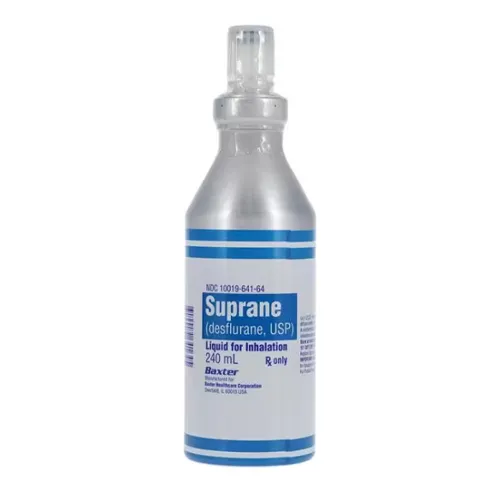
Table of Contents
Package leaflet: Information for the patient
SUPRANE Inhalation Liquid
Desflurane
Please read this leaflet carefully before you are given this medicine because it contains important information for you.
- Keep this leaflet. You may need to read it again.
- If you have any questions, ask your doctor or nurse.
- If you experience any side effects, including those not listed in this leaflet, tell your doctor or nurse. See section 4.
Contents of this leaflet:
- What SUPRANE is and what it is used for
- What you need to know before you are given SUPRANE
- How SUPRANE will be administered to you
- Possible side effects
- How to store SUPRANE
- Contents of the pack and other information
1. What SUPRANE is and what it is used for
SUPRANE is a medicine containing the active substance desflurane, which belongs to a group of medicines called "general anaesthetics". SUPRANE is used by the anaesthetist, the doctor responsible for anaesthesia (a state of general body numbness with loss of consciousness), to:
- induce and maintain anaesthesia during surgical procedures in adults;
- maintain anaesthesia during surgical procedures in neonates and children.
2. What you should know before being administered SUPRANE
SUPRANE must not be administered to you if:
- you are allergic to desflurane or to other anaesthetics similar to SUPRANE
- you have contraindications to general anaesthesia
- you or a member of your family has or is suspected to have a severe reaction to anaesthesia (malignant hyperthermia) (see section 4 “Possible side effects”)
- you have disorders of the arteries supplying blood to the heart (coronary arteries) or in any case where an increase in heart rate or blood pressure (very rapid heartbeat or high blood pressure) must be avoided. In these cases, SUPRANE should be used in combination with other medicinal products (preferably intravenous opioids and hypnotics)
- you have previously experienced liver function problems (hepatic dysfunction), unexplained fever, or increased white blood cells (leukocytosis) after inhalational anaesthesia
- you suffer from uncontrolled body movements (convulsive disorders)
- for induction of anaesthesia in children. Indeed, SUPRANE may cause coughing, breathing difficulties, cessation of breathing (apnoea), closure of the throat (laryngospasm), and increased secretions.
Warnings and precautions
This medicine is available only in hospital settings. Therefore, it will be administered to you only under close supervision by qualified medical personnel.
In particular, before being administered SUPRANE, inform your doctor:
- if you have previously been anaesthetized with medicines similar to SUPRANE and later developed liver disease, which may be a sign of possible allergy
- if you have suffered from liver disorders (cirrhosis, viral hepatitis, or other liver damage). In this case, your doctor may decide not to administer SUPRANE and choose another type of anaesthesia
- if you have a head injury (lesions in the intracranial space)
- if you have low blood pressure (hypotension)
- if you have reduced lung function (respiratory depression)
- if you suffer from diseases that could cause problems in the arteries supplying blood to the heart (coronary arteries) (see section “SUPRANE must not be administered to you”)
- if you suffer from conditions that could cause very rapid heartbeat or high blood pressure (see section “SUPRANE must not be administered to you”)
- if you are debilitated (a state of physical and mental weakening)
- if you are in a condition of reduced blood volume (hypovolemia)
- if you suffer from a disease that makes breathing difficult (bronchospasm)
- if you have recently undergone anaesthesia, especially if it was recent
- if you suffer from low blood volume (hypovolemia), low blood pressure, and feel weak or debilitated. In such cases, your doctor may decide to administer a lower dose of SUPRANE than recommended
- if you suffer from a severe muscle disease (muscular dystrophy, e.g., Duchenne muscular dystrophy).
Prolongation of the QT interval has been reported, very rarely associated with torsade de pointes
(see Possible side effects).
Children and adolescents
SUPRANE must not be used for induction of anaesthesia in children (see “SUPRANE must not be administered to you”).
SUPRANE is not approved for use in children under 6 years of age who have not had an airway tube inserted to assist breathing (intubation), as it may cause respiratory adverse effects.
SUPRANE will be administered with particular caution in children with asthma or who have recently had an upper respiratory tract infection.
Emergence from anaesthesia in children may be accompanied by a brief period of agitation.
Other medicines and SUPRANE
Inform your doctor or pharmacist if you are taking, have recently taken, or might take any other medicines.
In particular, inform your doctor if you are taking any of the following medicines:
- Muscle relaxants – medicines that cause muscle relaxation, as SUPRANE may enhance their effects
- Opioids – strong pain-relieving medicines. In this case, your doctor will use reduced doses of SUPRANE
- Benzodiazepines – medicines used to treat depression. In this case, your doctor will use reduced doses of SUPRANE
- Other sedative agents – medicines that cause relaxation. In this case, your doctor will use reduced doses of SUPRANE
- Nitrous oxide – as it may reduce the effects of SUPRANE
Pregnancy and breastfeeding
If you are pregnant, suspect you may be pregnant, planning to become pregnant, or are breastfeeding, inform your doctor before this medicine is administered to you.
There are insufficient data on the use of SUPRANE during pregnancy and breastfeeding. Therefore, SUPRANE is not recommended during pregnancy and breastfeeding.
Driving and use of machines
After anaesthesia with SUPRANE, do not drive or operate machinery for at least 24 hours following surgery, as your level of alertness may be impaired.
3. How SUPRANE will be administered
This medicine is available only in a hospital setting. Therefore, this medicine will be administered to you
only under the close supervision of qualified medical personnel.
Your anaesthetist (the doctor performing the anaesthesia) will determine the most appropriate dose for you,
based on your age, body weight, and general health. Your doctor will administer the correct dose of SUPRANE
to induce and maintain anaesthesia or to achieve the desired level of sedation, carefully assessing your response.
Use in children and adolescents
The dose will be determined by the anaesthetist based on the child's age, weight, and health status.
SUPRANE will not be used to induce anaesthesia in children (see section “When SUPRANE must not be given to you”).
Method of administration
SUPRANE is an inhaled anaesthetic (administered as a vapour to be inhaled).
SUPRANE will be administered to you using a vaporiser specifically designed and calibrated for desflurane.
If more SUPRANE is administered than intended
It is highly unlikely that you will receive more SUPRANE than intended, as your doctor will monitor you closely during treatment.
However, if an excessive dose of SUPRANE is administered, your doctor will stop the administration and provide appropriate supportive therapy.
4. Possible side effects
Like all medicines, this medicine can cause side effects, although not everyone experiences them.
Administration of Suprane may cause reduced activity of the respiratory and cardiac systems (respiratory and cardiac depression).
During administration of SUPRANE, the following serious side effects may occur; in such cases, the doctor will immediately discontinue administration and provide appropriate treatment:
- severe reaction to anaesthesia (malignant hyperthermia) presenting with the following symptoms:
- very high fever,
- muscle rigidity,
- increased heart rate (tachycardia),
- increased breathing rate (tachypnea),
- bluish skin discoloration (cyanosis),
- heart rhythm disturbances (arrhythmia),
- blood pressure fluctuations,
- severe lack of oxygen (acute hypoxia),
- increased blood concentration of carbon dioxide (hypercapnia),
- reduced circulating blood volume (hypovolemia).
The side effects are listed below according to the following frequency:
Very common (may affect more than 1 in 10 people)
- vomiting
- nausea
Common (may affect up to 1 in 10 people) - inflammation of the throat (pharyngitis)
- breath holding
- headache
- inflammation of the eye (conjunctivitis)
- heart rhythm disturbances (nodal arrhythmia)
- decreased or increased heart rate (bradycardia, tachycardia)
- high blood pressure (hypertension)
- temporary cessation of breathing (apnea)
- cough
- sudden contraction of the muscles of the larynx causing temporary airway closure (laryngospasm)
- increased saliva production
- increased blood levels of certain enzymes called creatine phosphokinase
- abnormal electrocardiogram (ECG, a test to assess the electrical activity of the heart)
Uncommon (may affect up to 1 in 100 people) - agitation
- dizziness
- heart attack (myocardial infarction)
- reduced blood flow to the heart (myocardial ischemia)
- heart rhythm disturbances (arrhythmia)
- widening of blood vessels (vasodilation)
- reduced oxygen supply to tissues (hypoxia)
- muscle pain (myalgia)
Frequency not known (frequency cannot be estimated from the available data) - alteration in the blood coagulation mechanism (coagulopathy)
- transient increase in white blood cells (transient leukocytosis)
- elevated potassium levels in the blood (hyperkalemia)
- decreased potassium levels in the blood (hypokalemia)
- elevated levels of acids in the blood (metabolic acidosis)
- involuntary muscle contractions resembling epilepsy (convulsions)
- increased blood flow in the brain
- yellow discoloration of the eyes (ocular jaundice)
- cessation of heartbeat (cardiac arrest)
- severe heart rhythm disturbances (torsades de pointes)
- disturbances in heart ventricles and atria (ventricular damage, ventricular hypokinesia, atrial fibrillation)
- very high blood pressure that may cause damage to internal organs (malignant hypertension)
- bleeding (haemorrhage)
- low blood pressure (hypotension)
- reduced blood flow to tissues (shock)
- difficulty breathing (respiratory arrest, respiratory injury, breathing difficulties, bronchospasm)
- coughing up blood (haemoptysis)
- sudden inflammation of the pancreas (acute pancreatitis)
- abdominal pain
- liver problems (hepatic failure, hepatic necrosis, cholestasis, abnormal liver function, liver damage)
- inflammation of the liver (hepatitis, cytolytic hepatitis)
- yellowing of the skin and eyes (jaundice)
- skin redness with itching (urticaria)
- skin redness (erythema)
- severe muscle damage (rhabdomyolysis)
- weakness
- malaise
- electrocardiogram abnormalities, tests to assess heart activity (ST-T segment changes, T-wave inversion)
- abnormal blood test results (increased levels of liver enzymes alanine aminotransferase and aspartate aminotransferase, abnormal coagulation tests, increased ammonia, increased blood bilirubin)
- severe drop in blood pressure
- awareness of one's own heartbeat (palpitations)
- temporary blindness, reduced visual acuity
- burning, pain, or eye irritation
- infection or inflammation of parts of the eye (ulcerative keratitis)
- red eyes (ocular hyperemia)
- brain disorder (encephalopathy)
- fatigue
- skin burning sensation
- medication administration error
- postoperative agitation in children
- confused mental state
Suprane may cause increased blood sugar levels during anaesthesia.
As with other medicines belonging to the same therapeutic class, a heart rhythm disturbance (QT interval prolongation) has been observed.
Reporting of side effects
If you experience any side effect, including those not listed in this leaflet, consult your doctor. You may also report side effects directly via the national reporting system at http://www.aifa.gov.it/content/segnalazioni-reazioni-avverse.
By reporting side effects, you can help provide more information on the safety of this medicine.
5. How to store SUPRANE
This medicinal product does not require any special storage temperature conditions.
Keep this medicinal product out of the sight and reach of children.
The anaesthetist and the hospital pharmacist are responsible for the correct storage, use and
distribution of the medicinal product.
Do not use this medicinal product after the expiry date stated on the packaging after "Exp".
The expiry date refers to the last day of that month.
The expiry date applies to the product in its original, undamaged packaging and correctly stored.
Store the vial in an upright position with the cap tightly closed.
Do not dispose of any medicinal product via wastewater or household waste. Ask your pharmacist how to dispose of medicines no longer required. This will help protect the environment.
6. Package contents and other information
What SUPRANE contains
- the active substance is desflurane
- no other components are present
Description of the appearance of SUPRANE and contents of the pack
SUPRANE is a liquid for inhalation.
It is available in packs of:
- 6 aluminium vials of 240 ml
Marketing Authorization Holder
Baxter S.p.A. - Via del Serafico 89, 00142 - Rome, Italy
Manufacturer
Baxter S.A. - Boulevard René Branquart 80, Lessines (Belgium)
The following information is intended exclusively for physicians or healthcare professionals:
PRECAUTIONS FOR USE
Desflurane must be administered at 0.8 MAC or lower, together with induction using barbiturates and hyperventilation (hypocapnia) in the period preceding cranial decompression. Adequate attention must be paid to maintaining cerebral perfusion pressure.
In patients with coronary artery disease, maintaining normal hemodynamics is important to avoid myocardial ischemia.
Marked increases in pulse rate, mean arterial pressure, and levels of adrenaline and noradrenaline are associated with a rapid increase in desflurane concentrations.
Desflurane must not be used as the sole agent for induction of anesthesia in patients at risk of coronary artery disease or in patients in whom increases in heart rate or blood pressure are undesirable. It should be used in combination with other drugs, preferably intravenous opioids and hypnotics.
During maintenance of anesthesia, increases in heart rate and blood pressure occurring after rapid incremental increases in end-tidal desflurane concentration may not represent inadequate anesthesia. Changes due to sympathetic system activation resolve within approximately 4 minutes. Increases in heart rate and blood pressure occurring before or in the absence of a rapid increase in desflurane concentration may be interpreted as light anesthesia.
The use of desflurane in debilitated, hypovolemic, and hypotensive patients has not been widely studied. As with other potent general anesthetics, lower concentrations than those recommended are advised in these patients.
Desflurane, like all other halogenated inhaled anesthetics, may react with dried carbon dioxide (CO₂) absorbents and produce carbon monoxide, which may lead to elevated carboxyhemoglobin levels in some patients. Case reports suggest that barium hydroxide lime and soda lime become dried when fresh gas passes through the carbon dioxide absorbent canister at high flow rates for many hours or days. When a physician suspects that the carbon dioxide absorbent has dried out, it must be replaced before administering desflurane.
As with other rapidly acting anesthetic agents, the rapid emergence with desflurane should be considered in cases where post-anesthetic pain is anticipated. Ensure that adequate analgesia is provided to the patient at the end of the procedure or in the immediate postoperative period.
Due to limited knowledge regarding repeated anesthesia, definitive recommendations cannot be provided in this regard. As with all halogenated anesthetics, repeated anesthesia within a short period of time should be performed with extreme caution.
Emergence from anesthesia in children may cause a brief period of agitation that may interfere with cooperation.
Immediate availability of equipment for maintaining airway patency, assisted ventilation, oxygen enrichment, and circulatory resuscitation is required.
Desflurane must be administered only by personnel specialized in administering general anesthesia and using a vaporizer specifically designed and calibrated for desflurane.
SPECIAL WARNINGS
Perioperative hyperkalemia
The use of inhaled anesthetic agents, including desflurane, has been associated with rare increases in serum potassium levels leading to cardiac arrhythmias, some of which have been fatal, in patients during the postoperative period. Patients with latent or manifest muscular dystrophies, particularly Duchenne Muscular Dystrophy, appear to be more vulnerable. Concomitant use of succinylcholine has been associated with many, but not all, of these cases. These patients have also shown significant increases in serum creatine phosphokinase levels and, in some cases, urinary changes consistent with myoglobinuria. Despite the similarity in presentation to malignant hyperthermia, none of these patients showed signs or symptoms of muscle rigidity or a hypermetabolic state. Immediate and aggressive intervention is recommended to treat hyperkalemia and resistant arrhythmias, as well as subsequent evaluation for latent neuromuscular damage.
The use of desflurane for induction of anesthesia in pediatric patients is not recommended due to the frequent occurrence of coughing, dyspnea, apnea, laryngospasm, and increased secretions in children.
Maintenance of anesthesia in children
Desflurane is not approved for maintenance of anesthesia in non-intubated children. When desflurane is used for maintenance of anesthesia with a laryngeal mask airway (LMA) or a face mask in children aged 6 years or younger, it may cause an increased incidence of adverse respiratory events, such as coughing and laryngospasm, especially upon removal of the LMA during deep anesthesia.
INTERACTIONS
The action of commonly used muscle relaxants is potentiated by desflurane. In patients treated with opioids, benzodiazepines, or other sedatives, reduced doses of desflurane are required. This type of interaction is illustrated below. Additionally, the concomitant use of nitrous oxide reduces the MAC values of desflurane, as explained in the posology section. Since opioids may cause respiratory depression, any concomitant use with desflurane should be performed with great caution.
Depolarizing and non-depolarizing muscle relaxants
Table 1 shows the doses of pancuronium, atracurium, suxamethonium, and vecuronium required to achieve 95% (ED₉₅) neuromuscular transmission depression at different desflurane concentrations. Except for vecuronium, these doses are similar to those required with isoflurane. The ED₉₅ of vecuronium is 14% lower with desflurane than with isoflurane. Furthermore, recovery from neuromuscular blockade is longer with desflurane than with isoflurane.
No clinically significant interactions have been observed in clinical trials regarding the use of commonly employed muscle relaxants.
Table 1 - Doses (mg/kg) of muscle relaxants causing 95% depression in neuromuscular transmission
| Desflurane Concentration | Pancuronium | Atracurium | Suxamethonium | Vecuronium |
|--------------------------|-------------|------------|----------------|------------|
| 0.65 MAC / 60% N₂O/O₂ | 0.026 | 0.133 | *ND | *ND |
| 1.25 MAC / 60% N₂O/O₂ | 0.018 | 0.119 | *ND | *ND |
| 1.25 MAC / O₂ | 0.022 | 0.120 | 0.360 | 0.019 |
*ND = not available
Pre-anesthetic medications
In clinical studies, no clinically significant adverse interactions have been reported with commonly used pre-anesthetic medications or with drugs used during anesthesia (intravenous agents, local anesthetics). The effect of desflurane on the bioavailability of other drugs has not been determined.
Opioids and benzodiazepines
Administration of increasing doses of fentanyl in patients anesthetized with various concentrations of desflurane has necessitated a reduction in anesthetic concentration or MAC. Intravenous administration of increasing doses of midazolam resulted in a small reduction in MAC. Results are shown in Table 2.
The reductions in MAC are similar to those observed with isoflurane. Therefore, it may be presumed that other opioids and sedatives will similarly affect MAC values.
Table 2 - Desflurane 0.6–0.8 MAC/O₂
| Treatment | *MAC (%) | % Reduction in MAC |
|--------------------------|-----------|--------------------|
| Without Fentanyl | 6.33–6.35 | - |
| Fentanyl (3 µg/kg) | 3.12–3.46 | 46–51 |
| Fentanyl (6 µg/kg) | 2.25–2.97 | 53–64 |
| Without Midazolam | 5.85–6.86 | - |
| Midazolam (25 µg/kg) | 4.93 | 15.7 |
| Midazolam (50 µg/kg) | 4.88 | 16.6 |
* Includes values for the age range 18–65 years
Increase in glucose
As with other halogenated anesthetic agents, desflurane has been associated with increased glucose levels during the intraoperative period.
DOSAGE, METHOD AND TIME OF ADMINISTRATION
Route of administration
Desflurane is administered by inhalation. The required concentration of desflurane must be delivered using a vaporizer specifically designed and calibrated for use with desflurane.
Effects on concomitant therapy
Opioids or benzodiazepines reduce the amount of desflurane required to produce anesthesia. Desflurane reduces the doses required of neuromuscular blocking agents (see Table 1). If additional relaxation is needed, supplementary doses of muscle relaxants may be used.
Premedication
Any premedication should be determined according to individual patient needs. Available studies to date have not shown any effect of premedication on respiratory tract response to inhaled induction of anesthesia.
Posology
The minimum alveolar concentration (MAC) of desflurane is closely related to patient age and has been determined as follows:
Table 3
MAC for desflurane according to patient age and inhalation mixture (Mean ± SD)
| Age | N* | 100% Oxygen | N* | 60% Nitrous oxide/40% Oxygen |
|---|---|---|---|---|
| 2 weeks | 6 | 9.2 ± 0.0 | ||
| 10 weeks | 5 | 9.4 ± 0.4 | ||
| 9 months | 4 | 10.0 ± 0.7 | 5 | 7.5 ± 0.8 |
| 2 years | 3 | 9.1 ± 0.6 | ||
| 3 years | 5 | 6.4 ± 0.4 | ||
| 4 years | 4 | 8.6 ± 0.6 | ||
| 7 years | 5 | 8.1 ± 0.6 | ||
| 25 years | 4 | 7.3 ± 0.0 | 4 | 4.0 ± 0.3 |
| 45 years | 4 | 6.0 ± 0.3 | 6 | 2.8 ± 0.6 |
| 70 years | 6 | 5.2 ± 0.6 | 6 | 1.7 |
* N = number of pairs of patients for whom a modified MAC was identified based on the quantal response method
Induction of anesthesia in adults
In adults, an initial concentration of 3% is recommended, with increments of 0.5–1% every 2–3 breaths. Desflurane concentrations of 4–11% generally produce surgical anesthesia within 2–4 minutes. However, in clinical studies, doses up to 15% have been used.
Such desflurane concentrations proportionally reduce the oxygen concentration, and the initial oxygen administration should be 30% or higher.
During induction in adults, the overall incidence of oxyhemoglobin desaturation (SpO2 < 90%) was 6%.
High concentrations of desflurane may cause adverse effects on the upper airways.
After induction in adults with an intravenous agent such as thiopental or propofol, desflurane may be initiated at a MAC of approximately 0.5–1 when the carrier gas is oxygen or nitrous oxide.
Resuscitation equipment and oxygen delivery systems must always be readily available.
A brief period of excitation may occur during anesthesia induction.
Induction of anesthesia in children
The use of Suprane is contraindicated for induction of general anesthesia in children and neonates due to the frequent occurrence of laryngospasm, increased secretions, apnea, breathing difficulties, and coughing (see section Contraindications).
Maintenance of anesthesia in adults
Adequate levels of surgical anesthesia are maintained with desflurane concentrations of 2–6% when administered together with nitrous oxide. Desflurane concentrations of 2.5–8.5% may be required when administration is performed with oxygen or oxygen-enriched air.
Maintenance of anesthesia in children
Desflurane is indicated for maintenance of anesthesia in neonates and children. Surgical levels of anesthesia can be maintained in children with end-tidal concentrations of 5.2% to 10% desflurane, with or without concomitant use of nitrous oxide.
Although concentrations up to 18% have been administered for short periods, when high doses of desflurane with nitrous oxide are required, it is essential to ensure that the inhaled mixture contains at least 25% oxygen.
If more pronounced muscle relaxation is needed, additional doses of muscle relaxants may be used.
Blood pressure and heart rate during maintenance
Blood pressure and heart rate must be closely monitored during maintenance as part of the assessment of anesthetic depth.
Dosage in hepatic and renal impairment
Concentrations of 1–4% desflurane in nitrous oxide/oxygen have been successfully used in patients with chronic hepatic or renal insufficiency and during renal transplantation.
Due to its very limited metabolism, dosage adjustment is not required in patients with reduced renal or hepatic function.
OVERDOSE
Symptoms and treatment of overdose
Symptoms of desflurane overdose may be considered similar to those observed with other volatile anesthetics and may include deepening of anesthesia, cardiac and/or respiratory depression in spontaneously breathing patients, and hypotension in ventilated patients, in whom hypercarbia and hypoxia may only become evident at an advanced stage.
In case of overdose or symptoms suggestive of overdose, the following measures should be taken: immediately discontinue desflurane administration, ensure airway patency, and initiate assisted or controlled ventilation with pure oxygen. Hemodynamic functions should be adequately supported and maintained.