Supracef
Italy
Table of Contents
- Package leaflet: Information for the user
- SUPRACEF 400 mg dispersible tablets
- 1. What SUPRACEF is and what it is used for
- 2. What you need to know before taking SUPRACEF
- 3. How to take SUPRACEF
- 4. Possible side effects
- 5. How to store SUPRACEF
- 6. Package contents and other information
- Package leaflet: information for the user
- SUPRACEF 100mg/5ml granules for oral suspension
- 1. What SUPRACEF is and what it is used for
- 2. What you should know before using SUPRACEF
- 3. How to use SUPRACEF
- 4. Possible side effects
- 5. How to store SUPRACEF
- 6. Package contents and other information
Package leaflet: Information for the user
SUPRACEF 400 mg dispersible tablets
Cefixime
Please read this leaflet carefully before taking this medicine because it contains
important information for you.
- Keep this leaflet. You may need to read it again.
- If you have any questions, ask your doctor or pharmacist.
- This medicine has been prescribed for you only. Do not give it to others, even if their symptoms are the same as yours, as it could be harmful.
- If you experience any side effects, including those not listed in this leaflet, contact your doctor or pharmacist. See section 4.
Contents of this leaflet:
- What SUPRACEF is and what it is used for
- What you need to know before taking SUPRACEF
- How to take SUPRACEF
- Possible side effects
- How to store SUPRACEF
- Contents of the pack and other information
1. What SUPRACEF is and what it is used for
SUPRACEF contains cefixime, an antibiotic used to treat infections caused by bacteria.
SUPRACEF is indicated in adults for the treatment of:
- throat infections (pharyngitis, tonsillitis);
- ear infections (otitis media);
- lung and bronchial infections (bronchitis, pneumonia);
- kidney and urinary tract infections.
2. What you need to know before taking SUPRACEF
Do not take SUPRACEF
- if you are allergic to cefixime or to any of the other ingredients of this medicine (listed in section 6);
- if you are allergic to penicillins or cephalosporins (antibiotics).
Warnings and precautions
Talk to your doctor or pharmacist before taking SUPRACEF.
In particular, inform your doctor if:
- you have previously experienced allergic reactions to cephalosporins, penicillins, or other medicines;
- you develop any allergic reaction during treatment with SUPRACEF, you must also stop the treatment;
- you have kidney problems, even if not severe (including severe renal impairment), or are undergoing blood purification procedures (hemodialysis or peritoneal dialysis);
- you suffer from or have suffered from stomach or intestinal diseases, especially colitis;
- you experience severe skin reactions; in such cases you must also stop the treatment;
- you have previously had a reduction in red blood cells due to damage to blood cells (hemolytic anemia).
Prolonged use of SUPRACEF may lead to the development of non-susceptible microorganisms and, in particular, to an alteration of the normal intestinal flora.
Other medicines and SUPRACEF
Inform your doctor or pharmacist if you are taking, have recently taken, or might take any other medicines.
In particular, inform your doctor if you are taking:
- anticoagulants (medicines that delay blood clotting) such as warfarin;
- drugs that reduce intestinal motility;
- nifedipine, a medicine used to lower blood pressure;
- oral contraceptives (birth control pills).
Laboratory tests and SUPRACEF
SUPRACEF may alter the results of certain blood and urine tests.
Fertility, pregnancy and breastfeeding
If you are pregnant, think you may be pregnant, planning a pregnancy, or are breastfeeding, consult your doctor or pharmacist before taking this medicine.
Your doctor will prescribe SUPRACEF only if clearly needed.
Pregnancy
During the first three months of pregnancy, administration of SUPRACEF is not recommended.
Breastfeeding
There are no data available on the passage of SUPRACEF into breast milk.
Driving and using machines
This medicine does not affect the ability to drive or operate machinery.
SUPRACEF 400 mg dispersible tablets contain sunset yellow FCF (E110)
It may cause allergic reactions.
SUPRACEF 400 mg dispersible tablets contain sodium
SUPRACEF 400 mg dispersible tablets contain less than 1 mmol (23 mg) of sodium per tablet, i.e., essentially "sodium-free".
SUPRACEF 400 mg dispersible tablets contain benzyl alcohol
This medicine contains 0.000875 mg of benzyl alcohol per tablet. Benzyl alcohol may cause allergic reactions.
Consult your doctor or pharmacist if you are pregnant or breastfeeding. This is because large amounts of benzyl alcohol may accumulate in the body and cause undesirable effects (such as metabolic acidosis).
Consult your doctor or pharmacist if you have liver or kidney disease. This is because large amounts of benzyl alcohol may accumulate in the body and cause undesirable effects (such as metabolic acidosis).
SUPRACEF 400 mg dispersible tablets contain sulfites
Rarely, these may cause severe hypersensitivity reactions and bronchospasm.
SUPRACEF 400 mg dispersible tablets contain ethanol
This medicine contains 0.015 mg of alcohol (ethanol) in each tablet. The amount in each tablet of this medicine is equivalent to less than 0.0004 ml of beer or 0.0002 ml of wine.
The small amount of alcohol in this medicine will not produce significant effects.
SUPRACEF 400 mg dispersible tablets contain sucrose
If your doctor has diagnosed you with an intolerance to certain sugars, contact him or her before taking this medicine.
3. How to take SUPRACEF
Take this medicine exactly as directed by your doctor or pharmacist. If you have any doubts, consult your doctor or pharmacist.
The recommended dose for adults is: one tablet (400 mg) once daily.
The break line on the dispersible tablet is intended to facilitate breaking the tablet to aid in its dispersion and not for dividing it into equal doses.
Method of administration:
SUPRACEF may be taken regardless of meal times (either with or without food).
The SUPRACEF dispersible tablet should be dissolved in a glass of water. Stir well until completely dissolved and drink immediately.
Duration of treatment:
Most infections can be treated within 7 days of therapy. However, in more severe cases, SUPRACEF may be used for up to 14 consecutive days.
Patients with severe kidney problems:
In patients with creatinine clearance values < 20 ml/min, undergoing continuous ambulatory peritoneal dialysis or hemodialysis, the recommended dosage is 200 mg once daily.
If you take more SUPRACEF than you should
If you accidentally take a large amount of this medicine, contact your doctor or go to the nearest hospital immediately.
If you forget to take SUPRACEF
Do not take a double dose to make up for the missed dose.
If you stop taking SUPRACEF
Do not stop taking the tablets without consulting your doctor, even if you feel better. It is important to complete the full course of treatment prescribed by your doctor.
If you have any questions about the use of this medicine, consult your doctor or pharmacist.
4. Possible side effects
Like all medicines, this medicine can cause side effects, although not everybody will experience them.
If you experience any of the following side effects during treatment with SUPRACEF, contact your doctor immediately, who will STOP the treatment and initiate appropriate therapies and/or precautionary measures:
- severe allergic reactions (serum sickness-like reaction and anaphylaxis), swelling of the face (facial edema), swelling of the skin or mucous membranes (angioedema), difficulty breathing (dyspnea);
- severe skin and mucous membrane reactions, even with blister formation (erythema multiforme, Stevens-Johnson syndrome, toxic epidermal necrolysis, drug rash with eosinophilia and systemic symptoms);
- severe antibiotic-associated diarrhoea (pseudomembranous colitis).
The following side effects may also occur during treatment:
- bacterial resistance,
- inflammation of the tongue (glossitis),
- nausea,
- vomiting,
- stomach burning (gastric pyrosis),
- abdominal pain,
- diarrhoea,
- indigestion (dyspepsia),
- intestinal gas (flatulence),
- joint pain (arthralgia),
- drug-induced fever,
- changes in certain blood tests (transient increase in transaminases, alkaline phosphatase, total bilirubin, blood urea nitrogen, and creatinine),
- reduced number of white blood cells (leucopenia, neutropenia, granulocytopenia),
- reduced number of platelets (thrombocytopenia),
- increased number of white blood cells (eosinophilia, agranulocytosis),
- impaired blood coagulation,
- reduced number of red blood cells due to damage to blood cells (haemolytic anaemia),
- impaired kidney function (acute renal failure and tubulointerstitial nephritis),
- yellowing of the skin and whites of the eyes (jaundice),
- liver inflammation (hepatitis),
- urticaria,
- skin rash,
- itching (pruritus),
- genital itching,
- dizziness,
- headache (cephalalgia),
- fever,
- loss of appetite (anorexia),
- vaginal fungal infection (Candida vaginitis).
Reporting of side effects
If you experience any side effect, including those not listed in this leaflet, contact your doctor. You may also report side effects directly via the national reporting system at the website https://www.aifa.gov.it/content/segnalazioni-reazioni-avverse.
By reporting side effects, you can help provide more information on the safety of this medicine.
5. How to store SUPRACEF
Keep this medicine out of the sight and reach of children.
Store below 30°C.
Do not use this medicine after the expiry date stated on the carton after Exp. The expiry date refers to the last day of that month.
Do not dispose of any medicine via wastewater or household waste. Ask your pharmacist how to dispose of medicines no longer required. This will help protect the environment.
6. Package contents and other information
What SUPRACEF contains
- The active substance is: cefixime (400 mg per tablet)
- The other components are: microcrystalline cellulose, hydroxypropylcellulose, anhydrous colloidal silica, povidone, strawberry flavour 1, strawberry flavour 2, magnesium stearate, sucralose, sucrose (see section “SUPRACEF 400 mg dispersible tablets contain sucrose”), ethanol (see section “SUPRACEF 400 mg dispersible tablets contain ethanol”), sulphites (E220) (see section “SUPRACEF 400 mg dispersible tablets contain sulphites (E220)”), benzyl alcohol (see section “SUPRACEF 400 mg dispersible tablets contain benzyl alcohol”), sunset yellow FCF (E110) (see section “SUPRACEF 400 mg dispersible tablets contain sunset yellow FCF (E110)”)
Description of the appearance of SUPRACEF and package contents
Dispersible tablets in blisters containing 5 or 7 tablets of 400 mg
Not all pack sizes may be marketed.
MARKETING AUTHORISATION HOLDER
LUSOFARMACO
Istituto Luso Farmaco d’Italia S.p.A.
Milanofiori – Strada 8 – Edificio N – Rozzano (MI)
MANUFACTURER
A. Menarini Manufacturing Logistics and Services s.r.l., manufacturing site at Via di Scandicci 37, Firenze.
ACS Dobfar S.p.A., manufacturing site at Via Laurentina Km 24.730 – Pomezia (Rome)
Package leaflet: information for the user
SUPRACEF 100mg/5ml granules for oral suspension
Cefixime
Please read this leaflet carefully before using this medicine because it contains
important information for you.
- Keep this leaflet. You may need to read it again.
- If you have any questions, consult your doctor or pharmacist.
- This medicine has been prescribed for you only. Do not give it to other people, even if their symptoms are the same as yours, as it may be harmful.
- If you experience any side effects, including those not listed in this leaflet, consult your doctor or pharmacist. See section 4.
Contents of this leaflet:
- What SUPRACEF is and what it is used for
- What you need to know before taking SUPRACEF
- How to take SUPRACEF
- Possible side effects
- How to store SUPRACEF
- Contents of the pack and other information
1. What SUPRACEF is and what it is used for
SUPRACEF contains cefixime, an antibiotic used to treat infections caused by bacteria.
SUPRACEF is indicated in children over 6 months of age for the treatment of:
- throat infections (pharyngitis, tonsillitis);
- ear infections (otitis media);
- infections of the bronchi and lungs (bronchitis, pneumonia);
- kidney and urinary tract infections.
2. What you should know before using SUPRACEF
Do not use SUPRACEF
- if you are allergic to cefixime or to any of the other ingredients of this medicine (listed in section 6);
- if you are allergic to penicillins and cephalosporins (antibiotics).
Warnings and precautions
Talk to your doctor or pharmacist before using SUPRACEF.
In particular, inform your doctor if:
- you have previously experienced allergic reactions to cephalosporins, penicillins, or other medicines;
- you develop any allergic reaction during treatment with SUPRACEF, in which case you must also stop the treatment;
- you have kidney problems, not only severe ones (severe renal insufficiency), or are undergoing a blood purification procedure (haemodialysis or peritoneal dialysis);
- you suffer or have suffered from stomach or intestinal diseases, especially colitis;
- you develop severe skin reactions; in such cases you must also stop the treatment;
- you have previously had a reduction in red blood cells due to damage to blood cells (haemolytic anaemia). Prolonged use of SUPRACEF may lead to the development of microorganisms that are not sensitive to the antibiotic, and particularly to alterations in the normal intestinal flora.
Other medicines and SUPRACEF
Inform your doctor or pharmacist if you are taking, have recently taken, or might take any other medicines.
In particular, inform your doctor if you are taking:
- anticoagulants (medicines that delay blood clotting) such as warfarin;
- drugs that reduce intestinal motility;
- nifedipine (a medicine used to lower blood pressure);
- oral contraceptives (birth control pills).
Laboratory tests and SUPRACEF
SUPRACEF may alter the results of certain blood and urine tests.
Fertility, pregnancy and breastfeeding
Pregnancy
During the first three months of pregnancy, administration of SUPRACEF is not recommended.
Breast-feeding
There are no data on the passage of SUPRACEF into breast milk.
Driving and using machines
This medicine does not affect the ability to drive or use machinery.
SUPRACEF contains sucrose
If your doctor has diagnosed you with an intolerance to certain sugars, contact him/her before using this medicine. It contains 6.07 g of sucrose (sugar) per 12 ml. This should be taken into consideration in patients with diabetes mellitus.
SUPRACEF contains sodium
SUPRACEF contains less than 1 mmol (23 mg) of sodium per vial (100 ml), i.e. essentially 'sodium-free'.
SUPRACEF contains sodium benzoate
This medicine contains 6.3 mg of sodium benzoate per 12 ml of medicine.
SUPRACEF contains benzyl alcohol
This medicine contains 0.001155 mg of benzyl alcohol per 12 ml of this medicine.
Benzyl alcohol may cause allergic reactions.
Do not use for more than one week in young children (under 3 years of age) unless otherwise recommended by the doctor or pharmacist.
Consult your doctor or pharmacist if you are pregnant or breastfeeding. This is because large amounts of benzyl alcohol may accumulate in the body and cause adverse effects (such as metabolic acidosis).
Consult your doctor or pharmacist if you have liver or kidney disease. This is because large amounts of benzyl alcohol may accumulate in the body and cause adverse effects (such as metabolic acidosis).
SUPRACEF contains sulphites
Rarely, it may cause severe hypersensitivity reactions and bronchospasm.
SUPRACEF contains ethanol
This medicine contains 0.020 mg of alcohol (ethanol) in each 12 ml. The amount in 12 ml of this medicine is equivalent to less than 0.0005 ml of beer or 0.0002 ml of wine.
The small amount of alcohol in this medicine will not produce significant effects.
3. How to use SUPRACEF
Use this medicine exactly as directed by your doctor or pharmacist. If you have any doubts, consult your doctor or pharmacist.
The recommended dose for children over 6 months of age is 8 mg/kg/day, administered once daily.
The SUPRACEF package contains a measuring spoon (for older children) and a syringe (for younger children) to accurately measure the correct dose of the medicine. The following table facilitates calculation of the dose to be administered according to the child's body weight.
| Weight (kg) | Daily dose (mg) | Daily dose (ml) |
| 10 | 80 | 4 |
| 12.5 | 100 | 5 |
| 15 | 120 | 6 |
| 17.5 | 140 | 7 |
| 20 | 160 | 8 |
| 22.5 | 180 | 9 |
| 25 | 200 | 10 |
| 27.5 | 220 | 11 |
| 30 | 240 | 12 |
Safety and efficacy in children under 6 months of age have not been established.
Administration method:
SUPRACEF may be taken regardless of meal times, either before or after meals.
Duration of treatment:
Most infections can be treated within 7 days of therapy. However, in more severe cases, SUPRACEF may be used for up to 14 consecutive days.
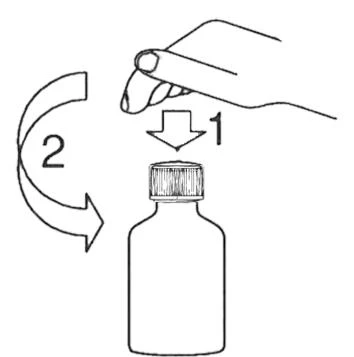
Instructions for opening the bottle:
➢ Open the bottle by pressing down firmly on the cap while simultaneously turning it counterclockwise.
Instructions for preparing the suspension:
➢ Before adding water to reconstitute the granules, invert and shake the bottle. This step facilitates reconstitution in case the powder has compacted at the bottom of the bottle.
➢ Completely fill the dosing cup with water.
➢ Add all the water into the bottle, close the cap tightly, invert, and shake for a few seconds.
➢ Let it stand for 1–2 minutes.
➢ Add water up to the level indicated by the arrow.
➢ Shake the suspension thoroughly until the granules are completely dispersed.
➢ Let it stand for 1–2 minutes.
➢ If the suspension level appears below that indicated by the arrow, add more water until the level reaches the mark indicated by the arrow.
➢ Shake vigorously again until a homogeneous suspension is obtained.
➢ The reconstituted suspension must be stored in the refrigerator in its original container and used within 14 days. Do not freeze.
➢ Shake vigorously before each use.
Patients with severe kidney problems:
In cases of creatinine clearance values < 20 ml/min, or in patients undergoing continuous ambulatory peritoneal dialysis or hemodialysis, the physician will adjust the dosage accordingly.
If you use more SUPRACEF than you should
In case of accidental overdose, contact your doctor or go to the nearest hospital.
If you forget to use SUPRACEF
Do not take a double dose to make up for the missed dose.
If you stop using SUPRACEF
Do not stop using SUPRACEF without consulting your doctor, even if you feel better. It is important to complete the entire course of treatment prescribed by your doctor.
If you have any doubts about the use of this medicine, consult your doctor or pharmacist.
4. Possible side effects
Like all medicines, this medicine may cause side effects, although not everybody gets them.
If you experience any of the following side effects during treatment with SUPRACEF, contact your doctor immediately, who will STOP the treatment and initiate appropriate therapies and/or precautionary measures:
- severe allergic reactions (serum sickness-like reaction and anaphylaxis), facial swelling (facial edema), swelling of the skin or mucous membranes (angioedema), difficulty breathing (dyspnea);
- severe skin and mucosal membrane reactions, sometimes with blistering (erythema multiforme, Stevens-Johnson syndrome, toxic epidermal necrolysis, drug rash with eosinophilia and systemic symptoms);
- severe antibiotic-associated diarrhea (pseudomembranous colitis).
The following side effects may also occur during treatment:
- bacterial resistance;
- inflammation of the tongue (glossitis);
- nausea;
- vomiting;
- stomach burning (gastric pyrosis);
- abdominal pain;
- diarrhea;
- indigestion (dyspepsia);
- intestinal gas (flatulence);
- joint pain (arthralgia);
- drug-induced fever;
- changes in certain blood tests (transient increase in transaminases, alkaline phosphatase, total bilirubin, blood urea nitrogen, and creatinine);
- reduced number of white blood cells (leucopenia, neutropenia, granulocytopenia);
- reduced number of platelets (thrombocytopenia);
- increased number of white blood cells (eosinophilia, agranulocytosis);
- impaired blood coagulation;
- reduced number of red blood cells due to damage to blood cells (hemolytic anemia);
- impaired kidney function (acute renal failure and tubulointerstitial nephritis);
- yellowing of the skin and whites of the eyes (jaundice);
- liver inflammation (hepatitis);
- urticaria;
- skin rash (rash);
- itching;
- genital itching;
- dizziness;
- headache (cephalalgia);
- fever;
- loss of appetite (anorexia);
- vaginal fungal infection (Candida vaginitis).
Reporting of side effects
If you experience any side effect, including those not listed in this leaflet, contact your doctor. You may also report side effects directly via the national reporting system at the website: https://www.aifa.gov.it/content/segnalazioni-reazioni-avverse.
By reporting side effects, you can help provide more information on the safety of this medicine.
5. How to store SUPRACEF
Keep this medicine out of the sight and reach of children.
Store the unreconstituted powder in the original intact container at a temperature not exceeding 30°C.
After reconstitution, the suspension must be stored in the refrigerator in the original container.
The reconstituted suspension must be used within 14 days. Do not freeze.
Do not use this medicine after the expiry date stated on the carton after Exp. The expiry date refers to the last day of that month.
Do not dispose of any medicine via wastewater or household waste. Ask your pharmacist how to dispose of medicines you no longer use. This will help protect the environment.
6. Package contents and other information
What SUPRACEF contains
- The active substance is: cefixime (20 mg/ml)
- The other ingredients are: sucrose (see section “SUPRACEF contains sucrose”), xanthan gum, sodium benzoate (see section “SUPRACEF contains sodium benzoate”), ethanol (see section “SUPRACEF contains ethanol”), benzyl alcohol (see section “SUPRACEF contains benzyl alcohol”), sulphites (E 220) (see section “SUPRACEF contains sulphites”), strawberry flavour 1 and strawberry flavour 2.
Description of the appearance of SUPRACEF and contents of the pack
Granules for oral suspension 100 mg/5 ml, in a 100 ml glass bottle. The bottle is fitted with a child-resistant cap.
The pack contains a dosing spoon and a dosing syringe.
MARKETING AUTHORISATION HOLDER
LUSOFARMACO
Istituto Luso Farmaco d’Italia S.p.A.
Milanofiori – Strada 8 – Edificio N – Rozzano (MI)
MANUFACTURER
A. Menarini Manufacturing Logistics and Services s.r.l., manufacturing site Via di Scandicci 37 - Florence.
ACS Dobfar S.p.A., manufacturing site Via Laurentina Km 24,730 – Pomezia (Rome)