Sunlenca
Italy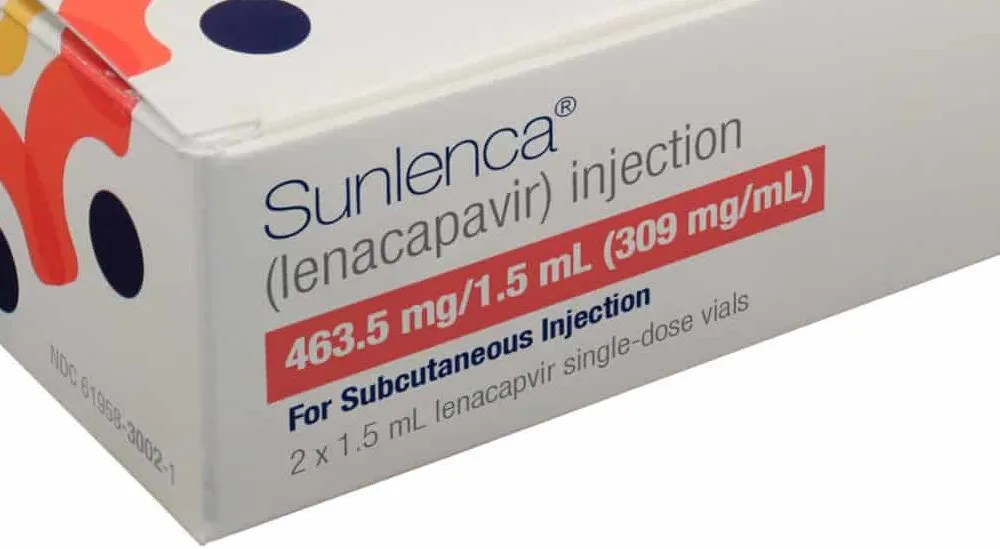
Table of Contents
- Patient Information Leaflet
- Sunlenca 464 mg injectable solution
- 1. What Sunlenca is and what it is used for
- 2. What you need to know before you are given Sunlenca
- 3. How Sunlenca is administered
- 4. Possible side effects
- 5. How to store Sunlenca
- 6. Package contents and other information
- Instructions for use - Sunlenca 464 mg injectable solution
- Patient information leaflet
- Sunlenca 300 mg film-coated tablets
- 1. What Sunlenca is and what it is used for
- 2. What you should know before taking Sunlenca
- 3. How to take Sunlenca
- 4. Possible side effects
- 5. How to store Sunlenca
- 6. Package contents and other information
Patient Information Leaflet
Sunlenca 464 mg injectable solution
lenacapavir
This medicinal product is subject to additional monitoring. This will allow any new safety information to be identified quickly. You can help by reporting any side effects you experience while taking this medicine. See the end of section 4 for information on how to report side effects.
Please read this leaflet carefully before using this medicine because it contains important information for you.
- Keep this leaflet. You may need to read it again.
- If you have any questions, ask your doctor or pharmacist.
- If you get any side effects, including those not listed in this leaflet, contact your doctor or pharmacist. See section 4.
Contents of this leaflet
- What Sunlenca is and what it is used for
- What you need to know before being administered Sunlenca
- How Sunlenca is administered
- Possible side effects
- How to store Sunlenca
- Contents of the pack and other information
1. What Sunlenca is and what it is used for
Sunlenca contains the active substance lenacapavir. It is an antiretroviral medicine known as a
capsid inhibitor.
Sunlenca is a prolonged-release medicine used in combination with other antiretroviral medicines
for the treatment of human immunodeficiency virus (HIV) type 1, the virus that causes acquired
immunodeficiency syndrome (AIDS).
It is used for the treatment of HIV infection in adults with limited treatment options (for example, when
other antiretroviral medicines are not sufficiently effective or are not suitable).
Treatment with Sunlenca in combination with other antiretrovirals reduces the amount of HIV in the body.
This improves the function of the immune system (the body's natural defenses) and reduces the risk of
developing diseases related to HIV infection.
2. What you need to know before you are given Sunlenca
Do not be given Sunlenca
- If you are allergic to lenacapavir or to any of the other ingredients of this medicine (listed in section 6).
- If you are taking any of the following medicines:
- rifampicin, used to treat certain bacterial infections, such as tuberculosis
- carbamazepine, phenytoin, used to prevent seizures
- St John’s wort (Hypericum perforatum), a herbal remedy used for depression and anxiety.
If any of these conditions apply to you, do not be given Sunlenca and inform your doctor immediately.
Warnings and precautions
Talk to your doctor before using Sunlenca
- Talk to your doctor or pharmacist if you have or have ever had severe liver disease or if blood tests have shown liver problems. Your doctor will carefully consider whether to treat you with Sunlenca.
While using Sunlenca
When you start using Sunlenca, be alert for:
- Signs of inflammation or infection.
If you notice any of these symptoms, inform your doctor immediately. For more information,
see section 4, Possible side effects.
- Reactions at the site where Sunlenca is injected.
A hardened mass or nodule may form at the injection site. In some cases, these nodules may
persist for more than one year and in some cases may not go away at all. If the problem has not
resolved by the time of your next injection, inform your doctor. For more information,
see section 4, Possible side effects.
Regular appointments are important
It is important that you attend all scheduled appointments to receive your Sunlenca injections, to monitor your HIV infection and prevent the disease from worsening. Talk to your doctor if you are considering stopping treatment. If a Sunlenca injection is delayed or if you stop treatment with Sunlenca, you will need to take other medicines to treat your HIV infection and reduce the risk of developing viral resistance.
Children and adolescents
Do not give this medicine to children and adolescents under 18 years of age. The use of Sunlenca in patients under 18 years of age has not yet been studied; therefore, the safety and efficacy of this medicine in this age group are unknown.
Other medicines and Sunlenca
Tell your doctor or pharmacist if you are taking, have recently taken, or might take any other medicines. Sunlenca may interact with other medicines. This could prevent Sunlenca or the other medicines from working properly, or could worsen their side effects. In some cases, your doctor may need to adjust the dose or monitor blood levels.
Medicines that must never be taken with Sunlenca:
- rifampicin, used to treat certain bacterial infections, such as tuberculosis
- carbamazepine, phenytoin, used to prevent seizures
- St John’s wort (Hypericum perforatum), a herbal remedy used for depression and anxiety.
If you are taking any of these medicines, do not be given injectable Sunlenca and inform your doctor immediately.
Talk to your doctor especially if you are taking:
- antibiotics containing:
- rifabutin
- anticonvulsants used to treat epilepsy and prevent seizures, containing:
- oxcarbazepine or phenobarbital
- medicines used to treat HIV, containing:
- atazanavir/cobicistat, efavirenz, nevirapine, tipranavir/ritonavir or etravirine
- medicines used to treat migraine headaches, containing:
- dihydroergotamine or ergotamine
- medicines used to treat erectile dysfunction and pulmonary hypertension, containing:
- sildenafil or tadalafil
- medicines used to treat erectile dysfunction, containing:
- vardenafil
- corticosteroids (also known as “steroids”) taken orally or administered by injection, used to treat allergies, inflammatory bowel disease, and various other inflammatory conditions, containing:
- dexamethasone or hydrocortisone/cortisone
- medicines used to lower cholesterol, containing:
- lovastatin or simvastatin
- antiarrhythmics used to treat heart problems, containing:
- digoxin
- medicines used to help sleep, containing:
- midazolam or triazolam
- anticoagulants used to prevent and treat blood clots, containing:
- rivaroxaban, dabigatran or edoxaban.
Inform your doctor if you are taking any of these medicines or if you start taking them
during treatment with Sunlenca. Do not stop treatment without contacting your doctor.
Sunlenca is a long-acting medicine. If, after speaking with your doctor, you decide to stop treatment or switch to another treatment, you should know that low levels of lenacapavir (the active substance in Sunlenca) may remain in your body for many months after the last injection. These low residual levels should not affect other antiretroviral medicines taken later to treat HIV infection. However, other medicines may be affected by the low levels of lenacapavir in your body if taken within 9 months after your last Sunlenca injection. You must ask your doctor whether such medicines can be taken safely after stopping Sunlenca treatment.
Pregnancy and breastfeeding
If you are pregnant, think you may be pregnant, are planning to become pregnant, or are breastfeeding, ask your doctor or pharmacist for advice before taking this medicine.
As a precautionary measure, it is preferable to avoid using Sunlenca during pregnancy unless your doctor tells you otherwise.
Breastfeeding is not recommended for HIV-positive women because HIV infection can be transmitted to the infant through breast milk. If you are breastfeeding or considering breastfeeding, you must discuss this with your doctor as soon as possible.
Driving and using machines
Sunlenca is unlikely to affect your ability to drive or use machines.
Sunlenca contains sodium
This medicine contains less than 1 mmol (23 mg) of sodium per injection, i.e., essentially ‘sodium-free’.
3. How Sunlenca is administered
Sunlenca is used in combination with other antiretroviral medicines to treat HIV infection.
Your doctor will tell you which other medicines you need to take to treat HIV infection and when to
take them.
Treatment with Sunlenca starts with tablets taken by mouth, followed by injections administered by
your doctor or nurse, as described below.
Talk to your doctor before taking the tablets. You will be informed when to start taking the tablets and when your first injection appointments are scheduled.
Day 1 of treatment:
- two tablets to be taken by mouth. These may be taken with or without food.
Day 2 of treatment:
- two tablets to be taken by mouth. These may be taken with or without food.
Day 8 of treatment:
- one tablet to be taken by mouth. This may be taken with or without food.
Day 15 of treatment:
- two injections into the abdomen (stomach area) administered at the same time by your doctor or nurse.
Every 6 months:
- two injections into the abdomen administered at the same time by your doctor or nurse.
If you are given more Sunlenca than you should
This medicine will be administered by your doctor or nurse; therefore, it is unlikely that you will be given an excessive amount. If you have any doubts, speak to your doctor or nurse.
If you miss an injection of Sunlenca
- It is important that you attend all scheduled appointments every 6 months to receive your Sunlenca injections. This will help control your HIV infection and prevent the disease from worsening.
- If you are unable to attend an appointment for your injections, inform your doctor as soon as possible to discuss your treatment options.
If you forget or vomit the tablets, read the patient information leaflet for Sunlenca tablets.
If you stop treatment with Sunlenca
Do not stop treatment with Sunlenca without talking to your doctor. Continue receiving Sunlenca injections for the period prescribed by your doctor. Stopping treatment may have serious consequences on the effectiveness of your future anti-HIV treatments.
Talk to your doctor if you no longer wish to receive Sunlenca injections.
4. Possible side effects
Like all medicines, this medicine can cause side effects, although not everyone gets them.
Possible side effects: inform your doctor immediately
- Signs of inflammation or infection. In some patients with advanced HIV infection (AIDS) and a history of prior opportunistic infections (infections that occur in people with a weakened immune system), signs and symptoms of inflammation from previous infections may occur shortly after starting anti-HIV treatment. These symptoms are thought to be due to an improved immune response, which enables the body to fight infections that may have been present without obvious symptoms.
- When you start taking medicines for HIV infection, autoimmune disorders may also occur, in which the immune system attacks healthy body tissue. Autoimmune disorders may occur several months after starting treatment. Be alert for any signs of infection or other symptoms such as:
- muscle weakness
- weakness starting in the hands and feet and progressing towards the trunk of the body
- palpitations, tremor, or hyperactivity.
If you notice these or any other signs of inflammation or infection, inform your doctor immediately.
Very common side effects
(may affect more than 1 in 10 people)
- Reactions at the site where Sunlenca is injected. Symptoms may include:
- pain and discomfort
- a hardened mass or nodule, which may take longer to resolve than other injection site reactions or may not resolve at all
- inflammatory reaction such as redness, itching, and swelling
- open wound on the skin
Common side effects
(may affect up to 1 in 10 people)
- Nausea
Reporting of side effects
If you experience any side effect, including those not listed in this leaflet, talk to your doctor or pharmacist. You can also report side effects directly via the national reporting system listed in Annex V. By reporting side effects, you can help provide more information on the safety of this medicine.
5. How to store Sunlenca
Keep this medicine out of the sight and reach of children.
Do not use this medicine after the expiry date stated on the vial label and on the carton after "Exp.". The expiry date refers to the last day of that month.
This medicine does not require any special storage temperature. Store in the original packaging to protect the medicine from light.
6. Package contents and other information
What Sunlenca contains
The active substance is lenacapavir. Each single-use vial contains 463.5 mg of lenacapavir.
The other components are
Macrogol (E1521), water for injections.
Description of the appearance of Sunlenca and pack contents
Sunlenca injectable solution (injection) is a clear, yellow to brown solution, free from visible particles. Sunlenca is supplied in two glass vials, each containing 1.5 mL of injectable solution. The vials are contained within a delivery kit which also includes 2 vial access devices (devices used by the physician or nurse to withdraw Sunlenca from the vial), 2 disposable syringes, and 2 injection needles.
Marketing Authorisation Holder
Gilead Sciences Ireland UC
Carrigtohill
County Cork, T45 DP77
Ireland
Manufacturer
Gilead Sciences Ireland UC
IDA Business & Technology Park
Carrigtohill
County Cork
Ireland
For further information about this medicinal product, please contact the local representative of the Marketing Authorisation Holder
België/Belgique/Belgien Lietuva
Gilead Sciences Belgium SRL-BV Gilead Sciences Ireland UC
Tél/Tel: + 32 (0) 24 01 35 50 Tel: + 353 (0) 1 686 1888
България Luxembourg/Luxemburg
Gilead Sciences Ireland UC Gilead Sciences Belgium SRL-BV
Тел.: + 353 (0) 1 686 1888 Tél/Tel: + 32 (0) 24 01 35 50
Česká republika Magyarország
Gilead Sciences s.r.o. Gilead Sciences Ireland UC
Tel: + 420 910 871 986 Tel.: + 353 (0) 1 686 1888
Danmark Malta
Gilead Sciences Sweden AB Gilead Sciences Ireland UC
Tlf: + 46 (0) 8 5057 1849 Tel: + 353 (0) 1 686 1888
Deutschland Nederland
Gilead Sciences GmbH Gilead Sciences Netherlands B.V.
Tel: + 49 (0) 89 899890-0 Tel: + 31 (0) 20 718 36 98
Eesti Norge
Gilead Sciences Ireland UC Gilead Sciences Sweden AB
Tel: + 353 (0) 1 686 1888 Tlf: + 46 (0) 8 5057 1849
Ελλάδα Österreich
Gilead Sciences Ελλάς Μ.ΕΠΕ. Gilead Sciences GesmbH
Τηλ: + 30 210 8930 100 Tel: + 43 1 260 830
España Polska
Gilead Sciences, S.L. Gilead Sciences Poland Sp. z o.o.
Tel: + 34 91 378 98 30 Tel.: + 48 22 262 8702
France Portugal
Gilead Sciences Gilead Sciences, Lda.
Tél: + 33 (0) 1 46 09 41 00 Tel: + 351 21 7928790
Hrvatska România
Gilead Sciences Ireland UC Gilead Sciences (GSR) S.R.L.
Tel: + 353 (0) 1 686 1888 Tel: + 40 31 631 18 00
Ireland Slovenija
Gilead Sciences Ireland UC Gilead Sciences Ireland UC
Tel: + 353 (0) 214 825 999 Tel: + 353 (0) 1 686 1888
Ísland Slovenská republika
Gilead Sciences Sweden AB Gilead Sciences Slovakia s.r.o.
Sími: + 46 (0) 8 5057 1849 Tel: + 421 232 121 210
Italia Suomi/Finland
Gilead Sciences S.r.l. Gilead Sciences Sweden AB
Tel: + 39 02 439201 Puh/Tel: + 46 (0) 8 5057 1849
Κύπρος Sverige
Gilead Sciences Ελλάς Μ.ΕΠΕ. Gilead Sciences Sweden AB
Τηλ: + 30 210 8930 100 Tel: + 46 (0) 8 5057 1849
Latvija
Gilead Sciences Ireland UC
Tel: + 353 (0) 1 686 1888
More detailed information on this medicinal product is available on the European Medicines Agency website: http://www.ema.europa.eu.
The following information is intended for healthcare professionals only:
Instructions for use - Sunlenca 464 mg injectable solution
The pack contains
| 2 vials | |
| 2 vial access devices |  |
| 2 syringes | 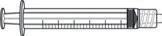 |
| 2 injection needles 22G, 13 mm |  |
All components are single-use.
Two 1.5 mL injections are required for a complete dose. The vial access device must be used.
Check that:
- The vial and the prepared syringe contain a yellow to brown solution free from particulate matter
- The contents are not damaged
- The product has not expired
1.Prepare the vial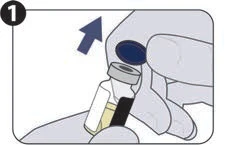 | |
| Remove the cap. | |
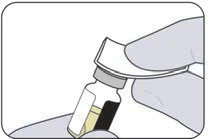 | Clean the vial stopper with an alcohol wipe. |
2.Prepare the vial access device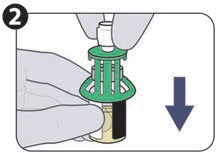 | |
| Press. | |
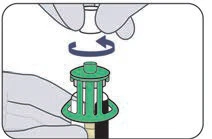 | Unscrew. |
3., 4. Attach and fill the syringe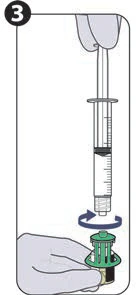 | |
| |
5.Attach the 22G injection needle to the syringe, expel air bubbles, and prepare to administer 1.5 mL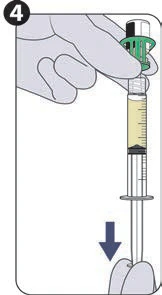 | |
| Grey connector | |
6.Clean an injection site on the patient's abdomen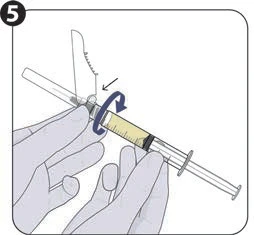 | |
Injection site options (at least 5 cm from the navel)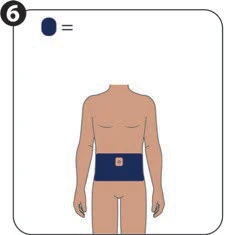 | Injection site options (at least 5 cm away from the navel). |
| 7.Administer 1.5 mL of Sunlenca subcutaneously | |
Insert completely 90° preferred 45° acceptable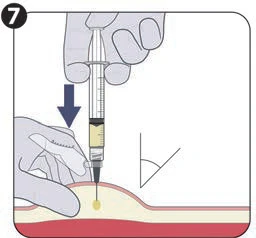 | |
| 8.Administer the second injection | |
Repeat steps for the 2nd injection at least 5 cm from the first injection site | |
Patient information leaflet
Sunlenca 300 mg film-coated tablets
lenacapavir
This medicinal product is subject to additional monitoring. This will allow for rapid identification of
new safety information. You can help by reporting any side effects you experience while taking
this medicine. See the end of section 4 for information on how to report side effects.
Please read this leaflet carefully before taking this medicine because it contains
important information for you.
- Keep this leaflet. You may need to read it again.
- If you have any questions, ask your doctor or pharmacist.
- This medicine has been prescribed for you only. Do not give it to others; it could be harmful to them, even if their symptoms are the same as yours.
- If you experience any side effect, including those not listed in this leaflet, contact your doctor or pharmacist. See section 4.
Contents of this leaflet
- What Sunlenca is and what it is used for
- What you need to know before taking Sunlenca
- How to take Sunlenca
- Possible side effects
- How to store Sunlenca
- Contents of the pack and other information
1. What Sunlenca is and what it is used for
Sunlenca contains the active substance lenacapavir. It is an antiretroviral medicine known as a capsid inhibitor.
Sunlenca is used in combination with other antiretroviral medicines for the treatment of human immunodeficiency virus (HIV) type 1, the virus that causes acquired immunodeficiency syndrome (AIDS).
It is used to treat HIV infection in adults who have limited treatment options (for example, when other antiretroviral medicines are not sufficiently effective or are not suitable).
Treatment with Sunlenca in combination with other antiretrovirals reduces the amount of HIV in the body.
This improves the function of the immune system (the body's natural defences) and reduces the risk of developing HIV-related illnesses.
Your doctor will instruct you to take Sunlenca tablets before the first administration of Sunlenca injections.
2. What you should know before taking Sunlenca
Do not take Sunlenca
- If you are allergic to lenacapavir or to any of the other ingredients of this medicine (listed in section 6).
- If you are taking any of the following medicines:
- rifampicin, used to treat certain bacterial infections, such as tuberculosis
- carbamazepine, phenytoin, used to prevent seizures
- St John’s wort ( Hypericum perforatum ), a herbal remedy used for depression and anxiety.
If any of these conditions apply to you, do not take Sunlenca and inform your doctor immediately.
Warnings and precautions
Talk to your doctor before taking Sunlenca
- Talk to your doctor or pharmacist if you have or have ever had severe liver disease or if blood tests have shown liver problems. Your doctor will carefully assess whether to treat you with Sunlenca.
While using Sunlenca
When you start using Sunlenca, be alert for:
- signs of inflammation or infection.
If you notice any of these symptoms, inform your doctor immediately. For more information, see section 4, Possible side effects.
Children and adolescents
Do not give this medicine to children and adolescents under 18 years of age. The use of Sunlenca in patients under 18 years of age has not yet been studied; therefore, the safety and efficacy of the medicine in this age group are unknown.
Other medicines and Sunlenca
Inform your doctor or pharmacist if you are taking, have recently taken or might take any other medicines. Sunlenca can interact with other medicines. This may prevent Sunlenca or the other medicines from working properly, or may worsen their side effects. In some cases, your doctor may need to adjust the dose or monitor blood levels.
Medicines that must never be taken with Sunlenca:
- rifampicin, used to treat certain bacterial infections, such as tuberculosis
- carbamazepine, phenytoin, used to prevent seizures
- St John’s wort ( Hypericum perforatum ), a herbal remedy used for depression and anxiety.
If you are taking any of these medicines, do not take Sunlenca and inform your doctor immediately.
Talk to your doctor especially if you are taking:
- antibiotics containing:
- rifabutin
- anticonvulsants used to treat epilepsy and prevent seizures, containing:
- oxcarbazepine or phenobarbital
- medicines used to treat HIV, containing:
- atazanavir/cobicistat, efavirenz, nevirapine, tipranavir/ritonavir or etravirine
- medicines used to treat migraine headaches, containing:
- dihydroergotamine or ergotamine
- medicines used to treat erectile dysfunction and pulmonary hypertension, containing:
- sildenafil or tadalafil
- medicines used to treat erectile dysfunction, containing:
- vardenafil
- corticosteroids (also known as “steroids”) taken orally or administered by injection, used to treat allergies, inflammatory bowel disease and various other inflammatory conditions, containing:
- dexamethasone or hydrocortisone/cortisone
- medicines used to lower cholesterol, containing:
- lovastatin or simvastatin
- antiarrhythmics used to treat heart problems, containing:
- digoxin
- medicines used to aid sleep, containing:
- midazolam or triazolam
- anticoagulants used to prevent and treat blood clots, containing:
- rivaroxaban, dabigatran or edoxaban.
Inform your doctor if you are taking any of these medicines or if you start taking them during treatment with Sunlenca. Do not stop treatment without contacting your doctor.
Pregnancy and breastfeeding
If you are pregnant, think you might be pregnant, planning a pregnancy, or breastfeeding, ask your doctor or pharmacist for advice before taking this medicine.
As a precautionary measure, it is preferable to avoid using Sunlenca during pregnancy unless your doctor tells you otherwise.
Breastfeeding is not recommended for women who are HIV-positive because HIV infection can be transmitted to the child through breast milk. If you are breastfeeding or considering breastfeeding, you must talk to your doctor as soon as possible.
Driving and using machines
Sunlenca is unlikely to affect your ability to drive or operate machinery.
Sunlenca contains sodium
This medicine contains less than 1 mmol (23 mg) of sodium per tablet, i.e. essentially ‘sodium-free’.
3. How to take Sunlenca
Sunlenca is used in combination with other antiretroviral medicines to treat HIV infection.
Your doctor will tell you which other medicines you need to take to treat HIV infection and when to
take them.
Treatment with Sunlenca starts with oral tablets, followed by injections administered by your doctor or nurse, as described below.
Talk to your doctor before taking the tablets. You will be informed when to start taking the tablets and when your first injection appointments are scheduled.
Treatment Day 1:
- two tablets to be taken by mouth. These may be taken with or without food.
Treatment Day 2:
- two tablets to be taken by mouth. These may be taken with or without food.
Treatment Day 8:
- one tablet to be taken by mouth. This may be taken with or without food.
Treatment Day 15:
- two injections into the abdomen (stomach area), administered at the same time by your doctor or nurse.
Every 6 months:
- two injections into the abdomen, administered at the same time by your doctor or nurse.
If you take more Sunlenca than you should
Contact your doctor or pharmacist immediately. If you take more Sunlenca than recommended, you may have an increased risk of experiencing possible side effects of this medicine (see section 4, Possible side effects).
It is important that you do not miss any doses of Sunlenca tablets.
If you forget to take the tablets, contact your doctor or pharmacist immediately.
If you vomit within 3 hours after taking Sunlenca tablets, contact your doctor right away and take two more tablets. If you vomit more than 3 hours after taking Sunlenca, you do not need to take another two tablets until your next scheduled dose or injection.
If you miss an injection of Sunlenca
- It is important that you attend all your scheduled appointments every 6 months to receive Sunlenca injections. This will help control your HIV infection and prevent the disease from worsening.
- If you are unable to attend an injection appointment, inform your doctor as soon as possible to discuss your treatment options.
Do not stop treatment with Sunlenca
Do not stop treatment with Sunlenca tablets without speaking to your doctor.
Stopping treatment may have serious consequences on the effectiveness of your future anti-HIV treatments.
4. Possible side effects
Like all medicines, this medicine can cause side effects, although not everybody gets them.
Possible side effects: inform your doctor immediately
- Signs of inflammation or infection. In some patients with advanced HIV infection (AIDS) and a history of opportunistic infections (infections that occur in people with weakened immune systems), signs and symptoms of inflammation from previous infections may occur shortly after starting anti-HIV treatment. These symptoms are believed to be due to an improved immune response, which enables the body to fight infections that may have been present without obvious symptoms.
- When you start taking medicines for HIV infection, autoimmune diseases may also occur, in which the immune system attacks healthy body tissues. Autoimmune diseases may appear many months after starting treatment. Watch for any signs of infection or other symptoms such as:
- muscle weakness
- weakness starting in the hands and feet and progressing towards the trunk
- palpitations, tremor, or hyperactivity.
If you notice these or any other signs of inflammation or infection, inform your doctor immediately.
Common side effects
(may affect up to 1 in 10 people)
- Nausea
Reporting of side effects
If you get any side effects, including any not listed in this leaflet, talk to your doctor or pharmacist. You can also report side effects directly through the national reporting system listed in Annex V. By reporting side effects, you can help provide more information on the safety of this medicine.
5. How to store Sunlenca
Keep this medicine out of the sight and reach of children.
Do not use this medicine after the expiry date stated on the carton and blister after
Exp.. The expiry date refers to the last day of that month.
This medicine does not require any special storage temperature. Store in the
original packaging to protect the medicine from moisture.
Do not dispose of medicines via wastewater or household waste. Ask your pharmacist how to
dispose of medicines you no longer use. This will help protect the environment.
6. Package contents and other information
What Sunlenca contains
The active substance is lenacapavir. Each tablet contains sodium lenacapavir equivalent to 300 mg of
lenacapavir.
The other components are
Tablet core
Mannitol (E421), microcrystalline cellulose (E460), sodium croscarmellose (E468), copovidone,
magnesium stearate (E572), poloxamer (see section 2, Sunlenca contains sodium).
Film coating
Polyvinyl alcohol (E1203), titanium dioxide (E171), macrogol (E1521), talc (E553b), yellow iron oxide (E172), black iron oxide (E172), red iron oxide (E172).
Description of the appearance of Sunlenca and contents of the pack
Sunlenca film-coated tablets are beige, capsule-shaped, film-coated tablets with “GSI” printed on one side and “62L” on the other. Sunlenca is supplied in a blister pack containing 5 tablets, which is enclosed in a cardboard outer. The blister is placed inside an aluminium pouch. The aluminium pouch contains a silica gel desiccant, which must remain inside the pouch to help protect the tablets. The silica gel is contained in a separate sachet or container and must not be ingested.
Marketing Authorisation Holder
Gilead Sciences Ireland UC
Carrigtohill
County Cork, T45 DP77
Ireland
Manufacturer
Gilead Sciences Ireland UC
IDA Business & Technology Park
Carrigtohill
County Cork
Ireland
For further information about this medicinal product, contact the local representative of the Marketing Authorisation Holder
België/Belgique/Belgien Lietuva
Gilead Sciences Belgium SRL-BV Gilead Sciences Ireland UC
Tél/Tel: + 32 (0) 24 01 35 50 Tel: + 353 (0) 1 686 1888
България Luxembourg/Luxemburg
Gilead Sciences Ireland UC Gilead Sciences Belgium SRL-BV
Тел.: + 353 (0) 1 686 1888 Tél/Tel: + 32 (0) 24 01 35 50
Česká republika Magyarország
Gilead Sciences s.r.o. Gilead Sciences Ireland UC
Tel: + 420 910 871 986 Tel.: + 353 (0) 1 686 1888
Danmark Malta
Gilead Sciences Sweden AB Gilead Sciences Ireland UC
Tlf: + 46 (0) 8 5057 1849 Tel: + 353 (0) 1 686 1888
Deutschland Nederland
Gilead Sciences GmbH Gilead Sciences Netherlands B.V.
Tel: + 49 (0) 89 899890-0 Tel: + 31 (0) 20 718 36 98
Eesti Norge
Gilead Sciences Ireland UC Gilead Sciences Sweden AB
Tel: + 353 (0) 1 686 1888 Tlf: + 46 (0) 8 5057 1849
Ελλάδα Österreich
Gilead Sciences Ελλάς Μ.ΕΠΕ. Gilead Sciences GesmbH
Τηλ: + 30 210 8930 100 Tel: + 43 1 260 830
España Polska
Gilead Sciences, S.L. Gilead Sciences Poland Sp. z o.o.
Tel: + 34 91 378 98 30 Tel.: + 48 22 262 8702
France Portugal
Gilead Sciences Gilead Sciences, Lda.
Tél: + 33 (0) 1 46 09 41 00 Tel: + 351 21 7928790
Hrvatska România
Gilead Sciences Ireland UC Gilead Sciences (GSR) S.R.L.
Tel: + 353 (0) 1 686 1888 Tel: + 40 31 631 18 00
Ireland Slovenija
Gilead Sciences Ireland UC Gilead Sciences Ireland UC
Tel: + 353 (0) 214 825 999 Tel: + 353 (0) 1 686 1888
Ísland Slovenská republika
Gilead Sciences Sweden AB Gilead Sciences Slovakia s.r.o.
Sími: + 46 (0) 8 5057 1849 Tel: + 421 232 121 210
Italia Suomi/Finland
Gilead Sciences S.r.l. Gilead Sciences Sweden AB
Tel: + 39 02 439201 Puh/Tel: + 46 (0) 8 5057 1849
Κύπρος Sverige
Gilead Sciences Ελλάς Μ.ΕΠΕ. Gilead Sciences Sweden AB
Τηλ: + 30 210 8930 100 Tel: + 46 (0) 8 5057 1849
Latvija
Gilead Sciences Ireland UC
Tel: + 353 (0) 1 686 1888
More detailed information on this medicinal product is available on the website of the European Medicines Agency, http://www.ema.europa.eu.