Sulidamor
Italy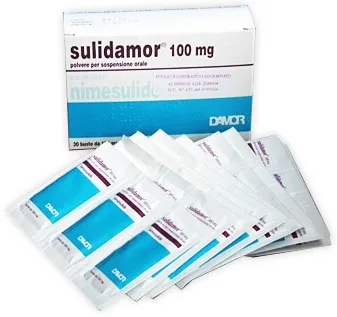
Table of Contents
- Package leaflet: Information for the user
- SULIDAMOR 100 mg oral suspension powder
- 1. WHAT SULIDAMOR IS AND WHAT IT IS USED FOR
- 2. WHAT YOU SHOULD KNOW BEFORE TAKING SULIDAMOR
- 3. HOW TO TAKE SULIDAMOR
- 4. POSSIBLE ADVERSE REACTIONS
- 5. HOW TO STORE SULIDAMOR
- 6. CONTENTS OF THE PACKAGE AND OTHER INFORMATION
Package leaflet: Information for the user
SULIDAMOR 100 mg oral suspension powder
Nimesulide
Please read this leaflet carefully before taking this medicine because it contains important information for you.
- Keep this leaflet. You may need to read it again.
- If you have any questions, ask your doctor or pharmacist.
- This medicine has been prescribed for you only. Do not give it to other people, even if their symptoms are the same as yours, because it could be harmful.
- If you experience any adverse reaction, including those not listed in this leaflet, consult your doctor or pharmacist. See section 4.
Contents of this leaflet:
- What SULIDAMOR is and what it is used for
- What you need to know before taking SULIDAMOR
- How to take SULIDAMOR
- Possible side effects
- How to store SULIDAMOR
- Contents of the pack and other information
1. WHAT SULIDAMOR IS AND WHAT IT IS USED FOR
SULIDAMOR contains the active substance nimesulide and is an anti-inflammatory medicine belonging to the class of NSAIDs (Non-Steroidal Anti-Inflammatory Drugs), with analgesic (pain-relieving) properties.
SULIDAMOR is used for the treatment of acute pain and menstrual pain in adult and adolescent patients over 12 years of age.
Before prescribing SULIDAMOR, your doctor will evaluate the potential benefits this medicine may provide you against the risk of developing adverse effects.
SULIDAMOR should only be prescribed as a second-line treatment.
The decision to prescribe nimesulide must be based on an overall assessment of the risks for the individual patient.
Please consult your doctor if you do not feel better or if you feel worse after 15 days.
2. WHAT YOU SHOULD KNOW BEFORE TAKING SULIDAMOR
Do not take SULIDAMOR
- If you are allergic to the active substance (nimesulide) or to any of the other components of this medicine (listed in section 6).
- If you have experienced any of the following allergic reactions after taking acetylsalicylic acid or other non-steroidal anti-inflammatory drugs (NSAIDs):
- Wheezing (respiratory noise).
- Rhinorrhea (excessive mucus production from the nose) or nasal congestion.
- Urticaria (sudden appearance, mostly, of raised areas of various sizes on the skin, usually very itchy).
- If you currently have or have previously had peptic ulcer (erosion of the inner lining of the stomach or intestine).
- If you have had a cerebral haemorrhage (stroke).
- If you have any other bleeding disorder or condition due to a blood coagulation defect.
- If you suffer from hepatic insufficiency (reduced liver function) or have elevated liver enzymes.
- If you are taking other medicines known to affect the liver, e.g. paracetamol or any other analgesic, or treatment with NSAIDs.
- If you are using drugs or have developed drug or other substance dependence.
- If you are a heavy habitual drinker of alcohol.
- If you have had gastrointestinal bleeding (bleeding in the stomach or intestine).
- If you have previously had a reaction to the active substance (nimesulide) affecting the liver.
- If you suffer from severe renal insufficiency (reduced kidney function).
- If you suffer from severe heart function impairment.
- If you have fever or influenza (generalized aching, malaise, chills or tremors, or high temperature).
- If you are in the last trimester of pregnancy (see "Pregnancy, breastfeeding and fertility").
- If you are breastfeeding (see "Pregnancy, breastfeeding and fertility").
Do not administer SULIDAMOR to children under 12 years of age (see "Children and adolescents").
Warnings and precautions
Talk to your doctor or pharmacist before taking SULIDAMOR.
Do not take SULIDAMOR in combination with other NSAIDs or analgesics (painkillers) (see "Other
medicines and SULIDAMOR").
Do not take SULIDAMOR or inform your doctor before taking SULIDAMOR
- if you have previously developed fixed drug eruptions (round or oval patches with redness and swelling of the skin, skin rash with blisters, urticaria and itching) after taking nimesulide.
Discontinue treatment with SULIDAMOR:
- If no benefit is observed.
- If during treatment you experience symptoms indicating liver problems such as loss of appetite, nausea, vomiting, abdominal pain, fatigue, dark urine or abnormal liver function tests. In such cases, do not use nimesulide again. Liver damage, reversible in most cases, has been reported after short exposure to the drug (see section 4 "Possible side effects"). Cases of severe hepatic reactions, including very rare fatal cases, have been reported during treatment with SULIDAMOR.
- In case of onset of fever and/or influenza-like symptoms.
- In case of gastrointestinal symptoms such as bleeding (haemorrhage) or gastrointestinal ulceration. Gastrointestinal bleeding, ulcers or perforations may occur at any time during treatment, with or without warning symptoms or previous gastrointestinal events.
- If you suffer from heart or kidney failure and notice worsening of your renal function.
- At the first appearance of skin rash (severe skin eruption), mucosal lesions or any other sign of skin allergy. Serious skin reactions, some of which are fatal, including exfoliative dermatitis, Stevens-Johnson syndrome and toxic epidermal necrolysis, usually occur within the first month of treatment (see section 4 "Possible side effects").
Use SULIDAMOR with caution:
- If you suffer from renal insufficiency.
- If you suffer from heart failure.
- If you have haemorrhagic diathesis (predisposition to bleeding) since nimesulide may interfere with platelet function. SULIDAMOR is not a substitute for acetylsalicylic acid in cardiovascular prevention.
- If you are taking medicines that may increase the risk of ulceration or bleeding such as oral corticosteroids, anticoagulants like warfarin, selective serotonin reuptake inhibitors or antiplatelet agents such as acetylsalicylic acid (see "Other medicines and SULIDAMOR").
- If you are elderly and have previously had ulcers, especially if complicated by bleeding or perforation. In such cases, the risk of gastrointestinal bleeding, ulceration or perforation is higher with higher NSAID doses, and treatment should be initiated with the lowest available dose. Concomitant use of protective agents (misoprostol or proton pump inhibitors) may be considered. Use of protective agents should also be considered in patients taking low-dose aspirin or other drugs that may increase the risk of gastrointestinal events (see "Other medicines and SULIDAMOR").
- If you have previously had stomach or intestinal diseases (ulcerative colitis, Crohn's disease), as these conditions may be aggravated (see section 4 "Possible side effects"). Report any unusual gastrointestinal symptoms, especially if they occur early in treatment.
Adequate monitoring and appropriate instructions are necessary if:
- You have previously had hypertension (high blood pressure) and/or mild to moderate congestive heart failure (fluid accumulation due to the heart's inability to function properly), since fluid retention and oedema (swelling) have been reported in association with NSAID therapy.
- You have uncontrolled hypertension, congestive heart failure, established ischaemic heart disease (due to an imbalance between blood supply and oxygen demand in heart tissue), peripheral arterial disease and/or cerebrovascular disease; in such cases, nimesulide should be taken only after careful evaluation by your doctor.
- You are starting long-term treatment and have cardiovascular risk factors such as hypertension, hyperlipidaemia (high blood fat levels), diabetes mellitus (high blood sugar levels), or smoking.
- You are elderly, as you may be particularly sensitive to the adverse effects of NSAIDs, especially gastrointestinal bleeding and perforation (which can be fatal), and renal, cardiac or hepatic failure. The use of certain NSAIDs, such as SULIDAMOR (especially at high doses and for long-term treatment), may be associated with a modest increase in the risk of arterial thrombotic events (e.g. myocardial infarction or stroke). The risk of adverse effects can be reduced by using SULIDAMOR for the shortest possible time (see section 3 "How to take SULIDAMOR"). Do not exceed the recommended dose or duration of treatment.
Children and adolescents
SULIDAMOR is contraindicated in children under 12 years of age (see "Do not take SULIDAMOR").
Other medicines and SULIDAMOR
Inform your doctor or pharmacist if you are taking, have recently taken or might take any
other medicine.
Avoid taking SULIDAMOR simultaneously with other NSAIDs (including selective COX-2 inhibitors).
Pay particular attention if you are taking any of the following medicines, which may interact with
SULIDAMOR:
-
Corticosteroids (medicines used to treat inflammatory conditions). These medicines increase the risk of gastrointestinal ulceration or bleeding.
-
Medicines to thin the blood (anticoagulants, e.g. warfarin, or antiplatelet agents or salicylates); NSAIDs may enhance the effects of anticoagulants (medicines used to prevent blood clots). Patients receiving warfarin or similar anticoagulant agents have a higher risk of haemorrhagic complications (bleeding) if treated with SULIDAMOR. Therefore, combination is not recommended and is contraindicated in patients with severe coagulation disorders (see "Do not take SULIDAMOR"). If combination cannot be avoided,
-
Antihypertensives and diuretics (medicines for controlling blood pressure or heart conditions); NSAIDs may reduce the effect of diuretics and other antihypertensive medicines. In some patients with reduced renal function (e.g. dehydrated patients or elderly patients with impaired renal function), concomitant administration of an ACE inhibitor and NSAIDs may worsen renal function. Concomitant use of these medicines should be done with caution, especially in elderly patients.
-
Lithium (used to treat depression and similar disorders): NSAIDs may increase lithium levels in the blood, thereby increasing its toxicity.
-
Selective serotonin reuptake inhibitors (medicines used to treat depression); these medicines increase the risk of stomach and intestinal bleeding.
-
Methotrexate (a medicine used to treat rheumatoid arthritis and cancer treatment). Caution is required if SULIDAMOR is taken less than 24 hours before or after methotrexate treatment, as methotrexate blood levels may increase, leading to greater toxicity of this drug.
-
Cyclosporine (a medicine used after organ transplantation or to treat immune system disorders); NSAIDs such as SULIDAMOR may increase the nephrotoxic effects of cyclosporine.
-
Furosemide; concomitant use of furosemide and SULIDAMOR requires caution in patients with renal or cardiac disease.
-
Medicines that are metabolized by a specific enzyme; their concentration may increase. In such cases, ensure that your doctor or pharmacist knows you are taking these medicines before taking SULIDAMOR. Pregnancy, breastfeeding and fertility If you are pregnant, suspect you may be pregnant, are planning a pregnancy, or are breastfeeding, consult your doctor or pharmacist before taking this medicine.
Pregnancy
Do not take SULIDAMOR during the last trimester of pregnancy (see "Do not take SULIDAMOR"); it may cause problems for the fetus (cardiopulmonary toxicity and renal dysfunction) and for delivery (possible prolongation of bleeding time, reduced platelet aggregation even at very low doses, and inhibition of uterine contractions leading to delayed or prolonged labour).
If you are in the first or second trimester of pregnancy, do not exceed the dose or duration of treatment prescribed by your doctor and take the medicine only when strictly necessary.
Breastfeeding
Do not take SULIDAMOR during breastfeeding.
Fertility
SULIDAMOR may reduce your fertility and is not recommended if you are trying to become pregnant (see "Warnings and precautions").
If you are taking SULIDAMOR and are planning to conceive, the dose and duration of treatment should be kept as low as possible.
Driving and use of machines
Do not drive or operate machinery if you experience dizziness, vertigo or drowsiness after taking SULIDAMOR.
SULIDAMOR 100 mg oral granules for oral suspension contains sucrose and lactose. If your doctor has diagnosed you with an intolerance to certain sugars (such as lactose and sucrose), contact him/her before using this medicine (see "Warnings and precautions").
3. HOW TO TAKE SULIDAMOR
Take this medicine exactly as directed by your doctor or pharmacist. If you have
any doubts, consult your doctor or pharmacist.
The recommended dose is one sachet containing 100 mg of granules for oral suspension twice daily, taken
after meals.
Take SULIDAMOR for the shortest duration possible and at the lowest effective dose as indicated by your
doctor (see "Warnings and precautions").
The maximum treatment duration with SULIDAMOR is 15 days.
If you take more SULIDAMOR than you should
If you take or think you have taken more SULIDAMOR than prescribed, contact your doctor immediately or go
to the nearest hospital.
Symptoms associated with acute NSAID overdose are usually limited to drowsiness, lethargy, nausea, vomiting,
and pain in the upper central part of the abdomen, which generally resolve with appropriate treatment.
Bleeding from the stomach and intestines may also occur. Rarely, high blood pressure, acute renal failure,
respiratory failure, and coma may also occur. Anaphylactic reactions (severe, rapidly developing allergic
reactions) have been reported following therapeutic doses of NSAIDs and could also manifest after taking an
excessive dose of the medicine.
In case of overdose with SULIDAMOR, symptomatic and supportive treatments will be initiated.
If you forget to take SULIDAMOR
Do not take a double dose to make up for the missed dose.
If you have any doubts about how to use this medicine, consult your doctor or pharmacist.
4. POSSIBLE ADVERSE REACTIONS
Like all medicines, this medicine can cause adverse reactions, although not everyone experiences them.
Adverse reactions can be minimized by using the lowest effective dose for the shortest possible duration needed to control symptoms, and in any case not exceeding 15 days.
If any of the following symptoms occur, stop treatment with SULIDAMOR and inform your doctor immediately,
as they may indicate a rare but serious adverse reaction requiring urgent medical attention:
- Symptoms suggestive of liver disorder such as loss of appetite, nausea, vomiting, abdominal pain, fatigue, dark urine, or abnormal liver function tests. Liver injury, reversible in most cases, has been reported after short-term exposure to the drug. Rarely, a link between SULIDAMOR and severe liver reactions has been reported, including very rare cases of fatal outcomes.
- Fever and/or flu-like symptoms.
- Gastrointestinal symptoms such as gastrointestinal bleeding or ulceration.
- Worsening of your kidney function.
- Skin rash, mucosal lesions, or any other sign of skin allergy.
Other possible adverse reactions that may occur with the use of SULIDAMOR are:
Common adverse reactions (may affect up to 1 in 10 people)
- Diarrhea, nausea, and vomiting.
- Increased liver enzyme levels.
Uncommon adverse reactions (may affect up to 1 in 100 people)
- Dizziness.
- Dyspnea (difficulty breathing).
- Constipation, flatulence (intestinal gas), gastritis (heartburn), stomach or intestinal bleeding, ulceration, and perforation of the stomach or intestine.
- Itching, skin rashes, increased sweating.
- Edema (swelling).
- Hypertension (high blood pressure).
Rare adverse reactions (may affect up to 1 in 1,000 people)
- Anemia (decrease in hemoglobin levels in the blood), eosinophilia (increase in certain white blood cells).
- Allergic reaction.
- Hyperkalemia (increased potassium levels in the blood).
- Anxiety, nervousness, nightmares.
- Blurred vision.
- Tachycardia (increased heart rate).
- Bleeding, blood pressure fluctuations, hot flushes.
- Erythema, dermatitis (skin inflammation).
- Dysuria (difficulty urinating), hematuria (blood in the urine), urinary retention.
- Malaise, asthenia (weakness).
Very rare adverse reactions (may affect up to 1 in 10,000 people)
- Thrombocytopenia (reduced platelet count), pancytopenia (reduced count of all blood cells), purpura (abnormal blood accumulation leading to characteristic skin spots).
- Headache, somnolence, encephalopathy (brain function disorder).
- Visual disturbances.
- Dizziness.
- Asthma, bronchospasm (narrowing of bronchial passages causing difficulty breathing).
- Abdominal pain, dyspepsia (indigestion), stomatitis (mouth inflammation), melena (passage of blood in stools), gastrointestinal hemorrhage, gastric and intestinal ulceration and perforation.
- Hepatitis (liver inflammation), fulminant hepatitis (including fatal cases), jaundice (yellowing of the skin), cholestasis (blockage of bile flow).
- Urticaria, angioneurotic edema (sudden swelling of skin or mucous membranes), facial edema (facial swelling), severe skin reactions such as erythema multiforme, Stevens-Johnson syndrome, and toxic epidermal necrolysis.
- Renal failure, oliguria (reduced urine output), interstitial nephritis (kidney inflammation).
- Hypothermia (decreased body temperature).
Frequency not known
- Fixed drug eruption (may present as round or oval patches with redness and swelling of the skin), skin rash with blisters (urticaria), itching sensation.
Medicines such as SULIDAMOR may be associated with a small increased risk of heart attack (myocardial infarction) or stroke.
Additional adverse reactions in children and adolescents
SULIDAMOR is contraindicated in children under 12 years of age. The adverse reactions described above may occur in both adults and adolescents.
Reporting of adverse reactions
If you experience any adverse reaction, including those not listed in this leaflet, contact your doctor or pharmacist. You may also report adverse reactions directly via the national reporting website at https://www.aifa.gov.it/content/segnalazioni-reazioni-avverse
By reporting adverse reactions, you can help provide more information on the safety of this medicine.
5. HOW TO STORE SULIDAMOR
No special storage precautions are required.
Keep SULIDAMOR out of the sight and reach of children.
Do not use SULIDAMOR after the expiry date stated on the packaging. The expiry date refers to the last day of that month and to the product in its original, undamaged packaging, properly stored.
Do not dispose of any medicine via wastewater or household waste. Ask your pharmacist how to dispose of medicines you no longer use. This will help protect the environment.
6. CONTENTS OF THE PACKAGE AND OTHER INFORMATION
What SULIDAMOR contains
Each sachet contains:
Active substance: nimesulide 100 mg.
Other components: sucrose, lactose, orange flavour, citric acid, sodium lauryl sulfate.
Description of the appearance of SULIDAMOR and contents of the pack
Powder for oral suspension.
Light yellow granular powder with an orange odour – 30 sachets in a cardboard carton.
Marketing Authorization Holder
FARMACEUTICI DAMOR S.p.A. - Via E. Scaglione, 27 - 80145 Naples, Italy.
Manufacturer
LAMP S. PROSPERO S.p.A. - Via della Pace, 25A, San Prospero s/S - 41030 Modena, Italy.
FARMACEUTICI DAMOR S.p.A. - Via E. Scaglione, 27 - 80145 Naples, Italy.