Sugammadex Amomed
Italy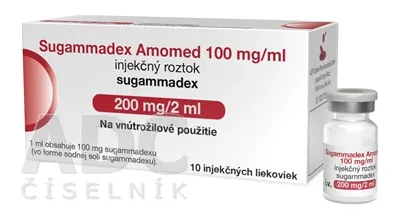
Table of Contents
- Package leaflet: Information for the user
- Sugammadex Amomed 100 mg/mL solution for injection
- 1. What is Sugammadex Amomed and what is it used for
- 2. What you need to know before Sugammadex Amomed is administered to you
- 3. How Sugammadex Amomed is administered
- 4. Possible side effects
- 5. How to store Sugammadex Amomed
- 6. Package contents and other information
- The following information is intended exclusively for healthcare professionals:
Package leaflet: Information for the user
Sugammadex Amomed 100 mg/mL solution for injection
sugammadex
Please read this leaflet carefully before you are given this medicine because it
contains important information for you.
- Keep this leaflet. You may need to read it again.
- If you have any questions, ask your anaesthetist or doctor.
- If you get any side effects, including those not listed in this leaflet, tell your anaesthetist or doctor. See section 4.
Contents of this leaflet
- What Sugammadex Amomed is and what it is used for
- What you need to know before it is given to you
- How Sugammadex Amomed is given
- Possible side effects
- How to store Sugammadex Amomed
- Contents of the pack and other information
1. What is Sugammadex Amomed and what is it used for
What is Sugammadex Amomed
Sugammadex Amomed contains the active substance sugammadex. Sugammadex Amomed is
considered to be a selective relaxant binding agent because it selectively binds to other medicines,
namely rocuronium bromide or vecuronium bromide, known as muscle relaxants, which relax the muscles.
What is Sugammadex Amomed used for
During certain types of surgery, muscles need to be completely relaxed. This makes the surgeon’s task
easier. For this purpose, muscle-relaxing medicines are added to the general anaesthesia administered.
These medicines are called muscle relaxants, and include rocuronium bromide and vecuronium bromide.
Since these medicines also relax the muscles that control breathing, assistance with breathing (so-called
artificial ventilation) is required during and after surgery, until you are able to breathe on your own again.
Sugammadex Amomed is used to speed up muscle recovery after surgery, allowing you to breathe on
your own again as soon as possible. It works by binding to rocuronium bromide or vecuronium bromide
present in the body. It can be used in adults whenever rocuronium bromide or vecuronium bromide is used.
It can also be used in newborns, infants, young children, children, and adolescents (from birth up to
17 years of age) when rocuronium bromide is used.
2. What you need to know before Sugammadex Amomed is administered to you
Do not receive Sugammadex Amomed
- if you are allergic to sugammadex or to any of the excipients of this medicine (listed in section 6). → Inform your anaesthetist if this applies to you.
Warnings and precautions
Inform your anaesthetist before Sugammadex Amomed is administered
- If you have or have previously had kidney disease. This is important because Sugammadex Amomed is eliminated from the body through the kidneys.
- If you have or have previously had liver disease.
- If you suffer from fluid retention (oedema).
- If you have conditions known to increase the risk of bleeding (blood coagulation disorders) or if you are taking an anticoagulant medicine.
Other medicines and Sugammadex Amomed
→ Inform your anaesthetist if you are currently taking, have recently taken, or might take any other
medicines. Sugammadex Amomed may affect or be affected by other medicines.
Some medicines reduce the effect of Sugammadex Amomed
→ It is particularly important that you inform your anaesthetist if you have recently taken:
- toremifene (used to treat breast cancer).
- fusidic acid (an antibiotic).
Sugammadex Amomed may affect hormonal contraceptives
- Sugammadex Amomed may reduce the effectiveness of hormonal contraceptives (including oral contraceptive pills, vaginal ring, implant, or hormonal intrauterine system (IUS)), as it reduces the amount of absorbed progestogenic hormone. The amount of progestogen lost when receiving Sugammadex Amomed is approximately equivalent to that of a missed oral contraceptive pill. → If you need to take your oral contraceptive pill on the same day Sugammadex Amomed is administered, follow the instructions provided in the oral contraceptive pill package leaflet regarding a missed dose. → If you are using other hormonal contraceptives (e.g. a vaginal ring, implant, or IUS), you must use an additional non-hormonal contraceptive method (such as a condom) for the following 7 days and follow the instructions provided in the package leaflet.
Effects on blood test results
Generally, Sugammadex Amomed has no effect on blood test results. However, it may
affect the results of a test measuring blood levels of a hormone called progesterone.
Please consult your doctor if testing for progesterone levels is required on the same day you receive
Sugammadex Amomed.
Pregnancy and breastfeeding
→ Inform your anaesthetist if you are pregnant, suspect you may be pregnant, or are breastfeeding.
You may still receive Sugammadex Amomed, but you must discuss this first with your
doctor.
It is not known whether sugammadex passes into breast milk. Your anaesthetist will help you decide whether
to discontinue breastfeeding or to refrain from treatment with sugammadex, taking into account the
benefits of breastfeeding for the infant and the benefits of Sugammadex Amomed for the mother.
Driving and using machines
Sugammadex Amomed has no known influence on the ability to drive vehicles or use
machinery.
Sugammadex Amomed contains sodium
This medicine contains up to 9.4 mg of sodium (the main component of table salt) per
mL. This corresponds to 0.5% of the maximum daily recommended dietary intake of sodium for an adult.
3. How Sugammadex Amomed is administered
Sugammadex Amomed will be administered to you by an anaesthetist or under the supervision of an anaesthetist.
The dose
The anaesthetist will determine the appropriate dose of Sugammadex Amomed for you, taking into consideration:
- your body weight
- the extent to which the muscle relaxant is still affecting you.
The usual dose is 2–4 mg per kg of body weight in patients of any age. A dose of 16 mg/kg may be used in adults if rapid reversal of muscle relaxation is required.
How Sugammadex Amomed is administered
Sugammadex Amomed will be administered by the anaesthetist as a single intravenous injection.
If you are given more Sugammadex Amomed than you should
Since your condition will be closely monitored by the anaesthetist, it is unlikely that you will receive an excessive amount of Sugammadex Amomed. However, if this were to happen, it is unlikely to cause you any problems.
If you have any doubts about the use of this medicine, consult your anaesthetist or doctor.
4. Possible side effects
Like all medicines, this medicine can cause side effects, although not everybody gets them.
If such side effects occur during anaesthesia, they will be detected and treated by the anaesthetist.
Common side effects (may affect up to 1 in 10 people)
- Cough
- Breathing difficulties which may include coughing or movements as if waking up or gasping for breath
- Light anaesthesia – you may begin to come out of deep sleep, and therefore may need additional anaesthetic. This may cause the patient to move or cough at the end of surgery
- Complications during the procedure such as changes in heart rate, coughing or movements
- Decrease in blood pressure due to the surgical procedure
Uncommon side effects (may affect up to 1 in 100 people)
- In patients with a history of lung problems, shortness of breath due to muscle contractions of the airways (bronchospasm) has been observed
- Allergic reactions (hypersensitivity to the drug), such as skin rash, flushed skin, swelling of the tongue and/or throat, shortness of breath, changes in blood pressure or heart rate, which sometimes may lead to severe drops in blood pressure. Severe allergic or anaphylactoid reactions can be life-threatening. Allergic reactions have been reported more commonly in healthy, awake volunteers
- Return of muscle relaxation after surgery
Frequency not known
- When Sugammadex Amomed is administered, severe slowing of the heart rate and slowing of the heart to the point of cardiac arrest may occur.
Reporting of side effects
If you experience any side effects, including those not listed in this leaflet, consult your anaesthetist or doctor. You can also report side effects directly via the national reporting system listed in Annex V. Reporting side effects can help provide more information on the safety of this medicine.
5. How to store Sugammadex Amomed
Storage will be managed by healthcare professionals.
Keep this medicine out of the sight and reach of children.
Do not use this medicine after the expiry date stated on the carton and label after "Exp.".
The expiry date refers to the last day of that month.
Store below 30 °C. Do not freeze. Keep the vial in the outer packaging to protect the medicine from light.
After first opening and dilution, store at 2-8 °C and use within 24 hours.
Do not dispose of any medicine via wastewater or household waste. Ask your pharmacist how to dispose of medicines you no longer use. This will help protect the environment.
6. Package contents and other information
What Sugammadex Amomed contains
- The active substance is sugammadex. 1 mL of injectable solution contains sodium sugammadex equivalent to 100 mg of sugammadex. Each 2 mL vial contains sodium sugammadex equivalent to 200 mg of sugammadex.
- The other excipients are water for injectable preparations, hydrochloric acid and/or sodium hydroxide.
Description of the appearance of Sugammadex Amomed and contents of the pack
Sugammadex Amomed is a clear, colourless to pale yellow injectable solution.
It is available in packs of 10 vials containing 2 mL of injectable solution.
Marketing Authorisation Holder
AOP Orphan Pharmaceuticals GmbH
Leopold-Ungar-Platz 2
1190 Vienna
Austria
Manufacturer
Bendalis GmbH
Keltenring 17
82041 Oberhaching
Germany
For further information on this medicinal product, please contact the local representative of the Marketing Authorisation Holder:
België/Belgique/Belgien Lietuva
AOP Orphan Pharmaceuticals GmbH (Austria) AOP Orphan Pharmaceuticals GmbH (Austrija)
Tél/Tel: +43 1 5037244 Tel: + 43 1 5037244
България Luxembourg/Luxemburg
AOP Orphan Pharmaceuticals GmbH (Австрия) AOP Orphan Pharmaceuticals GmbH (Austria)
Teл.: + 43 1 5037244 Tél/Tel: + 43 1 5037244
Česká republika Magyarország
AOP Orphan Pharmaceuticals GmbH (Rakousko) AOP Orphan Pharmaceuticals GmbH (Ausztria)
Tel: + 43 1 5037244 Tel.: + 43 1 5037244
Danmark Malta
AOP Orphan Pharmaceuticals GmbH (Østrig) AOP Orphan Pharmaceuticals GmbH (L-Awstrija)
Tlf: + 43 1 5037244 Tel: + 43 1 5037244
Deutschland Nederland
AOP Orphan Pharmaceuticals Germany GmbH AOP Orphan Pharmaceuticals GmbH (Oostenrijk)
Tel: + 49 89 99 740 7600 Tel: + 43 1 5037244
Eesti Norge
AOP Orphan Pharmaceuticals GmbH (Austria) AOP Orphan Pharmaceuticals GmbH (Østerrike)
Tel: + 43 1 5037244 Tlf: + 43 1 5037244
Ελλάδα Österreich
AOP Orphan Φαρμακευτική Ελλάδας ΜΕΠΕ AOP Orphan Pharmaceuticals GmbH
(Ελλάδα) Tel: + 43 1 5037244
Τηλ: +30 2107781283
España Polska
AOP Orphan Pharmaceuticals Iberia S.L.U. AOP Orphan Pharmaceuticals GmbH (Austria)
Tel: +34 91 449 19 89 Tel.: + 43 1 5037244
France Portugal
AOP Orphan Pharmaceuticals France AOP Orphan Pharmaceuticals Iberia S.L.U.
Tél: + 33 1 85 74 69 44 Tel: +34 91 449 19 89
Hrvatska România
AOP Orphan Pharmaceuticals GmbH (Austrija) AOP Orphan Pharmaceuticals GmbH (Austria)
Tel: + 43 1 5037244 Tel: + 43 1 5037244
Ireland Slovenija
AOP Orphan Pharmaceuticals GmbH (Austria) AOP Orphan Pharmaceuticals GmbH
Tel: + 43 1 5037244 Tel: + 386 64209900
Ísland Slovenská republika
AOP Orphan Pharmaceuticals GmbH (Austurríki) AOP Orphan Pharmaceuticals GmbH -
Sími: + 43 1 5037244 organizačná zložka
Tel: + 421 902 566 333
Italia Suomi/Finland
AOP Orphan Pharmaceuticals GmbH (Austria) AOP Orphan Pharmaceuticals GmbH (Itävalta)
Tel: + 43 1 5037244 Puh/Tel: + 43 1 5037244
Κύπρος Sverige
AOP Orphan Pharmaceuticals GmbH (Αυστρία) AOP Orphan Pharmaceuticals GmbH (Österrike)
Τηλ: + 43 1 5037244 Tel: + 43 1 5037244
Latvija United Kingdom (Northern Ireland)
AOP Orphan Pharmaceuticals GmbH (Austrija) AOP Orphan Pharmaceuticals GmbH (Austria)
Tel: + 43 1 5037244 Tel: + 43 1 5037244
Other sources of information
More detailed information on this medicinal product is available on the website of the European Medicines Agency: https://www.ema.europa.eu.
The following information is intended exclusively for healthcare professionals:
For detailed information, refer to the Summary of Product Characteristics (SmPC) of
Sugammadex Amomed.
Therapeutic indications and dosage
Reversal of neuromuscular blockade induced by rocuronium or vecuronium in adults.
For the paediatric population: sugammadex is recommended only for routine reversal of
rocuronium-induced blockade in paediatric patients from birth to 17 years of age.
Sugammadex must be administered only by an anaesthetist or under their supervision.
Appropriate neuromuscular monitoring techniques are recommended to monitor recovery from
neuromuscular blockade (see SmPC, section 4.4).
Adults
Routine reversal
If recovery from rocuronium- or vecuronium-induced blockade has reached a post-tetanic count (PTC)
of at least 1–2, the recommended dose of sugammadex is 4 mg/kg body weight. The median time to
recovery to a T\textsubscript{4}/T\textsubscript{1} ratio of 0.9 is approximately 3 minutes (see
SmPC, section 5.1).
A dose of 2 mg/kg body weight of sugammadex is recommended when spontaneous recovery has
progressed to the reappearance of T\textsubscript{1} after rocuronium- or vecuronium-induced
blockade. The median time to recovery to a T\textsubscript{4}/T\textsubscript{1} ratio of 0.9 is
approximately 2 minutes (see SmPC, section 5.1).
Use of the recommended doses for routine reversal results in a slightly faster median recovery time to a
T\textsubscript{4}/T\textsubscript{1} ratio of 0.9 for rocuronium compared to neuromuscular blockade
induced by vecuronium (see SmPC, section 5.1).
Immediate reversal of rocuronium-induced blockade
When immediate reversal is clinically required after administration of rocuronium, a dose of 16 mg/kg
of sugammadex is recommended. When 16 mg/kg of sugammadex is administered 3 minutes after a
bolus dose of 1.2 mg/kg rocuronium bromide, a median time to recovery to a T\textsubscript{4}/T\textsubscript{1} ratio of 0.9 of approximately 1.5 minutes can be expected (see SmPC, section 5.1).
There are no data to recommend the use of sugammadex for immediate reversal after vecuronium-induced
blockade.
Re-administration of sugammadex
In the rare event of recurrent neuromuscular blockade in the postoperative setting (see SmPC, section
4.4), after an initial dose of 2 mg/kg or 4 mg/kg of sugammadex, administration of an additional dose of
4 mg/kg sugammadex is recommended. After a second dose of sugammadex, the patient should be
closely monitored to ensure sustained recovery of neuromuscular function.
Renal impairment
The use of sugammadex in patients with severe renal impairment (including patients requiring dialysis
(ClCr < 30 mL/min)) is not recommended (see SmPC, section 4.4).
Obese patients
In obese patients, including morbidly obese patients (body mass index ≥ 40 kg/m\textsuperscript{2}),
the dose of sugammadex should be based on actual body weight. The same dosing recommendations as
for adults should be followed.
Paediatric population (from birth to 17 years of age)
Sugammadex may be diluted to 10 mg/mL to improve dosing accuracy in the paediatric population (see
SmPC, section 6.6).
Routine reversal
A dose of 4 mg/kg sugammadex is recommended for reversal of rocuronium-induced blockade when
recovery has reached a PTC of at least 1–2.
A dose of 2 mg/kg sugammadex is recommended for reversal of rocuronium-induced blockade upon
reappearance of T\textsubscript{1} (see SmPC, section 5.1).
Contraindications
Hypersensitivity to the active substance or to any of the excipients listed in section 6.1.
Special warnings and precautions for use
As in standard post-anaesthesia practice, after neuromuscular blockade, patients should be monitored in
the immediate postoperative period for adverse events, including recurrence of neuromuscular
blockade.
Respiratory function monitoring during recovery
After reversal of neuromuscular blockade, patients should receive respiratory support until adequate
spontaneous ventilation is restored. Even if reversal of neuromuscular blockade is complete, other
medications used in the peri- and post-operative period may depress respiratory function, and respiratory
support may therefore still be required.
If neuromuscular blockade recurs after extubation, adequate ventilation should be provided.
Recurrence of neuromuscular blockade
In clinical studies in subjects treated with rocuronium or vecuronium, where sugammadex was
administered using a dose indicated for deep neuromuscular blockade, an incidence of 0.20% of
recurrence of neuromuscular blockade was observed based on neuromuscular monitoring or clinical
evidence. Use of doses lower than those recommended may increase the risk of recurrence of
neuromuscular blockade after initial reversal and is not recommended (see SmPC, sections 4.2 and 4.8).
Effect on haemostasis
In a study in volunteers, doses of 4 mg/kg and 16 mg/kg of sugammadex resulted in a maximum
prolongation of the mean activated partial thromboplastin time (aPTT) of 17% and 22%, and of the
prothrombin time international normalised ratio [PT(INR)] of 11% and 22%, respectively. These minor
prolongations of mean aPTT and PT(INR) were of short duration (≤ 30 minutes). Based on clinical
databases (N = 3,519) and a specific study in 1,184 patients undergoing hip fracture surgery/major
joint replacement surgery, there was no clinically relevant effect of sugammadex administered at 4 mg/kg
alone or in combination with anticoagulants on the incidence of peri- or post-operative bleeding
complications.
In vitro studies have shown a pharmacodynamic interaction (prolongation of aPTT and PT) with vitamin
K antagonists, unfractionated heparin, low molecular weight heparinoids, rivaroxaban, and dabigatran.
In patients receiving routine post-operative anticoagulant prophylaxis, this pharmacodynamic interaction
is not clinically relevant. Caution should be exercised when considering the use of sugammadex in
patients receiving anticoagulant therapy for a pre-existing or comorbid condition.
An increased risk of bleeding cannot be excluded in patients:
- with hereditary deficiencies of vitamin K-dependent coagulation factors;
- with pre-existing coagulopathies;
- treated with coumarin derivatives and with an INR greater than 3.5;
- using anticoagulants and receiving a dose of 16 mg/kg of sugammadex.
If there is a medical need to administer sugammadex to these patients, the anaesthetist must decide whether the benefits outweigh the potential risks of bleeding complications, taking into account the patient's history of bleeding episodes and the type of planned surgical procedure. If sugammadex is administered to these patients, monitoring of haemostasis and coagulation parameters is recommended.
Waiting times for re-administration of neuromuscular blocking agents (NMBA) after
reversal with sugammadex
Table 1: Re-administration of rocuronium or vecuronium after routine reversal (up to
4 mg/kg sugammadex)
| Minimum waiting time | NMBA (neuromuscular blocking agent) and dose to be administered |
| 5 minutes | 1.2 mg/kg of rocuronium |
| 4 hours | 0.6 mg/kg of rocuronium or 0.1 mg/kg of vecuronium |
The onset of neuromuscular block may be prolonged by up to approximately 4 minutes, and the duration of neuromuscular block may be reduced by up to approximately 15 minutes after re-administration of 1.2 mg/kg rocuronium within 30 minutes following sugammadex administration.
Based on pharmacokinetic models in patients with mild or moderate renal impairment, the recommended waiting time before re-administering 0.6 mg/kg rocuronium or 0.1 mg/kg vecuronium after routine reversal with sugammadex should be 24 hours. If a shorter waiting time is required, the dose of rocuronium for a new neuromuscular block should be 1.2 mg/kg.
Re-administration of rocuronium or vecuronio after immediate reversal (16 mg/kg sugammadex): for the very rare cases in which this may be necessary, a waiting time of 24 hours is recommended.
If establishing a neuromuscular block is required before the recommended waiting time has elapsed, a non-steroidal neuromuscular blocking agent should be used. The onset of effect of a depolarizing neuromuscular blocking agent may be slower than expected, since a substantial fraction of postjunctional nicotinic receptors may still be occupied by the neuromuscular blocking agent.
Renal impairment
The use of sugammadex is not recommended in patients with severe renal impairment, including those requiring dialysis (see SmPC, section 5.1).
Light anaesthesia
In clinical studies, during reversal of neuromuscular block under anaesthesia, signs of light anaesthesia (movements, coughing, grimacing, and endotracheal tube sucking) have occasionally been observed.
If neuromuscular block is reversed while anaesthesia persists, additional doses of anaesthetic and/or opioid should be administered as clinically indicated.
Pronounced bradycardia
In rare cases, pronounced bradycardia has been observed a few minutes after sugammadex administration for reversal of neuromuscular block. Bradycardia may occasionally lead to cardiac arrest (see SmPC, section 4.8). Patients must be closely monitored for hemodynamic changes during and after reversal of neuromuscular block.
If clinically significant bradycardia is observed, treatment with anticholinergic agents such as atropine should be administered.
Hepatic impairment
Since sugammadex is not metabolized or excreted hepatically, studies have not been conducted in patients with hepatic impairment. Patients with severe hepatic impairment should be treated with great caution (see SmPC, section 4.2). If hepatic impairment is accompanied by coagulopathy, refer to information regarding effects on hemostasis.
Use in intensive care units
Sugammadex has not been studied in patients who have received rocuronium or vecuronium in an intensive care unit.
Use for reversal of blockade induced by neuromuscular blockers other than rocuronium and vecuronium
Sugammadex must not be used to reverse neuromuscular block induced by non-steroidal neuromuscular blocking agents such as succinylcholine or benzylisoquinolinium compounds.
Sugammadex must not be used to reverse neuromuscular block induced by steroidal neuromuscular blocking agents other than rocuronium and vecuronium, since data on efficacy and safety are not available under these circumstances. Limited data are available on reversal of pancuronium-induced block, but use of sugammadex is not recommended in this situation.
Delayed recovery
Conditions associated with prolonged circulation time, such as cardiovascular disease, advanced age (for recovery time in the elderly, see SmPC, section 4.2), or edematous states (e.g., severe hepatic impairment), may be associated with longer recovery times.
Hypersensitivity reactions to the drug
Physicians must be prepared for the possibility of hypersensitivity reactions to the drug (including anaphylactic reactions) and take necessary precautions (see SmPC, section 4.8).
Sodium
This medicinal product contains up to 9.4 mg of sodium per mL, equivalent to 0.5% of the maximum daily intake recommended by the WHO, corresponding to 2 g of sodium for an adult.
Interaction with other medicinal products and other forms of interaction
The information in this section is based on the binding affinity between sugammadex and other medicinal products, non-clinical experiments, clinical studies, and simulations using a model that considered the pharmacodynamic effects of neuromuscular blocking agents and the pharmacokinetic interaction between neuromuscular blocking agents and sugammadex. Based on these data, clinically significant pharmacodynamic interactions with other medicinal products are not expected, except for the following:
For toremifene and fusidic acid, displacement interactions could not be excluded (no clinically significant sequestration interactions are expected).
For hormonal contraceptives, a clinically significant sequestration interaction could not be excluded (no displacement interactions are expected).
Interactions that may compromise the efficacy of sugammadex (displacement interactions)
The administration of certain medicinal products after sugammadex may theoretically displace rocuronium or vecuronium from sugammadex. This may result in recurrence of neuromuscular block. In such an event, the patient must be ventilated. If an infusion is ongoing, administration of the medicinal product causing displacement must be discontinued. In situations where potential displacement interactions are expected, if another medicinal product is administered parenterally within 7.5 hours after sugammadex administration, patients must be closely monitored for signs of recurrence of neuromuscular block (for a period of approximately 15 minutes maximum).
Toremifene
Regarding toremifene, which has a relatively high binding affinity for sugammadex and for which relatively high plasma concentrations may be present, some displacement of vecuronium or rocuronium from sugammadex may occur. Physicians should be aware that restoration of a T/T ratio of 0.9 may therefore be delayed in patients who have received toremifene on the same day as surgery.
Intravenous administration of fusidic acid
The use of fusidic acid in the preoperative phase may result in some delay in restoring a T/T ratio of 0.9. In the postoperative phase, recurrence of neuromuscular block is not expected, since the infusion rate of fusidic acid lasts several hours and blood levels accumulate over 2–3 days. For re-administration of sugammadex, see section 4.2.
Interactions that may compromise the efficacy of other medicinal products (sequestration interactions)
Administration of sugammadex may cause reduced efficacy of certain medicinal products due to reduced plasma (free) concentrations. If such a situation occurs, the physician should consider re-administering the medicinal product, administering a therapeutically equivalent medicinal product (preferably from a different chemical class), and/or implementing non-pharmacological interventions, as appropriate.
Hormonal contraceptives
It has been estimated that the interaction between 4 mg/kg sugammadex and a progestogen results in a reduction of progestogen exposure (34% of AUC) similar to the reduction observed when taking the daily dose of an oral contraceptive with a 12-hour delay, an event that may reduce contraceptive efficacy. For estrogens, the effect is presumed to be less pronounced. Therefore, administration of a bolus dose of sugammadex is considered equivalent to missing one daily dose of oral steroidal contraceptives (combined or progestogen-only). If sugammadex is administered on the same day as an oral contraceptive is taken, reference should be made to the instructions in the contraceptive’s package leaflet regarding missed doses. For non-oral hormonal contraceptives, the patient should use an additional non-hormonal contraceptive method for the following 7 days and refer to the instructions in the medicinal product’s package leaflet.
Interactions due to prolonged effect of rocuronium or vecuronium
When using medicinal products in the postoperative period that potentiate neuromuscular block, particular attention must be paid to the possible recurrence of neuromuscular block (see SmPC, section 4.4). Consult the package leaflet of rocuronium or vecuronium for a list of specific medicinal products that potentiate neuromuscular block. If recurrence of neuromuscular block occurs, the patient may require mechanical ventilation and re-administration of sugammadex (see SmPC, section 4.2).
Fertility, pregnancy and lactation
Pregnancy
There are no clinical data on exposed pregnancies with sugammadex.
Animal studies do not indicate direct or indirect harmful effects with respect to pregnancy, embryonic/fetal development, parturition, or postnatal development.
Caution should be exercised when administering the medicinal product to pregnant women.
Lactation
It is not known whether sugammadex is excreted in human milk. Animal studies have shown excretion of sugammadex in milk. Oral absorption of cyclodextrins in general is low, and effects on the breastfed infant after a single dose administered to a breastfeeding woman are not expected.
A decision must be made whether to discontinue breastfeeding or to discontinue/abstain from sugammadex therapy, taking into account the benefit of breastfeeding for the child and the benefit of therapy for the woman.
Fertility
The effects of sugammadex on human fertility have not been studied. Animal studies assessing fertility did not reveal harmful effects.
Undesirable effects
Summary of safety profile
Sugammadex is administered concomitantly with neuromuscular blocking agents and anaesthetics in surgical patients. Therefore, the causality of adverse events is difficult to assess.
The most commonly reported adverse reactions in surgical patients were cough, anaesthetic-related respiratory complication, anaesthetic-related complication, procedural hypotension, and procedural complication (Common (≥ 1/100, < 1/10)).
Table 2: Table of adverse reactions
The safety of sugammadex has been evaluated in 3,519 unique subjects through a safety database from combined phase I-III studies. In placebo-controlled studies in which subjects received anaesthesia and/or neuromuscular blocking agents (1,078 subjects exposed to sugammadex versus 544 exposed to placebo), the following adverse reactions were reported:
Adverse reactions are listed by system organ class and frequency [Very common (≥ 1/10), common (≥ 1/100, < 1/10), uncommon (≥ 1/1,000, < 1/100), rare (≥ 1/10,000, < 1/1,000), very rare (< 1/10,000)]
| System Organ Class | Frequency | Adverse Reactions (Preferred Terms) |
| Immune system disorders | Uncommon | Drug hypersensitivity reactions (see section 4.4) |
| Respiratory, thoracic and mediastinal disorders | Common | Cough |
| Injury, poisoning and procedural complications | Common | Respiratory complication of anaesthesia Anaesthesia complication (see SmPC, section 4.4) Procedural hypotension Procedural complication |
Description of selected adverse reactions
Hypersensitivity reactions to the medicinal product
Hypersensitivity reactions, including anaphylaxis, have occurred in some patients and volunteers (for information on volunteers, see below under Healthy volunteers). In clinical studies of surgical patients, these reactions were reported as uncommon, and in post-marketing reports, the frequency is unknown.
These reactions ranged from isolated skin reactions to severe systemic reactions (i.e., anaphylaxis, anaphylactic shock) and occurred in patients who had no prior exposure to sugammadex. Symptoms associated with these reactions may include: flushing, urticaria, erythematous rash, (severe) hypotension, tachycardia, tongue swelling, pharyngeal swelling, bronchospasm, and obstructive pulmonary events. Severe hypersensitivity reactions can be fatal.
In post-marketing reports, hypersensitivity to sugammadex and to the sugammadex-rocuronium complex has been observed.
Anaesthesia-related respiratory complication
Anaesthesia-related respiratory complications included resistance against the endotracheal tube, coughing, mild resistance to intubated breathing, emergence reaction during surgery, coughing during anaesthetic or surgical procedure, or patient's spontaneous breathing related to the anaesthetic procedure.
Anaesthesia-related complication
Anaesthesia-related complications indicating recovery of neuromuscular function included limb or body movement, or coughing during the anaesthetic or surgical procedure, grimacing, or endotracheal tube sucking (see SmPC, section 4.4).
Procedure-related complication
Procedure-related complications included cough, tachycardia, bradycardia, movement, and increased heart rate.
Marked bradycardia
In post-marketing experience, isolated cases of marked bradycardia and bradycardia with cardiac arrest have been observed a few minutes after sugammadex administration (see SmPC, section 4.4).
Recurrence of neuromuscular block
In clinical studies involving subjects treated with rocuronium or vecuronium, where sugammadex was administered at a dose indicated for deep neuromuscular block (N = 2,022), an incidence of 0.20% of recurrence of neuromuscular block was observed based on neuromuscular monitoring or clinical evidence (see SmPC, section 4.4).
Information on healthy volunteers
A randomised, double-blind study evaluated the incidence of hypersensitivity reactions to the medicinal product in healthy volunteers who received up to 3 doses of placebo (N = 76), sugammadex 4 mg/kg (N = 151), or sugammadex 16 mg/kg (N = 148). Suspected hypersensitivity reactions were adjudicated by a blinded committee. The adjudicated incidence of hypersensitivity was 1.3%, 6.6%, and 9.5% in the placebo, sugammadex 4 mg/kg, and sugammadex 16 mg/kg groups, respectively. There were no reports of anaphylaxis after placebo or sugammadex 4 mg/kg. There was one confirmed case of anaphylaxis after the first dose of sugammadex 16 mg/kg (incidence of 0.7%). There was no evidence of increased frequency or severity of hypersensitivity with repeated doses of sugammadex.
In a previous study with a similar design, there were three confirmed cases of anaphylaxis, all after sugammadex 16 mg/kg (incidence of 2.0%).
In the pooled Phase 1 clinical trial database, adverse events considered common (≥ 1/100, < 1/10) or very common (≥ 1/10) and more frequent in subjects treated with sugammadex compared to placebo included dysgeusia (10.1%), headache (6.7%), nausea (5.6%), urticaria (1.7%), pruritus (1.7%), dizziness (1.6%), vomiting (1.2%), and abdominal pain (1.0%).
Additional information on special populations
Patients with a history of pulmonary complications
In post-marketing data and in a dedicated clinical study conducted in patients with a history of pulmonary complications, bronchospasm was reported as an adverse event possibly related to the medicinal product. As with all patients with a history of pulmonary complications, physicians should be aware of the possibility of bronchospasm.
Paediatric population
In studies of paediatric patients from birth to 17 years of age, the safety profile of sugammadex (up to 4 mg/kg) was generally similar to that observed in adults.
Patients with pathological obesity
In a dedicated clinical study in patients with pathological obesity, the safety profile was generally similar to that of adult patients in the pooled Phase 1 to 3 studies (see Table 2).
Patients with severe systemic disease
In a study of patients classified as American Society of Anesthesiologists (ASA) Class 3 or 4 (patients with severe systemic disease or patients with severe systemic disease that represents a constant life threat), the adverse reaction profile in ASA Class 3 and 4 patients was generally similar to that in adult patients in the pooled Phase 1 to 3 studies (see Table 2 and section 5.1).
Overdose
One case of accidental overdose with a dose of 40 mg/kg body weight was reported in clinical studies, which did not result in significant adverse reactions. In a human tolerability study, sugammadex was administered at doses up to 96 mg/kg body weight. No dose-related adverse events or serious adverse events were reported.
Sugammadex can be removed by haemodialysis using a high-flux filter, but not with a low-flux filter. Based on clinical studies, plasma concentrations of sugammadex are reduced by up to 70% after a dialysis session lasting 3 to 6 hours.
List of excipients
Hydrochloric acid and/or sodium hydroxide (to adjust pH)
Water for injections
Shelf life
3 years
After first opening and dilution, chemical and physical in-use stability has been demonstrated for 48 hours at a temperature between 2 °C and 25 °C. From a microbiological standpoint, the diluted medicinal product should be used immediately. If not used immediately, storage times and conditions prior to use are the responsibility of the user; normally not exceeding 24 hours at a temperature between 2 °C and 8 °C, unless dilution was performed under controlled and validated aseptic conditions.
Special precautions for storage
Store below 30 °C.
Do not freeze.
Keep the vial in the outer packaging to protect from light.
For storage conditions of the diluted medicinal product, see SmPC, section 6.3.
Special precautions for disposal and handling
Sugammadex Amomed may be injected into the infusion line of an intravenous set containing the following intravenous solutions: sodium chloride 9 mg/mL (0.9%), glucose 50 mg/mL (5%), sodium chloride 4.5 mg/mL (0.45%) and glucose 25 mg/mL (2.5%), lactated Ringer's solution, Ringer's solution, glucose 50 mg/mL (5%) in sodium chloride 9 mg/mL (0.9%).
The infusion line should be adequately flushed (e.g., with 0.9% sodium chloride) between the administration of Sugammadex and other medicinal products.
Use in the paediatric population
For paediatric patients, Sugammadex Amomed may be diluted with sodium chloride 9 mg/mL (0.9%) to a concentration of up to 10 mg/mL (see SmPC, section 6.3).