Sucramal
Italy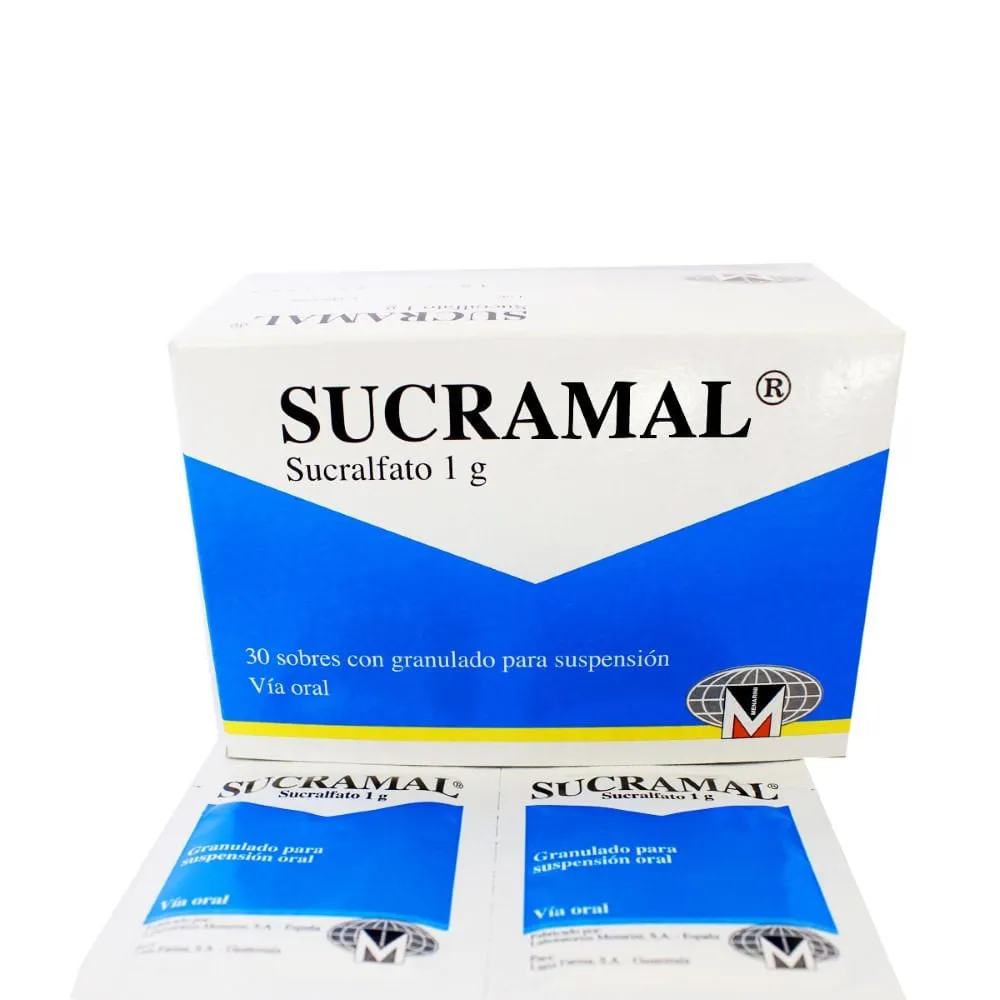
Table of Contents
- Patient Information Leaflet
- SUCRAMAL 1 g tablets
- 1. What Sucramal is and what it is used for
- 2. What you need to know before taking Sucramal
- 3. How to take Sucramal
- 4. Possible side effects
- 5. How to store Sucramal
- 6. Package contents and other information
- SUCRAMAL 2 g granules for oral suspension
- 1. What Sucramal is and what it is used for
- 2. What you need to know before taking Sucramal
- 3. How to take Sucramal
- 4. Possible side effects
- 5. How to store Sucramal
- 6. Package contents and other information
Patient Information Leaflet
SUCRAMAL 1 g tablets
Sucralfate
Please read this leaflet carefully before taking this medicine, as it contains important information for you.
- Keep this leaflet. You may need to read it again.
- If you have any questions, ask your doctor or pharmacist.
- This medicine has been prescribed for you only. Do not give it to others, even if they have the same symptoms as you, because it could be harmful.
- If you experience any side effects, including those not listed in this leaflet, contact your doctor or pharmacist. See section 4.
Contents of this leaflet:
- What Sucramal is and what it is used for
- What you need to know before taking Sucramal
- How to take Sucramal
- Possible side effects
- How to store Sucramal
- Contents of the pack and other information
1. What Sucramal is and what it is used for
Sucramal contains the active substance sucralfate, a medicine that belongs to a group of
drugs used for the treatment of gastroduodenal ulcer (a lesion affecting the inner lining of the
stomach and part of the intestine) and gastroesophageal reflux disease (a condition that occurs when acidic stomach contents pass
into the esophagus, causing pain, inflammation, and heartburn).
Sucramal works by forming a protective barrier on the inner lining of the stomach and upper intestine.
Sucramal is indicated in adults and adolescents over 14 years of age for the treatment of the following conditions:
- lesion of the stomach (gastric ulcer) or of the upper part of the intestine (duodenal ulcer),
- transient (acute gastritis) or chronic (symptomatic chronic gastritis) inflammation of the stomach lining,
- stomach disorders due to the use of medicines called NSAIDs (Non-Steroidal Anti-Inflammatory Drugs),
- inflammation of the esophagus caused by the backflow of acidic fluids and/or food (reflux esophagitis).
If you do not feel better or if you feel worse, consult your doctor.
2. What you need to know before taking Sucramal
Do not take Sucramal
- if you are allergic to sucralfate or to any of the other ingredients of this medicine (listed in section 6);
- if you are being treated with tetracycline, a type of antibiotic used to treat bacterial infections (see section “Other medicines and Sucramal”).
Sucramal must not be administered to premature infants.
Warnings and precautions
Talk to your doctor or pharmacist before taking Sucramal.
Inform your doctor and use this medicine with caution:
- if you suffer from severe kidney disease (chronic renal failure).
Additionally, if you are receiving intensive care treatment and, in particular, have any of the following conditions:
- you have problems with stomach emptying (due to medication or surgery) or diseases that reduce stomach or intestinal motility,
- you are fed via a tube reaching the stomach or intestine, your doctor will monitor you closely, as you have a higher risk of developing deposits of ingested foreign material that remain in the stomach and intestine (formation of bezoars) (see section 4 “Possible side effects”).
Your doctor will pay special attention when prescribing Sucramal if you have:
- impaired swallowing ability, such as recent or prolonged intubation, surgical incision of the trachea (tracheostomy), risk of inhaling liquids or solids into the bronchi (history of aspiration), difficulty swallowing (dysphagia);
- any other condition that may alter the swallowing reflex (pharyngeal reflex) or the cough reflex, or reduce coordination and movement capacity of the mouth and throat; because in these cases the risk increases that the Sucramal tablet may enter the bronchi instead of the oesophagus (tablet aspiration), leading to respiratory complications.
Children and adolescents
Sucramal is not recommended for children under 14 years of age.
Other medicines and Sucramal
Inform your doctor or pharmacist if you are taking, have recently taken, or might take any other medicines.
In particular, inform your doctor if you are taking any of the following medicines: tetracyclines (a type of antibiotic used to treat bacterial infections), since concomitant use with sucralfate is contraindicated (see section “Do not take Sucramal”);
- phenytoin (a medicine used to treat epilepsy, a disease characterised by uncontrollable body movements and loss of consciousness);
- warfarin (a medicine used to prevent blood clots from forming in the bloodstream);
- digoxin (a medicine used to treat heart disorders);
- fluoroquinolone antibiotics such as ciprofloxacin and norfloxacin (medicines used to treat bacterial infections).
Leave at least 2 hours between taking Sucramal and other medicines.
Pregnancy and breastfeeding
If you are pregnant, think you might be pregnant, planning a pregnancy, or are breastfeeding, consult your doctor or pharmacist before taking this medicine.
During pregnancy and breastfeeding, Sucramal should only be used when strictly necessary and under direct medical supervision.
Driving and using machines
Sucramal does not impair your ability to drive or operate machinery.
Sucramal contains:
- hydrogenated castor oil: may cause gastrointestinal disturbances and diarrhoea.
- benzyl alcohol: this medicine contains less than 0.3 mg of benzyl alcohol per tablet. Benzyl alcohol may cause allergic reactions. Benzyl alcohol has been associated with a risk of serious adverse effects, including breathing problems (gasping syndrome), in young children. Do not administer to infants up to 4 weeks of age unless otherwise recommended by a doctor. Do not use for more than one week in young children (under 3 years of age) unless otherwise recommended by a doctor or pharmacist. Consult your doctor or pharmacist if you are pregnant or breastfeeding. This is because large amounts of benzyl alcohol may accumulate in the body and cause adverse effects (such as metabolic acidosis). Consult your doctor or pharmacist if you have liver or kidney disease. This is because large amounts of benzyl alcohol may accumulate in the body and cause adverse effects (such as metabolic acidosis).
- ethanol: this medicine contains less than 0.35 mg of alcohol (ethanol) per tablet. The amount in each tablet is equivalent to less than 1 ml of beer and less than 1 ml of wine. The small amount of alcohol in this medicine will not produce significant effects.
- sodium: this medicine contains less than 1 mmol (23 mg) of sodium per tablet, i.e. essentially ‘sodium-free’.
3. How to take Sucramal
Take this medicine exactly as instructed by your doctor or pharmacist. If you have any doubts, consult your doctor or pharmacist.
The recommended dose is 1 tablet 3–4 times a day, as prescribed by your doctor, taken on an empty stomach.
Use in children and adolescents
The use of Sucramal in children under 14 years of age is not recommended.
If you take more Sucramal than you should
In case of accidental ingestion or overdose of Sucramal, contact your doctor immediately or go to the nearest hospital.
If you forget to take Sucramal
Do not take a double dose to make up for the missed tablet.
If you stop taking Sucramal
If you have any doubts about using this medicine, consult your doctor or pharmacist.
4. Possible side effects
Like all medicines, this medicine can cause side effects, although not everybody gets them.
The following side effects may occur:
Rare (may affect up to 1 in 1,000 people):
- formation of deposits of ingested foreign material remaining in the stomach and intestines (bezoars)
Not known (frequency cannot be estimated from the available data):
- dizziness
- constipation (with prolonged treatment)
- stomach and intestinal disorders, nausea
- dry mouth
- rash
- itching
- allergic reactions, including severe ones (anaphylactic reactions)
- sleep disorders (insomnia)
Reporting of side effects
If you experience any side effect, including those not listed in this leaflet, talk to your doctor or pharmacist. You can also report side effects directly via the national reporting system at the website
https://www.aifa.gov.it/content/segnalazioni-reazioni-avverse.
By reporting side effects, you can help provide more information on the safety of this medicine.
5. How to store Sucramal
Keep this medicine out of the sight and reach of children.
This medicine does not require any special storage conditions.
Do not use this medicine after the expiry date stated on the packaging after "Exp.".
The expiry date refers to the last day of that month.
Do not dispose of any medicine via wastewater or household waste. Ask your pharmacist
how to dispose of medicines you no longer use. This will help protect the environment.
6. Package contents and other information
What Sucramal contains
Sucramal 1 g tablets
- The active substance is sucralfate (1 g per tablet).
- The other components are microcrystalline cellulose, sodium carmellose, hydrogenated castor oil, magnesium stearate, cherry flavor (containing: benzyl alcohol, ethanol).
Description of the appearance of Sucramal and contents of the pack
Sucramal is presented as tablets contained in blisters.
Sucramal is available in packs of 40 tablets of 1 g.
Marketing Authorization Holder
SCHARPER S.p.A.
Viale Ortles, 12
20139 Milan
Manufacturer
Delpharm Dijon - 6, Boulevard de l'Europe - 21800 Quétigny (France)
Patient Information Leaflet
SUCRAMAL 2 g granules for oral suspension
Sucralfate
Please read this leaflet carefully before taking this medicine, as it contains important information for you.
- Keep this leaflet. You may need to read it again.
- If you have any questions, ask your doctor or pharmacist.
- This medicine has been prescribed for you only. Do not give it to others, even if they have the same symptoms as yours, as it could be harmful.
- If you experience any adverse reaction, including those not listed in this leaflet, contact your doctor or pharmacist. See section 4.
Contents of this leaflet:
- What Sucramal is and what it is used for
- What you need to know before taking Sucramal
- How to take Sucramal
- Possible side effects
- How to store Sucramal
- Package contents and other information
1. What Sucramal is and what it is used for
Sucramal contains the active substance sucralfate, a medicine that belongs to a group of
drugs used for the treatment of gastroduodenal ulcer (a lesion affecting the inner lining of the
stomach and part of the intestine) and gastroesophageal reflux disease (a condition occurring when acidic stomach contents pass
into the esophagus, causing pain, inflammation, and heartburn).
Sucramal works by forming a protective barrier on the inner lining of the stomach and upper intestine.
Sucramal is indicated in adults and adolescents over 14 years of age for the treatment of the following conditions:
- stomach lesion (gastric ulcer) or lesion in the upper part of the intestine (duodenal ulcer),
- transient (acute gastritis) or chronic (symptomatic chronic gastritis) inflammation of the stomach lining,
- stomach disorders due to the use of medicines called NSAIDs (Non-Steroidal Anti-Inflammatory Drugs),
- inflammation of the esophagus caused by the backflow of acidic fluids and/or food (reflux esophagitis).
Consult your doctor if you do not feel better or if you feel worse.
2. What you need to know before taking Sucramal
Do not take Sucramal
- if you are allergic to sucralfate or to any of the other ingredients of this medicine (listed in section 6);
- if you are being treated with tetracycline, a type of antibiotic used to treat bacterial infections (see section "Other medicines and Sucramal");
Sucramal must not be administered to premature infants.
Warnings and precautions
Talk to your doctor or pharmacist before taking Sucramal.
Inform your doctor and use this medicine with caution:
- if you suffer from severe kidney disease (chronic renal failure). Furthermore, if you are receiving intensive care treatment and, in particular, if you have any of the following conditions:
- you have problems with stomach emptying (following drug therapy or surgery) or diseases that reduce stomach or intestinal motility,
- you are fed via a tube reaching the stomach or intestine, your doctor will monitor you closely as you have a higher risk of developing deposits of ingested foreign material that remain in the stomach and intestine (bezoar formation) (see section 4 Possible side effects).
Children and adolescents
Sucramal is not recommended for children under 14 years of age.
Other medicines and Sucramal
Inform your doctor or pharmacist if you are taking, have recently taken, or might take any other medicines.
In particular, inform your doctor if you are taking any of the following medicines: tetracyclines (a type of antibiotic used to treat bacterial infections), as concomitant use with sucralfate is contraindicated (see section "Do not take Sucramal");
- phenytoin (a medicine used to treat epilepsy, a condition characterized by uncontrolled body movements and loss of consciousness);
- warfarin (a medicine used to prevent blood clots from forming);
- digoxin (a medicine used to treat heart disorders);
- fluoroquinolone antibiotics, for example ciprofloxacin and norfloxacin (medicines used to treat bacterial infections).
Leave at least 2 hours between taking Sucramal and other medicines.
Pregnancy and breastfeeding
If you are pregnant, think you might be pregnant, are planning to become pregnant, or are breastfeeding, consult your doctor or pharmacist before taking this medicine.
Sucramal should be used during pregnancy and breastfeeding only when strictly necessary and under direct medical supervision.
Driving and using machines
Sucramal does not affect the ability to drive or operate machinery.
Sucramal contains sucrose
If your doctor has diagnosed you with an intolerance to certain sugars, contact him/her before taking this medicine.
Sucramal contains sulfites and sulfur dioxide (E220) in trace amounts
Rarely, this may cause severe hypersensitivity reactions and bronchospasm.
Sucramal contains sodium
This medicine contains less than 1 mmol (23 mg) of sodium per sachet, i.e. essentially "sodium-free".
Sucramal contains benzyl alcohol
This medicine contains less than 0.1 mg of benzyl alcohol per sachet.
Benzyl alcohol may cause allergic reactions.
Benzyl alcohol has been associated with a risk of serious adverse effects, including breathing problems (gasping syndrome), in young children.
Do not administer to infants up to 4 weeks of age unless otherwise recommended by a doctor.
Do not use for more than one week in young children (under 3 years of age) unless otherwise recommended by a doctor or pharmacist.
Consult your doctor or pharmacist if you are pregnant or breastfeeding. This is because large amounts of benzyl alcohol may accumulate in the body and cause adverse effects (such as metabolic acidosis).
Consult your doctor or pharmacist if you have liver or kidney disease. This is because large amounts of benzyl alcohol may accumulate in the body and cause adverse effects (such as metabolic acidosis).
3. How to take Sucramal
Take this medicine exactly as directed by your doctor or pharmacist. If you have any doubts, consult your doctor or pharmacist.
The recommended dose is 1 sachet twice daily on an empty stomach, 1 hour before meals and before going to bed, unless otherwise prescribed by the doctor.
Dissolve the granules in a small amount of water and drink the solution after stirring well.
Use in children and adolescents
The use of Sucramal in children under 14 years of age is not recommended.
If you take more Sucramal than you should
In case of accidental ingestion/overdose of Sucramal, immediately inform your doctor or go to the nearest hospital.
If you forget to take Sucramal
Do not take a double dose to make up for the missed dose.
If you stop treatment with Sucramal
If you have any doubts about using this medicine, consult your doctor or pharmacist.
4. Possible side effects
Like all medicines, this medicine can cause side effects, although not everyone experiences them.
The following side effects may occur:
Rare (may affect up to 1 in 1,000 patients):
- formation of deposits from ingested foreign material remaining in the stomach and intestine (bezoars)
Not known (frequency cannot be estimated from the available data):
- dizziness
- constipation (with prolonged treatment)
- stomach and intestinal disturbances, nausea
- dry mouth
- skin rash
- itching
- allergic reactions, including severe ones (anaphylactic reactions)
- sleep disturbances (insomnia)
Reporting of side effects
If you experience any side effect, including those not listed in this leaflet, talk to your doctor or pharmacist.
You can also report side effects directly via the national reporting system at the website
https://www.aifa.gov.it/content/segnalazioni-reazioni-avverse.
By reporting side effects, you can help provide more information on the safety of this medicine.
5. How to store Sucramal
Keep this medicine out of the sight and reach of children.
This medicine does not require any special storage conditions.
Do not use this medicine after the expiry date stated on the packaging after
Exp. The expiry date refers to the last day of that month.
Do not dispose of any medicine via wastewater or household waste. Ask your pharmacist
how to dispose of medicines you no longer use. This will help protect the environment.
6. Package contents and other information
What Sucramal contains
Sucramal 2 g oral granules for suspension
- The active substance is sucralfate (2 g per sachet).
- The other components are orange juice granules (containing sucrose, sodium and traces of sulphites), orange flavour (containing benzyl alcohol and sulphur dioxide E220), mannitol, sodium saccharin, colloidal silica.
Description of the appearance of Sucramal and contents of the pack
Sucramal is presented as oral granules for suspension contained in sachets.
Sucramal is available in packs of 30 sachets of 2 g.
Marketing Authorization Holder
SCHARPER S.p.A.
Viale Ortles, 12
20139 Milan, Italy
Manufacturer
Sanofi Winthrop Industrie – 196, Avenue du Marechal Juin - Amilly (France)
Sanofi-Aventis Sp. Z.o.o. – 52 Lubelska Street – 35-233 Rzeszow, (Poland)