Strensiq
Italy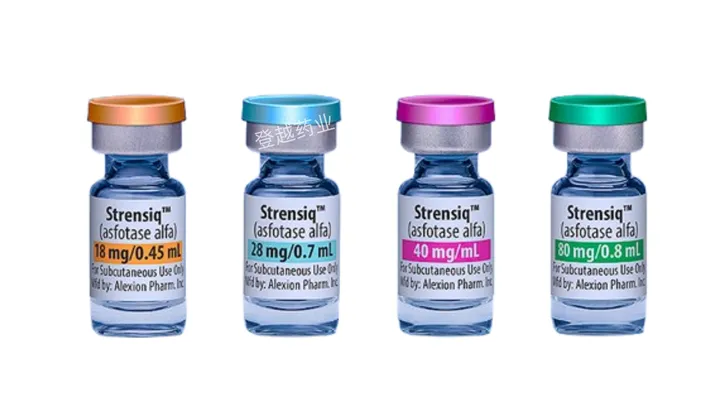
Table of Contents
- Package leaflet: Information for the user
- Strensiq 40 mg/mL solution for injection
- 1. What Strensiq is and what it is used for
- 2. What you need to know before using Strensiq
- 3. How to use Strensiq
- 4. Possible side effects
- 5. How to store Strensiq
- 6. Package contents and other information
- Patient Information Leaflet: Information for the User
- Strensiq 100 mg/mL solution for injection
- 1. What Strensiq is and what it is used for
- 2. What you need to know before using Strensiq
- 3. How to use Strensiq
- 4. Possible side effects
- 5. How to store Strensiq
- 6. Package contents and other information
Package leaflet: Information for the user
Strensiq 40 mg/mL solution for injection
(12 mg/0.3 mL, 18 mg/0.45 mL, 28 mg/0.7 mL, 40 mg/1 mL)
asfotase alfa
This medicinal product is subject to additional monitoring. This will allow any new safety information to be rapidly identified. You can help by reporting any side effects you experience while taking this medicine. See the end of section 4 for information on how to report side effects.
Please read all of this leaflet carefully before you start using this medicine because it contains important information for you.
- Keep this leaflet. You may need to read it again.
- If you have any questions, ask your doctor, pharmacist, or nurse.
- This medicine has been prescribed for you only. Do not give it to others, even if they have the same symptoms as yours, as it could be harmful.
- If you experience any side effect, including those not listed in this leaflet, contact your doctor, pharmacist, or nurse. See section 4.
Contents of this leaflet
- What Strensiq is and what it is used for
- What you need to know before using Strensiq
- How to use Strensiq
- Possible side effects
- How to store Strensiq
- Contents of the pack and other information
1. What Strensiq is and what it is used for
What Strensiq is
Strensiq is a medicine used to treat hypophosphatasia, an inherited disease that begins in childhood. It contains the active substance asfotase alfa.
What hypophosphatasia is
Patients with hypophosphatasia have low levels of an enzyme called alkaline phosphatase, which is important for many body functions, including the proper hardening of bones and teeth. Patients experience problems with bone growth and strength, which can lead to bone fractures, bone pain, and difficulty walking, as well as breathing difficulties and risk of seizures (attacks).
What Strensiq is used for
The active substance in Strensiq can replace the missing enzyme (alkaline phosphatase) in hypophosphatasia. It is used as a long-term enzyme replacement therapy to manage symptoms.
What benefits of Strensiq have been shown in clinical studies
Strensiq has demonstrated benefits on skeletal mineralization and patient growth.
2. What you need to know before using Strensiq
Do not use Strensiq
If you are severely allergic to asfotase alfa (see section "Warnings and precautions" below)
or to any of the other ingredients of this medicine (listed in section 6).
Warnings and precautions
Talk to your doctor before using Strensiq.
- Patients treated with asfotase alfa have experienced allergic reactions, including life-threatening anaphylaxis-like reactions requiring medical treatment. Patients who developed anaphylaxis-like symptoms had difficulty breathing, a sensation of suffocation, nausea, swelling around the eyes, and dizziness. These reactions occurred within minutes after administration of asfotase alfa and may occur in patients who have been receiving asfotase alfa for more than one year. If any of these symptoms occur, stop treatment with Strensiq and contact your doctor immediately. In case of anaphylactic reactions or events with similar symptoms, your doctor will discuss with you how to proceed and whether treatment with Strensiq may be resumed under medical supervision. Always follow the instructions provided by your doctor.
- During treatment, blood proteins directed against Strensiq, known as anti-drug antibodies, may develop. Consult your doctor if you notice a reduction in the effectiveness of Strensiq.
- Localized fat nodules or loss of fatty tissue under the skin (localized lipodystrophy) have been reported at injection sites after several months in patients using Strensiq. Please read section 3 carefully for injection recommendations. To reduce the risk of lipodystrophy, it is important to rotate injection sites among the following areas: abdominal region, thigh, or deltoid.
- In clinical studies, certain eye-related adverse effects (e.g., calcium buildup in the eye [conjunctival and corneal calcification]), likely associated with hypophosphatasia, were reported in both patients using Strensiq and those not using it. If you experience vision problems, consult your doctor.
- Premature fusion of skull bones (craniosynostosis) in children under 5 years of age has been reported in clinical studies of children with hypophosphatasia, both with and without the use of Strensiq. Inform your doctor if you notice any changes in your child's head shape.
- A reaction at the injection site (pain, nodule, rash, skin discoloration) may occur during or within hours after administration of the medicine. If a reaction occurs at the injection site, inform your doctor immediately.
- In clinical studies, increased parathyroid hormone levels and low calcium levels have been reported. As a result, your doctor may prescribe oral calcium and vitamin D supplements, if necessary.
- Weight gain may occur during treatment with Strensiq. Your doctor will provide dietary advice if needed.
Other medicines and Strensiq
Inform your doctor or pharmacist if you are taking, have recently taken, or might take any other
medicines.
If you are scheduled for laboratory tests (blood draws), inform your doctor that you are being treated
with Strensiq. Strensiq may cause falsely high or low results in certain tests. For this reason,
alternative testing methods may be required during treatment with Strensiq.
Pregnancy
Strensiq must not be used during pregnancy. For women of childbearing potential, effective contraceptive
measures should be considered during treatment.
Breast-feeding
It is not known whether Strensiq passes into breast milk. Inform your doctor if you are breast-feeding or plan to breast-feed. Your doctor will help you decide whether to discontinue breast-feeding or treatment with Strensiq, taking into account the benefits of breast-feeding for the child and the benefits of Strensiq for the mother.
If you are pregnant, suspect you may be pregnant, planning a pregnancy, or breast-feeding, ask your doctor or pharmacist for advice before taking this medicine.
Driving and using machines
This medicine is not expected to affect your ability to drive or use machines.
Important information about some of the excipients of Strensiq
This medicine contains less than 1 mmol (23 mg) of sodium per vial, i.e., essentially ‘sodium-free’.
3. How to use Strensiq
Use this medicine exactly as described in this leaflet or as instructed by your doctor, pharmacist, or nurse. If you have any doubts, consult your doctor, pharmacist, or nurse.
A doctor experienced in managing patients with metabolic or bone diseases will explain to you how to use Strensiq. After receiving instructions from your doctor or a specialized nurse, you may self-administer Strensiq at home.
Dosage
- The prescribed dose is based on body weight.
- The correct dose will be calculated by the doctor and consists of a total of 6 mg of asfotase alfa per kg of body weight per week, administered either as a 1 mg/kg injection of asfotase alfa six times per week or as a 2 mg/kg injection of asfotase alfa three times per week, according to the doctor's recommendation. Each dose is given as a subcutaneous injection (see the dosing table below for detailed information on injection volume and the type of vials to use based on body weight).
- Doses must be periodically adjusted by the doctor in line with changes in body weight.
- The maximum volume for each injection must not exceed 1 mL. If more than 1 mL is required, multiple consecutive injections must be given.
In case of injection three times a week
In case of injection six times a week
| Body weight (kg) | Volume to be injected | Color of the vial to use |
| 3 | 0.15 mL | Dark blue |
| 4 | 0.20 mL | Dark blue |
| 5 | 0.25 mL | Dark blue |
| 6 | 0.30 mL | Dark blue |
| 7 | 0.35 mL | Orange |
| 8 | 0.40 mL | Orange |
| 9 | 0.45 mL | Orange |
| 10 | 0.50 mL | Light blue |
| 11 | 0.55 mL | Light blue |
| 12 | 0.60 mL | Light blue |
| 13 | 0.65 mL | Light blue |
| 14 | 0.70 mL | Light blue |
| 15 | 0.75 mL | Pink |
| 16 | 0.80 mL | Pink |
| 17 | 0.85 mL | Pink |
| 18 | 0.90 mL | Pink |
| 19 | 0.95 mL | Pink |
| 20 | 1 mL | Pink |
| 25 | 0.50 mL | Green |
| 30 | 0.60 mL | Green |
| 35 | 0.70 mL | Green |
| 40 | 0.80 mL | Green |
| Body weight (kg) | Volume to be injected | Color of the vial to use |
| 6 | 0.15 mL | Dark blue |
| 7 | 0.18 mL | Dark blue |
| 8 | 0.20 mL | Dark blue |
| 9 | 0.23 mL | Dark blue |
| 10 | 0.25 mL | Dark blue |
| 11 | 0.28 mL | Dark blue |
| 12 | 0.30 mL | Dark blue |
| 13 | 0.33 mL | Orange |
| 14 | 0.35 mL | Orange |
| 15 | 0.38 mL | Orange |
| 16 | 0.40 mL | Orange |
| 17 | 0.43 mL | Orange |
| 18 | 0.45 mL | Orange |
| 19 | 0.48 mL | Light blue |
| 20 | 0.50 mL | Light blue |
| 25 | 0.63 mL | Light blue |
| 30 | 0.75 mL | Pink |
| 35 | 0.88 mL | Pink |
| 40 | 1 mL | Pink |
| 50 | 0.50 mL | Green |
| 60 | 0.60 mL | Green |
| 70 | 0.70 mL | Green |
| 80 | 0.80 mL | Green |
| 90 | 0.90 mL | Green (×2) |
| 100 | 1 mL | Green (×2) |
Injection Instructions
- A reaction at the injection site may occur. Before using this medicine, read section 4 carefully to learn which side effects may occur.
- If injections are administered regularly, the injection site should be rotated between different body areas to reduce the potential occurrence of pain and irritation.
- Areas with a sufficient amount of subcutaneous fat (thighs, arms (deltoids), abdomen, and buttocks) are most suitable for injection. Consult your doctor or nurse to determine the best sites for you.
Before injecting Strensiq, carefully read the following instructions
-
Each vial is for single use only and should be punctured only once. The Strensiq solution should be clear, slightly opalescent or opalescent, colorless to slightly yellowish, and may contain a few small translucent or white particles. If the solution has an altered color or contains clumps or large particles, do not use it and instead use a new vial. Unused medicine and waste materials derived from this medicine must be disposed of in accordance with local regulations.
-
If you are self-injecting the medicine, your doctor, pharmacist, or nurse will show you how to prepare and inject the medicine. Do not self-inject this medicine unless you have received adequate instruction and fully understand the procedure.
How to inject Strensiq
Step 1: Preparing the Strensiq dose
- Wash your hands thoroughly with soap and water.
- Remove the closed vial(s) of Strensiq from the refrigerator 15–30 minutes before injection to allow the liquid to reach room temperature. Do not heat Strensiq by any other method (for example, do not heat it in a microwave or in warm water). Once removed from the refrigerator, Strensiq must be used within a maximum of 3 hours (see section 5, How to store Strensiq).
- Remove the protective cap from the Strensiq vial(s). Remove the protective plastic from the syringe to be used (not included in the package). Always use a new, single-use syringe.
- Attach a large-gauge needle (e.g., 25G) to the empty syringe with the protective cap still in place, by inserting the needle into the syringe and rotating it clockwise until firmly secured.
- Remove the plastic needle cap. Be careful not to injure yourself with the needle.
- Pull back the plunger to draw into the syringe an amount of air equal to the prescribed dose.
Step 2: Drawing up the Strensiq solution from the vial
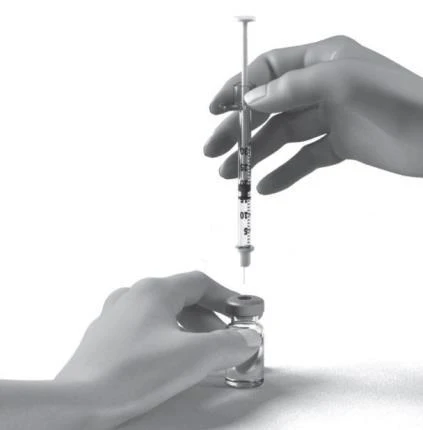
- Holding the syringe and vial, insert the needle through the sterile rubber seal of the vial.
- Push the plunger fully to inject the air into the vial.
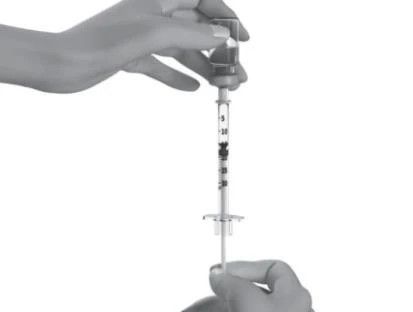
- Invert the vial and syringe. With the needle submerged in the solution, pull back the plunger to draw the correct dose into the syringe.
- Before removing the needle from the vial,
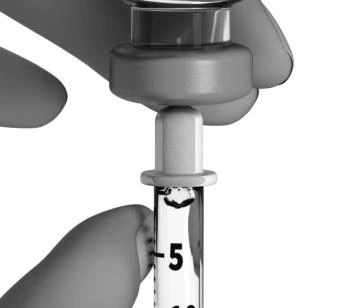
verify that you have drawn the correct volume and check for air bubbles in the syringe. If air bubbles are present, hold the syringe with the needle pointing upward and gently tap the side of the syringe until the bubbles rise to the top.
- Once all air bubbles have risen to the top of the syringe, gently push the plunger to expel the air from the syringe back into the vial.
- After removing air bubbles, recheck the medicine volume in the syringe to ensure the correct amount has been drawn. You may need to use multiple vials to draw up the full amount required to achieve the correct dose.
Step 3: Attaching the injection needle to the syringe
- Remove the needle from the vial. With one hand, place the cap on a flat surface, slide the needle into the cap, lift it up, and snap it securely into place using one hand only.
- Carefully remove the large-gauge needle by pushing downward and rotating counterclockwise. Dispose of the needle with its protective cap in a sharps container.
- Attach a small-gauge needle (e.g., 27G or 29G) to the filled syringe with the protective cap still in place, by inserting the needle into the syringe and rotating it clockwise until firmly secured. Remove the cap directly from the needle.
- Hold the syringe with the needle pointing upward and gently tap it with your fingers to remove any air bubbles. Visually confirm that the volume in the syringe is correct. The volume for each injection must not exceed 1 mL. If necessary, multiple injections at different sites should be performed. You are now ready to administer the correct dose.
Step 4: Injecting Strensiq
- Choose an injection site (thighs,
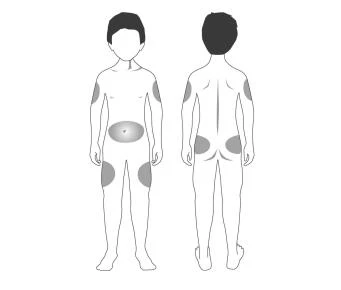
abdomen, arms (deltoids), buttocks). The most suitable areas for injection are shown in gray in the figure. Your doctor will advise you on appropriate injection sites.
NOTE: Do not select areas where you feel small lumps, firm nodules, or pain; inform your doctor if you notice any abnormalities.
- Gently pinch the skin at the chosen
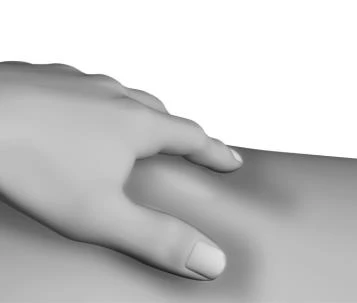
injection site between your thumb and index finger.
- Holding the syringe like a pencil or dart,
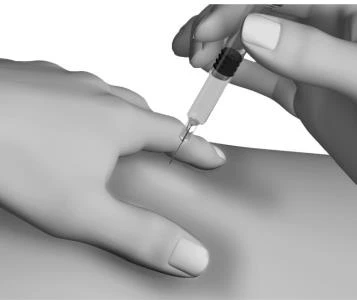
insert the needle into the pinched skin at an angle between 45º and 90º relative to the skin surface.
For patients with little subcutaneous fat or thin skin, a 45º angle may be preferable.
- While continuing to hold the skin fold, push
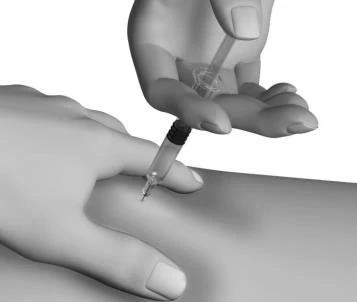
the syringe plunger slowly and steadily with constant pressure until fully depressed.
- Remove the needle, release the skin fold, and gently press a cotton ball or gauze pad over the injection site for several seconds. This will help close the tissue where the injection was given and prevent any leakage. Do not massage the injection site after injection.
If a second injection is required to administer the prescribed dose, take another Strensiq vial and repeat steps 1 to 4.
Step 5: Disposal of used materials
Collect syringes, vials, and needles in a sharps container. Your doctor, pharmacist, or nurse will explain how to obtain a sharps container.
If you use more Strensiq than you should
If you suspect you have accidentally received a dose of Strensiq higher than prescribed, consult your doctor.
If you forget to use Strensiq
Do not inject a double dose to make up for a missed dose; consult your doctor.
For more information, scan:

and visit the website: https://asfotasealfa-materialeeducazionaleperilpaziente.it/
If you have further questions about the use of this medicine, consult your doctor, pharmacist, or nurse.
4. Possible side effects
Like all medicines, this medicine can cause side effects, although not everybody gets them.
If you have any doubts about the meaning of the side effects listed below, please ask your doctor for clarification.
The most serious side effects observed in patients treated with asfotase alfa have been allergic reactions, including life-threatening anaphylaxis-like allergic reactions requiring medical treatment. This side effect is common [may affect up to 1 in 10 people]. Patients who experienced these severe allergic reactions had difficulty breathing, a sensation of suffocation, nausea, swelling around the eyes, and dizziness. These reactions occurred within minutes after administration of asfotase alfa and may occur in patients who have been using asfotase alfa for more than one year. If any of these symptoms occur, stop treatment with Strensiq immediately and consult your doctor without delay.
In addition, other allergic reactions (hypersensitivity) may occur, which may present as skin redness (erythema), fever (pyrexia), rash, itching, irritability, nausea, vomiting, pain, chills, numbness of the mouth (oral hypoaesthesia), headache, flushing, rapid heartbeat (tachycardia), and cough, with a common frequency. If any of these symptoms occur, stop treatment with Strensiq immediately and consult your doctor without delay.
Very common: may affect more than 1 in 10 people
- Reactions at the injection site during or shortly after administration of the medicine (which may cause redness, skin color changes, itching, pain, fatty lumps or reduction of fat tissue under the skin surface, skin hypopigmentation and/or swelling)
- Fever (pyrexia)
- Irritability
- Skin redness (erythema)
- Pain in hands and feet (pain in extremities)
- Bruising (contusion)
- Headache
Common: may affect up to 1 in 10 people
- Tight skin, skin color changes
- Nausea
- Numbness of the mouth (oral hypoaesthesia)
- Muscle pain (myalgia)
- Scarring
- Increased tendency to bruise
- Hot flushes
- Skin infection at the injection site (injection site cellulitis)
- Low levels of calcium in the blood (hypocalcaemia)
- Kidney stones (nephrolithiasis)
Reporting of side effects
If you experience any side effect, including those not listed in this leaflet, tell your doctor, pharmacist, or nurse. You may also report side effects directly through the national reporting system referred to in Annex V. By reporting side effects, you can help provide more information on the safety of this medicine.
5. How to store Strensiq
Keep this medicine out of the sight and reach of children.
Do not use this medicine after the expiry date stated on the carton and on the label of the vial after “Exp./EXP”. The expiry date refers to the last day of that month.
Store in a refrigerator (2°C – 8°C).
Do not freeze.
Keep in the original packaging to protect the medicine from light.
After opening the vial, the medicine should be used immediately (within a maximum of 3 hours at room temperature, between 23°C and 27°C).
Do not dispose of medicines via wastewater or household waste. Ask your pharmacist how to dispose of medicines you no longer use. This will help protect the environment.
6. Package contents and other information
What Strensiq contains
The active substance is asfotase alfa. Each mL of solution contains 40 mg of asfotase alfa.
Each 0.3 mL vial of solution (40 mg/mL) contains 12 mg of asfotase alfa.
Each 0.45 mL vial of solution (40 mg/mL) contains 18 mg of asfotase alfa.
Each 0.7 mL vial of solution (40 mg/mL) contains 28 mg of asfotase alfa.
Each 1 mL vial of solution (40 mg/mL) contains 40 mg of asfotase alfa.
The other components are: sodium chloride, monobasic monohydrate sodium phosphate, dibasic heptahydrate sodium phosphate, and water for injections.
Description of the appearance of Strensiq and contents of the pack
Strensiq is a clear, slightly opalescent or opalescent, colourless to slightly yellow aqueous injectable solution, supplied in glass vials containing 0.3 mL, 0.45 mL, 0.7 mL or 1 mL of solution. A few small translucent or white particles may be present.
Packs containing 1 or 12 vials are available.
Not all pack sizes may be marketed in your country.
Marketing Authorisation Holder
Alexion Europe SAS
103-105 rue Anatole France
92300 Levallois-Perret
France
Manufacturer
Alexion Pharma International Operations Limited
College Business and Technology Park, Blanchardstown
Dublin 15
Ireland
For further information about this medicinal product, please contact the local representative of the Marketing Authorisation Holder:
België/Belgique/Belgien Lietuva
Alexion Pharma Belgium UAB AstraZeneca Lietuva
Tél/Tel: +32 0 800 200 31 Tel: +370 5 2660550
България Luxembourg/Luxemburg
АстраЗенека България ЕООД Alexion Pharma Belgium
Teл.: +359 24455000 Tél/Tel: +32 0 800 200 31
Česká republika Magyarország
AstraZeneca Czech Republic s.r.o. AstraZeneca Kft.
Tel: +420 222 807 111 Tel.: +36 1 883 6500
Danmark Malta
Alexion Pharma Nordics AB Associated Drug Co. Ltd
Tlf: +46 (0) 8 557 727 50 Tel: +356 2277 8000
Deutschland Nederland
Alexion Pharma Germany GmbH Alexion Pharma Netherlands B.V.
Tel: +49 (0) 89 45 70 91 300 Tel: +32 (0) 2 548 36 67
Eesti Norge
AstraZeneca Alexion Pharma Nordics AB
Tel: +372 6549 600 Tlf: +46 (0) 8 557 727 50
Ελλάδα Österreich
AstraZeneca A.E. Alexion Pharma Austria GmbH
Τηλ: +30 210 6871500 Tel: +41 44 457 40 00
España Polska
Alexion Pharma Spain, S.L.U. AstraZeneca Pharma Poland Sp. z o.o.
Tel: +34 93 272 30 05 Tel.: +48 22 245 73 00
France Portugal
Alexion Pharma France SAS Alexion Pharma Spain, S.L. - Sucursal em
Tél: +33 1 47 32 36 21 Portugal
Tel: +34 93 272 30 05
Hrvatska România
AstraZeneca d.o.o. AstraZeneca Pharma SRL
Tel: +385 1 4628 000 Tel: +40 21 317 60 41
Ireland Slovenija
Alexion Europe SAS AstraZeneca UK Limited
Tel: 1 800 882 840 Tel: +386 1 51 35 600
Ísland Slovenská republika
Alexion Pharma Nordics AB AstraZeneca AB, o.z.
Sími: +46 (0) 8 557 727 50 Tel: +421 2 5737 7777
Italia Suomi/Finland
Alexion Pharma Italy srl Alexion Pharma Nordics AB
Tel: +39 02 7767 9211 Puh/Tel: +46 (0) 8 557 727 50
Κύπρος Sverige
Alexion Europe SAS Alexion Pharma Nordics AB
Τηλ: +357 22490305 Tel: +46 (0) 8 557 727 50
Latvija
SIA AstraZeneca Latvija
Tel: +371 67377100
This medicinal product has been authorised under “exceptional circumstances”.
This means that, due to the rarity of the disease, it has not been possible to obtain complete information about this medicinal product.
The European Medicines Agency will review any new information on this medicinal product annually, and this package leaflet will be updated if necessary.
Other sources of information
More detailed information on this medicinal product is available on the website of the European Medicines Agency, https://www.ema.europa.eu. Links to other websites on rare diseases and their treatments are also provided.
Patient Information Leaflet: Information for the User
Strensiq 100 mg/mL solution for injection
(80 mg/0.8 mL)
asfotase alfa
This medicinal product is subject to additional monitoring. This will allow for rapid identification of new safety information. You can help by reporting any side effects you experience while taking this medicine. See the end of section 4 for information on how to report side effects.
Please read all of this leaflet carefully before using this medicine because it contains important information for you.
- Keep this leaflet. You may need to read it again.
- If you have any questions, ask your doctor, pharmacist, or nurse.
- This medicine has been prescribed for you only. Do not give it to other people, even if their symptoms are the same as yours, as it may be harmful.
- If you experience any side effect, including those not listed in this leaflet, talk to your doctor, pharmacist, or nurse. See section 4.
Contents of this leaflet
- What Strensiq is and what it is used for
- What you need to know before using Strensiq
- How to use Strensiq
- Possible side effects
- How to store Strensiq
- Contents of the pack and other information
1. What Strensiq is and what it is used for
What Strensiq is
Strensiq is a medicine used to treat hypophosphatasia, an inherited disease that begins in childhood. It contains the active substance asfotase alfa.
What hypophosphatasia is
Patients with hypophosphatasia have low levels of an enzyme called alkaline phosphatase, which is important for many body functions, including proper hardening of bones and teeth. Patients experience problems with bone growth and strength, which can lead to bone fractures, bone pain, and difficulty walking, as well as breathing difficulties and risk of seizures (attacks).
What Strensiq is used for
The active substance in Strensiq can replace the missing enzyme (alkaline phosphatase) in hypophosphatasia. It is used as long-term enzyme replacement therapy to manage symptoms.
What benefits of Strensiq have been shown in clinical studies
Strensiq has demonstrated benefits on skeletal mineralization and patient growth.
2. What you need to know before using Strensiq
Do not use Strensiq
If you are severely allergic to asfotase alfa (see the section “Warnings and precautions” below)
or to any of the other ingredients of this medicine (listed in section 6).
Warnings and precautions
Talk to your doctor before using Strensiq.
- Patients treated with asfotase alfa have experienced allergic reactions, including life-threatening anaphylaxis-like reactions requiring medical treatment. Patients who developed anaphylaxis-like symptoms had difficulty breathing, a sensation of suffocation, nausea, swelling around the eyes, and dizziness. Reactions occurred within minutes after administration of asfotase alfa and may occur in patients who have been taking asfotase alfa for more than one year. If any of these symptoms occur, stop treatment with Strensiq and contact your doctor immediately. In case of anaphylactic reactions or events with similar symptoms, your doctor will discuss with you how to proceed and whether treatment with Strensiq may be resumed under medical supervision. Always follow the instructions provided by your doctor.
- During treatment, blood proteins directed against Strensiq, also known as anti-drug antibodies, may develop. Consult your doctor if you notice a reduction in effectiveness with Strensiq.
- Lumps of fat or loss of fat tissue at the injection site (localized lipodystrophy) have been reported on the skin surface after several months in patients using Strensiq. Please read section 3 carefully for injection recommendations. To reduce the risk of lipodystrophy, it is important to rotate injection sites among the following areas: abdominal area, thigh, or deltoid.
- In clinical studies, eye-related adverse effects (e.g., calcium buildup in the eye [conjunctival and corneal calcification]), likely associated with hypophosphatasia, were reported in both patients using Strensiq and those not using it. If you experience vision problems, consult your doctor.
- Early fusion of skull bones (craniosynostosis) in children under 5 years of age has been reported in clinical studies conducted in children with hypophosphatasia, both with and without the use of Strensiq. Inform your doctor if you notice any changes in your child’s head shape.
- During treatment with Strensiq, a reaction at the injection site (pain, nodule, rash, skin discoloration) may occur during or shortly after injection. If a reaction occurs at the injection site, inform your doctor immediately.
- In studies, increased levels of parathyroid hormone and low calcium levels have been reported. Therefore, your doctor may prescribe oral calcium and vitamin D supplements if necessary.
- Weight gain may occur during treatment with Strensiq. Your doctor will provide dietary advice if needed.
Other medicines and Strensiq
Tell your doctor or pharmacist if you are taking, have recently taken, or might take any other
medicines.
If you are undergoing laboratory tests (blood draw for testing), inform your doctor that you are being
treated with Strensiq. Strensiq may cause falsely high or low results in certain tests.
For this reason, it may be necessary to use an alternative type of test while being treated with
Strensiq.
Pregnancy
Strensiq must not be used during pregnancy. In women of childbearing potential, effective contraceptive measures should be considered during treatment.
Breast-feeding
It is not known whether Strensiq passes into breast milk. Inform your doctor if you are breast-feeding or intend to breast-feed. Your doctor will help you decide whether to discontinue breast-feeding or treatment with Strensiq, taking into account the benefit of breast-feeding for the child and the benefit of Strensiq for the mother.
If you are pregnant, suspect you may be pregnant, plan to become pregnant, or are breast-feeding, ask your doctor or pharmacist for advice before taking this medicine.
Driving and using machines
This medicine is not expected to affect the ability to drive or use machines.
Important information about some of the excipients in Strensiq
This medicine contains less than 1 mmol (23 mg) of sodium per vial, i.e., essentially ‘sodium-free’.
3. How to use Strensiq
Use this medicine exactly as stated in this leaflet or as directed by your doctor, pharmacist, or nurse. If you have any doubts, consult your doctor, pharmacist, or nurse.
A doctor experienced in managing patients with metabolic or bone diseases will explain to you how to use Strensiq. After receiving instructions from your doctor or a specialized nurse, you may self-administer Strensiq at home.
Dosage
- The prescribed dose is based on body weight.
- The correct dose will be calculated by your doctor and consists of a total of 6 mg of asfotase alfa per kg of body weight per week, administered either as a 1 mg/kg subcutaneous injection of asfotase alfa six times per week or as a 2 mg/kg subcutaneous injection of asfotase alfa three times per week, according to your doctor's recommendation. Each dose will be given as a subcutaneous injection (see the dosing table below for detailed information on the injection volume and the type of vials to use based on body weight).
- Your doctor will periodically adjust the doses in accordance with changes in body weight.
- The maximum volume for each injection must not exceed 1 mL. If more than 1 mL is required, multiple consecutive injections must be administered.
In case of injection 3 times per week
In case of injection 6 times per week
| Body weight (kg) | Volume to be injected | Color of the vial to use |
| 3 | 0.15 mL | Dark blue |
| 4 | 0.20 mL | Dark blue |
| 5 | 0.25 mL | Dark blue |
| 6 | 0.30 mL | Dark blue |
| 7 | 0.35 mL | Orange |
| 8 | 0.40 mL | Orange |
| 9 | 0.45 mL | Orange |
| 10 | 0.50 mL | Light blue |
| 11 | 0.55 mL | Light blue |
| 12 | 0.60 mL | Light blue |
| 13 | 0.65 mL | Light blue |
| 14 | 0.70 mL | Light blue |
| 15 | 0.75 mL | Pink |
| 16 | 0.80 mL | Pink |
| 17 | 0.85 mL | Pink |
| 18 | 0.90 mL | Pink |
| 19 | 0.95 mL | Pink |
| 20 | 1 mL | Pink |
| 25 | 0.50 mL | Green |
| 30 | 0.60 mL | Green |
| 35 | 0.70 mL | Green |
| 40 | 0.80 mL | Green |
| Body weight (kg) | Volume to be injected | Color of the vial to use |
| 6 | 0.15 mL | Dark blue |
| 7 | 0.18 mL | Dark blue |
| 8 | 0.20 mL | Dark blue |
| 9 | 0.23 mL | Dark blue |
| 10 | 0.25 mL | Dark blue |
| 11 | 0.28 mL | Dark blue |
| 12 | 0.30 mL | Dark blue |
| 13 | 0.33 mL | Orange |
| 14 | 0.35 mL | Orange |
| 15 | 0.38 mL | Orange |
| 16 | 0.40 mL | Orange |
| 17 | 0.43 mL | Orange |
| 18 | 0.45 mL | Orange |
| 19 | 0.48 mL | Light blue |
| 20 | 0.50 mL | Light blue |
| 25 | 0.63 mL | Light blue |
| 30 | 0.75 mL | Pink |
| 35 | 0.88 mL | Pink |
| 40 | 1 mL | Pink |
| 50 | 0.50 mL | Green |
| 60 | 0.60 mL | Green |
| 70 | 0.70 mL | Green |
| 80 | 0.80 mL | Green |
| 90 | 0.90 mL | Green (×2) |
| 100 | 1 mL | Green (×2) |
Injection recommendations
- A reaction at the injection site may occur. Before using this medicine, read section 4 carefully to learn which side effects may occur.
- If injections are administered regularly, the injection site should be rotated between different body areas to reduce the potential occurrence of pain and irritation.
- Areas with a good amount of subcutaneous fat (thighs, arms (deltoids), abdomen, and buttocks) are the most suitable for injection. Consult your doctor or nurse to determine the best injection sites for you.
Before injecting Strensiq, carefully read the following instructions
-
Each vial is for single use only and must be punctured only once. The Strensiq solution should appear clear, slightly opalescent or opalescent, colorless to slightly yellow, and may contain a few small translucent or white particles. If the solution has an altered color or contains clumps or large particles, do not use it and use a new vial instead. Unused medicine and waste materials derived from this medicine must be disposed of in accordance with local regulations.
-
If you are self-injecting the medicine, your doctor, pharmacist, or nurse will show you how to prepare and inject the medicine. Do not perform self-injection of this medicine unless you have received adequate instructions and fully understand the procedure.
How to inject Strensiq
Step 1: Preparing the Strensiq dose
- Wash your hands thoroughly with water and soap.
- Remove the closed Strensiq vial(s) from the refrigerator 15–30 minutes before injection to allow the solution to reach room temperature. Do not heat Strensiq in any other way (for example, do not heat it in a microwave or in warm water). Once removed from the refrigerator, Strensiq must be used within a maximum of 3 hours (see section 5 How to store Strensiq).
- Remove the protective cap from the Strensiq vial(s). Remove the protective plastic from the syringe to be used (not included in the package). Always use a new, single-use syringe.
- Attach a large-gauge needle (e.g., 25G) to the empty syringe with the protective cap in place, pushing the needle onto the syringe and rotating it clockwise until firmly secured.
- Remove the plastic needle cap. Be careful not to injure yourself with the needle.
- Pull back the plunger to draw into the syringe an amount of air equal to the prescribed dose.
Step 2: Drawing up the Strensiq solution from the vial
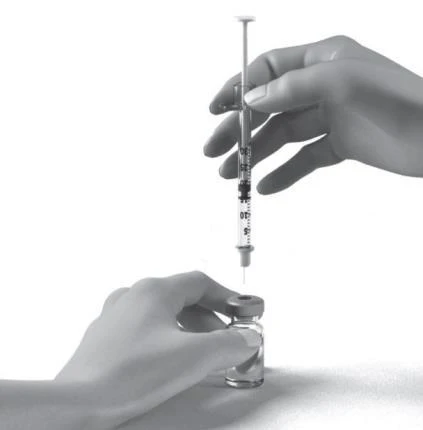
- Holding the syringe and vial, insert the needle through the sterile rubber stopper of the vial.
- Push the plunger fully to inject the air into the vial.
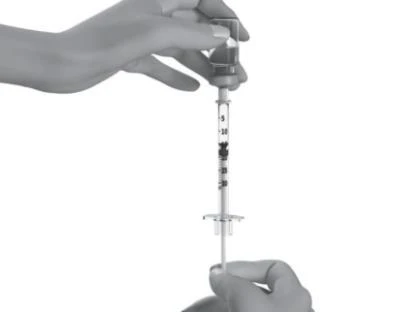
- Invert the vial and syringe. With the needle immersed in the solution, pull back the plunger to draw the correct dose into the syringe.
- Before removing the needle from the vial,
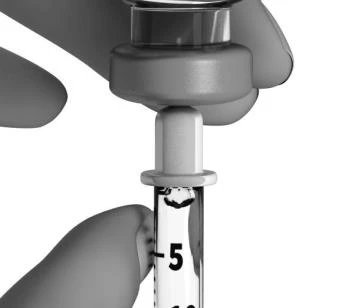
check that you have drawn the correct volume and inspect the syringe for air bubbles. If air bubbles are present, hold the syringe with the needle pointing upward and gently tap the side of the syringe until the bubbles rise to the top.
- Once all bubbles have risen to the top of the syringe, gently push the plunger to expel the air bubbles from the syringe and return them to the vial.
- After removing air bubbles, recheck the medicine volume in the syringe to ensure you have drawn the correct amount. It may be necessary to use multiple vials to draw up the full amount required to achieve the correct dose.
Step 3: Attaching the injection needle to the syringe
- Remove the needle from the vial. Replace the cap using one hand by placing it on a flat surface, sliding the needle into the cap, lifting it, and snapping it securely into place using one hand only.
- Carefully remove the large-gauge needle by pushing it downward and rotating it counterclockwise. Dispose of the needle with its protective cap in a sharps container.
- Attach a small-gauge needle (e.g., 27G or 29G) to the filled syringe with the protective cap in place, pushing the needle onto the syringe and rotating it clockwise until firmly secured. Remove the cap directly from the needle.
- Hold the syringe with the needle pointing upward and gently tap it with your fingers to remove any remaining air bubbles. Visually confirm that the volume in the syringe is correct. The volume for each injection must not exceed 1 mL. If necessary, multiple injections at different sites should be administered. You are now ready to inject the correct dose.
Step 4: Injecting Strensiq
- Choose an injection site (thighs,
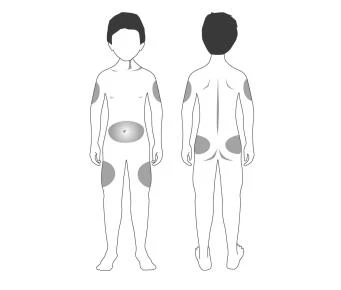
abdomen, arms (deltoids), buttocks). The most suitable areas for injection are shown in gray in the figure. Your doctor will advise you on appropriate sites.
NOTE: Do not choose areas where you feel small lumps, hard nodules, or pain; inform your doctor if you notice any abnormalities.
- Gently pinch between your thumb and index finger
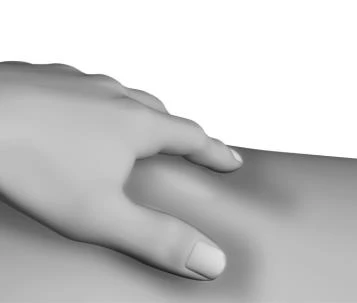
the skin at the chosen injection site.
- Holding the syringe like a pencil
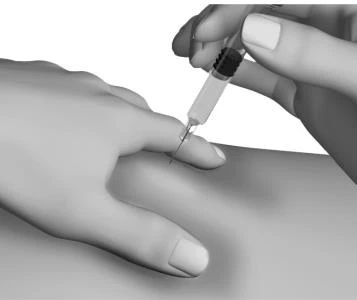
or a dart, insert the needle into the pinched skin at an angle between 45º and 90º relative to the skin surface.
For patients with little subcutaneous fat or thin skin, a 45º angle may be preferable.
- While continuing to hold the skin fold,
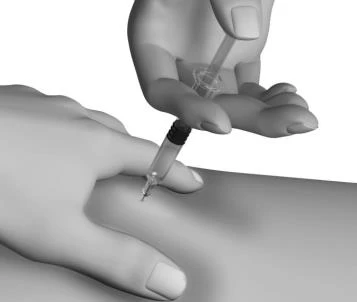
push the syringe plunger to inject the medicine slowly and steadily with constant pressure until fully administered.
- Remove the needle, release the skin fold, and gently apply a cotton ball or gauze pad to the injection site for several seconds. This will help close the tissue where the injection was given and prevent any leakage. Do not massage the injection site after injection.
If a second injection is needed to administer the prescribed dose, take another Strensiq vial and repeat steps 1 to 4.
Step 5: Disposal of used materials
Collect syringes, vials, and needles in a sharps container. Your doctor, pharmacist, or nurse will explain how to obtain a sharps container.
If you use more Strensiq than you should
If you suspect you have accidentally received a dose of Strensiq higher than prescribed, consult your doctor.
If you forget to use Strensiq
Do not inject a double dose to make up for a missed dose; consult your doctor.
For more information, scan:

and visit the website: https://asfotasealfa-materialeeducazionaleperilpaziente.it/
If you have any further questions about the use of this medicine, consult your doctor, pharmacist, or nurse.
4. Possible side effects
Like all medicines, this medicine can cause side effects, although not everybody gets them.
If you have any doubts about the meaning of the side effects listed below, please ask your doctor for clarification.
The most serious side effects observed in patients treated with asfotase alfa have been allergic reactions, including anaphylaxis-like allergic reactions that have been life-threatening and required medical treatment. This side effect is common [may affect up to 1 in 10 people]. Patients who experienced these severe allergic reactions had difficulty breathing, a sensation of suffocation, nausea, swelling around the eyes, and dizziness. These reactions occurred within minutes after administration of asfotase alfa and may occur even in patients who have been using asfotase alfa for more than one year. If any of these symptoms occur, stop treatment with Strensiq immediately and consult your doctor without delay.
In addition, other allergic reactions (hypersensitivity) may occur, which may present as skin redness (erythema), fever (pyrexia), rash, itching, irritability, nausea, vomiting, pain, chills, numbness of the mouth (oral hypoaesthesia), headache, flushing, rapid heartbeat (tachycardia), and cough, with a common frequency. If any of these symptoms occur, stop treatment with Strensiq immediately and consult your doctor without delay.
Very common: may affect more than 1 in 10 people
- Reactions at the injection site during or in the hours following administration of the medicine (which may cause redness, skin color changes, itching, pain, fatty lumps or loss of fat tissue under the skin surface, skin hypopigmentation and/or swelling)
- Fever (pyrexia)
- Irritability
- Skin redness (erythema)
- Pain in hands and feet (extremity pain)
- Bruising (contusion)
- Headache
Common: may affect up to 1 in 10 people
- Tight skin, skin color changes
- Nausea
- Numbness of the mouth (oral hypoaesthesia)
- Muscle pain (myalgia)
- Scarring
- Increased tendency to bruise
- Hot flushes
- Skin infection at the injection site (injection site cellulitis)
- Low levels of calcium in the blood (hypocalcaemia)
- Kidney stones (nephrolithiasis)
Reporting of side effects
If you experience any side effect, including those not listed in this leaflet, tell your doctor, pharmacist, or nurse. You can also report side effects directly via the national reporting system listed in Annex V. By reporting side effects, you can help provide more information on the safety of this medicine.
5. How to store Strensiq
Keep this medicine out of the sight and reach of children.
Do not use this medicine after the expiry date which is stated on the carton and on the label of the
vial after “Exp./EXP”. The expiry date refers to the last day of that month.
Store in a refrigerator (2°C – 8°C).
Do not freeze.
Keep in the original packaging to protect from light.
After opening the vial, the medicine should be used immediately (within a maximum of 3 hours at
room temperature, between 23°C and 27°C).
Do not dispose of medicines via wastewater or household waste. Ask your pharmacist how to
dispose of medicines you no longer use. This will help protect the environment.
6. Package contents and other information
What Strensiq contains
The active substance is asfotase alfa. Each mL of solution contains 100 mg of asfotase alfa.
Each 0.8 mL vial of solution (100 mg/mL) contains 80 mg of asfotase alfa.
The other components are: sodium chloride, monobasic monohydrate sodium phosphate, dibasic
heptahydrate sodium phosphate, and water for injections.
Description of the appearance of Strensiq and package contents
Strensiq is a clear, slightly opalescent or opalescent, colourless to slightly yellow aqueous injectable solution, supplied in glass vials containing 0.8 mL of solution.
Small translucent or white particles may be present.
Pack sizes of 1 or 12 vials.
Not all pack sizes may be marketed in your country.
Marketing Authorisation Holder
Alexion Europe SAS
103-105 rue Anatole France
92300 Levallois-Perret
France
Manufacturer
Alexion Pharma International Operations Limited
College Business and Technology Park, Blanchardstown
Dublin 15
Ireland
For further information about this medicinal product, please contact the local representative of the Marketing Authorisation Holder:
België/Belgique/Belgien Lietuva
Alexion Pharma Belgium UAB AstraZeneca Lietuva
Tél/Tel: +32 0 800 200 31 Tel: +370 5 2660550
България Luxembourg/Luxemburg
АстраЗенека България ЕООД Alexion Pharma Belgium
Teл.: +359 24455000 Tél/Tel: +32 0 800 200 31
Česká republika Magyarország
AstraZeneca Czech Republic s.r.o. AstraZeneca Kft.
Tel: +420 222 807 111 Tel.: +36 1 883 6500
Danmark Malta
Alexion Pharma Nordics AB Associated Drug Co. Ltd
Tlf: +46 (0) 8 557 727 50 Tel: +356 2277 8000
Deutschland Nederland
Alexion Pharma Germany GmbH Alexion Pharma Netherlands B.V.
Tel: +49 (0) 89 45 70 91 300 Tel: +32 (0) 2 548 36 67
Eesti Norge
AstraZeneca Alexion Pharma Nordics AB
Tel: +372 6549 600 Tlf: +46 (0) 8 557 727 50
Ελλάδα Österreich
AstraZeneca A.E. Alexion Pharma Austria GmbH
Τηλ: +30 210 6871500 Tel: +41 44 457 40 00
España Polska
Alexion Pharma Spain, S.L.U. AstraZeneca Pharma Poland Sp. z o.o.
Tel: +34 93 272 30 05 Tel.: +48 22 245 73 00
France Portugal
Alexion Pharma France SAS Alexion Pharma Spain, S.L. - Sucursal em Portugal
Tél: +33 1 47 32 36 21 Tel: +34 93 272 30 05
Hrvatska România
AstraZeneca d.o.o. AstraZeneca Pharma SRL
Tel: +385 1 4628 000 Tel: +40 21 317 60 41
Ireland Slovenija
Alexion Europe SAS AstraZeneca UK Limited
Tel: 1 800 882 840 Tel: +386 1 51 35 600
Ísland Slovenská republika
Alexion Pharma Nordics AB AstraZeneca AB, o.z.
Sími: +46 (0) 8 557 727 50 Tel: +421 2 5737 7777
Italia Suomi/Finland
Alexion Pharma Italy srl Alexion Pharma Nordics AB
Tel: +39 02 7767 9211 Puh/Tel: +46 (0) 8 557 727 50
Κύπρος Sverige
Alexion Europe SAS Alexion Pharma Nordics AB
Τηλ: +357 22490305 Tel: +46 (0) 8 557 727 50
Latvija
SIA AstraZeneca Latvija
Tel: +371 67377100
This medicinal product has been authorised under "exceptional circumstances".
This means that, due to the rarity of the disease, complete information about this medicinal product could not be obtained.
The European Medicines Agency will review any new information on this medicinal product annually, and this patient information leaflet will be updated if necessary.
Further information
More detailed information on this medicinal product is available on the website of the European Medicines Agency: https://www.ema.europa.eu. Links to other websites on rare diseases and their therapeutic treatments are also provided.