Stimufend
Italy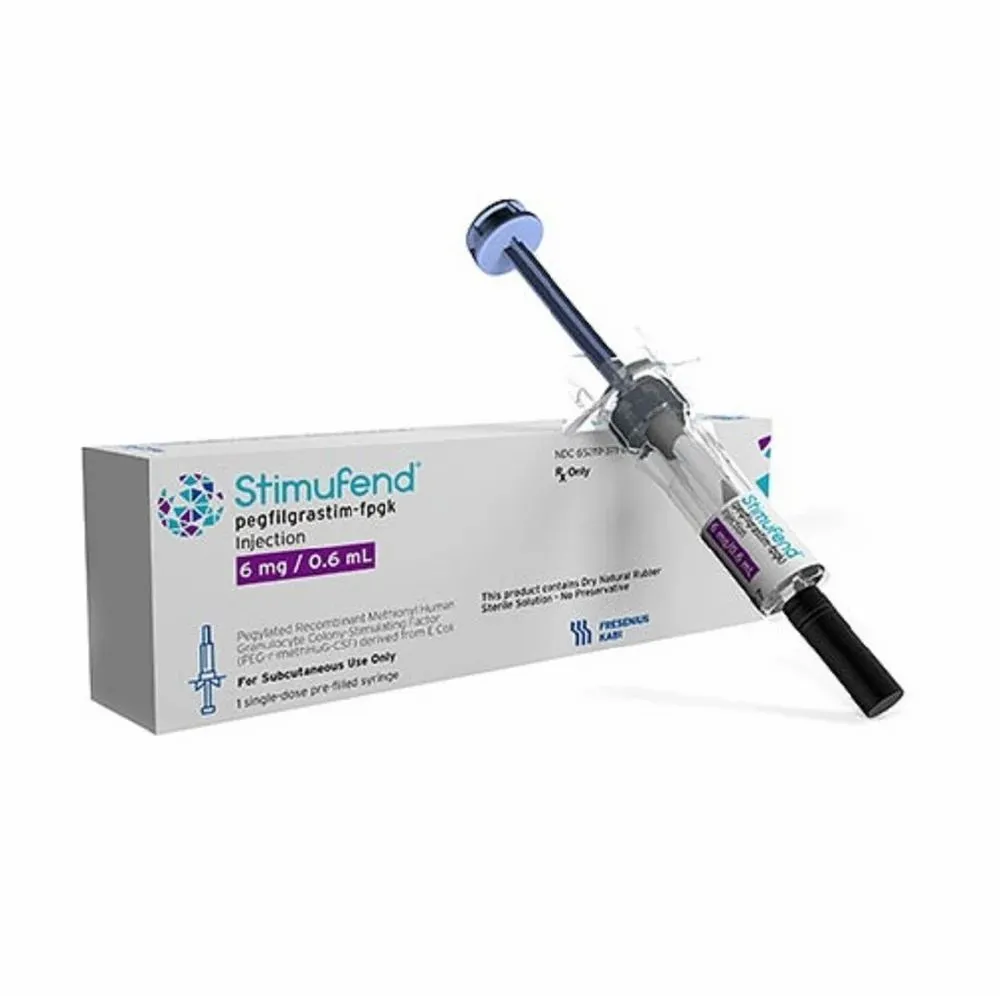
Table of Contents
- Package leaflet: Information for the user
- Stimufend 6 mg solution for injection in pre-filled syringe
- 1. What Stimufend is and what it is used for
- 2. What you need to know before using Stimufend
- 3. How to use Stimufend
- 4. Possible side effects
- 5. How to store Stimufend
- 6. Package contents and other information
- Instructions for use of Stimufend (pegfilgrastim)
Package leaflet: Information for the user
Stimufend 6 mg solution for injection in pre-filled syringe
pegfilgrastim
This medicinal product is subject to additional monitoring. This will allow for rapid identification of
new safety information. You can help by reporting any side effects you experience while taking
this medicine. See the end of section 4 for information on how to report side effects.
Please read all of this leaflet carefully before you start using this medicine, because it contains
important information for you.
Keep this leaflet. You may need to read it again.
If you have any questions, ask your doctor, pharmacist or nurse.
This medicine has been prescribed for you only. Do not give it to other people, even if their
symptoms are the same as yours, as it may be harmful.
If you experience any side effect, including those not listed in this leaflet, talk to your doctor,
pharmacist or nurse. See section 4.
Contents of this leaflet
- What Stimufend is and what it is used for
- What you need to know before using Stimufend
- How to use Stimufend
- Possible side effects
- How to store Stimufend
- Contents of the pack and other information
1. What Stimufend is and what it is used for
Stimufend contains the active substance pegfilgrastim. Pegfilgrastim is a protein produced using biotechnology in a bacterial cell called Escherichia coli. It belongs to a group of proteins known as cytokines and is very similar to a natural protein (granulocyte colony-stimulating factor) produced by our body.
Stimufend is used to reduce the duration of neutropenia (low number of white blood cells) and the occurrence of febrile neutropenia (low number of white blood cells with fever) that may be caused by cytotoxic chemotherapy (medicines that destroy rapidly growing cells). White blood cells are important because they help the body fight infections. These cells are highly sensitive to the effects of chemotherapy; this can cause a reduction in the number of these cells in the body. If the number of white blood cells drops to a low level, there may not be enough left to fight bacteria, increasing the risk of developing an infection.
Your doctor has prescribed Stimufend to stimulate the bone marrow (the part of the bone that produces blood cells) to produce more white blood cells, helping the body to fight infections.
2. What you need to know before using Stimufend
Do not use Stimufend
- If you are allergic to pegfilgrastim, filgrastim, or any of the other ingredients of this medicine (listed in section 6).
Warnings and precautions
Talk to your doctor, pharmacist, or nurse before using Stimufend:
- if you have an allergic reaction including weakness, low blood pressure, difficulty breathing, swelling of the face (anaphylaxis), flushing and redness, skin rash, or itchy skin areas.
- if you are allergic to latex. The needle cap of the pre-filled syringe contains a latex derivative which may cause severe allergic reactions.
- if you have cough, fever, and difficulty breathing. This could be a sign of Acute Respiratory Distress Syndrome (ARDS).
- if you experience one or more of the following side effects:
- swelling or bloating, which may be associated with reduced fluid passage, difficulty breathing, abdominal swelling and a feeling of fullness, and a general feeling of fatigue. These could be symptoms of a condition called "Capillary Leak Syndrome" that causes leakage of blood from small vessels in the body. See section 4.
- if you have pain in the upper left side of the abdomen or shoulder tip pain. These could be signs of a problem with the spleen (splenomegaly).
- if you have recently had a severe lung infection (pneumonia), fluid in the lungs (pulmonary edema), lung inflammation (pulmonary interstitial disease), or an abnormal finding on X-ray (pulmonary infiltration).
- if you know you have abnormal blood cell counts (e.g. increased white blood cells or anemia) or decreased platelet levels, which reduces the body's ability to clot (thrombocytopenia). Your doctor may wish to monitor you closely.
- if you have sickle cell anemia. Your doctor may wish to monitor you closely.
- if you have breast or lung cancer, Stimufend used in combination with chemotherapy and/or radiotherapy may increase the risk of a pre-leukemic blood condition called myelodysplastic syndrome (MDS) or a blood cancer called acute myeloid leukemia (AML). Symptoms may include fatigue, fever, and easy bruising or bleeding.
- if you suddenly develop signs of allergy such as skin rash, hives, or itching, swelling of the face, lips, tongue, or other parts of the body, shortness of breath, wheezing, or difficulty breathing, as these could be signs of a serious allergic reaction.
- if you have symptoms of inflammation of the aorta (the large blood vessel carrying blood from the heart to the rest of the body), which have been reported rarely in cancer patients and healthy individuals. Symptoms may include fever, abdominal pain, malaise, back pain, and increased markers of inflammation. Inform your doctor if such symptoms occur.
Your doctor will regularly check your blood and urine because Stimufend may damage the tiny filters in your kidneys (glomerulonephritis).
Severe skin reactions (Stevens-Johnson syndrome) have been observed with the use of pegfilgrastim. If you notice any of the symptoms described in section 4, stop using pegfilgrastim and seek immediate medical assistance.
You should discuss with your doctor the risks of developing blood cancer. If you have or may have blood cancer, you must not use Stimufend unless otherwise instructed by your doctor.
Loss of response to pegfilgrastim
If you experience a decreased response or failure to maintain response to treatment with pegfilgrastim, your doctor will investigate possible causes, including the possibility that you have developed antibodies that neutralize the activity of pegfilgrastim.
Other medicines and Stimufend
Inform your doctor or pharmacist if you are taking, have recently taken, or might take any other medicines.
Pregnancy and breastfeeding
Ask your doctor or pharmacist for advice before taking any medicine.
Stimufend has not been studied in pregnant women. It is important that you inform your doctor if:
- you are pregnant;
- you suspect you are pregnant; or
- you are planning to become pregnant.
If you become pregnant while being treated with Stimufend, inform your doctor.
Unless otherwise advised by your doctor, you must stop breastfeeding while using Stimufend.
Driving and using machines
Stimufend does not affect or has negligible effect on the ability to drive or operate machinery.
Stimufend contains sorbitol (E420) and sodium acetate
This medicine contains 30 mg of sorbitol in each 6 mg dose, equivalent to 50 mg/ml.
This medicine contains less than 1 mmol of sodium (23 mg) per 6 mg dose, i.e., essentially 'sodium-free'.
3. How to use Stimufend
Stimufend is intended for adults aged 18 years or older.
Take Stimufend exactly as directed by your doctor. If you have any doubts, consult your doctor or pharmacist.
The usual dose is one subcutaneous injection (injection under the skin) of 6 mg, which should be administered at least 24 hours after the last dose of chemotherapy, at the end of each chemotherapy cycle.
How to self-administer the Stimufend injection
Your doctor may consider it appropriate for you to self-administer the Stimufend injection. Your doctor or nurse will show you how to inject yourself with Stimufend. Do not attempt to self-inject unless you have been properly instructed on how to do so.
Refer to the section at the end of this leaflet for further instructions on how to self-administer the Stimufend injection.
Do not shake Stimufend vigorously, as this may impair its activity.
If you use more Stimufend than you should
If you use more Stimufend than prescribed, you must contact your doctor, pharmacist, or nurse.
If you forget your Stimufend injection
If you are self-injecting and have missed your dose of Stimufend, you must contact your doctor to determine when to administer the next injection.
If you have any doubts about how to use this medicine, consult your doctor, pharmacist, or nurse.
4. Possible side effects
Like all medicines, this medicine can cause side effects, although not everyone gets them.
Immediately inform your doctor if you experience any one or a combination of the following
side effects:
- swelling or oedema, which may be associated with less frequent urination, difficulty breathing, abdominal swelling and a feeling of fullness, and a general feeling of fatigue. These symptoms usually develop rapidly.
These could be symptoms of an uncommon condition (may affect up to 1 in 100 people) called "Capillary Leak Syndrome", which causes blood to leak from small blood vessels into body tissues and requires urgent medical treatment.
Very common side effects (may affect more than 1 in 10 people):
- bone pain. Your doctor will advise you on what to take to relieve bone pain.
- nausea and headache.
Common side effects (may affect up to 1 in 10 people):
- pain at the injection site.
- general discomfort, joint and muscle pain.
- certain changes may occur in the blood, but these will be detected during routine blood tests. White blood cell levels may rise temporarily. Platelet levels may decrease, leading to bruising.
Uncommon side effects (may affect up to 1 in 100 people):
- allergic-type reactions, including flushing and hot flushes, skin rash (reddening of the skin), and itchy skin swellings.
- severe allergic reactions including anaphylaxis (weakness, drop in blood pressure, difficulty breathing, facial swelling).
- enlargement of the spleen.
- rupture of the spleen. Some cases of spleen rupture have been fatal. It is important that you contact your doctor immediately if you feel pain in the upper left side of your abdomen or left shoulder, as this may indicate spleen problems.
- breathing problems. If you have cough, fever and difficulty breathing, contact your doctor.
- cases of Sweet’s syndrome (purple, raised and painful skin lesions on limbs, and sometimes on the face and neck, associated with fever) have been reported, although other factors may have contributed.
- cutaneous vasculitis (inflammation of the skin blood vessels).
- damage to the tiny filters within the kidneys (glomerulonephritis).
- redness at the injection site.
- coughing up blood (haemoptysis).
- blood disorders (myelodysplastic syndrome [MDS] or acute myeloid leukaemia [AML]).
Rare side effects (may affect up to 1 in 1,000 people):
- inflammation of the aorta (the large blood vessel carrying blood from the heart to the rest of the body), see section 2.
- bleeding from the lungs (pulmonary haemorrhage).
- Stevens-Johnson syndrome, which may present as reddish patches or round spots, often with central blisters, located on the trunk, skin peeling, mouth ulcers, and sores in the throat, nose, genitals and eyes, and may be preceded by fever and flu-like symptoms. If you develop these symptoms, stop using Stimufend and contact your doctor or seek immediate medical attention. See also section 2.
Reporting of side effects
If you experience any side effect, including those not listed in this leaflet, talk to your doctor, pharmacist or nurse.
You can also report side effects directly via the national reporting system at
https://www.aifa.gov.it/content/segnalazioni-reazioni-avverse
By reporting side effects, you can help provide more information on the safety of this medicine.
5. How to store Stimufend
Keep this medicine out of the sight and reach of children.
Do not use this medicine after the expiry date stated on the carton and on the label of the syringe after EXP. The expiry date refers to the last day of that month.
Store in the refrigerator (2°C – 8°C).
Stimufend may be exposed to room temperature (not above 30°C) for a single period of up to 72 hours. Stimufend left at room temperature for more than 72 hours must be discarded. For any questions about storage, ask your doctor, nurse, or pharmacist.
Do not freeze.
Keep the pre-filled syringe in the outer packaging to protect the medicine from light.
Do not use this medicine if you notice that it is cloudy or if particles are visible.
Do not dispose of any medicine via wastewater or household waste. Ask your pharmacist how to dispose of medicines you no longer use. This will help protect the environment.
6. Package contents and other information
What Stimufend contains
- The active substance is pegfilgrastim. Each pre-filled syringe contains 6 mg of pegfilgrastim in 0.6 mL of solution.
- The other components are sodium acetate, sorbitol (E420), polysorbate 20, glacial acetic acid and water for injections. See section 2 'Stimufend contains sorbitol (E420) and sodium acetate'.
Description of the appearance of Stimufend and package contents
Stimufend is a clear, colourless injectable solution in a pre-filled syringe (6 mg/0.6 mL). Each
package contains 1 pre-filled glass syringe with an attached stainless steel needle and a needle cap.
The pre-filled syringe is supplied with automatic needle protection.
Marketing Authorisation Holder
Fresenius Kabi Deutschland GmbH
Else-Kroener Strasse 1
61352 Bad Homburg v.d.Hoehe
Germany
Manufacturer
Fresenius Kabi Austria GmbH
Hafnerstrasse 36
8055 Graz
Austria
Other sources of information
More detailed information on this medicinal product is available on the website of the European Medicines Agency, http://www.ema.europa.eu/
Instructions for use of Stimufend (pegfilgrastim)
Single-dose pre-filled syringe for subcutaneous injection
Important:
Read the package leaflet for important information you need to know about Stimufend before
using these instructions for use of Stimufend.
Before using a pre-filled syringe of Stimufend, read these important instructions.
Storage of pre-filled syringes of Stimufend:
- Store Stimufend in the refrigerator at a temperature between 2°C and 8°C.
- Do not freeze.
- Keep the pre-filled syringe in its original packaging to protect it from light.
- Discard (dispose of) Stimufend left at room temperature above 30°C for more than 72 hours.
- Keep the pre-filled syringe of Stimufend out of the reach of children.
Using the pre-filled syringe:
- It is important that you do not attempt to inject Stimufend unless you or the person caring for you has received training from your healthcare provider.
- Do not inject Stimufend into children.
- You cannot accurately measure a dose lower than 6 mg/0.6 ml using the Stimufend pre-filled syringe.
- Do not use a pre-filled syringe after the expiry date printed on the label, as it may harm you.
- Do not shake the pre-filled syringe.
- Do not remove the needle cap from the pre-filled syringe until you are ready to inject.
- Do not use the pre-filled syringe if the packaging is open or damaged.
- Do not use the pre-filled syringe if it has fallen on a hard surface. The pre-filled syringe may be broken even if you cannot see the damage. Use a new pre-filled syringe.
- Do not use Stimufend that has been frozen or exposed to direct sunlight.
- The needle cap on the pre-filled syringe contains dry natural rubber (latex). Inform your doctor if you are allergic to latex. Do not administer Stimufend using the pre-filled syringe if you are allergic to latex.
- The Stimufend pre-filled syringe has a transparent needle shield that covers the needle after the injection is completed.
- Do not attempt to activate the transparent needle shield before injection.
- Do not insert your fingers into the opening of the transparent needle shield, as the needle may injure you.
- Do not attempt to reuse the Stimufend pre-filled syringe, as it may cause infection.
Call your healthcare provider if you have any questions.
Step 1: Preparing the injection
Before injection

Figure A
After complete injection (Transparent needle shield locked in place)
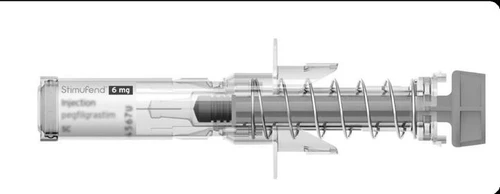
Figure B
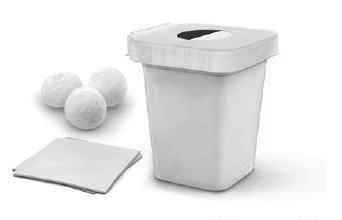
| 1.1 Prepare the materials | |
 | |
| Figure C |
| |
| |
 | |
| Figure D minutes |
- Do not heat the syringe in any other way, for example in a microwave oven, hot water or direct sunlight.
- Do not remove the needle cap while the syringe is reaching room temperature.
Step 2: Wash your hands
2.1 Wash your hands
- Wash your hands thoroughly with soap and water and
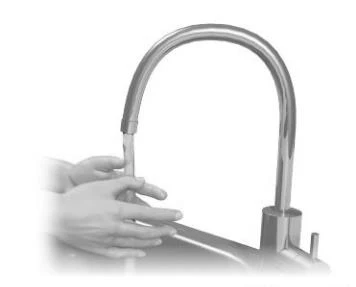
dry them with a clean towel (Figure E).
- Wearing gloves does not replace the need to wash your hands.
Figure E
Step 3: Check the syringe
3.1 Remove the pre-filled syringe from the sealed plastic tray
- Peel off the seal from the sealed plastic tray.
- Place two fingers on both sides, at the center of the
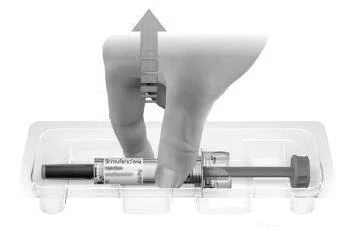
transparent needle shield. Pull the pre-filled syringe
upwards and remove it from the tray (Figure F).
Do not handle the pre-filled syringe by the plunger or
the needle cap. This could damage the syringe or activate the transparent needle shield.
Figure F
3.2 Check the syringe
- Check that the pre-filled syringe, the transparent needle shield and the needle cap are not
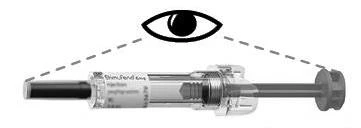
cracked or damaged (Figure G).
Figure G
- Check that the needle cap is securely attached
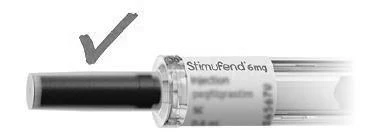
(Figure H).
Figure H
- Check that the needle safety spring is not
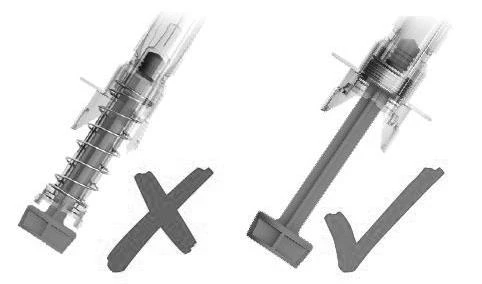
extended (Figure I).
Figure I
Do not use the pre-filled syringe if it shows any signs of damage. In this case, dispose of the syringe in a sharps disposal container (see Step 6) and contact your doctor or pharmacist immediately.
3.3 Check the liquid
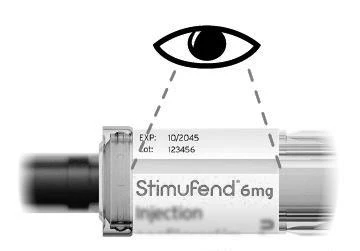
- Check the liquid through the transparent window of the label to ensure that the medicine is clear, colourless and free from particles or flakes (Figure J).
Figure J
Do not use the pre-filled syringe if the medicine is cloudy or discoloured, or if it contains particles or flakes. In this case, dispose of the syringe in a sharps disposal container (see Step 6) and contact your doctor or pharmacist immediately.
3.4 Check the label
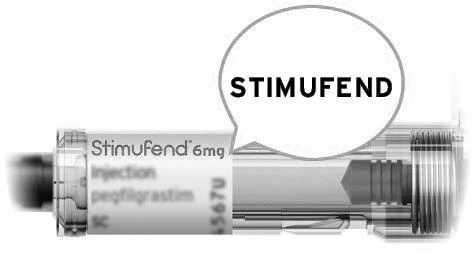
- Check the label on the syringe to ensure that
- The name on the label is Stimufend (Figure K).
- The expiry date has not been exceeded (Figure L).
- The dosage is 6 mg/0.6 mL.
Figure K
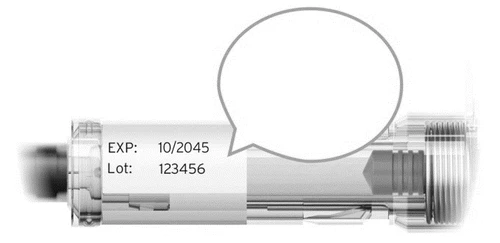
Do not use the pre-filled syringe if:
- The name on the label is not Stimufend.
- The expiry date has been exceeded. EXP: MM/YYYY
- The dosage is not 6 mg/0.6 mL.
Figure L
In this case, dispose of the syringe in a sharps disposal container (see Step 6) and contact your doctor or pharmacist immediately.
Step 4: Prepare for injection
4.1 Choose an injection site (Figure M)
You may use:
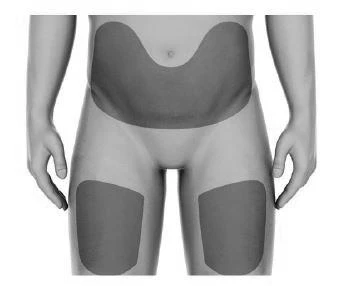
- The upper thigh, or
- The stomach area (lower abdomen), except within 5 centimetres of the navel (belly button).
Figure M
- If injecting someone else, you may also use the
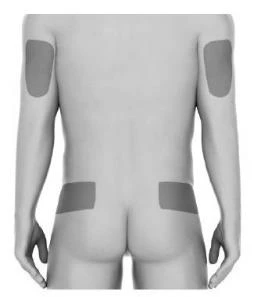
back of the upper arm or the outer upper areas of the buttocks (Figure N).
- Inject only into the sites shown
Figure N
Do not inject into an area that is sore (tender), bruised, red, hard, scarred, or has stretch marks or tattoos.
Do not inject through clothing.
4.2 Clean the injection site
- Clean the skin at the injection site with an
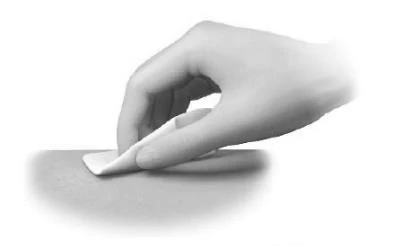
alcohol swab (Figure O). Allow the skin to dry.
Do not touch the injection site again before injecting.
Figure O
Step 5: Inject the medicine
5.1 Remove the needle cap
- Hold the syringe by the transparent
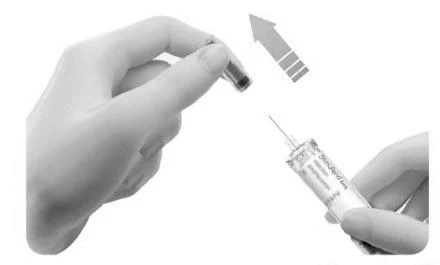
needle shield.
- Use the other hand to remove the needle cap by pulling it straight off (Figure P).
- Dispose of the needle cap in a sharps disposal container.
Figure P
Do not touch the needle or allow it to come into contact with any surface after removing the needle cap.
5.2 Pinch the skin
| Figure Q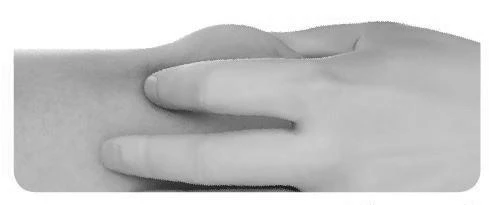 |
| 5.3 Insert the needle | |
| Figure R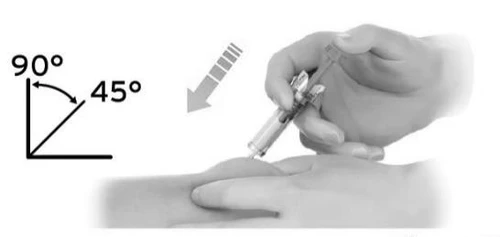 |
| 5.4 Inject | |
| Figure S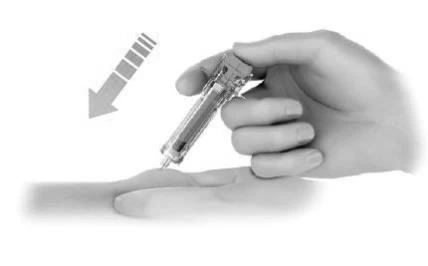 |
| Figure T |
Do not remove the needle from the skin when the plunger reaches the end.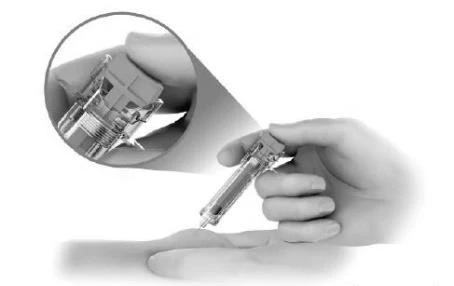 | |
| 5.5 Complete the injection | |
| Figure U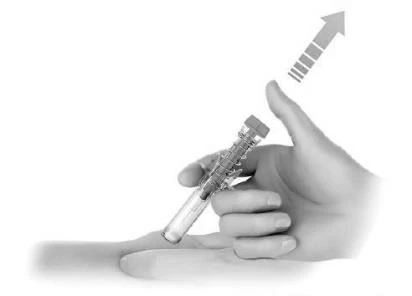 |
| Important: Call your doctor or pharmacist immediately if: • you did not inject the full dose or • the transparent needle shield does not activate after a complete injection. | |
Injecting an incorrect amount of medicine may affect or delay treatment.
Do not reuse a syringe if a partial dose has been administered.
Do not attempt to recap the needle, as this may cause needle-stick injuries.
- If blood or fluid is present at the injection site,
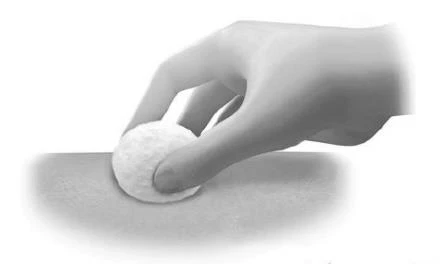
gently press a cotton ball or gauze pad against the skin (Figure V). If needed, you may use an adhesive bandage.
Figure V
Do not rub the injection site.
Step 6: Dispose of the prefilled syringe
6.1 Immediately after use, place used prefilled syringes
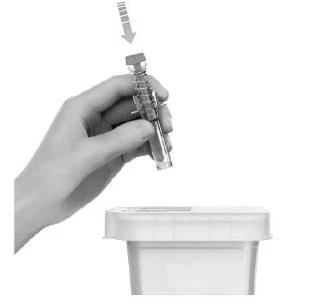
into a sharps disposal container (Figure W).
Do not throw (dispose of) prefilled syringes into household waste.
Figure W
- If you do not have a sharps disposal container, you may use a household container that:
- is made of heavy-duty plastic;
- can be closed with a tight, puncture-resistant lid, preventing sharps from coming out;
- is upright and stable during use;
- is leak-resistant; and
- is properly labeled to warn of hazardous waste inside the container.
- When your sharps disposal container is nearly full, follow local guidelines for proper disposal of the sharps disposal container. There may be local regulations regarding the disposal of used needles and syringes. Do not throw the used sharps disposal container into household trash unless local guidelines permit it.
Do not recycle the used sharps disposal container.