Stilnox
Italy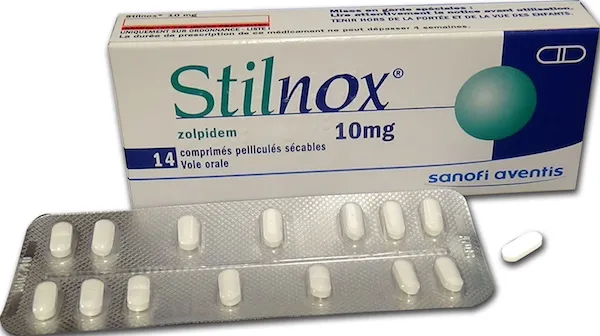
Table of Contents
Package leaflet: Information for the patient
Stilnox 10 mg film-coated tablets
zolpidem tartrate
Please read all of this leaflet carefully before taking this medicine because it contains
important information for you.
- Keep this leaflet. You may need to read it again.
- If you have any questions, ask your doctor, pharmacist, or nurse.
- This medicine has been prescribed for you only. Do not pass it on to other people, even if their symptoms are the same as yours, because it may be harmful.
- If you experience any side effects, including those not listed in this leaflet, tell your doctor, pharmacist, or nurse. See section 4.
Contents of this leaflet:
- What Stilnox is and what it is used for
- What you need to know before taking Stilnox
- How to take Stilnox
- Possible side effects
- How to store Stilnox
- Contents of the pack and other information
1. What Stilnox is and what it is used for
Stilnox contains zolpidem tartrate, which belongs to a class of medicines called
"benzodiazepine-like drugs".
Stilnox is indicated for short-term treatment of sleep disorders (insomnia),
only in cases where the sleep disturbances are severe, disabling or causing
significant distress.
It must not be used for long periods. The treatment should be as short as
possible, since the risk of dependence increases with the duration of treatment.
2. What you should know before taking Stilnox
Do not take Stilnox
- if you are allergic to the active substance or to any of the other ingredients of this medicine (listed in section 6),
- if you suffer from a disease causing severe muscle weakness (severe myasthenia gravis),
- if you have difficulty breathing (acute and/or severe respiratory insufficiency),
- if you suffer from brief episodes of breathing cessation during sleep (sleep apnoea syndrome),
- if you have severe liver damage (severe hepatic insufficiency),
- if you are a child or adolescent under 18 years of age, if you are pregnant or breastfeeding (see "Pregnancy and breastfeeding"),
if you have previously experienced episodes of sleepwalking or other unusual behaviours during sleep, while not fully awake, after taking Stilnox or other medicines containing zolpidem (see "Warnings and precautions").
Warnings and precautions
Talk to your doctor or pharmacist before taking Stilnox.
Before prescribing Stilnox, your doctor should try to identify and treat the underlying causes of sleep disorders.
If sleep disturbances do not improve after 7–14 days of treatment, there may be an underlying psychiatric or physical condition that needs to be investigated.
Psychomotor impairment the following day (see also “Driving and use of machinery”)
Like other medicines used to treat anxiety and/or insomnia, Stilnox has central nervous system depressant effects.
The day after taking Stilnox, the risk of psychomotor impairment, including impaired ability to drive, may increase if you:
- take this medicine less than 8 hours before performing activities requiring mental alertness,
- take a higher dose than recommended,
- take zolpidem together with other medicines that depress the central nervous system, or other medicines that increase zolpidem blood levels, or drink alcohol, or take illicit psychoactive substances. Take the single dose immediately before going to bed. Do not take another dose during the same night.
Tolerance:
After repeated use for several weeks, a certain reduction in the effect of this medicine may occur.
Dependence:
The use of Stilnox may lead to abuse and/or physical and psychological dependence (need to continue taking the medicine). Inform your doctor if you have ever had mental health disorders, or have abused or been dependent on alcohol, substances or medicines. The risk of dependence is higher when zolpidem is used for more than 4 weeks. The risk of dependence increases with higher doses and longer treatment duration. The risk of abuse and dependence is greater in patients with a history of mental disorders and/or abuse of alcohol, illicit substances or medicines. If you have developed physical dependence, abruptly stopping treatment may cause withdrawal symptoms such as:
- headache (cephalalgia),
- muscle pain,
- extreme anxiety,
- tension,
- restlessness,
- confusion,
- irritability. In severe cases, the following symptoms may occur:
- feeling detached from reality (derealisation),
- feeling detached from oneself (depersonalisation),
- hearing disturbances (hyperacusis),
- numbness and tingling in the extremities,
- hypersensitivity to light, noise and physical contact,
- hallucinations,
- epileptic seizures.
Rebound insomnia
When stopping the medicine, a transient syndrome may occur, consisting of a worsening of the symptoms that led to treatment. This may be accompanied by other reactions such as mood changes, anxiety, restlessness, or sleep disturbances.
This syndrome is more likely to occur if the medicine is stopped abruptly; therefore, discontinue Stilnox treatment gradually.
It is important that you are aware of the possibility of such symptoms occurring, so that you can reduce your anxiety.
Duration of treatment
The treatment duration should be as short as possible (see “How to take Stilnox”) and should not exceed 4 weeks, including the tapering-off phase.
The treatment should not be extended beyond this period without your doctor re-evaluating your condition.
Initially, your doctor will explain that this treatment will be of limited duration and how you should gradually reduce the dose.
Memory disturbances (amnesia):
Stilnox may cause memory disturbances (anterograde amnesia). This effect most often occurs several hours after taking the medicine.
To reduce the risk, ensure you can sleep uninterrupted for 8 hours (see “Possible side effects”).
Other psychiatric reactions and “paradoxical” reactions:
During the use of benzodiazepines or medicines similar to Stilnox, the following may occur:
- restlessness,
- worsening of insomnia,
- agitation,
- irritability,
- aggressiveness,
- delirium,
- anger,
- nightmares,
- hallucinations,
- mental disorders (psychosis),
- inappropriate behaviour.
If any of these occur, contact your doctor and stop taking Stilnox.
The occurrence of these reactions is more likely in children and elderly patients.
Sleep disorders (sleepwalking) and associated behaviours:
Stilnox may cause sleepwalking or other unusual behaviours during sleep (such as driving, eating, making phone calls or having sexual intercourse) while not fully awake. The next morning, you may not remember what you did during the night. If any of the above conditions occur, stop treatment with Stilnox immediately and contact your doctor, as these sleep-related behaviours could seriously risk injury to yourself or others (see “Do not take Stilnox”).
Both drinking alcohol or taking other sedative medicines together with Stilnox, and using Stilnox at doses exceeding the maximum recommended dose, increase the risk of these sleep-related behaviours occurring (see “Stilnox with alcohol” and “Possible side effects”).
Severe injuries:
Stilnox may cause drowsiness and reduced level of consciousness, which may lead to falls and consequently to serious injuries.
Elderly patients:
If you are elderly, your doctor will prescribe a lower dose (see “How to take Stilnox”).
Patients with respiratory problems:
If you suffer from severe respiratory problems (chronic respiratory insufficiency), your doctor will prescribe Stilnox cautiously, as it may depress respiratory function (see “Possible side effects”).
Patients with liver problems:
If you suffer from severe liver problems (severe acute or chronic hepatic insufficiency), Stilnox is not indicated, as it may worsen brain damage (encephalopathy) (see “Do not take Stilnox”, “How to take Stilnox” and “Possible side effects”).
Patients with psychotic disorders:
Stilnox is not recommended as primary treatment for psychotic disorders.
Patients with depression or anxiety associated with depression:
Stilnox should not be used alone to treat depression or anxiety associated with depression, as suicidal tendencies may increase.
Stilnox, like other benzodiazepines and similar substances, should be administered with caution if you have depression or anxiety associated with depression.
If you are depressed, you may have suicidal tendencies, and therefore your doctor will prescribe the smallest possible amount of medicine: in this regard, it is recommended that you strictly follow your doctor’s instructions.
Pre-existing depression may become apparent during the use of Stilnox. Since insomnia may be a symptom of depression, your doctor will re-evaluate your condition if insomnia persists.
Possibility of suicide
Several studies have shown an increased risk of suicidal thoughts, suicide attempts and suicides in patients taking certain sedatives and hypnotics, including this medicine. However, it has not been established whether this is caused by the medicine or whether there may be another reason. If you have suicidal thoughts, contact your doctor as soon as possible for further evaluation.
Patients with a history of alcohol or substance abuse:
Stilnox should be used with caution if you have previously abused alcohol or illicit substances.
Patients with long QT syndrome:
If you have a congenital condition called long QT syndrome, your doctor must carefully evaluate whether you can take zolpidem.
Children and adolescents
Stilnox must not be used in children and adolescents under 18 years of age (see “Do not take Stilnox”).
Other medicines and Stilnox
Tell your doctor or pharmacist if you are taking, have recently taken or might take any other medicines.
When taking zolpidem together with the following medicines, increased drowsiness and psychomotor impairment the following day may occur, including impaired ability to drive (see “Driving and use of machinery”):
- medicines for certain mental health conditions (antipsychotics),
- medicines for sleep problems (hypnotics),
- medicines to calm or reduce anxiety,
- medicines for depression,
- medicines for moderate to severe pain (narcotic analgesics),
- medicines for epilepsy,
- medicines used for anaesthesia,
- medicines for hay fever, skin rashes or other allergies that may cause drowsiness (sedating antihistamines).
When taking zolpidem together with antidepressant medicines, including bupropion, desipramine, fluoxetine, sertraline and venlafaxine, you may see things that are not real (hallucinations).
The concomitant use of zolpidem with fluvoxamine or ciprofloxacin is not recommended.
The effects of Stilnox may also be influenced by, or may influence, the following medicines:
- highly effective painkillers (narcotic analgesics), as an increased sense of euphoria may occur, which could lead to increased dependence (need to continue taking the medicine);
- inhibitors and inducers of a liver protein (cytochrome CYP450), as substances that inhibit this protein may increase the activity of benzodiazepines or similar substances like Stilnox;
- rifampicin (an antibiotic), as the effect of Stilnox decreases when taken with this medicine;
- St John’s wort, as the effect of Stilnox decreases when taken with this herbal remedy;
- itraconazole (for fungal infections); the effect of Stilnox is not affected by this medicine;
- ketoconazole (for fungal infections), as concomitant administration of Stilnox and ketoconazole (200 mg twice daily) may increase the sedative effects of Stilnox.
Other medicines
-
The use of Stilnox together with opioids (strong painkillers, substitution therapy medicines and some cough medicines) increases the risk of drowsiness, breathing difficulties (respiratory depression), coma and may be life-threatening. For this reason, concomitant use should only be considered when no other treatment options are available. However, if your doctor prescribes Stilnox together with opioids, your doctor will limit the dose and duration of concomitant treatment.
Inform your doctor if you are taking opioid medicines and follow your doctor’s dosage instructions carefully. It may be helpful to inform family members and friends so they are aware of the signs and symptoms listed above. Contact your doctor if you experience such symptoms. -
No significant interactions have been observed when Stilnox is administered together with warfarin (to reduce blood clotting), digoxin (for treatment of heart failure) or ranitidine (for stomach problems).
Stilnox with alcohol
Do not take Stilnox with alcohol, as the calming (sedative) effect may be increased if the medicine is taken together with alcohol.
Pregnancy and breastfeeding
If you are pregnant, think you may be pregnant or are planning to become pregnant, or if you are breastfeeding, consult your doctor or pharmacist before taking this medicine.
Pregnancy
Stilnox must not be taken during pregnancy (see “Do not take Stilnox”).
If you are pregnant, think you may be pregnant or are planning to become pregnant, consult your doctor.
If used during pregnancy, there is a risk that the baby may be affected. Some studies have shown that the risk of cleft lip and palate (sometimes called "cleft palate") may increase in the newborn.
Reduced fetal movement and variability in fetal heart rate may occur after taking Stilnox during the second and/or third trimester of pregnancy.
If, for essential medical reasons, Stilnox must be administered at the end of pregnancy or during labour, the baby may show:
- muscle weakness,
- lowered body temperature,
- feeding difficulties,
- breathing problems (respiratory depression).
If this medicine is taken regularly in the late stages of pregnancy, the baby may develop physical dependence and may be at risk of developing withdrawal symptoms such as restlessness or tremors. In this case, the newborn should be closely monitored during the postnatal period.
Severe respiratory depression may occur in the newborn if Stilnox has been used together with other central nervous system depressant medicines towards the end of pregnancy.
Breastfeeding
Stilnox passes into breast milk and therefore must not be taken during breastfeeding (see “Do not take Stilnox”).
Driving and use of machinery
Stilnox impairs the ability to drive vehicles and operate machinery, with a risk, for example, of "falling asleep at the wheel".
The day after taking Stilnox (as with other hypnotic medicines), you should be aware that:
- you may feel drowsy, sleepy, dizzy or confused,
- it may take you longer to make decisions,
- your vision may be blurred or double,
- you may feel less alert.
A period of at least 8 hours is recommended between taking zolpidem and driving, operating machinery or working at heights, to minimise the previously listed effects. Do not drink alcohol or take other psychoactive substances while taking Stilnox, as the effects listed above may be intensified.
Stilnox contains lactose
If you have been diagnosed with an intolerance to certain sugars, consult your doctor before taking this medicine.
Stilnox contains sodium
This medicine contains less than 1 mmol (23 mg) of sodium per tablet, i.e. essentially “sodium-free”.
3. How to take Stilnox
Take this medicine exactly as instructed by your doctor or pharmacist. If you have any doubts, consult your doctor or pharmacist.
The duration of treatment should be as short as possible.
Generally, it ranges from a few days to two weeks, with a maximum of four weeks including the phase of discontinuation of the medicine.
Sometimes your doctor may extend the maximum treatment period; in such case, follow your doctor's instructions carefully.
The recommended dose is 10 mg (1 tablet) of Stilnox per day. Do not exceed the dose of 10 mg every 24 hours.
A lower dose may be prescribed for certain patients.
Use in elderly or debilitated patients
If you are elderly or debilitated, you may be particularly sensitive to the effects of Stilnox; the recommended dose is:
half a tablet (5 mg), which will be exceeded only in exceptional cases.
Use in patients with liver problems (hepatic insufficiency) who do not eliminate the medicine as rapidly as normal subjects
The recommended dose is:
half a tablet (5 mg), which will be exceeded only in exceptional cases.
Stilnox must be taken:
- as a single administration,
- just before going to bed. Make sure you have at least an 8-hour period after taking this medicine before performing any activities requiring your alertness. Do not take another dose of Stilnox during the same night.
Use in children and adolescents
Stilnox must not be used in children and adolescents under 18 years of age (see "Do not take Stilnox").
If you take more Stilnox than you should
In case of accidental ingestion or overdose of Stilnox, contact your doctor immediately or go to the nearest hospital.
In cases of overdose (overdosing) of Stilnox alone or in combination with other medicines or substances that depress the activity of the Central Nervous System (including alcohol), the following have been reported:
- reduced level of consciousness up to coma;
- severe disturbances that may lead to death.
If you forget to take Stilnox
Do not take a double dose to make up for the forgotten dose.
If you have any doubts about the use of this medicine, consult your doctor or pharmacist.
4. Possible side effects
Like all medicines, this medicine can cause side effects, although not
everyone experiences them.
With Stilnox, dose-dependent side effects may occur, particularly affecting the
Central Nervous System (CNS).
These effects:
- are less pronounced if you take Stilnox immediately before going to bed or while already lying down,
- occur more frequently if you are elderly.
Common side effects (may affect up to 1 in 10 people)
- drowsiness,
- headache,
- dizziness,
- worsening of insomnia,
- cognitive disturbances such as memory loss (anterograde amnesia), which may be associated with inappropriate behavior,
- hallucinations,
- agitation,
- nightmares,
- depression (see “Warnings and precautions”),
- fatigue,
- vision problems (impaired vision),
- diarrhoea,
- nausea,
- vomiting,
- abdominal pain,
- back pain,
- respiratory tract infections (upper and lower).
Uncommon side effects (may affect up to 1 in 100 people)
- altered sensation in parts of the body (paraesthesia),
- tremor,
- attention and speech disorders,
- confusion,
- irritability,
- restlessness,
- aggression,
- sleepwalking or other unusual sleep-related behaviors (such as driving, eating, making phone calls, or having sexual intercourse) while not fully awake (see “Do not take Stilnox” and “Warnings and precautions”),
- euphoria,
- double vision (diplopia),
- blurred vision,
- joint pain (arthralgia),
- muscle pain (myalgia),
- involuntary muscle contractions (muscle spasms),
- neck pain,
- muscle weakness,
- skin irritation (rash),
- itching,
- excessive sweating (hyperhidrosis),
- increased liver blood test values,
- appetite disturbances.
Rare side effects (may affect up to 1 in 1,000 people)
- decreased level of consciousness,
- changes in sexual desire,
- gait disturbances,
- falls (especially in elderly patients and when Stilnox is not taken as prescribed) (see “Warnings and precautions”),
- urticaria,
- liver damage and bile flow impairment (hepatocellular, cholestatic, and mixed liver injury) (see “Do not take Stilnox”, “Warnings and precautions”, and “How to take Stilnox”).
Very rare side effects (may affect up to 1 in 10,000 people)
- delirium,
- dependence (after discontinuation of treatment, withdrawal syndrome or rebound effects may occur. See “Warnings and precautions”),
- respiratory depression (see “Warnings and precautions”).
Side effects with unknown frequency (frequency cannot be estimated from the available data)
- anger,
- abnormal behavior,
- delirium (a sudden and severe change in mental status causing confusion or disorientation),
- loss of response to the medicine (tolerance),
- swelling of the face, throat, or limbs, possibly with breathing difficulty (angioedema).
Reporting of side effects
If you experience any side effect, including those not listed in this leaflet,
please consult your doctor or pharmacist. You may also report side effects
directly via the national reporting system at the website
www.aifa.gov.it/content/segnalazioni-reazioni-avverse.
By reporting side effects, you can help provide more information on the
safety of this medicine.
5. How to store Stilnox
Keep this medicine out of the sight and reach of children.
This medicine does not require any special storage conditions.
Do not use this medicine after the expiry date stated on the packaging after "Exp". The expiry date refers to the last day of that month.
Do not dispose of any medicine via wastewater or household waste. Ask your pharmacist how to dispose of medicines no longer required. This will help protect the environment.
6. Package contents and other information
What Stilnox contains
- The active substance is zolpidem tartrate. One film-coated tablet contains 10 mg of zolpidem tartrate.
- The other ingredients are: lactose monohydrate; microcrystalline cellulose; hypromellose; sodium carboxymethyl starch (type A); magnesium stearate. Tablet coating: hypromellose; titanium dioxide (E171); macrogol 400.
Description of the appearance of Stilnox and contents of the pack
Stilnox is available as
Film-coated tablets.
- Pack of 14 film-coated 10 mg tablets
- Pack of 20 film-coated 10 mg tablets
- Pack of 30 film-coated 10 mg tablets. Not all pack sizes may be marketed.
Marketing Authorization Holder
Sanofi S.r.l. – Viale L. Bodio, 37/B – Milan
Manufacturer
Sanofi Winthrop Industrie - 30-36, Avenue Gustave Eiffel - Tours, France
Delpharm Dijon - 6, Boulevard de l’Europe - Quetigny, France