Stadium
Italy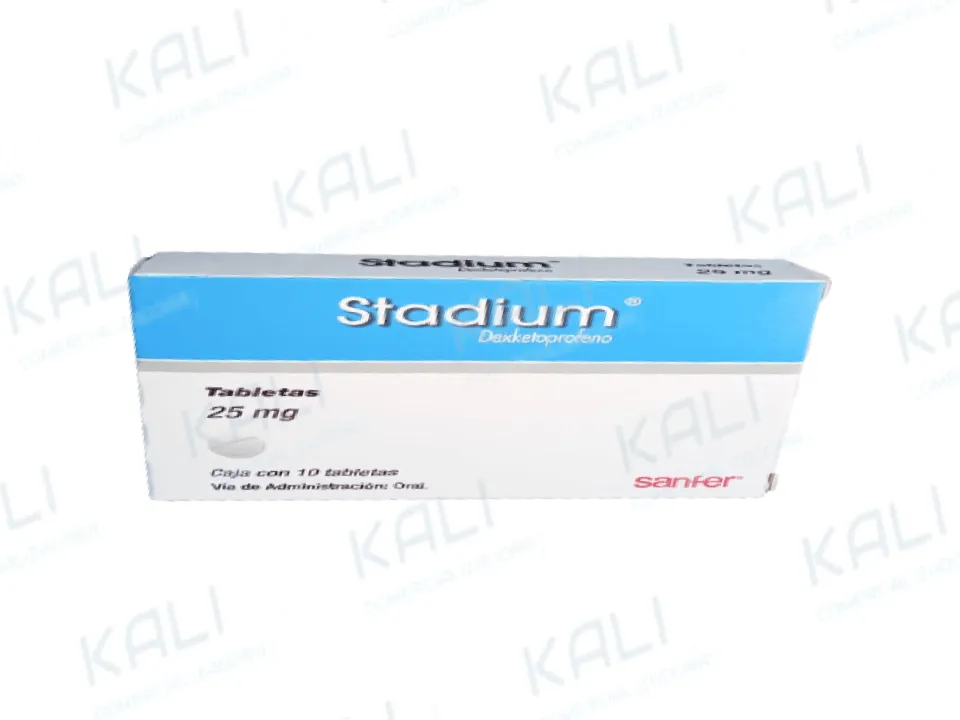
Table of Contents
PATIENT LEAFLET
STADIUM 400 mg film-coated tablets
Cefixime
Generic medicine
PHARMACOTHERAPEUTIC CATEGORY
Systemic antibacterial agent, belonging to the cephalosporin class.
THERAPEUTIC INDICATIONS
STADIUM is indicated for the treatment of infections caused by microorganisms sensitive to
cefixime, in particular:
Acute exacerbations of chronic bronchitis
Community-acquired pneumonia
Uncomplicated lower urinary tract infections
Uncomplicated pyelonephritis.
Also indicated for the treatment of:
Otitis media
Sinusitis
Pharyngitis.
CONTRAINDICATIONS
Hypersensitivity to the active substance, to other cephalosporins, to soy or to any of the
excipients. The medicinal product is also generally contraindicated in patients with hypersensitivity
to penicillins and cephalosporins (see “Precautions for use”).
PRECAUTIONS FOR USE
STADIUM should be administered with caution in patients who have shown hypersensitivity to
other medicinal products. Cephalosporins should be administered with caution in patients sensitive to
penicillins, as there is some evidence of partial cross-allergenicity between penicillins and
cephalosporins.
Some patients have experienced severe reactions (including anaphylaxis) to both classes of drugs.
Particular attention is recommended in patients who have developed allergic reactions to
penicillins or other beta-lactam antibiotics, as cross-reactions may occur (for contraindications related to known hypersensitivity reactions, see “Contraindications”).
Page 1 of 6
If severe hypersensitivity reactions or anaphylactic reactions occur after administration of
cefixime, cefixime must be discontinued immediately and appropriate emergency measures must be initiated.
Renal impairment
STADIUM should be administered with caution in patients with creatinine clearance < 20
ml/min (see “Dosage, method and duration of administration”). There are insufficient data on the use of cefixime in children and adolescents with renal impairment. Therefore, the use of cefixime is not recommended in these patient groups.
Renal function should be monitored during combination therapy with cefixime and
potentially nephrotoxic agents (such as aminoglycoside antibiotics, colistin, polymyxin B, or high doses of loop diuretics (e.g.
furosemide) due to the possibility of additional renal impairment. This particularly concerns patients who already have reduced renal function (see “Interactions”).
INTERACTIONS
Inform your doctor or pharmacist if you have recently taken any other medicines, including those without
a prescription. Concomitant administration of potentially nephrotoxic substances
(such as aminoglycoside antibiotics, colistin, polymyxin and viomycin) and potent diuretics (e.g.
ethacrynic acid or furosemide) may increase the risk of impaired
renal function (see “Precautions for use”).
Nifedipine, a calcium antagonist, may increase the bioavailability of cefixime by up to 70%.
As with other cephalosporins, increased prothrombin time has been observed in a few patients.
Therefore, caution should be exercised in patients receiving anticoagulant therapy.
Administration of cefixime may reduce the efficacy of oral contraceptives. Therefore, it is
recommended to adopt additional non-hormonal contraceptive measures.
SPECIAL WARNINGS
Treatment with STADIUM at the recommended dose (400 mg/day) may significantly
alter the normal colonic flora and lead to superinfection with Clostridium. Studies indicate that
a toxin produced by Clostridium difficile is the main cause of antibiotic-associated
diarrhea.
In patients who develop severe persistent diarrhea during or after cefixime use, the possibility of pseudomembranous colitis, which may be life-threatening, should be considered. STADIUM should be discontinued and appropriate therapeutic measures initiated. The management of pseudomembranous colitis includes sigmoidoscopy, appropriate bacteriological tests, and administration of fluid, electrolyte, and protein supplementation. If colitis does not improve after discontinuation of the medicinal product, or if symptoms are severe, oral vancomycin is the drug of first choice for the treatment of C. difficile-associated antibiotic-induced pseudomembranous colitis.
Other causes of colitis must be excluded. The use of medicinal products that inhibit intestinal peristalsis is contraindicated.
Influence on laboratory diagnostic tests
False positive results for glucose in urine may occur with Benedict's or Fehling's solutions or with copper sulfate tablets, but not with enzyme-based tests using glucose oxidase.
False positive Coombs test results have been reported during treatment with cephalosporins; therefore, it should be borne in mind that a positive Coombs test may be due to the drug.
The tablet coating contains 0.6 mg of soy lecithin.
Pregnancy and breastfeeding
Consult your doctor or pharmacist before taking any medicine.
Pregnancy
There are no adequate data on the use of cefixime in pregnant women. Animal studies do not indicate direct or indirect harmful effects on pregnancy, embryofetal development, delivery or postnatal development. STADIUM should not be used in pregnant women unless considered essential by the physician.
Breastfeeding
There are no data on the passage of the drug into breast milk. Animal studies have shown excretion of cefixime into milk. A decision must be made whether to discontinue breastfeeding or to discontinue/continue cefixime therapy, taking into account the benefit of breastfeeding for the child and the benefit of cefixime therapy for the mother.
However, until further clinical experience becomes available, STADIUM should not be prescribed to breastfeeding women.
Effects on ability to drive and use machines
Cefixime has no known effects on the ability to drive and use machines. However, adverse effects may occur (see also section “Undesirable effects”) that could affect the ability to drive or use machines.
DOSAGE, METHOD AND DURATION OF ADMINISTRATION
Adults
The recommended dose in adults is 400 mg/day taken as a single dose (see “Precautions for use”).
The usual duration of treatment is 7 days. If necessary, it may be continued up to 14 days.
Elderly patients
Page 3 of 6
Elderly patients may be treated with the same dose as adults. In cases of severe renal impairment, renal function should be assessed and the dose adjusted accordingly (see “Precautions for use”).
Adolescents ≥ 12 years of age
Adolescents > 12 years may receive the same recommended dose as adults.
Children from 6 months to 11 years of age
In children from 6 months to 11 years of age, cefixime is recommended in the form of oral suspension. The recommended dosage in children is 8 mg/kg/day, administered as a single dose or divided into two doses.
Children under 6 months of age
The safety and efficacy of cefixime have not been evaluated in children under 6 months of age.
Renal impairment
STADIUM may be administered in the presence of impaired renal function. The normal dose and regimen may be used in patients with creatinine clearance > 20 ml/min. In patients with creatinine clearance < 20 ml/min, a maximum dose of 200 mg once daily is recommended. The dosage and regimen in patients undergoing chronic ambulatory peritoneal dialysis or hemodialysis should follow the same recommendations as for patients with creatinine clearance less than 20 ml/min.
Data on use in children and adolescents with renal impairment are insufficient. Therefore, the use of cefixime is not recommended in these patient groups.
Method of administration
STADIUM tablets are for oral use only. STADIUM tablets should be taken with a sufficient amount of water.
STADIUM may be taken with or without food.
OVERDOSE
Up to 2 grams per day (equivalent to 5 tablets of 400 mg), STADIUM has shown, in
healthy volunteers, the same tolerability observed in patients treated with recommended therapeutic doses. However, in case of accidental ingestion/overdose of STADIUM, contact your doctor immediately or go to the nearest hospital.
WHAT TO DO IF YOU FORGET TO TAKE ONE OR MORE DOSES
If the patient forgets the daily dose at the scheduled time (e.g. in the evening), they should
take it as soon as possible (e.g. the next morning: in this case, two doses will be taken on the same day).
UNDESIRABLE EFFECTS
Page 4 of 6
If you have any doubts about the use of STADIUM, consult your doctor or pharmacist.
Like all medicines, Cefixime can cause undesirable effects, although not everyone experiences them.
The following undesirable effects are important and, if they occur, require immediate medical attention. You must stop taking Cefixime and consult your doctor immediately if any of the following symptoms occur:
Very rare adverse effects (affecting less than 1 patient in 10,000) include:
- Severe watery diarrhea, which may also contain blood
- Sudden severe allergic reactions (anaphylactic shock) such as rash or urticaria, itching, swelling of the face, lips, tongue or other parts of the body, tightness in the chest, wheezing and collapse.
- Severe skin disease with blistering of the skin, mouth, eyes and genitals (Stevens-Johnson syndrome, toxic epidermal necrolysis).
The following adverse effects have also been reported:
Common adverse effects (affecting less than 1 in 10 patients) include:
- Diarrhea.
Uncommon adverse effects (affecting less than 1 in 100 patients) include:
- Headache
- Nausea
- Vomiting
- Abdominal pain
- Changes in blood tests related to liver function
- Rash.
Rare adverse effects (affecting less than 1 in 1,000 patients) include:
- Increased risk of infections caused by organisms not susceptible to Cefixime, such as candidiasis
- Increase in the number of white blood cells called eosinophils
- Allergic reaction
- Loss of appetite
- Dizziness
- Flatulence (intestinal gas)
- Itching
- Inflammation of mucous membranes such as those of the mouth and/or internal surfaces
- Fever
- Changes in blood tests measuring kidney function.
Page 5 of 6
Very rare adverse effects (affecting less than 1 in 10,000 patients) include:
- Decrease in the number of various blood cells (symptoms may include fatigue, new infections and easy bruising or bleeding)
- Allergic reactions characterized by rash, fever, joint pain and organ enlargement
- Restlessness and increased activity
- Liver problems, including jaundice (yellowing of the skin and whites of the eyes)
- Kidney inflammation.
If any of the undesirable effects worsens, or if you notice any undesirable effect not listed in this leaflet, inform your doctor or pharmacist.
EXPIRY DATE AND STORAGE
STADIUM should be used before the expiry date stated on the carton and blister.
DO NOT USE AFTER THE EXPIRY DATE. This date is valid only if the packaging
is intact.
Keep the medicine out of the reach and sight of children.
Store the product at a temperature not exceeding 25 °C.
The expiry date indicated refers to the product when unopened and correctly stored.
COMPOSITION
One film-coated tablet contains:
Active substance: cefixime trihydrate 447.68 mg, equivalent to 400 mg of anhydrous cefixime.
Excipients: anhydrous calcium hydrogen phosphate, pregelatinized starch, hydroxypropylcellulose,
microcrystalline cellulose, magnesium stearate. Coating: polyvinyl alcohol, titanium dioxide,
talc, soy lecithin, xanthan gum.
PHARMACEUTICAL FORM AND CONTENT
Film-coated tablets, 5 tablets.
MARKETING AUTHORISATION HOLDER
S.F. GROUP S.R.L.
VIA TIBURTINA, 1143, 00156 - ROMA
RESPONSIBLE PHARMACEUTICAL COMPANY FOR BATCH RELEASE
APL Swift Services (Malta) Limited
HF26, Hal Far Industrial Estate, Hal Far, Birzebbugia, BBG 3000, Malta
25/11/2011
Page 6 of 6