Sporanox
Italy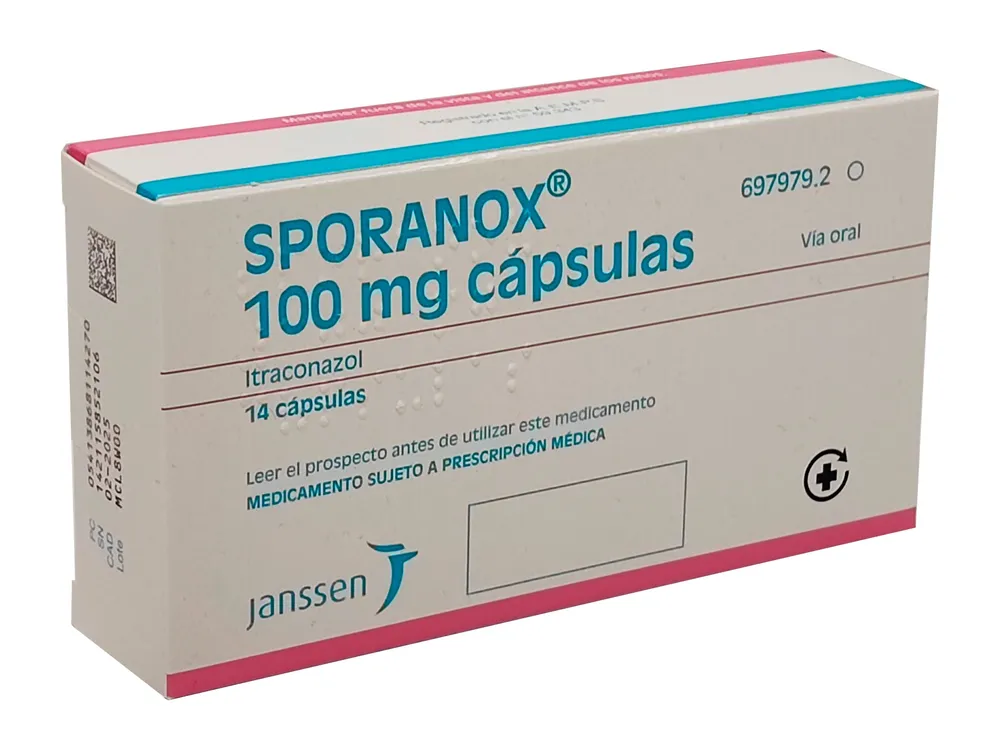
Table of Contents
- Package leaflet: Information for the patient
- SPORANOX 10 mg/mL oral solution
- 1. What SPORANOX oral solution is and what it is used for
- 2. What you should know before taking SPORANOX oral solution
- 3. How to take SPORANOX oral solution
- 4. Possible side effects
- 5. How to store SPORANOX oral solution
- 6. Package contents and other information
- Patient Information Leaflet
- SPORANOX 100 mg hard capsules
- 1. What Sporanox capsules are and what they are used for
- 2. What you need to know before taking Sporanox capsules
- 3. How to use Sporanox capsules
- 4. Possible side effects
- 5. How to store Sporanox capsules
- 6. Package contents and other information
Package leaflet: Information for the patient
SPORANOX 10 mg/mL oral solution
(itraconazole)
Please read this leaflet carefully before using this medicine because
it contains important information for you.
- Keep this leaflet. You may need to read it again.
- If you have any questions, ask your doctor or pharmacist.
- This medicine has been prescribed for you only. Do not give it to other people, even if their symptoms are the same as yours, as it may be harmful.
- If you experience any side effects, including those not listed in this leaflet, contact your doctor or pharmacist.
Contents of this leaflet
- What SPORANOX oral solution is and what it is used for
- What you need to know before taking SPORANOX oral solution
- How to take SPORANOX oral solution
- Possible side effects
- How to store SPORANOX oral solution
- Contents of the pack and other information
1. What SPORANOX oral solution is and what it is used for
SPORANOX oral solution belongs to a group of medicines called "antifungals".
These medicines are used to treat and clear fungal infections,
including yeast infections.
SPORANOX oral solution is prescribed to you:
- to treat yeast infections of the mouth, throat or oesophagus if you have a weakened immune system
- to prevent certain fungal infections if you have a weakened immune system due to blood disorders or bone marrow transplantation.
2. What you should know before taking SPORANOX oral solution
Do not use SPORANOX oral solution:
- If you are allergic (hypersensitive) to any of the other components of SPORANOX oral solution (listed in section 6)
- If you are pregnant, suspect you may be pregnant, or are planning a pregnancy (see section “Pregnancy”)
Talk to your doctor if you are taking any other medicine before taking
SPORANOX oral solution.
- Do not take SPORANOX oral solution if you are taking certain medicines, or within 2 weeks after stopping SPORANOX oral solution. The following list includes examples of medicines you must not take with SPORANOX oral solution, nor within 2 weeks after stopping SPORANOX oral solution:
Medicines for treating heart, blood, or circulation problems
- aliskiren, eplerenone, lercanidipine or nisoldipine (for high blood pressure)
- bepridil, ivabradine or ranolazine (for angina)
- dabigatran or ticagrelor (for blood clots)
- disopyramide, dofetilide, dronedarone or quinidine (for irregular heart rhythm)
- finerenone (for kidney problems in patients with type 2 diabetes)
- lomitapide, lovastatin or simvastatin (to lower cholesterol)
- sildenafil (for pulmonary arterial hypertension) Medicines for treating stomach problems or constipation
- cisapride (for stomach disorders)
- domperidone (for nausea and vomiting)
- naloxegol (for constipation caused by opioid painkillers) Medicines for treating headaches, insomnia, or mental health problems
- dihydroergotamine or ergotamine (ergot alkaloids for migraines)
- midazolam (oral) or triazolam (for sedation or to help sleep)
- lurasidone, pimozide, quetiapine or sertindole (for schizophrenia, bipolar disorder or other mental health problems) Medicines for treating urinary problems
- darifenacin (for urinary incontinence)
- fesoterodine or solifenacin (for bladder irritation) when used in patients with certain kidney or liver problems Medicines for treating allergies
- astemizole, mizolastine or terfenadine (for allergies) Medicines for treating erectile and ejaculation problems
- avanafil (for erectile dysfunction)
- dapoxetine (for premature ejaculation)
- vardenafil (for erectile dysfunction) if used in men over 75 years of age Other medicines containing:
- colchicine (for gout) if used in patients with kidney or liver problems
- ergot alkaloids, ergometrine (ergonovine) or methylergometrine (methylergonovine), used after childbirth
- eliglustat (for Gaucher disease) if used in patients unable to metabolize certain medicines
- halofantrine (for malaria)
- irinotecan (for cancer)
- isavuconazole (for fungal infections)
- ombitasvir, paritaprevir, ritonavir with or without dasabuvir (for hepatitis C treatment)
- venetoclax (for chronic lymphocytic leukemia) when starting treatment or during dose escalation at the beginning of treatment
- voclosporin (for lupus-related kidney problems)
Note: do not take any of the medicines listed above for 2 weeks
following your last dose of SPORANOX oral solution.
This is not a complete list, so inform your doctor if you are taking or plan to take any of these or other medicines.
Warnings and precautions
Stop treatment with SPORANOX oral solution and contact
your doctor immediately if any of the following serious liver problems occur during treatment:
- severe loss of appetite, feeling unwell, malaise, unusual tiredness, stomach pain, unusually dark urine or unusually pale stools.
Inform your doctor immediately:
- if you experience unusual tingling, reduced sensation, or weakness in your hands or feet during treatment with SPORANOX oral solution
- if you notice symptoms related to hearing loss. In very rare cases, patients taking SPORANOX oral solution have reported temporary or permanent hearing loss.
Tell your doctor if you have or have had any of the following conditions:
- an allergic reaction to other antifungal medicines
- heart problems, including heart failure (also called congestive heart failure or CHF), which SPORANOX oral solution could worsen. If your doctor decides to prescribe SPORANOX, you should be aware of the symptoms listed below. If you experience any of these symptoms, stop taking SPORANOX and contact your doctor immediately. These could be signs of heart failure:
- shortness of breath
- unexpected weight gain
- swelling in the legs or stomach
- unusual tiredness
- waking up at night with breathing difficulties
- liver problems, such as jaundice (yellowing of the skin): in this case, the dose of SPORANOX may need to be adjusted. Your doctor will advise you on symptoms to monitor. If you need to take SPORANOX continuously for more than one month, your doctor may want to check liver function with blood tests. Additionally, there may be specific medicines you should not take
- kidney problems: in this case, the dose of SPORANOX may need to be adjusted. Additionally, there may be specific medicines you should not take.
- cystic fibrosis (a genetic disease affecting the lungs, pancreas, liver, kidneys, and intestines).
Other medicines and SPORANOX oral solution
Inform your doctor or pharmacist if you are taking, have recently taken, or
might take any other medicine.
There are some medicines that you must not take during treatment with
SPORANOX. These are listed in the section “Do not use SPORANOX oral solution if:”
Some medicines are not recommended for use with SPORANOX oral solution.
Your doctor will decide whether you must not take certain medicines
concurrently or within 2 weeks after stopping
treatment with SPORANOX oral solution.
Examples of these medicines are:
Medicines for treating heart, blood, or circulation problems
- apixaban, edoxaban, rivaroxaban or vorapaxar (for blood clots)
- atorvastatin (to lower cholesterol)
- felodipine (for high blood pressure)
- riociguat or tadalafil (for pulmonary hypertension) Medicines for treating epilepsy, headaches, or mental health problems
- phenytoin, carbamazepine or phenobarbital (antiepileptics)
- eletriptan (for migraine)
- St John’s wort (Hypericum perforatum) (a herbal remedy used for mental health problems) Medicines for treating urinary problems
- tamsulosin (for male urinary incontinence)
- tolterodine (for bladder irritation) Medicines for treating cancer
- axitinib, bosutinib, cabazitaxel, cabozantinib, ceritinib, cobimetinib, crizotinib, dabrafenib, dasatinib, docetaxel, entrectinib, glasdegib, ibrutinib, lapatinib, nilotinib, olaparib, pazopanib, regorafenib, sunitinib, talazoparib, trabectedin, trastuzumab emtansine, venetoclax (when taking a stable dose of venetoclax for chronic lymphocytic leukemia, or at any time during treatment for acute myeloid leukemia), or vinca alkaloids (e.g. vinflunine, vinorelbine) Medicines for treating tuberculosis
- bedaquiline, isoniazid, rifabutin or rifampicin (for tuberculosis) Medicines for treating human immunodeficiency virus (HIV) or hepatitis
- efavirenz or nevirapine (for HIV/AIDS), elbasvir/grazoprevir, tenofovir alafenamide fumarate (TAF), tenofovir disoproxil fumarate (TDF) (for HIV or hepatitis) Medicines used after organ transplant
- everolimus, rapamycin (also known as sirolimus), temsirolimus Medicines for treating benign prostatic hyperplasia
- alfuzosin, silodosin Medicines for treating lung problems, allergies, or inflammatory conditions
- ciclesonide (for inflammation, asthma and allergies)
- ebastine (for allergies)
- salmeterol (for asthma or chronic obstructive pulmonary disease, COPD) Medicines for treating erectile and ejaculation problems
- tadalafil or vardenafil (if used in men aged 75 years or younger) (for erectile dysfunction) Other medicines containing:
- colchicine (for gout)
- fentanyl (for pain)
- lumacaftor/ivacaftor (for cystic fibrosis)
Note: do not take any of the medicines listed above for 2 weeks
following your last dose of SPORANOX oral solution.
This is not a complete list, so inform your doctor if you are taking or plan to take any of these or other medicines.
Caution is required when taking SPORANOX oral solution with certain other medicines
You may be more likely to experience side effects, or it may be necessary to adjust the dose of SPORANOX oral solution or the other medicine. Examples of these medicines are:
Medicines for treating heart, blood, or circulation problems
- bosentan (for pulmonary hypertension)
- calcium channel blockers such as dihydropyridines, e.g. amlodipine, isradipine, nifedipine, nimodipine or diltiazem (for high blood pressure)
- or verapamil (for high blood pressure)
- cilostazol (for circulatory problems)
- “coumarins” such as warfarin (for blood clotting)
- digoxin (for atrial fibrillation)
- nadolol (for pulmonary hypertension or angina) Medicines for treating stomach problems or diarrhoea
- aprepitant or netupitant (for nausea and vomiting during cancer treatment)
- loperamide (for diarrhoea)
- antacids such as aluminium, calcium, magnesium or sodium bicarbonate; H2-receptor antagonists such as cimetidine, ranitidine, and proton pump inhibitors such as lansoprazole, omeprazole, rabeprazole (for acid-related stomach problems) Medicines for treating sleep or mental health problems
- alprazolam, brotizolam, buspirone or midazolam (intravenous) (for anxiety or to help sleep)
- zopiclone (to help sleep)
- reboxetine or venlafaxine (for depression and anxiety)
- aripiprazole, cariprazine, haloperidol or risperidone (for schizophrenia, bipolar disorder or other mental health problems)
- galantamine (for Alzheimer’s disease)
- guanfacine (for attention deficit hyperactivity disorder) Medicines for treating urinary problems
- imidafenacin, fesoterodine, oxybutynin, solifenacin (for bladder irritation) Medicines for treating cancer
- bortezomib, brentuximab vedotin, busulfan, erlotinib, gefitinib, idelalisib, imatinib, nintedanib, panobinostat, pemigatinib, ponatinib, ruxolitinib, sonidegib or tretinoin (oral) Medicines for treating infections
- ciprofloxacin, clarithromycin or erythromycin (for bacterial infections)
- delamanid (for tuberculosis)
- artemether-lumefantrine or quinine (for treating malaria)
- praziquantel (for flukes and tapeworms) Medicines for treating human immunodeficiency virus (HIV) or hepatitis
- cobicistat, boosted elvitegravir, maraviroc, ritonavir, ritonavir-boosted darunavir, ritonavir-boosted fosamprenavir, indinavir or saquinavir (for HIV)
- glecaprevir/pibrentasvir (for hepatitis) Medicines used after organ transplant
- cyclosporine or tacrolimus Medicines for treating benign prostatic hyperplasia
- dutasteride Medicines for treating lung problems, allergies, or inflammatory conditions
- bilastine or rupatadine (for allergies)
- methylprednisolone or dexamethasone (medicines taken orally or by injection for asthma, allergies or inflammatory conditions)
- budesonide or fluticasone (for asthma, allergies) Medicines for treating erectile and ejaculation problems
- sildenafil (for erectile dysfunction) Medicines for treating pain
- alfentanil, buprenorphine, oxycodone or sufentanil (for pain)
- meloxicam (for inflammation and joint pain) Other medicines containing:
- alitretinoin (oral) (for eczema)
- cabergoline (for Parkinson’s disease)
- cannabinoid-containing products including medicinal products (such as those for nausea and vomiting or muscle spasms in patients with multiple sclerosis)
- cinacalcet (for hyperparathyroidism)
- dienogest or ulipristal (contraceptives)
- eliglustat (for Gaucher disease) if used in patients unable to metabolize certain medicines
- ivacaftor (for cystic fibrosis)
- methadone (for drug addiction treatment)
- repaglinide or saxagliptin (for diabetes) This is not a complete list, so inform your doctor if you are taking or plan to take any of these or other medicines.
SPORANOX oral solution with food and drink
Do not take SPORANOX with food or drink, as they may reduce your body’s ability to absorb the medicine. Always take SPORANOX oral solution one hour before food or drink, as this helps your body absorb the drug.
Children
SPORANOX is not normally given to children. Your doctor may prescribe it in special cases.
SPORANOX contains cyclodextrin, propylene glycol and alcohol (ethanol). Do not use in children under 2 years of age unless recommended by your doctor. If your child is under 5 years of age, talk to your doctor or pharmacist before giving this medicine, especially if your child is taking other medicines containing cyclodextrin, propylene glycol or alcohol.
Elderly
SPORANOX is not normally given to elderly patients. Your doctor may prescribe it in special cases.
Pregnancy
Do not use SPORANOX if you are pregnant, unless your doctor has told you to take it. If you are of childbearing age and could become pregnant, you must use adequate contraceptive measures to avoid pregnancy during treatment with this medicine. Since SPORANOX remains in the body for some time after stopping treatment, you must continue using contraception until your first menstrual period after completing SPORANOX treatment.
If you find out you are pregnant after a course of SPORANOX treatment, stop taking SPORANOX and contact your doctor immediately.
Before taking any medicine, always inform your doctor if you are pregnant, think you may be pregnant, or intend to become pregnant.
Breast-feeding
Do not take SPORANOX if you are breast-feeding, as small amounts of the medicine may pass into breast milk. If your doctor recommends taking SPORANOX, additional monitoring may be required during treatment.
Driving and using machines
SPORANOX may sometimes cause dizziness, blurred or double vision, or hearing loss. If you experience these symptoms, do not drive or operate machinery.
SPORANOX oral solution contains sorbitol
This medicine contains 7,920 mg of sorbitol in a 40 mL dose, equivalent to 198 mg per mL. If your doctor has told you that you (or your child) have an intolerance to certain sugars or have been diagnosed with hereditary fructose intolerance (HFI), a rare genetic disorder in which a person cannot metabolize fructose, talk to your doctor before you (or your child) take this medicine. Sorbitol is a source of fructose and may cause gastrointestinal discomfort and has a mild laxative effect.
SPORANOX oral solution contains propylene glycol
This medicine contains 4.2 g of propylene glycol in each 40 mL dose, equivalent to 104 mg/mL. If you are pregnant, breast-feeding, or have liver or kidney disease, do not take this medicine unless recommended by your doctor. Your doctor may require additional monitoring while you are taking this medicine.
SPORANOX oral solution contains cyclodextrin
This medicine contains 16,000 mg of cyclodextrins in each 40 mL, equivalent to
400 mg/mL. Cyclodextrin may cause digestive disorders such as diarrhoea.
SPORANOX oral solution contains alcohol (ethanol)
This medicine contains 0.2 mg of alcohol (ethanol) in each 40 mL dose, equivalent to 0.005 mg/mL. The amount in 40 mL of this medicine is less than 1 mL of beer or wine. The small amount of alcohol in this medicine will not produce significant effects.
SPORANOX oral solution contains sodium
This medicine contains less than 1 mmol of sodium (23 mg) in a 40 mL dose, i.e. essentially “sodium-free”.
3. How to take SPORANOX oral solution
Always take SPORANOX oral solution one hour before any food or drink:
this will help ensure proper absorption of the medicine.
Swish the medicine in your mouth for about 20 seconds before swallowing. Do not
rinse your mouth after taking the oral solution.
Always take SPORANOX exactly as prescribed by your doctor. If you are
unsure, consult your doctor or pharmacist.
A calibrated measuring cup indicating 10 mL is provided. Make sure to fill it up to the
10 mL mark.
How to take SPORANOX oral solution
-
Treatment of yeast infections of the mouth, throat or oesophagus
The usual dose is 2 measuring cups (20 mL) once daily for one week. This may be taken as a single dose or divided into two daily doses.
If the infection has not resolved after one week of treatment with SPORANOX, your doctor may decide to continue therapy for another week. -
Treatment of mouth, throat or oesophageal infections previously treated without success with other antifungals
The usual dose is 1–2 measuring cups (10–20 mL) twice daily for two weeks. Treatment may be continued for an additional two weeks if the infection has not resolved during the initial two weeks.
For patients receiving a daily dose of 400 mg (4 measuring cups), treatment should be limited to 14 days unless there is evidence of improvement during this period. -
Prevention of fungal infections
The dose is calculated based on your body weight (5 mg per kg), divided into two daily doses. Your doctor will tell you exactly how much medicine to take.
Instructions for opening the bottle
The bottle comes with a child-resistant cap, which must be opened as follows: press the cap downwards and, at the same time, turn it counterclockwise.
How to use the dosing cap
Use the dosing cap as provided on the bottle. Ensure that the side with the graduated markings (the shallower side) is facing upwards; this is the side to be filled.
When the arrow points upward, the correct side is the higher one.
If you take more SPORANOX oral solution than you should
If you or someone else takes more SPORANOX than prescribed, contact your doctor or the nearest hospital immediately.
If you forget to take SPORANOX oral solution
If you forget to take your dose, take the next dose at the usual time and continue taking the medicine as directed by your doctor. Do not take a double dose to make up for a forgotten dose.
If you have any further questions about the use of SPORANOX oral solution, ask your doctor or pharmacist.
4. Possible side effects
Like all medicines, SPORANOX oral solution can cause side effects,
although not everyone gets them.
Medicines can cause serious allergic reactions.
Stop taking SPORANOX and contact your doctor immediately if
you experience any of the following:
- sudden dizziness, breathing difficulties, facial swelling, rash, itching (especially if it affects the whole body), or a severe skin disorder (characterized by widespread skin rashes with skin peeling and blisters in the mouth, eyes and genitals, or rashes characterized by small pustules or blisters).
- severe loss of appetite, feeling unwell or malaise, unusual tiredness, abdominal pain (in the stomach), unusually dark urine or pale stools. These may be symptoms of serious liver problems.
You must inform your doctor immediately if you experience any of the following
side effects:
- Symptoms suggestive of heart failure such as shortness of breath, unexpected weight gain, swelling of the legs, unusual tiredness, repeated waking at night.
- Tingling sensation, light sensitivity, reduced sensation and weakness in the limbs.
- Blurred or double vision, ringing in the ears, incontinence or increased urge to urinate.
- If symptoms of hearing loss occur.
- Severe pain in the upper part of the stomach, often with nausea and vomiting due to inflammation of the pancreas (pancreatitis).
Other side effects include:
Common side effects (occur in less than 1 in 10 patients):
- headache
- stomach ache, feeling unwell (nausea), vomiting, diarrhoea, indigestion, unpleasant taste sensation
- rash
- fever or high temperature
- shortness of breath
- dizziness
- cough
Uncommon side effects (occur in less than 1 in 100 patients):
- certain blood disorders that may cause an increased risk of bleeding or bruising (possible symptoms due to low platelet levels), or infections (possible symptoms due to low white blood cell levels in the blood)
- constipation
- itching, hives
- generalized swelling
- muscle cramps or irregular heartbeat (possible symptoms due to low potassium levels in the blood)
- muscle pain, joint pain
- abnormal menstrual bleeding
- reduced or altered sensation, especially in the skin
The following side effects have been reported in patients treated with SPORANOX
at an unknown frequency:
- elevated triglycerides (fats) in the blood
- hair loss
- increased levels of creatine phosphokinase in the blood
- symptoms due to increased levels of the hormone “aldosterone” (such as high blood pressure or low potassium levels in the blood), even when “aldosterone” levels in the blood are normal or low
The following adverse effects have been reported in patients treated with other
formulations of SPORANOX:
- upper respiratory tract infection
- inflammation of the nose
- inflammation of the paranasal sinuses
- certain blood disorders that may increase the risk of infections (possible symptoms due to low granulocyte levels)
- high blood sugar levels
- muscle cramps or irregular heartbeats (possible symptoms due to low magnesium levels in the blood)
- muscle cramps or irregular heartbeats (possible symptoms due to high potassium levels in the blood)
- confusion
- drowsiness
- tremors
- increased heart rate
- high blood pressure
- low blood pressure
- fluid in the lungs
- difficulty speaking
- excess gas in the intestinal tract
- increase in specific liver function parameters (elevated liver enzymes)
- inflammation of the liver (hepatitis)
- yellowing of the skin (jaundice)
- excessive sweating
- kidney problems
- excessive urine production
- erectile dysfunction
- generalized swelling
- facial swelling
- chest pain
- pain
- chills
- fatigue
- increased blood urea levels
- abnormal urine tests
Reporting of side effects
If you experience any side effect, including those not listed in this
leaflet, talk to your doctor, pharmacist or nurse. You can also report side effects
directly via the national reporting system at
https://www.aifa.gov.it/content/segnalazioni-reazioni-avverse . Reporting side effects
can help provide more information on the safety of this medicine.
5. How to store SPORANOX oral solution
Keep this medicine out of the sight and reach of children.
Store SPORANOX oral solution at a temperature not exceeding 25°C.
Do not use SPORANOX oral solution after the expiry date stated on the packaging
after EXP. The expiry date refers to the last day of the month.
The oral solution must not be used for more than 1 month after first opening the
bottle.
Always return any unused medicine to the pharmacist. Keep it only if instructed by the
doctor.
6. Package contents and other information
What SPORANOX oral solution contains
- The active substance is itraconazole (10 mg of itraconazole per mL).
- The excipients are: hydroxypropyl-β-cyclodextrin E420, sorbitol (non-crystallizable liquid), propylene glycol E1520, hydrochloric acid, cherry flavour 1 and 2 (contains ethanol), caramel flavour, sodium saccharin, sodium hydroxide and water.
Description of the appearance of SPORANOX oral solution and contents of the
pack
SPORANOX oral solution is a clear solution, yellow to slightly amber in colour. It is available in a 150 mL bottle with a dosing dispenser.
Marketing Authorisation Holder and Manufacturer
Marketing Authorisation Holder
Janssen-Cilag SpA
Viale Fulvio Testi, 280/6
20126 Milan MI
Manufacturer
SPORANOX oral solution is manufactured by:
Janssen Pharmaceutica N.V.
Turnhoutseweg, 30
B-2340 Beerse
Belgium
This medicinal product is authorised in the Member States of the European
Economic Area and in the United Kingdom (Northern Ireland) under the following names:
Austria: SPORANOX
Belgium: SPORANOX
Finland: SPORANOX
Germany: SEMPERA
Ireland: SPORANOX
Italy: SPORANOX
Luxembourg: SPORANOX
Netherlands: TRISPORAL
Portugal: SPORANOX
Sweden: SPORANOX
United Kingdom (Northern Ireland): SPORANOX
® Registered trademark
Patient Information Leaflet
SPORANOX 100 mg hard capsules
Itraconazole
Read this entire leaflet carefully before taking this medicine because it contains
important information for you.
- Keep this leaflet. You may need to read it again.
- If you have any questions, ask your doctor or pharmacist.
- This medicine has been prescribed for you only. Do not give it to other people, even if their symptoms are the same as yours, as it could be harmful.
- If you experience any side effect, including those not listed in this leaflet, inform your doctor or pharmacist. See section 4.
Contents of this leaflet:
- What Sporanox capsules are and what they are used for
- What you need to know before taking Sporanox capsules
- How to take Sporanox capsules
- Possible side effects
- How to store Sporanox capsules
- Contents of the pack and other information
1. What Sporanox capsules are and what they are used for
Sporanox contains itraconazole, which belongs to a group of medicines known as "systemic antifungals", used to treat the following fungal infections (mycoses):
- Superficial mycoses:
- vulvovaginal candidiasis (fungal infection of the female genital tract)
- pityriasis versicolor (skin infection characterized by light and dark patches)
- dermatophytosis (superficial skin infection)
- oral candidiasis (mouth infection)
- fungal keratitis (inflammation of the cornea on the front of the eye)
- onychomycosis (nail infections) caused by fungi and/or yeasts.
- Systemic mycoses (fungal infections that spread throughout the body):
- aspergillosis (infection caused by Aspergillus)
- candidiasis (infection caused by Candida)
- cryptococcosis (infection caused by Cryptococcus), including cryptococcal meningitis (inflammation of the meninges): in immunocompromised patients with cryptococcosis and in all patients with central nervous system cryptococcosis, Sporanox is indicated only when first-line treatment is considered inappropriate or has proven ineffective;
- histoplasmosis (infection caused by Histoplasma)
- sporotrichosis, including lymphocutaneous and cutaneous sporotrichosis (infection caused by Sporothrix)
- paracoccidioidomycosis (infection caused by Paracoccidioides brasiliensis)
- blastomycosis (infection caused by Blastomyces dermatitidis)
- other rare systemic mycoses.
2. What you need to know before taking Sporanox capsules
DO NOT use Sporanox capsules
- If you are allergic (hypersensitive) to any of the other components of Sporanox capsules (listed in section 6);
- If you are pregnant, suspect you may be pregnant, or are planning a pregnancy (see section on "Pregnancy");
- If you have heart problems (ventricular dysfunction), for example if your heart is unable to pump blood effectively (congestive heart failure), unless your doctor determines that treatment for potentially life-threatening infections or other serious infections is necessary.
Inform your doctor if you are taking any medications before taking Sporanox capsules.
- Do not take Sporanox capsules if you are taking certain medicines or within 2 weeks after stopping Sporanox capsules. The list below includes examples of medicines that must not be taken with Sporanox capsules, either during treatment or within 2 weeks of stopping Sporanox capsules:
Medicines used to treat heart, blood, or circulation problems
- aliskiren, eplerenone, lercanidipine, or nisoldipine (for high blood pressure)
- bepridil, ivabradine, or ranolazine (for angina)
- dabigatran or ticagrelor (for blood clots)
- disopyramide, dofetilide, dronedarone, or quinidine (for irregular heartbeat)
- finerenone (for kidney problems in patients with type 2 diabetes)
- lomitapide, lovastatin, or simvastatin (to lower cholesterol)
- sildenafil (for pulmonary arterial hypertension)
Medicines to treat stomach or constipation problems
- cisapride (for stomach disorders)
- domperidone (for nausea and vomiting)
- naloxegol (for constipation caused by opioid painkillers)
Medicines to treat headaches, sleep, or mental health problems
- dihydroergotamine or ergotamine (ergot alkaloids used for migraine headaches)
- midazolam (oral) or triazolam (for sedation or to help you sleep)
- lurasidone, pimozide, quetiapine, or sertindole (for schizophrenia, bipolar disorder, or other mental health problems)
Medicines to treat urinary problems
- darifenacin (for urinary incontinence)
- fesoterodine or solifenacin (for bladder irritation) when used in patients with certain kidney or liver problems
Medicines to treat allergies
- astemizole, mizolastine, or terfenadine (for allergies)
Medicines to treat erectile dysfunction and ejaculation problems
- avanafil (for erectile dysfunction)
- dapoxetine (for premature ejaculation)
- vardenafil (for erectile dysfunction) when used in men over 75 years of age
Other medicines containing:
- colchicine (for gout) when used in patients with kidney or liver problems
- ergometrine (ergonovine) or methylergometrine (methylergonovine), ergot alkaloids used after childbirth
- eliglustat (for Gaucher disease) when used in patients who cannot metabolize certain drugs
- halofantrine (for malaria)
- irinotecan (for cancer)
- isavuconazole (for fungal infections)
- ombitasvir, paritaprevir, ritonavir with or without dasabuvir (to treat hepatitis C)
- venetoclax (for chronic lymphocytic leukemia) when starting treatment or when increasing doses at the beginning of treatment
- voclosporin (to treat kidney problems associated with lupus)
Note: do not take any of the medicines listed above for 2 weeks after your last dose of Sporanox capsules.
This is not a complete list; therefore, inform your doctor if you are taking or plan to take any of these medicines or other medicines.
Warnings and precautions
Consult your doctor or pharmacist before taking Sporanox capsules.
Stop treatment with Sporanox capsules and contact your doctor immediately if you experience any of the following symptoms:
- Loss of appetite (anorexia)
- Nausea
- Vomiting
- Weakness (asthenia)
- Abdominal pain
- Dark urine
If your doctor considers it necessary to take Sporanox capsules, they may recommend regular blood tests to detect early signs of liver problems.
Contact your doctor if you experience hearing loss or if you have achlorhydria (a condition causing reduced stomach acidity).
Contact your doctor immediately if you experience:
-
Shortness of breath
-
Unexpected weight gain
-
Swelling in legs or abdomen
-
Unusual fatigue
-
Difficulty breathing at night
These may be symptoms of heart failure; in such cases, treatment must be stopped. -
Tingling
-
Numbness
-
Weakness in limbs
-
Other nerve problems in arms or legs
-
Blurred or double vision, ringing in the ears, or loss of bladder control
These may be symptoms of a nerve disorder (neuropathy); in such cases, treatment must be stopped.
Inform your doctor if you have or have had:
- Liver problems: dose adjustment of Sporanox capsules may be necessary;
- Heart problems;
- Kidney problems: dose adjustment of Sporanox capsules may be necessary;
- Cystic fibrosis (a genetic disease);
- Peripheral nervous system disorders (neuropathy);
- Neutropenia (low white blood cell count), AIDS, or if you have undergone an organ transplant. Dose adjustment of Sporanox capsules may be necessary.
If you are elderly: Sporanox capsules should not be used in elderly patients unless otherwise prescribed by a doctor.
Other medicines and Sporanox capsules
Inform your doctor or pharmacist if you are taking, have recently taken, or might take any other medicines.
There are some medicines that must not be taken while using Sporanox capsules. These are listed above in the section "Do not use Sporanox capsules if:"
The use of some medicines is not recommended with Sporanox capsules.
Your doctor will decide whether you must not take certain medicines at the same time as Sporanox capsules or within 2 weeks after stopping Sporanox capsules.
Examples of these medicines include:
Medicines to treat heart, blood, or circulation problems
- apixaban, edoxaban, rivaroxaban, or vorapaxar (for blood clots)
- atorvastatin (to lower cholesterol)
- felodipine (for high blood pressure)
- riociguat or tadalafil (for pulmonary hypertension)
Medicines to treat epilepsy, headaches, or mental health problems
- phenytoin, carbamazepine, or phenobarbital (antiepileptics)
- eletriptan (for migraine headaches)
- St. John’s wort (Hypericum perforatum) (a herbal medicine used for mental health problems)
Medicines to treat urinary problems
- tamsulosin (for urinary incontinence in men)
- tolterodine (for bladder irritation)
Medicines to treat cancer
- axitinib, bosutinib, cabazitaxel, cabozantinib, ceritinib, cobimetinib, crizotinib, dabrafenib, dasatinib, docetaxel, entrectinib, glasdegib, ibrutinib, lapatinib, nilotinib, olaparib, pazopanib, regorafenib, sunitinib, talazoparib, trabectedin, trastuzumab emtansine, venetoclax (when taking a stable dose of venetoclax for chronic lymphocytic leukemia, or at any time during treatment for acute myeloid leukemia), or vinca alkaloids (e.g., vinflunine, vinorelbine)
Medicines to treat tuberculosis
- bedaquiline, isoniazid, rifabutin, or rifampicin (for tuberculosis)
Medicines to treat human immunodeficiency virus (HIV) or hepatitis
- efavirenz or nevirapine (for HIV/AIDS)
- elbasvir/grazoprevir, tenofovir alafenamide fumarate (TAF), tenofovir disoproxil fumarate (TDF) (for HIV or hepatitis)
Medicines used after organ transplantation
- everolimus, sirolimus (also known as rapamycin), temsirolimus
Medicines to treat benign prostatic hyperplasia
- alfuzosin, silodosin
Medicines to treat lung problems or allergies
- ciclesonide (for inflammation, asthma, and allergies)
- ebastine (for allergies)
- salmeterol (for asthma or chronic obstructive pulmonary disease - COPD)
Medicines to treat erectile dysfunction and ejaculation problems
- tadalafil or vardenafil (when used in men aged 75 years or younger) (for erectile dysfunction)
Other medicines containing:
- colchicine (for gout)
- fentanyl (for pain)
- lumacaftor/ivacaftor (for cystic fibrosis)
Note: do not take any of the medicines listed above for 2 weeks after your last dose of Sporanox capsules. This is not a complete list; therefore, inform your doctor if you are taking or plan to take any of these medicines or any other medicine.
Caution is required when taking Sporanox capsules with certain other medicines
You may be more likely to experience adverse effects, or it may be necessary to adjust the dose of Sporanox capsules or the other medicine. Examples include:
Medicines to treat heart, blood, or circulation problems
- bosentan (for pulmonary hypertension)
- calcium channel blockers such as dihydropyridines, e.g., amlodipine, isradipine, nifedipine, nimodipine, or diltiazem (for hypertension)
- or verapamil (for high blood pressure)
- cilostazol (for circulatory problems)
- coumarins such as warfarin (for blood clots)
- digoxin (for atrial fibrillation)
- nadolol (for pulmonary hypertension or angina)
Medicines to treat stomach problems or diarrhea
- aprepitant or netupitant (for nausea and vomiting during cancer treatment)
- loperamide (for diarrhea)
- antacids such as aluminum, calcium, magnesium, or sodium bicarbonate; H2-receptor antagonists such as cimetidine, ranitidine; and proton pump inhibitors such as lansoprazole, omeprazole, rabeprazole (to treat stomach acid problems)
Medicines to treat sleep or mental health problems
- alprazolam, brotizolam, buspirone, or midazolam (when administered intravenously) (for anxiety or to promote sleep)
- zopiclone (to promote sleep)
- reboxetine or venlafaxine (for depression and anxiety)
- aripiprazole, cariprazine, haloperidol, or risperidone (for schizophrenia, bipolar disorder, or other mental health problems)
- galantamine (for Alzheimer's disease)
- guanfacine (for hyperactivity and attention deficit disorders)
Medicines to treat urinary problems
- imidafenacin, fesoterodine, oxybutynin, solifenacin (for bladder irritation)
Medicines to treat cancer
- bortezomib, brentuximab vedotin, busulfan, erlotinib, gefitinib, idelalisib, imatinib, nintedanib, panobinostat, pemigatinib, ponatinib, ruxolitinib, sonidegib, or oral tretinoin
Medicines to treat infections
- ciprofloxacin, clarithromycin, or erythromycin (for bacterial infections)
- delamanid (for tuberculosis)
- artemether-lumefantrine or quinine (for malaria)
- praziquantel (for trematodes and tapeworms)
Medicines to treat human immunodeficiency virus (HIV) or hepatitis
- cobicistat, elvitegravir boosted, maraviroc, ritonavir, darunavir boosted with ritonavir, fosamprenavir boosted with ritonavir, indinavir, or saquinavir (for HIV)
- glecaprevir/pibrentasvir (for hepatitis)
Medicines used after organ transplantation
- cyclosporine or tacrolimus
Medicines to treat benign prostatic hyperplasia
- dutasteride
Medicines to treat lung problems, allergies, or inflammatory conditions
- bilastine or rupatadine (for allergies)
- methylprednisolone or dexamethasone (medicines taken orally or by injection for asthma, allergies, or inflammatory conditions)
- budesonide or fluticasone (for asthma, allergies)
Medicines to treat erectile dysfunction and ejaculation problems
- sildenafil (for erectile dysfunction)
Medicines to treat pain
- alfentanil, buprenorphine, oxycodone, or sufentanil (for pain)
- meloxicam (for joint inflammation and pain)
Other medicines containing:
- alitretinoin (oral) (for eczema)
- cabergoline (for Parkinson's disease)
- cannabis-based products, including medicinal products (such as those for nausea and vomiting or muscle spasms in patients with multiple sclerosis)
- cinacalcet (for hyperparathyroidism)
- dienogest or ulipristal (contraceptives)
- eliglustat (for Gaucher disease) when used in patients unable to metabolize certain drugs
- ivacaftor (for cystic fibrosis)
- methadone (for treating drug addiction)
- repaglinide or saxagliptin (for diabetes)
This is not a complete list; therefore, inform your doctor if you are taking or plan to take any of these medicines or any other medicine.
Taking certain medicines together with Sporanox capsules may be harmful or may alter the activity of Sporanox capsules.
Absorption of Sporanox capsules into the body requires sufficient gastric acidity. For this reason, medicines that neutralize stomach acid (antacids) should be taken at least 1 hour before or not within 2 hours after taking Sporanox capsules.
For the same reason, if you are using medicines that inhibit gastric acid production, it is advisable to take Sporanox capsules with a cola-containing drink.
Pregnancy, breastfeeding, and fertility
If you are pregnant, think you may be pregnant, are planning to become pregnant, or are breastfeeding, consult your doctor or pharmacist before taking this medicine.
Pregnancy
Sporanox capsules are contraindicated during pregnancy unless your doctor determines that treatment for potentially life-threatening infections is necessary, where the expected benefit to the mother outweighs the potential risk to the fetus.
Breastfeeding
Avoid breastfeeding during treatment with Sporanox capsules, as small amounts of the medicine may pass into breast milk, unless your doctor evaluates the potential risk versus the expected benefit.
Fertility
If you are a woman of childbearing potential and could become pregnant, speak with your doctor. You must use effective contraceptive measures to ensure you do not become pregnant during treatment with this medicine.
Consult your doctor if you started therapy with Sporanox capsules without adequate contraceptive precautions.
Driving and using machines
When driving vehicles or operating machinery, consider that Sporanox capsules may cause dizziness, visual disturbances, and hearing loss (see section on Possible side effects).
Sporanox capsules contain sucrose
If your doctor has diagnosed you with an intolerance to certain sugars, contact them before taking this medicine.
3. How to use Sporanox capsules
Take this medicine exactly as directed by your doctor or pharmacist. If you have any doubts, consult your doctor or pharmacist.
Take Sporanox capsules immediately after one of the main meals to ensure optimal absorption. Please note the following:
- The capsule must not be opened and should be swallowed whole.
- The dose to be taken varies depending on the fungal infection being treated.
Always follow your doctor's instructions carefully, as they may adjust the treatment according to your individual needs.
Treatment of superficial fungal (fungal) infections
| INDICATION | RECOMMENDED DOSE | DURATION | ||||||||||||||||||||||||||||||||||||||||||
| Pityriasis versicolor | 2 capsules once daily | 7 days | ||||||||||||||||||||||||||||||||||||||||||
| INDICATION | RECOMMENDED DOSE | DURATION | ||||||||||||||||||||||||||||||||||||||||||
| Dermatophytosis (skin infection) | 2 capsules once daily | 7 days | ||||||||||||||||||||||||||||||||||||||||||
| Treatment of particularly keratinized areas, such as plantar forms of tinea pedis and palmar forms of tinea manuum | 2 capsules twice daily | 7 days | ||||||||||||||||||||||||||||||||||||||||||
| Onychomycosis (nail infection) of the hands | 1 cycle = 2 capsules twice daily for one week | 2 cycles. Each cycle must be followed by 3 weeks without treatment. | ||||||||||||||||||||||||||||||||||||||||||
| Onychomyc游戏副本
In skin infections, lesions disappear completely only after 2-4 weeks from the
If you take more Sporanox capsules than you should 4. Possible side effectsLike all medicines, Sporanox capsules can cause side effects, although not everyone experiences them.
The most serious side effects are:
Below are other side effects observed during clinical studies.
Uncommon side effects (may affect up to 1 in 100 people) include:
Rare side effects (may affect up to 1 in 1,000 people) include:
Side effects with unknown frequency (cannot be estimated from available data) include:
*See section "Warnings and precautions" The following list includes adverse drug reactions (ADRs) associated with itraconazole reported in clinical trials with SPORANOX oral solution and SPORANOX IV, excluding the term "injection site inflammation", which is specific to the injectable route of administration. Haematopoietic and lymphatic system disorders: granulocytopenia, thrombocytopenia Paediatric population
In general, the side effects reported in paediatric patients are similar to those observed in adults, but occur more frequently in paediatric patients. Cases of cardiac arrest have also been reported. Side effects identified during post-marketing surveillance of Sporanox capsules, frequency unknown
Reporting of side effects 5. How to store Sporanox capsulesKeep this medicine out of the sight and reach of children. 6. Package contents and other informationWhat Sporanox capsules contain |