Sotalol Teva
Italy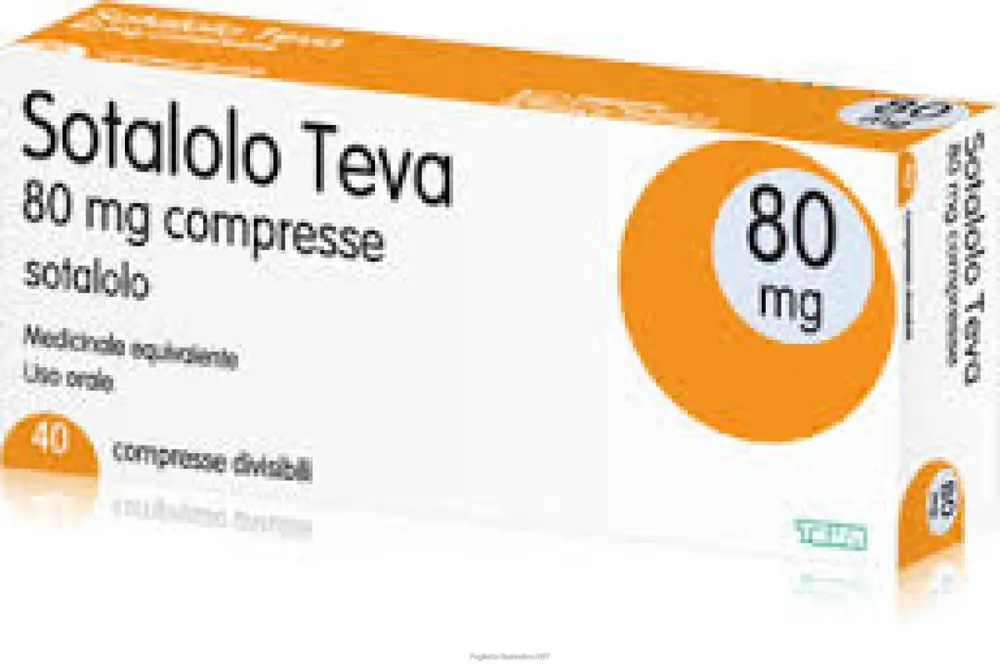
Table of Contents
Package leaflet: Information for the patient
Sotalolo Teva 80 mg tablets
Sotalol
Generic medicine
Please read this leaflet carefully before taking this medicine because it contains
important information for you.
- Keep this leaflet. You may need to read it again.
- If you have any questions, ask your doctor or pharmacist.
- This medicine has been prescribed for you only. Do not give it to others, even if they have the same symptoms as you, because it could be harmful.
- If you experience any side effects, including those not listed in this leaflet, contact your doctor or pharmacist. See section 4.
Contents of this leaflet:
- What Sotalolo Teva is and what it is used for
- What you need to know before taking Sotalolo Teva
- How to take Sotalolo Teva
- Possible side effects
- How to store Sotalolo Teva
- Contents of the pack and other information
1. What Sotalolo Teva is and what it is used for
- Sotalolo Teva belongs to a group of medicines called beta-blockers, which slow down the heartbeat, allowing the heart to beat more efficiently.
- Sotalolo Teva is used to prevent recurrences of serious heart rhythm problems.
2. What you should know before taking Sotalolo Teva
Do not take Sotalolo Teva:
- if you are allergic to sotalol, sulfonamides (e.g. cotrimoxazole, sulfadiazine), or any of the other ingredients of this medicine (listed in section 6).
- if you have heart problems other than those for which the medicine has been prescribed, particularly:
- abnormal heart rhythm known as “long QT syndrome”,
- torsades de pointes (a life-threatening irregular heartbeat),
- atrioventricular block or sick sinus syndrome (without a pacemaker) (certain types of heart rhythm disorders),
- your heart beats less than 50 times per minute,
- uncontrolled heart failure,
- shock due to heart problems (a condition that may be associated with low blood pressure, cold skin, weak pulse, confusion, and anxiety).
- if you have any of the following conditions:
- asthma or any other breathing difficulties,
- Prinzmetal's angina (chest pain and palpitations at rest, usually during sleep),
- circulatory problems (e.g. Raynaud's phenomenon or calf muscle pain while walking),
- untreated phaeochromocytoma (a benign adrenal gland tumour),
- low blood pressure (not due to an irregular heartbeat),
- severe kidney problems,
- metabolic acidosis (excessive acidity in the blood).
- if you are scheduled to undergo general anaesthesia.
- if you are also taking other medicines to correct an abnormal heart rhythm, such as quinidine, hydroquinidine, or disopyramide (so-called “class I antiarrhythmic agents”), or amiodarone, dofetilide, or ibutilide (so-called “class III antiarrhythmic agents”).
- if you are also taking medicines used to treat schizophrenia and other serious mental disorders, such as sulpiride, sultopride, amisulpride, thioridazine, chlorpromazine, levomepromazine, trifluoperazine, zuclopenthixol, tiapride, pimozide, haloperidol, droperidol (so-called “neuroleptics”).
- if you are also receiving injections of erythromycin (an antibiotic) or vincamine (which may be used in the treatment of certain cerebral disorders, such as dementia), or if you are taking bepridil (used to treat angina), cisapride (used to treat certain gastrointestinal problems), difenamil (which may be used to treat a slow heartbeat), mizolastine (used to treat hay fever), moxifloxacin (an antibiotic), or floctafénine (used to treat pain).
If you are elderly, it is especially important that you do not take Sotalolo Teva if any of the
above conditions apply to you.
Warnings and precautions
Sotalolo Teva may sometimes worsen an already abnormal heartbeat or cause new heart rhythm
problems.
Consult your doctor or pharmacist before taking Sotalolo Teva if you have:
- a slow heartbeat (less than 50–55 beats per minute).
- treated heart failure or a heart rhythm disorder called “first-degree atrioventricular block”, or if you have recently had a heart attack.
- an electrolyte imbalance (low levels of potassium and magnesium in the blood).
- severe or prolonged diarrhoea.
- frequent allergic reactions.
- overactivity of the thyroid gland.
- psoriasis (thickened, sore patches of skin).
- diabetes treated with insulin or sulphonamides, as the warning signs of low blood sugar may be less obvious than usual.
- kidney disease.
Other precautions to take:
- Inform hospital staff or your dentist that you are taking Sotalolo Teva if you are undergoing a procedure requiring anaesthesia or if you need X-rays requiring iodinated contrast media.
- Do not stop taking Sotalolo Teva suddenly (see section 3 “How to take Sotalolo Teva”).
Athletes should be aware that Sotalolo Teva may lead to positive results in doping tests.
Other medicines and Sotalolo Teva
Tell your doctor or pharmacist if you are taking, have recently taken, or might take any other medicine.
Some medicines must not be taken together with Sotalolo Teva. These medicines are listed above in the subsection “Do not take Sotalolo Teva”.
Also inform your doctor if you are using one or more of the following medicines.
Sotalolo Teva should generally not be taken together with the following medicines due to the risk of
additional heart problems:
- Halofantrine (used to treat malaria).
- Pentamidine (used to treat pneumonia).
- Sparfloxacin (an antibiotic).
- Methadone (which may be used to treat cough, pain, and heroin addiction).
- Diltiazem or verapamil (so-called “calcium channel blockers/antagonists”, used to treat abnormal heart rhythm).
- Medicines that may increase blood pressure, such as monoamine oxidase inhibitors (MAOIs), e.g. moclobemide, phenelzine, isocarboxazid.
Caution is also required if you are taking:
- Diuretics (“water tablets”)
- Laxatives (used to treat constipation)
- Glucocorticoids (used to treat inflammation and skin allergic reactions)
- Tetracosactide (mainly used to diagnose or treat adrenal gland disorders)
- Intravenous amphotericin B (used to treat fungal infections)
- Guanfacine (used to treat attention deficit hyperactivity disorder [ADHD])
- Digitalis glycosides including digoxin (used to treat irregular heart rhythms or impaired heart function)
- Class Ic antiarrhythmics such as propafenone or flecainide, or intravenous lidocaine (used to control irregular heart rhythm)
- Mefloquine (used to prevent or treat malaria)
- Cholinesterase inhibitors such as donepezil, rivastigmine, tacrine, galantamine, neostigmine, pyridostigmine, or ambenonium (used to treat Alzheimer's disease)
- Pilocarpine (used to treat dry mouth or high eye pressure)
- Other beta-blockers, clonidine, dihydropyridines, or alpha-methyldopa (used to treat high blood pressure)
- Volatile halogenated anaesthetics (used in surgery)
- Insulin and hypoglycaemic sulphonamides (used to treat diabetes)
- Baclofen (used to treat muscle spasm)
- Non-steroidal anti-inflammatory drugs (NSAIDs) such as ibuprofen, diclofenac (used to treat pain, fever, or inflammation)
- Tricyclic antidepressants (e.g. imipramine), phenothiazine neuroleptics (used to treat psychiatric disorders)
- Amifostine (used during chemotherapy or radiotherapy)
- Intravenous dipyridamole (used to prevent blood clot formation).
Interactions with laboratory tests:
If you are having a blood test, inform your doctor that you are taking sotalol, as this may affect the results of certain blood tests.
Athletes
Athletes should be informed that this medicine contains an active substance that may cause a positive reaction in “anti-doping tests”.
Pregnancy and breastfeeding
If you are pregnant, think you may be pregnant, are planning to become pregnant, or are breastfeeding, consult your doctor or pharmacist before taking this medicine.
Your doctor may prescribe Sotalolo Teva during pregnancy only if absolutely necessary. Do not take
Sotalolo Teva unless specifically instructed by your doctor, and always follow the prescription exactly.
Breastfeeding during treatment with Sotalolo Teva is not recommended.
Driving and using machines
Sotalolo Teva may affect your vision or cause dizziness.
Do not drive and do not operate machinery or tools if you experience these symptoms.
Sotalolo Teva contains lactose
Sotalolo Teva tablets contain lactose. If your doctor has diagnosed you with an intolerance to certain sugars, contact him/her before taking this medicine.
3. How to take Sotalolo Teva
Take this medicine exactly as directed by your doctor. If you have any doubts, consult your doctor or pharmacist.
The recommended dose is:
Adults (including elderly):
The initial dose is 80 mg of sotalol, taken once daily or in two divided doses given 12 hours apart. Your doctor will gradually increase the dose according to your needs.
The recommended dose ranges between 160 mg and 320 mg of sotalol per day, taken in 2 or 3 divided doses.
For some patients with life-threatening irregular heartbeats, the dose may be increased up to 480 mg or 640 mg of sotalol per day.
Patients with kidney problems may require a lower dose.
Use in children:
Due to lack of data, Sotalolo Teva is not recommended for use in children. Please consult your doctor.
Method of administration
Sotalolo Teva tablets should be swallowed whole with a full glass of water.
The tablet may be divided into equal doses.
If you take more Sotalolo Teva than you should
If you (or someone else) have taken several tablets at once, or if you suspect that a child has taken any tablets, contact immediately the nearest hospital emergency department or your doctor. Bring this leaflet, any remaining tablets, and the container with you so that hospital staff or your doctor can see what has been taken.
If you forget to take Sotalolo Teva
If you forget to take a dose, take it as soon as you remember, unless it is almost time for your next dose. Do not take a double dose to make up for a forgotten dose. Take your next doses at the scheduled times.
If you stop taking Sotalolo Teva
Do not stop taking Sotalolo Teva suddenly, as serious heart problems may occur, including heart attack and death.
Your doctor will decide when and how to stop treatment with Sotalolo Teva. Follow your doctor's instructions carefully.
If you have any questions about the use of this medicine, ask your doctor or pharmacist.
4. Possible side effects
Like all medicines, this medicine can cause side effects, although not everybody gets them.
Immediately inform your doctor if you experience any of the following symptoms:
- Swelling of the face, lips, tongue and/or throat, with difficulty swallowing or breathing. These may be signs of an allergic reaction, and the tablets will be discontinued.
Other side effects:
- Blood disorders (such as changes in the number of white or red blood cells or platelets), which may be characterized by unusual bleeding or unexplained bruising, fever or chills, sore throat, mouth or throat ulcers. If these symptoms occur, contact your doctor.
- Low blood sugar levels.
- Cold hands and/or feet.
- Vision problems.
- Slow heart rate, shortness of breath, wheezing, chest pain, palpitations, swelling of the ankles, abnormalities on electrocardiogram, low blood pressure, worsening of irregular heartbeat, fainting, heart failure.
- Skin rashes, itching, sweating, sensitivity to light.
- Nausea, vomiting, diarrhoea, indigestion, abdominal pain, flatulence.
- Cramps, muscle or joint pain.
- Sexual problems, including impotence.
- Fatigue, dizziness, feeling weak, headache, depression, difficulty sleeping, tingling, anxiety, fever.
In rare cases, joint and connective tissue inflammation (e.g. tendons) with skin rashes has been reported. These symptoms usually resolve upon discontinuation of therapy.
If you have psoriasis or intermittent claudication (cramp-like leg pain caused by walking), your symptoms may worsen.
If any of the side effects worsen, or if you notice any side effects not listed in this leaflet, inform your doctor or pharmacist.
Reporting of side effects
If you experience any side effect, including those not listed in this leaflet, talk to your doctor or pharmacist. You can also report side effects directly via the national reporting system at www.agenziafarmaco.gov.it/content/come-segnalare-una-sospetta-reazione-avversa. By reporting side effects, you can help provide more information on the safety of this medicine.
5. How to store Sotalolo Teva
Keep this medicine out of the sight and reach of children.
Do not use this medicine after the expiry date which is stated on the packaging after Exp.. The expiry
date refers to the last day of that month.
Store the blister pack in the outer packaging to protect the medicine from light.
Do not dispose of any medicine via wastewater or household waste. Ask your pharmacist how to
dispose of medicines you no longer use. This will help protect the environment.
6. Package contents and other information
What Sotalolo Teva contains
- The active substance is sotalol hydrochloride.
- Each tablet contains 80 mg of sotalol hydrochloride.
- The other ingredients are monohydrate lactose, maize starch, magnesium stearate, povidone, and indigo carmine (E132).
Description of the appearance of Sotalolo Teva and the contents of the pack
- Sotalolo Teva 80 mg: blue, oval tablet; divided on one side by a score line, with the numbers 93 above and 61 below this line; the other side is smooth.
- Sotalolo Teva 80 mg is available in packs containing 20, 28, 30, 40, 50, 60, 90 and 100 tablets.
Not all pack sizes may be marketed.
Marketing Authorization Holder and Manufacturer
Marketing Authorization Holder
Teva Italia S.r.l. – Piazzale Luigi Cadorna, 4 – 20123 Milano
Manufacturer
Teva UK Ltd. - Brampton Road - Hampden Park – BN22 9AG Eastbourne – East Sussex (United Kingdom)
Pharmachemie B.V. - Swensweg 5, P.O. Box 552, 2003 RN Haarlem (Netherlands)
Teva Operations Poland Sp. z o.o., ul. Mogilska 80, 31-546 Kraków, Poland