Sodium iodide (131I) Curium Netherlands
Italy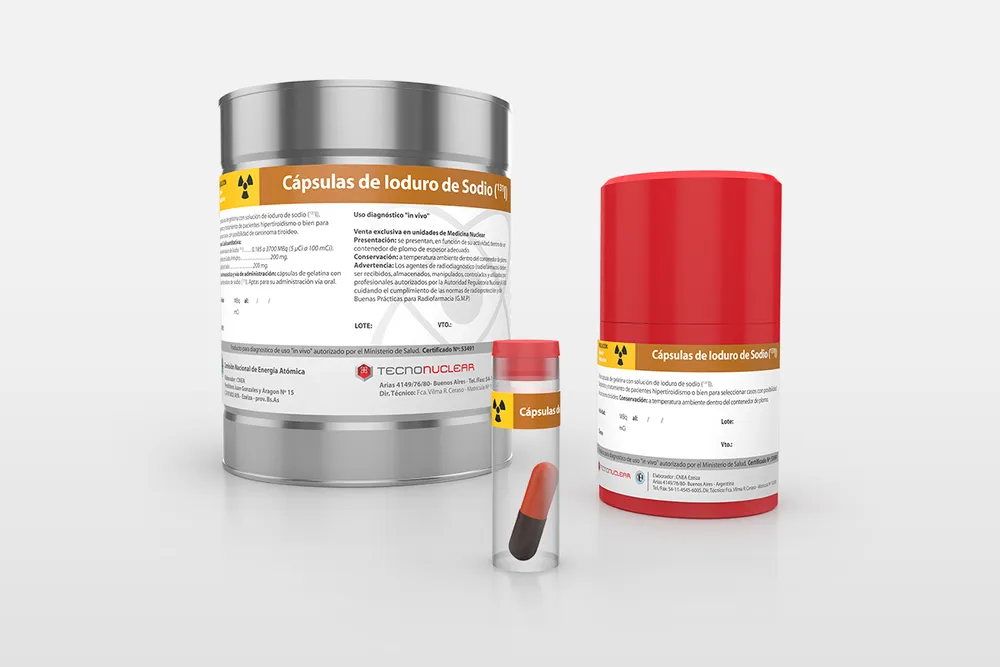
Table of Contents
- PATIENT INFORMATION LEAFLET
- Sodium iodide (I131) Curium Netherlands 37-7400 MBq hard capsules
- 1. What Sodio ioduro (I131) Curium Netherlands is and what it is used for
- 2. What you should know before Sodio ioduro (I131) Curium Netherlands is used
- 3. How Sodio ioduro (I131) Curium Netherlands is used
- 4. Possible side effects
- 5. How Sodio ioduro (I131) Curium Netherlands is stored
- 6. Package contents and other information
PATIENT INFORMATION LEAFLET
Sodium iodide (I131) Curium Netherlands 37-7400 MBq hard capsules
Sodium iodide (I131)
Please read this leaflet carefully before you are given this medicine because it contains important information for you.
- Keep this leaflet. You may need to read it again.
- If you have any questions, consult the nuclear medicine specialist supervising the procedure.
- If you experience any side effects, including those not listed in this leaflet, contact the nuclear medicine physician. See section 4.
Contents of this leaflet:
- What Sodium iodide (I131) Curium Netherlands is and what it is used for
- What you need to know before you are given Sodium iodide (I131) Curium Netherlands
- How Sodium iodide (I131) Curium Netherlands is used
- Possible side effects
- How Sodium iodide (I131) Curium Netherlands is stored
- Package contents and other information
1. What Sodio ioduro (I131) Curium Netherlands is and what it is used for
Sodio ioduro (I131) Curium Netherlands is a medicine used in adults, children and adolescents for the
treatment of:
- thyroid gland tumours
- overactivity of the thyroid gland
This medicine contains sodium iodide (I131), a radioactive substance that accumulates in certain organs,
such as the thyroid gland.
The use of Sodio ioduro (I131) Curium Netherlands involves exposure to radioactivity. Your doctor and the nuclear medicine specialist have assessed that the clinical benefit of treatment with this radiopharmaceutical outweighs the risk associated with radiation exposure.
2. What you should know before Sodio ioduro (I131) Curium Netherlands is used
Sodio ioduro (I131) Curium Netherlands must not be used
if you
- are allergic to sodium iodide or to any of the other ingredients of this medicinal product (listed in section 6).
- are pregnant or are breastfeeding
if you have:
- swallowing difficulties
- esophageal obstruction
- stomach disorders such as inflammation (gastritis) and gastroduodenal ulcer.
- reduced gastric or intestinal motility.
If any of these situations apply to you, inform the nuclear medicine physician.
Warnings and precautions
Inform the nuclear medicine physician:
- if you suffer from impaired renal function.
- if you have bladder emptying problems
- if you have digestive or stomach problems.
- if you have protruding eyes as part of the disease symptoms you suffer from (Graves’ disease-induced ophthalmopathy)
Paediatric patients are at higher risk of developing malignant tumours due to radiation exposure.
Inform your nuclear medicine physician if any of these situations apply to you. Sodio ioduro
(I131) Curium Netherlands might not be suitable for you.
Your physician will advise you whether special precautions are necessary after using this
medicinal product.
If you have any doubts, consult your nuclear medicine physician.
Low blood sodium levels have been observed in elderly patients who have undergone thyroidectomy. This event is more likely to occur in women and in patients taking medicines that increase the amount of water and sodium excreted in urine (diuretics, such as hydrochlorothiazide). If you belong to any of these groups, your physician may perform periodic blood tests to monitor the levels of electrolytes (e.g. sodium) in your blood.
Before administration of Sodio ioduro (I131) Curium Netherlands
you should
- follow a low-iodine diet.
- drink plenty of water before starting administration so as to urinate as frequently as possible during the first hours after taking Sodio ioduro (I131) Curium Netherlands.
- fast on the day of treatment.
Children and adolescents
Inform the nuclear medicine physician if you are under 18 years of age or if you are unable to swallow a capsule.
Other medicines and Sodio ioduro (I131) Curium Netherlands
Inform the nuclear medicine physician if you are taking, have recently taken, or might take any other medicines, including those without a prescription.
Inform your nuclear medicine physician if you are taking or have been administered any of the following medicines or substances, as they may interfere with treatment efficacy.
Your physician may recommend that you stop taking the following medicines before treatment:
- medicines that reduce thyroid gland function such as: carbimazole, methimazole, propylthiouracil, perchlorate for one week;
- salicylates: medicines used to reduce pain, fever or inflammation such as aspirin for one week;
- cortisone: medicines to reduce inflammation or prevent organ transplant rejection for one week;
- sodium nitroprusside: medicine used to reduce high blood pressure or also during surgery for one week;
- sodium sulfobromophthalein: medicine to assess liver function for 1 week;
- other medicines for one week or to reduce blood coagulation or to treat parasitic infections or antihistamines used to treat allergies or penicillins and sulfonamides (antibiotics) or tolbutamide: medicine used to reduce blood sugar levels;
- thiopental: anaesthetic medicine used during surgery to reduce intracranial pressure and also to treat severe epileptic seizures for one week;
- phenylbutazone: medicine to reduce pain and inflammation for 1-2 weeks;
- medicines containing iodine to help clear respiratory secretions for 2 weeks;
- medicines containing iodide applied only to a limited area of the body for 1-9 months;
- iodinated contrast agents up to 1 year;
- vitamins containing iodide salts for 2 weeks;
- medicines containing thyroid hormones such as levothyroxine (for 4 weeks) or triiodothyronine (for 2 weeks);
- benzodiazepines: medicines for mood and supportive treatment in patients for sleep and muscle relaxation for 4 weeks;
- lithium: medicine used to treat bipolar disorders for 4 weeks;
- amiodarone: medicine used to treat cardiac rhythm disorders for 3-6 months.
Sodio ioduro (I131) Curium Netherlands and food
Your physician may recommend that you follow a low-iodine diet and avoid foods such as molluscs and crustaceans.
Pregnancy, breastfeeding and fertility
This medicinal product must not be used during pregnancy. Therefore, you must inform
the nuclear medicine physician before administration of Sodio ioduro (I131) Curium
Netherlands if you have missed a period, think you may be pregnant, or are planning to have a child.
If you are pregnant
You must not take Sodio ioduro (I131) Curium Netherlands. Pregnancy must be ruled out before using this medicinal product.
Contraception in males and females
Women must not become pregnant for at least 6-12 months after treatment with Sodio ioduro (I131) Curium Netherlands.
Women are advised to use contraception for a period of 6-12 months after treatment with Sodio ioduro (I131) Curium Netherlands.
As a precaution, men should not father a child for a period of 6-12 months after treatment with Sodio ioduro (I131) Curium Netherlands, to allow replacement of irradiated spermatozoa with non-irradiated ones.
Fertility
Reproductive capacity in men and women may be transiently affected after treatment with Sodio ioduro (I131) Curium Netherlands.
In men, high doses of sodium iodide (I131) may temporarily affect sperm production.
If you intend to father a child, discuss with your physician the possibility of storing your sperm in a sperm bank before treatment.
If you are breastfeeding
Inform the nuclear medicine physician, as you must completely stop breastfeeding 8 weeks
before treatment. Breastfeeding must not be resumed after treatment with
Sodio ioduro (I131) Curium Netherlands.
Driving and using machines
Sodio ioduro (I131) Curium Netherlands is unlikely to affect the ability to drive vehicles or operate machinery.
Sodio ioduro (I131) Curium Netherlands contains sodium and sucrose
This medicinal product contains 63.5 mg of sodium (a key component of common salt) per capsule. This corresponds to 3% of the maximum recommended daily dietary intake for an adult. This should be taken into account if you are on a low-sodium diet.
This medicinal product contains sucrose, a type of sugar. If your physician has diagnosed you with an intolerance to certain sugars, contact them before taking this medicinal product.
3. How Sodio ioduro (I131) Curium Netherlands is used
There are strict regulations governing the use, handling, and disposal of radiopharmaceuticals. Sodio ioduro (I131) Curium Netherlands must only be used in designated controlled areas. This product will be administered to you only by healthcare professionals trained and qualified to use it safely. These individuals will take particular care in the safe use of this product and will keep you informed about their actions.
The nuclear medicine physician supervising the procedure will determine the correct dose of Sodio ioduro (I131) Curium Netherlands for you. It will be the smallest amount necessary to achieve the desired effect.
Sodio ioduro (I131) Curium Netherlands is administered as a single capsule by specialists who will take responsibility for all necessary precautions.
The recommended administered doses for adults are:
- 200 – 800 MBq for treatment of hyperactive thyroid gland
- 1850 – 3700 MBq for partial or complete removal of the thyroid gland and for treatment of tumour cell spread, known as metastases
- 3700 – 11100 MBq for additional treatment of metastases
MBq (megabecquerel) is the unit of measurement used to express the radioactivity of the medicinal product.
Use in children and adolescents under 18 years of age
Lower doses are used for children and adolescents.
Administration of Sodio ioduro (I131) Curium Netherlands and procedure
Sodio ioduro (I131) Curium Netherlands will be administered to you as a single capsule.
Your stomach must be empty when you take this capsule.
Swallow the capsule with plenty of water to ensure it passes completely into the stomach as quickly as possible.
Children should take the capsule with crushed food.
Drink as much fluid as possible after taking the capsule and on the day following treatment: this will help eliminate the active substance from the bladder.
Duration of the procedure
The nuclear medicine physician will inform you about the duration of the procedure.
After administration of Sodio ioduro (I131) Curium Netherlands
The nuclear medicine physician will inform you about any special precautions you need to take after receiving this medicinal product.
In particular, you:
- must avoid close contact with pregnant women or young children for at least one week after administration. Your doctor will inform you of the necessary duration;
- should drink plenty of fluids and urinate frequently to help remove the medicinal product from your body;
- must flush the toilet carefully after use and wash your hands thoroughly, as body fluids will be radioactive for a few days;
- should drink beverages or eat sweets containing citric acid, e.g. orange, lemon or lime juice, which stimulate saliva production and prevent saliva accumulation in the salivary glands;
- should take laxatives to stimulate the bowel if you have fewer than one bowel movement per day. If you have difficulty emptying your bladder, a catheter will be inserted after administration of high doses of the radiopharmaceutical. Blood, faeces, urine or any vomit may be radioactive for several days and must not come into contact with other people. Please consult your nuclear medicine physician if you have any questions.
If you have been given more Sodio ioduro (I131) Curium Netherlands than you should have
Overdose is unlikely, as you will receive only a single dose of Sodio ioduro (I131) Curium Netherlands, carefully controlled by the nuclear medicine physician supervising the procedure. However, in case of overdose, appropriate treatment will be given.
If you have any further questions about the use of Sodio ioduro (I131) Curium Netherlands, please consult the nuclear medicine physician supervising the procedure.
4. Possible side effects
Like all medicines, this medicine can cause side effects, although not everyone will experience them.
Frequent adverse reactions include: hypothyroidism (underactive thyroid gland), transient
hyperthyroidism (overactive thyroid gland), salivary and lacrimal gland disorders, and local radiation effects. In cancer treatment, side effects affecting the stomach and intestines, as well as reduced blood cell production in the bone marrow, may also occur frequently.
If you experience a severe allergic reaction causing difficulty breathing or dizziness, or if you have a severe hyperthyroid crisis, contact your doctor immediately.
All side effects associated with Sodio ioduro (I131) Curium Netherlands capsules are listed below, grouped according to the conditions of use of Sodio ioduro (I131) Curium Netherlands, as these depend on the dosage used for different treatments.
Treatment of hyperactive thyroid gland
Very common (may affect more than 1 in 10 people)
- underactivity of the thyroid gland
- a type of eye inflammation called endocrine ophthalmopathy (following treatment for Graves' disease)
Common (may affect up to 1 in 10 people)
- temporary overactivity of the thyroid gland
- inflammation of the salivary gland
Very rare (may affect up to 1 in 10,000 people)
- vocal cord paralysis
Frequency not known (frequency cannot be estimated from the available data)
- severe allergic reaction causing difficulty breathing or dizziness
- severe hyperthyroid crisis
- inflammation of the thyroid gland
- reduced lacrimal gland function causing dry eyes
- reduced or loss of parathyroid hormone production leading to tingling in the hands, fingers, and around the mouth, up to more severe forms such as muscle cramps
- deficiency of thyroid hormone in offspring
- abnormal liver function
- iodo acne (acne-like skin eruption)
- local swelling
- enlargement of the thyroid gland
- chest pain and increased heart rate
Treatment of tumours
Very common (may affect more than 1 in 10 people):
- bone marrow failure with severe reduction in blood cells, which may cause weakness, bruising, or increased risk of infections
- lack of red blood cells
- bone marrow failure with reduction in red blood cells, white blood cells, or both
- disturbance or loss of smell or taste
- nausea (feeling unwell)
- decreased appetite
- loss of ovarian function
- menstrual cycle disturbances
- flu-like illness
- headache, neck pain
- extreme tiredness or drowsiness
- inflammation causing red, watery, itchy eyes
- inflammation of the salivary glands with symptoms such as dry mouth, dry nose, and dry eyes; dental caries, tooth loss
Common (may affect up to 1 in 10 people)
- lack of white blood cells or platelets
- runny nose
- breathing difficulties
- vomiting
- areas of tissue swelling
Uncommon (may affect up to 1 in 100 people)
- abnormal and cancerous increase in white blood cells
Rare (may affect up to 1 in 1,000 people):
- severe or transient hyperactivity of the thyroid gland
Frequency not known (frequency cannot be estimated from the available data):
- severe allergic reaction causing difficulty breathing or dizziness
- cancer of the bladder, large intestine, stomach, or breast
- permanent or severe reduction in blood cell production in the bone marrow
- inflammation of the thyroid gland
- reduced or loss of parathyroid hormone production
- increased parathyroid hormone production
- inactive thyroid gland
- worsening of increased thyroid activity (worsening of hyperthyroidism)
- Graves' disease (Basedow's disease)
- enlargement of the thyroid gland
- inflammation of the trachea and/or narrowing of the throat, or both
- connective tissue proliferation in the lungs
- difficulty or laboured breathing
- lung inflammation
- vocal cord paralysis, hoarseness, reduced ability to produce vocal sounds
- mouth and throat pain
- decreased sodium concentration in the blood (hyponatremia)
- fluid accumulation in the brain
- inflammation of the stomach lining
- difficulty swallowing
- bladder inflammation
- reduced male and female fertility, low sperm count or absence of sperm
- deficiency of thyroid hormone in offspring
- abnormal liver function
- a specific eye disease called endocrine ophthalmopathy
- chest pain and increased heart rate
- radiation-related injuries including radiation-induced thyroid inflammation, radiation-associated pain, tracheal obstruction
Reporting of side effects
If you experience any side effect, including those not listed in this leaflet, please contact your Nuclear Medicine physician. You may also report side effects directly via the website: http://www.aifa.gov.it/content/segnalazioni-reazioni-avverse
By reporting side effects, you can help provide more information on the safety of this medicine.
5. How Sodio ioduro (I131) Curium Netherlands is stored
Do not store this medicinal product. This medicinal product is stored under the responsibility of the specialist in appropriate facilities. Radiopharmaceuticals must be stored in accordance with national regulations in force concerning radioactive materials.
The following information is intended exclusively for the specialist.
The Sodio ioduro (I131) Curium Netherlands capsule must not be used after the expiry date stated following "Exp".
6. Package contents and other information
What Sodio ioduro (I131) Curium Netherlands contains
The active substance is iodide (I) as sodium iodide.
Each hard capsule contains from 37 to 7400 MBq of sodium iodide (I).
The other ingredients are:
gelatin (capsule), disodium phosphate dihydrate, sodium thiosulfate, sodium hydrogen carbonate, sodium hydroxide,
sucrose, sodium chloride, water for injections.
Description of the appearance of Sodio ioduro (I131) Curium Netherlands and package contents
Sodio ioduro (I131) Curium Netherlands is a transparent capsule filled with powder ranging from white to light brown and is available in packages containing one capsule.
Marketing Authorization Holder and Manufacturer
Curium Netherlands B.V.
Westerduinweg 3
1755 LE Petten
The Netherlands
More detailed information on this medicinal product is available on the website of the Italian Medicines Agency: www.aifa.gov.it.
The following information is intended exclusively for physicians and healthcare professionals:
The complete product characteristics summary of Sodio ioduro (I131) Curium Netherlands is provided as a separate document, intended to supply healthcare professionals with additional scientific and practical information on the administration and use of this radiopharmaceutical.
Refer to the SmPC (Summary of Product Characteristics) of Sodio ioduro (I131) Curium Netherlands.