Sodium iodide (123I) Curium Netherlands
Italy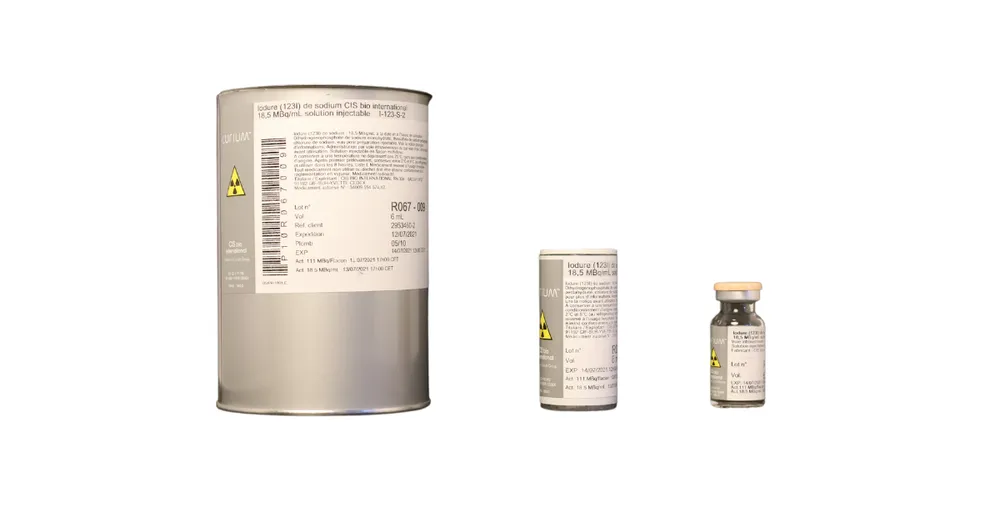
Table of Contents
- PACKAGE LEAFLET: INFORMATION FOR THE USER
- Sodium Iodide ( I) Curium Netherlands 37 MBq/ml solution for injection
- 1. WHAT SODIUM IODIDE (I) IS AND WHAT IT IS USED FOR
- 2. WHAT YOU SHOULD KNOW BEFORE USING SODIUM IODIDE (I)
- 3. HOW TO USE SODIUM IODIDE (I)
- 4. POSSIBLE ADVERSE REACTIONS
- 5. HOW TO STORE SODIUM IODIDE (I)
- 6. CONTENTS OF THE PACKAGE AND OTHER INFORMATION
- Instructions for Use
PACKAGE LEAFLET: INFORMATION FOR THE USER
Sodium Iodide ( I) Curium Netherlands 37 MBq/ml solution for injection
Sodium iodide ( I)
Please read this leaflet carefully before taking this medicine because it contains
important information for you.
- Keep this leaflet. You may need to read it again.
- If you have any questions, ask the nuclear medicine specialist supervising the procedure.
- If you experience any side effects, including those not listed in this leaflet, inform the nuclear medicine specialist. See section 4.
Contents of this leaflet:
- What Sodium Iodide ( I) is and what it is used for
- What you need to know before using Sodium Iodide ( I)
- How to use Sodium Iodide ( I)
- Possible side effects
- How to store Sodium Iodide ( I)
- Contents of the pack and other information
1. WHAT SODIUM IODIDE (I) IS AND WHAT IT IS USED FOR
The medicinal product is a radiopharmaceutical for diagnostic use only.
Sodium iodide (I) is used during a scan to examine the thyroid gland:
The radioactive substance can be detected from outside the body using special machines that can provide an image called a scan. This scan shows the distribution of radioactivity within the organ and the body. Furthermore, the scan provides the doctor with valuable information on the structure and function of this organ.
The use of Sodium iodide (I) involves exposure to limited amounts of radioactivity. Your physician and the nuclear medicine specialist have determined that the clinical benefit you will obtain from the procedure with the radiopharmaceutical outweighs the risk associated with radiation exposure.
2. WHAT YOU SHOULD KNOW BEFORE USING SODIUM IODIDE (I)
Sodium iodide (I) must not be used
If you are allergic (hypersensitive) to the active substance or to any of the other components of this
medicinal product (listed in section 6).
Take special care with Sodium iodide (I)
Inform the nuclear medicine specialist in the following cases:
- If you have reduced kidney function
- If you are pregnant or suspect you may be pregnant
- If you are breastfeeding
Before administration of Sodium iodide (I), you must:
- Drink plenty of water before the start of the examination, in order to urinate as frequently as possible during the first few hours after the procedure.
Children and adolescents
Consult the nuclear medicine specialist if you are under 18 years of age.
Other medicines and Sodium iodide (I)
Inform the nuclear medicine specialist supervising the procedure if you are taking or have
recently taken any other medicines, including those obtained without a prescription, as they may interfere with the interpretation of images.
The doctor may advise you to discontinue the following medicines before starting treatment:
- Medicines that reduce thyroid gland function, such as:
- propylthiouracil, methimazole, carbimazole
- perchlorate
- Salicylates: medicines that relieve pain, fever, or inflammation, such as acetylsalicylic acid
- Corticosteroids: medicines that reduce inflammation or prevent rejection of transplanted organs
- Sodium nitroprusside: a medicine used to reduce hypertension, also used in surgery
- Sodium sulfobromophthalein: a medicine used to perform liver function tests
- Some medicines
- to reduce blood coagulation
- to treat parasitic infestations
- Antihistamines: medicines used to treat allergies
- Penicillins and sulfonamides: antibiotics
- Tolbutamide: a medicine used to reduce blood glucose levels
- Thiopental: a medicine used under anesthesia to reduce intracranial pressure and also to treat severe epileptic seizures
- Phenylbutazone: a medicine used to reduce pain and inflammation
- Medicines to help clear airways of sputum
- Vitamins containing iodine
- Medicines containing thyroid hormones, such as sodium levothyroxine, sodium liotironine
- Amiodarone: a medicine used to treat cardiac rhythm disorders
- Benzodiazepines: sedative, sleep-inducing, or muscle-relaxant medicines
- Lithium: a medicine used to treat depression
- Iodinated contrast media: substances administered intravenously to make internal body structures visible
- Medicines containing iodine applied only to limited external areas of the body
- Oil-based contrast media containing iodine
Pregnancy and breastfeeding
Inform the nuclear medicine specialist before administration of Sodium iodide (I) if:
- You think you may be pregnant
- You have missed a menstrual period
- You are breastfeeding
If you have any doubts, it is important to consult the nuclear medicine specialist supervising the procedure.
If you are pregnant
The nuclear medicine specialist will administer the product during pregnancy only when the expected benefits outweigh the risks.
If you are breastfeeding
The doctor may also ask you to interrupt breastfeeding for 1.5 to 3 days and discard the milk expressed during this time, until radioactivity is completely eliminated from your body.
Driving and using machines
It is unlikely that Sodium iodide (I) will affect your ability to drive vehicles or operate machinery.
3. HOW TO USE SODIUM IODIDE (I)
There are very strict regulations regarding the use, handling, and disposal of
radiopharmaceuticals. Sodium iodide (I) will be used only in special and controlled areas. This
product will be handled and administered exclusively by trained and qualified personnel able to
use it safely. These individuals will pay particular attention to the safe use of this
product and will keep you informed about their actions.
The nuclear medicine specialist supervising the procedure will determine the amount of Sodium
iodide (I) required in your case. This will be the minimum amount necessary to obtain the desired
information.
The usually recommended administered activity in adults ranges from 3.7 to 14.8 MBq (megabecquerels are the units used to express radioactivity).
Use in children and adolescents
In children and adolescents, the administered amount will be adjusted according to the child's or adolescent's body weight.
Administration of Sodium Iodide ( I) and procedure performance
Sodium iodide (I) is injected into a vein.
A single injection is sufficient to perform the test requested by the physician. Scans are
typically performed 3–6 hours after injection.
Duration of the procedure
The nuclear medicine specialist will inform you about the typical duration of the procedure.
If you are administered more Sodium Iodide ( I) than required
Overdose is unlikely, as the nuclear medicine specialist supervising the procedure will administer a single, precisely controlled dose of Sodium iodide (I). However, in the event of an overdose, appropriate treatment will be provided.
If you have any further questions about the use of Sodium iodide (I), please consult the nuclear medicine specialist supervising the procedure.
4. POSSIBLE ADVERSE REACTIONS
Like all medicines, this medicinal product can cause adverse reactions, although not everyone experiences them. This radiopharmaceutical will deliver low amounts of ionizing radiation after administration, which entails a very low risk of cancer and hereditary abnormalities.
If any adverse reaction occurs, including those not listed in this leaflet, consult the nuclear medicine specialist supervising the procedure.
Adverse reactions occurring with unknown frequency (frequency cannot be estimated from the available data) are:
- allergic reactions,
- nausea,
- vomiting,
- pruritus,
- rash,
- urticaria.
Hospital staff will manage these reactions if they occur.
Reporting of suspected adverse reactions.
Reporting suspected adverse reactions after medicine authorization is important, as it allows continuous monitoring of the benefit-risk balance of the medicine. Healthcare professionals are required to report any suspected adverse reaction via the national reporting system at https://www.aifa.gov.it/content/segnalazioni-reazioni-avverse .
5. HOW TO STORE SODIUM IODIDE (I)
It is not your responsibility to store this medicine. This medicine is stored by the specialist under appropriate conditions. Storage of radiopharmaceuticals must comply with national regulations concerning radioactive materials.
The following information is intended exclusively for the specialist:
Do not use Sodium Iodide after the expiry date stated on the label.
6. CONTENTS OF THE PACKAGE AND OTHER INFORMATION
WHAT SODIUM IODIDE ( I) CONTAINS
- The active substance is I as sodium iodide, 37 MBq/ml
- The other components are: sodium chloride, sodium hydrogen carbonate, and water for injections.
Description of the appearance of SODIUM IODIDE ( I) and contents of the pack
Sodium iodide ( I) is supplied in a glass vial closed with a bromobutyl rubber stopper and sealed with an aluminium cap. It is available in multi-dose vials containing 1, 2, 5 or 10 ml.
Marketing Authorisation Holder and Manufacturer
Curium Netherlands B.V.
Westerduinweg 3
1755 LE Petten
The Netherlands
For further information about this medicinal product, please contact the local representative of the Marketing Authorisation Holder:
THE FOLLOWING INFORMATION IS INTENDED EXCLUSIVELY FOR HEALTHCARE PROFESSIONALS
Instructions for Use
Ready-to-use injectable solution in a multidose vial.
Withdrawals must be performed under aseptic conditions. The vial must not be opened without first disinfecting the stopper; the solution should be withdrawn using a single-dose syringe equipped with an appropriate protective shield and a sterile, single-use needle.
The product must not be used if, during its preparation, the integrity of the vial is compromised.
Incompatibilities
In the absence of compatibility studies, this medicinal product must not be mixed with other medicinal products.
SPECIAL PRECAUTIONS FOR DISPOSAL AND HANDLING
GENERAL WARNINGS
Radiopharmaceuticals must be received, used, and administered only by authorized personnel in specially designated clinical facilities. Receipt, storage, use, transfer, and disposal are subject to regulations and/or appropriate authorizations issued by local competent authorities.
Radiopharmaceuticals must be prepared so as to meet both radiation protection standards and pharmaceutical quality requirements. Appropriate aseptic precautions must be taken.
Instructions for the preparation of this radiopharmaceutical prior to administration are provided in the section “Instructions for Use”.
If at any time during preparation the integrity of the vial is compromised, the product must not be used.
Administration must be carried out in a way that minimizes the risk of contamination of the medicinal product and radiation exposure to personnel. Adequate shielding is mandatory.
Administration of radiopharmaceuticals poses risks to individuals in contact with the patient due to external irradiation or contamination from spillage of urine, vomit, etc. Appropriate protective measures must therefore be adopted in accordance with national regulations.
Unused medicine and waste materials resulting from the use of this medicine must be disposed of in accordance with current local regulations.
DOSIMETRY
I is obtained by proton irradiation of enriched Xenon. Depending on the production process of I, long-lived radionuclidic impurities such as I and Te may be present as radioactive contaminants, increasing radiation dosimetry in various organs. At the date and time of calibration, radionuclidic purity is at least 99.85%, while at expiry it is 99.7%. The main impurities are detectable at the following levels: Te ≤ 0.09% and I ≤ 0.15% at the end of the shelf-life period. For this reason, organ radiation dosimetry may be higher than indicated in the following tables.
For this product, the effective dose resulting from an administered activity of 14.8 MBq in a 70 kg adult will be 3.3 mSv in patients with a thyroid uptake of 35%. This effective dose depends on glandular thyroid uptake.
The equivalent effective dose (EDE) (whole body) is calculated considering the six standard organs (gonads, breast, red bone marrow, lungs, thyroid, and bone surfaces) and the five additional organs receiving the highest absorbed dose (indicated with *).
The table below reports the dosimetry calculated according to ICRP Publication 53 (International Commission on Radiological Protection, Radiation Dose to Patients from Radiopharmaceuticals, Pergamon Press, 1987) and subsequent updates provided in ICRP Publication 80 (1998):
I 13.21 hours
Thyroid blockade, uptake: 0%
Absorbed dose per unit of administered activity (mGy/MBq)
| Organ | Adult | 15 years | 10 years | 5 years | 1 year |
| Adrenal glands | 0.007 | 0.0087 | 0.014 | 0.021 | 0.039 |
| *Bladder wall | 0.09 | 0.11 | 0.16 | 0.24 | 0.45 |
| Bone surfaces | 0.0081 | 0.0097 | 0.015 | 0.024 | 0.046 |
| Breast gland | 0.0056 | 0.0056 | 0.0081 | 0.013 | 0.025 |
| Gastrointestinal tract: | |||||
| Stomach wall | 0.0069 | 0.0085 | 0.014 | 0.021 | 0.037 |
| *Small intestine | 0.0085 | 0.01 | 0.016 | 0.025 | 0.046 |
| *Upper large intestine wall | 0.008 | 0.0099 | 0.015 | 0.024 | 0.043 |
| *Lower large intestine wall | 0.0097 | 0.012 | 0.019 | 0.029 | 0.054 |
| *Kidneys | 0.011 | 0.014 | 0.02 | 0.029 | 0.051 |
| Liver | 0.0067 | 0.0082 | 0.013 | 0.02 | 0.037 |
| Lungs | 0.0061 | 0.0078 | 0.012 | 0.019 | 0.035 |
| Ovaries | 0.0098 | 0.012 | 0.019 | 0.03 | 0.053 |
| Pancreas | 0.0076 | 0.0091 | 0.014 | 0.022 | 0.041 |
| Red bone marrow | 0.0094 | 0.011 | 0.017 | 0.026 | 0.047 |
| Spleen | 0.007 | 0.0083 | 0.013 | 0.02 | 0.037 |
| Testes | 0.0069 | 0.0094 | 0.015 | 0.025 | 0.048 |
| Thyroid | 0.0051 | 0.0077 | 0.012 | 0.02 | 0.037 |
| Uterus | 0.014 | 0.017 | 0.028 | 0.043 | 0.076 |
| Other tissues | 0.0064 | 0.0077 | 0.012 | 0.019 | 0.035 |
| Equivalent effective dose (mSv/MBq) | 0.013§ | 0.016 | 0.024 | 0.037 | 0.067 |
The effective dose in adults is 0.011 mSv/MBq according to ICRP publication No. 80 of 1998;
therefore, the effective dose after intravenous administration of 14.8 MBq (maximum dose) is 0.16
mSv.
Effect of radionuclidic impurities:
Contamination from radionuclides with I and Te contributes 0.002 mSv at the time of calibration and 0.006 mSv at the time of expiry.
Incomplete blocking
Effective dose (mSv/MBq) with reduced thyroid uptake:
Adult 15 years 10 years 5 years 1 year
Uptake: 0.5% 0.016 0.02 0.031 0.052 0.096
Uptake: 1% 0.019 0.025 0.038 0.067 0.13
Uptake: 2% 0.025 0.034 0.052 0.099 0.18
Thyroid uptake 15%
Absorbed dose per unit of administered activity (mGy/MBq)
| Organ | Adult | 15 years | 10 years | 5 years | 1 year |
| Adrenal glands | 0.0063 | 0.0083 | 0.013 | 0.02 | 0.037 |
| *Bladder wall | 0.076 | 0.095 | 0.14 | 0.21 | 0.38 |
| Bone surfaces | 0.0071 | 0.0091 | 0.014 | 0.022 | 0.041 |
| Breast gland | 0.0047 | 0.0047 | 0.0073 | 0.012 | 0.023 |
| Gastrointestinal tract: | |||||
| *Stomach wall | 0.068 | 0.085 | 0.12 | 0.20 | 0.38 |
| *Small intestine | 0.043 | 0.054 | 0.091 | 0.14 | 0.27 |
| *Upper large intestine wall | 0.018 | 0.019 | 0.029 | 0.045 | 0.077 |
| Lower large intestine wall | 0.011 | 0.014 | 0.022 | 0.033 | 0.060 |
| Kidneys | 0.01 | 0.013 | 0.018 | 0.027 | 0.046 |
| Liver | 0.0062 | 0.0076 | 0.013 | 0.021 | 0.038 |
| Lungs | 0.0057 | 0.0072 | 0.011 | 0.018 | 0.034 |
| Ovaries | 0.012 | 0.016 | 0.025 | 0.038 | 0.068 |
| *Pancreas | 0.014 | 0.016 | 0.024 | 0.035 | 0.061 |
| Red marrow | 0.0094 | 0.012 | 0.017 | 0.025 | 0.043 |
| Spleen | 0.0095 | 0.011 | 0.017 | 0.025 | 0.044 |
| Testes | 0.0053 | 0.0072 | 0.012 | 0.020 | 0.038 |
| Thyroid | 1.9 | 3.0 | 4.5 | 9.8 | 19.0 |
| Uterus | 0.015 | 0.019 | 0.031 | 0.049 | 0.086 |
| Other tissues | 0.0068 | 0.0085 | 0.013 | 0.021 | 0.039 |
| Equivalent effective dose (mSv/MBq) | 0.075 | 0.11 | 0.17 | 0.35 | 0.65 |
The equivalent effective dose in adults after intravenous administration of 14.8 MBq (maximum dose) is 1.1 mSv.
Effect of radionuclidic impurities:
Contamination from radionuclides with I and Te contributes 0.03 mSv at the time of calibration and 0.1 mSv at the time of expiry.
Thyroid uptake 35%
Absorbed dose per unit of administered activity (mGy/MBq)
| Organ | Adult | 15 years | 10 years | 5 years | 1 year |
| Adrenal glands | 0.0065 | 0.0084 | 0.013 | 0.021 | 0.038 |
| *Bladder wall | 0.060 | 0.074 | 0.11 | 0.16 | 0.30 |
| Bone surfaces | 0.0079 | 0.011 | 0.016 | 0.025 | 0.046 |
| Breast gland | 0.0052 | 0.0052 | 0.0085 | 0.015 | 0.027 |
| Gastrointestinal tract: | |||||
| *Stomach wall | 0.068 | 0.085 | 0.12 | 0.20 | 0.38 |
| *Small intestine | 0.042 | 0.054 | 0.090 | 0.14 | 0.27 |
| *Upper large intestine wall | 0.018 | 0.019 | 0.029 | 0.045 | 0.076 |
| Lower large intestine wall | 0.010 | 0.014 | 0.021 | 0.032 | 0.058 |
| Kidneys | 0.0091 | 0.011 | 0.016 | 0.024 | 0.041 |
| Liver | 0.0063 | 0.0078 | 0.013 | 0.021 | 0.040 |
| Lungs | 0.0065 | 0.0086 | 0.014 | 0.022 | 0.042 |
| Ovaries | 0.011 | 0.015 | 0.024 | 0.037 | 0.066 |
| *Pancreas | 0.014 | 0.016 | 0.024 | 0.036 | 0.062 |
| Organ | Adult | 15 years | 10 years | 5 years | 1 year |
| Red marrow | 0.010 | 0.013 | 0.019 | 0.028 | 0.048 |
| Spleen | 0.0096 | 0.011 | 0.017 | 0.025 | 0.045 |
| Testes | 0.0050 | 0.0068 | 0.011 | 0.018 | 0.035 |
| Thyroid | 4.5 | 7.0 | 11.0 | 23.0 | 43.0 |
| Uterus | 0.014 | 0.017 | 0.029 | 0.044 | 0.079 |
| Other tissues | 0.0080 | 0.010 | 0.016 | 0.026 | 0.049 |
| Equivalent effective dose (mSv/MBq) | 0.15§ | 0.23 | 0.35 | 0.74 | 1.4 |
The effective dose in adults is 0.22 mSv/MBq according to ICRP publication No. 80 of 1998;
therefore, the effective dose following intravenous administration of 14.8 MBq (maximum dose) is
3.3 mSv.
Effect of radionuclidic impurities:
Contamination from radionuclides with I and Te contributes 0.07 mSv at the time of calibration and 0.22 mSv at the time of expiry.
Thyroid uptake 55%
Absorbed dose per unit of administered activity (mGy/MBq)
| Organ | Adult | 15 years | 10 years | 5 years | 1 year |
| Adrenal glands | 0.0065 | 0.0085 | 0.014 | 0.021 | 0.039 |
| *Bladder wall | 0.043 | 0.053 | 0.079 | 0.12 | 0.22 |
| Bone surfaces | 0.0086 | 0.012 | 0.018 | 0.028 | 0.051 |
| Breast gland | 0.0056 | 0.0056 | 0.0095 | 0.017 | 0.031 |
| Gastrointestinal tract: | |||||
| *Stomach wall | 0.068 | 0.085 | 0.12 | 0.20 | 0.39 |
| *Small intestine | 0.042 | 0.054 | 0.091 | 0.14 | 0.27 |
| *Upper large intestine wall | 0.018 | 0.019 | 0.029 | 0.044 | 0.076 |
| Lower large intestine wall | 0.0098 | 0.013 | 0.020 | 0.030 | 0.055 |
| Kidneys | 0.0091 | 0.011 | 0.016 | 0.024 | 0.041 |
| Liver | 0.0064 | 0.0079 | 0.013 | 0.022 | 0.041 |
| Lungs | 0.0072 | 0.0097 | 0.016 | 0.026 | 0.048 |
| Ovaries | 0.011 | 0.015 | 0.023 | 0.036 | 0.064 |
| *Pancreas | 0.014 | 0.016 | 0.025 | 0.036 | 0.063 |
| Red marrow | 0.011 | 0.015 | 0.021 | 0.030 | 0.052 |
| Spleen | 0.0097 | 0.011 | 0.017 | 0.026 | 0.046 |
| Testes | 0.0046 | 0.0062 | 0.010 | 0.016 | 0.032 |
| Thyroid | 7.0 | 11.0 | 17.0 | 36.0 | 68.0 |
| Uterus | 0.012 | 0.016 | 0.026 | 0.040 | 0.072 |
| Other tissues | 0.0092 | 0.012 | 0.019 | 0.031 | 0.058 |
| Equivalent effective dose (mSv/MBq) | 0.23 | 0.35 | 0.53 | 1.1 | 2.1 |
The equivalent effective dose in adults after intravenous administration of 14.8 MBq (maximum dose) is 3.4 mSv.
Effect of radionuclide impurities:
Contamination from radionuclides with I and Te contributes 0.12 mSv at the time of calibration and 0.36 mSv at the time of expiry.