Sirturo
Italy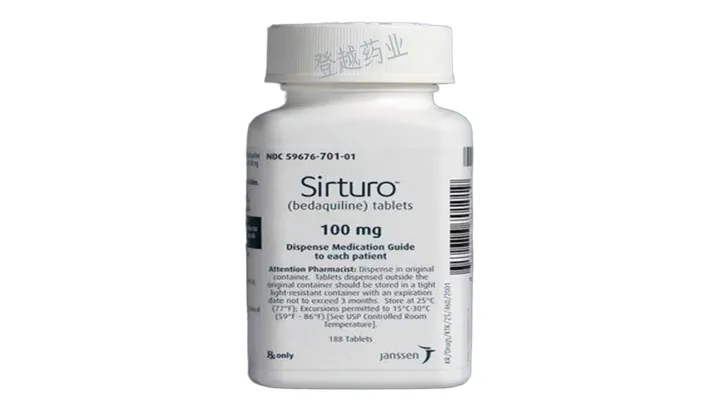
Table of Contents
- Package leaflet: Information for the patient
- SIRTURO 20 mg tablets
- 1. What SIRTURO is and what it is used for
- 2. What you need to know before taking SIRTURO
- 3. How to take SIRTURO
- 4. Possible side effects
- 5. How to store SIRTURO
- 6. Package contents and other information
- Patient information leaflet
- SIRTURO 100 mg tablets
- 1. What SIRTURO is and what it is used for
- 2. What you need to know before taking SIRTURO
- 3. How to take SIRTURO
- 4. Possible side effects
- 5. How to store SIRTURO
- 6. Package contents and other information
Package leaflet: Information for the patient
SIRTURO 20 mg tablets
bedaquiline
Please read all of this leaflet carefully before taking this medicine because it contains
important information for you.
- Keep this leaflet. You may need to read it again.
- If you have any questions, ask your doctor, pharmacist, or nurse.
- This medicine has been prescribed for you only. Do not give it to other people, even if they have the same symptoms as yours, because it could be harmful.
- If you experience any side effects, including those not listed in this leaflet, tell your doctor, pharmacist, or nurse. See section 4.
Contents of this leaflet
- What SIRTURO is and what it is used for
- What you need to know before taking SIRTURO
- How to take SIRTURO
- Possible side effects
- How to store SIRTURO
- Contents of the pack and other information
1. What SIRTURO is and what it is used for
SIRTURO contains the active substance bedaquiline.
SIRTURO is a type of antibiotic. Antibiotics are medicines that kill bacteria causing disease.
SIRTURO is used to treat tuberculosis affecting the lungs when the disease has become resistant to at least rifampicin and isoniazid, which are also antibiotics.
SIRTURO must always be taken together with other medicines for the treatment of tuberculosis.
It is used in adults and children (from 2 years of age onwards, with body weight equal to or greater than 7 kg).
2. What you need to know before taking SIRTURO
Do not take SIRTURO
- if you are allergic to bedaquiline or to any of the other ingredients of this medicine (listed in section 6). Do not take SIRTURO if this applies to you. If you have any doubts, consult your doctor or pharmacist before taking SIRTURO.
Warnings and precautions
Talk to your doctor, pharmacist, or nurse before taking SIRTURO if:
- you have had an abnormal electrocardiogram (ECG) trace or have suffered from heart failure;
- you have a personal or family history of a heart condition called "congenital long QT syndrome";
- you are taking other medicines, as some may increase the risk of side effects;
- you have reduced function of the thyroid gland. This can be determined by a blood test;
- you have liver disease or drink alcohol regularly;
- your blood potassium levels are low. This can be detected by a blood test;
- you have human immunodeficiency virus (HIV) infection.
If any of the conditions listed above apply to you (or you are unsure), talk to your doctor, pharmacist, or nurse before taking SIRTURO.
Children and adolescents
In adolescents weighing between 30 and 40 kg, SIRTURO blood levels are expected to be higher than in adults. This may be associated with an increased risk of changes in the ECG trace (known as QT interval prolongation) or increased liver enzymes (detected in blood tests). Talk to your doctor, pharmacist, or nurse before taking SIRTURO.
Do not give this medicine to children under 2 years of age or weighing less than 7 kg, as there are no studies in these patients.
Other medicines and SIRTURO
Other medicines may affect the action of SIRTURO. Inform your doctor or pharmacist if you are taking, have recently taken, or might take any other medicines.
The following are examples of medicines that patients with pulmonary tuberculosis caused by M. tuberculosis resistant to at least rifampicin and isoniazid may take, and which could potentially interact with SIRTURO:
| Medicine (active ingredient name) | Medicine use |
| rifampicin, rifapentine, rifabutin | to treat certain infections such as tuberculosis (antimycobacterials) |
| efavirenz, etravirine | to treat HIV infection (antiretrovirals, non-nucleoside reverse transcriptase inhibitors) |
| carbamazepine, phenytoin | to treat epileptic seizures (anticonvulsants) |
| St. John's Wort (Hypericum perforatum) | herbal product used to relieve anxiety |
SIRTURO and alcohol
You must not drink alcohol while taking SIRTURO.
Pregnancy and breastfeeding
If you are pregnant, think you may be pregnant, planning a pregnancy, or are breastfeeding, ask your doctor or pharmacist for advice before taking this medicine.
Driving and using machines
You may feel dizzy after taking SIRTURO. If this happens, do not drive or operate machinery.
3. How to take SIRTURO
Take this medicine exactly as directed by your doctor or pharmacist. If you have any doubts, consult your doctor or pharmacist.
SIRTURO must always be taken together with other medicines used to treat tuberculosis. Your doctor will decide which other medicines you should take along with SIRTURO.
Use in children (from 2 years of age and weighing at least 7 kg but less than 10 kg)
How much to take
Take SIRTURO for a 24-week treatment period.
First 2 weeks:
- take 80 mg once daily.
From Week 3 to Week 24: - take 40 mg once daily only for 3 days per week
- there must be an interval of at least 48 hours between two doses of SIRTURO. For example, from Week 3 onwards, you may take SIRTURO on Monday, Wednesday, and Friday of each week.
Use in children (from 2 years of age and weighing at least 10 kg but less than 15 kg)
How much to take
Take SIRTURO for a 24-week treatment period.
First 2 weeks:
- take 120 mg once daily.
From Week 3 to Week 24: - take 60 mg once daily only for 3 days per week
- there must be an interval of at least 48 hours between two doses of SIRTURO. For example, from Week 3 onwards, you may take SIRTURO on Monday, Wednesday, and Friday of each week.
Use in children (from 5 years of age and weighing at least 15 kg but less than 20 kg)
How much to take
Take SIRTURO for a 24-week treatment period.
First 2 weeks:
- take 160 mg once daily.
From Week 3 to Week 24: - take 80 mg once daily only for 3 days per week
- there must be an interval of at least 48 hours between two doses of SIRTURO. For example, from Week 3 onwards, you may take SIRTURO on Monday, Wednesday, and Friday of each week.
Use in children (from 5 years of age and weighing between 20 kg and 30 kg)
How much to take
Take SIRTURO for a 24-week treatment period.
First 2 weeks:
- take 200 mg once daily.
From Week 3 to Week 24: - take 100 mg once daily only for 3 days per week
- there must be an interval of at least 48 hours between two doses of SIRTURO. For example, from Week 3 onwards, you may take SIRTURO on Monday, Wednesday, and Friday of each week.
Use in adults and children (from 5 years of age and weighing at least 30 kg)
How much to take
Take SIRTURO for a 24-week treatment period.
First 2 weeks:
- take 400 mg once daily.
From Week 3 to Week 24: - take 200 mg once daily only for 3 days per week
- at least 48 hours must pass between one dose of SIRTURO and the next. For example, from Week 3 onwards, you may take SIRTURO on Monday, Wednesday, and Friday of each week.
You may need to continue taking other tuberculosis medicines for more than 6 months. Consult your doctor or pharmacist.
When to take this medicine
- always take SIRTURO with food. Food is important to achieve adequate levels of the medicine in your body.
If you are able to swallow tablets
- swallow the tablets with some water; the tablets may be taken whole or split in half.
If you are unable to swallow tablets
- If you cannot swallow SIRTURO tablets, you may:
- mix them with water: mix up to 5 tablets per teaspoon of water until completely dissolved or swallow the mixture immediately, or to facilitate administration, you may add at least one more teaspoon of water (or another beverage) or soft food and mix; the following beverages may be used for mixing: water, milk product, apple juice, orange juice, cranberry juice, or carbonated drinks. The following soft foods may be used for mixing: yogurt, apple puree, banana puree, or porridge. Swallow the mixture immediately. Repeat the same steps with additional tablets until the full dose is taken. Ensure no residue of the tablets remains in the container; rinse the container with additional liquid or soft food and swallow the mixture immediately.
- crush the tablets and mix them with soft food: you may use soft foods such as yogurt, apple puree, banana puree, or porridge. Swallow the mixture immediately. Ensure no residue of the tablets remains in the container; then add more soft food and swallow the mixture immediately.
- feeding tube: SIRTURO 20 mg tablets may also be administered through certain feeding tubes. Please consult your doctor for specific instructions on how to properly administer the tablets via a feeding tube.
If you take more SIRTURO than you should
If you take more SIRTURO than prescribed, contact your doctor immediately. Bring the medicine packaging with you.
If you forget to take SIRTURO
During the first 2 weeks
- skip the missed dose and take the next dose as usual.
- do not take a double dose to make up for the missed dose.
From Week 3 onwards
- take the missed dose as soon as possible.
- resume taking the medicine three times a week.
- ensure at least 24 hours pass between the missed dose and the next scheduled dose.
- do not exceed the prescribed weekly dose over any 7-day period.
If you miss a dose and are unsure what to do, consult your doctor or pharmacist.
If you stop taking SIRTURO
Do not stop taking SIRTURO without first discussing it with your doctor.
Skipping doses or not completing the full course of treatment may:
- make the treatment ineffective, possibly worsening tuberculosis; and
- increase the likelihood that bacteria become resistant to the medicine. This means the disease may no longer be treatable with SIRTURO or other medicines in the future.
If you have any questions about the use of this medicine, consult your doctor, pharmacist, or nurse.
4. Possible side effects
Like all medicines, this medicine can cause side effects, although not everybody gets them.
Very common (may affect more than 1 in 10 people):
- changes in the ECG trace known as "prolongation of the QT interval". Contact your doctor immediately if you faint.
- increased liver enzymes (detected by blood tests)
- headache
- joint pain
- dizziness
- feeling unwell or malaise (nausea or vomiting).
Common (may affect up to 1 in 10 people):
- diarrhoea
- sore or painful muscles, not due to physical exercise
Reporting of side effects
If you get any side effects, including ones not listed in this leaflet, talk to your doctor, pharmacist or nurse.
You can also report side effects directly via the national reporting system referred to in Annex V. By reporting side effects, you can help provide more information on the safety of this medicine.
5. How to store SIRTURO
Keep this medicine out of the sight and reach of children.
Do not use this medicine after the expiry date which is stated on the carton after “Exp.”. The expiry
date refers to the last day of that month.
Store in the original container and keep the container tightly closed to protect the medicine from
light and moisture. Do not remove the desiccant (the sachet containing the drying agent).
This medicine may pose a risk to the environment. Do not dispose of any medicine via wastewater or
household waste. Ask your pharmacist how to dispose of medicines you no longer use.
This will help protect the environment.
6. Package contents and other information
What SIRTURO contains
- The active substance is bedaquiline. Each tablet contains bedaquiline fumarate equivalent to 20 mg of bedaquiline.
- The other components are: microcrystalline cellulose, crospovidone, anhydrous colloidal silica, hypromellose, polysorbate 20, sodium stearate fumarate.
Description of the appearance of SIRTURO and package contents
White or almost white, elongated uncoated tablet, with a score line on both sides,
imprinted with “2” and “0” on one side and plain on the other.
One plastic bottle containing 60 tablets.
Marketing Authorization Holder
Janssen-Cilag International NV
Turnhoutseweg 30
B-2340 Beerse
Belgium
Manufacturer
Janssen Pharmaceutica NV
Turnhoutseweg 30
B-2340 Beerse
Belgium
For further information about this medicinal product, please contact the local representative of the Marketing Authorization Holder:
België/Belgique/Belgien Lietuva
Janssen-Cilag NV UAB “JOHNSON & JOHNSON”
Tel/Tél: +32 14 64 94 11 Tel: +370 5 278 68 88
[email protected] [email protected]
България Luxembourg/Luxemburg
„Джонсън & Джонсън България” ЕООД Janssen-Cilag NV
Тел.: +359 2 489 94 00 Tél/Tel: +32 14 64 94 11
[email protected] [email protected]
Česká republika Magyarország
Janssen-Cilag s.r.o. Janssen-Cilag Kft.
Tel: +420 227 012 227 Tel.: +36 1 884 2858
[email protected]
Danmark Malta
Janssen-Cilag A/S AM MANGION LTD
Tlf.: +45 4594 8282 Tel: +356 2397 6000
[email protected]
Deutschland Nederland
Janssen-Cilag GmbH Janssen-Cilag B.V.
Tel: 0800 086 9247 / +49 2137 955 6955 Tel: +31 76 711 1111
[email protected] [email protected]
Eesti Norge
UAB “JOHNSON & JOHNSON” Eesti filiaal Janssen-Cilag AS
Tel: +372 617 7410 Tlf: +47 24 12 65 00
[email protected] [email protected]
Ελλάδα Österreich
Janssen-Cilag Φαρμακευτική Μονοπρόσωπη Janssen-Cilag Pharma GmbH
Α.Ε.Β.Ε. Tel: +43 1 610 300
Tηλ: +30 210 80 90 000
España Polska
Janssen-Cilag, S.A. Janssen-Cilag Polska Sp. z o.o.
Tel: +34 91 722 81 00 Tel.: +48 22 237 60 00
[email protected]
France Portugal
Janssen-Cilag Janssen-Cilag Farmacêutica, Lda.
Tél: 0 800 25 50 75 / +33 1 55 00 40 03 Tel: +351 214 368 600
[email protected]
Hrvatska România
Johnson & Johnson S.E. d.o.o. Johnson & Johnson România SRL
Tel: +385 1 6610 700 Tel: +40 21 207 1800
[email protected]
Ireland Slovenija
Janssen Sciences Ireland UC Johnson & Johnson d.o.o.
Tel: 1 800 709 122 Tel: +386 1 401 18 00
[email protected] [email protected]
Ísland Slovenská republika
Janssen-Cilag AB Johnson & Johnson, s.r.o.
c/o Vistor ehf. Tel: +421 232 408 400
Sími: +354 535 7000
[email protected]
Italia Suomi/Finland
Janssen-Cilag SpA Janssen-Cilag Oy
Tel: 800 688 777/+39 02 2510 1 Puh/Tel: +358 207 531 300
[email protected] [email protected]
Κύπρος Sverige
Βαρνάβας Χατζηπαναγής Λτδ Janssen-Cilag AB
Τηλ: +357 22 207 700 Tfn: +46 8 626 50 00
[email protected]
Latvija
UAB “JOHNSON & JOHNSON” filiāle Latvijā
Tel: +371 678 93561
[email protected]
More detailed information on this medicinal product is available on the website of the European Medicines Agency: https://www.ema.europa.eu.
Patient information leaflet
SIRTURO 100 mg tablets
bedaquiline
Please read this leaflet carefully before taking this medicine because it contains important information for you.
- Keep this leaflet. You may need to read it again.
- If you have any questions, ask your doctor, pharmacist or nurse.
- This medicine has been prescribed for you only. Do not give it to others, even if they have the same symptoms as you, because it could be harmful.
- If you experience any side effects, including those not listed in this leaflet, talk to your doctor, pharmacist or nurse. See section 4.
Contents of this leaflet:
- What SIRTURO is and what it is used for
- What you need to know before taking SIRTURO
- How to take SIRTURO
- Possible side effects
- How to store SIRTURO
- Contents of the pack and other information
1. What SIRTURO is and what it is used for
SIRTURO contains the active substance bedaquiline.
SIRTURO is a type of antibiotic. Antibiotics are medicines that kill bacteria causing disease.
SIRTURO is used to treat tuberculosis affecting the lungs, when the disease has become resistant at least to rifampicin and isoniazid, which are also antibiotics.
SIRTURO must always be taken together with other medicines for the treatment of tuberculosis.
It is used in adults and children (from 2 years of age onwards, with body weight equal to or greater than 7 kg).
In patients weighing less than 15 kg, SIRTURO 20 mg tablets must be used to achieve the appropriate dose.
2. What you need to know before taking SIRTURO
Do not take SIRTURO:
- if you are allergic to bedaquiline or to any of the other ingredients of this medicine (listed in section 6). Do not take SIRTURO if this applies to you. If you have any doubts, consult your doctor or pharmacist before taking SIRTURO.
Warnings and precautions
Talk to your doctor, pharmacist, or nurse before taking SIRTURO if:
- you have had an abnormal electrocardiogram (ECG) trace or have suffered from heart failure;
- you have a personal or family history of a heart condition called "congenital long QT syndrome";
- you are taking other medicines, as some may increase the risk of side effects;
- you have reduced thyroid gland function. This can be determined by a blood test;
- you have liver disease or regularly consume alcohol;
- your blood potassium levels are low. This can be detected by a blood test;
- you have human immunodeficiency virus (HIV) infection.
If any of the conditions listed above apply to you (or if you are unsure), consult your doctor, pharmacist, or nurse before taking SIRTURO.
Children and adolescents
In adolescents weighing between 30 and 40 kg, SIRTURO blood levels are expected to be higher than in adults. This may be associated with an increased risk of changes in the ECG trace (known as QT interval prolongation) or elevated liver enzymes (detected in blood tests). Consult your doctor, pharmacist, or nurse before taking SIRTURO.
Do not give this medicine to children under 2 years of age or weighing less than 7 kg, as there are no studies in these patients.
Other medicines and SIRTURO
Other medicines may affect the action of SIRTURO. Inform your doctor or pharmacist if you are taking, have recently taken, or might take any other medicines.
The following are examples of medicines that patients with pulmonary tuberculosis caused by M. tuberculosis resistant to at least rifampicin and isoniazid may be taking, and which may potentially interact with SIRTURO:
| Medicine (active substance name) | Use of the medicine |
| rifampicin, rifapentine, rifabutin | to treat certain infections such as tuberculosis (antimycobacterials) |
| efavirenz, etravirine | to treat HIV infection (antiretrovirals, non-nucleoside reverse transcriptase inhibitors) |
| carbamazepine, phenytoin | to treat epileptic seizures (anticonvulsants) |
| St. John's Wort (Hypericum perforatum) | herbal product used to relieve anxiety |
SIRTURO and alcohol
You must not drink alcohol while taking SIRTURO.
Pregnancy and breastfeeding
If you are pregnant, think you may be pregnant, planning to become pregnant, or breastfeeding
breast milk, ask your doctor or pharmacist for advice before taking this medicine.
Driving and using machines
You may feel dizzy after taking SIRTURO. If this happens, do not drive or operate machinery.
SIRTURO contains lactose
SIRTURO contains "lactose" (a type of sugar). If you have an intolerance to certain sugars, consult your
doctor before taking this medicine.
3. How to take SIRTURO
Take this medicine exactly as instructed by your doctor or pharmacist. If you have any doubts, consult your doctor or pharmacist.
SIRTURO must always be taken in combination with other medicines used to treat tuberculosis. Your doctor will decide which other medicines you should take together with SIRTURO.
Use in children (from 5 years of age and weighing at least 15 kg but less than 20 kg)
How much to take
Take SIRTURO for a 24-week treatment period.
First 2 weeks:
- Take 160 mg once daily.
From Week 3 to Week 24:
- Take 80 mg once daily only on 3 days per week.
- There must be an interval of at least 48 hours between two doses of SIRTURO. For example, from Week 3 onwards, you may take SIRTURO on Monday, Wednesday, and Friday of each week.
Use in children (from 5 years of age and weighing between 20 kg and 30 kg)
How much to take
Take SIRTURO for a 24-week treatment period.
First 2 weeks:
- Take 200 mg once daily.
From Week 3 to Week 24:
- Take 100 mg once daily only on 3 days per week.
- There must be an interval of at least 48 hours between two doses of SIRTURO. For example, from Week 3 onwards, you may take SIRTURO on Monday, Wednesday, and Friday of each week.
Use in adults and children (from 5 years of age and weighing at least 30 kg)
How much to take
Take SIRTURO for a 24-week treatment period.
First 2 weeks:
- Take 400 mg once daily.
From Week 3 to Week 24:
- Take 200 mg once daily only on 3 days per week.
- At least 48 hours must pass between one dose of SIRTURO and the next. For example, from Week 3 onwards, you may take SIRTURO on Monday, Wednesday, and Friday of each week.
You may need to continue taking other tuberculosis medicines for more than 6 months. Consult your doctor or pharmacist.
When to take this medicine
- Always take SIRTURO with food. Food is important to achieve adequate levels of the medicine in your body.
- Swallow the tablets whole with water.
If you take more SIRTURO than you should
If you take more SIRTURO than prescribed, contact your doctor immediately. Bring the medicine package with you.
If you forget to take SIRTURO
During the first 2 weeks
- Skip the missed dose and take the next dose as usual.
- Do not take a double dose to make up for the missed dose.
From Week 3 onwards
- Take the missed dose as soon as possible.
- Resume taking the medicine three times a week.
- Ensure that at least 24 hours pass between the missed dose and the next scheduled dose.
- Do not exceed the prescribed weekly dose over any 7-day period.
If you have missed a dose and are unsure what to do, consult your doctor or pharmacist.
If you stop taking SIRTURO
Do not stop taking SIRTURO without first talking to your doctor.
Skipping doses or not completing the full course of treatment may:
- Make the treatment ineffective and lead to worsening of tuberculosis; and
- Increase the likelihood that the bacteria become resistant to the medicine. This means that in the future, the disease may no longer be treatable with SIRTURO or other medicines.
If you have any questions about how to use this medicine, consult your doctor, pharmacist, or nurse.
4. Possible side effects
Like all medicines, this medicine can cause side effects, although not everybody gets them.
Very common (may affect more than 1 in 10 people):
- changes in the ECG trace known as "prolongation of the QT interval". Contact your doctor immediately if you faint.
- increased liver enzymes (detected by blood tests)
- headache
- joint pain
- dizziness
- feeling unwell or malaise (nausea or vomiting).
Common (may affect up to 1 in 10 people):
- diarrhoea
- muscle tenderness or pain not due to exercise
Reporting of side effects
If you experience any side effect, including those not listed in this leaflet, talk to your doctor, pharmacist or nurse.
You can also report side effects directly via the national reporting system listed in Annex V. By reporting side effects, you can help provide more information on the safety of this medicine.
5. How to store SIRTURO
Keep this medicine out of the sight and reach of children.
Do not use this medicine after the expiry date stated on the carton after “Exp.”. The expiry date refers to the last day of that month.
Store SIRTURO in the original container or packaging to protect it from light.
This medicine may pose a risk to the environment. Do not dispose of any medicine via wastewater or household waste. Ask your pharmacist how to dispose of medicines you no longer use. This will help protect the environment.
6. Package contents and other information
What SIRTURO contains
- The active substance is bedaquiline. Each tablet contains bedaquiline fumarate equivalent to 100 mg of bedaquiline.
- The other components are: anhydrous colloidal silica, sodium croscarmellose, hypromellose, lactose monohydrate, magnesium stearate, maize starch, microcrystalline cellulose, polysorbate 20.
Description of the appearance of SIRTURO and contents of the pack
White or almost white, round, biconvex, uncoated tablet, 11 mm in diameter, imprinted with
“T” over “207” on one side and “100” on the other.
Plastic bottle containing 188 tablets.
Pack containing 4 blister strips (each strip contains 6 tablets).
Not all pack sizes may be marketed.
Marketing Authorization Holder
Janssen-Cilag International NV
Turnhoutseweg 30
B-2340 Beerse
Belgium
Manufacturer
Janssen Pharmaceutica NV
Turnhoutseweg 30
B-2340 Beerse
Belgium
For further information about this medicinal product, please contact the local representative of the Marketing Authorization Holder:
België/Belgique/Belgien Lietuva
Janssen-Cilag NV UAB “JOHNSON & JOHNSON”
Tel/Tél: +32 14 64 94 11 Tel: +370 5 278 68 88
[email protected] [email protected]
България Luxembourg/Luxemburg
„Джонсън & Джонсън България” ЕООД Janssen-Cilag NV
Тел.: +359 2 489 94 00 Tél/Tel: +32 14 64 94 11
[email protected] [email protected]
Česká republika Magyarország
Janssen-Cilag s.r.o. Janssen-Cilag Kft.
Tel: +420 227 012 227 Tel.: +36 1 884 2858
[email protected]
Danmark Malta
Janssen-Cilag A/S AM MANGION LTD
Tlf.: +45 4594 8282 Tel: +356 2397 6000
[email protected]
Deutschland Nederland
Janssen-Cilag GmbH Janssen-Cilag B.V.
Tel: 0800 086 9247 / +49 2137 955 6955 Tel: +31 76 711 1111
[email protected] [email protected]
Eesti Norge
UAB “JOHNSON & JOHNSON” Eesti filiaal Janssen-Cilag AS
Tel: +372 617 7410 Tlf: +47 24 12 65 00
[email protected] [email protected]
Ελλάδα Österreich
Janssen-Cilag Φαρμακευτική Μονοπρόσωπη Janssen-Cilag Pharma GmbH
Α.Ε.Β.Ε. Tel: +43 1 610 300
Tηλ: +30 210 80 90 000
España Polska
Janssen-Cilag, S.A. Janssen-Cilag Polska Sp. z o.o.
Tel: +34 91 722 81 00 Tel.: +48 22 237 60 00
[email protected]
France Portugal
Janssen-Cilag Janssen-Cilag Farmacêutica, Lda.
Tél: 0 800 25 50 75 / +33 1 55 00 40 03 Tel: +351 214 368 600
[email protected]
Hrvatska România
Johnson & Johnson S.E. d.o.o. Johnson & Johnson România SRL
Tel: +385 1 6610 700 Tel: +40 21 207 1800
[email protected]
Ireland Slovenija
Janssen Sciences Ireland UC Johnson & Johnson d.o.o.
Tel: 1 800 709 122 Tel: +386 1 401 18 00
[email protected] [email protected]
Ísland Slovenská republika
Janssen-Cilag AB Johnson & Johnson, s.r.o.
c/o Vistor ehf. Tel: +421 232 408 400
Sími: +354 535 7000
[email protected]
Italia Suomi/Finland
Janssen-Cilag SpA Janssen-Cilag Oy
Tel: 800 688 777/+39 02 2510 1 Puh/Tel: +358 207 531 300
[email protected] [email protected]
Κύπρος Sverige
Βαρνάβας Χατζηπαναγής Λτδ Janssen-Cilag AB
Τηλ: +357 22 207 700 Tfn: +46 8 626 50 00
[email protected]
Latvija
UAB “JOHNSON & JOHNSON” filiāle Latvijā
Tel: +371 678 93561
[email protected]
More detailed information on this medicinal product is available on the website of the European Medicines Agency: https://www.ema.europa.eu.