Sirkava
ItalyTable of Contents
- Patient Information Leaflet
- Sirkava 18 micrograms inhalation powder, hard capsule
- 1. What Sirkava is and what it is used for
- 2. What you need to know before using Sirkava 18 micrograms
- 3. How to take Sirkava 18 micrograms
- 4. Possible side effects
- 5. How to store Sirkava 18 micrograms
- 6. Package contents and other information
Patient Information Leaflet
Sirkava 18 micrograms inhalation powder, hard capsule
tiotropium
Generic Medicine
Please read all of this leaflet carefully before you start using this medicine, as it contains important information for you.
- Keep this leaflet. You may need to read it again.
- If you have any questions, consult your doctor, pharmacist, or nurse.
- This medicine has been prescribed for you only. Do not give it to others, even if their symptoms are the same as yours, as it could be harmful.
- If you experience any side effects, including those not listed in this leaflet, tell your doctor, pharmacist, or nurse. See section 4.
Contents of this leaflet:
- What Sirkava is and what it is used for
- What you need to know before using Sirkava 18 micrograms
- How to use Sirkava 18 micrograms
- Possible side effects
- How to store Sirkava 18 micrograms
- Contents of the pack and other information
1. What Sirkava is and what it is used for
Sirkava 18 micrograms helps people with chronic obstructive pulmonary disease (COPD) to breathe more easily. COPD is a chronic lung disease that causes shortness of breath and cough. The term COPD refers to chronic conditions of bronchitis and emphysema. Since COPD is a chronic disease, Sirkava 18 micrograms must be used every day, not only when breathing difficulties or other COPD symptoms occur.
Sirkava 18 micrograms is a long-acting bronchodilator that helps to widen the airways and makes it easier for air to flow into and out of the lungs. Regular use of Sirkava 18 micrograms may also help when shortness of breath related to the disease develops, and will help minimize the impact of the disease on your daily life. It also allows you to stay active for longer. Daily use of Sirkava 18 micrograms helps prevent sudden short-term worsening of COPD symptoms, which may last for several days. The effect of this medicine lasts for 24 hours; therefore, it must be taken once daily. For the correct dosage of Sirkava 18 micrograms, see section 3. How to use Sirkava 18 micrograms and the instructions for use provided on the other side of the package leaflet.
2. What you need to know before using Sirkava 18 micrograms
Do not use Sirkava 18 micrograms
- if you are allergic (hypersensitive) to tiotropium, the active substance contained in this medicine, or to
any of the other ingredients of this medicine (listed in section 6).
- if you are allergic (hypersensitive) to atropine or substances related to it, such as ipratropium or oxitropium.
Warnings and precautions
Talk to your doctor or pharmacist before using Sirkava 18 micrograms.
- Inform your doctor if you have narrow-angle glaucoma, prostate problems, or difficulty urinating.
- If you have kidney problems, consult your doctor.
- Sirkava 18 micrograms is indicated for maintenance treatment of chronic obstructive pulmonary disease (COPD); it must not be used to treat sudden attacks of breathlessness or wheezing.
- Immediate allergic reactions such as skin rash, swelling, itching, wheezing, or shortness of breath may occur after administration of Sirkava 18 micrograms. If this happens, consult your doctor immediately.
- Medicines taken by inhalation, such as Sirkava 18 micrograms, may cause chest tightness, cough, wheezing, or shortness of breath immediately after administration. If this occurs, consult your doctor immediately.
- Avoid carefully allowing the inhaled powder to come into contact with the eyes, as this may precipitate or worsen narrow-angle glaucoma, an eye disease. Pain or discomfort in the eyes, blurred vision, seeing halos around lights, or colored images associated with red eyes may be signs of an acute attack of narrow-angle glaucoma. Ocular symptoms may be accompanied by headache, nausea, or vomiting. Discontinue use of tiotropium bromide and consult your doctor immediately, preferably an eye specialist, if signs or symptoms of narrow-angle glaucoma occur.
- Dry mouth, which has been observed during treatment with anticholinergics, may over time be associated with dental caries. Therefore, careful dental hygiene is recommended.
- If you have suffered a myocardial infarction within the last 6 months, or any form of unstable or life-threatening irregular heartbeat, or severe heart failure in the past year, inform your doctor. This information is important to determine whether Sirkava is the appropriate medicine for you.
- Do not use Sirkava 18 micrograms more frequently than once daily.
Children and adolescents
Sirkava 18 micrograms is not recommended for children and adolescents under 18 years of age.
Other medicines and Sirkava 18 micrograms
Inform your doctor or pharmacist if you are taking, have recently taken, or might take any other medicines, including medicines without a prescription.
Inform your doctor or pharmacist if you are using or have recently used similar medicines for your lung condition, such as ipratropium or oxitropium.
No specific adverse effects have been reported following the use of Sirkava 18 micrograms in combination with other medicines used to treat COPD, such as inhaled medicines that relieve symptoms like salbutamol, methylxanthines such as theophylline, and/or orally or inhaled administered steroids such as prednisolone.
Pregnancy and breastfeeding
If you are pregnant, think you may be pregnant, planning to become pregnant, or breastfeeding, consult your doctor or pharmacist before taking this medicine. Do not use this medicine unless specifically recommended by your doctor.
Driving and using machines
Dizziness, blurred vision, or headache may affect your ability to drive vehicles or operate machinery.
Sirkava 18 micrograms contains anhydrous lactose.
When taken according to the recommended dosage—one capsule once daily—each dose provides up to 5.5 mg of anhydrous lactose. If your doctor has diagnosed you with an intolerance to certain sugars, contact him or her before taking this medicine.
3. How to take Sirkava 18 micrograms
Use this medicine exactly as directed by your doctor or pharmacist. If you have
any doubts, consult your doctor or pharmacist.
The recommended dose is inhalation of the contents of one capsule (18 micrograms of tiotropium) once
daily. Do not use a higher dose than recommended.
Sirkava 18 micrograms is not recommended for children and adolescents under 18 years of age.
The capsule should be used at the same time every day. This is important because Sirkava 18
micrograms is effective for 24 hours.
The capsules are for inhalation only and must not be taken orally.
Do not swallow the capsules.
The NeumoHaler device, into which the Sirkava capsule must be placed, pierces the
capsule and allows inhalation of the powder.
Make sure you have a NeumoHaler and know how to use it properly. Instructions for
using the NeumoHaler are provided at the end of this leaflet.
Ensure that you do not blow into the NeumoHaler.
If you have any doubts about how to use the NeumoHaler, consult your doctor, nurse, or pharmacist,
who will demonstrate its correct use.
The NeumoHaler must be cleaned once a month. Instructions for cleaning the NeumoHaler are
provided at the end of this leaflet.
When taking Sirkava 18 micrograms, take care to avoid the powder entering your eyes. If this
happens, you may experience blurred vision, eye pain and/or redness. In such a case, immediately
rinse your eyes with lukewarm water and then contact your doctor immediately for further advice.
If you notice that your breathing worsens, inform your doctor as soon as possible.
If you use more Sirkava 18 micrograms than you should
If you inhale the contents of more than one Sirkava 18 microgram capsule in one day, you must
contact your doctor immediately. You may have an increased risk of experiencing adverse effects
such as dry mouth, constipation, difficulty urinating, increased heart rate, or
blurred vision.
If you forget to use Sirkava 18 micrograms
If you forget to take a dose, take it as soon as you remember, but do not take a double
dose at the same time or on the same day. Then take your next dose as usual.
If you stop using Sirkava 18 micrograms
Before stopping treatment with Sirkava 18 micrograms, you must speak to your doctor or
pharmacist.
If you stop treatment with Sirkava 18 micrograms, your COPD symptoms may worsen.
If you have any questions about using this medicine, consult your doctor or pharmacist.
4. Possible side effects
Like all medicines, this medicine can cause side effects, although not everyone gets them.
The side effects described below have been reported by people who have taken this medicine and are listed by frequency, categorised as common, uncommon, rare or not known.
Common (may affect up to 1 in 10 people):
- Dry mouth: usually mild
Uncommon (may affect up to 1 in 100 people):
- Dizziness
- Headache
- Taste disturbances
- Blurred vision
- Irregular heartbeat (atrial fibrillation)
- Inflammation of the throat (pharyngitis)
- Hoarse voice (dysphonia)
- Cough
- Heartburn (gastroesophageal reflux disease)
- Constipation
- Fungal infections of the mouth and throat (oropharyngeal candidiasis)
- Rash
- Difficulty urinating (urinary retention)
- Pain on urination (dysuria)
Rare (may affect up to 1 in 1,000 people):
- Difficulty sleeping (insomnia)
- Visual halos around lights or coloured images associated with red eyes (glaucoma)
- Increased measured eye pressure
- Irregular heartbeat (supraventricular tachycardia)
- Fast heartbeat (tachycardia)
- Awareness of heartbeat (palpitations)
- Chest tightness, associated with cough, wheezing or shortness of breath immediately after inhalation (bronchospasm)
- Nosebleeds (epistaxis)
- Inflammation of the larynx (laryngitis)
- Inflammation of the sinuses (sinusitis)
- Bowel blockage or absence of bowel movements (intestinal obstruction including paralytic ileus)
- Inflammation of the gums (gingivitis)
- Inflammation of the tongue (glossitis)
- Difficulty swallowing (dysphagia)
- Inflammation of the mouth (stomatitis)
- Feeling unwell (nausea)
- Hypersensitivity including immediate reactions
- Severe allergic reactions causing swelling of the face or throat (angioedema)
- Hives (urticaria)
- Itching (pruritus)
- Urinary tract infections
Not known (frequency cannot be estimated from the available data):
- Loss of body fluids (dehydration)
- Dental caries
- Severe allergic reaction (anaphylactic reaction)
- Skin infections or ulcerations
- Dry skin
- Swelling of joints
After administration of Sirkava 18 micrograms, serious side effects may occur, including allergic reactions causing swelling of the face or throat (angioedema) or other hypersensitivity reactions (such as sudden drop in blood pressure or dizziness), occurring alone or as part of a severe allergic reaction (anaphylactic reaction). In addition, as with other inhaled medicines, some patients may experience unexpected chest tightness, cough, wheezing or shortness of breath immediately after inhalation (bronchospasm). If any of these effects occur, contact your doctor immediately.
Reporting of side effects
If you experience any side effect, including those not listed in this leaflet, talk to your doctor, pharmacist or nurse. You can also report side effects directly via the national reporting system at http://www.agenziafarmaco.gov.it/content/come-segnalare-una-sospetta-reazione-avversa. By reporting side effects, you can help provide more information on the safety of this medicine.
5. How to store Sirkava 18 micrograms
Keep this medicine out of the sight and reach of children.
Do not use this medicine after the expiry date stated on the carton and blister. The expiry date refers to the last day of that month.
You may use the NeumoHaler until you have used all the medicine contained in this package (up to a maximum of 3 months).
Do not store above 30 °C.
Keep in the original packaging to protect the medicine from moisture.
Do not dispose of any medicine via wastewater or household waste. Ask your pharmacist how to dispose of medicines you no longer use. This will help protect the environment.
6. Package contents and other information
What Sirkava contains
- The active substance is tiotropium. Each capsule contains 18 micrograms of the active substance tiotropium (as anhydrous bromide). The dose delivered during inhalation (the dose released from the mouthpiece of the NeumoHaler device) is 12 micrograms of tiotropium.
- The excipients are lactose, hypromellose, titanium dioxide (E171), black ink.
Description of the appearance of Sirkava and the contents of the pack
Inhalation powder, hard capsule.
White or almost white hard capsules with "T18" printed in black ink on the cap, containing white or almost white powder.
Aluminum/Aluminum-PVC peel-off blister.
NeumoHaler is a single-dose inhalation device for tiotropium, with a green body and cap and a white plastic (ABS) and stainless steel button.
Pack sizes and devices supplied:
- Carton containing 30 capsules
- Carton containing 60 capsules
- Carton containing 90 capsules
The NeumoHaler device is packaged/supplied in each carton.
Not all pack sizes may be marketed.
Marketing Authorization Holder and Manufacturer
Marketing Authorization Holder
Mylan S.p.A., Via Vittor Pisani 20, 20124 Milan, Italy
Manufacturer
Ferrer Internacional, S.A., Joan Buscallà 1-9, 08173 Sant Cugat del Vallès (Barcelona), Spain
NeumoHaler instructions for use:
Dear Patient,
NeumoHaler allows you to inhale the medicine contained in Sirkava capsules, which your doctor has prescribed for your respiratory problems.
Please remember to follow carefully the instructions provided by your doctor for using Sirkava. The NeumoHaler device has been specifically designed for Sirkava. Do not use it to take any other medicines. You may use the NeumoHaler device until you have finished all the medicine in this pack (for a maximum of up to 3 months). The NeumoHaler has a dust cap (curved top cover), a mouthpiece (located under the dust cap), a base, a piercing button (on the side of the NeumoHaler), and a central chamber (located under the mouthpiece).
NeumoHaler
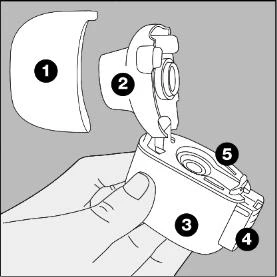
1 Dust cap
2 Mouthpiece
3 Base
4 Piercing button
5 Central chamber
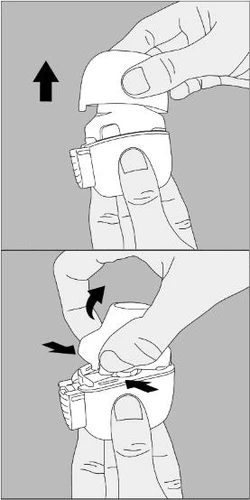
- Remove the dust cap. Check that no foreign objects are present in the inhalation channel.
- Open the mouthpiece by lifting it upwards while pressing the two tabs.
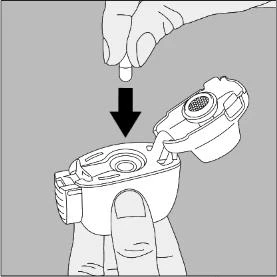
- Remove one Sirkava capsule from the blister (only immediately
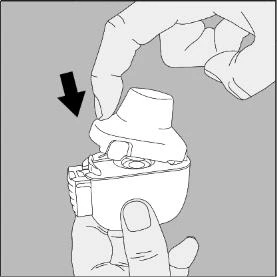
before use; see blister use instructions at the end of these instructions) and insert it into the central chamber of the NeumoHaler, as shown. The orientation of the capsule in the chamber does not matter. Never place the capsule directly into the mouthpiece.
- Close the mouthpiece securely until you hear a click.
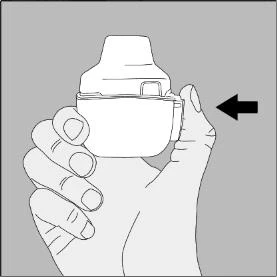
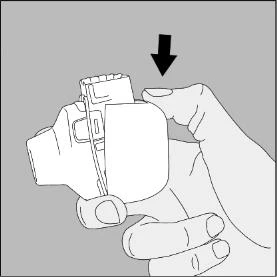
- Hold the NeumoHaler device with the mouthpiece facing
upwards and press the piercing button fully down once, then release. This action creates holes in the capsule, allowing the medicine to be released during inhalation.
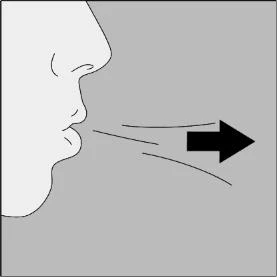
- Breathe out fully. Important: never breathe into the mouthpiece.
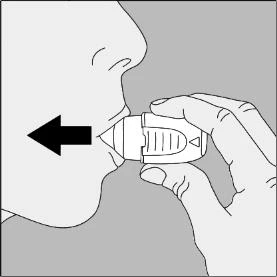
- Bring the NeumoHaler device to your mouth and close your lips firmly around the mouthpiece. Keep your head in an upright position and
inhale slowly and deeply, but at a sufficient speed to hear or feel the capsule vibrating. Inhale until your lungs are full, then hold your breath as long as possible while simultaneously removing the NeumoHaler device from your mouth.
Repeat steps 6 and 7 once to ensure the capsule is completely emptied.
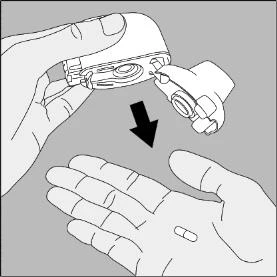
- Open the mouthpiece again. Empty the used capsule and discard it. Close the mouthpiece and replace the dust cap. Make sure the dust cap is properly closed.
Cleaning the NeumoHaler device
Clean the NeumoHaler device once a month.
- Open the dust cap and the mouthpiece.
Then open the base by pressing with your thumb on the triangle engraved beneath the piercing button, as shown in the figure.
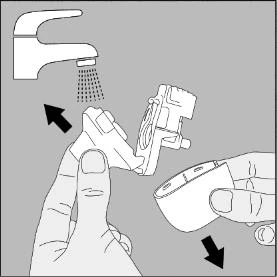
- Rinse the entire inhaler with warm water to remove any powder residue. Dry the NeumoHaler thoroughly by tipping out excess water onto a paper towel and leaving it to air-dry, without reassembling the components. Since air-drying takes 24 hours, the device should be cleaned immediately after use so that it is ready for the next inhalation. If necessary, the outer part of the mouthpiece may be cleaned with a damp, but not wet, cloth.
Blister use:
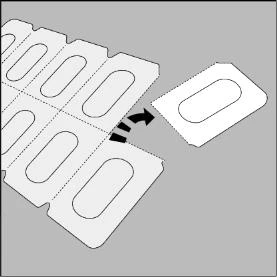
- Detach one section from the blister by tearing along the perforated line.
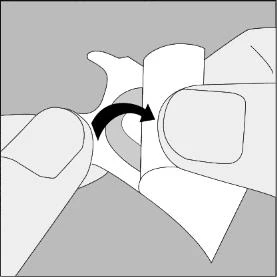
- Take the separated section and remove the protective backing to
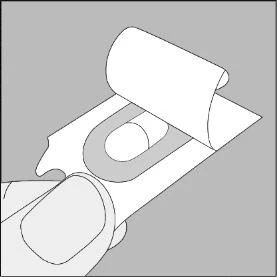
expose the capsule.
Do not push the capsule through the foil.
- Capsules must always be stored in the blister and removed only immediately before use. With dry hands, remove the

capsule from the blister.
Do not swallow the capsule.
Sirkava capsules contain only a small amount of powder, so the capsule is only partially filled.
NeumoHaler device manufacturer:
Ferrer Internacional, S.A
Joan Buscallà 1-9
08173 Sant Cugat del Vallès
Spain