Sirio
Italy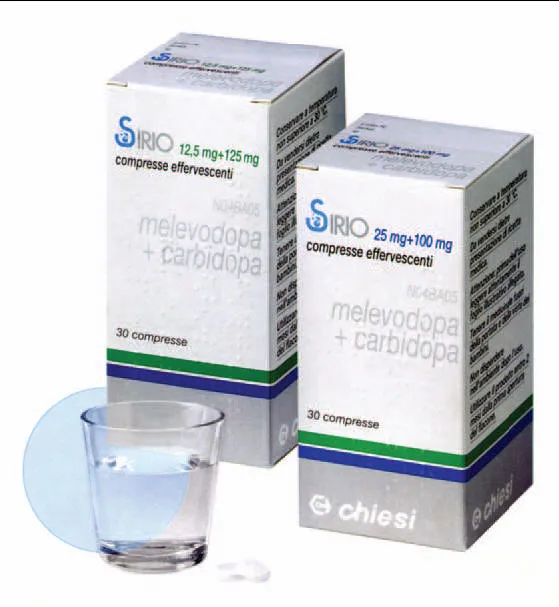
Table of Contents
- Package leaflet: Information for the patient
- SIRIO 12.5 mg + 125 mg effervescent tablets, 25 mg + 100 mg effervescent tablets
- 1. What SIRIO is and what it is used for
- 2. What you should know before taking SIRIO
- 3. How to take SIRIO
- 4. Possible side effects
- 5. How to store SIRIO
- 6. Contents of the pack and other information
Package leaflet: Information for the patient
SIRIO 12.5 mg + 125 mg effervescent tablets, 25 mg + 100 mg effervescent tablets
Carbidopa + Melevodopa
Please read all of this leaflet carefully before you start taking this medicine because it contains important information for you.
- Keep this leaflet. You may need to read it again.
- If you have any questions, ask your doctor, pharmacist, or nurse.
- This medicine has been prescribed for you only. Do not pass it on to other people, even if their symptoms are the same as yours, as it may be harmful.
- If you experience any side effects, including those not listed in this leaflet, inform your doctor, pharmacist, or nurse. See section 4.
Contents of this leaflet:
- What SIRIO is and what it is used for
- What you need to know before taking SIRIO
- How to take SIRIO
- Possible side effects
- How to store SIRIO
- Contents of the pack and other information
1. What SIRIO is and what it is used for
SIRIO contains two active substances, carbidopa and melevodopa.
SIRIO is a medicine indicated in adults for the treatment of Parkinson's disease, a disorder of the central nervous system that causes movement problems in muscles and manifests, for example, with tremor, muscle rigidity, slowness of movement, and difficulty maintaining balance.
Treatment with SIRIO is particularly indicated in patients with movement disorders known as akinesias (morning akinesia, afternoon akinesia, end-of-dose akinesia).
2. What you should know before taking SIRIO
Do not take SIRIO
- if you are allergic to carbidopa, melevodopa, or any of the other ingredients of this medicine (listed in section 6);
- if you are in a condition where administration of sympathomimetic amines (such as adrenaline and noradrenaline) is contraindicated;
- if you are in a condition where administration of adrenergic drugs is contraindicated (e.g. severe liver disease, phaeochromocytoma, i.e. a tumour developing mainly in the adrenal medulla, hyperthyroidism, Cushing's syndrome, severe cardiovascular diseases);
- if you suffer from a severe eye disease characterised by increased pressure of the fluid inside the eye (narrow-angle glaucoma);
- if you have recently had a heart attack (myocardial infarction), in patients with severe heart failure, severe cardiac arrhythmia, or acute stroke;
- if you have a suspected skin lesion or have previously had skin cancer (melanoma);
- if you are taking non-selective monoamine oxidase inhibitors and monoamine oxidase A inhibitors, used to treat depression;
- if you are under 18 years of age;
- if you are pregnant or breastfeeding.
Warnings and precautions
Talk to your doctor, pharmacist, or nurse before taking SIRIO:
- if you are also taking other medicines used in the treatment of Parkinson’s disease;
- if you are taking a medicine containing selegiline, as it may increase the adverse reactions of levodopa;
- if you suffer from movement disorders caused by another medicine you are taking. SIRIO may indeed cause involuntary movements;
- if you suffer from severe cardiovascular or pulmonary disease;
- if you suffer from bronchial asthma, kidney, liver, or endocrine disease;
- if you have a history of gastrointestinal bleeding due to gastroduodenal ulcer;
- if you suffer or have previously suffered from mental disorders (including psychosis), depression with suicidal tendencies, or other serious antisocial behaviours;
- if you suffer from bronchial asthma or severe heart or lung disease, or if you have kidney, liver, or hormonal disorders;
- if you have previously had a heart attack (myocardial infarction) or suffer from heart rhythm disorders (atrial, nodal, or ventricular arrhythmias);
- if you have previously had stomach (peptic ulcer) and/or intestinal lesions. After taking SIRIO, there is an increased risk of bleeding from the stomach and/or intestine;
- if you suffer from a bone disease known as osteomalacia;
- if you have previously experienced involuntary body movements (convulsions);
- if you suffer from an eye disease characterised by increased pressure of the fluid inside the eye (chronic open-angle glaucoma);
- if you experience urges or desires to behave in ways that are unusual or you cannot resist the impulse or temptation to perform certain activities which could harm you or others. These behaviours are called impulse control disorders and may include gambling addiction, excessive eating, excessive spending, abnormally increased sexual desire, or an increase in sexual thoughts.
- If you suffer from extrapyramidal (movement) syndromes, whether drug-induced or Huntington's chorea.
In all these cases, consult your doctor, who may prescribe an appropriate therapy.
Inform your doctor if you experience excessive drowsiness or sudden attacks of sleep during treatment with SIRIO (see section 4 “Possible side effects”). It may be necessary to reduce the dosage.
Inform your doctor if you or a family member/carer notice the development of symptoms resembling dependence, leading to a desire for high doses of SIRIO and other medicines used to treat Parkinson’s disease.
Epidemiological studies have shown that patients with Parkinson’s disease are at higher risk of developing melanoma (skin cancer), and therefore regular monitoring for prevention is recommended.
The safety and efficacy of SIRIO have not been established in newborns and children; its use is therefore contraindicated in patients under 18 years of age.
Laboratory tests
If you take SIRIO for long periods, your doctor will perform frequent blood tests.
During treatment with SIRIO, your laboratory test results may be altered.
For example, decreased haemoglobin (the protein that transports oxygen from the blood to tissues) and blood cell count (haematocrit), increased blood glucose and white blood cells (a type of blood cell), and presence of blood and bacteria in urine have been reported. Alterations in alanine aminotransferase (ALT) (an enzyme used to assess liver function), lactate dehydrogenase, and uric acid levels (uricaemia) have also been observed.
When using a test strip to determine ketonuria (presence of ketone bodies, i.e. waste products of fat metabolism, in urine), carbidopa/levodopa preparations may lead to a false-positive result for urinary ketone bodies. This reaction is not altered by boiling the urine sample.
False-negative results may also occur in testing for glycosuria (presence of sugars such as glucose in urine) with methods based on glucose oxidase.
Other medicines and SIRIO
Inform your doctor or pharmacist if you are taking, have recently taken, or might take any other medicines, especially:
- Antihypertensives (medicines for treating high blood pressure): you may experience a drop in blood pressure when moving from sitting to standing (orthostatic hypotension) when SIRIO is administered to a patient already on antihypertensive drugs.
- Antidepressants (such as non-selective monoamine oxidase A inhibitors): treatment with these medicines must be discontinued at least two weeks before starting therapy with SIRIO. Rarely, adverse effects including increased blood pressure and movement difficulties have been reported with concomitant use of antidepressants and medicines like SIRIO.
- Phenothiazines (medicines for treating mental disorders and allergies) and butyrophenones (medicines for treating mental disorders and nausea): may reduce the effects of levodopa contained in SIRIO.
- Phenytoin and papaverine (medicines for treating epilepsy and muscle spasms): may reduce the therapeutic effects of SIRIO.
- if you are on a diet high in proteins.
- Vitamin B6: do not take it in medium or high doses together with SIRIO, as it counteracts the effects of SIRIO. This counteracting effect does not occur with low-dose vitamin B6, such as that found in vitamin preparations.
- Iron: may decrease the absorption of carbidopa/levodopa when taken as ferrous sulphate or ferrous gluconate;
- Agents that deplete dopamine stores (e.g. reserpine and tetrabenazine);
- Monoamine oxidase inhibitors (except low doses of selective monoamine oxidase B inhibitors) and SIRIO tablets must not be administered together, and treatment with these inhibitors must be discontinued at least two weeks before starting therapy with SINEMET tablets.
Pregnancy, breastfeeding and fertility
Do not take SIRIO if you are pregnant, suspect you may be pregnant, are planning a pregnancy, or are breastfeeding (see section 2, “Do not take SIRIO”).
Driving and using machines
During treatment with SIRIO, exercise particular caution when driving or operating machinery.
If you experience excessive drowsiness or sudden episodes of falling asleep, refrain from driving and using machinery and contact your doctor.
SIRIO contains lactose and sodium
If your doctor has diagnosed you with an intolerance to certain sugars, contact him/her before taking this medicine.
SIRIO 12.5 mg + 125 mg effervescent tablets contain 46.7 mg of sodium (main component of table salt) per dose. This corresponds to 2.34% of the maximum daily dietary intake recommended for an adult.
SIRIO 25 mg + 100 mg effervescent tablets contain 45.1 mg of sodium (main component of table salt) per dose. This corresponds to 2.26% of the maximum daily dietary intake recommended for an adult.
3. How to take SIRIO
Take this medicine exactly as your doctor or pharmacist has told you. If you are unsure, consult your doctor or pharmacist.
The recommended initial dose in patients not previously treated with levodopa plus carbidopa is one effervescent tablet of SIRIO 25 mg + 100 mg three times daily. The dosage may be increased by one effervescent tablet per day or on alternate days.
The recommended initial dose of SIRIO 12.5 mg + 125 mg is one effervescent tablet once or twice daily, increasing if necessary by one effervescent tablet per day or on alternate days until an optimal response is achieved.
In patients already receiving treatment with carbidopa plus levodopa, when switching from previous therapy to SIRIO, your doctor will determine the appropriate SIRIO dosage based on your prior treatment.
In most patients, a maximum maintenance dose ranges between 3 and 6 effervescent tablets daily.
The effervescent tablets, available in two strengths, may be administered separately or together, as needed, to achieve the optimal dosage, thus allowing specific dose modulation.
The dose and frequency of administration will be determined by your doctor based on your health status.
If you develop involuntary movements, your doctor may reduce your SIRIO dosage. If you experience involuntary eyelid movements (blepharospasm), inform your doctor, who will reduce your SIRIO dosage.
If you are scheduled for surgery under general anesthesia, continue taking SIRIO for as long as you are able to take medications.
INSTRUCTIONS FOR USE
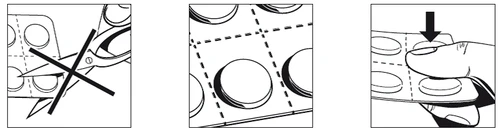
Do not use instruments such as scissors to remove SIRIO tablets from their blister pack (or to cut individual blisters), as this may compromise the integrity of the blister (Figure 1).
The blister is pre-scored (Figure 2), delineating each individual blister cavity, thus allowing easier tablet removal, even by patients with Parkinson's disease who may have tremors due to their condition.
Remove the SIRIO tablet from the blister only at the time of administration (it must not be stored outside the blister, nor in a punctured or otherwise damaged blister) by pressing with your fingers on the blister directly over the tablet (Figure 3).
Immediately after removal, dissolve the SIRIO tablet in approximately 150 ml of water.
FIG. 1 FIG. 2 FIG. 3
If you take more SIRIO than you should
In case of accidental ingestion or overdose of SIRIO, contact your doctor immediately or go to the nearest hospital.
Gastric lavage and appropriate supportive therapy may be required.
If you forget to take SIRIO
Do not take a double dose to make up for the forgotten tablet.
If you stop taking SIRIO
Abrupt discontinuation of SIRIO may lead to a condition similar to neuroleptic malignant syndrome, characterized by muscle rigidity, high body temperature, mental status changes, and alterations in certain laboratory parameters. Therefore, your doctor will closely monitor you when SIRIO dosage is abruptly reduced or discontinued, especially if you are taking medications with strong sedative effects (neuroleptics).
If you have any questions about how to use this medicine, consult your doctor or pharmacist.
4. Possible side effects
Like all medicines, this medicine can cause side effects, although not everybody gets them.
The side effects most commonly observed in people treated with SIRIO are rapid and involuntary movements.
Very common
- Urinary tract infections
Rare (may affect up to 1 in 1,000 people)
- decrease in the number of certain blood cells (leucopenia, agranulocytosis, thrombocytopenia) and in the amount of haemoglobin, a protein that carries oxygen (anaemia),
- somnolence, numbness (paraesthesia),
- high blood pressure (hypertension), inflammation of veins (phlebitis),
- shortness of breath (dyspnoea),
- bleeding from the stomach and intestine (gastrointestinal haemorrhage), intestinal damage (duodenal ulcer),
- chest pain.
Very rare (may affect up to 1 in 10,000 people)
- decrease in the amount of haemoglobin in the blood due to breakdown of red blood cells (haemolytic anaemia).
Not known (frequency cannot be estimated from the available data)
- skin tumour (malignant melanoma);
- reduced appetite;
- sleep disorder, confusion, paranoia, mental disorders (psychosis), depression (with or without suicidal tendencies), euphoric mood, seizures, insomnia, delirium, nightmares, hallucinations, mania, agitation, anxiety, teeth grinding (bruxism);
- desire for high doses of SIRIO exceeding those required to control motor symptoms, known as dopamine dysregulation syndrome. Some patients may experience severe abnormal involuntary movements (dyskinesias), mood changes or other side effects after taking high doses of SIRIO;
- inability to resist the impulse to carry out actions that could be harmful, which may include:
- strong impulse to gamble excessively, despite serious personal and/or family consequences (pathological gambling);
- altered or increased sexual interest (hypersexuality or increased libido);
- uncontrolled eating;
- eating more food than normal and more than needed to satisfy hunger (bulimia nervosa, an eating disorder in which a person consumes excessive amounts of food and then uses methods to avoid absorbing it);
- dementia, disturbances in dream activity, agitation, confusion;
- uncontrolled shopping or excessive spending.
If you experience any of these behaviours, inform your doctor so that he or she can decide how to intervene to manage or reduce these symptoms.
- dizziness, movement disorders (dyskinesia), headache, reduced mental acuity, loss of consciousness (syncope), dementia, slowed movements (bradykinesia), disorientation, loss of coordination of movements (ataxia), increased tendency to fall, gait abnormalities, worsened tremor, reduced sensitivity to stimuli (hypoesthesia), Horner’s syndrome (activation of latent syndrome, characterised by paralysis of eye nerves), reduced sense of taste (dysgeusia), neuroleptic malignant syndrome (see section 3, “If you stop taking SIRIO”), feeling of excitement,
- uncontrollable eyelid movement (blepharospasm), blurred vision, double vision (diplopia), dilation of the pupil of the eye (mydriasis), fixed eye position (oculogyric crisis),
- vertigo,
- irregular heartbeat (arrhythmia), awareness of your own heartbeat (palpitations),
- fluctuations in blood pressure (pressorial fluctuations), drop in blood pressure upon sudden change from sitting to standing position (orthostatic hypotension), hot flush,
- hiccups, loss of voice (dysphonia), respiratory irregularities,
- nausea, vomiting, difficulty digesting, constipation, diarrhoea, abdominal pain, flatulence, increased saliva production (hypersalivation), dry mouth, burning sensation in the mouth (glossodynia), difficulty swallowing (dysphagia),
- increased sweating (hyperhidrosis), loss of hair and body hair (alopecia), skin rash, change in sweat colour, swelling of subcutaneous tissues, urticaria, itching, inflammation of small blood vessels,
- muscle rigidity, muscle spasms, jaw contracture making it impossible to open the mouth (trismus), hoarseness,
- urinary retention, incontinence,
- painful and prolonged erection (priapism),
- fatigue, swelling (oedema), weakness (asthenia), malaise, fainting,
- abnormal urine colour, weight gain, weight loss, abnormalities in laboratory tests (increased liver enzymes, increased blood lactate dehydrogenase, increased blood bilirubin, increased blood alkaline phosphatase, increased blood urea, increased blood creatinine, increased blood uric acid, positive Coombs test).
Reporting of side effects
If you experience any side effect, including those not listed in this leaflet, talk to your doctor or pharmacist. You can also report side effects directly via the national reporting system at the following website: http://www.agenziafarmaco.gov.it/content/come-segnalare-una-sospetta-reazione-avversa.
By reporting side effects, you can help provide more information on the safety of this medicine.
5. How to store SIRIO
Keep this medicine out of the sight and reach of children.
Do not store above 30 °C.
Store the tablets in the original packaging to protect the medicine from light and
moisture. The tablets must not be stored outside the blister cavity,
nor in a perforated or otherwise imperfect blister.
Do not use this medicine after the expiry date stated on the packaging after
Exp.
The expiry date refers to the last day of that month.
Do not dispose of any medicine via wastewater or household waste. Ask your pharmacist
how to dispose of medicines you no longer use. This will help protect the environment.
6. Contents of the pack and other information
What SIRIO contains
- The active substances are Carbidopa and Melevodopa.
One effervescent tablet of SIRIO 12.5 mg + 125 mg contains: 13.5 mg of hydrated carbidopa equivalent to 12.5 mg of anhydrous carbidopa and 157 mg of melevodopa hydrochloride equivalent to 125 mg of levodopa.
One effervescent tablet of SIRIO 25 mg + 100 mg contains: 27 mg of hydrated carbidopa equivalent to 25 mg of anhydrous carbidopa and 125.6 mg of melevodopa hydrochloride equivalent to 100 mg of levodopa.
- The other components are monohydrate lactose, glycine, sodium carbonate, fumaric acid, Macrogol 6000, magnesium stearate.
Description of the appearance of SIRIO and contents of the pack
SIRIO is presented as white effervescent tablets.
For the strengths 12.5 mg + 125 mg and 25 mg + 100 mg, it is available in cartons containing 30 and 60 tablets in aluminum blister packs with pre-cut perforations.
Marketing Authorization Holder and Manufacturer
Marketing Authorization Holder
CHIESI ITALIA S.p.A., Via Giacomo Chiesi, 1 – 43122 Parma - Italy
Manufacturers
CHIESI FARMACEUTICI S.p.A., Parma facility, Via S. Leonardo, 96 – Italy
FINE FOODS AND PHARMACEUTICALS NTM S.p.A., Via Grignano, 43 - 24041 Brembate - BG - Italy