Simulect
Italy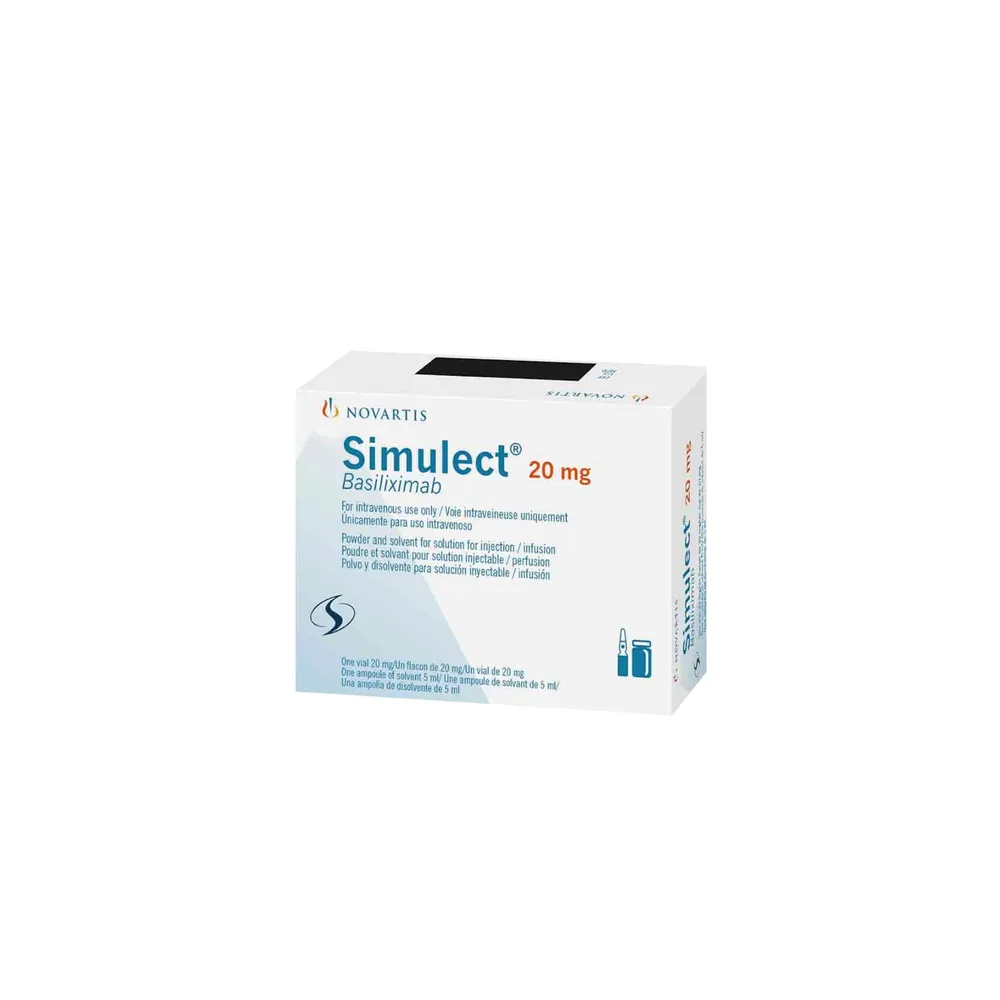
Table of Contents
- Package leaflet: Information for the user
- Simulect 20 mg powder and solvent for injectable solution or for infusion
- 1. What Simulect is and what it is used for
- 2. What you should know before being given Simulect
- 3. How Simulect is administered
- 4. Possible side effects
- 5. How to store Simulect
- 6. Package contents and other information
- The following information is intended exclusively for healthcare professionals:
- Package leaflet: Information for the user
- Simulect 20 mg powder for injectable solution or infusion
- 1. What Simulect is and what it is used for
- 2. What you should know before being given Simulect
- 3. How Simulect is administered
- 4. Possible side effects
- 5. How to store Simulect
- 6. Package contents and other information
- The following information is intended exclusively for healthcare professionals:
- Package leaflet: Information for the user
- Simulect 10 mg powder and solvent for injectable solution or infusion
- 1. What Simulect is and what it is used for
- 2. What you need to know before you are given Simulect
- 3. How Simulect is given
- 4. Possible side effects
- 5. How to store Simulect
- 6. Package Contents and Other Information
- The following information is intended exclusively for healthcare professionals:
- Package leaflet: Information for the user
- Simulect 10 mg powder for solution for injection or infusion
- 1. What Simulect is and what it is used for
- 2. What you need to know before you are given Simulect
- 3. How Simulect is administered
- 4. Possible side effects
- 5. How to store Simulect
- 6. Package contents and other information
- The following information is intended exclusively for healthcare professionals:
Package leaflet: Information for the user
Simulect 20 mg powder and solvent for injectable solution or for infusion
basiliximab
Please read this leaflet carefully before you are given this medicine because it contains important information for you.
- Keep this leaflet. You may need to read it again.
- If you have any questions, ask your doctor, nurse or pharmacist.
- If you get any side effects, including those not listed in this leaflet, talk to your doctor, nurse or pharmacist. See section 4.
Contents of this leaflet
- What Simulect is and what it is used for
- What you need to know before Simulect is given to you
- How Simulect is given
- Possible side effects
- How to store Simulect
- Contents of the pack and other information
1. What Simulect is and what it is used for
Simulect belongs to a group of medicines called immunosuppressants. It is
administered in hospital to adults, adolescents, and children who are receiving a kidney transplant.
Immunosuppressants reduce the body's response to anything perceived as "foreign" –
including transplanted organs. The body's immune system recognizes a transplanted organ
as a foreign body and will attempt to reject it. Simulect works by blocking the immune cells that
attack transplanted organs.
You will receive only two doses of Simulect. These two doses will be administered in
hospital, around the time of the transplant surgery. Simulect is given to prevent rejection of the new organ by the body during the first 4–6 weeks after transplantation, the period when rejection is most likely. To help protect your new kidney during this time and after discharge from hospital, you will be given other medicines such as ciclosporin and corticosteroids.
2. What you should know before being given Simulect
Follow your doctor's instructions carefully. If you have any doubts, ask your doctor, nurse, or pharmacist.
Simulect must not be administered
- if you are allergic (hypersensitive) to basiliximab or to any of the other components of Simulect listed in section 6 under “What Simulect contains”. Inform your doctor if you think you have ever had an allergic reaction to any of these components.
- if you are pregnant or breastfeeding.
Warnings and precautions
Talk to your doctor, nurse, or pharmacist before being given Simulect:
- if you have previously received a transplant that failed shortly afterwards, or
- if you were previously prepared for a transplant that could not be carried out.
In such cases, you may have already been given Simulect. Your doctor will check this and discuss with you whether repeating treatment with Simulect is appropriate.
If you need vaccination, consult your doctor first.
Other medicines and Simulect
Inform your doctor, nurse, or pharmacist if you are taking, have recently taken, or might take any other medicines.
Elderly (patients aged 65 years and older)
Simulect can be given to elderly patients, but available information is limited. Your doctor will discuss this with you before administering Simulect.
Children and adolescents (aged 1 to 17 years)
Simulect can be administered to children and adolescents. The dose for children weighing less than 35 kg will be lower than the usual adult dose.
Pregnancy and breastfeeding
It is very important to inform your doctor before transplantation if you are pregnant or suspect you may be pregnant. Simulect must not be given if you are pregnant. You must use an effective method of contraception to prevent pregnancy during treatment and for up to 4 months after receiving the last dose of Simulect. Inform your doctor immediately if you become pregnant during this period, even if using contraceptive methods.
You must also inform your doctor if you are breastfeeding. Simulect could harm your baby. You must not breastfeed after receiving Simulect or for up to 4 months after the second dose.
Ask your doctor, nurse, or pharmacist for advice before taking any medicine if you are pregnant or breastfeeding.
Driving and using machines
There is no evidence to suggest that Simulect affects your ability to drive or operate machinery.
Simulect contains sodium and potassium
This medicine contains less than 1 mmol (23 mg) of sodium per vial, i.e., essentially ‘sodium-free’.
This medicine contains potassium, less than 1 mmol (39 mg) per vial, i.e., essentially ‘potassium-free’.
3. How Simulect is administered
You will be given Simulect only if you are receiving a new kidney transplant. Simulect is administered twice, in hospital. The medicine must be given slowly through a needle placed into a vein, as an intravenous infusion lasting 20–30 minutes or as an intravenous injection using a syringe.
If you have had a severe allergic reaction to Simulect or if you have experienced complications after surgery such as loss of the transplanted organ, the second dose of Simulect must not be given.
The first dose is administered just before the transplant surgery and the second dose 4 days after surgery.
Usual dose for adults
The usual dose for adults is 20 mg for each infusion or injection.
Usual dose for children and adolescents (aged between 1 and 17 years)
- In children and adolescents weighing 35 kg or more, the dose of Simulect given for each infusion or injection is 20 mg.
- In children and adolescents weighing less than 35 kg, the dose of Simulect given for each infusion or injection is 10 mg.
If you have been given more Simulect than you should have
An overdose of Simulect should not cause immediate side effects, but it could weaken your immune system for a longer period of time. Your doctor will monitor any effects on your immune system and treat them if necessary.
4. Possible side effects
Like all medicines, this medicine can cause side effects, although not everybody will experience them.
Inform your doctor or nurse as soon as possible if you develop any unexpected symptoms
while being treated with Simulect or within the 8 weeks following treatment, even if you think they are
unrelated to the medicine.
Severe, sudden allergic reactions have been observed in patients treated with Simulect. If you notice
sudden signs of allergy such as skin rash, itching, or hives, swelling of the face, lips, tongue or other parts
of the body, rapid heartbeat, dizziness, lightheadedness, shortness of breath, sneezing, wheezing or
difficulty breathing, a marked decrease in urine output, or fever and flu-like symptoms, inform your doctor
or nurse immediately.
In adult patients, the most commonly reported side effects are constipation, nausea, diarrhoea, weight
gain, headache, pain, swelling of the hands, ankles or feet, increased blood pressure, anaemia, changes
in blood test values (for example potassium, cholesterol, phosphate, creatinine), surgical wound
complications, and various types of infections.
In children, the most commonly reported side effects are constipation, excessive hair growth, nasal
congestion or excessive nasal discharge, fever, increased blood pressure, and various types of
infections.
Reporting of side effects
If you experience any side effect, including those not listed in this leaflet, contact your doctor, pharmacist,
or nurse. You can also report side effects directly via the national reporting system detailed in Annex V.
By reporting side effects, you can help provide more information on the safety of this medicine.
5. How to store Simulect
Keep this medicine out of the sight and reach of children.
Do not use this medicine after the expiry date stated on the carton and label after EXP. The expiry date refers to the last day of that month.
Store in a refrigerator (2°C - 8°C).
6. Package contents and other information
What Simulect contains
- The active substance is basiliximab. Each vial contains 20 mg of basiliximab.
- The other components are monobasic potassium phosphate; anhydrous sodium phosphate; sodium chloride; sucrose; mannitol (E421); glycine.
Description of the appearance of Simulect and package contents
Simulect is a white powder in a colorless glass vial containing 20 mg of basiliximab. It is supplied with a vial of colorless glass containing 5 ml of sterile water for injection. This solvent is used to dissolve the powder before administration.
Simulect is also available in vials containing 10 mg of basiliximab.
Marketing Authorization Holder
Novartis Europharm Limited
Vista Building
Elm Park, Merrion Road
Dublin 4
Ireland
Manufacturer
Novartis Farmacéutica S.A.
Gran Via de les Corts Catalanes, 764
08013 Barcelona
Spain
Novartis Pharma GmbH
Roonstrasse 25
90429 Nuremberg
Germany
For further information about this medicinal product, please contact the local representative of the Marketing Authorization Holder:
België/Belgique/Belgien Lietuva
Novartis Pharma N.V. SIA Novartis Baltics Lietuvos filialas
Tél/Tel: +32 2 246 16 11 Tel: +370 5 269 16 50
България Luxembourg/Luxemburg
Novartis Bulgaria EOOD Novartis Pharma N.V.
Тел.: +359 2 489 98 28 Tel: +32 2 246 16 11
Česká republika Magyarország
Novartis s.r.o. Novartis Hungária Kft.
Tel: +420 225 775 111 Tel.: +36 1 457 65 00
Danmark Malta
Novartis Healthcare A/S Novartis Pharma Services Inc.
Tlf: +45 39 16 84 00 Tel: +356 2122 2872
Deutschland Nederland
Novartis Pharma GmbH Novartis Pharma B.V.
Tel: +49 911 273 0 Tel: +31 88 04 52 111
Eesti Norge
SIA Novartis Baltics Eesti filiaal Novartis Norge AS
Tel: +372 66 30 810 Tlf: +47 23 05 20 00
Ελλάδα Österreich
Novartis (Hellas) A.E.B.E. Novartis Pharma GmbH
Τηλ: +30 210 281 17 12 Tel: +43 1 86 6570
España Polska
Novartis Farmacéutica, S.A. Novartis Poland Sp. z o.o.
Tel: +34 93 306 42 00 Tel.: +48 22 375 4888
France Portugal
Novartis Pharma S.A.S. Novartis Farma - Produtos Farmacêuticos, S.A.
Tél: +33 1 55 47 66 00 Tel: +351 21 000 8600
Hrvatska România
Novartis Hrvatska d.o.o. Novartis Pharma Services Romania SRL
Tel. +385 1 6274 220 Tel: +40 21 31299 01
Ireland Slovenija
Novartis Ireland Limited Novartis Pharma Services Inc.
Tel: +353 1 260 12 55 Tel: +386 1 300 75 50
Ísland Slovenská republika
Vistor hf. Novartis Slovakia s.r.o.
Sími: +354 535 7000 Tel: +421 2 5542 5439
Italia Suomi/Finland
Novartis Farma S.p.A. Novartis Finland Oy
Tel: +39 02 96 54 1 Puh/Tel: +358 (0)10 6133 200
Κύπρος Sverige
Novartis Pharma Services Inc. Novartis Sverige AB
Τηλ: +357 22 690 690 Tel: +46 8 732 32 00
Latvija United Kingdom (Northern Ireland)
SIA Novartis Baltics Novartis Ireland Limited
Tel: +371 67 887 070 Tel: +44 1276 698370
More detailed information on this medicinal product is available on the European Medicines Agency website: http://www.ema.europa.eu
INSTRUCTIONS FOR RECONSTITUTION AND ADMINISTRATION
The following information is intended exclusively for healthcare professionals:
Simulect must not be administered unless there is absolute certainty that the patient will receive
the transplant and concomitant immunosuppression.
To prepare the solution for intravenous infusion or injection, aseptically add the 5 ml of water for
injections contained in the vial supplied in the package together with the Simulect powder vial. Gently
swirl the vial to dissolve the powder, avoiding foaming. The resulting colorless solution, ranging from
clear to opalescent, should be used immediately after reconstitution. Prior to administration,
reconstituted products should be inspected visually for particulate matter. Do not use if extraneous
particles are present. After reconstitution, chemical and physical stability has been demonstrated for
24 hours at 2°C–8°C or for 4 hours at room temperature. Reconstituted solution not used within this
time period must be discarded. From a microbiological standpoint, the product should be used
immediately. If not used immediately, the duration and conditions of storage prior to use are the
responsibility of the user.
The reconstituted Simulect solution is administered either as a 20–30 minute intravenous infusion or
as an intravenous bolus injection. The reconstituted solution is isotonic. For infusion, the reconstituted
solution should be diluted to a volume of at least 50 ml or greater with either normal saline or 5%
dextrose solution (50 mg/ml). The first dose should be administered within 2 hours before surgery and
the second dose 4 days after transplantation. The second dose must not be administered if severe
hypersensitivity reactions to Simulect occur or if graft failure occurs.
Since compatibility data with other intravenous substances are not available, Simulect must not be
mixed with other medicinal products/substances and must always be administered through a separate
infusion line.
Compatibility has been verified with the following infusion sets:
Infusion bag
- Baxter minibag NaCl 0.9%
Infusion sets
- Luer Lock , H. Noolens
- Sterile vented i.v. set, Abbott
- Infusion set, Codan
- Infusomat , Braun
- Infusionsgerät R 87 plus, Ohmeda
- Lifecare 5000 Plumset Microdrip, Abbott
- Vented basic set, Baxter
- Flashball device, Baxter
- Vented primary administration set, Imed
Do not use after the expiry date stated on the container.
Store in a refrigerator (2°C–8°C).
Any unused medicinal product and waste material derived from this medicinal product must be
disposed of in accordance with local regulations.
Package leaflet: Information for the user
Simulect 20 mg powder for injectable solution or infusion
basiliximab
Please read this leaflet carefully before this medicine is administered to you because it contains important information for you.
- Keep this leaflet. You may need to read it again.
- If you have any questions, ask your doctor, nurse, or pharmacist.
- If you experience any side effects, including those not listed in this leaflet, tell your doctor, nurse, or pharmacist. See section 4.
Contents of this leaflet
- What Simulect is and what it is used for
- What you need to know before you are given Simulect
- How Simulect is administered
- Possible side effects
- How to store Simulect
- Contents of the pack and other information
1. What Simulect is and what it is used for
Simulect belongs to a group of medicines called immunosuppressants. It is administered in hospital to adults, adolescents, and children who are receiving a kidney transplant.
Immunosuppressants reduce the body's response to anything perceived as "foreign"—including transplanted organs. The body's immune system recognizes a transplanted organ as a foreign body and will attempt to reject it. Simulect works by blocking the immune cells that attack transplanted organs.
You will receive only two doses of Simulect. These two doses will be administered in hospital, during the period of the transplant surgery. Simulect is given to prevent rejection of the new organ by the body during the first 4–6 weeks after transplantation, when the risk of rejection is highest. To help protect your new kidney during this period and after discharge from hospital, you will be given other medicines such as cyclosporine and corticosteroids.
2. What you should know before being given Simulect
Follow your doctor's instructions carefully. If you have any doubts, ask your doctor, nurse, or pharmacist.
Simulect must not be administered
- if you are allergic (hypersensitive) to basiliximab or to any of the other ingredients of Simulect listed in section 6 under “What Simulect contains”. Inform your doctor if you think you have previously had an allergic reaction to any of the ingredients.
- if you are pregnant or breastfeeding.
Warnings and precautions
Talk to your doctor, nurse, or pharmacist before being given Simulect:
- if you have previously received a transplant that failed shortly afterwards, or
- if you were previously prepared for a transplant that could not be carried out.
In such cases, you may have already been given Simulect. Your doctor will check this for you and will discuss with you whether treatment with Simulect should be repeated.
If you need vaccination, consult your doctor first.
Other medicines and Simulect
Inform your doctor, nurse, or pharmacist if you are taking, have recently taken, or might take any other medicines.
Elderly patients (aged 65 years and over)
Simulect can be given to elderly patients, but available information is limited. Your doctor will discuss this with you before administering Simulect.
Children and adolescents (aged between 1 and 17 years)
Simulect can be administered to children and adolescents. The dose for children weighing less than 35 kg will be lower than the usual adult dose.
Pregnancy and breastfeeding
It is very important to inform your doctor before transplantation if you are pregnant or suspect you might be pregnant. Simulect must not be given if you are pregnant. You must use an effective method of contraception to prevent pregnancy during treatment and for up to 4 months after receiving the last dose of Simulect. Inform your doctor immediately if you become pregnant during this period, even if you are using contraceptive methods.
You must also inform your doctor if you are breastfeeding. Simulect could harm your baby. You must not breastfeed after receiving Simulect or for up to 4 months after the second dose.
Ask your doctor, nurse, or pharmacist for advice before taking any medicine if you are pregnant or breastfeeding.
Driving and using machines
There is no evidence to suggest that Simulect affects your ability to drive or operate machinery.
Simulect contains sodium and potassium
This medicine contains less than 1 mmol (23 mg) of sodium per vial, i.e., essentially ‘sodium-free’.
This medicine contains potassium, less than 1 mmol (39 mg) per vial, i.e., essentially ‘potassium-free’.
3. How Simulect is administered
You will be given Simulect only if you are receiving a new kidney transplant. Simulect is administered twice, in hospital. The medicine must be given slowly through a needle placed into a vein, as an intravenous infusion lasting 20–30 minutes, or as an intravenous injection using a syringe.
If you have had a severe allergic reaction to Simulect or if you have experienced complications after surgery such as loss of the transplanted organ, the second dose of Simulect must not be given.
The first dose is administered just before the transplant surgery, and the second dose is given 4 days after the surgery.
Usual dose for adults
The usual dose for adults is 20 mg for each infusion or injection.
Usual dose for children and adolescents (aged between 1 and 17 years)
- In children and adolescents weighing 35 kg or more, the dose of Simulect given in each infusion or injection is 20 mg.
- In children and adolescents weighing less than 35 kg, the dose of Simulect given in each infusion or injection is 10 mg.
If you have been given more Simulect than you should have
An overdose of Simulect is unlikely to cause immediate side effects, but it could weaken your immune system for a longer period of time. Your doctor will monitor any effects on your immune system and treat them if necessary.
4. Possible side effects
Like all medicines, this medicine can cause side effects, although not everyone experiences them.
Inform your doctor or nurse as soon as possible if you experience any unexpected symptoms
while being treated with Simulect or within the 8 weeks following treatment, even if you think
they are not related to the medicine.
Severe, sudden allergic reactions have been observed in patients treated with Simulect. If you notice sudden signs of allergy such as skin rash, itching, or hives, swelling of the face, lips, tongue or other parts of the body, rapid heartbeat, dizziness, lightheadedness, shortness of breath, sneezing, wheezing or difficulty breathing, a significant decrease in urine output, or fever and flu-like symptoms, inform your doctor or nurse immediately.
In adult patients, the most commonly reported side effects are constipation, nausea, diarrhoea, weight gain, headache, pain, swelling of the hands, ankles or feet, increased blood pressure, anaemia, changes in blood test values (for example potassium, cholesterol, phosphates, creatinine), surgical wound complications, and various types of infections.
In children, the most commonly reported side effects are constipation, excessive hair growth, stuffy or runny nose, fever, increased blood pressure, and various types of infections.
Reporting of side effects
If you experience any side effect, including those not listed in this leaflet, talk to your doctor, pharmacist, or nurse. You can also report side effects directly via the national reporting system listed in Annex V. By reporting side effects, you can help provide more information on the safety of this medicine.
5. How to store Simulect
Keep this medicine out of the sight and reach of children.
Do not use this medicine after the expiry date stated on the carton and label after EXP. The expiry date refers to the last day of that month.
Store in a refrigerator (2°C - 8°C).
6. Package contents and other information
What Simulect contains
- The active substance is basiliximab. Each vial contains 20 mg of basiliximab.
- The other components are monobasic potassium phosphate; anhydrous sodium phosphate; sodium chloride; sucrose; mannitol (E421); glycine.
Description of the appearance of Simulect and the contents of the pack
Simulect is a white powder in a clear glass vial containing 20 mg of basiliximab.
Simulect is also available in vials containing 10 mg of basiliximab.
Marketing Authorization Holder
Novartis Europharm Limited
Vista Building
Elm Park, Merrion Road
Dublin 4
Ireland
Manufacturer
Novartis Farmacéutica S.A.
Gran Via de les Corts Catalanes, 764
08013 Barcelona
Spain
Novartis Pharma GmbH
Roonstrasse 25
90429 Nuremberg
Germany
For further information on this medicinal product, please contact the local representative of the Marketing Authorization Holder:
België/Belgique/Belgien Lietuva
Novartis Pharma N.V. SIA Novartis Baltics Lietuvos filialas
Tél/Tel: +32 2 246 16 11 Tel: +370 5 269 16 50
България Luxembourg/Luxemburg
Novartis Bulgaria EOOD Novartis Pharma N.V.
Тел.: +359 2 489 98 28 Tel: +32 2 246 16 11
Česká republika Magyarország
Novartis s.r.o. Novartis Hungária Kft.
Tel: +420 225 775 111 Tel.: +36 1 457 65 00
Danmark Malta
Novartis Healthcare A/S Novartis Pharma Services Inc.
Tlf: +45 39 16 84 00 Tel: +356 2122 2872
Deutschland Nederland
Novartis Pharma GmbH Novartis Pharma B.V.
Tel: +49 911 273 0 Tel: +31 88 04 52 111
Eesti Norge
SIA Novartis Baltics Eesti filiaal Novartis Norge AS
Tel: +372 66 30 810 Tlf: +47 23 05 20 00
Ελλάδα Österreich
Novartis (Hellas) A.E.B.E. Novartis Pharma GmbH
Τηλ: +30 210 281 17 12 Tel: +43 1 86 6570
España Polska
Novartis Farmacéutica, S.A. Novartis Poland Sp. z o.o.
Tel: +34 93 306 42 00 Tel.: +48 22 375 4888
France Portugal
Novartis Pharma S.A.S. Novartis Farma - Produtos Farmacêuticos, S.A.
Tél: +33 1 55 47 66 00 Tel: +351 21 000 8600
Hrvatska România
Novartis Hrvatska d.o.o. Novartis Pharma Services Romania SRL
Tel. +385 1 6274 220 Tel: +40 21 31299 01
Ireland Slovenija
Novartis Ireland Limited Novartis Pharma Services Inc.
Tel: +353 1 260 12 55 Tel: +386 1 300 75 50
Ísland Slovenská republika
Vistor hf. Novartis Slovakia s.r.o.
Sími: +354 535 7000 Tel: +421 2 5542 5439
Italia Suomi/Finland
Novartis Farma S.p.A. Novartis Finland Oy
Tel: +39 02 96 54 1 Puh/Tel: +358 (0)10 6133 200
Κύπρος Sverige
Novartis Pharma Services Inc. Novartis Sverige AB
Τηλ: +357 22 690 690 Tel: +46 8 732 32 00
Latvija United Kingdom (Northern Ireland)
SIA Novartis Baltics Novartis Ireland Limited
Tel: +371 67 887 070 Tel: +44 1276 698370
More detailed information on this medicinal product is available on the website of the European Medicines Agency, http://www.ema.europa.eu
INSTRUCTIONS FOR RECONSTITUTION AND ADMINISTRATION
The following information is intended exclusively for healthcare professionals:
Simulect must not be administered unless there is absolute certainty that the patient will receive
the transplant and concomitant immunosuppression.
To prepare the solution for infusion or intravenous injection, add 5 ml of Water for Injections complying
with the European Pharmacopoeia and without any additive to the vial of Simulect powder, under aseptic
conditions. Gently swirl the vial to dissolve the powder, avoiding foaming. The colourless, clear to opalescent
solution is recommended for immediate use after reconstitution. Before administration, reconstituted
products should be inspected visually for particulate matter. Do not use if extraneous particles are present.
After reconstitution, chemical and physical stability has been demonstrated for 24 hours at 2°C–8°C or for
4 hours at room temperature. Reconstituted solution, if not used within this time period, must be discarded.
From a microbiological standpoint, the product should be used immediately. If not used immediately, the
times and conditions of storage prior to use are the responsibility of the user.
The reconstituted Simulect solution is administered as an intravenous infusion lasting 20–30 minutes or
as an intravenous bolus injection. The reconstituted solution is isotonic. For infusion, the reconstituted
solution must be diluted to a volume of at least 50 ml or more with normal saline or 50 mg/ml (5%) dextrose
solution. The first dose should be administered within 2 hours before surgery and the second dose 4 days
after transplantation. The second dose must not be administered if severe hypersensitivity reactions to
Simulect occur or in case of graft failure.
Since data on the compatibility of Simulect with other intravenous substances are not available, Simulect
must not be mixed with other medicinal products/substances and should always be administered through
a separate infusion line.
Compatibility has been verified with the following infusion sets:
Infusion bag
- Baxter minibag NaCl 0.9%
Infusion sets
- Luer Lock , H. Noolens
- Sterile vented i.v. set, Abbott
- Infusion set, Codan
- Infusomat , Braun
- Infusionsgerät R 87 plus, Ohmeda
- Lifecare 5000 Plumset Microdrip, Abbott
- Vented basic set, Baxter
- Flashball device, Baxter
- Vented primary administration set, Imed
Do not use after the expiry date stated on the packaging.
Store in a refrigerator (2°C–8°C).
Unused medicine and waste material derived from this medicine must be disposed of in accordance with
local regulations.
Package leaflet: Information for the user
Simulect 10 mg powder and solvent for injectable solution or infusion
basiliximab
Please read this leaflet carefully before this medicine is administered to you because it contains important information for you.
- Keep this leaflet. You may need to read it again.
- If you have any questions, ask your doctor, nurse, or pharmacist.
- If you experience any side effects, including those not listed in this leaflet, contact your doctor, nurse, or pharmacist. See section 4.
Contents of this leaflet
- What Simulect is and what it is used for
- What you need to know before you are given Simulect
- How Simulect is administered
- Possible side effects
- How to store Simulect
- Contents of the pack and other information
1. What Simulect is and what it is used for
Simulect belongs to a group of medicines called immunosuppressants. It is administered in hospital to adults, adolescents, and children who are receiving a kidney transplant. Immunosuppressants reduce the body’s response to anything perceived as "foreign," including transplanted organs. The body’s immune system recognizes a transplanted organ as a foreign object and will attempt to reject it. Simulect works by blocking the immune cells that attack transplanted organs.
You will receive only two doses of Simulect. These two doses will be given to you in hospital, during the transplant surgery period. Simulect is administered to prevent the body from rejecting the new organ during the first 4–6 weeks after transplantation, when the risk of rejection is highest. To help protect your new kidney during this period and after hospital discharge, you will be given other medicines such as ciclosporin and corticosteroids.
2. What you need to know before you are given Simulect
Follow your doctor's instructions carefully. If you have any doubts, ask your doctor, nurse, or pharmacist.
Simulect must not be administered
- if you are allergic (hypersensitive) to basiliximab or to any of the other ingredients of Simulect listed in section 6 under “What Simulect contains”. Inform your doctor if you think you have ever had an allergic reaction to any of these ingredients.
- if you are pregnant or breastfeeding.
Warnings and precautions
Talk to your doctor, pharmacist, or nurse before you are given Simulect:
- if you have previously received a transplant that failed shortly afterwards, or
- if you were previously prepared for a transplant that could not be carried out.
In such cases, you may have already received Simulect. Your doctor will check this for you and will discuss with you whether treatment with Simulect should be repeated.
If you need vaccination, consult your doctor first.
Other medicines and Simulect
Inform your doctor, nurse, or pharmacist if you are taking, have recently taken, or might take any other medicines.
Elderly patients (aged 65 years and over)
Simulect can be given to elderly patients, but available information is limited. Your doctor will discuss this with you before administering Simulect.
Children and adolescents (aged between 1 and 17 years)
Simulect can be given to children and adolescents. The dose for children weighing less than 35 kg will be lower than the usual adult dose.
Pregnancy and breastfeeding
It is very important to inform your doctor before transplantation if you are pregnant or suspect you may be pregnant. Simulect must not be given to you if you are pregnant. You must use an effective method of contraception to prevent pregnancy during treatment and for up to 4 months after receiving the last dose of Simulect. Inform your doctor immediately if you become pregnant during this period, even if you are using contraceptive methods.
You must also inform your doctor if you are breastfeeding. Simulect could harm your baby. You must not breastfeed after receiving Simulect or for up to 4 months after the second dose.
Ask your doctor, nurse, or pharmacist for advice before taking any medicine if you are pregnant or breastfeeding.
Driving and using machines
There is no evidence to suggest that Simulect affects your ability to drive or operate machinery.
Simulect contains sodium and potassium
This medicine contains less than 1 mmol (23 mg) of sodium per vial, i.e. essentially 'sodium-free'.
This medicine contains potassium, less than 1 mmol (39 mg) per vial, i.e. essentially 'potassium-free'.
3. How Simulect is given
You will be given Simulect only if you are receiving a new kidney transplant. Simulect will be
administered twice, in hospital. The medicine must be given slowly through a needle placed in a
vein, as an intravenous infusion lasting 20–30 minutes or as an intravenous injection using a syringe.
If you have had a severe allergic reaction to Simulect or if you have experienced complications after surgery such as loss of the transplanted organ, the second dose of Simulect must not be given.
The first dose is given just before the transplant surgery and the second dose 4 days after surgery.
Usual dose in children and adolescents (aged 1 to 17 years)
- In children and adolescents weighing less than 35 kg, the dose of Simulect administered in each infusion or injection is 10 mg.
- In children and adolescents weighing 35 kg or more, the dose of Simulect administered in each infusion or injection is 20 mg.
Usual dose for adults
The usual dose for adults is 20 mg for each infusion or injection.
If you have been given more Simulect than you should have
An overdose of Simulect should not cause immediate unwanted effects, but it could weaken your immune system for a longer period of time. Your doctor will monitor any effects on your immune system and treat them if necessary.
4. Possible side effects
Like all medicines, this medicine can cause side effects, although not everybody gets them.
Tell your doctor or nurse as soon as possible if you experience any unexpected symptoms
while being treated with Simulect or within 8 weeks afterwards, even if you think they are not
related to the medicine.
Severe, sudden allergic reactions have been observed in patients treated with Simulect. If you notice sudden signs of an allergic reaction such as skin rash, itching or hives, swelling of the face, lips, tongue or other parts of the body, rapid heartbeat, dizziness, feeling of light-headedness, shortness of breath, sneezing, wheezing or difficulty breathing, a severe decrease in urine output, or fever and flu-like symptoms, contact your doctor or nurse immediately.
In children, the most commonly reported side effects are constipation, excessive hair growth, nasal congestion or excessive nasal secretion, fever, increased blood pressure, and various types of infections.
In adult patients, the most commonly reported side effects are constipation, nausea, diarrhoea, weight gain, headache, pain, swelling of the hands, ankles or feet, increased blood pressure, anaemia, changes in blood test values (for example potassium, cholesterol, phosphates, creatinine), surgical wound complications, and various types of infections.
Reporting of side effects
If you experience any side effect, including those not listed in this leaflet, talk to your doctor, pharmacist or nurse. You can also report side effects directly via the national reporting system detailed in Annex V. By reporting side effects, you can help provide more information on the safety of this medicine.
5. How to store Simulect
Keep this medicine out of the sight and reach of children.
Do not use this medicine after the expiry date stated on the carton and label after EXP. The expiry date refers to the last day of that month.
Store in a refrigerator (2°C - 8°C).
6. Package Contents and Other Information
What Simulect Contains
- The active substance is basiliximab. Each vial contains 10 mg of basiliximab.
- The other ingredients are monobasic potassium phosphate; anhydrous sodium phosphate; sodium chloride; sucrose; mannitol (E421); glycine.
Description of the Appearance of Simulect and Package Contents
Simulect is a white powder in a clear glass vial containing 10 mg of basiliximab. It is supplied with a vial of clear glass containing 5 ml of sterile water for injection. 2.5 ml of water for injection is used to dissolve the powder prior to administration.
Simulect is also available in vials containing 20 mg of basiliximab.
Marketing Authorization Holder
Novartis Europharm Limited
Vista Building
Elm Park, Merrion Road
Dublin 4
Ireland
Manufacturer
Novartis Farmacéutica S.A.
Gran Via de les Corts Catalanes, 764
08013 Barcelona
Spain
Novartis Pharma GmbH
Roonstrasse 25
90429 Nuremberg
Germany
For further information on this medicinal product, please contact the local representative of the marketing authorization holder:
België/Belgique/Belgien Lietuva
Novartis Pharma N.V. SIA Novartis Baltics Lietuvos filialas
Tél/Tel: +32 2 246 16 11 Tel: +370 5 269 16 50
България Luxembourg/Luxemburg
Novartis Bulgaria EOOD Novartis Pharma N.V.
Тел.: +359 2 489 98 28 Tel: +32 2 246 16 11
Česká republika Magyarország
Novartis s.r.o. Novartis Hungária Kft.
Tel: +420 225 775 111 Tel.: +36 1 457 65 00
Danmark Malta
Novartis Healthcare A/S Novartis Pharma Services Inc.
Tlf: +45 39 16 84 00 Tel: +356 2122 2872
Deutschland Nederland
Novartis Pharma GmbH Novartis Pharma B.V.
Tel: +49 911 273 0 Tel: +31 88 04 52 111
Eesti Norge
SIA Novartis Baltics Eesti filiaal Novartis Norge AS
Tel: +372 66 30 810 Tlf: +47 23 05 20 00
Ελλάδα Österreich
Novartis (Hellas) A.E.B.E. Novartis Pharma GmbH
Τηλ: +30 210 281 17 12 Tel: +43 1 86 6570
España Polska
Novartis Farmacéutica, S.A. Novartis Poland Sp. z o.o.
Tel: +34 93 306 42 00 Tel.: +48 22 375 4888
France Portugal
Novartis Pharma S.A.S. Novartis Farma - Produtos Farmacêuticos, S.A.
Tél: +33 1 55 47 66 00 Tel: +351 21 000 8600
Hrvatska România
Novartis Hrvatska d.o.o. Novartis Pharma Services Romania SRL
Tel. +385 1 6274 220 Tel: +40 21 31299 01
Ireland Slovenija
Novartis Ireland Limited Novartis Pharma Services Inc.
Tel: +353 1 260 12 55 Tel: +386 1 300 75 50
Ísland Slovenská republika
Vistor hf. Novartis Slovakia s.r.o.
Sími: +354 535 7000 Tel: +421 2 5542 5439
Italia Suomi/Finland
Novartis Farma S.p.A. Novartis Finland Oy
Tel: +39 02 96 54 1 Puh/Tel: +358 (0)10 6133 200
Κύπρος Sverige
Novartis Pharma Services Inc. Novartis Sverige AB
Τηλ: +357 22 690 690 Tel: +46 8 732 32 00
Latvija United Kingdom (Northern Ireland)
SIA Novartis Baltics Novartis Ireland Limited
Tel: +371 67 887 070 Tel: +44 1276 698370
More detailed information on this medicinal product is available on the European Medicines Agency website: http://www.ema.europa.eu
INSTRUCTIONS FOR RECONSTITUTION AND ADMINISTRATION
The following information is intended exclusively for healthcare professionals:
Simulect 10 mg must not be administered unless there is absolute certainty that the patient
will receive the transplant and concomitant immunosuppression.
To prepare the solution for infusion or injection, aseptically withdraw 2.5 mL of water for
injections from the attached 5 mL vial and add it aseptically to the Simulect powder vial. Gently swirl
the vial to dissolve the powder, avoiding formation of foam. It is recommended to use the resulting
colorless solution, ranging from clear to opalescent, immediately after reconstitution. Prior to
administration, reconstituted products should be inspected visually for particulate matter. Do not use
if foreign particles are present. After reconstitution, chemical and physical stability has been
demonstrated for 24 hours at 2°C–8°C or for 4 hours at room temperature. Reconstituted solution
that is not used within these time periods must be discarded. From a microbiological standpoint, the
product should be used immediately. If not used immediately, the duration and conditions of storage
prior to use are the responsibility of the user.
The reconstituted Simulect solution may be administered either as a 20–30 minute intravenous
infusion or as an intravenous bolus injection. The reconstituted solution is isotonic. For infusion, the
reconstituted solution should be diluted to a volume of at least 25 mL or greater with either normal
saline or 50 mg/mL (5%) dextrose solution. The first dose should be administered within two hours
before surgery, and the second dose four days after transplantation. The second dose must not be
administered if severe hypersensitivity reactions to Simulect occur or in case of transplant failure.
Since compatibility data with other intravenous substances are not available, Simulect must not be
mixed with other medicinal products/substances and should always be administered through a separate
infusion line.
Compatibility has been verified with the following infusion sets:
Infusion bag
- Baxter minibag NaCl 0.9%
Infusion sets
- Luer Lock , H. Noolens
- Sterile vented i.v. set, Abbott
- Infusion set, Codan
- Infusomat , Braun
- Infusionsgerät R 87 plus, Ohmeda
- Lifecare 5000 Plumset Microdrip, Abbott
- Vented basic set, Baxter
- Flashball device, Baxter
- Vented primary administration set, Imed
Do not use after the expiry date stated on the packaging.
Store in a refrigerator (2°C–8°C).
Unused medicine and waste material derived from this medicine must be disposed of in accordance
with local regulations.
Package leaflet: Information for the user
Simulect 10 mg powder for solution for injection or infusion
basiliximab
Please read this leaflet carefully before you are given this medicine because it
contains important information for you.
- Keep this leaflet. You may need to read it again.
- If you have any questions, ask your doctor, nurse, or pharmacist.
- If you get any side effects, talk to your doctor, nurse, or pharmacist. This includes any side effects not listed in this leaflet. See section 4.
Contents of this leaflet
- What Simulect is and what it is used for
- What you need to know before you are given Simulect
- How Simulect is administered
- Possible side effects
- How to store Simulect
- Contents of the pack and other information
1. What Simulect is and what it is used for
Simulect belongs to a group of medicines called immunosuppressants. It is administered in hospital to adults, adolescents, and children who are receiving a kidney transplant.
Immunosuppressants reduce the body’s response to anything perceived as “foreign” – including transplanted organs. The body’s immune system recognizes a transplanted organ as a foreign object and will attempt to reject it. Simulect works by blocking the immune cells that attack transplanted organs.
You will receive only two doses of Simulect. These two doses will be administered in hospital, during the transplant procedure period. Simulect is given to prevent rejection of the new organ by the body during the first 4–6 weeks after transplantation, when the risk of rejection is highest. To help protect your new kidney during this period and after discharge from hospital, you will be given other medicines such as cyclosporine and corticosteroids.
2. What you need to know before you are given Simulect
Follow your doctor's instructions carefully. If you have any doubts, ask your doctor, nurse, or pharmacist.
Simulect must not be administered
- if you are allergic (hypersensitive) to basiliximab or to any of the other ingredients of Simulect listed in section 6 under “What Simulect contains”. Inform your doctor if you think you have previously had an allergic reaction to any of these components.
- if you are pregnant or breastfeeding.
Warnings and precautions
Talk to your doctor, pharmacist, or nurse before you are given Simulect:
- if you have previously received a transplant that failed shortly afterwards, or
- if you were previously prepared for a transplant that could not be carried out.
In such cases, you may have already received Simulect. Your doctor will check this for you and will discuss with you whether treatment with Simulect should be repeated.
If you need vaccination, consult your doctor first.
Other medicines and Simulect
Inform your doctor, nurse, or pharmacist if you are taking, have recently taken, or might take any other medicines.
Elderly patients (aged 65 years and over)
Simulect can be given to elderly patients, but available information is limited. Your doctor will discuss this with you before administering Simulect.
Children and adolescents (aged between 1 and 17 years)
Simulect can be administered to children and adolescents. The dose for children weighing less than 35 kg will be lower than the usual adult dose.
Pregnancy and breastfeeding
It is very important to inform your doctor before transplantation if you are pregnant or suspect you might be pregnant. Simulect must not be given if you are pregnant. You must use an effective method of contraception to prevent pregnancy during treatment and for 4 months after receiving the last dose of Simulect. Inform your doctor immediately if you become pregnant during this period, despite using contraceptive methods.
You must also inform your doctor if you are breastfeeding. Simulect could harm your baby. You must not breastfeed after receiving Simulect or for 4 months after the second dose.
Ask your doctor, nurse, or pharmacist for advice before taking any medicine if you are pregnant or breastfeeding.
Driving and using machines
There is no evidence to suggest that Simulect affects your ability to drive or operate machinery.
Simulect contains sodium and potassium
This medicine contains less than 1 mmol (23 mg) of sodium per vial, i.e. essentially ‘sodium-free’.
This medicine contains potassium, less than 1 mmol (39 mg) per vial, i.e. essentially ‘potassium-free’.
3. How Simulect is administered
You will be given Simulect only if you are receiving a kidney transplant. Simulect will be
administered twice, in hospital. The medicine must be given slowly through a needle placed in a
vein, as an intravenous infusion lasting 20–30 minutes or as an intravenous injection using a syringe.
If you have had a severe allergic reaction to Simulect or if you have developed complications after surgery such as loss of the transplanted organ, the second dose of Simulect must not be given.
The first dose is given just before the transplant surgery and the second dose is given 4 days after surgery.
Usual dose in children and adolescents (aged 1 to 17 years)
- In children and adolescents weighing less than 35 kg, the dose of Simulect administered in each infusion or injection is 10 mg.
- In children and adolescents weighing 35 kg or more, the dose of Simulect administered in each infusion or injection is 20 mg.
Usual dose for adults
The usual dose for adults is 20 mg for each infusion or injection.
If you have been given more Simulect than you should have
An overdose of Simulect should not cause immediate unwanted effects, but it could weaken your immune system for a longer period of time. Your doctor will monitor carefully for any effects on the immune system and will treat them if necessary.
4. Possible side effects
Like all medicines, this medicine can cause side effects, although not everyone gets them.
Tell your doctor or nurse as soon as possible if you experience any unexpected symptoms
while being treated with Simulect or within the following 8 weeks, even if you think they are not
related to the medicine.
Severe, sudden allergic reactions have been observed in patients treated with Simulect. If you notice
sudden signs of allergy such as skin rash, itching, or hives, swelling of the face, lips, tongue or other body
parts, rapid heartbeat, dizziness, lightheadedness, shortness of breath, sneezing, wheezing or difficulty
breathing, a marked decrease in urine output, or fever and flu-like symptoms, inform your doctor or
nurse immediately.
In children, the most commonly reported side effects are constipation, excessive hair growth, nasal
congestion or excessive nasal discharge, fever, increased blood pressure, and various types of
infections.
In adult patients, the most commonly reported side effects are constipation, nausea, diarrhoea, weight
gain, headache, pain, swelling of the hands, ankles or feet, increased blood pressure, anaemia, changes
in blood test values (for example potassium, cholesterol, phosphates, creatinine), surgical wound
complications, and various types of infections.
Reporting of side effects
If you experience any side effect, including those not listed in this leaflet, talk to your doctor, pharmacist
or nurse. You can also report side effects directly via the national reporting system detailed in Annex V.
By reporting side effects, you can help provide more information on the safety of this medicine.
5. How to store Simulect
Keep this medicine out of the sight and reach of children.
Do not use this medicine after the expiry date stated on the carton and label following EXP. The expiry date refers to the last day of that month.
Store in a refrigerator (2°C - 8°C).
6. Package contents and other information
What Simulect contains
- The active substance is basiliximab. Each vial contains 10 mg of basiliximab.
- The other ingredients are monobasic potassium phosphate; anhydrous sodium phosphate; sodium chloride; sucrose; mannitol (E421); glycine.
Description of the appearance of Simulect and contents of the pack
Simulect is a white powder in a colourless glass vial containing 10 mg of basiliximab.
Simulect is also available in vials containing 20 mg of basiliximab.
Marketing Authorization Holder
Novartis Europharm Limited
Vista Building
Elm Park, Merrion Road
Dublin 4
Ireland
Manufacturer
Novartis Farmacéutica S.A.
Gran Via de les Corts Catalanes, 764
08013 Barcelona
Spain
Novartis Pharma GmbH
Roonstrasse 25
90429 Nuremberg
Germany
For further information about this medicinal product, please contact the local representative of the Marketing Authorization Holder:
België/Belgique/Belgien Lietuva
Novartis Pharma N.V. SIA Novartis Baltics Lietuvos filialas
Tél/Tel: +32 2 246 16 11 Tel: +370 5 269 16 50
България Luxembourg/Luxemburg
Novartis Bulgaria EOOD Novartis Pharma N.V.
Тел.: +359 2 489 98 28 Tel: +32 2 246 16 11
Česká republika Magyarország
Novartis s.r.o. Novartis Hungária Kft.
Tel: +420 225 775 111 Tel.: +36 1 457 65 00
Danmark Malta
Novartis Healthcare A/S Novartis Pharma Services Inc.
Tlf: +45 39 16 84 00 Tel: +356 2122 2872
Deutschland Nederland
Novartis Pharma GmbH Novartis Pharma B.V.
Tel: +49 911 273 0 Tel: +31 88 04 52 111
Eesti Norge
SIA Novartis Baltics Eesti filiaal Novartis Norge AS
Tel: +372 66 30 810 Tlf: +47 23 05 20 00
Ελλάδα Österreich
Novartis (Hellas) A.E.B.E. Novartis Pharma GmbH
Τηλ: +30 210 281 17 12 Tel: +43 1 86 6570
España Polska
Novartis Farmacéutica, S.A. Novartis Poland Sp. z o.o.
Tel: +34 93 306 42 00 Tel.: +48 22 375 4888
France Portugal
Novartis Pharma S.A.S. Novartis Farma - Produtos Farmacêuticos, S.A.
Tél: +33 1 55 47 66 00 Tel: +351 21 000 8600
Hrvatska România
Novartis Hrvatska d.o.o. Novartis Pharma Services Romania SRL
Tel. +385 1 6274 220 Tel: +40 21 31299 01
Ireland Slovenija
Novartis Ireland Limited Novartis Pharma Services Inc.
Tel: +353 1 260 12 55 Tel: +386 1 300 75 50
Ísland Slovenská republika
Vistor hf. Novartis Slovakia s.r.o.
Sími: +354 535 7000 Tel: +421 2 5542 5439
Italia Suomi/Finland
Novartis Farma S.p.A. Novartis Finland Oy
Tel: +39 02 96 54 1 Puh/Tel: +358 (0)10 6133 200
Κύπρος Sverige
Novartis Pharma Services Inc. Novartis Sverige AB
Τηλ: +357 22 690 690 Tel: +46 8 732 32 00
Latvija United Kingdom (Northern Ireland)
SIA Novartis Baltics Novartis Ireland Limited
Tel: +371 67 887 070 Tel: +44 1276 698370
More detailed information on this medicinal product is available on the European Medicines Agency website: http://www.ema.europa.eu
INSTRUCTIONS FOR RECONSTITUTION AND ADMINISTRATION
The following information is intended exclusively for healthcare professionals:
Simulect 10 mg must not be administered unless there is absolute certainty that the patient will
undergo transplantation and receive concomitant immunosuppressive therapy.
To prepare the solution for infusion or injection, add 2.5 ml of water for injections complying with the European Pharmacopoeia and without any additive to the vial of Simulect powder, under aseptic conditions. Gently swirl the vial to dissolve the powder, avoiding foaming. It is recommended to use the colourless, clear to opalescent solution immediately after reconstitution. Before administration, reconstituted products should be inspected visually for particulate matter. Do not use if foreign particles are present. After reconstitution, chemical and physical stability has been demonstrated for 24 hours at 2°C – 8°C or for 4 hours at room temperature. Reconstituted solution, if not used within this time period, must be discarded. From a microbiological standpoint, the product should be used immediately. If not used immediately, the times and conditions of storage prior to use are the responsibility of the user.
The reconstituted Simulect solution may be administered either as a 20–30 minute intravenous infusion or as an intravenous bolus injection. The reconstituted solution is isotonic. For infusion, the reconstituted solution should be diluted to a volume of at least 25 ml or greater with normal saline or 50 mg/ml (5%) dextrose solution. The first dose should be administered within two hours before surgery and the second dose four days after transplantation. The second dose must not be administered if severe hypersensitivity reactions to Simulect occur or in case of graft failure.
Since compatibility data with other intravenous substances are not available, Simulect must not be mixed with other medicinal products/substances and should always be administered through a separate infusion line.
Compatibility has been verified with the following infusion sets:
Infusion bag
- Baxter minibag NaCl 0.9%
Infusion sets
- Luer Lock , H. Noolens
- Sterile vented i.v. set, Abbott
- Infusion set, Codan
- Infusomat , Braun
- Infusionsgerät R 87 plus, Ohmeda
- Lifecare 5000 Plumset Microdrip, Abbott
- Vented basic set, Baxter
- Flashball device, Baxter
- Vented primary administration set, Imed
Do not use after the expiry date stated on the packaging.
Store in a refrigerator (2°C – 8°C).
Unused medicine and waste material derived from this medicine must be disposed of in accordance with local regulations.