Sialanar
Italy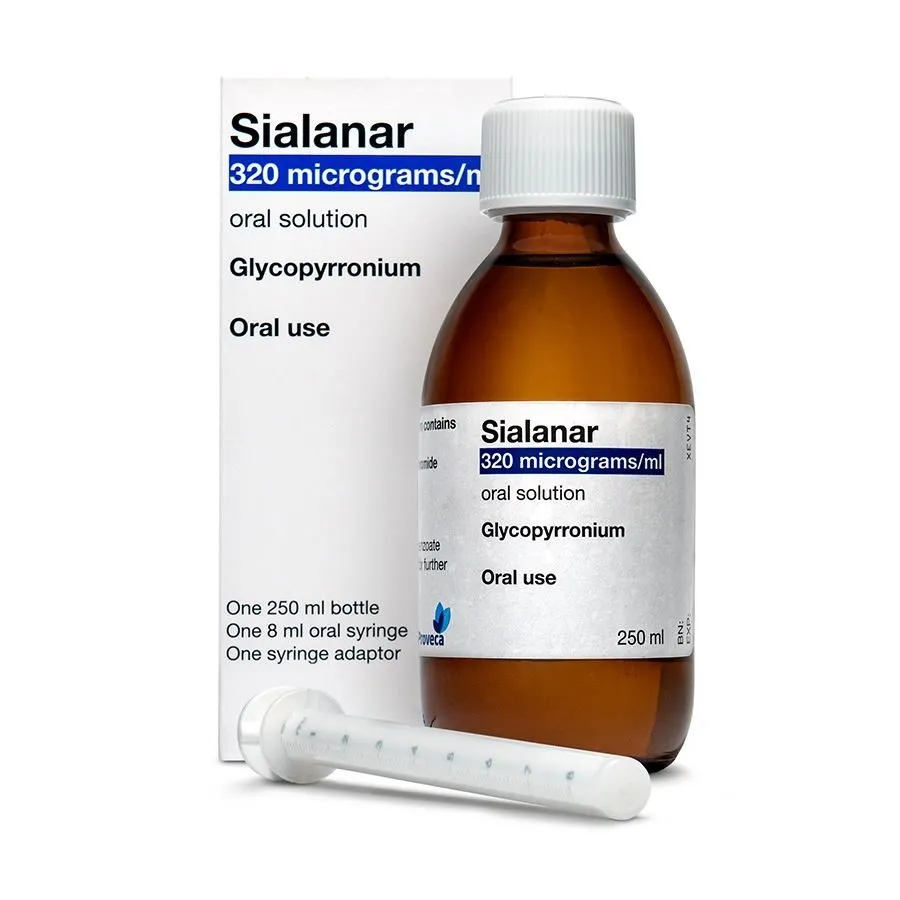
Table of Contents
- Patient Information Leaflet: Information for the User
- Sialanar 320 micrograms/ml oral solution
- 1. What Sialanar is and what it is used for
- 2. What you should know before administering Sialanar
- 3. How to use Sialanar
- 4. Possible side effects
- 5. How to store Sialanar
- 6. Package contents and other information
Patient Information Leaflet: Information for the User
Sialanar 320 micrograms/ml oral solution
Glycopyrronium
Please read this leaflet carefully before administering this medicine to your child
because it contains important information for you.
- Keep this leaflet. You may need to read it again.
- If you have any questions, consult your doctor or pharmacist.
- This medicine has been prescribed for your child only. Do not give it to others, even if their symptoms are the same as your child's, as it could be harmful.
- If your child experiences any side effect, including those not listed in this leaflet, consult your doctor or pharmacist. See section 4.
Contents of this leaflet
- What Sialanar is and what it is used for
- What you need to know before using Sialanar
- How to use Sialanar
- Possible side effects
- How to store Sialanar
- Contents of the pack and other information
1. What Sialanar is and what it is used for
Sialanar contains the active substance glycopyrronium.
Glycopyrronium belongs to a group of medicines known as quaternary ammonium-based anticholinergics; these are agents that block or reduce transmission between nerve cells.
This reduced transmission can inhibit the cells that produce saliva.
Sialanar is used to treat excessive saliva production (sialorrhea) in children and adolescents aged 3 years and older.
Sialorrhea (hypersalivation or excessive drooling) is a common symptom of many neurological and muscular disorders. It is mostly caused by poor control of facial muscles. Acute sialorrhea may be associated with inflammation, dental infections, or oral infections.
Sialanar works on the salivary glands to reduce saliva production.
2. What you should know before administering Sialanar
Do not administer Sialanar if your child or adolescent:
- is allergic to glycopyrronium or to any of the other ingredients of this medicine (listed in section 6)
- is pregnant or breastfeeding
- has glaucoma (increased eye pressure)
- is unable to empty the bladder completely (urinary retention)
- has severe kidney disease
- has a stomach (pyloric stenosis) or intestinal obstruction causing vomiting
- has diarrhoea (frequent, loose, watery stools)
- has ulcerative colitis (inflammation of the intestine)
- has stomach pain and bloating (paralytic ileus)
- has myasthenia gravis (muscle weakness and fatigue)
- is taking any of the following medicines (see section "Other medicines and Sialanar"): oral solid formulations of potassium chloride; anticholinergic medicines.
Warnings and precautions
Talk to your doctor or pharmacist before using Sialanar if your child has:
- heart disease, heart failure, irregular heartbeat, or high blood pressure
- digestive problems (constipation; chronic heartburn and indigestion)
- high temperature (fever)
- inability to sweat normally
- kidney problems or difficulty urinating
- abnormal blood-brain barrier (the membrane covering blood vessels in the brain)
If you have any doubts whether any of the above conditions apply to your child, discuss this with your doctor or pharmacist before administering Sialanar.
The person caring for the child should stop treatment and contact the doctor if any of the following occur:
- pneumonia
- allergic reaction
- urinary retention
- changes in behaviour
- constipation
- fever
Avoid exposing the child to warm or very hot temperatures (hot climate, high ambient temperature) to prevent an increase in body temperature and the risk of heat stroke.
During hot seasons, check with the child’s doctor whether the dose of Sialanar should be reduced.
Reduced salivation may increase the risk of dental disease; therefore, the child’s teeth should be brushed daily and undergo regular dental health checks.
Children with kidney problems may require a lower dose.
Check the child’s pulse if they appear unwell. Report a very slow or very fast heart rate to the doctor.
Long-term use
The long-term efficacy and safety of Sialanar have not been studied beyond 24 weeks of use. Continued use of Sialanar should be reviewed with the child’s doctor every 3 months to confirm that Sialanar remains appropriate for the child.
Children under 3 years of age
Do not administer this medicine to children under 3 years of age, as it is formulated orally with a dosage specifically intended for children and adolescents aged 3 years and older.
Other medicines and Sialanar
Inform your doctor or pharmacist if your child is taking, has recently taken, or might take any other medicines.
In particular, taking Sialanar together with the following medicines may affect how Sialanar or the listed medicine works, or may increase the risk of side effects:
- potassium chloride oral solid formulations (see previous section “Do not administer Sialanar if your child or adolescent:”)
- anticholinergic medicines (see previous section “Do not administer Sialanar if your child or adolescent:”)
- antispasmodics used to treat nausea and vomiting (e.g. domperidone and metoclopramide)
- topiramate used to treat epilepsy
- antihistamines used to treat certain allergies
- neuroleptics/antipsychotics (clozapine, haloperidol, phenothiazines) used to treat certain mental illnesses
- muscle relaxants (botulinum toxin)
- antidepressants (tricyclic antidepressants)
- opioids used to treat severe pain
- corticosteroids used to treat inflammatory diseases
Talk to your doctor or pharmacist for further information about medicines to avoid while taking Sialanar.
Pregnancy and breastfeeding
This medicine is intended for use in children and adolescents. Sialanar must not be administered if the patient is pregnant (or might be pregnant) or is breastfeeding (see section 2 “Do not administer”). Consult your doctor if contraception is needed.
Driving and using machines
Sialanar may affect vision and coordination. This may impair performance in tasks requiring skills such as driving, cycling, or operating machinery. After receiving Sialanar, the patient should not drive any vehicle, ride a bicycle, or use machinery until vision and coordination are fully restored. For further advice, consult your doctor.
Sialanar contains sodium and benzyl alcohol (E211)
This medicine contains less than 1 mmol (23 mg) of sodium per maximum dose, i.e. essentially “sodium-free”.
This medicine contains 2.3 mg of benzyl alcohol (E211) in each ml.
3. How to use Sialanar
Use this medicine exactly as directed by your doctor. If you have any doubts, consult your doctor.
Children and adolescents aged 3 years to less than 18 years:
Your doctor will prescribe the correct dose of Sialanar. The initial dose will be calculated based on the child's body weight. Dose increases will be decided by the doctor, using the table below as a guide, and will depend on both the effect of Sialanar and the occurrence of any adverse effects in the patient (this is why several dosage levels are listed in the table below). Possible adverse effects associated with the use of Sialanar are described in section 4. These should be discussed with the doctor at every medical visit, including those related to dose increases or reductions, and whenever you have any concerns.
The child should be monitored at regular intervals (at least every 3 months) to ensure that Sialanar remains the appropriate treatment.
Weight Dosage level 1 Dosage level 2 Dosage level 3 Dosage level 4 Dosage level 5
kg ml ml ml ml ml
13–17 0.6 1.2 1.8 2.4 3.0
18–22 0.8 1.6 2.4 3.2 4.0
23–27 1.0 2.0 3.0 4.0 5.0
28–32 1.2 2.4 3.6 4.8 6.0
33–37 1.4 2.8 4.2 5.6 6.0
38–42 1.6 3.2 4.8 6.0 6.0
43–47 1.8 3.6 5.4 6.0 6.0
≥48 2.0 4.0 6.0 6.0 6.0
Administer the prescribed dose to the child three times daily.
The dose should be given 1 hour before meals or 2 hours after meals.
It is important that the dose is administered at regular times in relation to food intake. Do not administer with high-fat foods.
Route of administration
Sialanar is for oral use.
Instructions for use
How to use the oral syringe
Remove the child-resistant cap from the bottle.
Insert the syringe adapter with the hole into the neck of the bottle (this may have already been done by the pharmacist).
Insert the tip of the oral syringe into the syringe adapter and ensure it is securely fitted.
Hold the oral syringe in place and turn the bottle upside down. Gently pull the plunger down to the correct level (see the tables for the correct dose). Check that you have drawn up the correct volume. The maximum volume of the highest dose is 6 ml.
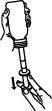
Rotate the bottle back to an upright position.
Remove the oral syringe by holding the bottle and gently rotating the syringe.
Place the oral syringe into the child’s mouth and slowly push the plunger to gently release the medicine.
After use, leave the syringe adapter in the neck of the bottle.
Replace the cap.
The oral syringe should be gently washed with warm water and allowed to dry after each use (i.e., three times daily). Do not use a dishwasher.
If the medicine is administered through a feeding tube, flush the tube with 10 ml of water after administering the medicine.
If you administer more Sialanar than you should
It is important to ensure that the exact dose is administered each time to prevent harmful effects of Sialanar that may occur due to dosing errors or overdose.
Check that you have drawn up the correct level in the syringe before administering Sialanar.
Contact your doctor immediately if an excessive dose of Sialanar has been administered to the child, even if the child appears well.
If you forget to administer Sialanar
Administer the next dose at the scheduled time. Do not give a double dose to make up for the missed dose.
If you stop administering Sialanar to the child
No withdrawal effects are expected when stopping Sialanar. Your doctor may decide to discontinue treatment with Sialanar if adverse effects cannot be managed by reducing the dose.
If you have any questions about the use of this medicine, consult your doctor or pharmacist.
4. Possible side effects
Like all medicines, this medicine can cause side effects, although not everyone gets them.
If any of the following serious side effects occur, stop using the medicine and consult a doctor urgently.
- Constipation (difficulty passing stools) – very common
- Difficulty in urinating (urinary retention) – very common
- Pneumonia (a serious chest infection) – common
- Allergic reaction (rash, itching, red raised itchy rash (urticaria), difficulty breathing or swallowing, dizziness) – frequency not known
The following side effects may be signs of a severe allergic reaction. If they occur, take the child to the nearest emergency medical facility and bring the medicine with you.
- Swelling mainly of the tongue, lips, face or throat (possible signs of angioedema) – frequency not known
Other side effects include:
Very common (may affect more than 1 in 10 people)
- Dry mouth
- Difficulty passing stools (constipation)
- Diarrhoea
- Nausea (vomiting)
- Flushing
- Nasal congestion
- Inability to empty the bladder completely (urinary retention)
- Reduced respiratory secretions
- Irritability
Common (may affect up to 1 in 10 people)
- Upper respiratory tract infection (chest infection)
- Pneumonia (serious chest infection)
- Urinary tract infection
- Drowsiness
- Agitation
- Fever (pyrexia)
- Nosebleed (epistaxis)
- Rash
Uncommon (may affect up to 1 in 100 people)
Bad breath (halitosis)
Fungal infection (thrush) of the throat (oesophageal candidiasis)
Abnormal contractions of the gastrointestinal tract when food is swallowed (gastrointestinal motility disorder)
A disorder affecting intestinal muscles and nerves causing obstruction or blockage (pseudo-obstruction)
Dilation of the pupil of the eye (mydriasis)
Involuntary eye movements (nystagmus)
Headache
Dehydration
Thirst in hot environments
Other side effects that occur with anticholinergics, but whose frequency with glycopyrronium is not known
- Allergic reaction (rash, itching, red raised itchy rash (urticaria), difficulty breathing or swallowing, dizziness)
- Severe allergic reaction (angioedema); signs include swelling mainly of the tongue, lips, face or throat
- Restlessness; hyperactivity; attention instability; frustration; mood changes; sudden outbursts of anger or explosive behaviour; oversensitivity; seriousness or sadness; frequent episodes of crying; fear
- Insomnia (difficulty sleeping)
- Increased intraocular pressure (which may lead to glaucoma); photophobia (sensitivity to light); dry eyes
- Slow heart rate followed by rapid heart rate, palpitations and irregular heartbeat
- Inflammation and swelling of the nasal sinuses (sinusitis)
- Nausea
- Dry skin
- Reduced ability to sweat, which may cause fever and heat stroke
- Urgent need to urinate
Sometimes side effects may be difficult to recognize in patients with neurological problems who cannot easily communicate how they feel.
If you suspect that a troublesome side effect is occurring after increasing the dose, the dose should be reduced to the previously used level and you should contact your doctor.
Inform your doctor if you notice behavioural changes or any other changes in the child.
Reporting of side effects
If the child experiences any side effects, including those not listed in this leaflet, talk to your doctor or pharmacist. You may also report side effects directly via the national reporting system mentioned in Annex V.
By reporting side effects, you can help provide more information on the safety of this medicine.
5. How to store Sialanar
Keep this medicine out of the sight and reach of children.
Do not store above 25°C.
This medicine should be used within 2 months after first opening the bottle.
Do not use this medicine after the expiry date stated on the label after "Exp.:". The expiry date refers to the last day of that month.
Sialanar must not be used if the packaging has been opened or damaged.
Do not dispose of medicines via wastewater or household waste. Ask your pharmacist how to dispose of medicines you no longer use. This will help protect the environment.
6. Package contents and other information
What Sialanar contains
The active substance is glycopyrronium.
Each ml of solution contains 400 micrograms of glycopyrronium bromide, equivalent to 320 micrograms of glycopyrronium.
The other ingredients are sodium benzoate (E211) (see section 2 “Sialanar contains sodium and benzoate salt”), raspberry flavour (containing propylene glycol E1520), sucralose (E955), citric acid (E330) and purified water.
Description of the appearance of Sialanar and contents of the pack
Sialanar oral solution is a clear, colourless liquid. It is supplied in a 60 ml or 250 ml amber glass bottle, packed in a cardboard box. Each box contains one bottle, an 8 ml oral syringe and a syringe adapter. Not all pack sizes may be marketed.
Marketing Authorisation Holder
Proveca Pharma Ltd
2 Dublin Landings
North Wall Quay
Dublin 1
Ireland
Manufacturer
Lusomedicamenta - Sociedade Técnica Farmacêutica S.A.,
Estrada Consiglieri Pedroso 69-B,
Queluz de Baixo,
2730-055 Barcarena,
Portugal
Unither Liquid Manufacturing,
1-3 Allée de la Neste,
Z.I. d'en Sigal,
31770 Colomiers,
France
Other sources of information
More detailed information on this medicinal product is available on the website of the European Medicines Agency: https://www.ema.europa.eu.