Seleparina
ItalyTable of Contents
- Package leaflet: Information for the patient
- SELEPARINA 2,850 IU anti-Xa/0.3 ml solution for injection, 3,800 IU anti-Xa/0.4 ml solution for injection, 5,700 IU anti-Xa/0.6 ml solution for injection, 7,600 IU anti-Xa/0.8 ml solution for injection, 9,500 IU anti-Xa/1 ml solution for injection
- 1. What SELEPARINA is and what it is used for
- 2. What you need to know before using SELEPARINA
- 3. How to use SELEPARINA
- 4. Possible side effects
- 5. How to store SELEPARINA
- 6. Package contents and other information
- The following information is intended exclusively for healthcare professionals
Package leaflet: Information for the patient
SELEPARINA 2,850 IU anti-Xa/0.3 ml solution for injection, 3,800 IU anti-Xa/0.4 ml solution for injection, 5,700 IU anti-Xa/0.6 ml solution for injection, 7,600 IU anti-Xa/0.8 ml solution for injection, 9,500 IU anti-Xa/1 ml solution for injection
nadroparin calcium
Please read all of this leaflet carefully before you start using this medicine because it contains important information for you.
- Keep this leaflet. You may need to read it again.
- If you have any questions, ask your doctor or pharmacist.
- This medicine has been prescribed for you only. Do not give it to other people, even if their symptoms are the same as yours, because it may be harmful.
- If you experience any adverse reaction, including those not listed in this leaflet, contact your doctor or pharmacist. See section 4.
Contents of this leaflet:
- What SELEPARINA is and what it is used for
- What you need to know before using SELEPARINA
- How to use SELEPARINA
- Possible side effects
- How to store SELEPARINA
- Contents of the pack and other information
1. What SELEPARINA is and what it is used for
SELEPARINA contains the active substance nadroparin calcium, an antithrombotic derived from heparin used to prevent the formation of blood clots.
SELEPARINA is used:
- for the prevention of deep vein thrombosis (DVT) in general and orthopaedic surgery. It is therefore used to prevent the formation of blood clots in the leg veins in cases of immobility or reduced mobility following major surgical procedures.
- for the treatment of deep vein thrombosis.
- for the prevention of clot formation during haemodialysis (a procedure used to purify the blood) in patients with renal insufficiency.
- for the treatment of certain types of heart attack (unstable angina and non-Q-wave myocardial infarction).
If you do not feel better or if you feel worse, please consult your doctor.
2. What you need to know before using SELEPARINA
Do not use SELEPARINA
- if you are allergic to the active substance nadroparin, heparin, or to a similar product (such as enoxaparin, bemiparin, dalteparin), or to any of the other ingredients of this medicine (listed in section 6),
- if you have a history of heparin-induced thrombocytopenia (low platelet count, the cells responsible for blood clotting) (see also "Warnings and precautions"),
- if you are at increased risk of bleeding due to coagulation disorders, except for heparin-induced disseminated intravascular coagulation (a severe syndrome causing blood clotting in many blood vessels),
- if you have lesions at risk of bleeding (such as active peptic ulcer, upper gastrointestinal ulcers),
- if you currently suffer (or have previously suffered) from retinopathies (diseases of the retina, the membrane lining the inner surface of the eye),
- if you currently suffer (or have previously suffered) from hemorrhagic syndrome,
- if you currently suffer (or have previously suffered) from hemorrhagic cerebrovascular accidents (cerebral hemorrhages),
- if you currently suffer (or have previously suffered) from acute infective endocarditis (an acute infection affecting the inner lining of the heart),
- if you have severe renal insufficiency and are being treated for deep vein thrombosis, unstable angina, or non-Q myocardial infarction,
- if you have severe kidney or pancreas diseases,
- if you have severe arterial hypertension (very high blood pressure),
- if you have recently undergone surgery for head trauma (surgically treated cranial trauma),
- in case of local anesthesia for surgical procedures. It is contraindicated if you are taking low molecular weight heparin for therapeutic use.
Warnings and precautions
Talk to your doctor or pharmacist before using SELEPARINA.
You may develop heparin-induced thrombocytopenia (low platelet count); therefore, your platelet count must be monitored throughout treatment with nadroparin.
Rare cases of thrombocytopenia, occasionally severe, have been reported, which may be associated with arterial or venous thrombosis. This diagnosis should be considered in the following situations:
- thrombocytopenia
- any significant decrease in platelet levels
- worsening of the initial thrombosis during therapy
- new-onset thrombosis during treatment
- disseminated intravascular coagulation.
In these cases, treatment with nadroparin must be discontinued.
If thrombocytopenia occurs as a result of heparin treatment (both standard and low molecular weight), your doctor may consider:
- whether treatment with nadroparin is necessary
- switching to an antithrombotic from a different class
- if switching is not possible but heparin administration remains necessary, replacing it with another low molecular weight heparin.
In such cases, your doctor must monitor your platelet count at least daily, and if thrombocytopenia occurs, treatment must be immediately stopped (see "Do not use SELEPARINA").
Nadroparin must be used with caution in the following conditions, which may be associated with an
increased risk of bleeding:
- hepatic insufficiency (liver impairment)
- very high blood pressure (severe arterial hypertension)
- clinical history of peptic ulcer (stomach) or other organ lesions at risk of bleeding
- vascular diseases of the choroid and retina (a part of the eye rich in blood vessels)
- during the postoperative period following brain, spinal cord (vertebral surgery), or eye surgery, and in cases of cranial trauma.
Pay particular attention:
- If you have impaired kidney function: you are at higher risk of bleeding and must be treated cautiously.
- If you are elderly: your doctor should assess your kidney function before starting treatment (see "Do not use SELEPARINA").
- If you have high potassium levels in the blood or are at risk of increased potassium levels, for example if you have diabetes mellitus, chronic renal failure, pre-existing metabolic acidosis (disturbances in blood gas and salt concentrations), or if you are taking medications that may increase blood potassium levels (e.g., ACE inhibitors, non-steroidal anti-inflammatory drugs (NSAIDs)). Heparin may suppress aldosterone production (a hormone regulating blood salt concentration), leading to increased blood potassium levels. This risk appears to increase with the duration of therapy, but is usually reversible.
- If you are undergoing spinal or epidural anesthesia, the use of low molecular weight heparin may rarely be associated with spinal or epidural hematomas, which may lead to prolonged or permanent paralysis. You should therefore be frequently monitored for signs and symptoms of neurological impairment, such as back pain, sensory and motor deficits (numbness and weakness in the lower limbs), and intestinal and/or bladder dysfunction. You must immediately inform a doctor or healthcare professional if any of these symptoms occur. The risk of spinal/epidural hematomas is increased by the use of catheters placed in the spinal canal or by concomitant use of other drugs that may affect blood coagulation, such as non-steroidal anti-inflammatory drugs (NSAIDs), platelet aggregation inhibitors, or other anticoagulants. The risk is also increased by trauma or repeated epidural or spinal punctures.
Skin necrosis
Inform your doctor if you notice signs such as purpura (dark red discoloration) or infiltrated or painful erythematous plaques, with or without general symptoms, as these may be associated with skin necrosis (i.e., death of skin tissue), which has been very rarely reported. In such cases, your doctor will immediately discontinue treatment.
Latex allergy
The protective cap of the needle on the pre-filled syringe may contain latex rubber. It may cause severe allergic reactions.
Children and adolescents
Nadroparin is not recommended in children and adolescents under 18 years of age.
Other medicines and SELEPARINA
Inform your doctor or pharmacist if you are taking, have recently taken, or might take any other medicines.
Nadroparin should be administered with caution if you are taking:
- oral anticoagulants, as concomitant administration may increase the anticoagulant effect
- systemic (gluco-)corticosteroids (cortisone and similar), as concomitant administration may increase the risk of bleeding
- dextrans (substances used to increase blood volume), as concomitant administration may increase the risk of bleeding
- ascorbic acid (vitamin C), antihistamines, digitalis, intravenous penicillins, tetracyclines, or phenothiazines, as these may reduce the effectiveness of the medicine.
SELEPARINA is not recommended if you are taking the following medicines, as the risk of bleeding increases in these cases:
- acetylsalicylic acid and other salicylates, non-steroidal anti-inflammatory drugs - NSAIDs (systemic administration). Use other substances for analgesic or antipyretic effects.
- ticlopidine (oral anticoagulants)
- other platelet aggregation inhibitors (clopidogrel, dipyridamole, sulfinpyrazone, etc.).
Pregnancy, breastfeeding, and fertility
If you are pregnant, suspect you may be pregnant, plan to become pregnant, or are breastfeeding, consult your doctor or pharmacist before using this medicine.
Pregnancy
The use of nadroparin during pregnancy is not recommended unless the therapeutic benefits outweigh the potential risks.
Breastfeeding
Information on the excretion of nadroparin in breast milk is limited. As a precaution, breastfeeding mothers receiving nadroparin should be advised not to breastfeed.
Fertility
There are no studies on the effect of nadroparin on fertility.
Driving and using machines
No studies on the ability to drive vehicles or use machinery have been conducted.
3. How to use SELEPARINA
Use this medicine exactly as directed by your doctor or pharmacist. If you have any doubts, consult your doctor or pharmacist.
Do not mix nadroparin calcium with other preparations.
Pay particular attention to dosing instructions, which are specific for different brands of low molecular weight heparins, as different measurement systems (Units or mg) are used for expressing doses for each low molecular weight heparin.
Therefore, nadroparin must not be used interchangeably with other low molecular weight heparins during treatment.
Nadroparin must not be administered by intramuscular injection.
Administration of nadroparin around the time of spinal/epidural anaesthesia or spinal lumbar puncture must follow specific recommendations (see “Warnings and precautions”).
You must monitor platelet count throughout the entire course of treatment with nadroparin (see “Warnings and precautions”).
Subcutaneous injection technique
When nadroparin is administered subcutaneously, the injection should be given into the anterolateral or posterolateral abdominal wall, alternating between the right and left sides. The thigh may be used as an alternative site.
To avoid loss of solution when using pre-filled syringes, do not expel the air bubble from the syringe before performing the injection.
The needle must be inserted fully, perpendicularly (i.e. at a 90-degree angle to the abdomen), and not tangentially, into a skin fold created between the thumb and index finger of the operator.
The skin fold must be maintained throughout the duration of the injection. After completing the injection, do not rub the skin, but apply gentle pressure to the injection site.
If the dose is adjusted according to your body weight, adjust the volume to be administered by moving the plunger to the desired mark while holding the syringe in a vertical position.
The injectable solution of nadroparin must be inspected visually before use for the presence of particulate matter (i.e. solid material in a liquid solution) or any discoloration.
If any visual change is observed, the solution must be discarded.
Syringes are for single use only, and any unused content of each syringe must be discarded. Solutions must not be mixed with other preparations or re-administered.
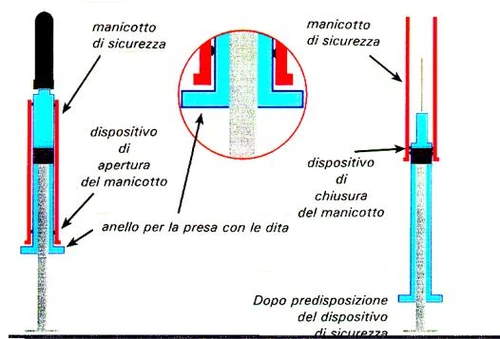
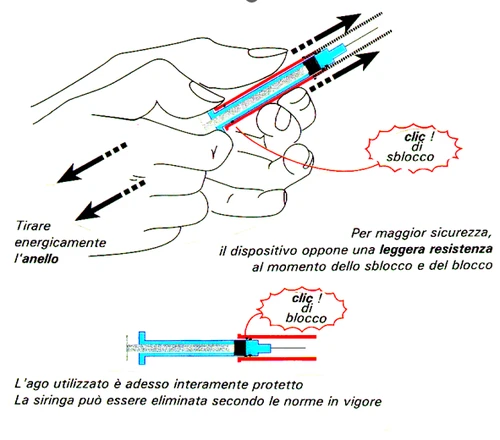
For syringes with a needle safety protection system:
Prevention of deep vein thrombosis
Subcutaneous administration
In general surgery:
The recommended dose is one subcutaneous injection 2–4 hours before surgery, followed by one injection every 24 hours for at least 7 days; in all cases, prophylaxis must continue throughout the period of risk and at least until you are able to walk again.
In orthopaedic surgery:
The recommended dose is one preoperative injection 12 hours before surgery, one postoperative injection 12 hours after surgery, followed by one daily injection.
The duration of treatment is at least 10 days; in all cases, prophylaxis must continue throughout the period of risk and at least until you are able to walk again.
Treatment of deep vein thrombosis
Subcutaneous administration
The recommended dose is one injection every 12 hours.
If there are no contraindications, initiate oral anticoagulant therapy as soon as possible.
You must monitor platelet count throughout the entire course of treatment with nadroparin (see “Warnings and precautions”).
Prevention of coagulation during haemodialysis
Intravascular administration
If you are not at increased risk of bleeding and for dialysis sessions lasting ≤4 hours, a single dose injection should be given at the start of the session into the arterial access, based on your body weight.
If you are at increased risk of bleeding, dialysis sessions may be performed using a half dose.
For sessions lasting longer than 4 hours, an additional reduced dose may be administered.
For subsequent dialysis sessions, if necessary, the dose may be adjusted based on the initial observed effect.
You must be closely monitored during the dialysis session for any signs of bleeding or clotting in the dialysis circuit.
Treatment of unstable angina and non-Q-wave myocardial infarction
Subcutaneous administration
The recommended dose of nadroparin, administered subcutaneously, is twice daily (every 12 hours). The duration of treatment is generally 6 days.
Use in children and adolescents
Nadroparin is not recommended in children and adolescents, as there are insufficient safety and efficacy data to establish a dose in patients under 18 years of age.
Elderly
No dose adjustment is necessary solely due to age, unless renal function is impaired. Your doctor will assess your renal function before starting treatment (see below “Renal impairment”).
Renal impairment
Prevention of deep vein thrombosis
Dose reduction is not required in mild renal impairment. If you have moderate or severe renal impairment, you are at increased risk of thromboembolism and bleeding. Where your doctor considers dose reduction appropriate, taking into account individual haemorrhagic and thromboembolic risk factors, dose reduction of varying extent should be considered in cases of moderate or severe renal impairment (see “Warnings and precautions”).
SELEPARINA is contraindicated in severe renal impairment.
Treatment of deep vein thrombosis, unstable angina, and non-Q-wave myocardial infarction
If you have mild renal impairment and are taking nadroparin for the treatment of these conditions, dose reduction is not required.
If you have moderate or severe renal impairment, you are at increased risk of thromboembolism and bleeding.
Where your doctor considers dose reduction appropriate, taking into account individual haemorrhagic and thromboembolic risk factors, dose reduction of varying extent should be considered in cases of moderate or severe renal impairment (see “Warnings and precautions”).
Hepatic impairment
Studies have not been conducted in patients with hepatic impairment.
If you use more SELEPARINA than you should
In case of accidental overdose of SELEPARINA, contact your doctor immediately or go to the nearest hospital.
Symptoms and signs
The most evident manifestation of overdose, whether by subcutaneous or intravenous route, is bleeding. In such a case, your doctor should perform a platelet count and measure other coagulation parameters.
Minor bleeding episodes rarely require specific treatment, and usually reducing or delaying subsequent doses of nadroparin is sufficient.
If you have any doubts about how to use this medicine, consult your doctor or pharmacist.
4. Possible side effects
Like all medicines, this medicine can cause side effects, although not everybody gets them.
The side effects are listed below by frequency of occurrence:
Very common (may affect more than 1 in 10 people)
- Bleeding manifestations at various sites (including cases of spinal haematoma), more frequent in patients with other risk factors (see "Do not use SELEPARINA" and "Warnings and precautions").
- Bruising at the injection site.
- In some cases, firm nodules may appear. These nodules usually disappear after a few days.
Common (may affect up to 1 in 10 people)
- Increased transaminases (enzymes produced by the liver), generally temporary.
- Reaction at the injection site.
Rare (may affect up to 1 in 1,000 people)
- Thrombocytopenia, i.e. reduction in the number of platelets in the blood (including heparin-induced thrombocytopenia) (see "Warnings and precautions"), thrombocytosis (increase in the number of platelets in the blood).
- Dermatitis, urticaria, erythema, pruritus.
- Calcinosis (calcium salt deposits) at the injection site. Calcinosis is more frequent in patients with abnormal calcium phosphate production, as well as in some cases of chronic renal failure.
Very rare (may affect up to 1 in 10,000 people)
- Eosinophilia, i.e. an increase in a type of white blood cells in the blood, reversible upon discontinuation of treatment.
- Hypersensitivity reactions (including angioedema and skin reactions), anaphylactoid reactions.
- Reversible increase in blood potassium concentration, particularly in patients at risk (see "Warnings and precautions").
- Priapism (abnormal, prolonged and painful erections).
- Skin necrosis (death of skin tissue), usually at the injection site (see "Warnings and precautions").
Not known (frequency cannot be estimated from the available data)
- Headache, migraine
Reporting of side effects
If you experience any side effect, including those not listed in this leaflet, talk to your doctor, pharmacist or nurse. You may also report side effects directly via the national reporting system at www.aifa.gov.it/content/segnalazioni-reazioni-avverse.
By reporting side effects, you can help provide more information on the safety of this medicine.
5. How to store SELEPARINA
Keep this medicine out of the sight and reach of children.
Do not use this medicine after the expiry date stated on the packaging after "Exp." The expiry date refers to the last day of that month. The stated expiry date applies to the product stored in its original, unopened packaging and correctly conserved.
This medicine does not require any special storage conditions.
Do not freeze. Do not store in the refrigerator, as cold injections may be painful.
Do not dispose of medicines via wastewater or household waste. Ask your pharmacist how to dispose of medicines you no longer use. This will help protect the environment.
6. Package contents and other information
What SELEPARINA contains
- The active substance is calciparine calcium (antiXa U.I.). One pre-filled syringe contains:
o 0.3 ml of SELEPARINA 2,850 antiXa U.I.;
o 0.4 ml of SELEPARINA 3,800 antiXa U.I.;
o 0.6 ml of SELEPARINA 5,700 antiXa U.I.;
o 0.8 ml of SELEPARINA 7,600 antiXa U.I.;
o 1 ml of SELEPARINA 9,500 antiXa U.I. - The other components are: calcium hydroxide solution or diluted hydrochloric acid – water for injectable preparations.
Description of the appearance of SELEPARINA and contents of the pack
- 2,850 antiXa U.I./0.3 ml solution for injection: cardboard box containing 6 pre-filled syringes made of colourless glass, with or without safety device, or 10 pre-filled syringes made of colourless glass with safety device.
- 3,800 antiXa U.I./0.4 ml solution for injection: cardboard box containing 6 pre-filled syringes made of colourless glass, with or without safety device, or 10 pre-filled syringes made of colourless glass with safety device.
- 5,700 antiXa U.I./0.6 ml solution for injection: cardboard box containing 2, 6 or 10 pre-filled syringes made of colourless glass, with or without safety device.
- 7,600 antiXa U.I./0.8 ml solution for injection: cardboard box containing 2, 6 or 10 pre-filled syringes made of colourless glass, with or without safety device.
- 9,500 antiXa U.I./1 ml solution for injection: cardboard box containing 2, 6 or 10 pre-filled syringes made of colourless glass, with or without safety device.
Not all pack sizes may be marketed.
Marketing Authorization Holder
Viatris Italia S.r.l.
Via Vittor Pisani, 20, 20124 Milano, Italy
Manufacturer
ASPEN - NOTRE DAME DE BONDEVILLE - 1, rue de l’Abbaye 76960 Notre Dame de Bondeville
(FRANCE)
The following information is intended exclusively for healthcare professionals
Do not mix nadroparin calcium with other preparations.
Particular attention must be paid to dosage instructions, which are specific for different brands of low molecular weight heparin, as different measurement systems (Units or mg) are used to express doses for each low molecular weight heparin.
Therefore, nadroparin must not be used interchangeably with other low molecular weight heparins during treatment.
Nadroparin must not be administered by intramuscular route.
Administration of nadroparin around the time of spinal/epidural anaesthesia or lumbar puncture must follow specific recommendations (see "Warnings and precautions").
Platelet count must be monitored throughout the duration of treatment with nadroparin (see "Warnings and precautions").
Prevention of deep vein thrombosis
Subcutaneous administration
In general surgery:
The recommended dose is one subcutaneous injection 2–4 hours before surgery, followed by one injection every 24 hours for at least 7 days. In all cases, prophylaxis should continue throughout the period of risk and at least until the patient resumes walking.
In orthopaedic surgery:
The recommended dose is one preoperative injection 12 hours before surgery, one postoperative injection 12 hours after the end of surgery, followed by one daily injection.
The duration of treatment is at least 10 days; in all cases, prophylaxis should continue throughout the period of risk and at least until the patient resumes walking.
Orthopaedic surgery
| Body weight kg | 12 hours before, 12 hours after surgery and then once daily until and including the 3rd postoperative day | From the 4th postoperative day onwards | ||
| Volume to be injected | antiXa IU | Volume to be injected | antiXa IU | |
| < 50 | 0.2 ml | 1,900 | 0.3 ml | 2,850 |
| 50 - 69 | 0.3 ml | 2,850 | 0.4 ml | 3,800 |
| ≥ 70 | 0.4 ml | 3,800 | 0.6 ml | 5,700 |
Treatment of deep vein thrombosis
Subcutaneous administration
The recommended dose is one injection every 12 hours.
If there are no contraindications, initiate oral anticoagulant therapy as soon as possible.
Platelet count must be monitored throughout the duration of treatment with nadroparin (see
"Warnings and Precautions").
| Treatment of deep venous thrombosis | ||
| One injection twice daily for 10 days | ||
| Body weight (kg) | Volume per injection | antiXa IU |
| < 50 50-59 60-69 70-79 80-89 90 | 0.4 ml 0.5 ml 0.6 ml 0.7 ml 0.8 ml 0.9 ml | 3 800 4 750 5 700 6 650 7 600 8 550 |
Prevention of coagulation during hemodialysis
Intravascular administration
In patients without bleeding risk and for a session lasting less than or equal to 4 hours,
a single dose injection must be administered at the beginning of the session into the arterial access,
adjusted according to body weight.
| Prevention of coagulation during hemodialysis | ||
| Body weight (kg) | Volume of nadroparin per session | antiXa IU |
| < 50 50-69 70 | 0.3 ml 0.4 ml 0.6 ml | 2,850 3,800 5,700 |
In patients with an increased risk of bleeding, dialysis sessions may be performed
using a reduced dose of half.
For sessions lasting longer than 4 hours, an additional reduced dose may be administered.
For subsequent dialysis sessions, if necessary, the dose may be adjusted according to the initial observed effect.
Careful monitoring during the dialysis session is required for any signs of bleeding or clotting in the dialysis circuit.
Treatment of unstable angina and non-Q-wave myocardial infarction
Subcutaneous administration
The recommended dose of nadroparin, administered subcutaneously, is twice daily (every 12
hours). The duration of treatment is generally 6 days.
| Treatment of unstable angina and non-Q myocardial infarction | |||
| Body weight (kg) | Volume to be injected | ||
| Intravenous bolus | Subcutaneous injections (every 12 hours) | Corresponding antiXa U.I. | |
| < 50 50-59 60-69 70-79 80-89 90-99 100 | 0.4 ml 0.5 ml 0.6 ml 0.7 ml 0.8 ml 0.9 ml 1.0 ml | 0.4 ml 0.5 ml 0.6 ml 0.7 ml 0.8 ml 0.9 ml 1.0 ml | 3 800 4 750 5 700 6 650 7 600 8 550 9 500 |
In patients undergoing lumbar puncture, spinal anaesthesia or epidural anaesthesia,
a minimum of 12 hours must elapse between the administration of prophylactic doses of nadroparin
and the insertion or removal of the spinal/epidural catheter or needle, and at least 24 hours
in the case of therapeutic doses of nadroparin, taking into account the product characteristics and the patient's profile.
For patients with renal impairment, longer intervals should be considered.
The subsequent dose should not be administered until at least 4 hours have elapsed.
Re-administration of nadroparin should be delayed until after completion of the surgical procedure.
If signs or symptoms suggestive of spinal haematoma are suspected, urgent diagnosis and intervention must be performed, including spinal cord decompression.
If significant or obvious bleeding occurred during catheter placement, a careful benefit-risk assessment must be carried out before initiating/resuming heparin therapy.
Overdose
Treatment
Only in severe cases should protamine sulfate be considered, which largely neutralizes the anticoagulant effect of nadroparin, although some anti-Xa activity may still remain.
0.6 ml of protamine sulfate neutralizes approximately 950 IU anti-Xa of nadroparin. The amount of protamine to be administered should take into account the time elapsed since heparin injection, and the dose of protamine may need to be reduced accordingly.