Seki
Italy
Table of Contents
- Package leaflet: Information for the patient
- Seki 10 mg film-coated tablets
- 1. What Seki is and what it is used for
- 2. What you need to know before taking Seki
- 3. How to take Seki
- 4. Possible side effects
- 5. How to store Seki
- 6. Package contents and other information
- Patient Information Leaflet
- Seki 3.54 mg/ml syrup
- 1. What Seki is and what it is used for
- 2. What you need to know before taking Seki
- 3. How to take Seki
- 4. Possible side effects
- 5. How to store Seki
- 6. Package contents and other information
Package leaflet: Information for the patient
Seki 10 mg film-coated tablets
cloperastine hydrochloride
Seki 35.4 mg/ml oral drops, suspension
Seki bambini 4.4 mg chewable tablets
cloperastine fendizoate
Please read all of this leaflet carefully before taking this medicine because it contains important information for you.
Always take this medicine exactly as described in this leaflet or as your doctor or pharmacist has told you to do.
- Keep this leaflet. You may need to read it again.
- If you need more information or advice, contact your pharmacist.
- If you experience any side effects, including those not listed in this leaflet, contact your doctor or pharmacist. See section 4.
- Contact your doctor if you do not notice any improvement or if you notice a worsening of symptoms.
Contents of this leaflet:
- What Seki is and what it is used for
- What you need to know before taking Seki
- How to take Seki
- Possible side effects
- How to store Seki
- Contents of the pack and other information
1. What Seki is and what it is used for
Seki is a medicine that acts as a cough suppressant.
Seki is used to relieve the urge to cough.
Consult your doctor if you do not feel better or if you feel worse after a short period of treatment.
Consult your doctor if the child does not feel better or feels worse after 7 days.
2. What you need to know before taking Seki
Do not use Seki
- if you are allergic to cloperastine or to any of the other ingredients of this medicine (listed in section 6);
- in children under 2 years of age.
Warnings and precautions
Talk to your doctor or pharmacist before taking Seki.
Caution is advised if you have increased intraocular pressure, prostate enlargement, or bladder obstruction.
Extreme caution is recommended if you have chronic productive cough (with mucus), such as that associated with smoking, pulmonary emphysema or asthma, because by suppressing cough, Seki may impair the ability to clear mucus (expectoration) and increase airway resistance.
Other medicines and Seki
Inform your doctor or pharmacist if you are taking, have recently taken, or might take any other medicines.
Avoid concomitant use of Seki with:
- antihistamine medicines (used to treat allergies);
- anticholinergic medicines;
- sedative medicines.
Use this medicine with caution and consult your doctor if you are taking substances that depress or stimulate the central nervous system.
Seki with food and alcohol
It is not recommended to take Seki during meals (see "How to take Seki").
Avoid consuming alcoholic beverages during treatment with Seki.
Pregnancy, breastfeeding and fertility
If you are pregnant, think you may be pregnant, planning to become pregnant, or breastfeeding, consult your doctor or pharmacist before taking this medicine.
Avoid taking Seki during the first months of pregnancy; during later stages, take this medicine only if clearly needed and strictly under medical supervision.
It is unknown whether the medicine and/or its metabolites are excreted in breast milk. Do not take Seki while breastfeeding.
There are no data available on the effect of Seki on fertility.
Driving and using machines
Seki may cause drowsiness. Be cautious if you intend to drive or perform tasks requiring full alertness.
Seki contains sucrose
- The tablets contain 38.07 mg of sucrose per dose.
- The drops contain approximately 140 mg of sucrose per ml.
- The chewable tablets contain approximately 36.8 mg of sucrose per dose.
If your doctor has diagnosed you with an intolerance to certain sugars, consult him before taking this medicine. Seki contains sucrose. This should be taken into account in patients with diabetes mellitus or those following low-calorie (hypocaloric) diets.
Seki (drops) contains parahydroxybenzoates (parabens)
The drops contain methyl-parahydroxybenzoate (E218), which may cause allergic reactions (including delayed reactions).
3. How to take Seki
Take this medicine exactly as described in this leaflet, or as your doctor or pharmacist has told you. If you are unsure, consult your doctor or pharmacist.
Recommended doses are:
Adults
Seki 10 mg film-coated tablets:
2 tablets in the evening at bedtime, 1 tablet in the morning and 1 tablet in the afternoon, preferably between meals.
Seki 35.4 mg/ml oral drops, suspension:
30 drops in the evening before going to bed, 15 drops in the morning and 15 drops in the afternoon.
Use in children over 2 years of age
Seki Children 4.4 mg chewable tablets:
- Children up to 7 years of age: 2 tablets in the evening at bedtime, 1 tablet in the morning and 1 tablet in the afternoon.
- Children over 7 years of age: 4–6 tablets in the evening at bedtime, 2–3 tablets in the morning and 2–3 tablets in the afternoon.
Seki 35.4 mg/ml oral drops, suspension
- 14 drops in the evening before going to bed, 8 drops in the morning and 8 drops in the afternoon.
Administration of the medicine during meals is not recommended.
Instructions for opening the dropper bottle and using the dropper
SEKI 35.4 mg/ml oral drops, suspension is for oral use.
- Shake well before use.
- Press on the cap of the bottle and turn in the
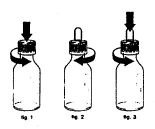
direction indicated by the arrow (see fig. 1).
- Remove the cap.
- Take the dropper and unscrew the protective sheath from the pipette tip.
- Screw the dropper onto the bottle (see fig. 2).
- To use the dropper, press on the cap and turn in the direction indicated by the arrow (see fig. 3).
- Replace the dropper onto the bottle by simply screwing the cap back on (see fig. 2).
If you take more Seki than you should
In case of accidental ingestion/overdose of Seki, contact your doctor immediately or go to the nearest hospital.
If you have any doubts about how to use this medicine, consult your doctor or pharmacist.
If you forget to take Seki
Do not take a double dose to make up for the missed dose.
If you stop taking Seki
If you have any doubts about how to use this medicine, consult your doctor or pharmacist.
4. Possible side effects
Urticaria is the most frequently reported adverse reaction.
Like all medicines, this medicine can cause side effects, although not everybody gets them.
Uncommon (may affect up to 1 in 100 patients)
- drowsiness,
- dry mouth.
Frequency not known (frequency cannot be estimated from the available data)
- severe, rapidly occurring allergic reactions (anaphylactic/anaphylactoid reaction),
- urticaria,
- skin redness (erythema).
Following the instructions in this leaflet reduces the risk of side effects.
Reporting of side effects
If you experience any side effect, including those not listed in this leaflet, talk to your doctor or pharmacist.
You can also report side effects directly via the national reporting system at the following website: .
By reporting side effects, you can help provide more information on the safety of this medicine.
5. How to store Seki
Keep this medicine out of the sight and reach of children.
Do not use this medicine after the expiry date which is stated on the packaging after "Exp". The expiry date refers to the last day of that month. The expiry date applies to the product in its original packaging, stored correctly.
Store the coated tablets at a temperature below 25°C.
Do not dispose of any medicine via wastewater or household waste. Ask your pharmacist how to dispose of medicines you no longer use. This will help protect the environment.
6. Package contents and other information
What Seki contains
Seki 10 mg film-coated tablets
- The active substance is cloperastine hydrochloride. One tablet contains 10 mg of cloperastine hydrochloride.
- The other components are: microcrystalline cellulose, silica, talc, magnesium stearate, hypromellose, povidone, macrogol 4000, sucrose, magnesium carbonate, titanium dioxide, erythrosine (E127).
Seki 35.4 mg/ml oral drops, suspension
- The active substance is cloperastine fendizoate. 100 ml contain 3.54 g of cloperastine fendizoate, equivalent to 1.8 g of cloperastine.
- The other components are: polyoxyethylene stearate, silica, methyl parahydroxybenzoate, sucrose, banana flavour, purified water.
Seki bambini 4.4 mg chewable tablets
- The active substance is cloperastine fendizoate. One tablet contains 4.4 mg of cloperastine fendizoate.
- The other components are: sucrose, mannitol, microcrystalline cellulose, starch, methylcellulose, magnesium stearate, talc, strawberry essence.
Description of the appearance of Seki and package contents
Seki is available in the following forms:
Film-coated tablets – 20 tablets
Oral drops, suspension – 25 ml bottle
Chewable tablets – 20 or 60 tablets
Marketing Authorization Holder
Zambon Italia s.r.l.
Via Lillo del Duca 10 – 20091 Bresso (MI)
Manufacturer
Zambon S.p.A. - Vicenza
Patient Information Leaflet
Seki 3.54 mg/ml syrup
cloperastine fendizoate
Please read this leaflet carefully before taking this medicine because it contains important information for you.
Always take this medicine exactly as described in this leaflet or as your doctor or pharmacist has instructed you.
- Keep this leaflet. You may need to read it again.
- If you need more information or advice, consult your pharmacist.
- If you experience any side effects, including those not listed in this leaflet, consult your doctor or pharmacist. See section 4.
- Consult your doctor if you do not notice any improvement or if your symptoms worsen.
Contents of this leaflet:
- What Seki is and what it is used for
- What you need to know before taking Seki
- How to take Seki
- Possible side effects
- How to store Seki
- Contents of the pack and other information
1. What Seki is and what it is used for
Seki is a medicine that acts as a cough suppressant.
Seki is used to relieve the urge to cough.
Consult your doctor if you do not feel better or if you feel worse after a short period of treatment.
Consult your doctor if the child does not feel better or feels worse after 7 days.
2. What you need to know before taking Seki
Do not use Seki
- if you are allergic to cloperastine or to any of the other ingredients of this medicine (listed in section 6),
- in children under 2 years of age.
Warnings and precautions
Talk to your doctor or pharmacist before taking Seki.
Caution is advised if you have glaucoma (increased intraocular pressure), prostate enlargement, or bladder obstruction.
Extreme caution is recommended if you have chronic productive cough (with mucus), such as that associated with smoking, pulmonary emphysema, or asthma, because by suppressing cough, Seki may impair mucus clearance (expectoration) and increase airway resistance.
Other medicines and Seki
Inform your doctor or pharmacist if you are taking, have recently taken, or might take any other medicines.
Avoid simultaneous use of Seki with:
- antihistamine medicines (used to treat allergies);
- anticholinergic medicines;
- sedative medicines.
Use this medicine with caution and consult your doctor if you are taking substances that depress or stimulate the central nervous system.
Seki with food and alcohol
It is not recommended to take Seki during meals (see "How to take Seki").
Avoid consuming alcoholic beverages during treatment with Seki.
Pregnancy, breastfeeding and fertility
If you are pregnant, think you may be pregnant, are planning to become pregnant, or are breastfeeding, consult your doctor or pharmacist before taking this medicine.
Avoid taking Seki during the first months of pregnancy; during later stages, take this medicine only if clearly needed and under direct medical supervision.
It is not known whether the medicine and/or its metabolites are excreted in breast milk. Do not take Seki while breastfeeding.
There are no data available on the effect of Seki on fertility.
Driving and using machines
Seki may cause drowsiness. Exercise caution if you intend to drive or perform activities requiring full attention and alertness.
Seki contains sucrose
The syrup contains 1.687 g of sucrose per 3.75 ml dose (marking “Children”) and 3.375 g of sucrose per 7.5 ml dose (marking “Adults”).
If your doctor has diagnosed you with an intolerance to certain sugars, contact him or her before taking this medicine.
Seki contains sucrose. This should be taken into account in patients with diabetes mellitus or those following low-calorie (hypocaloric) diets.
Seki contains Ethanol (contained in the banana flavour)
This medicine contains 0.0011 ml of alcohol (ethanol) in each 3.75 ml dose (marking “Children”) and 0.0022 ml of alcohol (ethanol) in each 7.5 ml dose (marking “Adults”).
The amount in a single dose of this medicine is equivalent to less than 1 ml of beer or wine.
The small amount of alcohol in this medicine will not produce significant effects.
Seki contains Propylene Glycol (contained in the banana flavour)
This medicine contains 8.6 mg of propylene glycol in 3.75 ml (marking “Children”) and 17.3 mg of propylene glycol in 7.5 ml (marking “Adults”).
Seki contains Sodium (contained in sodium carmellose)
This medicine contains less than 1 mmol (23 mg) of sodium per dose, i.e. essentially 'sodium-free'.
Seki contains parahydroxybenzoates (parabens)
The syrup contains methyl parahydroxybenzoate and propyl parahydroxybenzoate (E218 and E216), which may cause allergic reactions (including delayed reactions).
3. How to take Seki
Take this medicine exactly as described in this leaflet or as your doctor or pharmacist has told you. If you are unsure, consult your doctor or pharmacist.
Recommended doses are:
Adults
Seki 3.54 mg/ml syrup
Use the dosing cup provided in the package, filling it up to the mark labeled "Adults"; one "Adults" mark corresponds to 7.5 ml of syrup.
Take 2 cups in the evening at bedtime, 1 cup in the morning, and 1 cup in the afternoon.
Use in children
Seki 3.54 mg/ml syrup
- Children over 2 years of age: use the dosing cup provided in the package, filling it up to the mark labeled "Children"; one "Children" mark corresponds to 3.75 ml of syrup.
Take 2 cups in the evening before bedtime, 1 cup in the morning, and 1 cup in the afternoon.
It is not recommended to take the medicine during meals.
Instructions for use
Seki 3.54 mg/ml syrup is for oral administration using the dosing cup provided in the package.
- Shake the bottle before use.
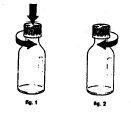
- Place the bottle in an upright position, press the cap and unscrew in the direction indicated by the arrow (see fig. 1).
- Use the dosing cup according to the dose indicated above. For accurate dosing, hold the cup horizontally and fill it up to the marked line.
- To close the bottle, screw the cap tightly in the opposite direction to opening (see fig. 2).
- It is recommended to wash the dosing cup after each use.
If you take more Seki than you should
In case of accidental ingestion or overdose of Seki, contact your doctor immediately or go to the nearest hospital.
If you have any doubts about how to use this medicine, consult your doctor or pharmacist.
If you forget to take Seki
Do not take a double dose to make up for the forgotten dose.
If you stop taking Seki
If you have any doubts about how to use this medicine, consult your doctor or pharmacist.
4. Possible side effects
Urticaria is the most frequently reported adverse reaction.
Like all medicines, this medicine can cause side effects, although not everybody will experience them.
Uncommon (may affect up to 1 in 100 patients)
- drowsiness,
- dry mouth.
Frequency not known (frequency cannot be estimated from the available data)
- severe, rapidly occurring allergic reactions (anaphylactic/anaphylactoid reaction),
- urticaria,
- skin redness (erythema). Following the instructions contained in this leaflet reduces the risk of side effects.
Reporting of side effects
If you experience any side effect, including those not listed in this leaflet, talk to your doctor or pharmacist.
You can also report side effects directly via the national reporting system at: https://www.aifa.gov.it/content/segnalazioni-reazioni-avverse.
By reporting side effects, you can help provide more information on the safety of this medicine.
5. How to store Seki
Keep this medicine out of the sight and reach of children.
Do not use this medicine after the expiry date stated on the packaging after "Exp". The expiry date refers to the last day of that month. The expiry date applies to the product in its original packaging, stored correctly.
Store the syrup at a temperature below 30°C.
After first opening, the bottle can be used for no longer than 30 days.
Do not dispose of medicines via wastewater or household waste. Ask your pharmacist how to dispose of medicines you no longer use. This will help protect the environment.
6. Package contents and other information
What Seki contains
Seki 3.54 mg/ml syrup
- The active substance is cloperastine fendizoate. 100 ml contain 354 mg of cloperastine fendizoate, equivalent to 180 mg of cloperastine.
- The other components are: microcrystalline cellulose, sodium carmellose, polyoxy-40-stearate, sucrose, methyl parahydroxybenzoate, propyl parahydroxybenzoate, banana flavour (containing ethanol and propylene glycol), purified water.
Description of the appearance of Seki and contents of the pack
Seki is available as:
Syrup – 200 ml bottle with dosing cup.
Marketing Authorisation Holder
Zambon Italia s.r.l.
Via Lillo del Duca 10 – 20091 Bresso (MI)
Manufacturer
Zambon S.p.A. - Vicenza