Sedaconda
Italy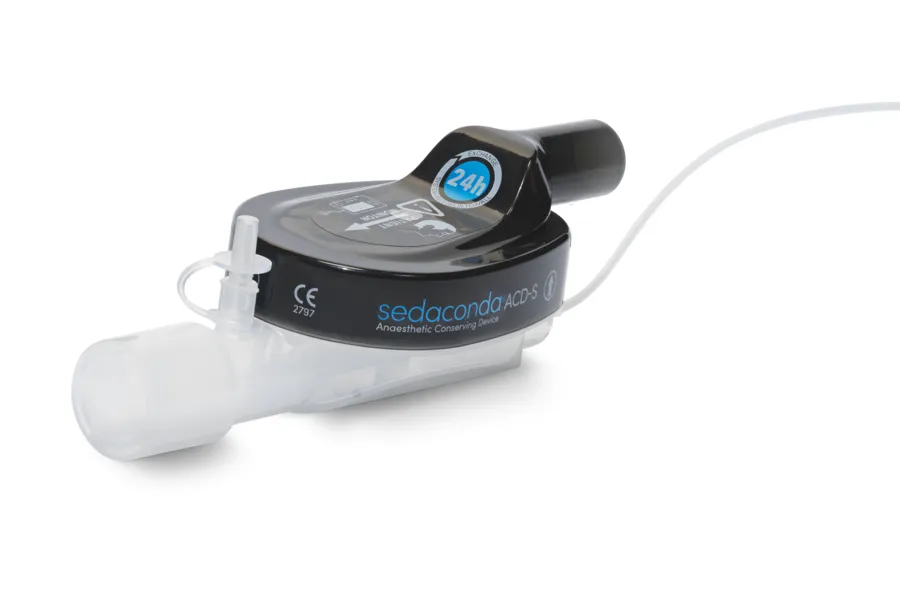
Table of Contents
- Patient Information Leaflet
- Sedaconda 100% V/V vapor for inhalation, liquid
- 1. What Sedaconda is and what it is used for
- 2. What you need to know before you are given Sedaconda
- 3. How Sedaconda will be administered to you
- 4. Possible side effects
- 5. How to store Sedaconda
- 6. Package contents and other information
- The following information is intended for healthcare professionals only:
Patient Information Leaflet
Sedaconda 100% V/V vapor for inhalation, liquid
Isoflurane
Please read all of this leaflet carefully before you are given this medicine as it
contains important information for you.
Keep this leaflet. You may need to read it again.
If you have any questions, ask your doctor, pharmacist, or nurse.
If you experience any side effects, including those not listed in this leaflet,
please contact your doctor, pharmacist, or nurse. See section 4.
Contents of this leaflet:
What Sedaconda is and what it is used for
What you need to know before you are given Sedaconda
How Sedaconda will be administered to you
Possible side effects
How to store Sedaconda
Contents of the pack and other information
1. What Sedaconda is and what it is used for
Sedaconda contains the active substance isoflurane, which belongs to a group of medicines called anaesthetics. It is used to induce sedation (a state of calm, drowsiness or sleep) in adult and paediatric patients aged 3 years and older who require mechanical ventilation (a treatment using a special machine to help patients breathe) during intensive care therapy.
2. What you need to know before you are given Sedaconda
You must not be given Sedaconda
if you are allergic to isoflurane or other halogenated anaesthetics
if you or someone in your family has ever experienced a rapid increase in body temperature during sedation or anaesthesia (a rare condition known as malignant hyperthermia).
For further information, see section “Possible side effects”.
Warnings and precautions
Talk to your doctor or nurse before receiving Sedaconda if:
you have ever had QT interval prolongation (an abnormal reading on an electrocardiogram) or torsade de pointes (a life-threatening irregular heartbeat). Isoflurane is sometimes known to cause these effects.
you suffer from a mitochondrial disease. Mitochondrial diseases are a group of rare genetic conditions that occur when mitochondria (small structures within cells) fail to produce enough energy for the body to function properly.
you suffer from heart disease (e.g. coronary artery disease).
you have previously been administered an inhaled anaesthetic, particularly within the last 3 months. You may be at increased risk of liver damage.
you have high intracranial pressure (pressure around the brain) due to head trauma, brain tumour, or another condition. Sedaconda may further increase pressure inside the skull.
you suffer from low blood pressure, low blood volume, or are debilitated. A lower dose of Sedaconda may be required.
you suffer from liver disorders.
you suffer from a disease affecting nerves and muscles (a neuromuscular disease, e.g. Duchenne muscular dystrophy or myasthenia gravis).
you are taking medicines called muscle relaxants (see section “Other medicines and Sedaconda”).
Sedaconda can cause malignant hyperthermia, which involves a rapid and significant rise in body temperature accompanied by muscle rigidity and other symptoms (see section 4).
Sedaconda may rarely cause hyperkalaemia (increased serum potassium levels) (see section 4). Patients with neuromuscular diseases appear to be most vulnerable.
Sedaconda may cause breathing difficulties (respiratory depression) (see section 4).
Children and adolescents
This medicine must not be administered to children under 3 years of age, as experience with this medicine in this age group is limited.
Other medicines and Sedaconda
Inform your doctor or nurse if you are taking, have recently taken, or might take any other medicines.
This is particularly important if you are taking any of the following medicines:
Certain antidepressants called non-selective monoamine oxidase inhibitors (MAO inhibitors), such as isocarboxazid, nialamide, phenelzine, etc. Your doctor will not administer Sedaconda until at least 15 days after you have taken MAO inhibitors.
Medicines called beta-sympathomimetics (a broad group of medicines acting on a part of the nervous system that functions autonomously), e.g. isoprenaline, adrenaline, noradrenaline. Taking these medicines with Sedaconda may cause irregular heartbeat.
Medicines called indirectly acting sympathomimetics such as amphetamines and their derivatives, psychostimulants, appetite suppressants, ephedrine and its derivatives. Taking these medicines with Sedaconda may cause high blood pressure.
Beta-blockers (a group of medicines used to treat high blood pressure and certain heart conditions). Taking these medicines with Sedaconda may impair so-called cardiac compensatory responses (responses that help the body compensate for reduced blood and oxygen supply caused by heart failure).
Isoniazid (an antibiotic used to treat tuberculosis), which may increase the risk of liver damage.
Calcium antagonists (used to treat high blood pressure and certain heart conditions) such as amlodipine, diltiazem, nifedipine, verapamil.
Opioids (e.g. morphine, fentanyl), benzodiazepines (e.g. midazolam, diazepam), and other sedative medicines, which may cause slow and ineffective breathing.
Medicines used to relax muscles (e.g. suxamethonium, pancuronium, atracurium, vecuronium). Sedaconda may enhance their effects.
Pregnancy, breastfeeding and fertility
If you are pregnant, think you may be pregnant, planning to become pregnant, or are breastfeeding, consult your doctor before being given this medicine.
Sedaconda may increase blood loss, for example if surgery on the uterus is required or during childbirth. Your doctor will not administer this medicine unless the potential benefit outweighs the potential risks to you and your baby.
If you have breastfed before receiving Sedaconda, you must stop breastfeeding until the medicine has been eliminated from your body. Your doctor will inform you when it is safe to resume breastfeeding.
Driving and using machines
Sedaconda may impair your ability to drive and use machinery for up to 6 days.
Do not drive or operate machinery until your doctor advises you that it is safe to do so.
3. How Sedaconda will be administered to you
Sedaconda will be administered to you only by qualified and experienced medical personnel. Your doctor will decide the appropriate dose for you based on your age, your health condition, and the level of sedation (drowsiness) you require.
Your doctor will give you the correct initial dose to achieve the required level of sedation, carefully monitoring your responses and vital signs (such as pulse, blood pressure, and breathing, etc.).
Sedaconda is a liquid that is converted into vapour (gas) using a vaporiser. It is for inhalation use, meaning you will breathe it in as vapour.
If you are given more Sedaconda than you should have
If you are given too much Sedaconda and you are in deep sedation, your blood pressure may drop (hypotension) and your breathing may become slow and ineffective. Your doctor will take supportive measures to correct blood pressure and breathing.
If you have any doubts about the use of this medicine, consult your doctor, pharmacist, or nurse.
4. Possible side effects
Like all medicines, this medicine can cause side effects, although not everybody gets them.
Side effects whose frequency is unknown (cannot be estimated from the available data):
anaphylactic reaction (a severe allergic reaction, potentially life-threatening), other allergic reactions (manifesting as red, itchy, blistered, dry or cracked skin, rash, shortness of breath, wheezing, chest discomfort, facial swelling),
elevated levels of sugar or potassium in the blood,
mood changes,
mental deterioration and seizures, a medical condition in which the body's muscles contract and relax rapidly and repeatedly, causing uncontrolled body movements,
irregular heartbeat, slow heartbeat, cardiac arrest (a condition in which the heart suddenly stops beating), QT interval prolongation (an abnormal reading on the electrocardiogram) and torsade de pointes (a life-threatening irregular heartbeat),
bronchospasm (tightening of the airway muscles leading to breathing difficulties),
shortness of breath, wheezing, slow and shallow breathing, laryngospasm (tightening of the vocal cords making it temporarily difficult to speak or breathe),
intestinal obstruction, vomiting, nausea,
liver cell death or damage (hepatic necrosis), elevated levels of bilirubin (a breakdown product of red blood cells) in the blood,
blood test results showing changes in kidney function: elevated creatinine levels and reduced urea levels,
rapid and significant increase in body temperature (malignant hyperthermia). This is a serious condition that will be immediately treated by a doctor.
chest discomfort, chills,
changes in blood test results: abnormal levels of certain liver enzymes,
increased white blood cell count, increased fluoride levels and decreased cholesterol levels,
abnormal electroencephalogram (EEG) results (a test assessing electrical activity in the brain),
presence of myoglobin (a muscle protein) in the urine, rhabdomyolysis (severe muscle damage).
Side effects reported as common (may affect up to 1 in 10 people) in a clinical study:
increased heart rate
agitation, delirium (sudden change in mental state, which may include confusion, agitation, personality changes, and difficulties with understanding and memory) during or after sedation
low blood pressure
increased blood levels of creatine phosphokinase (a substance found in muscles)
feeling unwell, vomiting
Side effects reported as very common in children (may affect more than 1 in 10 people) in a clinical study:
low blood pressure
Reporting of side effects
If you experience any side effect, including those not listed in this leaflet, consult your doctor, pharmacist, or nurse. You can also report side effects directly via the national reporting system at: https://www.aifa.gov.it/content/segnalazioni-reazioni-avverse . By reporting side effects, you can help provide more information on the safety of this medicine.
5. How to store Sedaconda
Keep this medicine out of the sight and reach of children.
Do not use this medicine after the expiry date stated on the carton and on the label of the
bottle after “Exp.”. The expiry date refers to the last day of that month.
The shelf life of Sedaconda after connecting the Sedaconda filling adapter is
14 days.
Do not store above 30°C. Store the bottle in the outer packaging to
protect it from light.
Any unused medicine or waste material must be disposed of in accordance with
local requirements.
6. Package contents and other information
What Sedaconda contains
The active substance is isoflurane 100% V/V. There are no other ingredients.
Description of the appearance of Sedaconda and contents of the pack
Sedaconda is a vapour for inhalation, liquid. It is a clear, colourless liquid supplied in amber glass bottles of 100 ml and 250 ml.
Pack sizes:
6 x 100 ml
6 x 250 ml
Not all pack sizes may be marketed.
Marketing Authorisation Holder and Manufacturer
Marketing Authorisation Holder
Sedana Medical AB
Svärdvägen 3A
SE-182 33 Danderyd
Sweden
Manufacturer
Piramal Critical Care B.V
Rouboslaan 32 (ground floor)
2252 TR Voorschoten
The Netherlands
This medicinal product is authorised in the European Economic Area countries under the
following names:
Austria: Cedaconda 100 % V/V Flüssigkeit zur Herstellung eines Dampfs zur Inhalation
Belgium: Sedaconda 100 % V/V liquide pour inhalation par vapeur; Sedaconda 100% V/V vloeistof voor inhalatiedamp; Sedaconda 100 % V/V Flüssigkeit zur Herstellung eines Dampfs zur Inhalation
Croatia: Sedaconda 100% V/V para inhalata, tekućina
Denmark: Sedaconda
Finland: Sedaconda 100 % V/V inhalaatiohöyry, neste
France: Cedaconda 100 % V/V liquide pour inhalation par vapeur
Germany: Sedaconda 100 % V/V Flüssigkeit zur Herstellung eines Dampfs zur Inhalation
Ireland: Sedaconda 100% V/V inhalation vapour, liquid
Italy: Sedaconda
The Netherlands: Sedaconda 100% V/V vloeistof voor inhalatiedamp
Norway: Sedaconda 100 % V/V væske til inhalasjonsdamp
Poland: Sedaconda, 100 % V/V, płyn do sporządzania inhalacji parowej
Portugal: Sedaconda 100% V/V líquido para inalação por vaporização
Slovenia: Sedaconda 100 % V/V para za inhaliranje, tekočina
Spain: Sedaconda 100% líquido para inhalación del vapor
Sweden: Sedaconda 100 % V/V inhalationsånga, vätska
The following information is intended for healthcare professionals only:
Sedaconda 100% V/V vapour for inhalation, liquid
Administration
Sedaconda must be administered and inhaled only via the Sedaconda ACD (anaesthetic conserving device) delivery device, using the Sedaconda filling adapter, and must be used only in intubated or tracheotomized patients with protected airways. Sedaconda must be administered only by medical personnel experienced in the management of mechanically ventilated patients, Sedaconda ACD, and the pharmacodynamics of isoflurane.
Isoflurane must be administered only in adequately equipped environments by personnel trained in handling volatile anaesthetic agents. To minimize losses and emissions during the use of Sedaconda, adequate general ventilation in the intensive care unit, a well-designed scavenging system, proper work practices, and regular equipment maintenance are required.
The Sedaconda ACD is a modified passive heat and moisture exchanger (HME) and, as such, adds dead space to the respiratory circuit. The patient's ventilatory status must be taken into account when selecting the size of the Sedaconda ACD; refer to the Instructions for Use (IFU) provided with the Sedaconda ACD.
Complete information on how to use the Sedaconda ACD and the Sedaconda filling adapter is provided in the IFU document supplied with the devices.
Please read the Sedaconda Summary of Product Characteristics and the IFU provided with the Sedaconda ACD and the Sedaconda filling adapter before setting up the Sedaconda ACD delivery system and initiating sedation.