Sectral
Italy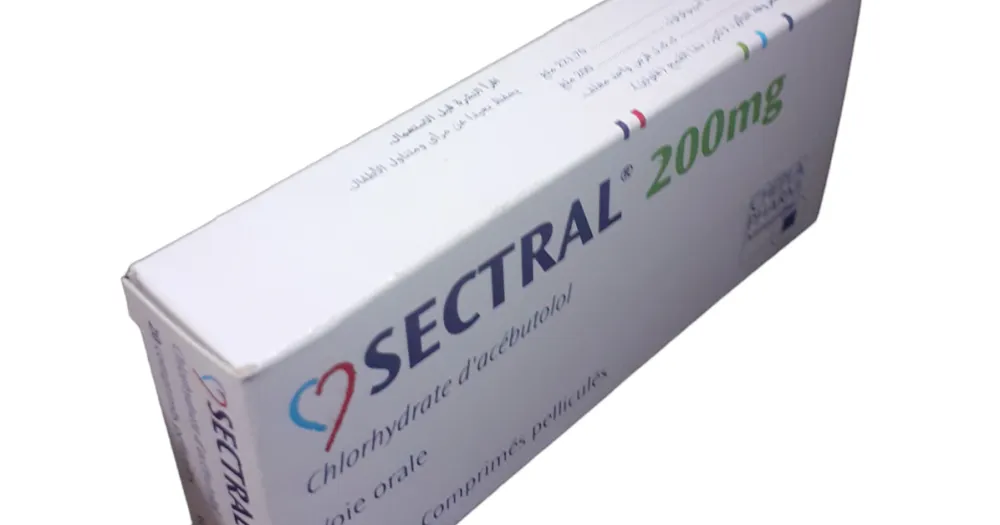
Table of Contents
Patient Information Leaflet
Sectral 400 mg film-coated tablets
acebutolol
Please read all of this leaflet carefully before taking this medicine, as it contains important information for you.
- Keep this leaflet. You may need to read it again.
- If you have any questions, ask your doctor or pharmacist.
- This medicine has been prescribed for you only. Do not give it to others, even if their symptoms are the same as yours, as it could be harmful.
- If you experience any side effects, including those not listed in this leaflet, contact your doctor or pharmacist. See section 4.
Contents of this leaflet:
- What Sectral is and what it is used for
- What you need to know before taking Sectral
- How to take Sectral
- Possible side effects
- How to store Sectral
- Contents of the pack and other information
1. What Sectral is and what it is used for
Sectral contains the active substance acebutolol, which belongs to a class of medicines called
"Selective beta-blockers". It works by lowering blood pressure (antihypertensive medicine).
Sectral is indicated for the treatment of:
- high blood pressure (arterial hypertension) of any type and severity,
- severe chest pain known as "angina pectoris",
- increased heart rate (supraventricular tachyarrhythmias: sinus tachycardia, fibrillation, extrasystolic arrhythmias, atrial flutter; ventricular tachycardia),
- certain irregularities in heart rhythm (arrhythmias due to digitalis overdose, rhythm disturbances caused by adrenergic overstimulation).
2. What you should know before taking Sectral
Do not take Sectral
- if you are allergic to the active substance or to any of the other ingredients of this medicine (listed in section 6),
- if you have serious heart problems (cardiogenic shock, second- or third-degree atrioventricular block, sino-atrial node syndrome, sino-atrial block, decompensated heart failure),
- if you have very low blood pressure (especially if systolic pressure is ≤100 mmHg and diastolic pressure is ≤60 mmHg),
- if you have a marked slowing of the heartbeat (marked bradycardia <45–50 bpm),
- if you have an imbalance in blood acid levels (metabolic acidosis),
- if you have severe circulation problems in the limbs (peripheral arterial disease and Raynaud's phenomenon),
- if you have an untreated tumour called “pheochromocytoma”,
- if you have bronchial hyperreactivity, such as in bronchial asthma or severe chronic obstructive pulmonary disease.
Warnings and precautions
Take this medicine exactly as instructed by your doctor or pharmacist. If you have
any doubts, consult your doctor or pharmacist.
- If you have kidney problems (renal insufficiency), Sectral will be prescribed with careful attention to dosage (the frequency of administration should not exceed once daily, and your dose will be reduced according to kidney function).
- If you suffer from liver problems, especially if you have severe impairment of both liver and kidney function (concomitant severe hepatic and renal insufficiency), you must be very cautious when using Sectral due to the possible accumulation of the medicine in the blood.
- Sectral, like all medicines in the same class (beta-blockers), may cause a slowing of the heartbeat (bradycardia); in such a case, your doctor will reduce the recommended dose.
- Take Sectral and all medicines in the same class (beta-blockers) with great caution if you suffer from certain heart conditions (compensated heart failure, Prinzmetal's angina). Discontinuation of beta-blocker therapy must be done gradually by reducing the dose.
- If you suffer from circulation problems in the limbs (peripheral circulatory disorders), be cautious when using Sectral and other medicines in the same class (beta-blockers), as they may worsen these conditions.
- Sectral and medicines in the same class (beta-blockers) may mask symptoms of severe thyroid gland disorders (thyrotoxicosis).
- Take Sectral with particular caution if you have diabetes with large fluctuations in blood sugar levels (glycaemia), if you are fasting strictly, or engaging in intense physical exercise, as you may experience a significant drop in blood sugar (severe hypoglycaemia). Signs of low blood sugar (particularly increased heart rate) may be masked during treatment with Sectral.
If you suffer from a type of tumour called “pheochromocytoma”, your doctor will prescribe Sectral only if you are
also taking medicines known as “alpha-adrenergic agents”.
- If you suffer from a severe skin disease called “psoriasis”, your doctor will prescribe Sectral and medicines in the same class (beta-blockers) only after careful evaluation, as psoriasis may worsen.
- Sectral and medicines in the same class (beta-blockers) may increase both sensitivity to substances causing allergies (allergens) and the severity of allergic reactions (anaphylactic reactions). If you have had severe allergic reactions (hypersensitivity) or are undergoing allergy treatment (desensitization therapy), your doctor will prescribe Sectral only if strictly necessary.
- Beta-blockers may reduce reflex tachycardia and increase the risk of low blood pressure (hypotension). If your doctor decides to discontinue Sectral before surgery, treatment should be stopped for at least 24 hours. Continuing therapy reduces the risk of heart rhythm disturbances (arrhythmias), cardiac ischemia, and hypertension relapse, but increases the risk of low blood pressure (hypotension). If your doctor decides to continue treatment, the anaesthetist must be informed that you are taking Sectral.
- If you suffer from respiratory disorders (airway obstructive disease), your doctor will prescribe Sectral only if strictly necessary.
- When you need to stop taking Sectral, your doctor will gradually reduce the dose, especially if you suffer from serious heart disease (ischemic heart disease).
- During treatment with Sectral, you may develop blood disorders manifesting as reddish spots on the skin (thrombocytopenic and non-thrombocytopenic purpura); if you experience these symptoms, inform your doctor.
- Use Sectral with caution if you wear contact lenses, as you may experience dry eyes.
- In elderly patients, Sectral has been used without the need for dose adjustment. However, your doctor may prescribe lower maintenance doses.
Other medicines and Sectral
Inform your doctor or pharmacist if you are taking, have recently taken, or might take any
other medicine.
Sectral may be affected by or may affect the following medicines.
-
Do not use Sectral in combination with verapamil (used for high blood pressure), and wait several days after stopping verapamil before starting Sectral (and vice versa). Use Sectral with great caution together with other medicines in the same class as verapamil (calcium antagonists), particularly diltiazem. An increased risk of depression has been reported when beta-blockers are administered with diltiazem (see “Undesired effects”).
-
Use particular caution if you take Sectral together with medicines used to regulate heart rhythm (cardio-depressant antiarrhythmics, e.g. quinidine), anaesthetics, or morphine (used for pain), if you have diabetes and are taking medicines to lower blood sugar (hypoglycaemics).
-
Medicines used to regulate heart rhythm (Class I antiarrhythmics), such as disopyramide and amiodarone, may cause cardiac effects (prolonged atrial conduction time and negative inotropic effects) when administered concurrently with medicines in the same class as Sectral (beta-blockers).
-
If you take Sectral (or medicines in the same class as Sectral) together with clonidine (used for high blood pressure), continue clonidine treatment for several days after stopping Sectral. Abrupt discontinuation of clonidine during Sectral treatment may cause excessive increases in blood pressure.
-
Concomitant treatment with Sectral and medicines acting on the heart (cardiac glycosides), reserpine (used for high blood pressure and some mental illnesses), alpha-methyldopa, guanethidine, and guanfacine (used for high blood pressure) may lead to severe slowing of the heartbeat or other heart problems (conduction delays).
-
Concomitant use of fingolimod (used for multiple sclerosis) with Sectral and medicines in the same class (beta-blockers) is not recommended, as this combination may increase the heart-slowing effects (bradycardic effects) of fingolimod. If your doctor considers this co-administration necessary, you will be closely monitored at the start of treatment and at least until the following morning.
-
Concomitant use of Sectral and medicines called “calcium antagonists”, used for high blood pressure, such as nifedipine, may also cause a greater drop in blood pressure and,
occasionally, the onset of serious heart problems (bradycardia, hypotension, and heart failure). -
Sectral and medicines in the same class (beta-blockers) may enhance the blood sugar-lowering effect (hypoglycaemic effect) of insulin and oral antidiabetic medicines. If you have diabetes (labile or insulin-dependent diabetes), your doctor may consider it necessary to reduce the dose of substances used to lower blood sugar (such as insulin and oral antidiabetic agents). However, medicines in the same class as Sectral are also known to reduce the effect of glibenclamide (used to lower blood sugar).
-
Sectral may counteract the action of medicines used to dilate the bronchi (sympathomimetic bronchodilators and xanthines).
-
Concurrent use of digoxin (used for heart problems) and medicines similar to Sectral (beta-blockers) may sometimes lead to a severe slowing of the heartbeat (bradycardia).
-
Anti-inflammatory medicines, such as non-steroidal anti-inflammatory drugs (NSAIDs) and indomethacin, may reduce the effect of Sectral.
-
Concurrent administration of Sectral with antidepressants (tricyclic antidepressants), barbiturates, phenothiazines (used for mental illnesses), and other antihypertensive medicines may increase the blood pressure-lowering effect of Sectral and medicines in the same class (beta-blockers).
-
There is a risk that concurrent administration of certain antidepressants (monoamine oxidase inhibitors, MAOIs) and high doses of Sectral or medicines in the same class (beta-blockers) may cause increased blood pressure (hypertension).
-
If you are to undergo general anaesthesia, the anaesthetist must be informed, as the use of anaesthetic agents such as ether, cyclopropane, and trichloroethylene may cause heart problems.
-
Avoid combining Sectral with “rauwolfia alkaloids” and their derivatives (used for high blood pressure).
-
Sectral may alter the results of certain laboratory tests (determination of urinary 17-ketosteroids and urinary methoxylated catecholamine derivatives).
-
Concomitant use of Sectral and painkillers (narcotics) may cause a greater drop in blood pressure.
-
A harmful increase in blood pressure may occur during simultaneous administration of Sectral with “noradrenaline” or “adrenaline”.
-
Medicines known to cause heart rhythm disturbances: concomitant use with beta-blockers such as Sectral may cause conduction block in the heart's electrical signal.
Pregnancy and breastfeeding
If you are pregnant, think you may be pregnant, are planning a pregnancy, or are breastfeeding, consult your
doctor or pharmacist before taking this medicine.
Pregnancy
Do not use Sectral during the first three months of pregnancy unless your doctor considers it essential.
In such cases, your doctor will prescribe the lowest possible dose.
Do not use Sectral during the last months of pregnancy, as medicines in the same class as Sectral (beta-
blockers) administered during late pregnancy may cause reduced heart rate (bradycardia), low blood sugar
(hypoglycaemia), and lung or heart complications in the fetus/newborn.
Medicines in the same class as Sectral (beta-blockers) may reduce blood flow (perfusion) to the placenta, which
may lead to fetal death in utero, premature birth, and immature newborns.
If your doctor decides that continuing Sectral treatment is necessary for your health, treatment must be
discontinued at least 48–72 hours before the expected delivery date, otherwise there is a risk of reduced
heart rate (bradycardia), low blood pressure (hypotension), low blood sugar (hypoglycaemia), and respiratory
depression (neonatal asphyxia) in the newborn.
If Sectral treatment cannot be stopped before delivery, the newborn will be closely monitored during the
first 48–72 hours of life.
Breastfeeding
Sectral passes into breast milk.
Do not use Sectral during breastfeeding.
Driving and using machines
Sectral may occasionally cause dizziness and fatigue.
Take this into account if you need to drive or operate machinery.
Sectral contains lactose
If your doctor has diagnosed you with an intolerance to certain sugars, contact them before taking this
medicine.
Sectral contains wheat starch
This medicine contains only a very small amount of gluten (from wheat starch).
This medicine is considered “gluten-free” and is very unlikely to cause problems if you have coeliac disease.
One tablet of Sectral (400 mg of acebutolol) contains no more than 4 micrograms of gluten.
If you are allergic to wheat (a condition different from coeliac disease), do not take this medicine.
For those engaged in sports:
Using this medicine without therapeutic need constitutes doping and may lead to a positive anti-doping test.
3. How to take Sectral
Take this medicine exactly as prescribed by your doctor or pharmacist. If you have
any doubts, consult your doctor or pharmacist.
Swallow the tablets whole with a small amount of liquid, preferably before meals.
For the treatment of high blood pressure (hypertension)
The recommended dose is:
Initially 400 mg daily by mouth, as a single dose or in two 200 mg doses.
If the response is not adequate, your doctor may increase your dose to 800–1200 mg daily, divided into
2–3 doses.
For the treatment of angina pectoris
The recommended dose is:
Usually 400 mg daily by mouth, in 1–2 doses.
In more severe cases, your doctor may increase your dose to 800 mg daily, divided into 2–4 doses.
For the treatment of heart rhythm disorders (cardiac arrhythmias)
Your doctor will advise you to start oral therapy with a dose of 200 mg (half a tablet).
Oral administration of Sectral reaches its full effect approximately three hours after intake.
Usually, 400 mg daily (two doses of 200 mg) is sufficient, but some people may require a dose of 600 mg daily (three doses of 200 mg).
Patients with kidney or liver disease (impaired renal or hepatic function):
Follow your doctor’s instructions very carefully.
If you take more Sectral than you should
The symptoms you may experience if you take more Sectral than prescribed depend particularly on the condition of your heart.
If you suffer from severe heart problems (marked heart failure), even low doses may worsen your heart condition. The main symptoms you may experience are: fatigue, loss of consciousness, pupil dilation, and occasionally seizures. Other possible effects include:
low blood pressure (hypotension), slowing of the heart rate (bradycardia), progressing to severe heart rhythm disturbances (asystole), and other heart problems (conduction disorders: on ECG, supraventricular or ventricular escape rhythms are often seen, or there may be a complete block in the heart's electrical signal conduction), potentially leading to severe impairment of heart function (heart failure) and shock, which may manifest as narrowing of blood vessels (peripheral vasoconstriction) and narrowing of the airways (bronchospasm).
Stop treatment immediately if you take more Sectral than prescribed (overdose) or if you experience a sudden drop in heart rate or blood pressure, and contact your doctor promptly.
If you forget to take Sectral
Do not take a double dose to make up for the forgotten dose.
If you have any doubts about how to use this medicine, consult your doctor or pharmacist.
4. Possible side effects
Like all medicines, this medicine can cause side effects, although not everyone experiences them.
The most common side effects of Sectral affect the heart, the nervous system, and blood vessels (due to beta-adrenergic blockade), as well as fatigue, and gastrointestinal disorders.
The most serious side effects are heart-related abnormalities (heart failure, atrioventricular block) and bronchial constriction (bronchospasm).
As with all medicines of the same class as Sectral (beta-blockers), abruptly stopping treatment may worsen chest pain (angina pectoris). Pay particular attention if you have a heart condition known as "cardiac ischemia".
Very common side effects (may affect more than 1 in 10 people)
- positivity in a blood test called "anti-nuclear antibody",
- fatigue,
- stomach and intestinal disorders.
Common side effects (may affect up to 1 in 10 people)
- depression,
- nightmares,
- dizziness,
- headache (cephalalgia),
- blurred vision,
- difficulty breathing (dyspnoea),
- nausea,
- diarrhoea,
- skin rashes,
- itching,
- sweating.
Uncommon side effects (may affect up to 1 in 100 people)
- skin inflammation and skin disorders (lupus-like syndrome),
- changes in heart rhythm (palpitations),
- loss of consciousness (syncope).
Rare side effects (may affect up to 1 in 1000 people)
- changes in heart rhythm (arrhythmia),
- dry mouth,
- loss of appetite (anorexia),
- changes in certain liver blood tests (increased alkaline phosphatase, hyperbilirubinemia, increased SGOT and SGPT),
- skin disease called "psoriasis", skin redness resembling psoriasis, worsening of psoriasis,
- impotence,
- decreased sexual desire (decreased libido),
- decreased potassium levels in the blood (hypokalaemia),
- diabetes (precipitated or worsened diabetes mellitus),
- increased blood lipids (hyperlipidaemia),
- decreased cholesterol (reduction in HDL),
- decreased blood sugar (hypoglycaemia).
Side effects with unknown frequency (frequency cannot be estimated from available data)
- psychological disorders (psychosis),
- hallucinations,
- confusion,
- loss of sexual desire (loss of libido),
- sleep disorders,
- altered sensation in certain areas of the body (paraesthesia),
- disorders of the Nervous System (Central Nervous System),
- changes in movement, emotions, and behaviour (catatonia),
- memory disturbances,
- dry eyes,
- heart disorders (heart failure, first-degree atrioventricular block, worsening of existing atrioventricular block),
- decreased heart rate (bradycardia), when your heartbeat becomes very slow or stops. Dizziness may occur, and you may feel unusually tired and short of breath. This condition may particularly occur in people over 65 years of age or in those with pre-existing heart rhythm problems,
- difficulty walking (intermittent claudication),
- blood vessel disorder called "Raynaud's syndrome",
- bluish discolouration of limbs (peripheral cyanosis) and cold extremities,
- low blood pressure (hypotension),
- pneumonia, even severe,
- presence in the lungs of cells originating from other organs (pulmonary infiltration),
- narrowing of the bronchial lumen (bronchospasm),
- worsening of asthma,
- vomiting,
- liver damage (mainly hepatocellular liver injury),
- increase in certain liver blood tests (elevated liver enzymes),
- disorders due to treatment discontinuation (withdrawal syndrome),
- blood disorder called "thrombocytopenic purpura",
- decrease in certain white blood cells (granulocytopenia),
- weakness (asthenia),
- severe muscle weakness (myasthenia),
- muscle cramps.
If you experience bronchial constriction (bronchospasm), a blood disorder called "thrombocytopenic purpura", changes in certain white blood cells (granulocytopenia), or skin rashes (cutaneous rash), your doctor will discontinue your treatment and provide appropriate therapy.
Reporting of side effects
If you experience any side effect, including those not listed in this leaflet, talk to your doctor or pharmacist. You may also report side effects directly via the national reporting system at the following website:
https://www.aifa.gov.it/content/segnalazioni-reazioni-avverse.
By reporting side effects, you can help provide more information on the safety of this medicine.
5. How to store Sectral
Keep this medicine out of the sight and reach of children.
This medicine does not require any special storage conditions.
Do not use this medicine after the expiry date stated on the pack after "Exp". The expiry date refers to the last day of that month.
Do not dispose of any medicine via wastewater or household waste. Ask your pharmacist how to dispose of medicines you no longer use. This will help protect the environment.
6. Package contents and other information
What Sectral contains
- The active substance is acebutolol. One tablet contains 443.4 mg of acebutolol hydrochloride equivalent to 400 mg of acebutolol.
- The other components are: wheat starch, povidone, anhydrous colloidal silica, talc, magnesium stearate, macrogols, hypromellose, lactose.
Description of the appearance of Sectral and package contents
Sectral is available as film-coated tablets.
- Box containing 30 tablets
Marketing Authorization Holder
CHEPLAPHARM Arzneimittel GmbH, Ziegelhof 24, 17489 Greifswald, Germany
Manufacturer
Sanofi-aventis, S.A. - Ctra. C-35 (La Batllòria-Hostalric) Km. 63.09 - 17404 Riells i Viabrea (Girona) - Spain