Schollmed onychomycosis
Italy
Table of Contents
- Patient Information Leaflet: Information for the User
- Schollmed Onychomycosis Nail Medicated Polish
- 1. What Schollmed Onicomicosi is and what it is used for
- 2. What you need to know before using Schollmed Onychomycosis
- 3. How to use Schollmed Onicomicosi
- 4. Possible side effects
- 5. How to store Schollmed Onychomycosis
- 6. Package contents and other information
Patient Information Leaflet: Information for the User
Schollmed Onychomycosis Nail Medicated Polish
Amorolfine
Please read this leaflet carefully before using this medicine because it contains important information for you.
Always use this medicine exactly as described in this leaflet or as your doctor or pharmacist has instructed you.
This medicine is available without a prescription. However, Schollmed Onychomycosis should be used carefully to achieve the best results.
- Keep this leaflet. You may need to read it again.
- If you need more information or advice, consult your pharmacist.
- If you experience any side effects, including those not listed in this leaflet, contact your doctor or pharmacist. See section 4.
- Consult your doctor if you do not notice improvement or if symptoms worsen after 3 months.
Contents of this leaflet
- What Schollmed Onychomycosis is and what it is used for
- What you need to know before using Schollmed Onychomycosis
- How to use Schollmed Onychomycosis
- Possible side effects
- How to store Schollmed Onychomycosis
- Contents of the pack and other information
1. What Schollmed Onicomicosi is and what it is used for
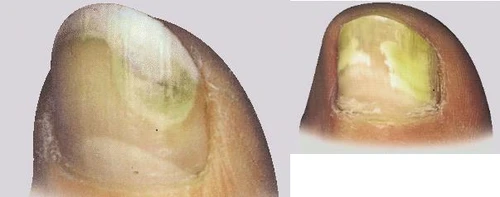
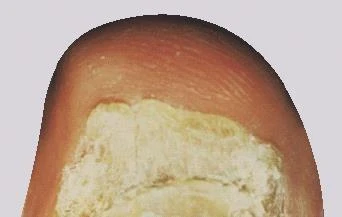
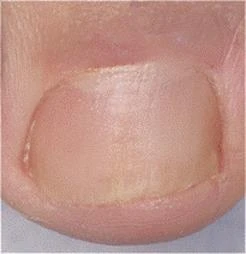
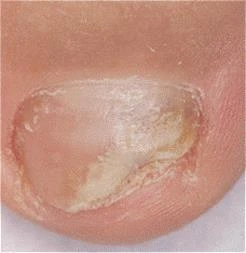
- Schollmed Onicomicosi is used to treat fungal infections affecting no more than two nails and involving the upper or lateral part of the nail (as shown in the first picture below). If the infection looks more like image 2 or 3, you should consult your doctor.
- The active substance in Schollmed Onicomicosi is amorolfine (as hydrochloride), which belongs to a group of medicines known as antifungals.
- Schollmed Onicomicosi kills a wide variety of fungi that can cause nail infections. A nail affected by a fungal infection is likely to become discoloured (white, yellow or brown), ridged or brittle, although its appearance may vary considerably, as shown in the following images:
2. What you need to know before using Schollmed Onychomycosis
Do not use Schollmed Onychomycosis
- if you are allergic (hypersensitive) to the active substance (amorolfine) or to any of the other components of Schollmed Onychomycosis (listed in section 6).
- if you are under 18 years of age.
Warnings and precautions
This medicine may cause allergic reactions, some of which may be serious. If this occurs,
discontinue application of the product, immediately remove the product using nail polish remover or the cleansing pads provided in the package, and consult your doctor. The product must not be reapplied.
Seek urgent medical attention if you experience any of the following symptoms:
- you have difficulty breathing;
- your face, lips, tongue or throat swell;
- your skin develops a severe rash.
Consult your doctor or pharmacist before using Amorolfine,
- if you have diabetes;
- if you are being treated for immune system disorders;
- if you have circulatory problems in hands or feet;
- if the nail is severely damaged or infected.
If Schollmed Onychomycosis comes into contact with eyes or ears, rinse immediately with water and contact your doctor, pharmacist, or go to the nearest hospital.
Avoid contact of the nail lacquer with mucous membranes (e.g. mouth and nostrils). Do not inhale it.
Wear waterproof gloves when using organic solvents, to avoid removing the nail lacquer.
This medicine contains 55.4% w/w alcohol (ethanol).
It may cause a burning sensation on damaged skin.
Other medicines and Schollmed Onychomycosis
You may use the nail lacquer while taking other medicines.
Other nail products
Artificial nails must not be used during treatment with Schollmed Onychomycosis.
Cosmetic nail polish may be applied at least 10 minutes after application of Schollmed Onychomycosis.
Before reapplying Schollmed Onychomycosis, carefully remove any residual nail lacquer and cosmetic nail polish, then file the affected nail as needed and clean it with the cleansing pad provided in the package.
Pregnancy and breastfeeding
You must not use Schollmed Onychomycosis if you are pregnant, suspect you may be pregnant, are planning a pregnancy, or are breastfeeding. Your doctor will decide whether you can use Schollmed Onychomycosis.
Ask your doctor or pharmacist for advice before using any medicine.
3. How to use Schollmed Onicomicosi
Use this medicinal product exactly as instructed by your doctor or pharmacist. If you have
any doubts, consult your doctor or pharmacist.
Adults and elderly
Before starting treatment
Mark on the diagram below the affected area of the nail with fungal infection. This will help
you remember, during follow-up visits, how the nail looked before treatment began. Every three
months, update the diagram to show the appearance of the affected area until the infected nail has completely regrown. If more than one nail is affected, use the most severely damaged nail as reference. Bring this leaflet along to consultations with your pharmacist or podiatrist during follow-up visits to inform them about the treatment progress.
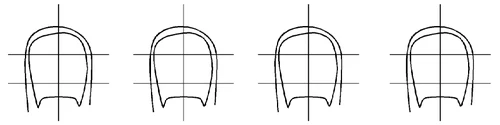
Before treatment Three Months Six Months Nine Months
Instructions for use
- Treat infected nails as described below. THE NAILS MUST BE TREATED ONCE A WEEK.
- The weekly application should continue for 6 months for fingernails and from 9 to 12 months for toenails. A treatment review is recommended approximately every three months.
- Nails grow slowly, so it may take 2 to 3 months before improvement becomes noticeable.
- It is important to continue treatment with the medicated nail lacquer until the infection has completely resolved and the nail has fully regenerated.
- The following steps should be strictly followed for each affected nail:
| Step 1: Filing the nail Before starting treatment, file the infected area of the nail as much as possible, including the surface, using the nail file provided. WARNING: do not use the file used for infected nails on healthy nails, as this could spread the infection. To prevent spreading the infection, the file supplied in the kit must not be used by anyone else. |  |
| Step 2: Cleaning the nail Use one of the cleaning pads supplied (or nail polish remover) to clean the nail surface. Repeat the procedure described in steps 1 and 2 for each infected nail. |  |
| Step 3: Applying the medicated nail polish Dip one of the reusable applicators into the nail polish bottle. Do not wipe the applicator against the neck of the bottle before application. Apply the nail polish evenly over the entire nail surface. Repeat this step for each infected nail. Allow the treated nail(s) to dry for approximately 3 minutes. |  |
| Step 4: Cleaning the applicator The applicators provided are reusable. However, it is important to clean them thoroughly after each application, using the cleaning pad previously used to clean the nail. Avoid touching the treated nail with the cleaning pad. Close the nail polish bottle tightly. Dispose of the cleaning pad carefully as it is flammable. |  |
- Nail polish can be applied at least 10 minutes after applying Schollmed Onychomycosis.
- Before reapplying the nail polish, remove any previously applied polish or other cosmetic nail polish using a cleansing pad, and file the nails again if necessary.
- Clean the nails with a pad and reapply the nail polish as described above.
- Once dry, the nail polish is resistant to soap and water, so you may wash your hands and feet as usual. However, if you need to use chemical substances such as solvents or turpentine, you should wear rubber or other waterproof (water-resistant) gloves to protect the nail polish on your nails.
- It is important to continue treatment with the nail polish until the infection has completely resolved and the nail has fully regenerated. Approximately 6 months of treatment are required for fingernails and 9 to 12 months for toenails. You will see healthy nail growing as the infected portion diminishes.
If Schollmed Onychomycosis is accidentally swallowed
If you or someone else accidentally swallows the medicated nail polish, contact your doctor, pharmacist, or go immediately to the nearest hospital.
If you forget to use Schollmed Onychomycosis
Do not worry if you forget to apply the nail polish at the correct time. When you remember, simply resume using the product as before.
If you stop treatment with Schollmed Onychomycosis
Do not stop treatment with Schollmed Onychomycosis until the nail has improved, otherwise the infection may recur. If you have any doubts about using this medicine, consult your doctor or pharmacist.
4. Possible side effects
Like all medicines, Schollmed Onychomycosis can cause side effects, although not everyone experiences them.
Rare side effects (may affect up to 1 in 1,000 people)
Your nails may discolour, break, or become brittle.
Very rare side effects (may affect up to 1 in 10,000 people)
A burning sensation around the nail area may occur.
Frequency not known (frequency cannot be estimated from the available data)
Redness, itching, hives, blisters, and skin allergic reaction (contact dermatitis).
Reporting of side effects
If you experience any side effect, including those not listed in this leaflet, please consult your doctor or pharmacist. You may also report side effects directly through the national reporting system at https://www.aifa.gov.it/content/segnalazioni-reazioni-avverse. By reporting side effects, you can help provide more information on the safety of this medicine.
5. How to store Schollmed Onychomycosis
- Keep this medicine out of the sight and reach of children.
- Do not use Schollmed Onychomycosis after the expiry date stated on the packaging. The expiry date refers to the last day of that month.
- Store below 30°C. Keep the medicine away from heat sources.
- After use, keep the bottle tightly closed and in an upright position.
Flammable substance! Keep the solution away from fire and flames!
Do not dispose of medicines via wastewater or household waste. Ask your pharmacist how to dispose of medicines you no longer use. This will help protect the environment.
6. Package contents and other information
What Schollmed Onychomycosis contains
1 ml of Schollmed Onychomycosis contains 55.74 mg of amorolfine hydrochloride (equivalent to 50 mg of
amorolfine).
The other components are Eudragit RL 100 (ammonium methacrylate copolymer type A), triacetin,
butyl acetate, ethyl acetate and ethanol (anhydrous) 55.4% w/w.
Description of the appearance of Schollmed Onychomycosis and contents of the pack
Schollmed Onychomycosis is a clear solution, colourless to pale yellow. It is available in 2.5 ml and 3 ml bottles; one pack contains 1 bottle, 30 cleansing pads, 10 reusable applicators and 30 nail files.
Not all pack sizes may be marketed.
Marketing Authorization Holder
Scholl’s Wellness Company srl – Corso Vercelli 40 – 20145 Milan, Italy
Manufacturer
Chanelle Medical, Dublin Road, Loughrea, Co Galway, H62FH90, Ireland
This medicinal product is authorised in the European Economic Area countries under the following names:
Portugal: Amorolfina Schollmed
United Kingdom: Amorolfine 5 % w/v Medicated Nail Lacquer
Belgium: Amorolfine Schollmedical 50mg/ml, nagellak
Germany: Amorolfin Scholl gegen Nagelpilz Behandlungsset
Austria: Amorolfin Schollmed gegen Nagelpilz Behandlungsset, 50 mg/ml wirkstoffhaltiger Nagellack
Greece: SchollMed Fungal Nail 5% w/v φαρμακευτικό βερνίκι νυχιών
Poland: Scholl Zestaw na grzybicę paznokci
This Patient Information Leaflet was last revised on: