Scandonest
Italy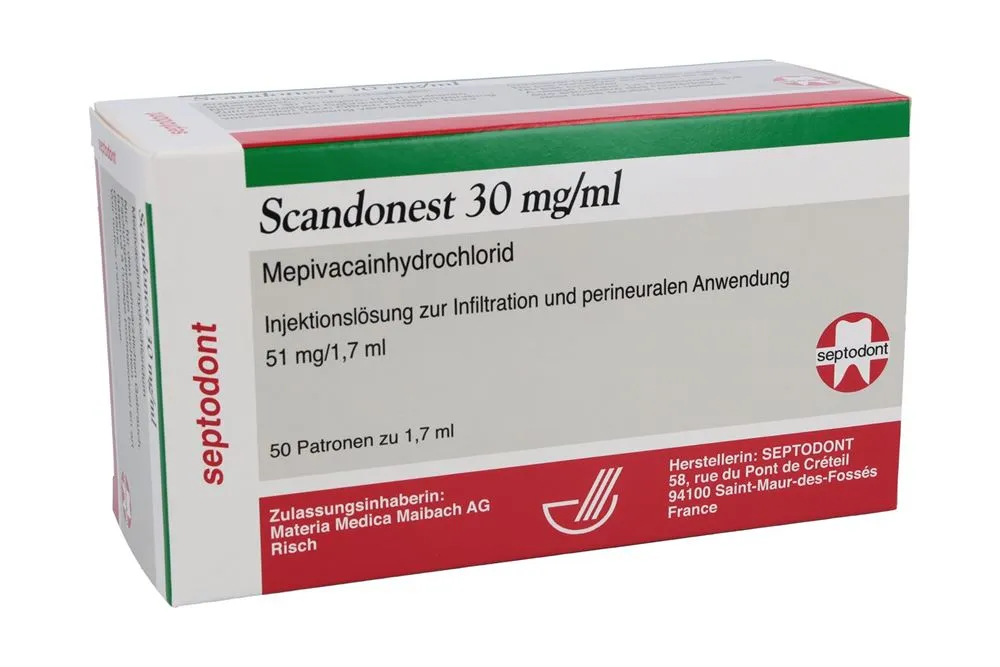
Table of Contents
- Package leaflet: information for the patient
- SCANDONEST 3% injectable solution
- 1. What SCANDONEST 3% is and what it is used for
- 2. What you need to know before using SCANDONEST 3%
- 3. How to use SCANDONEST 3%
- 4. Possible side effects
- 5. How to store SCANDONEST 3%
- 6. Package contents and other information
- Patient Information Leaflet: Information for the User
- SCANDONEST 2% with Adrenaline 1:100,000 injectable solution
- 1. What SCANDONEST is and what it is used for
- 2. What you need to know before using SCANDONEST
- 3. How to use SCANDONEST
- 4. Possible adverse reactions
- 5. How to store SCANDONEST
- 6. Package contents and other information
PACKAGE LEAFLET
Package leaflet: information for the patient
SCANDONEST 3% injectable solution
Mepivacaine hydrochloride
Please read this leaflet carefully before using this medicine because it contains important information for you.
- Keep this leaflet. You may need to read it again.
- If you have any questions, consult your doctor, dentist or pharmacist.
- This medicine has been prescribed for you only. Do not give it to others, even if their symptoms are the same as yours, as it could be harmful.
- If you experience any side effects, including those not listed in this leaflet, contact your doctor, dentist or pharmacist. See section 4.
Contents of this leaflet:
- What SCANDONEST 3% is and what it is used for
- What you need to know before using SCANDONEST 3%
- How to use SCANDONEST 3%
- Possible side effects
- How to store SCANDONEST 3%
- Contents of the pack and other information
1. What SCANDONEST 3% is and what it is used for
SCANDONEST 3% is a local anaesthetic that numbs a specific area to prevent or minimize pain. The medicine is used in local dental procedures in adults, adolescents, and children over 4 years of age (approximately 20 kg body weight). It contains the active substance mepivacaine hydrochloride and belongs to the group of anaesthetics of the nervous system.
2. What you need to know before using SCANDONEST 3%
Do not use SCANDONEST 3%:
- If you are allergic to mepivacaine or to any of the other ingredients of this medicine (listed in section 6);
- If you are allergic to other local anaesthetics of the same group (e.g. lidocaine, bupivacaine);
- If you have:
- Heart disorders due to electrical impulse abnormalities causing heartbeat irregularities (severe conduction disorders);
- Epilepsy not adequately controlled by treatment;
- In children under 4 years of age (approximately 20 kg body weight).
Warnings and precautions
Talk to your dentist before using SCANDONEST 3% if you have any of the following conditions:
- Heart disorders;
- Severe anaemia;
- High blood pressure (severe or untreated hypertension);
- Low blood pressure (hypotension);
- Epilepsy;
- Liver disease;
- Kidney disease;
- A disease affecting the nervous system causing neurological disturbances (porphyria);
- High acidity in the blood (acidosis);
- Circulatory problems;
- General health impairment;
- Inflammation or infection at the injection site.
If any of these conditions apply to you, inform your dentist, who may decide to administer a reduced dose.
Other medicines and SCANDONEST 3%
Inform your dentist if you are currently taking, have recently taken, or might take any other medicines, especially:
- Other local anaesthetics;
- Medicines used to treat heartburn and stomach or intestinal ulcers (such as cimetidine);
- Tranquillisers and sedatives;
- Medicines used to stabilise heart rhythm (antiarrhythmics);
- Cytochrome P450 1A2 inhibitors;
- Medicines used to treat hypertension (propranolol).
SCANDONEST 3% and food
Avoid eating, including chewing gum, until normal sensation returns, as there is a risk of biting the lips, cheeks or tongue, especially in children.
Pregnancy, breastfeeding and fertility
If you are pregnant, think you may be pregnant, planning to become pregnant, or are breastfeeding, consult your doctor, dentist or pharmacist before using this medicine.
As a precautionary measure, it is preferable to avoid using this medicine during pregnancy unless necessary.
Breastfeeding mothers are advised not to breastfeed for 10 hours after anaesthesia with this product.
Driving and using machines
This medicine may have minimal effects on the ability to drive and operate machinery.
Dizziness (including vertigo, visual disturbances and fatigue) and loss of consciousness may occur after administration of this medicine (see section 4). You should not leave the dental office until you are certain these effects have subsided (usually within 30 minutes) following the dental procedure.
SCANDONEST 3% contains sodium.
This medicine contains 24.67 mg of sodium per 10 ml (maximum recommended dose). This is equivalent to 1.23% of the maximum daily recommended dietary intake of sodium for an adult.
3. How to use SCANDONEST 3%
SCANDONEST 3% must be used only by, or under the supervision of, dentists,
oral surgeons, or other qualified physicians, via slow topical injection.
They will determine the appropriate dose according to the procedure, age, weight, and general health status.
The lowest effective dose that provides adequate anesthesia should be used.
The medicine is administered by injection into the oral cavity.
If you use more SCANDONEST 3% than you should
The following symptoms may be signs of toxicity due to excessive doses of local anesthetics:
agitation, numbness of the lips and tongue, tingling and prickling sensations around the mouth, dizziness, visual and auditory disturbances, tinnitus, muscle stiffness and twitching, low blood pressure, slow or irregular heartbeat. If any of these symptoms occur, stop administration immediately and seek urgent medical attention.
If you have further questions about the use of this medicine, consult your doctor or dentist.
4. Possible side effects
Like all medicines, this medicine can cause side effects, although not everyone experiences them.
After administration of SCANDONEST 3%, one or more of the following side effects may occur:
Common side effects (may affect up to 1 in 10 people):
- Headache
Rare side effects (may affect up to 1 in 1,000 people):
- Rash, itching, swelling of the face, lips, gums, tongue and/or throat, breathing difficulties, wheezing/asthma, hives: these could be symptoms of hypersensitivity reactions (allergic or pseudoallergic reactions);
- Pain due to nerve damage (neuropathic pain);
- Burning sensation, skin prickling, tingling without apparent physical cause around the mouth (paresthesia);
- Abnormal sensation inside and around the mouth (hypoesthesia);
- Metallic taste, altered taste, loss of taste (dysgeusia);
- Dizziness (vertigo);
- Tremor;
- Loss of consciousness, convulsion, coma;
- Fainting;
- Confusion, disorientation;
- Speech disorders, excessive talkativeness;
- Restlessness, agitation;
- Impaired sense of balance (imbalance);
- Drowsiness;
- Blurred vision, difficulty focusing clearly on an object, visual impairment;
- Sensation of spinning (vertigo);
- Inability of the heart to contract effectively (cardiac arrest), rapid and irregular heartbeats (ventricular fibrillation), severe crushing chest pain (angina pectoris);
- Problems coordinating heart rhythm (conduction disorders, atrioventricular block), abnormally slow heartbeat (bradycardia), abnormally fast heartbeat (tachycardia), palpitations;
- Low blood pressure;
- Increased blood flow (hyperemia);
- Breathing difficulties such as shortness of breath, abnormally slow or very rapid breathing;
- Yawning;
- Feeling unwell, vomiting, mouth or gum ulcers, swelling of the tongue, lips or gums;
- Excessive sweating;
- Muscle contractions;
- Chills;
- Swelling at the injection site.
Very rare side effects (may affect up to 1 in 10,000 people):
- High blood pressure.
Not known (frequency cannot be estimated from the available data):
- Euphoric mood, anxiety/nervousness;
- Involuntary eye movements, eye problems such as constricted pupil, drooping of the upper eyelid (as in Horner's syndrome), dilated pupil, posterior displacement of the eyeball within the orbit due to changes in orbital volume (called enophthalmos), double vision or loss of vision;
- Ear disorders, such as ringing in the ears (tinnitus), increased sensitivity to sound;
- Inability of the heart to contract effectively (myocardial depression);
- Widening of blood vessels (vasodilation);
- Changes in skin color accompanied by confusion, cough, rapid heartbeat, rapid breathing, sweating: these could be symptoms of tissue oxygen deficiency (hypoxia);
- Rapid or difficult breathing, drowsiness, headache, inability to think clearly, and drowsiness, which may be signs of high carbon dioxide concentration in the blood (hypercapnia);
- Altered voice (hoarseness);
- Swelling of the mouth, lips, tongue and gums, increased salivation;
- Fatigue, feeling of weakness, sensation of warmth, pain at the injection site;
- Nerve injury.
Reporting of side effects
If you experience any side effect, including those not listed in this leaflet, consult your doctor or dentist.
You can also report side effects directly via the website
https://www.aifa.gov.it/content/segnalazioni-reazioni-avverse.
By reporting side effects, you can help provide more information on the safety of this medicine.
5. How to store SCANDONEST 3%
Keep this medicine out of the sight and reach of children.
This medicine does not require any special storage conditions.
Do not freeze.
Do not use this medicine after the expiry date stated on the cartridge label and on the box after “Exp.” The expiry date refers to the last day of that month.
Do not use this medicine if the solution is not clear and colourless.
Cartridges are for single use only. The medicine should be administered immediately after opening the cartridge. Any unused solution must be discarded.
Do not dispose of medicines via wastewater or household waste. Ask your dentist, doctor, or pharmacist how to dispose of medicines you no longer use. This will help protect the environment.
6. Package contents and other information
What SCANDONEST 3% contains
- The active substance is mepivacaine hydrochloride 30 mg/ml; each 1.7 ml cartridge of injectable solution contains 51 mg of mepivacaine hydrochloride. Each 2.2 ml cartridge of injectable solution contains 66 mg of mepivacaine hydrochloride.
- The other components are: sodium chloride, sodium hydroxide, and water for injections.
Description of the appearance of SCANDONEST 3% and contents of the pack
This medicine is a clear, colourless solution. It is supplied in a glass cartridge fitted with a rubber stopper held in place by an aluminium seal.
The commercial pack consists of 1.7 ml or 2.2 ml cartridges, packed in boxes of 50 cartridges.
Marketing Authorisation Holder and Manufacturer
SEPTODONT
58, rue du Pont de Créteil
94100 Saint-Maur-Des-Fossés
France
This medicinal product is authorised in the European Economic Area countries under the following names:
Austria: Scandonest 3% ohne Vasokonstriktor, Injektionslösung
Belgium: Scandonest 3% sans Vasoconstricteur, solution injectable
Bulgaria: Scandonest 30 mg/ml, solution for injection
Croatia: Scandonest 30 mg/ml otopina za injekciju
Denmark: Scandonest, 30 mg/ml, injektionsvæske, opløsning
Estonia: Scandonest, 30 mg/ml süstelahus
Finland: Scandonest 30 mg/ml, injektioneste, liuos
France: Scandonest 30 mg/ml, solution injectable à usage dentaire
Germany: Scandonest 3% ohne Vasokonstriktor, Injektionslösung
Greece: Scandonest 3 %, ενέσιμο διάλυμα
Hungary: Scandonest 30 mg/ml oldatos injekció
Ireland: Scandonest 3% w/v, Solution for Injection
Italy: SCANDONEST 3% soluzione iniettabile
Latvia: Scandonest 30 mg/ml šķīdums injekcijām
Lithuania: Scandonest 30 mg/ml injekcinis tirpalas
Luxembourg: Scandonest 3% sans Vasoconstricteur, solution injectable
Malta: Scandonest 30 mg/ml, solution for injection
Netherlands: Scandonest 3% zonder vasoconstrictor, oplossing voor injectie
Norway: Scandonest Plain 30 mg/ml injeksjonsvæske, oppløsning
Poland: Scandonest 30 mg/ml, roztwór do wstrzykiwań
Portugal: Scandonest 30 mg/ml, solução injectável
Romania: Scandonest 3% Plain, soluţie injectabilă
Slovakia: Scandonest 3%, injekčný roztok
Slovenia: Scandicaine 30 mg/ml raztopina za injiciranje
Spain: Scandonest 30 mg/ml, solución inyectable
Sweden: Scandonest 30 mg/ml, injektionsvätska, lösning
United Kingdom: Scandonest 3% Plain, solution for injection
Patient Information Leaflet: Information for the User
SCANDONEST 2% with Adrenaline 1:100,000 injectable solution
Mepivacaine hydrochloride, Adrenaline
Please read this leaflet carefully before using this medicine, as it contains important
information for you.
- Keep this leaflet. You may need to read it again.
- If you have any questions, consult your dentist, doctor or pharmacist.
- This medicine has been prescribed for you only. Do not give it to others, even if their symptoms are the same as yours, as it could be dangerous.
- If you experience any side effects, including those not listed in this leaflet, consult your dentist, doctor or pharmacist. See section 4.
Contents of this leaflet:
- What SCANDONEST is and what it is used for
- What you need to know before using SCANDONEST
- How to use SCANDONEST
- Possible side effects
- How to store SCANDONEST
- Contents of the pack and other information
1. What SCANDONEST is and what it is used for
SCANDONEST contains two active substances: mepivacaine hydrochloride and adrenaline. These belong to the group of local anaesthetics of the nervous system.
SCANDONEST is a local anaesthetic indicated for local and loco-regional anaesthesia in dental procedures. It may be administered only by a dentist.
It is intended for use in adults, adolescents, and children above 4 years of age.
2. What you need to know before using SCANDONEST
Do not use SCANDONEST
- if you are allergic to mepivacaine hydrochloride, adrenaline (epinephrine), or any of the other ingredients of this medicine (listed in section 6);
- if you are allergic to other local anaesthetics known as amide-type anaesthetics;
- in children under 4 years of age (approximately weighing less than 20 kg).
Because of the presence of mepivacaine, do not use this medicine:
- if you suffer from severe heart rhythm disorders;
- if you have epilepsy that is not adequately controlled by current therapy.
Because of the presence of adrenaline, a vasoconstrictor, do not use this medicine:
- if you have very high blood pressure (hypertension);
- if you suffer from severe heart failure (ischaemic heart disease);
- if you have a fast, irregular heartbeat (tachyarrhythmia);
- if your thyroid gland is severely overactive (thyrotoxicosis);
- if you have a tumour called a phaeochromocytoma.
Warnings and precautions
Talk to your dentist, doctor or pharmacist before using SCANDONEST:
- if you have blood vessel problems (e.g. narrowing and hardening of arteries supplying blood to legs and feet);
- if you have an irregular heartbeat (arrhythmia);
- if you have heart failure;
- if you have low blood pressure (hypotension);
- if you have epilepsy;
- if you have liver problems;
- if you have kidney problems;
- if you are being treated with antiplatelet/anticoagulant medicines;
- if you have uncontrolled diabetes;
- if you have a condition called acute angle-closure glaucoma affecting your eyes;
- if you are over 70 years old;
- if the area where the injection is to be given is inflamed or infected;
- if you are allergic to sulphites.
Other medicines and SCANDONEST
Tell your dentist, doctor or pharmacist if you are taking, have recently taken, or might take any other medicines. This is particularly important if you are taking the following medicines, as your dentist will need to take appropriate precautions:
- Other local anaesthetics;
- Concomitant administration of certain antibiotics (such as fluoroquinolones, ciprofloxacin), antiarrhythmics (such as verapamil), medicines used to treat heart failure (such as calcium channel blockers), or certain antidepressants (Selective Serotonin Reuptake Inhibitors);
- Opioid sedatives, used to relieve pain;
- Metabolism inhibitors (used to treat heartburn and peptic ulcers);
- Medicines for heart and blood pressure (e.g. guanadrel, guanethidine, and beta-blockers such as propranolol and nadolol);
- Certain inhaled anaesthetics;
- Tricyclic antidepressants used to treat depression (such as amitriptyline, desipramine, imipramine, nortriptyline, maprotiline and protriptyline);
- Sympathomimetic vasoconstrictors such as oxymetazoline, used to treat nasal congestion or inflammation;
- MAO inhibitors used to treat depressive disorders or anxiety states (such as brofaromine, moclobemide, toloxatone, phenelzine, tranylcypromine);
- COMT inhibitors used in the treatment of Parkinson’s disease (such as entacapone or tolcapone);
- Medicines with adrenergic-serotonergic effects, used to treat depression, obsessive-compulsive disorders and anxiety (such as venlafaxine, milnacipran, sertraline);
- Medicines used to treat irregular heartbeat (e.g. digitalis, quinidine);
- Medicines used for migraine attacks (such as methysergide or ergotamine);
- Neuroleptic medicines (e.g. phenothiazines).
If a sympathomimetic vasoconstrictor such as cocaine, amphetamines, phenylephrine, pseudoephedrine or oxymetazoline has been used within the last 24 hours, the planned dental treatment should be postponed.
SCANDONEST and food
Avoid chewing gum or eating until normal sensation has returned after using this medicine. Otherwise, you may accidentally bite your lips, cheeks or tongue.
Pregnancy, breastfeeding and fertility
If you are pregnant, think you may be pregnant, planning to become pregnant, or are breastfeeding, consult your dentist, doctor or pharmacist before using this medicine.
As a precautionary measure, it is preferable to avoid using this product during pregnancy. Breastfeeding mothers are advised not to breastfeed for 10 hours following anaesthesia with this product.
In preclinical studies, no effects on fertility were observed. Currently, no human data are available.
Driving and using machines
Mepivacaine in combination with adrenaline may have minimal effects on the ability to drive or operate machinery. Dizziness (including vertigo, visual disturbances and fatigue) may occur after administration of this product (see section 4. Possible side effects). You should not drive or operate machinery until symptoms have completely resolved.
SCANDONEST contains sodium and potassium metabisulphite.
- Sodium: less than 1 mmol of sodium (23 mg) per cartridge, i.e. practically "sodium-free".
- Potassium metabisulphite: rarely, may cause severe hypersensitivity reactions and bronchospasm. This medicine contains less than 1 mmol (39 mg) of potassium per cartridge, i.e. practically "potassium-free".
3. How to use SCANDONEST
Only dentists and oral surgeons are trained to administer SCANDONEST via a slow
local injection.
The lowest effective dose required to achieve adequate anesthesia must be used.
The product is administered by injection into the oral cavity.
If you use more SCANDONEST than you should
If signs of acute systemic toxicity occur, administration must be stopped immediately and emergency medical support measures must be promptly initiated.
If you have any doubts about the use of this medicinal product, consult your dentist, doctor or pharmacist.
4. Possible adverse reactions
Like all medicines, SCANDONEST may cause adverse reactions, although not everyone experiences them.
Contact your dentist, doctor or pharmacist immediately if you experience any of the following serious
side effects:
- Skin rash, itching, swelling of the face, lips, gums, tongue and/or throat, and difficulty breathing: these could be symptoms of an allergic/anaphylactic reaction;
- Loss of consciousness;
- Convulsion;
- Horner’s syndrome – a combination of drooping eyelids and pupil constriction;
- Double vision, drooping or lowering of the upper eyelid, pupil dilation;
- Loss of vision;
- Reduced ability of the heart to contract effectively (myocardial depression, cardiac arrest), fast and irregular heartbeat (ventricular fibrillation), severe and oppressive chest pain (angina pectoris);
- Abnormally slow breathing (respiratory depression), respiratory arrest (apnea);
- Skin color changes with confusion, coughing, rapid heartbeat, fast breathing, sweating: these could be symptoms of tissue oxygen deficiency (hypoxia);
- Tooth pain and/or darkening, possibly with gum abscess, indicating that the tooth's internal pulp tissue is dying.
Other adverse reactions not listed above may also occur:
Common adverse reactions (may affect up to 1 in 10 people):
- Headache;
- Palpitations;
- Low blood pressure (hypotension), high blood pressure (hypertension);
- Pallor;
Rare adverse reactions (may affect up to 1 in 1,000 people):
- Pain due to nerve damage (neuropathic pain);
- Numbness or reduced sensitivity to touch inside and around the mouth;
- Metallic taste, altered taste, or loss of taste function;
- Posterior displacement of the eyeball into the orbit due to changes in orbital volume, called enophthalmos;
- Tremor;
- Involuntary eye movements (nystagmus);
- Dizziness (mental confusion);
- Heartbeat coordination problems (conduction disorders, atrioventricular block), abnormally slow heartbeat; abnormally fast heartbeat (tachycardia);
- Shortness of breath (dyspnea);
- Breathing difficulties, wheezing (bronchospasm, asthma);
- Nausea, vomiting;
- Skin rashes, itching;
- Urticaria;
- Pain at injection site.
Very rare adverse reactions (may affect up to 1 in 10,000 people):
- Burning sensation, tingling of the skin, spontaneous prickling without apparent physical cause (paresthesia);
Frequency not known (frequency cannot be estimated from available data):
- Inflammation of the mouth and lips (stomatitis), tongue (glossitis), or gums (gingivitis);
- Confusional state, disorientation;
- Anxiety, nervousness, agitation, restlessness;
- Euphoric mood, communication disorders (logorrhea);
- Coma;
- Pre-syncope, syncope;
- Balance disorder (loss of balance);
- Speech disorder;
- Somnolence;
- Ringing in the ears (tinnitus), auditory hypersensitivity;
- Vertigo;
- Blurred vision, difficulty focusing clearly on an object, impaired vision;
- Dilation or constriction of blood vessels;
- Abnormally slow or rapid breathing;
- Elevated carbon dioxide levels in the blood (hypercapnia), which may damage the brain, liver, and other organs;
- Respiratory disorders, hoarseness;
- Yawning;
- Gum detachment and ulceration;
- Diarrhea;
- Excessive sweating (hyperhidrosis);
- Muscle contraction, trismus;
- Swelling at injection site;
- Malaise, discomfort;
- Chills (tremors);
- Difficulty swallowing;
- Feeling hot or feeling cold.
Reporting of adverse reactions
If you experience any adverse reaction, including those not listed in this leaflet, please consult your dentist, doctor or pharmacist. You may also report adverse reactions directly via the national reporting system at: www.agenziafarmaco.gov.it/content/come-segnalare-una-sospetta-reazione-avversa
By reporting adverse reactions, you can help provide more information on the safety of this medicine.
5. How to store SCANDONEST
Keep this medicine out of the sight and reach of children.
Do not use this medicine after the expiry date which is stated on the ampoule and on the
carton after "Exp.". The expiry date refers to the last day of that month.
Store below 25°C.
Keep the ampoule in the outer packaging, tightly closed, to protect the medicine from light. Do not freeze.
Do not use this medicine if you notice that the solution is not clear and colourless.
The ampoules are for single use only. If only part of the ampoule is used, the remainder must be discarded.
Do not dispose of any medicine via wastewater or household waste. Ask your dentist how to dispose of medicines no longer required. This will help protect the environment.
6. Package contents and other information
What SCANDONEST contains
- The active substances are mepivacaine hydrochloride and adrenaline.
- The other components are sodium chloride, potassium metabisulfite (E224), disodium edetate, sodium hydroxide, hydrochloric acid and water for injections.
Description of the appearance of SCANDONEST and contents of the pack
This medicinal product is an injectable solution.
It is a clear, colourless solution.
The marketed pack consists of 1.8 ml ampoules, packed in boxes of 50 ampoules.
Marketing Authorisation Holder and Manufacturer
SEPTODONT
58, rue du Pont de Créteil
94100 Saint-Maur-Des-Fossés
France
The following information is intended for healthcare professionals only:
Dosage and method of administration
For professional use by dentists and oral surgeons.
Dosage
Adults
Since pain relief is related to individual patient sensitivity, the smallest effective dose required to achieve adequate anaesthesia should be used.
In routine procedures, the normal dose for adult patients is 1 ampoule, although less than one full ampoule may be sufficient to achieve effective anaesthesia. At the dentist's discretion, additional ampoules may be required for more extensive procedures, without exceeding the recommended maximum dose.
For a healthy adult weighing 70 kg, the maximum dose of mepivacaine administered via submucosal infiltration and/or nerve block should not exceed 4.4 mg/kg (0.22 ml/kg) body weight, with an absolute maximum dose of 300 mg of mepivacaine hydrochloride per treatment session.
The recommended maximum doses are shown in the table below according to ampoule volume and patient weight.
| Equivalent in number of ampoules | ||||
| Weight (kg) | Dose of mepivacaine hydrochloride (mg) | Dose of adrenaline (mg) | Volume (ml) | 1.8 ml |
| 60 | 264 | 0.132 | 13.2 | 7 |
| 70 and over | 300 | 0.150 | 15.0 | 8 |
Paediatric population
Scandonest is contraindicated in children under 4 years of age (approximately 20 kg body weight).
Recommended therapeutic dose:
Particular care must be taken when treating the paediatric population. The anaesthetic technique should be carefully selected and painful techniques should be avoided. The child's behaviour must be closely monitored during treatment.
The dosage will be determined according to the child's age, the extent of the procedure, and taking into account the child's body weight.
In routine procedures, the average dose used is 1 cartridge, although the content of less than one cartridge may be sufficient to achieve effective anaesthesia. At the dentist's discretion, additional cartridges may be required for more extensive procedures, without exceeding the recommended maximum dose.
Recommended maximum dose:
Do not exceed 3 mg of mepivacaine hydrochloride/kg (0.15 ml of mepivacaine/kg) of body weight.
The table below illustrates the recommended maximum dose:
| Equivalent in number of ampoules | ||||
| Weight (kg) | Dose of mepivacaine hydrochloride (mg) | Dose of adrenaline (mg) | Volume (ml) | 1.8 ml |
| 20 | 60 | 0.03 | 3 | 2 |
| 30 | 90 | 0.045 | 4.5 | 2 |
| 40 | 120 | 0.06 | 6 | 3 |
| 50 | 150 | 0.075 | 7.5 | 4 |
Special populations
Due to the absence of clinical data, particular precautions must be taken to
administer the minimum dose necessary to achieve effective anaesthesia in:
- elderly patients
- patients with renal impairment or hepatic dysfunction
Method of administration:
Infiltration and perineural use in the oral cavity.
Before injection, aspiration should always be performed to avoid intravascular injection.
In most cases, severe systemic reactions due to accidental intravascular injection can be avoided by performing aspiration before injecting the anaesthetic. The injection rate must not exceed 1 ml of solution per minute.
To avoid the risk of infection (e.g., transmission of hepatitis), the syringe and needles used to draw up the solution must always be new and sterile.
Single use only. Any unused solution must be discarded.
The medicinal product must not be used if it appears cloudy or discoloured.
Precautions for use
Before using the medicinal product, it is important to:
- Obtain information regarding the patient's diathesis, current therapies, and clinical history;
- Maintain verbal contact with the patient;
- Keep resuscitation equipment readily available (see Overdose section).
Risk associated with accidental intravascular injection:
Accidental intravascular injection (e.g., unintentional intravenous injection into the systemic circulation, or accidental intravenous or intra-arterial injection in the head and neck region) may be associated with serious adverse reactions such as seizures, followed by central nervous system or cardiorespiratory depression and coma, which may lead to respiratory arrest, due to the sudden high levels of adrenaline and mepivacaine in the systemic circulation.
Therefore, to ensure that the needle has not entered a blood vessel during injection, aspiration must be performed before injecting the local anaesthetic. However, the absence of blood in the syringe does not guarantee that an intravascular injection has not occurred.
Risk associated with intraneural injection:
Accidental intraneural injection may cause the drug to travel retrogradely along the nerve.
To avoid intraneural injection and prevent nerve injury related to nerve blocks, the needle must always be slightly withdrawn if the patient experiences an electric shock sensation during injection or if the injection is particularly painful. If nerve injury from the needle occurs, the neurotoxic effect may be exacerbated by the potential chemical neurotoxicity of mepivacaine and the presence of adrenaline, as the latter may compromise perineural blood flow and hinder local elimination of mepivacaine.
Risk of Takotsubo cardiomyopathy or stress-induced cardiomyopathy:
Catecholamine-induced stress cardiomyopathy has been reported.
Due to the presence of adrenaline, precautionary measures and monitoring should be reinforced in the following situations: patients under stress prior to a dental procedure, or conditions of use that may contribute to systemic release of adrenaline, such as administration of a dose higher than recommended or accidental intravascular injection.
Any prior knowledge of such underlying conditions in patients requiring dental anaesthesia must be taken into account, and the lowest possible dose of local anaesthetic with a vasoconstrictor should be used.
Concomitant use of other medicinal products may require careful monitoring (see section Other medicinal products and SCANDONEST).
Overdose
Types of overdose
Local anaesthetic overdose in a broader sense is often used to describe:
- Absolute overdose
- Relative overdose: either accidental injection into a blood vessel, or abnormally rapid absorption into the systemic circulation, or delayed metabolism and elimination of the drug.
Symptoms
Associated with mepivacaine:
Symptoms are dose-dependent and progress in severity, starting with neurological manifestations, followed by vascular and respiratory toxicity, and ultimately cardiac toxicity.
Associated with adrenaline:
Adrenaline overdose may cause cardiovascular effects.
Treatment of overdose
Resuscitation equipment must be available before starting dental anaesthesia with local anaesthetics.
If acute toxicity is suspected, injection of this product must be immediately discontinued.
Oxygen should be rapidly administered, if necessary via assisted ventilation.
Reposition the patient into the supine position if required.
In case of cardiac arrest, immediate cardiopulmonary resuscitation must be initiated.