Saridon
Italy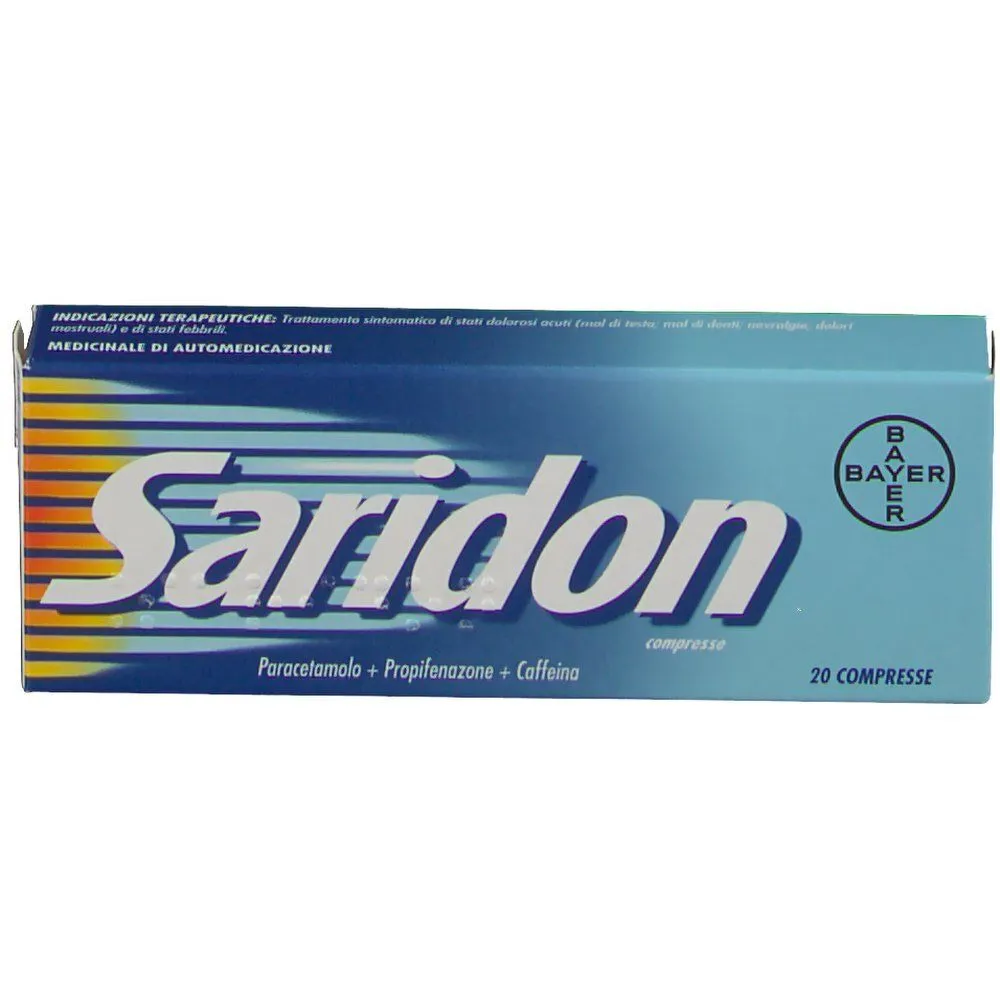
Table of Contents
Package leaflet: Information for the user
Saridon tablets
paracetamol 250 mg, propyphenazone 150 mg and caffeine 25 mg
Please read this leaflet carefully before taking this medicine because it contains
important information for you.
Always take this medicine exactly as described in this leaflet or as your doctor or
pharmacist has instructed you.
- Keep this leaflet. You may need to read it again.
- If you need more advice or information, consult your pharmacist.
- If you experience any side effects, including those not listed in this leaflet, contact your doctor or pharmacist. See section 4.
- Consult your doctor if you do not notice any improvement or if your symptoms worsen after three days.
Contents of this leaflet:
- What Saridon is and what it is used for
- What you need to know before taking Saridon
- How to take Saridon
- Possible side effects
- How to store Saridon
- Contents of the pack and other information
1. What Saridon is and what it is used for
Saridon belongs to the therapeutic category of analgesic-antipyretic medicines (medicines used to reduce pain and fever).
Saridon is used for the symptomatic treatment of acute painful conditions (i.e. short-term, such as headache, toothache, neuralgia, menstrual pain) and febrile states.
Do not take this product for more than 3 consecutive days without consulting a doctor.
2. What you should know before taking Saridon
Do not take Saridon
- if you are allergic to paracetamol, propyphenazone, or caffeine, or to any of the other ingredients of this medicine (listed in section 6);
- if you are allergic to other substances chemically closely related;
- if you have a history of gastrointestinal bleeding (stomach and intestine) or perforation related to previous active treatments, or a history of recurrent peptic bleeding/ulcer (on the inner mucosa of the stomach, duodenum, or esophagus) (two or more distinct episodes of proven ulceration or bleeding);
- if you suffer from blood disorders (hemopathies) such as granulocytopenia (low number of granulocytes, a particular type of white blood cells, in the blood) and intermittent porphyria (deficiency of an enzyme known as PBG deaminase);
- if you suffer from glucose-6-phosphate dehydrogenase deficiency (commonly known as favism);
- if you suffer from severe hemolytic anemia (anemia caused by destruction of red blood cells);
- if you suffer from severe hepatocellular (inadequate function of liver cells), renal, or cardiac insufficiency (the heart's inability to pump sufficient blood to meet the body's needs);
- if you are pregnant or breastfeeding (see "Pregnancy and breastfeeding"). P a g . 1 | 8
Saridon must not be administered to children under 12 years of age due to the presence of caffeine.
Warnings and precautions
Talk to your doctor or pharmacist before taking Saridon:
- if you suffer or have suffered from gastric or duodenal ulcers; in this case, the use of Saridon must be closely monitored by a doctor. NSAIDs (Non-Steroidal Anti-Inflammatory Drugs) should be used cautiously in patients with a history of gastrointestinal disease (ulcerative colitis, Crohn's disease), as these conditions may be exacerbated. If you have experienced gastrointestinal toxicity, report any unusual gastrointestinal symptoms (especially gastrointestinal bleeding), particularly during the initial stages of treatment;
- if you suffer from renal (reduced kidney function) or hepatic (reduced liver function) impairment, Gilbert's syndrome (a benign liver disorder characterized by excessive and uncontrolled increase in bilirubin), or hematopoietic dysfunction (disorders of blood cell formation);
- if you are taking any other medicine containing the same active ingredient (paracetamol), because serious adverse reactions may occur if paracetamol is taken at high doses (see also “Other medicines and Saridon”);
- if you suffer from asthma, chronic rhinitis, or chronic urticaria, as isolated cases of asthma attacks and anaphylactic shock associated with the intake of medicines containing propyphenazone and paracetamol have been reported;
- if you have heart problems or a history of stroke (cerebrovascular accident), or think you may be at risk for these conditions (e.g., if you have high blood pressure, elevated cholesterol levels, diabetes, or smoke), because the use of some NSAIDs (especially at high doses and for long-term treatment) may be associated with a modest increase in the risk of arterial thrombotic events (e.g., myocardial infarction or stroke);
- if you have a history of hypertension (high blood pressure) and/or heart failure (the heart's inability to pump sufficient blood to meet the body's needs), because fluid retention, hypertension, and edema (swelling caused by excessive accumulation of fluid in cells or tissues) have been observed in association with NSAID (Non-Steroidal Anti-Inflammatory Drug) treatment;
- if you suffer from hyperthyroidism: in this case, the use of Saridon must be closely monitored by a doctor.
During treatment with Saridon, inform your doctor immediately if:
- you suffer from serious illnesses, including severe renal impairment or sepsis (when bacteria and their toxins circulate in the blood causing organ damage), or malnutrition, chronic alcoholism, or if you are also taking flucloxacillin (an antibiotic). In patients with these conditions, a serious condition called metabolic acidosis (an abnormality in blood and fluids) has been reported when paracetamol is used regularly for prolonged periods or when paracetamol is taken in combination with flucloxacillin. Symptoms of metabolic acidosis may include: severe breathing difficulties with deep rapid breathing, drowsiness, nausea, and vomiting.
Children and adolescents
Saridon must not be taken by children under 12 years of age.
Other medicines and Saridon
Inform your doctor or pharmacist if you are taking, have recently taken, or might take any other medicines, including those without a prescription. The use of Saridon should be avoided concomitantly with NSAIDs, including selective COX-2 inhibitors.
Exercise particular caution if you are taking:
- Medicines that slow gastric emptying (e.g., propantheline), as they may slow the absorption of paracetamol, resulting in delayed onset of action;
- Corticosteroids (containing cortisol, a hormone produced by the adrenal glands), as concomitant use increases the risk of gastrointestinal ulceration or bleeding;
- Oral anticoagulants (medicines that prevent blood clot formation), such as warfarin: NSAIDs may enhance the effects of anticoagulants; paracetamol may also enhance anticoagulant effects, therefore, it should not be taken for long periods without medical supervision; in case of anticoagulant therapy, dose reduction is recommended;
- Antiplatelet agents (medicines that prevent blood clot formation) and selective serotonin reuptake inhibitors (SSRIs, antidepressants), as they increase the risk of gastrointestinal bleeding;
- Diuretics (medicines that increase urine production), ACE inhibitors, and angiotensin II antagonists (medicines used to treat high blood pressure), as NSAIDs may reduce the effect of diuretics and other antihypertensive medicines. Particular caution is advised if administered on the same day, especially if you have impaired renal function (particularly if elderly or dehydrated). Adequate hydration should be ensured after starting concomitant therapy, and your doctor should consider monitoring renal function;
- Hypoglycemic agents (medicines used in the treatment of diabetes), such as acetohexamide, chlorpropamide, tolbutamide;
- Probenecid (a medicine used to treat gout and hyperuricemia [elevated concentration of uric acid in the blood]): if taken simultaneously, your doctor should consider reducing the paracetamol dose;
- Medicines that increase the rate of gastric emptying (e.g., metoclopramide, domperidone), as they lead to increased absorption rate of paracetamol;
- Cholestyramine (a medicine used to lower blood cholesterol levels), as it reduces the rate and extent of paracetamol absorption;
- Chloramphenicol (an antibiotic), as paracetamol may increase its half-life (the time required to reduce the amount of a medicine in plasma or blood by half), and thus potentially increase its toxicity;
- AZT (zidovudine - an antiretroviral agent against certain viruses); concomitant use of paracetamol and AZT increases the tendency toward reduced white blood cell count (neutropenia). Therefore, the product should not be taken concomitantly with AZT (zidovudine) except under medical prescription;
- Anti-inflammatory medicines (NSAIDs) and painkillers (opioids), as their concomitant administration with Saridon results in mutual enhancement of analgesic effect. It is not advisable to use Saridon if you are already being treated with anti-inflammatory drugs;
- Lamotrigine (an antiepileptic): paracetamol may reduce the effectiveness of lamotrigine;
- Protective agents (misoprostol or proton pump inhibitors): concomitant use of protective agents should be considered in elderly patients and in patients taking low-dose acetylsalicylic acid or other drugs that may increase the risk of gastrointestinal events;
- Tropisetron and granisetron (antiemetics, medicines used against nausea and vomiting): these medicines may completely inhibit the analgesic effect of paracetamol.
If you are being treated with rifampicin (an antibiotic), cimetidine (a medicine for gastric acidity), or antiepileptic medicines (phenytoin, glutethimide, phenobarbital, carbamazepine), use paracetamol with extreme caution and only under strict medical supervision.
The administration of paracetamol may interfere with the determination of uric acid levels (using the phosphotungstic acid method) and blood glucose levels (using the glucose oxidase-peroxidase method). If you need to undergo blood tests using these methods, inform your doctor.
P a g . 3 | 8
Inform your doctor or pharmacist if you are taking:
- flucloxacillin (an antibiotic), due to a serious risk of blood and fluid disturbances (called metabolic acidosis with high anion gap), which requires urgent treatment.
Saridon and alcohol
The product may interact with alcohol; moderate alcohol consumption together with paracetamol, even at low doses, may increase the risk of liver damage.
Pregnancy, breastfeeding, and fertility
If you are pregnant, suspect you may be pregnant, plan to become pregnant, or are breastfeeding, consult your doctor or pharmacist before taking this medicine.
Pregnancy
Do not take Saridon if you are pregnant, as it may harm the fetus or cause problems during childbirth.
NSAIDs may cause kidney and heart problems in the fetus. They may affect the bleeding tendency in both mother and child and delay or prolong labor beyond expected duration.
From the 20th week of pregnancy, NSAIDs may cause kidney problems in the fetus, thereby reducing the levels of amniotic fluid surrounding the baby (oligohydramnios), or cause narrowing of a blood vessel (ductus arteriosus) in the baby’s heart.
Avoid using the medicine if you suspect you are pregnant or plan to conceive.
Breastfeeding
Saridon must not be used during breastfeeding.
Driving and using machines
Due to the possible occurrence of dizziness or drowsiness, Saridon may impair your ability to drive vehicles or operate machinery.
3. How to take Saridon
Take this medicine exactly as stated in this leaflet or as directed by your doctor or pharmacist. If you are in doubt, consult your doctor or pharmacist.
Take Saridon with food.
Swallow the tablet with a generous amount of water.
Recommended doses are:
Adults: 1–2 tablets, up to a maximum of 4 tablets within 24 hours.
Use in elderly patients and patients with a history of peptic ulcer: elderly patients should adhere to the minimum doses indicated above.
Caution: do not exceed the recommended doses without medical advice.
Do not take for more than 3 consecutive days without consulting your doctor.
Page 4 | 8
Consult your doctor if the symptoms recur frequently or if you have noticed any recent changes in their characteristics.
If you take more Saridon than you should
If you accidentally ingest/overdose on Saridon, contact your doctor immediately or go to the nearest hospital. Prompt medical intervention is important even if there are no obvious signs or symptoms.
Symptoms of acute paracetamol poisoning include: nausea, vomiting, abdominal pain, sweating and general malaise. Liver damage due to progressive necrosis of liver cells and kidney damage due to tubular necrosis (destruction of renal tubular cells) have been reported. Due to the presence of caffeine, in cases of overdose, excessive stimulation may occur, leading to restlessness, insomnia, muscle tremors, nausea, vomiting, increased urine output, increased heart rate, and palpitations.
If you have any doubts about using this medicine, consult your doctor or pharmacist.
4. Possible adverse effects
Like all medicines, this medicine can cause adverse effects, although not everyone experiences them.
If gastrointestinal bleeding or ulceration occurs in patients taking Saridon, treatment must be discontinued.
Serious adverse effects:
If fever or sore throat recurs during treatment, stop the therapy and consult your doctor.
Severe skin reactions, some of which have been fatal, including exfoliative dermatitis, Stevens-Johnson syndrome, and toxic epidermal necrolysis, have very rarely been reported in association with the use of NSAIDs (Non-Steroidal Anti-Inflammatory Drugs). The highest risk appears to be during the initial stages of treatment, as onset of the reaction occurs in most cases within the first month of treatment.
Discontinue treatment with Saridon at the first appearance of skin rash, mucosal lesions, or any other sign of allergy.
The adverse reactions listed below are derived from spontaneous reports, therefore it is not possible to classify them according to frequency categories.
Skin and subcutaneous tissue disorders:
Various types and severities of skin reactions have been reported, including:
- skin rash;
- pruritus (itching);
- urticaria (hives);
- allergic edema and angioedema (swollen, itchy skin areas, most frequently located on extremities, external genitalia, and face, especially around eyes and lips);
- generalized acute exanthematous pustulosis (eruption of small, superficial pustules);
- fixed erythema (red-violet patches);
- erythema multiforme (bright red skin lesions caused by inflammation of blood vessels);
- bullous reactions including Stevens-Johnson syndrome and epidermal necrolysis (very rare) (two serious skin diseases potentially leading to fatal outcomes).
Immune system disorders:
- hypersensitivity reactions (allergic reactions) have been reported, such as cyanosis (bluish discoloration of the skin and mucous membranes), sweating, nausea, hypotension (low blood pressure), dyspnea (difficulty breathing), asthma, laryngeal edema (swelling of the larynx, often accompanied by breathing difficulties), anaphylactoid reaction, anaphylactic reaction, anaphylactic shock (possible symptoms of anaphylactic reaction include: severe and sudden drop in blood pressure, accelerated or slowed heart rate, unusual fatigue or weakness, anxiety, restlessness, dizziness, loss of consciousness, difficulty breathing [due to laryngeal obstruction or bronchospasm] or swallowing).
Blood and lymphatic system disorders:
- changes in blood cell counts (detected in blood tests), such as thrombocytopenia (reduced number of platelets in the blood), thrombocytopenic purpura (a coagulation disorder), leucopenia (reduced number of white blood cells), anemia (reduced number of red blood cells), agranulocytosis (reduced number of granulocytes, a type of white blood cell), pancytopenia (reduced number of all blood cells).
During administration of therapeutic doses of paracetamol, an increase in serum alanine aminotransferase (ALT) may occur.
Nervous system disorders:
- dizziness;
- somnolence (drowsiness).
Hepatobiliary disorders (liver, gallbladder, and biliary tract):
- impaired liver function;
- hepatitis;
- dose-dependent liver failure, hepatic necrosis (destruction of liver cells), potentially fatal (see "Warnings and precautions" and "If you take more Saridon than you should").
Renal and urinary disorders:
- acute renal failure (rapid reduction in kidney function);
- interstitial nephritis (inflammation of the kidneys);
- haematuria (presence of blood in urine);
- anuria (absence of urine production).
Gastrointestinal disorders:
The most commonly observed adverse events are gastrointestinal in nature:
- peptic ulcers (lesion of the stomach mucosa), gastrointestinal perforation or bleeding, sometimes fatal, particularly in the elderly, may occur in association with the use of non-steroidal anti-inflammatory drugs (see "Warnings and precautions"). In elderly patients and in those with a history of ulcers, especially if complicated by bleeding or perforation (see section 4.3), the risk of gastrointestinal bleeding, ulceration, or perforation is higher with increased doses of NSAIDs. In such cases, treatment should be initiated with the lowest available dose;
- nausea;
- vomiting;
- diarrhoea;
- flatulence (intestinal gas);
- constipation;
- dyspepsia (indigestion);
- abdominal pain;
- melena (presence of blood in stools: stools appear dark);
- haematemesis (vomiting blood);
- ulcerative stomatitis (inflammation of the oral mucosa);
- exacerbation of colitis;
- Crohn’s disease (a severe intestinal inflammation; see "Warnings and precautions");
- gastritis (less frequently).
Thoracic and mediastinal disorders:
- bronchospasm and asthma (breathing disorders), including analgesic-induced asthma syndrome.
Edema (swelling due to excessive fluid accumulation in cells or tissues), hypertension (high blood pressure), and heart failure (the heart’s inability to pump sufficient blood to meet the body’s needs) have been reported in association with NSAID (Non-Steroidal Anti-Inflammatory Drug) treatment.
Medicines such as Saridon may be associated with a small increased risk of arterial thrombotic events such as heart attack ("myocardial infarction") or stroke (cerebrovascular accident).
Continuous use of paracetamol, especially in combination with other analgesics, may lead to permanent kidney damage and renal failure (analgesic nephropathy).
High or prolonged doses of this product may cause high-risk hepatopathy and severe blood disorders.
Adverse effects can be minimized by using the lowest effective dose for the shortest duration necessary to control symptoms.
Frequency not known (cannot be estimated from available data): severe condition causing blood to become more acidic (called metabolic acidosis), in patients with severe illness using paracetamol (see section 2).
Following the instructions in this leaflet reduces the risk of adverse effects.
These adverse effects are generally transient. However, if any occur, it is advisable to consult your doctor or pharmacist.
Reporting of adverse effects
If you experience any adverse effect, including those not listed in this leaflet, talk to your doctor or pharmacist. You may also report adverse effects directly via the national reporting system at www.agenziafarmaco.gov.it/it/responsabili. By reporting adverse effects, you can help provide more information on the safety of this medicine.
P a g . 5 | 8
P a g . 6 | 8
5. How to store Saridon
Keep this medicine out of the sight and reach of children.
Do not store at temperatures above 30°C.
Do not use this medicine after the expiry date stated on the packaging. The expiry date refers to the last day of that month. The expiry date applies to the product in its original, unopened packaging and stored correctly.
Do not dispose of any medicine via wastewater or household waste. Ask your pharmacist how to dispose of medicines you no longer use. This will help protect the environment.
P a g . 7 | 8
6. Package contents and other information
What Saridon contains
- The active substances are: paracetamol, propyphenazone and caffeine. Each tablet contains: paracetamol 250 mg, propyphenazone 150 mg, caffeine 25 mg.
- The other components are: microcrystalline cellulose, povidone, maize starch, hypromellose, talc, magnesium stearate, precipitated silica.
Description of the appearance of Saridon and pack contents
Saridon is presented as oral tablets.
Pack contents: 5, 10 or 20 tablets.
Not all pack sizes may be marketed.
Marketing Authorization Holder
Bayer S.p.A., Viale Certosa 130, 20156 Milan, Italy.
Manufacturer
Delpharm Gaillard - Gaillard manufacturing site (France).
P a g . 8 | 8