Sancuso
Italy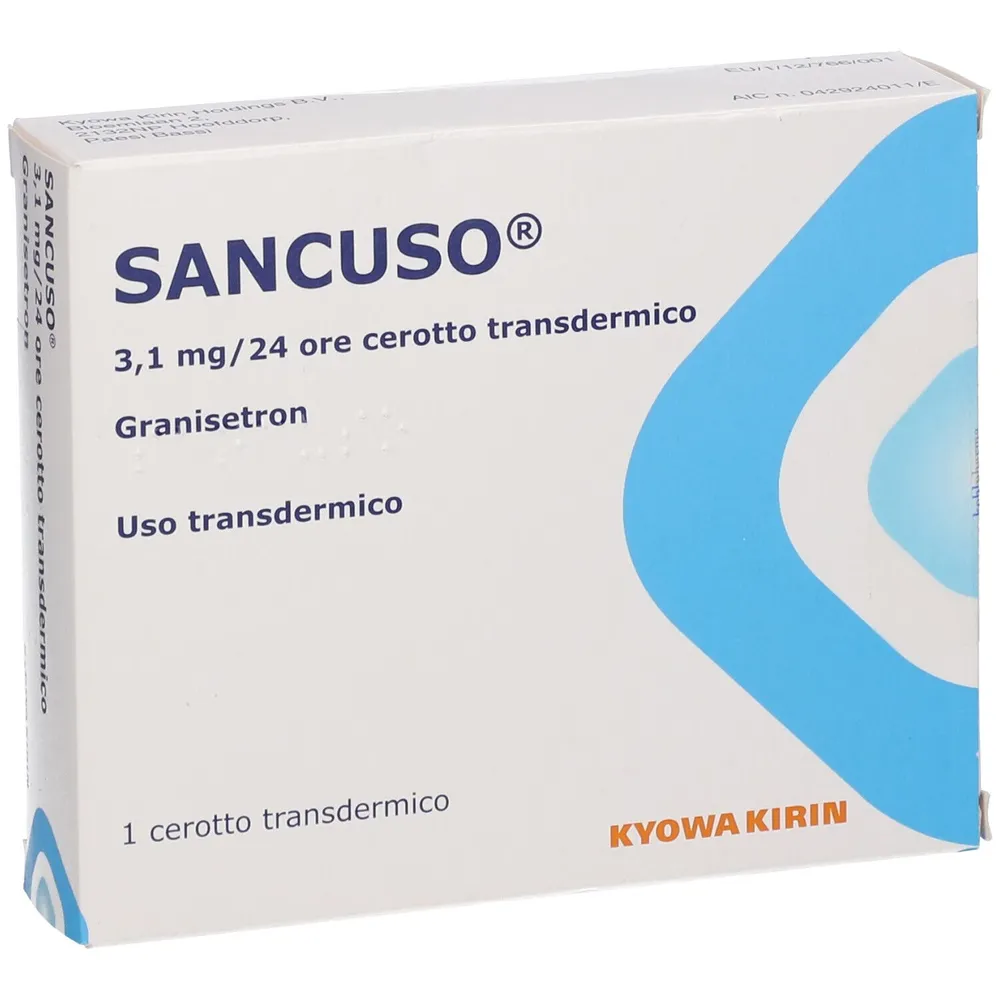
Table of Contents
Package Leaflet: Information for the Patient
SANCUSO 3.1 mg/24 hours transdermal patch
granisetron
Please read this leaflet carefully before using this medicine because it contains important information for you.
- Keep this leaflet. You may need to read it again.
- If you have any questions, ask your doctor or nurse.
- This medicine has been prescribed for you only. Do not give it to other people, even if their symptoms are the same as yours, because it could be harmful.
- If you experience any side effect, including those not listed in this leaflet, contact your doctor or nurse. See section 4.
Contents of this leaflet
- What SANCUSO is and what it is used for
- What you need to know before using SANCUSO
- How to use SANCUSO
- Possible side effects
- How to store SANCUSO
- Contents of the pack and other information
1. What SANCUSO is and what it is used for
The active substance in SANCUSO is granisetron, which belongs to a group of medicines called antiemetics and antinausea agents.
SANCUSO is a transdermal (skin) patch used to prevent nausea and vomiting in adults undergoing chemotherapy (medicines for the treatment of cancer) lasting 3 to 5 days, and who have difficulty swallowing tablets (for example, due to pain, dryness, or inflammation of the mouth or throat).
Contact your doctor if you do not feel better or if you feel worse after the first day of chemotherapy.
2. What you need to know before using SANCUSO
Do not use SANCUSO:
- if you are allergic to granisetron or to any of the other ingredients of this medicine (listed in section 6)
- if you are allergic to any other anti-nausea medicine whose name ends in "setron", for example ondansetron.
Warnings and precautions
Talk to your doctor or nurse before using this treatment if any of the following apply to you:
- if you have been diagnosed with a heart disorder or heart disease
- if you have stomach (abdominal) pain or a swollen stomach
- if you have kidney or liver problems.
This medicine may not work optimally and/or may cause skin effects if exposed to direct sunlight or to light from sunlamps or sunbeds. It is important to follow these precautions:
- while wearing the transdermal patch, keep it covered with clothing if you are exposed to sunlight or are near a sunlamp, including sunbeds
- keep the area where this medicine was applied covered for an additional 10 days after removing the transdermal patch, to protect it from exposure to direct sunlight.
It is not known how activities such as swimming, intense physical exercise, or using a sauna or a hot tub might affect this medicine. Avoid these activities while wearing this transdermal patch. You may continue to take showers and wash normally during application of the transdermal patch.
Avoid exposing the area of the transdermal patch to external sources of heat, for example heat from hot water bottles or heating pads.
Children and adolescents
This medicine must not be used in children or adolescents under 18 years of age.
Other medicines and SANCUSO
Tell your doctor or nurse if you are taking, have recently taken, or might take any other medicines. SANCUSO may affect the action of certain medicines, and other medicines may affect the action of SANCUSO. In particular, inform your doctor or nurse if you are taking the following medicines:
- Paracetamol, used to treat pain.
- Phenobarbital, used to treat epilepsy.
- Ketoconazole, used to treat fungal infections.
- SSRIs (selective serotonin reuptake inhibitors) for depression and/or anxiety, such as fluoxetine, paroxetine, sertraline, fluvoxamine, citalopram, escitalopram.
- SNRIs (serotonin-norepinephrine reuptake inhibitors) for depression and/or anxiety, such as venlafaxine, duloxetine.
- Buprenorphine, opioids, or other serotonergic medicines.
Pregnancy and breastfeeding
Do not use this medicine during pregnancy unless specifically recommended by your doctor.
Discontinue breastfeeding while wearing the patch.
If you are pregnant, suspect you may be pregnant, plan to become pregnant, or are breastfeeding, consult your doctor before using this medicine.
Driving and using machines
SANCUSO does not affect or has negligible effect on the ability to drive or operate machinery.
3. How to use SANCUSO
Use this medicine exactly as instructed by your doctor. If you have any doubts, consult your doctor or nurse.
The recommended dose is one single transdermal patch. The medicine contained in the transdermal patch passes gradually through the skin into the body, so the patch should be applied 1–2 days (24–48 hours) before the start of chemotherapy.
This medicine is for transdermal use. It releases the active substance slowly and continuously through the skin into the bloodstream, for the entire duration of transdermal patch application.
Things to remember when using the transdermal patch
- Do not keep or store the transdermal patch outside its sealed pouch.
- Do not cut the transdermal patch into smaller pieces.
- Use only one transdermal patch at a time.
- When removing the transdermal patch, check the skin and inform your doctor if you notice a severe skin reaction (if the skin is very red, itchy, or if you notice blisters).
- Direct sunlight or exposure to sunlamps may affect the transdermal patch. While wearing the patch, keep it covered (e.g. under clothing) if there is a risk of exposure to sunlight or sunlamps. Continue to keep the application site covered for an additional 10 days after removing the patch.
- Bathing or showering does not affect the action of SANCUSO. However, the patch may partially detach. Try to avoid wearing the patch in water for prolonged periods.
- There is no information on the effect of other activities on the transdermal patch, such as intense physical exercise or the use of saunas or hot tubs; therefore, you should avoid such activities while wearing this transdermal patch.
- Avoid exposing the area of the transdermal patch to external heat sources (e.g. hot water bottles or heating pads).
When to apply and remove the transdermal patch
Do not remove the transdermal patch from its pouch until you are ready to use it. Apply one transdermal patch at least 1 day (24 hours) before your scheduled chemotherapy treatment. The transdermal patch may be applied up to 2 days (48 hours) before chemotherapy.
Wear the transdermal patch throughout the entire duration of chemotherapy. The patch may be worn for up to 7 days, depending on the length of the chemotherapy treatment.
Remove the transdermal patch at least 1 day (24 hours) after completion of chemotherapy.
Where to apply the transdermal patch
Apply the transdermal patch to a clean, dry, and healthy area of skin on the outer part of the upper arm. If the arms are unsuitable for patch application, your doctor may instruct you to apply it to the abdomen. The chosen area should not be oily, recently shaved, or have any skin problems such as wounds (cuts or scrapes) or irritation (redness or rash). Do not apply SANCUSO to areas treated with creams, oils, lotions, powders, or other skin products, as these may prevent the patch from adhering properly to the skin.
How to apply the transdermal patch
- Remove a pouch from the box and open it along the designated perforation line. Each pouch contains one transdermal patch attached to a rigid plastic film.
- Remove the transdermal patch from the pouch.
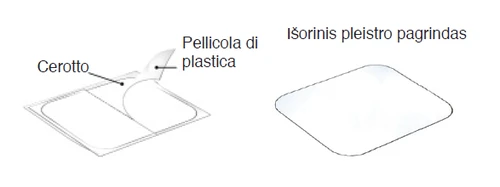
Outer covering of the
patch
-
The adhesive side of the transdermal patch is protected by a rigid plastic film divided into two parts. Fold the patch in half and remove one half of the rigid plastic film. Be careful not to let the patch stick to itself and avoid touching the adhesive side of the patch.
-
Holding the other half of the rigid plastic film, apply the transdermal patch to the skin on the outer part of the upper arm.
-
Remove the second half of the rigid plastic film and press the entire patch firmly into place with your fingers, smoothing it down. Press firmly to ensure good contact with the skin, especially around the edges.
-
Wash your hands after applying the transdermal patch.
-
Keep the transdermal patch in place for the entire duration of chemotherapy.
-
Do not reuse the transdermal patch after removal; see instructions below for removal and disposal (see section 5).
After removing the transdermal patch
- The used transdermal patch still contains some amount of granisetron and must be disposed of immediately, as described in section 5.
- After removing the patch, you may notice adhesive residue on the skin. Gently wash the area with water and soap to remove it. Alcohol or other solvents, such as nail polish remover, may cause skin irritation and should not be used.
- Wash your hands.
- You may observe mild redness on the skin where the patch was removed. This redness should fade over time. If it does not, inform your doctor.
If the transdermal patch becomes detached
If the transdermal patch starts to come loose, reattach the same patch to the same area of skin. If needed, use surgical bandages or surgical adhesive tape to keep the patch in place. If the patch is lost or damaged, contact your doctor.
If you use more SANCUSO than you should
If you use more SANCUSO than prescribed, simply remove the extra patch or patches and contact your doctor.
If you forget to use SANCUSO
It is important to use this medicine exactly as instructed by your doctor to prevent nausea or vomiting after chemotherapy. If you forgot to apply the transdermal patch at the correct time, apply it as soon as you remember and inform your doctor as soon as possible before your chemotherapy treatment.
If you stop using SANCUSO
It is important to use this medicine for the entire duration of chemotherapy (up to 7 days) to prevent chemotherapy-induced nausea or vomiting. Consult your doctor if you wish to remove the patch before the end of the chemotherapy cycle (up to 7 days).
If you have any doubts about how to use this medicine, consult your doctor or nurse.
4. Possible side effects
Like all medicines, this medicine can cause side effects, although not everybody gets them.
If you are receiving chemotherapy with a moderate or high potential to cause nausea and vomiting, you may still experience vomiting despite treatment with anti-emetic therapy, including this medicine.
Contact your doctor immediately if you develop constipation or have stomach pain or swelling. Constipation is a common side effect and may affect up to 1 in 10 people.
Remove the transdermal patch and contact your doctor if you notice:
- signs and symptoms of a condition called serotonin syndrome, which can be serious and in some cases life-threatening. These may include changes in blood pressure (which may cause dizziness or headache), rapid heartbeat, blurred vision (which may be due to pupil dilation), sweating, increased intestinal movements/noises, chills, tremor, muscle twitching or spasms, and overactive reflexes. You may also experience high or very high body temperature (fever), feelings of agitation or confusion, muscle stiffness, and you may notice that you are talking faster. The number of people in whom serotonin syndrome occurs is not known (the frequency cannot be estimated from the available data).
- severe skin reaction (if the skin is very red, itchy, or if you notice blisters). Skin reactions at the application site, such as irritation, itching, or redness, are not common and may affect up to 1 in 100 people.
Other possible side effects:
Uncommon side effects are:
- headache, sensation of dizziness even when still (vertigo)
- decreased appetite, weight loss
- hot flushes (or flushing)
- nausea, vomiting, dry mouth
- joint pain
- swelling due to fluid retention (oedema)
- changes in liver function tests (if you have blood tests, inform your doctor or nurse that you have used SANCUSO).
Rare side effects (may affect up to 1 in 1,000 people) are:
- abnormal muscle movements (e.g. tremor, muscle rigidity, and muscle contractions).
Side effects of unknown frequency (frequency cannot be estimated from the available data):
- allergic skin reactions with symptoms such as itchy red hives.
Other possible side effects associated with granisetron-containing products (frequency unknown):
- allergic reactions including urticaria (itching, redness, and skin erythema) and anaphylaxis (a serious allergic reaction which may present with sudden symptoms such as wheezing, difficulty breathing, swelling of the eyelids, face or lips, rash or itching)
- difficulty sleeping/disturbed sleep
- excessive drowsiness
- QT interval prolongation on ECG (changes in the heart trace (ECG) indicating a disturbance in heart rhythm)
- constipation
- diarrhoea
- lack of energy/weakness/loss of strength
Reporting of side effects
If you experience any side effect, including those not listed in this leaflet, talk to your doctor or nurse. You can also report side effects directly via the national reporting system detailed in Annex V*.
By reporting side effects, you can help provide more information on the safety of this medicine.
5. How to store SANCUSO
Keep this medicine out of the sight and reach of children.
Do not use this medicine after the expiry date stated on the outer packaging and sachet after "Exp". The expiry date refers to the last day of that month.
Store in the original packaging to protect the medicine from light.
Used transdermal patches still contain active substances, which may be harmful to others.
Fold the used transdermal patch in half with the adhesive side inwards, and then dispose of it safely, out of the reach of children. Do not dispose of any medicine via wastewater or household waste. Ask your pharmacist how to dispose of medicines no longer used.
This will help protect the environment.
6. Package contents and other information
What SANCUSO contains
- The active substance is granisetron. Each 52 cm transdermal patch contains 34.3 mg of granisetron, releasing 3.1 mg of granisetron over 24 hours.
- The other components are:
- Patch adhesive: acrylate-vinyl acetate copolymer
- Outer covering: polyester
- Rigid plastic film: silicone-coated polyester
Description of the appearance of SANCUSO and contents of the pack
SANCUSO is a rectangular, thin, transparent transdermal patch with rounded edges, attached to a rigid plastic film. The transdermal patch is contained in a pouch. Each pack contains one transdermal patch.
Marketing Authorisation Holder and Manufacturer
Marketing Authorisation Holder
Grünenthal GmbH
Zieglerstraße 6
52078 Aachen
Germany
Manufacturer
Pharbil Waltrop GmbH (a subsidiary of NextPharma)
Im Wirrigen 25
45731 Waltrop
Germany
More detailed information on this medicinal product is available on the website of the European Medicines Agency: http://www.ema.europa.eu