Safinamide Tiefenbacher
Italy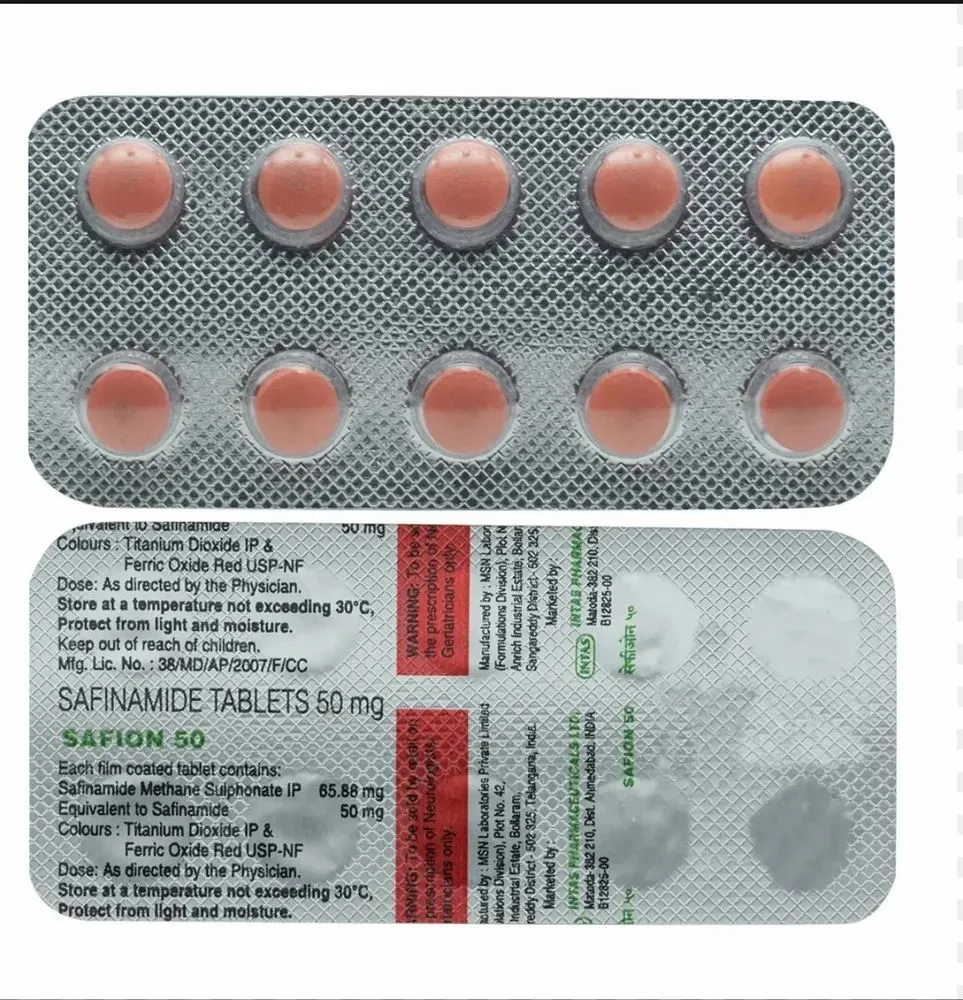
Table of Contents
- Patient Information Leaflet
- Safinamide Tiefenbacher 50 mg film-coated tablets, 100 mg film-coated tablets
- 1. What Safinamide Tiefenbacher is and what it is used for
- 2. What you need to know before taking Safinamide Tiefenbacher
- 3. How to take Safinamide Tiefenbacher
- 4. Possible side effects
- 5. How to store Safinamide Tiefenbacher
- 6. Package contents and other information
Patient Information Leaflet
Safinamide Tiefenbacher 50 mg film-coated tablets, 100 mg film-coated tablets
safinamide
Equivalent medicine
Please read this leaflet carefully before taking this medicine because it contains
important information for you.
- Keep this leaflet. You may need to read it again.
- If you have any questions, ask your doctor.
- This medicine has been prescribed for you only. Do not give it to other people, even if they have the same symptoms as yours, because it may be harmful.
- If you experience any side effects, including those not listed in this leaflet, inform your doctor. See section 4.
Contents of this leaflet
- What Safinamide Tiefenbacher is and what it is used for
- What you need to know before taking Safinamide Tiefenbacher
- How to take Safinamide Tiefenbacher
- Possible side effects
- How to store Safinamide Tiefenbacher
- Contents of the pack and other information
1. What Safinamide Tiefenbacher is and what it is used for
Safinamide Tiefenbacher is a medicine containing the active substance safinamide. It works by increasing the levels in the brain of a substance called dopamine, which is involved in movement control and is present in lower amounts in the brains of patients with Parkinson's disease.
Safinamide Tiefenbacher is used to treat Parkinson's disease in adults.
In patients with mid- to late-stage disease who experience sudden transitions from the "ON" state, in which they are able to move, to the "OFF" state, in which they have difficulty moving, Safinamide Tiefenbacher is added to a stable dose of the medicine called levodopa, either used alone or in combination with other Parkinson's disease medicines.
2. What you need to know before taking Safinamide Tiefenbacher
Do not take Safinamide Tiefenbacher
- if you are allergic to safinamide or to any of the other ingredients of this medicine (listed in section 6).
- if you are taking any of the following medicines:
- monoamine oxidase (MAO) inhibitors such as selegiline, rasagiline, moclobemide, phenelzine, isocarboxazid, tranylcypromine (e.g. for the treatment of Parkinson’s disease, depression, or any other disorder).
- meperidine (a strong painkiller).
You must wait at least 7 days after stopping treatment with Safinamide Tiefenbacher before starting treatment with MAO inhibitors or meperidine.
- if you have been told you have severe liver problems.
- if you have an eye disorder that could put you at risk of retinal damage (the light-sensitive layers at the back of the eye), e.g. albinism (lack of pigment in the skin and eyes), retinal degeneration (loss of cells from the light-sensitive layer at the back of the eye), uveitis (inflammation inside the eye), inherited retinopathy (inherited vision disorders), or severe progressive diabetic retinopathy (progressive loss of vision due to diabetes).
Warnings and precautions
Talk to your doctor before taking Safinamide Tiefenbacher:
- if you have liver problems.
- patients and caregivers should be informed that with other Parkinson’s disease medications, certain compulsive behaviours have been reported, such as compulsions, obsessive thoughts, pathological gambling, increased libido, hypersexuality, impulsive behaviour, and compulsive shopping syndrome.
- when Safinamide Tiefenbacher is used together with levodopa, sudden, uncontrolled movements may occur or worsen.
Children and adolescents
Safinamide Tiefenbacher is not recommended for use in children and adolescents under 18 years of age, as there are no data on safety and efficacy in this population.
Other medicines and Safinamide Tiefenbacher
Tell your doctor or pharmacist if you are taking, have recently taken, or might take any other medicines. Ask your doctor for advice before taking any of the following medicines together with Safinamide Tiefenbacher:
- cough or cold remedies containing dextromethorphan, ephedrine, or pseudoephedrine.
- medicines called selective serotonin reuptake inhibitors (SSRIs), usually used to treat anxiety disorders and certain personality disorders (e.g. fluoxetine or fluvoxamine).
- medicines called serotonin-norepinephrine reuptake inhibitors (SNRIs), used to treat major depression and other mood disorders, such as venlafaxine.
- medicines for high cholesterol such as rosuvastatin, pitavastatin, pravastatin.
- antibiotics in the class of fluoroquinolones such as ciprofloxacin.
- medicines that act on the immune system such as methotrexate.
- medicines for the treatment of metastatic cancer such as topotecan.
- medicines for the treatment of pain and inflammatory conditions such as diclofenac.
- medicines for the treatment of type 2 diabetes such as glyburide, metformin.
- medicines for the treatment of viral infections such as aciclovir, ganciclovir.
Pregnancy and breastfeeding
If you are pregnant, think you may be pregnant, planning to become pregnant, or are breastfeeding, ask your doctor for advice before taking this medicine.
Pregnancy
Safinamide Tiefenbacher must not be used during pregnancy or by women of childbearing potential who are not using adequate contraception.
Breastfeeding
Safinamide Tiefenbacher is likely to be excreted in breast milk. Safinamide Tiefenbacher must not be used during breastfeeding.
Driving and using machines
During treatment with safinamide, drowsiness and dizziness may occur; caution should be exercised when operating dangerous machinery or driving vehicles, until you are reasonably certain that Safinamide Tiefenbacher does not cause any adverse effects of any kind.
Ask your doctor for advice before driving or using machines.
Safinamide Tiefenbacher contains sodium
This medicine contains less than 1 mmol (23 mg) of sodium per tablet, i.e. essentially 'sodium-free'.
3. How to take Safinamide Tiefenbacher
Take this medicine exactly as your doctor has told you. If you have any doubts, consult your doctor.
The recommended starting dose of Safinamide Tiefenbacher is one 50 mg tablet, which may be increased to one 100 mg tablet taken once daily, preferably in the morning, orally with water. Safinamide Tiefenbacher may be taken either on an empty or full stomach.
If you have moderately impaired liver function, you must not take more than 50 mg per day; your doctor will advise you if this applies to you.
If you take more Safinamide Tiefenbacher than you should
If you have taken too many Safinamide Tiefenbacher tablets, you may develop high blood pressure, anxiety, confusion, forgetfulness, drowsiness, dizziness, nausea or vomiting, dilated pupils, or involuntary jerking movements. Contact your doctor immediately and take the package of Safinamide Tiefenbacher with you.
If you forget to take Safinamide Tiefenbacher
Do not take a double dose to make up for the forgotten dose. Skip the missed dose and take the next dose at the usual time.
If you stop taking Safinamide Tiefenbacher
Do not stop treatment with Safinamide Tiefenbacher without first talking to your doctor.
If you have any questions about the use of this medicine, ask your doctor or pharmacist.
4. Possible side effects
Like all medicines, this medicine can cause side effects, although not everyone experiences them.
Consult a doctor if you experience hypertensive crises (very high blood pressure, collapse), neuroleptic malignant syndrome (confusion, sweating, muscle rigidity, hyperthermia, increased levels of the enzyme creatine kinase in the blood), serotonin syndrome (confusion, hypertension, muscle rigidity, hallucinations), or hypotension.
The following side effects have been reported in patients with moderate to advanced Parkinson’s disease (patients treated with safinamide as add-on therapy to levodopa either alone or in combination with other Parkinson’s disease medications):
Common (may affect up to 1 in 10 people): insomnia, difficulty performing voluntary movements, somnolence, dizziness, headache, worsening of Parkinson’s disease, clouding of the eye’s lens, orthostatic hypotension (drop in blood pressure upon standing), nausea, falls.
Uncommon (may affect up to 1 in 100 people): urinary tract infection, skin tumour, low iron levels in the blood, low white blood cell count, abnormalities of red blood cells, loss of appetite, high levels of lipids in the blood, increased appetite, high blood sugar, seeing things that are not there, feeling of sadness, abnormal dreams, fear and worry, confusion, mood swings, increased interest in sex, abnormal thoughts and perceptions, restlessness, sleep disorders, numbness, loss of balance, loss of sensation, sustained abnormal muscle contraction, headache, difficulty speaking, fainting, memory impairment, blurred vision, blind spots, double vision, photophobia, disturbances in the light-sensitive layer at the back of the eye, eye redness, increased eye pressure, sensation of dizziness, awareness of heartbeat, rapid heartbeat, irregular heartbeat, slow heartbeat, high blood pressure, low blood pressure, enlarged and twisted veins, cough, breathing difficulty, runny nose, constipation, heartburn, vomiting, dry mouth, diarrhoea, abdominal pain, stomach burning, flatulence, feeling of fullness, drooling, mouth ulcer, sweating, generalized itching, light sensitivity, skin redness, back pain, joint pain, cramps, stiffness, pain in arms or legs, muscle weakness, feeling of heaviness, increased frequency of urination at night, pain during urination, difficulty in sexual performance in men, fatigue, feeling of weakness, unsteady gait, swelling of the feet, pain, sensation of warmth, weight loss, weight gain, abnormalities in blood tests, high levels of lipids in the blood, increased blood sugar, abnormal ECG, abnormalities in liver function tests, abnormalities in urine tests, decreased blood pressure, increased blood pressure, abnormalities in vision tests, foot fracture.
Rare (may affect up to 1 in 1,000 people): pneumonia, skin infection, sore throat, nasal allergy, dental infection, viral infection, non-cancerous skin conditions/growths, abnormalities of white blood cells, severe weight loss and weakness, increased potassium levels in blood, uncontrollable urges, clouding of consciousness, disorientation, distorted perception of images, reduced interest in sex, persistent thoughts that cannot be dismissed, feeling that someone is against you, premature ejaculation, uncontrollable urge to sleep, fear of social situations, suicidal thoughts, clumsiness, easy distractibility, loss of taste, weak/slow reflexes, pain radiating into legs, persistent urge to move legs, drowsiness, eye abnormalities, progressive loss of vision due to diabetes, increased tear production, night blindness, strabismus, heart attack, stiffening/narrowing of blood vessels, severe high blood pressure, chest tightness, difficulty speaking, difficulty/painful swallowing, peptic ulcer, vomiting urges, stomach bleeding, jaundice, hair loss, blisters, skin allergy, skin conditions, bruising, scaly skin, night sweats, skin pain, skin colour change, psoriasis, scaly skin, inflammation of spinal joints due to autoimmune disorder, hip pain, joint swelling, musculoskeletal pain, muscle pain, neck pain, joint pain, joint cysts, uncontrollable urgency to urinate, increased frequency of urination, presence of pus cells in urine, urinary hesitation, prostate problems, breast pain, reduced effect of the medicine, drug intolerance, feeling of cold, feeling unwell, fever, dryness of the skin, eyes and mouth, abnormalities in blood tests, fever, heart murmurs, abnormal heart tests, bruising/swelling after injury, blockage of a blood vessel due to fat, head injuries, mouth injuries, skeletal injuries, gambling.
Reporting of side effects
If you experience any side effect, including those not listed in this leaflet, talk to your doctor or pharmacist. You may also report side effects directly via the national reporting system at www.aifa.gov.it/content/segnalazioni-reazioni-avverse.
By reporting side effects, you can help provide more information on the safety of this medicine.
5. How to store Safinamide Tiefenbacher
Keep this medicine out of the sight and reach of children.
Do not use this medicine after the expiry date stated on the pack after "Exp.".
The expiry date refers to the last day of that month.
This medicine does not require any special storage conditions.
Do not dispose of medicines via wastewater or household waste. Ask your pharmacist how to
dispose of medicines you no longer use. This will help protect the environment.
6. Package contents and other information
What Safinamide Tiefenbacher contains
- The active substance is safinamide. Each tablet contains 50 mg or 100 mg of safinamide (as methanesulfonate).
- The other components are:
- Tablet core: microcrystalline cellulose, crospovidone type A, anhydrous colloidal silica, sodium stearyl fumarate, ascorbic acid.
- Tablet coating: hypromellose, macrogol (6000), mica-based pearlescent pigment (E555/E171), titanium dioxide (E171), iron oxide red (E172).
Description of the appearance of Safinamide Tiefenbacher and package contents
Safinamide Tiefenbacher 50 mg are film-coated tablets, round, biconvex, orange to copper-coloured, with a metallic sheen, approximately 7 mm in diameter, marked with "50" on one side of the tablet.
Safinamide Tiefenbacher 100 mg are film-coated tablets, round, biconvex, orange to copper-coloured, with a metallic sheen, approximately 9 mm in diameter, marked with "100" on one side of the tablet.
Safinamide Tiefenbacher is supplied in packages containing 10, 30 or 100 film-coated tablets.
Not all pack sizes may be marketed.
Marketing Authorisation Holder
Alfred E. Tiefenbacher (GmbH & Co. KG)
Van-der-Smissen-Strasse 1
22767 Hamburg
Germany
Manufacturer
Delorbis Pharmaceuticals Ltd.
17 Athinon str., Ergates Industrial Area,
2643 Ergates, Lefkosia,
Cyprus
PHARMADOX Healthcare Limited
KW20A Corradino Industrial Estate,
Paola PLA3000,
Malta