Sabril
Italy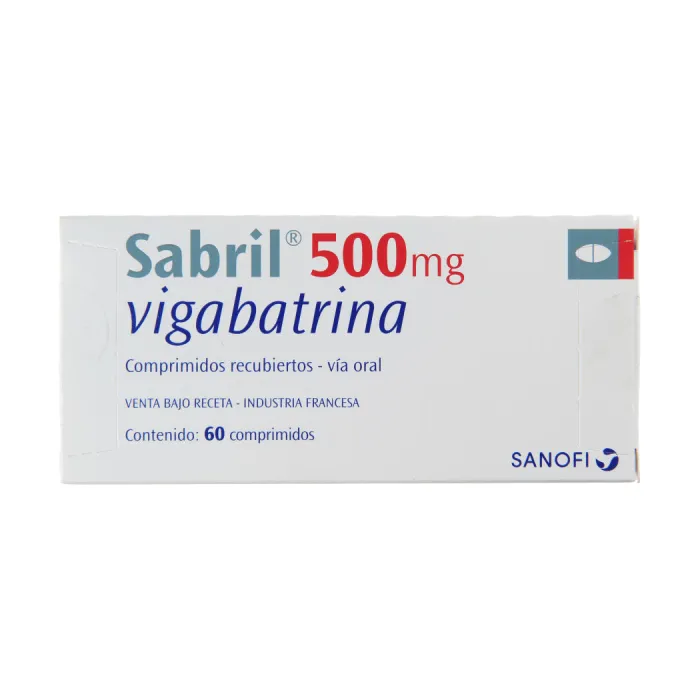
Table of Contents
- Package leaflet: Information for the user
- Sabril 500 mg film-coated tablets
- 1. What Sabril is and what it is used for
- 2. What you need to know before taking Sabril
- 3. How to take Sabril
- 4. Possible side effects
- 5. How to store Sabril
- 6. Package contents and other information
- Package leaflet: Information for the user
- Sabril 500 mg granules for oral solution
- 1. What Sabril is and what it is used for
- 2. What you need to know before taking Sabril
- 4. Possible side effects
- 5. How to store Sabril
- 6. Package contents and other information
Package leaflet: Information for the user
Sabril 500 mg film-coated tablets
vigabatrin
Please read this leaflet carefully before taking this medicine because it contains important information for you.
- Keep this leaflet. You may need to read it again.
- If you have any questions, ask your doctor or pharmacist.
- This medicine has been prescribed for you only. Do not give it to other people, even if their symptoms are the same as yours, as it may be harmful.
- If you experience any side effects, including those not listed in this leaflet, tell your doctor or pharmacist. See section 4.
Contents of this leaflet:
- What Sabril is and what it is used for
- What you need to know before taking Sabril
- How to take Sabril
- Possible side effects
- How to store Sabril
- Contents of the pack and other information
1. What Sabril is and what it is used for
Sabril is used to help control various forms of epilepsy.
It is used as an add-on therapy to ongoing treatment for difficult-to-control epilepsy. Initially,
the medicine will be prescribed by a specialist. Your response to treatment will be monitored.
It is also used to control infantile spasms (West syndrome).
2. What you need to know before taking Sabril
Do not take Sabril
- if you are allergic to vigabatrin or to any of the other ingredients of this medicine (listed in section 6).
Warnings and precautions
Talk to your doctor before taking Sabril:
- if you are breastfeeding
- if you are pregnant or planning to become pregnant
- if you have or have previously had depression or any other psychiatric illness
- if you have had or have kidney problems
- if you have had eye problems
During treatment with Sabril, loss of visual field (loss of vision at the edges of the field of view) may occur. Before starting treatment with this medicine, discuss this possibility with your doctor. Loss of visual field may be severe, up to tunnel vision or complete vision loss, and irreversible; therefore, it must be detected promptly. A worsening of visual field defects after discontinuation of treatment cannot be ruled out.
It is important that you inform your doctor immediately if you notice any changes in your vision.
It is recommended that your doctor (or your child’s doctor) test your (or your child’s) vision, including peripheral vision, and visual acuity (ability to read an eye chart), before starting Sabril or within 4 weeks of starting treatment, and thereafter every 3–6 months until Sabril is discontinued. It is also recommended that you (or your child) have a vision test approximately 3–6 months after stopping Sabril.
Sabril may cause reduced vision due to eye problems such as retinal disorder, blurred vision, optic atrophy, or optic neuritis (see section 4). If your vision changes, consult your ophthalmologist.
If you experience symptoms such as drowsiness, reduced level of consciousness and movement (stupor), or confusion, consult your doctor, who will decide whether dose reduction or discontinuation is necessary.
A small number of patients taking antiepileptic medicines have developed suicidal thoughts or self-harming thoughts. If such thoughts occur at any time, contact your doctor immediately.
Children
In young children treated for infantile spasms (West syndrome), movement disorders and abnormalities in brain MRI (magnetic resonance imaging) have been reported. If you observe unusual movement disorders in the child, consult your doctor, who will decide whether a change in therapy is necessary.
Other medicines and Sabril
Inform your doctor if you are taking clonazepam, as concomitant use with Sabril may increase the risk of sedation.
Inform your doctor or pharmacist if you are taking, have recently taken, or might take any other medicines.
Sabril should not be used in combination with other medicines that may have eye-related adverse effects.
Pregnancy, breastfeeding and fertility
If you are pregnant, think you might be pregnant, or are planning to become pregnant, consult your doctor before taking this medicine.
Do not take Sabril during pregnancy unless specifically instructed by your doctor. Sabril may cause harm to the unborn baby. However, avoid abruptly stopping the medicine, as this may pose a risk to both the mother’s and the unborn baby’s health.
Sabril passes into breast milk. If you are breastfeeding, consult your doctor before taking this medicine. You must not breastfeed while being treated with Sabril.
Driving and using machines
Do not drive or operate machinery if your epilepsy is not controlled.
Sabril may sometimes cause symptoms such as drowsiness or dizziness, and your concentration and reaction ability may be reduced. If you experience such symptoms during treatment with Sabril, you must not perform hazardous tasks such as driving or operating machinery.
In some patients taking this medicine, visual disturbances have been reported that may affect the ability to drive and use machinery. If you wish to continue driving, you should have regular check-ups (every six months) to detect possible visual disturbances, even if you do not notice any changes in your vision.
Sabril contains sodium
This medicine contains less than 1 mmol (23 mg) of sodium per tablet, i.e. essentially ‘sodium-free’.
3. How to take Sabril
Take this medicine exactly as directed by your doctor. If you have any doubts, consult your doctor or pharmacist. It is important to follow your doctor's instructions precisely. Never change the dose on your own initiative. Your doctor will determine the dose and adjust it individually for each patient.
The usual initial daily dose for adults is 1 g (2 tablets). However, your doctor may decide to increase or decrease the dose depending on your response; the usual daily dose for adults is 2–3 g (4 to 6 tablets). The maximum recommended dose is 3 g/day.
Additionally, if you are elderly and/or have kidney problems, your doctor may decide to administer a lower dose.
Use in children
Refractory partial epilepsy
For children, the dose is based on age and body weight. Initially, the usual daily dose for children is 40 milligrams per kg of body weight. The table below indicates the number of tablets to administer to a child according to body weight. It is important to emphasize that this is merely a guideline. The pediatrician may consider slightly different doses appropriate.
Body weight
10–15 kg: 0.5–1 g (1–2 tablets)/day
15–30 kg: 1–1.5 g (2–3 tablets)/day
30–50 kg: 1.5–3 g (3–6 tablets)/day
over 50 kg: 2–3 g (4–6 tablets)/day (adult dose)
Children with infantile spasms (West Syndrome)
The recommended initial daily dose for children with West Syndrome (infantile spasms) is 50 milligrams per kg of body weight, although sometimes higher doses may be used.
Method of administration
The route of administration is oral (by mouth).
Always swallow the tablet with at least half a glass of water.
You may take Sabril before or after meals.
The daily dose may be taken as a single dose or divided into two doses.
If you take more Sabril than you should
If you or your child accidentally takes too many Sabril tablets, inform your doctor immediately or go to the nearest hospital or Poison Control Center.
Possible signs of overdose include drowsiness or loss/reduced level of consciousness.
If you forget to take Sabril
If you miss a dose, take it as soon as you remember. If it is already time for your next dose, just take the next dose as scheduled. Do not take a double dose to make up for the missed dose.
If you stop taking Sabril
Do not stop taking this medicine without consulting your doctor. If your doctor decides to discontinue treatment, they will inform you that the dose must be gradually reduced. Do not stop treatment suddenly, as this could cause a recurrence of epileptic seizures.
If you have any questions about the use of this medicine, consult your doctor or pharmacist.
4. Possible side effects
Like all medicines, this medicine can cause side effects, although not everyone experiences them.
Similarly to other antiepileptic medicines, during treatment with this medicine, some patients may experience an increase in the frequency of epileptic seizures. If this occurs in you or your child, contact your doctor immediately.
Contact your doctor immediately if you experience:
Very common side effects (may affect more than 1 in 10 people)
- Visual field disturbances – Approximately 1 in 3 or 33 out of 100 patients treated with Sabril may experience disturbances in the visual field (visual field constriction). The severity of this "visual field defect" can range from mild to severe. It is usually detected after months or years of treatment with Sabril. Visual field disturbances may be irreversible and therefore must be identified early. If you or your child experiences any vision problems, contact your doctor or hospital immediately.
Other side effects include:
Very common side effects (may affect more than 1 in 10 people)
- Fatigue and pronounced drowsiness
- Joint pain
Common side effects (may affect up to 1 in 10 people)
- Headache
- Weight gain
- Tremor (trembling)
- Swelling (edema)
- Dizziness
- Sensation of numbness or tingling
- Concentration and memory disturbances
- Psychological disturbances including agitation, aggression, nervousness, irritability, depression, thought disturbances, paranoia, and insomnia. These side effects are usually reversible when the dose is reduced or gradually discontinued. However, do not reduce the dose without first consulting your doctor. Contact your doctor if you experience these side effects.
- Nausea, vomiting, and abdominal pain
- Blurred vision, diplopia (double vision), and rapid involuntary eye movement
- Speech disturbances
- Decreased number of red blood cells (anaemia)
- Unusual hair loss or thinning (alopecia)
Uncommon side effects (may affect up to 1 in 100 people)
- Lack of coordination in movements or disorganized physical movements
- More severe psychological disturbances such as hypomania, mania, and psychosis
- Skin rash
Rare side effects (may affect up to 1 in 1,000 people)
- Severe allergic reactions causing facial or throat swelling: if you experience these symptoms, contact your doctor immediately.
- Hives (urticaria)
- Marked sedation, stupor, and confusion. These side effects are usually reversible when the dose is reduced or gradually discontinued. However, do not reduce the dose without first consulting your doctor. Contact your doctor if you experience these side effects.
- Suicide attempts
- Other eye problems such as retinal disorders
Very rare side effects (may affect up to 1 in 10,000 people)
- Other eye problems such as optic neuritis and optic nerve atrophy
- Hallucinations
- Liver disorders
Frequency not known (frequency cannot be estimated from the available data)
- Decreased sharpness of vision
- Abnormal changes in brain images obtained by magnetic resonance imaging (MRI)
- Swelling of the protective layer of nerve cells in part of the brain, as observed in MRI images
Additional side effects in children
Very common side effects (may affect more than 1 in 10 children)
- Excitation or agitation
Frequency not known (frequency cannot be estimated from the available data)
- Movement disorders in young children treated for infantile spasms
- Abnormal changes in brain images obtained by magnetic resonance imaging (MRI), especially in infants
- Swelling of the protective layer of nerve cells in part of the brain, as observed in MRI images, especially in infants
Reporting of side effects
If you experience any side effect, including those not listed in this leaflet, talk to your doctor or pharmacist. You can also report side effects directly via the national reporting system at “https://www.aifa.gov.it/content/segnalazioni-reazioni-avverse”. By reporting side effects, you can help provide more information on the safety of this medicine.
5. How to store Sabril
Keep this medicine out of the sight and reach of children.
Do not use this medicine after the expiry date stated on the outer cardboard box and on the blisters. The expiry date refers to the last day of that month.
This medicine does not require any special storage conditions.
Do not dispose of medicines via wastewater or household waste. Ask your pharmacist how to dispose of medicines you no longer use. This will help protect the environment.
6. Package contents and other information
What Sabril contains
- The active substance is vigabatrin. One film-coated tablet contains 500 mg of vigabatrin.
- The other components are:
Tablet core: Povidone K30 (E1201), microcrystalline cellulose (E460), sodium starch glycolate (type A), magnesium stearate.
Tablet coating:
Hypromellose 15 mPa.s (E464), titanium dioxide (E171), Macrogol 8000.
Description of the appearance of Sabril and package contents
Sabril is presented as film-coated, biconvex, oval tablets, white to almost white in colour, with a breakline on one side and "Sabril" imprinted on the other side.
It is available in transparent or opaque blisters containing 10 tablets.
Each package contains 30, 50, 60, 100 or 200 tablets.
Not all pack sizes may be marketed.
Marketing Authorisation Holder and Manufacturer
Marketing Authorisation Holder
Sanofi S.r.l.
Viale L. Bodio, 37/B
20158 Milan, Italy
Manufacturer
PATHEON FRANCE S.A.S.
40, Boulevard de Champaret - 38317 Bourgoin-Jallieu (France)
For further information on Sabril, please contact the local representative of the Marketing Authorisation Holder.
This medicinal product is authorised in the Member States of the European Economic Area under the following names:
Austria: Sabril 500 mg Filmtabletten
Belgium: Sabril 500 mg filmomhulde tabletten
Denmark: Sabrilex
Finland: Sabrilex 500 mg tabletti, kalvopäällysteinen
France: Sabril 500 mg comprimé pelliculé
Germany: Sabril 500 mg Filmtabletten
Greece: Sabril 500 mg επικαλυμμένα με λεπτό υμένιο δισκία
Ireland: Sabril 500 mg film-coated tablets
Italy: Sabril 500 mg compresse rivestite con film
Luxembourg: Sabril 500 mg comprimés pelliculés
Netherlands: Sabril 500 mg filmomhulde tablet
Portugal: Sabril 500 mg comprimidos revestidos por pelicula
Spain: Sabrilex 500 mg comprimidos recubiertos con pelicula
Sweden: Sabrilex 500 mg filmdragerade tabletter
United Kingdom: Sabril 500 mg film-coated tablets
This leaflet was last approved on:
Package leaflet: Information for the user
Sabril 500 mg granules for oral solution
vigabatrin
Please read all of this leaflet carefully before taking this medicine because it contains important information for you.
- Keep this leaflet. You may need to read it again.
- If you have any questions, ask your doctor or pharmacist.
- This medicine has been prescribed for you only. Do not give it to other people, even if their symptoms are the same as yours, as it may be harmful.
- If you experience any side effects, including those not listed in this leaflet, talk to your doctor or pharmacist. See section 4.
Contents of this leaflet:
- What Sabril is and what it is used for
- What you need to know before taking Sabril
- How to take Sabril
- Possible side effects
- How to store Sabril
- Contents of the pack and other information
1. What Sabril is and what it is used for
Sabril is used to help control various forms of epilepsy.
It is used as an add-on therapy to ongoing treatment for difficult-to-control epilepsy. Initially,
the medicine will be prescribed by a specialist. Your response to treatment will be monitored.
It is also used to control infantile spasms (West syndrome).
2. What you need to know before taking Sabril
Do not take Sabril
- if you are allergic to vigabatrin or to any of the other ingredients of this medicine (listed in section 6).
Warnings and precautions
Talk to your doctor before taking Sabril:
- if you are breastfeeding
- if you are pregnant or planning to become pregnant
- if you currently have or have previously had depression or any other psychiatric illness
- if you have had kidney problems
- if you have had eye problems
During treatment with Sabril, loss of visual field (loss of vision at the edges of the field of vision) may occur. Before starting therapy with this medicine, discuss this possibility with your doctor. Loss of visual field may be severe, up to tunnel vision or complete vision loss, and irreversible; therefore, it must be detected promptly. Worsening of visual field defects after discontinuation of treatment cannot be ruled out.
It is important that you inform your doctor immediately if you notice any changes in your vision.
It is recommended that your doctor (or your child's doctor) test your vision (or your child's vision), including peripheral vision, and visual acuity (ability to read an eye chart), before starting Sabril or within 4 weeks of starting treatment, and thereafter every 3–6 months until discontinuation of Sabril. It is also recommended that you (or your child) have a vision test approximately 3–6 months after stopping Sabril.
Sabril may cause reduced vision due to eye problems such as retinal disorder, blurred vision, optic atrophy, or optic neuritis (see section 4). If your vision changes, consult your ophthalmologist.
If you experience symptoms such as drowsiness, reduced consciousness and movement (stupor), or confusion, consult your doctor, who will decide whether to reduce the dose or discontinue treatment.
A small number of patients treated with antiepileptic medicines have developed suicidal thoughts or self-harming thoughts. If such thoughts occur at any time, contact your doctor immediately.
Children
In young children treated for infantile spasms (West syndrome), movement disorders and abnormalities in brain MRI (magnetic resonance imaging) have been reported. If you observe unusual movement disorders in the child, consult your doctor, who will decide whether a change in therapy is necessary.
Other medicines and Sabril
Inform your doctor if you are taking clonazepam, as concomitant use with Sabril may increase the risk of sedation.
Inform your doctor or pharmacist if you are taking, have recently taken, or might take any other medicines.
Sabril must not be used in combination with other medicines that may have eye-related adverse effects.
Pregnancy, breastfeeding and fertility
If you are pregnant, think you may be pregnant, or are planning to become pregnant, consult your doctor before taking this medicine. Do not take Sabril during pregnancy unless specifically advised by your doctor. Sabril may cause harm to the unborn baby. However, avoid abruptly stopping the medicine, as this may pose risks to both the mother's and the unborn baby's health.
Sabril passes into breast milk. If you are breastfeeding, consult your doctor before taking this medicine. You must not breastfeed while being treated with Sabril.
Driving and using machines
Do not drive or operate machinery if your epilepsy is not controlled.
Sabril may sometimes cause symptoms such as drowsiness or dizziness, and your ability to concentrate and react may be reduced. If such symptoms occur during treatment with Sabril, you must not perform hazardous tasks such as driving or operating machinery.
Visual disturbances have been observed in some patients taking this medicine, which may affect the ability to drive and use machines. If you wish to continue driving, you must have regular check-ups (every six months) to detect any possible visual disturbances, even if you do not notice any changes in your vision.
- How to take Sabril
Take this medicine exactly as your doctor has instructed. If you have any doubts, consult your doctor or pharmacist. It is important to follow your doctor's instructions exactly. Never change the dose on your own initiative. Your doctor will prescribe the dose and adjust it individually for each patient.
Initially, the usual daily dose for adults is 1 g (2 sachets). However, your doctor may decide to increase or decrease the dose depending on the individual patient's response; the usual daily dose for adults is 2–3 g (4–6 sachets). The maximum recommended dose is 3 g/day.
Additionally, if you are elderly and/or have kidney problems, your doctor may decide to administer a lower dose.
Use in children
Refractory partial epilepsy
For children, the dose is based on age and body weight. Initially, the usual daily dose for children is 40 milligrams per kg of body weight. The table below indicates the number of sachets to be administered to a child according to body weight. It is important to emphasize that this is only a guideline. The pediatrician may consider slightly different doses appropriate.
Body weight 10–15 kg 0.5–1 g (1–2 sachets)/day
15–30 kg 1–1.5 g (2–3 sachets)/day
30–50 kg 1.5–3 g (3–6 sachets)/day
over 50 kg 2–3 g (4–6 sachets)/day (adult dose)
Children with infantile spasms (West syndrome)
The recommended initial daily dose for children with West syndrome (infantile spasms) is 50 milligrams per kg of body weight, although higher doses may sometimes be used.
Method of administration
The route of administration is oral (by mouth).
Do not open the sachets until it is time to take the medicine. To take a dose, dissolve all the powder from the recommended number of sachets in half a glass of cold water or a non-alcoholic beverage such as fruit juice or milk. As soon as the powder is fully dissolved, drink the entire solution immediately without letting it stand.
You may take Sabril before or after meals.
The daily dose may be taken as a single dose or divided into two doses.
If you take more Sabril than you should
If you or your child accidentally take too many sachets of Sabril, inform your doctor immediately or go to the nearest hospital or Poison Control Center.
Possible signs of overdose include drowsiness or loss/reduced level of consciousness.
If you forget to take Sabril
If you miss a dose, take it as soon as you remember. If it is almost time for your next dose, take only the next scheduled dose. Do not take a double dose to make up for a forgotten dose.
If you stop taking Sabril
Do not stop taking this medicine without consulting your doctor. If your doctor decides to discontinue treatment, they will instruct you to gradually reduce the dose. Do not stop treatment suddenly, as this could cause a recurrence of epileptic seizures.
If you have any questions about the use of this medicine, consult your doctor or pharmacist.
4. Possible side effects
Like all medicines, this medicine can cause side effects, although not everyone gets them.
Similarly to other antiepileptic medicines, during treatment with this medicine some patients may experience an increase in the frequency of epileptic seizures. If this happens to you or your child, contact your doctor immediately.
Contact your doctor immediately if you experience:
Very common side effects (may affect more than 1 in 10 people)
- Visual field defects – Approximately 1 in 3, or 33 out of 100 patients treated with Sabril may develop visual field defects (constriction of the visual field). The severity of this "visual field defect" can range from mild to severe. It is usually detected after months or years of treatment with Sabril. Visual field defects may be irreversible and therefore must be detected early. If you or your child experiences any visual disturbances, contact your doctor or hospital immediately.
Other side effects include:
Very common side effects (may affect more than 1 in 10 people)
- Fatigue and pronounced drowsiness
- Joint pain
Common side effects (may affect up to 1 in 10 people)
- Headache
- Weight gain
- Tremor (shaking)
- Swelling (edema)
- Dizziness
- Sensation of numbness or tingling
- Concentration and memory disturbances
- Psychological disturbances including agitation, aggression, nervousness, irritability, depression, thought disturbances, and paranoia, insomnia. These side effects are usually reversible when the dose is reduced or gradually discontinued. However, do not reduce the dose without first consulting your doctor. Contact your doctor if you experience these side effects.
- Nausea, vomiting, and abdominal pain
- Blurred vision, double vision, and rapid involuntary eye movements
- Speech disorders
- Decreased number of red blood cells (anemia)
- Unusual hair loss or thinning (alopecia)
Uncommon side effects (may affect up to 1 in 100 people)
- Lack of coordination in movements or disorganized physical movements
- More severe psychological disturbances such as hypomania, mania, and psychosis
- Skin rash
Rare side effects (may affect up to 1 in 1,000 people)
- Severe allergic reactions causing facial or throat swelling: if you experience these symptoms, contact your doctor immediately
- Hives (urticaria)
- Marked sedation, stupor, and confusion. These side effects are usually reversible when the dose is reduced or gradually discontinued. However, do not reduce the dose without first consulting your doctor. Contact your doctor if you experience these side effects.
- Suicidal attempts
- Other eye problems such as retinal disorders
Very rare side effects (may affect up to 1 in 10,000 people)
- Other eye problems such as optic neuritis and optic nerve atrophy
- Hallucinations
- Liver disorders
Frequency not known (frequency cannot be estimated from the available data)
- Decreased sharpness of vision
- Abnormal changes in brain images obtained by magnetic resonance imaging (MRI)
- Swelling of the protective layer of nerve cells in part of the brain, as observed in MRI images
Additional side effects in children
Very common side effects (may affect more than 1 in 10 children)
- Excitability or agitation
Frequency not known (frequency cannot be estimated from the available data)
- Movement disorders in young children treated for infantile spasms
- Abnormal changes in brain images obtained by magnetic resonance imaging (MRI), especially in infants
- Swelling of the protective layer of nerve cells in part of the brain, as observed in MRI images, especially in infants
Reporting of side effects
If you experience any side effect, including those not listed in this leaflet, talk to your doctor or pharmacist. You can also report side effects directly via the national reporting system at: “https://www.aifa.gov.it/content/segnalazioni-reazioni-avverse”.
By reporting side effects, you can help provide more information on the safety of this medicine.
5. How to store Sabril
Keep this medicine out of the sight and reach of children.
Do not use this medicine after the expiry date stated on the outer cardboard box and on the sachets. The expiry date refers to the last day of that month.
This medicine does not require any special storage conditions.
Do not dispose of any medicine via wastewater or household waste. Ask your pharmacist how to dispose of medicines you no longer use. This will help protect the environment.
6. Package contents and other information
What Sabril contains
- The active substance is vigabatrin. One sachet contains 500 mg of vigabatrin.
- The other component is: Povidone K30 (E1201)
Description of the appearance of Sabril and contents of the pack
Sabril is a granular powder, white to almost white in colour.
It is available in packs of 50, 60 or 100 sachets.
Not all pack sizes may be marketed.
Marketing Authorisation Holder and Manufacturer
Marketing Authorisation Holder
Sanofi S.r.l.
Viale L. Bodio, 37/B
20158 Milan, Italy
Manufacturer
Granules for oral solution:
PATHEON FRANCE S.A.S.
40, Boulevard de Champaret - 38317 Bourgoin-Jallieu (France)
For further information on Sabril, please contact the local representative of the Marketing Authorisation Holder.
This medicinal product is authorised in the European Economic Area countries under the following names:
Austria: Sabril 500 mg lösliches Pulver
Denmark: Sabrilex
Finland: Sabrilex 500 mg rakeet oraaliliuosta varten
France: Sabril 500 mg granulés pour solution buvable en sachet-dose
Germany: Sabril Beutel
Ireland: Sabril 500 mg granules for oral solution
Italy: Sabril 500 mg granulato per soluzione orale
Netherlands: Sabril 500 mg granulaat voor drank
Portugal: Sabril 500 mg granulado para soluçào oral
Spain: Sabrilex 500 mg granulado para solución oral
Sweden: Sabrilex 500 mg granulat till oral lösning
United Kingdom: Sabril 500 mg granules for oral solution
This leaflet was last approved on: