Rybrevant
Italy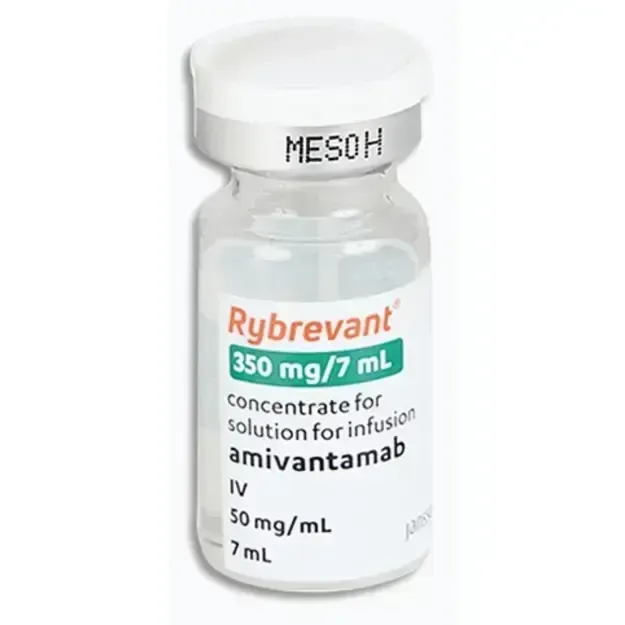
Instructions for Use
Table of Contents
- Rybrevant 350 mg concentrate for solution for infusion
- 1. What Rybrevant is and what it is used for
- 2. What you need to know before using Rybrevant
- 3. How Rybrevant is administered
- 4. Possible side effects
- 5. How to store Rybrevant
- 6. Package contents and other information
- The following information is intended exclusively for healthcare professionals:
- Patient information leaflet
- Rybrevant 1 600 mg solution for injection, 2 240 mg solution for injection
- 1. What Rybrevant is and what it is used for
- 2. What you need to know before using Rybrevant
- 3. How Rybrevant is administered
- 4. Possible side effects
- 5. How to store Rybrevant
- 6. Package contents and other information
- The following information is intended exclusively for healthcare professionals:
Package leaflet: Information for the patient
Rybrevant 350 mg concentrate for solution for infusion
amivantamab

This medicinal product is subject to additional monitoring. This will allow for rapid identification of new safety information. You can help by reporting any side effects you experience while taking this medicine. See the end of section 4 for information on how to report side effects.
Please read all of this leaflet carefully before you start using this medicine as it contains important information for you.
- Keep this leaflet. You may need to read it again.
- If you have any questions, ask your doctor or nurse.
- If you get any side effects, including those not listed in this leaflet, talk to your doctor or nurse. See section 4.
Contents of this leaflet
- What Rybrevant is and what it is used for
- What you need to know before using Rybrevant
- How Rybrevant is given
- Possible side effects
- How to store Rybrevant
- Contents of the pack and other information
1. What Rybrevant is and what it is used for
What RYBREVANT is
Rybrevant is an anticancer medicine. It contains the active substance “amivantamab”, which is an antibody (a type of protein) designed to recognise and bind to specific targets in the body.
What RYBREVANT is used for
Rybrevant is used in adults with a type of lung cancer called “non-small cell lung cancer”. It is used when the cancer has spread to other parts of the body and has specific changes in a gene called “EGFR”.
Rybrevant may be prescribed:
- as first treatment for the cancer in combination with lazertinib,
- in combination with chemotherapy after failure of a prior therapy containing an epidermal growth factor receptor (EGFR) tyrosine kinase inhibitor (TKI),
- as first treatment for the cancer in combination with chemotherapy, or
- when chemotherapy is no longer effective against the cancer.
How RYBREVANT works
The active substance in Rybrevant, amivantamab, targets two proteins found on cancer cells:
- epidermal growth factor receptor (EGFR), and
- mesenchymal-epithelial transition factor (MET).
This medicine works by binding to these proteins. In this way, it can help slow down or stop the growth of lung cancer. It may also help reduce the size of the tumour.
Rybrevant may be given in combination with other anticancer medicines. It is important to read the package leaflets of these other medicines as well. If you have any questions about them, please consult your doctor.
2. What you need to know before using Rybrevant
Do not use Rybrevant
- if you are allergic to amivantamab or to any of the other ingredients of this medicine (listed in section 6). Do not use this medicine if this applies to you. If you are unsure, consult your doctor or nurse before receiving the medicine.
Warnings and precautions
Talk to your doctor or nurse before using Rybrevant if:
- you have previously had inflammation of the lungs (a condition called "interstitial lung disease" or "pneumonitis").
Immediately inform your doctor or nurse while taking this medicine if you experience
any of the following side effects (see section 4 for more information):
- Any side effect while the medicine is being infused intravenously.
- Sudden difficulty breathing, cough or fever, which may indicate inflammation of the lungs. This condition can be potentially life-threatening; therefore, healthcare professionals will monitor you for the appearance of potential symptoms.
- When used in combination with another medicine called lazertinib, potentially life-threatening side effects (due to blood clots in the veins) may occur. Your doctor will give you additional medicines to help prevent blood clots during treatment and will monitor you for potential symptoms.
- Skin problems. To reduce the risk of skin problems, avoid exposure to sunlight, wear protective clothing, apply sunscreen, and regularly use moisturizing creams on your skin and nails during treatment. You will need to continue these measures for 2 months after stopping treatment. Your doctor may recommend starting therapy with one or more medicines to prevent skin problems, may treat you with one or more medicines, or may refer you to see a skin specialist (dermatologist) if you develop skin reactions during treatment.
- Eye problems. If you notice vision problems or eye pain, contact your doctor or nurse immediately. If you wear contact lenses and develop any new eye symptoms, stop using contact lenses and inform your doctor or nurse immediately.
Children and adolescents
Do not administer this medicine to children or young people under 18 years of age, as it is not known whether
the medicine is safe and effective in this age group.
Other medicines and Rybrevant
Inform your doctor or nurse if you are taking, have recently taken, or might take any other medicines.
Contraception
- If you are of childbearing potential, you must use an effective method of contraception during treatment with Rybrevant and for 3 months after stopping treatment.
Pregnancy
- If you are pregnant, suspect you may be pregnant, or are planning a pregnancy, consult your doctor or nurse before using this medicine.
- This medicine may harm the unborn baby. If you become pregnant while being treated with this medicine, inform your doctor or nurse immediately. You and your doctor will decide whether the benefit of the medicine outweighs the risk to the unborn baby.
Breast-feeding
It is not known whether Rybrevant is excreted in human breast milk. Ask your doctor for advice before
the medicine is administered to you. You and your doctor will decide whether the benefit of breast-feeding
is greater than the potential risk to the baby.
Driving and using machines
If you experience fatigue, dizziness, or if your eyes are irritated or your vision is impaired after taking
Rybrevant, do not drive or operate machinery.
Rybrevant contains sodium
This medicine contains less than 1 mmol (23 mg) of sodium per dose, i.e. essentially 'sodium-free'. However, before Rybrevant is administered to you, it may be mixed with a solution containing sodium. Talk to your doctor if you are on a low-salt diet.
Rybrevant contains polysorbate
This medicine contains 0.6 mg of polysorbate 80 per mL, equivalent to 4.2 mg per 7 mL vial. Polysorbates may cause allergic reactions. Inform your doctor if you have known allergies.
3. How Rybrevant is administered
Dose administered
Your doctor will calculate the correct dose of Rybrevant. The dose of this medicine depends on your body weight at the start of treatment. You will receive Rybrevant once every 2 or 3 weeks, depending on the treatment schedule decided by your doctor.
The recommended dose of Rybrevant every 2 weeks is:
- 1,050 mg if your body weight is less than 80 kg;
- 1,400 mg if your body weight is greater than or equal to 80 kg.
The recommended dose of Rybrevant every 3 weeks is:
- 1,400 mg for the first 4 doses and 1,750 mg for subsequent doses if you weigh less than 80 kg;
- 1,750 mg for the first 4 doses and 2,100 mg for subsequent doses if your body weight is greater than or equal to 80 kg.
How the medicine is administered
This medicine is administered by a doctor or nurse. It is given as an intravenous infusion over several hours.
Rybrevant is administered as follows:
- once a week for the first 4 weeks;
- then once every 2 weeks starting from week 5, or once every 3 weeks starting from week 7, for as long as you continue to benefit from treatment.
During the first week, your doctor will administer the dose of Rybrevant over two days.
Medicines administered during treatment with Rybrevant
Before each Rybrevant infusion, you will receive medicines to help reduce the risk of infusion-related reactions. These may include:
- medicines for allergic reactions (antihistamines);
- medicines for inflammation (corticosteroids);
- medicines for fever (such as paracetamol).
You may also receive other medicines depending on any symptoms you might develop.
If you are given more Rybrevant than you should
This medicine will be administered by a doctor or nurse. In the unlikely event that you receive too much medicine (overdose), your doctor will monitor you closely for any adverse effects.
If you miss an appointment to receive Rybrevant
It is very important to attend all your appointments. If you miss an appointment, schedule another one as soon as possible.
If you have any questions about the use of this medicine, consult your doctor or nurse.
4. Possible side effects
Like all medicines, this medicine can cause side effects, although not everybody gets them.
Serious side effects
Tell your doctor or nurse immediately if you notice any of the following serious side effects:
Very common (may affect more than 1 in 10 people):
- Signs of an infusion reaction such as chills, feeling short of breath, feeling unwell (nausea, flushing, chest discomfort, and vomiting) while the medicine is being administered. These effects may occur especially with the first dose. Your doctor may give you other medicines, or the infusion may be slowed down or stopped.
- When given with another medicine called 'lazertinib', a blood clot may form in the veins, especially in the lungs or legs. Signs may include sudden chest pain, shortness of breath, rapid breathing, leg pain, and swelling of the arms or legs.
- Skin problems such as rash (including acne), infected skin around the nails, dry skin, itching, pain, and redness. Inform your doctor if skin or nail problems worsen.
Common (may affect up to 1 in 10 people):
- Eye problems such as dry eyes, swollen eyelids, itchy eyes, vision problems, and increased growth of eyelashes.
- Signs of lung inflammation such as sudden difficulty breathing, cough, or fever. Damage may become permanent (“interstitial lung disease”). If you experience this side effect, your doctor may stop treatment with Rybrevant.
Uncommon (may affect up to 1 in 100 people):
- Inflamed cornea (front part of the eye)
- Inflammation inside the eye that may affect vision
- Potentially life-threatening skin rash with blisters and peeling of most of the body (toxic epidermal necrolysis).
The following side effects have been reported in clinical studies with Rybrevant in combination with
lazertinib:
Other side effects
Tell your doctor if you notice any of the following side effects:
Very common (may affect more than 1 in 10 people):
- Nail problems
- Low level of the protein “albumin” in the blood
- Swelling due to fluid accumulation in the body
- Mouth ulcers
- Increased levels of liver enzymes in the blood
- Nerve damage which may cause tingling, numbness, pain, or loss of pain sensation
- Feeling extremely tired
- Constipation
- Diarrhoea
- Loss of appetite
- Low level of calcium in the blood
- Feeling unwell (nausea)
- Muscle spasms
- Low level of potassium in the blood
- Dizziness
- Muscle pain
- Vomiting
- Fever
- Stomach ache
Common (may affect up to 1 in 10 people):
- Haemorrhoids
- Redness, swelling, peeling, or tenderness, especially on the hands or feet (palmar-plantar erythrodysesthesia)
- Low level of magnesium in the blood
- Itchy skin rash (urticaria)
- Skin ulcer (sore)
The following side effects have been reported in clinical studies with Rybrevant given alone:
Other side effects
Tell your doctor if you notice any of the following side effects:
Very common (may affect more than 1 in 10 people):
- Low level of the protein ‘albumin’ in the blood
- Swelling due to fluid accumulation in the body
- Feeling extremely tired
- Mouth ulcers
- Constipation or diarrhoea
- Loss of appetite
- Increased level of the liver enzyme ‘alanine aminotransferase’ in the blood, a possible sign of liver problems
- Increased level of the enzyme ‘aspartate aminotransferase’ in the blood, a possible sign of liver problems
- Dizziness
- Increased level of the enzyme ‘alkaline phosphatase’ in the blood
- Muscle pain
- Fever
- Low level of calcium in the blood
Common (may affect up to 1 in 10 people):
- Stomach ache
- Low level of potassium in the blood
- Low level of magnesium in the blood
- Haemorrhoids
Uncommon (may affect up to 1 in 100 people):
- Skin ulcer (sore)
The following side effects have been reported in clinical studies with Rybrevant in combination with
chemotherapy:
Other side effects
Tell your doctor if you notice any of the following side effects:
Very common (may affect more than 1 in 10 people):
- Low count of a type of white blood cells (neutropenia)
- Low platelet count (cells that help blood to clot)
- Blood clot in the veins
- Feeling extremely tired
- Nausea
- Mouth ulcers
- Constipation
- Swelling due to fluid accumulation in the body
- Loss of appetite
- Low level of the protein ‘albumin’ in the blood
- Increased level of the liver enzyme ‘alanine aminotransferase’ in the blood, a possible sign of liver problems
- Increased level of the enzyme ‘aspartate aminotransferase’ in the blood, a possible sign of liver problems
- Vomiting
- Low level of potassium in the blood
- Diarrhoea
- Fever
- Low level of magnesium in the blood
- Low level of calcium in the blood
Common (may affect up to 1 in 10 people):
- Increased level of the enzyme ‘alkaline phosphatase’ in the blood
- Stomach ache
- Dizziness
- Haemorrhoids
- Muscle pain
- Skin ulcer (sore)
Reporting of side effects
If you get any side effects, including ones not listed in this leaflet, talk to your doctor or nurse. You can also report side effects directly via the national reporting system listed in Annex V. By reporting side effects, you can help provide more information on the safety of this medicine.
5. How to store Rybrevant
Rybrevant will be stored at the hospital or clinic.
Keep this medicine out of the sight and reach of children.
Do not use this medicine after the expiry date stated on the carton and on the label of the
vial after “Exp.”. The expiry date refers to the last day of that month.
Chemical and physical in-use stability has been demonstrated for 10 hours at a temperature between 15 ºC and 25 °C under ambient light.
From a microbiological point of view, unless the method of dilution excludes the risk of microbial contamination, the product should be used immediately.
If not used immediately, the times and conditions of storage are the responsibility of the user.
Store in a refrigerator (2 °C - 8 °C). Do not freeze.
Keep in the original packaging to protect the medicine from light.
Medicines should not be disposed of via wastewater or household waste. Ask your pharmacist how to dispose of medicines no longer required. This will help protect the environment.
6. Package contents and other information
What Rybrevant contains
- The active substance is amivantamab. One mL of concentrate for solution for infusion contains 50 mg of amivantamab. A 7 mL vial of concentrate contains 350 mg of amivantamab.
- The other components are ethylenediaminetetraacetic acid (EDTA) disodium salt dihydrate, L-histidine, L-histidine monohydrochloride monohydrate, L-methionine, polysorbate 80, sucrose and water for injections (see section 2).
Description of the appearance of Rybrevant and contents of the pack
Rybrevant is a concentrate for solution for infusion and is a colourless to pale yellow liquid.
This medicinal product is available in a pack containing 1 glass vial with 7 mL of concentrate.
Marketing Authorisation Holder
Janssen-Cilag International NV
Turnhoutseweg 30
B-2340 Beerse
Belgium
Manufacturer
Janssen Biologics B.V.
Einsteinweg 101
2333 CB Leiden
The Netherlands
For further information about this medicinal product, please contact the local representative of the Marketing Authorisation Holder:
België/Belgique/Belgien Lietuva
Janssen-Cilag NV UAB “JOHNSON & JOHNSON”
Tel/Tél: +32 14 64 94 11 Tel: +370 5 278 68 88
[email protected] [email protected]
България Luxembourg/Luxemburg
„Джонсън & Джонсън България” ЕООД Janssen-Cilag NV
Тел.: +359 2 489 94 00 Tél/Tel: +32 14 64 94 11
[email protected] [email protected]
Česká republika Magyarország
Janssen-Cilag s.r.o. Janssen-Cilag Kft.
Tel: +420 227 012 227 Tel.: +36 1 884 2858
[email protected]
Danmark Malta
Janssen-Cilag A/S AM MANGION LTD
Tlf.: +45 4594 8282 Tel: +356 2397 6000
[email protected]
Deutschland Nederland
Janssen-Cilag GmbH Janssen-Cilag B.V.
Tel: 0800 086 9247 / +49 2137 955 6955 Tel: +31 76 711 1111
[email protected] [email protected]
Eesti Norge
UAB "JOHNSON & JOHNSON" Eesti filiaal Janssen-Cilag AS
Tel: +372 617 7410 Tlf: +47 24 12 65 00
[email protected] [email protected]
Ελλάδα Österreich
Janssen-Cilag Φαρμακευτική Μονοπρόσωπη Janssen-Cilag Pharma GmbH
Α.Ε.Β.Ε. Tel: +43 1 610 300
Tηλ: +30 210 80 90 000
España Polska
Janssen-Cilag, S.A. Janssen-Cilag Polska Sp. z o.o.
Tel: +34 91 722 81 00 Tel.: +48 22 237 60 00
[email protected]
France Portugal
Janssen-Cilag Janssen-Cilag Farmacêutica, Lda.
Tél: 0 800 25 50 75 / +33 1 55 00 40 03 Tel: +351 214 368 600
[email protected]
Hrvatska România
Johnson & Johnson S.E. d.o.o. Johnson & Johnson România SRL
Tel: +385 1 6610 700 Tel: +40 21 207 1800
[email protected]
Ireland Slovenija
Janssen Sciences Ireland UC Johnson & Johnson d.o.o.
Tel: 1 800 709 122 Tel: +386 1 401 18 00
[email protected] [email protected]
Ísland Slovenská republika
Janssen-Cilag AB Johnson & Johnson, s.r.o.
c/o Vistor ehf. Tel: +421 232 408 400
Sími: +354 535 7000
[email protected]
Italia Suomi/Finland
Janssen-Cilag SpA Janssen-Cilag Oy
Tel: 800.688.777 / +39 02 2510 1 Puh/Tel: +358 207 531 300
[email protected] [email protected]
Κύπρος Sverige
Βαρνάβας Χατζηπαναγής Λτδ Janssen-Cilag AB
Τηλ: +357 22 207 700 Tfn: +46 8 626 50 00
[email protected]
Latvija
UAB "JOHNSON & JOHNSON" filiāle Latvijā
Tel: +371 678 93561
[email protected]
Other sources of information
More detailed information on this medicinal product is available on the European Medicines Agency website: https://www.ema.europa.eu.
The following information is intended exclusively for healthcare professionals:
This medicinal product must not be mixed with other medicinal products except those mentioned below.
Prepare the intravenous infusion solution using an aseptic technique as described below:
Preparation
- Determine the appropriate dose and number of Rybrevant vials required based on the patient's baseline body weight. Each Rybrevant vial contains 350 mg of amivantamab.
- For the every-2-week dosing regimen, patients < 80 kg receive 1,050 mg and patients ≥80 kg receive 1,400 mg once weekly for a total of 4 doses, then every 2 weeks starting from Week 5.
- For the every-3-week dosing regimen, patients < 80 kg receive 1,400 mg once weekly for a total of 4 doses, then 1,750 mg every 3 weeks starting from Week 7; for patients ≥80 kg, 1,750 mg once weekly for a total of 4 doses, then 2,100 mg every 3 weeks starting from Week 7.
- Check that the Rybrevant solution is colourless to pale yellow. Do not use if there are changes in colour or visible particles.
- Remove from the 250 mL infusion bag and then discard a volume of 5% glucose solution or 9 mg/mL (0.9%) sodium chloride injectable solution equal to the volume of Rybrevant solution to be added (discard 7 mL of diluent from the infusion bag for each vial). Infusion bags must be made of polyvinyl chloride (PVC), polypropylene (PP), polyethylene (PE), or polyolefin blend (PP+PE).
- Withdraw 7 mL of Rybrevant from each required vial and add to the infusion bag. Each vial contains an excess of 0.5 mL to ensure sufficient extractable volume. The final volume in the infusion bag must be 250 mL. Discard any unused portion remaining in the vial.
- Gently invert the bag to mix the solution. Do not shake.
- Visually inspect the solution for particulate matter and discoloration prior to administration. Do not use the solution if discoloration or visible particles are present.
Administration
- Administer the diluted solution by intravenous infusion using an infusion set equipped with a flow regulator and an in-line, sterile, non-pyrogenic, low protein-binding polyethersulfone (PES) filter (pore diameter 0.22 or 0.2 micrometres). Administration sets must be made of polyurethane (PU), polybutadiene (PBD), PVC, PP, or PE.
- The administration set with filter must be primed with 5% glucose solution or 0.9% sodium chloride solution before starting each Rybrevant infusion.
- Do not co-infuse Rybrevant in the same intravenous line with other agents.
- The diluted solution must be administered within 10 hours (including duration of infusion) at room temperature (15 °C to 25 °C) and under normal light conditions.
- Due to the high frequency of infusion-related reactions (IRR) with the first dose, amivantamab must be infused through a peripheral vein in Week 1 and Week 2; infusion via a central line may be used in subsequent weeks when the risk of IRR is lower.
Disposal
This medicinal product is for single use only; any unused medicinal product not administered within 10 hours must be disposed of in accordance with local regulations.
Patient information leaflet
Rybrevant 1 600 mg solution for injection, 2 240 mg solution for injection
amivantamab

This medicinal product is subject to additional monitoring. This will allow rapid identification of
new safety information. You can help by reporting any side effects you experience while taking
this medicine. See the end of section 4 for information on how to report side effects.
Please read all of this leaflet carefully before you start using this medicine because it contains important information for you.
- Keep this leaflet. You may need to read it again.
- If you have any questions, ask your doctor or nurse.
- If you get any side effects, including those not listed in this leaflet, tell your doctor or nurse. See section 4.
Contents of this leaflet
- What Rybrevant is and what it is used for
- What you need to know before using Rybrevant
- How Rybrevant is administered
- Possible side effects
- How to store Rybrevant
- Contents of the pack and other information
1. What Rybrevant is and what it is used for
What RYBREVANT is
Rybrevant is an anticancer medicine. It contains the active substance “amivantamab”, which is an antibody (a type of protein) designed to recognise and bind to specific targets in the body.
What RYBREVANT is used for
Rybrevant is used in adults with a type of lung cancer called “non-small cell lung cancer”. It is used when the cancer has spread to other parts of the body and has specific alterations in a gene called “EGFR”.
Rybrevant may be prescribed:
- as the first medicine for cancer treatment, in combination with lazertinib, or
- when chemotherapy is no longer effective against the cancer.
How RYBREVANT works
The active substance in Rybrevant, amivantamab, targets two proteins present on cancer cells:
- epidermal growth factor receptor (EGFR), and
- mesenchymal-epithelial transition factor (MET).
This medicine works by binding to these proteins. In this way, it can help slow down or stop the growth of lung cancer. It may also help shrink the tumour.
Rybrevant may be given in combination with other anticancer medicines. It is important to also read the package leaflets of these other medicines. If you have any questions about them, please consult your doctor.
2. What you need to know before using Rybrevant
Do not use Rybrevant
- if you are allergic to amivantamab or to any of the other ingredients of this medicine (listed in section 6). Do not use this medicine if the above applies to you. If you are not sure, consult your doctor or nurse before receiving this medicine.
Warnings and precautions
Talk to your doctor or nurse before using Rybrevant if:
- you have previously had lung inflammation (a condition called “interstitial lung disease” or “pneumonitis”).
Immediately inform your doctor or nurse while taking this medicine if you experience
any of the following side effects (see section 4 for more information):
- Any side effect while the medicine is being injected.
- Sudden difficulty in breathing, cough, or fever, which may indicate lung inflammation. This condition can be potentially life-threatening; therefore, healthcare providers will monitor you for the development of potential symptoms.
- When used in combination with another medicine called lazertinib; potentially life-threatening side effects (due to blood clots in the veins) may occur. Your doctor will prescribe additional medicines to help prevent blood clot formation during treatment and will monitor you for potential symptoms.
- Skin problems. To reduce the risk of skin problems, avoid exposure to sunlight, wear protective clothing, apply sunscreen, and regularly use moisturizing creams on your skin and nails during treatment. You will need to continue these measures for 2 months after stopping treatment. Your doctor may recommend starting treatment with one or more medicines to prevent skin problems, may treat you with one or more medicines, or may refer you to see a skin specialist (dermatologist) if you develop skin reactions during treatment.
- Eye problems. If you notice vision problems or eye pain, contact your doctor or nurse immediately. If you wear contact lenses and develop any new eye symptoms, stop using contact lenses and inform your doctor or nurse immediately.
Children and adolescents
Do not administer this medicine to children or young people under 18 years of age, as it is not known
whether the medicine is safe and effective in this age group.
Other medicines and Rybrevant
Inform your doctor or nurse if you are taking, have recently taken, or might take any other medicines.
Contraception
- If you are of childbearing age, you must use an effective method of contraception during treatment with Rybrevant and for 3 months after stopping treatment.
Pregnancy
- If you are pregnant, suspect you may be pregnant, or are planning a pregnancy, consult your doctor or nurse before using this medicine.
- This medicine may harm the unborn baby. If you become pregnant during treatment with this medicine, inform your doctor or nurse immediately. You and your doctor will decide whether the benefit of the medicine outweighs the risk to the unborn baby.
Breast-feeding
It is not known whether Rybrevant is excreted in breast milk. Consult your doctor before this
medicine is administered to you. You and your doctor will decide whether the benefit of breast-feeding
outweighs the risk to the baby.
Driving and using machines
If you feel tired, dizzy, or if your eyes are irritated or your vision is affected after taking
Rybrevant, do not drive or operate machinery.
Rybrevant contains sodium
This medicine contains less than 1 mmol (23 mg) of sodium per dose, i.e. essentially ‘sodium-free’.
Rybrevant contains polysorbate
This medicine contains 0.6 mg of polysorbate 80 per mL, equivalent to 6 mg per 10 mL vial or 8.4 mg per 14 mL vial. Polysorbates may cause allergic reactions.
Inform your doctor if you have known allergies.
3. How Rybrevant is administered
Amount administered
The correct dose of Rybrevant will be calculated by your doctor. The dose of this medicine depends on
your body weight at the start of therapy.
The recommended dose of Rybrevant is:
- 1,600 mg if your weight is less than 80 kg.
- 2,240 mg if your weight is greater than or equal to 80 kg.
How the medicine is administered
Rybrevant will be administered to you by a doctor or nurse as an injection under the skin
(subcutaneous injection) over approximately 5 minutes. It is administered in the stomach area
(abdomen), not in other parts of the body, and not in areas of the abdomen where the skin is red, bruised,
tender, hard, or where there are tattoos or scars.
If you experience pain during the injection, the doctor or nurse may pause the injection and
administer the remaining dose in another area of the abdomen.
Rybrevant is administered as follows:
- once weekly for the first 4 weeks
- then once every 2 weeks starting from week 5, for as long as you continue to benefit from treatment.
Medicines administered during treatment with Rybrevant
Before each Rybrevant injection, you will receive medicines to help reduce the risk of
administration-related reactions. These may include:
- medicines for allergic reactions (antihistamines)
- medicines for inflammation (corticosteroids)
- medicines for fever (such as paracetamol).
You may also receive other medicines depending on any symptoms you may develop.
If you are given more Rybrevant than you should
This medicine will be administered by a doctor or nurse. In the unlikely event that you are given an excessive amount (overdose), your doctor will monitor you to check for any adverse effects.
If you miss an appointment to receive Rybrevant
It is very important to attend all your appointments. If you miss an appointment, schedule another one as soon as possible.
If you have any questions about the use of this medicine, consult your doctor or nurse.
4. Possible side effects
Like all medicines, this medicine can cause side effects, although not everyone will experience them.
Serious side effects
Tell your doctor or nurse immediately if you notice any of the following serious side effects:
Very common (may affect more than 1 in 10 people):
- Signs of a reaction to the injection – such as chills, shortness of breath, feeling unwell (nausea), hot flushes, chest discomfort, and fever. These effects may occur especially with the first dose. Your doctor may administer other medicines or it may be necessary to stop the infusion.
- Skin problems – such as rash (including acne), infected skin around the nails, dry skin, itching, pain, and redness. Inform your doctor if skin or nail problems worsen.
- When administered with another medicine called 'lazertinib', a blood clot may form in the veins, especially in the lungs or legs. Signs may include sudden sharp chest pain, breathlessness, rapid breathing, leg pain, and swelling of the arms or legs.
- Eye problems – such as dry eye, eyelid swelling, and itchy eyes.
Common (may affect up to 1 in 10 people):
- Signs of lung inflammation – such as sudden difficulty breathing, cough, or fever. Damage may become permanent (“interstitial lung disease”). If you experience this side effect, your doctor may stop treatment with Rybrevant.
- Eye problems – such as vision disturbances and eyelash growth.
- Inflammation of the cornea (front part of the eye).
The following side effects were reported in clinical studies with Rybrevant when administered as monotherapy via intravenous infusion:
Other side effects
Tell your doctor if you notice any of the following side effects:
Very common (may affect more than 1 in 10 people):
- low blood levels of the protein 'albumin'
- swelling due to fluid accumulation in the body
- feeling extremely tired
- mouth ulcers
- nausea
- vomiting
- constipation or diarrhoea
- loss of appetite
- increased blood levels of the liver enzymes 'alanine aminotransferase' and 'aspartate aminotransferase'
- dizziness
- increased blood levels of the enzyme 'alkaline phosphatase'
- muscle pain
- fever
- low blood calcium levels.
Common (may affect up to 1 in 10 people):
- stomach pain
- low blood potassium levels
- low blood magnesium levels
- haemorrhoids.
Uncommon (may affect up to 1 in 100 people):
- skin ulcer (sore).
The following side effects were reported in clinical studies with Rybrevant (administered as intravenous infusion or subcutaneous injection) in combination with lazertinib:
Other side effects
Tell your doctor if you notice any of the following side effects:
Very common (may affect more than 1 in 10 people):
- low blood levels of the protein 'albumin'
- mouth ulcers
- liver toxicity
- swelling due to fluid accumulation in the body
- feeling extremely tired
- unusual skin sensations (such as tingling or prickling)
- constipation
- diarrhoea
- loss of appetite
- nausea
- low blood calcium levels
- vomiting
- muscle pain
- low blood potassium levels
- muscle spasms
- dizziness
- fever
- stomach pain.
Common (may affect up to 1 in 10 people):
- haemorrhoids
- irritation or pain at the injection site
- low blood magnesium levels
- redness, swelling, peeling, or tenderness, especially on the hands or feet (palmar-plantar erythrodysesthesia)
- itchy rash (urticaria)
- skin ulcer (sore).
Reporting of side effects
If you experience any side effects, including those not listed in this leaflet, talk to your doctor or nurse. You can also report side effects directly through the national reporting system listed in Annex V. By reporting side effects, you can help provide more information on the safety of this medicine.
5. How to store Rybrevant
Rybrevant will be stored at the hospital or clinic.
Keep this medicine out of the sight and reach of children.
Do not use this medicine after the expiry date stated on the carton and on the vial label after “Exp.”. The expiry date refers to the last day of that month.
Store in a refrigerator (2 °C - 8 °C). Do not freeze.
Keep in the original packaging to protect the medicine from light.
Chemical and physical in-use stability of the prepared syringe has been demonstrated for up to 24 hours at a temperature between 2 °C and 8 °C, followed by a maximum of 24 hours at a temperature between 15 °C and 30 °C. From a microbiological standpoint, unless the method of dose preparation excludes the risk of microbial contamination, the product should be used immediately.
If not used immediately, the duration and conditions of storage are the responsibility of the user.
Medicines should not be disposed of via wastewater or household waste. Ask your pharmacist how to dispose of medicines no longer required. This will help protect the environment.
6. Package contents and other information
What Rybrevant contains
- The active substance is amivantamab. One mL of solution contains 160 mg of amivantamab. A 10 mL vial of injectable solution contains 1,600 mg of amivantamab. A 14 mL vial of injectable solution contains 2,240 mg of amivantamab.
- The other components are recombinant human hyaluronidase (rHuPH20), EDTA disodium salt dihydrate, glacial acetic acid, L-methionine, polysorbate 80 (E433), sodium acetate trihydrate, sucrose, and water for injections (see “Rybrevant contains sodium” and “Rybrevant contains polysorbate” in section 2).
Description of the appearance of Rybrevant and contents of the pack
Rybrevant injectable solution is a liquid ranging from colourless to pale yellow. This medicinal product is available in a cardboard pack containing one glass vial with 10 mL of solution or one glass vial with 14 mL of solution.
Marketing Authorisation Holder
Janssen-Cilag International NV
Turnhoutseweg 30
B-2340 Beerse
Belgium
Manufacturer
Janssen Biologics B.V.
Einsteinweg 101
2333 CB Leiden
The Netherlands
For further information about this medicinal product, please contact the local representative of the Marketing Authorisation Holder:
België/Belgique/Belgien Lietuva
Janssen-Cilag NV UAB “JOHNSON & JOHNSON”
Tel/Tél: +32 14 64 94 11 Tel: +370 5 278 68 88
[email protected] [email protected]
България Luxembourg/Luxemburg
„Джонсън & Джонсън България” ЕООД Janssen-Cilag NV
Тел.: +359 2 489 94 00 Tél/Tel: +32 14 64 94 11
[email protected] [email protected]
Česká republika Magyarország
Janssen-Cilag s.r.o. Janssen-Cilag Kft.
Tel: +420 227 012 227 Tel.: +36 1 884 2858
[email protected]
Danmark Malta
Janssen-Cilag A/S AM MANGION LTD
Tlf.: +45 4594 8282 Tel: +356 2397 6000
[email protected]
Deutschland Nederland
Janssen-Cilag GmbH Janssen-Cilag B.V.
Tel: 0800 086 9247 / +49 2137 955 6955 Tel: +31 76 711 1111
[email protected] [email protected]
Eesti Norge
UAB "JOHNSON & JOHNSON" Eesti filiaal Janssen-Cilag AS
Tel: +372 617 7410 Tlf: +47 24 12 65 00
[email protected] [email protected]
Ελλάδα Österreich
Janssen-Cilag Φαρμακευτική Μονοπρόσωπη Janssen-Cilag Pharma GmbH
Α.Ε.Β.Ε. Tel: +43 1 610 300
Tηλ: +30 210 80 90 000
España Polska
Janssen-Cilag, S.A. Janssen-Cilag Polska Sp. z o.o.
Tel: +34 91 722 81 00 Tel.: +48 22 237 60 00
[email protected]
France Portugal
Janssen-Cilag Janssen-Cilag Farmacêutica, Lda.
Tél: 0 800 25 50 75 / +33 1 55 00 40 03 Tel: +351 214 368 600
[email protected]
Hrvatska România
Johnson & Johnson S.E. d.o.o. Johnson & Johnson România SRL
Tel: +385 1 6610 700 Tel: +40 21 207 1800
[email protected]
Ireland Slovenija
Janssen Sciences Ireland UC Johnson & Johnson d.o.o.
Tel: 1 800 709 122 Tel: +386 1 401 18 00
[email protected] [email protected]
Ísland Slovenská republika
Janssen-Cilag AB Johnson & Johnson, s.r.o.
c/o Vistor ehf. Tel: +421 232 408 400
Sími: +354 535 7000
[email protected]
Italia Suomi/Finland
Janssen-Cilag SpA Janssen-Cilag Oy
Tel: 800.688.777 / +39 02 2510 1 Puh/Tel: +358 207 531 300
[email protected] [email protected]
Κύπρος Sverige
Βαρνάβας Χατζηπαναγής Λτδ Janssen-Cilag AB
Τηλ: +357 22 207 700 Tfn: +46 8 626 50 00
[email protected]
Latvija
UAB "JOHNSON & JOHNSON" filiāle Latvijā
Tel: +371 678 93561
[email protected]
Other sources of information
More detailed information on this medicinal product is available on the website of the European Medicines Agency: https://www.ema.europa.eu.
The following information is intended exclusively for healthcare professionals:
Rybrevant subcutaneous formulation must be administered by a healthcare professional.
To avoid medication errors, it is important to check the vial labels to ensure that the appropriate formulation (intravenous or subcutaneous) and dose are administered to the patient as prescribed. The subcutaneous formulation of Rybrevant must be administered only by subcutaneous injection, using the specified dose. The subcutaneous formulation of Rybrevant is not intended for intravenous administration.
This medicinal product must not be mixed with other medicinal products except those mentioned below.
Prepare the subcutaneous injection solution using aseptic technique as described below:
Preparation
- Determine the required dose and the appropriate vial of the subcutaneous formulation of Rybrevant based on the patient’s baseline body weight.
- Patients weighing <80 kg receive 1,600 mg and patients weighing ≥80 kg receive 2,240 mg weekly from Week 1 to Week 4, and then every 2 weeks starting from Week 5 onwards.
- Remove the appropriate vial of the subcutaneous formulation of Rybrevant from refrigerated storage (between 2 °C and 8 °C).
- Check that the solution is colourless to pale yellow. Do not use if particulate matter, discolouration, or extraneous particulate material is observed.
- Allow the subcutaneous formulation of Rybrevant to reach room temperature (between 15 °C and 30 °C) for at least 15 minutes. Do not heat the subcutaneous formulation of Rybrevant by any other method. Do not shake.
- Using a transfer needle, withdraw the required volume of the subcutaneous formulation of Rybrevant from the vial into a syringe of appropriate size. Smaller syringes require less force during preparation and administration.
- The subcutaneous formulation of Rybrevant is compatible with stainless steel injection needles, polypropylene and polycarbonate syringes, and polyethylene, polyurethane, and polyvinyl chloride subcutaneous infusion sets. If needed, a 9 mg/mL (0.9%) sodium chloride solution may also be used to flush an infusion set.
- Replace the transfer needle with appropriate administration or transfer accessories. A 21G to 23G needle or an infusion set is recommended to ensure ease of administration.
Storage of the prepared syringe
The prepared syringe should be used immediately. If immediate administration is not possible, store the prepared syringe refrigerated at 2 to 8 °C for up to 24 hours, followed by storage at room temperature between 15 °C and 30 °C for up to 24 hours. The prepared syringe must be discarded if stored in the refrigerator for more than 24 hours or at room temperature for more than 24 hours. If refrigerated, allow the solution to reach room temperature before administration.
Traceability
To enhance the traceability of biological medicinal products, the name and batch number of the administered product must be clearly recorded.
Disposal
This medicinal product is for single use only. Unused medicine and waste derived from this medicine must be disposed of in accordance with local regulations.
ANNEX IV
SCIENTIFIC CONCLUSIONS AND GROUNDS FOR THE VARIATION TO THE TERMS OF THE
MARKETING AUTHORISATIONS
Scientific conclusions
Taking into account the assessment by the Pharmacovigilance Risk Assessment Committee (PRAC) of the Periodic Safety Update Reports (PSURs) for amivantamab, the PRAC’s scientific conclusions are as follows:
In light of available data on cutaneous ulcer from clinical studies, literature, and spontaneous reports, and considering a plausible mechanism of action, the PRAC considers that there is at least a reasonable possibility of a causal relationship between amivantamab and cutaneous ulcer. The PRAC concluded that the product information for medicinal products containing amivantamab should be updated accordingly.
Having reviewed the PRAC recommendation, the Committee for Human Medicinal Products (CHMP) agrees with the PRAC’s overall conclusions and the rationale behind the recommendation.
Grounds for the variation to the terms of the marketing authorisations
Based on the scientific conclusions regarding amivantamab, the CHMP considers that the benefit-risk balance of medicinal products containing amivantamab remains favourable, subject to the proposed changes to the product information.
The CHMP recommends a variation to the terms of the marketing authorisations.
This page has been machine-translated and may contain inaccuracies. The original data is available in the manufacturing country's language.
Last data check: May 11, 2026 · Data source: Agenzia Italiana del Farmaco (AIFA)