Ruxience
Italy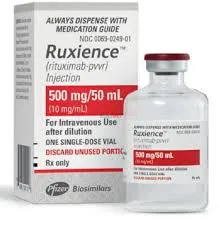
Table of Contents
- Package insert: information for the patient
- Ruxience 100 mg concentrate for solution for infusion, 500 mg concentrate for solution for infusion
- 1. What is Ruxience and what is it used for
- 2. What you should know before using Ruxience
- 3. How Ruxience is administered
- 4. Possible side effects
- 5. How to store Ruxience
- 6. Package contents and other information
B. PACKAGE O INSERT
Package insert: information for the patient
Ruxience 100 mg concentrate for solution for infusion, 500 mg concentrate for solution for infusion
rituximab

This medicinal product is subject to additional monitoring. This will allow for rapid identification of new safety information. You can help by reporting any side effects you experience while taking this medicinal product. See the end of section 4 for information on how to report side effects.
Please read this leaflet carefully before taking this medicine, as it contains important information for you.
- Keep this leaflet. You may need to read it again.
- If you have any questions, ask your doctor, pharmacist, or nurse.
- If you experience any side effect, including those not listed in this leaflet, talk to your doctor, pharmacist, or nurse. See section 4.
Contents of this leaflet:
- What Ruxience is and what it is used for
- What you need to know before using Ruxience
- How Ruxience is administered
- Possible side effects
- How to store Ruxience
- Contents of the pack and other information
1. What is Ruxience and what is it used for
What is Ruxience
Ruxience contains the active substance "rituximab", a type of protein known as a "monoclonal antibody" that binds to the surface of certain white blood cells, specifically B-lymphocytes. When rituximab binds to the surface of these cells, it causes their death.
What is Ruxience used for
Ruxience can be used to treat a variety of conditions in adults and children. Your doctor may prescribe Ruxience for the treatment of:
a) Non-Hodgkin’s lymphoma
Non-Hodgkin’s lymphoma is a disease of the lymphatic tissue (part of the immune system) that affects B-lymphocytes, a specific type of white blood cell.
In adults, Ruxience may be given as monotherapy (alone) or in combination with other medicines collectively referred to as "chemotherapy".
In adult patients who respond to treatment, Ruxience may be used as maintenance therapy for 2 years following completion of initial treatment.
In children and adolescents, Ruxience is administered in combination with "chemotherapy".
b) Chronic lymphocytic leukemia
Chronic lymphocytic leukemia (CLL) is the most common form of leukemia in adults. CLL affects a specific type of lymphocyte, the B-cell, which originates in the bone marrow and matures in the lymph nodes. Patients with CLL have too many abnormal lymphocytes, which accumulate mainly in the bone marrow and blood.
The proliferation of these abnormal B-lymphocytes causes the symptoms you may experience. Ruxience, in combination with chemotherapy, destroys these cells, which are then gradually removed from the body through biological processes.
c) Rheumatoid arthritis
Ruxience is used to treat rheumatoid arthritis. Rheumatoid arthritis is a disease that affects the joints. B-lymphocytes are responsible for some of the symptoms you have. Ruxience is used to treat rheumatoid arthritis in people who have already tried other medicines that either stopped working, were not effective enough, or caused unwanted side effects. Ruxience is usually taken together with another medicine called methotrexate.
Ruxience slows down joint damage caused by rheumatoid arthritis and improves the ability to carry out normal daily activities.
The best response to Ruxience has been observed in patients who have tested positive in blood tests for rheumatoid factor (RF) and/or anti-cyclic citrullinated peptide (anti-CCP). Both tests are commonly positive in rheumatoid arthritis and help confirm the diagnosis.
d) Granulomatosis with polyangiitis and microscopic polyangiitis
Ruxience is used to treat adults and children aged 2 years and older with granulomatosis with polyangiitis (previously called Wegener’s disease) or microscopic polyangiitis, in combination with glucocorticoids.
Granulomatosis with polyangiitis and microscopic polyangiitis are two forms of blood vessel inflammation that primarily affect the lungs and kidneys, but may also involve other organs. B-lymphocytes play a role in causing these conditions.
e) Pemphigus vulgaris
Ruxience is used to treat patients with moderate to severe pemphigus vulgaris. Pemphigus vulgaris is an autoimmune disease that causes painful blisters to form on the skin and mucous membranes (lining tissues) of the mouth, nose, throat, and genitals.
2. What you should know before using Ruxience
Do not take Ruxience:
- if you are allergic to rituximab, to other proteins similar to rituximab, or to any of the other ingredients of this medicine (listed in section 6);
- if you currently have a severe active infection;
- if your immune system is weakened;
- if you suffer from severe heart failure or severe uncontrolled heart disease and have rheumatoid arthritis, granulomatosis with polyangiitis, microscopic polyangiitis, or pemphigus vulgaris.
Do not take Ruxience if any of the above conditions apply to you. If you have any doubts, consult your doctor, pharmacist, or nurse before being administered Ruxience.
Warnings and precautions
It is important that you and your doctor record the brand name and batch number of the medicine. Talk to your doctor, pharmacist, or nurse before being administered Ruxience if:
- you have previously had hepatitis infection or suspect you may currently have it, as in a small number of cases Ruxience may cause reactivation of hepatitis B, which in very rare cases can lead to death. Patients with a prior history of hepatitis B infection will be closely monitored by the doctor for any signs of reactivation.
- you have previously had heart problems (such as angina, palpitations, or heart failure) or respiratory problems.
If any of the above conditions apply to you (or if you have any doubts), talk to your doctor, pharmacist, or nurse before being administered Ruxience. Your doctor may need to pay particular attention during treatment with Ruxience.
Also speak with your doctor if you think you may need any vaccinations in the near future, including vaccinations required for travel to other countries. Some vaccines should not be given at the same time as Ruxience or in the months following Ruxience treatment. Your doctor will assess whether you can receive any vaccine before starting Ruxience.
If you have rheumatoid arthritis, granulomatosis with polyangiitis, microscopic polyangiitis, or pemphigus vulgaris, talk to your doctor
- if you think you have an infection, even a mild one such as a cold. The cells affected by Ruxience play a role in fighting infections, and it is necessary to wait until the infection has resolved before taking Ruxience. Also, inform your doctor if you have previously had frequent infections or suffer from severe infections.
Children and adolescents
Non-Hodgkin’s lymphoma
Ruxience may be used to treat children and adolescents aged 6 months and older with non-Hodgkin’s lymphoma, specifically CD20-positive diffuse large B-cell lymphoma (DLBCL), Burkitt lymphoma (BL)/Burkitt leukemia (acute mature B-cell leukemia; BAL), or Burkitt-like lymphoma (BLL).
Talk to your doctor, pharmacist, or nurse before administering this medicine if you or your child is under 18 years of age.
Granulomatosis with polyangiitis or microscopic polyangiitis
Ruxience may be used to treat children and adolescents aged 2 years and older with granulomatosis with polyangiitis (previously called Wegener’s disease) or microscopic polyangiitis. Currently, limited information is available regarding the use of rituximab in children and adolescents with other diseases.
Talk to your doctor, pharmacist, or nurse before administering this medicine if you or your child is under 18 years of age.
Other medicines and Ruxience
Inform your doctor, pharmacist, or nurse if you are taking, have recently taken, or might take any other medicines, including those without a prescription and herbal medicines, as Ruxience may affect how some medicines work and vice versa.
Specifically, inform your doctor:
- if you are taking medicines for high blood pressure. You may be asked to stop taking these medicines for 12 hours before receiving Ruxience, as some people may experience a drop in blood pressure during Ruxience infusion;
- if you have previously taken medicines that affect the immune system—such as chemotherapy or immunosuppressive drugs.
If any of the above conditions apply to you (or if you have any doubts), talk to your doctor, pharmacist, or nurse before being administered Ruxience.
Pregnancy and breastfeeding
You must inform your doctor or nurse if you are pregnant, suspect you may be pregnant, or are planning a pregnancy, as Ruxience can cross the placenta and may affect the unborn child.
If there is a possibility that you could become pregnant, you and your partner should use an effective method of contraception during treatment with Ruxience and for 12 months after the last dose of Ruxience.
Ruxience passes into breast milk in very small amounts. Since the long-term effects on breastfed infants are unknown, as a precaution, breastfeeding is not recommended during treatment with Ruxience and for 6 months after treatment.
Driving and using machines
It is not known whether rituximab affects the ability to drive or use tools or machinery.
Ruxience contains sodium
This medicine contains less than 1 mmol (23 mg) of sodium per dose, i.e., essentially “sodium-free”.
3. How Ruxience is administered
Administration
Ruxience will be administered to you by a doctor or a nurse experienced in the use of this treatment.
They will closely monitor you during administration of the medicine to detect any possible
adverse effects.
Ruxience is always administered by intravenous infusion (slow drip into a vein).
Medicines given before each Ruxience infusion
Before each Ruxience infusion, you will be given other medicines (premedication) to prevent or reduce
the occurrence of possible adverse effects.
Dose and frequency of treatment
a) If you are being treated for non-Hodgkin’s lymphoma
- If you are receiving Ruxience alone
Ruxience will be given once a week for 4 weeks. Repeated cycles of Ruxience treatment may be possible. - If you are receiving Ruxience in combination with chemotherapy
You will receive Ruxience on the same day as your chemotherapy; administration is usually repeated every 3 weeks for up to 8 cycles. - If you respond well to treatment, Ruxience may be given as maintenance therapy every 2 or 3 months for up to 2 years. Depending on your response to the medicine, your doctor may adjust this treatment schedule.
- If you are under 18 years of age, you will receive Ruxience in combination with chemotherapy. You will receive Ruxience up to 6 times over a period of 3.5 to 5.5 months.
b) If you are being treated for chronic lymphocytic leukaemia
If you are receiving Ruxience in combination with chemotherapy, you will receive Ruxience infusions on day 0 of cycle 1, then on day 1 of each cycle for a total of 6 cycles. Each cycle lasts 28 days. Chemotherapy must be administered after the Ruxience infusion. Your doctor will decide whether you should also receive concomitant supportive therapy.
c) If you are being treated for rheumatoid arthritis
Each treatment cycle consists of two separate infusions given 2 weeks apart. Repeated cycles of Ruxience treatment may be given. Depending on your disease signs and symptoms, your doctor will determine when further cycles should be administered. This may occur after several months.
d) If you are being treated for granulomatosis with polyangiitis or microscopic polyangiitis
Treatment with Ruxience consists of four separate weekly infusions. Corticosteroids will be administered by injection before starting Ruxience treatment. Oral corticosteroids may be started at any time, as decided by your doctor, to manage your condition.
If you are aged 18 years or older and respond well to treatment, Ruxience may be given as maintenance therapy. This consists of two separate infusions given 2 weeks apart, followed by an infusion every 6 months for at least 2 years. Depending on your response to the medicine, your doctor may decide to extend Ruxience treatment (up to a maximum of 5 years).
e) If you are being treated for pemphigus vulgaris
Each treatment cycle consists of two separate infusions given 2 weeks apart. If you respond well to treatment, Ruxience may be given as maintenance therapy at 1 year and 18 months after initial treatment, and subsequently, if necessary, every 6 months. Depending on your response to the medicine, your doctor may modify this treatment schedule.
If you have any further questions about the use of this medicine, please ask your doctor, pharmacist, or nurse.
4. Possible side effects
Like all medicines, this medicine can cause side effects, although not everyone gets them.
Most side effects are mild or moderate, but in some cases they can be severe and require treatment. Rarely, some of these reactions have been fatal.
Infusion reactions
During or within the first 24 hours after the infusion, you may develop fever, chills, and tremors. Less frequently, some patients may experience pain at the infusion site, blistering, skin itching, nausea, fatigue, headache, breathing difficulties, increased blood pressure, wheezing, sore throat, swelling of the tongue or throat, irritation or runny nose, vomiting, feeling of warmth or palpitations, heart attack, or reduction in platelet count. If you have heart disease or angina, these reactions may worsen. If you or your child experiences any of these symptoms, inform immediately the person administering the infusion, as it may be necessary to slow down or stop the infusion rate. Additional treatment may be required, for example with an antihistamine or paracetamol. Once these symptoms have resolved or improved, the infusion may be resumed. These reactions are less likely to occur after the second infusion. Your doctor may decide to discontinue treatment with Ruxience if these reactions are severe.
Infections
Inform your doctor immediately if you or your child shows signs of infection, including:
- fever, cough, sore throat, burning when urinating, feeling weak or generally unwell
- memory loss, thinking disorders, difficulty walking, or loss of vision – these may be due to a very rare, serious infection, which has proven fatal (Progressive Multifocal Leukoencephalopathy or PML).
- fever, headache, and neck stiffness, lack of coordination (ataxia), personality changes, hallucinations, altered consciousness, seizures, or coma – these may be due to a serious brain infection (enteroviral meningoencephalitis), which can be fatal.
You may become more susceptible to infections during treatment with Ruxience.
These are often colds, but cases of pneumonia, urinary tract infections, and serious viral infections have occurred. These conditions are listed below under the section “Other side effects”.
If you are being treated for rheumatoid arthritis, granulomatosis with polyangiitis, microscopic polyangiitis, or pemphigus vulgaris, you will find this information also in the Patient Alert Card that your doctor will give you. It is important that you carry this alert card with you and show it to family members or anyone caring for you.
Skin reactions
Very rarely, serious skin reactions with blistering may occur, which can be life-threatening. Redness, often associated with blisters, may appear on the skin or mucous membranes, such as inside the mouth, in the genital area, or around the eyelids, and fever may be present. Inform your doctor immediately if any of these symptoms occur.
Other side effects
a) If you or your child is being treated for non-Hodgkin’s lymphoma or chronic lymphocytic leukemia
Very common side effects (may affect more than 1 in 10 people):
- bacterial or viral infections, bronchitis
- low white blood cell count, with or without fever, or low platelet count (blood cells)
- nausea
- areas of hair loss on the scalp, chills, headache
- weakened immune defenses – due to a reduction in certain antibodies called “immunoglobulins” (IgG) in the blood, which help the body protect itself from infections.
Common side effects (may affect up to 1 in 10 people):
- blood infections (sepsis), pneumonia, shingles (herpes zoster), colds, bronchial infections, fungal infections, infections of unknown origin, sinusitis, hepatitis B
- low red blood cell count (anemia), low count of all blood cells
- allergic reactions (hypersensitivity)
- high blood sugar levels, weight loss, facial and body swelling, elevated levels of the enzyme “LDH” in the blood, low blood calcium levels
- abnormal skin sensations – such as numbness, tingling, prickling, burning, feeling of stretched skin, reduced sense of touch
- restlessness, difficulty falling asleep
- marked redness of the face and other skin areas due to dilation of blood vessels
- dizziness or anxiety
- increased tear production, problems with tear duct, eye inflammation (conjunctivitis)
- continuous ringing in the ears, ear pain
- heart problems – such as heart attack, irregular or rapid heartbeat
- high or low blood pressure (particularly low blood pressure when standing)
- contraction of the muscles in the airways causing wheezing (bronchospasm), inflammation, irritation in the lungs, throat, or sinuses, shortness of breath, runny nose
- vomiting, diarrhea, stomach pain, throat or mouth irritation or ulceration, swallowing difficulties, constipation, indigestion
- eating disorders, inadequate food intake leading to weight loss
- hives, increased sweating, night sweats
- muscle problems – such as muscle stiffness, joint or muscle pain, back and neck pain
- tumor pain
- general malaise, restlessness or fatigue, tremors, flu-like symptoms
- multi-organ failure.
Uncommon side effects (may affect up to 1 in 100 people):
- blood clotting problems, reduced production of red blood cells, and increased destruction of red blood cells (hemolytic and aplastic anemia), swelling or enlargement of lymph nodes
- low mood and loss of interest or pleasure in activities, nervousness
- taste-related problems – such as altered sense of taste
- heart problems – such as decreased heart rate or chest pain (angina)
- asthma, insufficient oxygen reaching the body's organs
- stomach swelling.
Very rare side effects (may affect up to 1 in 10,000 people):
- short-term increase in certain types of antibodies (called immunoglobulins - IgM) in the blood, chemical changes in the blood due to the breakdown of dying tumor cells
- nerve damage in arms and legs, facial paralysis
- heart failure
- inflammation of blood vessels, including those causing skin symptoms
- respiratory failure
- damage to the intestinal wall (perforation)
- severe skin problems with blistering, potentially fatal. Redness, often associated with blisters, may appear on the skin or mucous membranes, such as inside the mouth, in the genital area, or around the eyelids, and fever may be present
- kidney failure
- severe loss of vision
Not known (frequency cannot be determined from available data):
- delayed reduction in white blood cells
- reduction in platelet count immediately after infusion – a reversible condition, but potentially fatal in rare cases
- hearing loss, loss of other senses
- infection/inflammation of the brain and meninges (enteroviral meningoencephalitis)
Children and adolescents with non-Hodgkin’s lymphoma
In general, the side effects observed in children and adolescents with non-Hodgkin’s lymphoma were similar to those seen in adults with non-Hodgkin’s lymphoma or chronic lymphocytic leukemia. The most commonly observed side effects were fever associated with low levels of a type of white blood cell (neutrophils), inflammation or mouth ulcers affecting the lining of the mouth, and allergic reactions (hypersensitivity).
b) If you are being treated for rheumatoid arthritis
Very common side effects (may affect more than 1 in 10 people):
- infections such as pneumonia (bacterial)
- pain when urinating (urinary tract infections)
- allergic reactions likely to occur during infusion but which may occur up to 24 hours after infusion
- changes in blood pressure, nausea, skin rashes, fever, itching sensation, stuffy or runny nose, sneezing, tremor, rapid heartbeat, and fatigue
- headache
- changes in laboratory tests requested by your doctor. These include a reduction in certain specific proteins in the blood (immunoglobulins) that help protect against infections.
Common side effects (may affect up to 1 in 10 people):
- infections such as bronchial inflammation (bronchitis)
- a feeling of pain and fullness behind the nose, cheeks, and eyes (sinusitis), abdominal pain, vomiting, and diarrhea, breathing problems
- fungal infection of the feet (athlete’s foot)
- high cholesterol levels in the blood
- abnormal sensations on the skin, such as numbness, tingling, prickling, or burning, sciatica, migraine, dizziness
- hair loss
- anxiety, depression
- indigestion, diarrhea, acid reflux, throat and mouth irritation and/or ulceration
- pain in the stomach, back, muscles, and/or joints.
Uncommon side effects (may affect up to 1 in 100 people):
- fluid retention in the face and body
- inflammation, irritation, and/or tightness in the lungs, throat, cough
- skin reactions, including hives, itching, skin rashes
- allergic reactions including wheezing or shortness of breath, swelling of the face and tongue, collapse.
Very rare side effects (may affect up to 1 in 10,000 people):
- a complex of symptoms occurring within a few weeks after rituximab infusion, including allergic-type reactions such as skin rashes, itching, joint pain, swollen lymph glands, and fever
- severe skin reactions with blistering that can be life-threatening. Redness, often associated with blisters, may appear on the skin or mucous membranes, such as inside the mouth, in the genital area, or around the eyelids, and fever may be present.
Not known (frequency cannot be determined from available data):
- serious viral infections
- infection/inflammation of the brain and meninges (enteroviral meningoencephalitis)
Other side effects rarely reported with rituximab treatment include a reduction in the number of white blood cells (neutrophils) in the blood, which are needed to fight infections. Some infections can be serious (please refer to the information on Infections within this section).
c) If you or your child is being treated for granulomatosis with polyangiitis or microscopic polyangiitis
Very common side effects (may affect more than 1 in 10 people):
- infections, such as lung infections, urinary tract infections (pain when urinating), colds, and herpes infections
- allergic reactions likely to occur during infusion but which may occur up to 24 hours after infusion
- diarrhea
- cough or shortness of breath
- nosebleeds
- increased blood pressure
- joint or back pain
- muscle contractions or restlessness
- dizziness
- tremors (often in the hands)
- sleep disturbances (insomnia)
- swelling of hands and ankles
Common side effects (may affect up to 1 in 10 people):
- indigestion
- constipation
- skin rashes, including acne or spots
- hot flushes or skin redness
- fever
- stuffy or runny nose
- muscle stiffness or muscle pain
- pain in muscles, hands, or feet
- low red blood cell count (anemia)
- low platelet count in the blood
- increased potassium levels in the blood
- changes in heart rhythm or rapid heartbeat.
Very rare side effects (may affect up to 1 in 10,000 people):
- severe skin reactions with blistering that can be life-threatening. Redness, often associated with blisters, may appear on the skin or mucous membranes, such as inside the mouth, in the genital area, or around the eyelids, and fever may be present
- reactivation of previous hepatitis B infection.
Not known (frequency cannot be determined from available data):
- serious viral infections
- infection/inflammation of the brain and meninges (enteroviral meningoencephalitis)
Children and adolescents with granulomatosis with polyangiitis or microscopic polyangiitis
In general, the side effects in children and adolescents with granulomatosis with polyangiitis or microscopic polyangiitis were similar in type to those observed in adults with these conditions. The most frequently observed side effects were infections, allergic reactions, and nausea.
d) If you are being treated for pemphigus vulgaris
Very common side effects (may affect more than 1 in 10 people):
- allergic reactions likely to occur during infusion but which may occur up to 24 hours after infusion
- headache
- infections, such as chest infections
- persistent depression
- hair loss.
Common side effects (may affect up to 1 in 10 people):
- infections, such as colds, herpes infections, eye infections, oral thrush, and urinary tract infections (pain during urination)
- mood disorders, such as irritability and depression
- skin disorders, such as itching, hives, and benign cysts
- fatigue or dizziness
- fever
- joint or back pain
- abdominal pain
- muscle pain
- rapid heartbeat.
Not known (frequency cannot be determined from available data):
- serious viral infections
- infection/inflammation of the brain and meninges (enteroviral meningoencephalitis)
Ruxience may also cause changes in laboratory tests requested by your doctor.
If you are taking Ruxience in combination with other medicines, some of the side effects you experience may be due to the other drugs.
Reporting of side effects
If you get any side effect, including ones not listed in this leaflet, talk to your doctor, pharmacist, or nurse. You can also report side effects directly via the national reporting system listed in Annex V.
By reporting side effects, you can help provide more information on the safety of this medicine.
5. How to store Ruxience
Keep this medicine out of the sight and reach of children.
Do not use this medicine after the expiry date stated on the carton after “Exp”. The expiry date refers to the last day of that month.
Store in a refrigerator (2°C – 8°C). Keep the container in the outer packaging to protect it from light.
Do not dispose of any medicine via wastewater or household waste. Ask your pharmacist how to dispose of medicines you no longer use. This will help protect the environment.
6. Package contents and other information
What Ruxience contains
- The active substance in Ruxience is rituximab. The 10 mL vial contains 100 mg of rituximab (10 mg/mL). The 50 mL vial contains 500 mg of rituximab (10 mg/mL).
- The other components are L-histidine, L-histidine monohydrochloride monohydrate, disodium edetate, polysorbate 80, sucrose, water for injections.
Description of the appearance of Ruxience and contents of the pack
Ruxience is a solution ranging from clear to slightly opalescent, from colourless to light brownish-yellow, supplied as a concentrate for infusion solution [sterile concentrate].
10 mL vial – Pack containing 1 vial
50 mL vial – Pack containing 1 vial
Marketing Authorisation Holder
Pfizer Europe MA EEIG
Boulevard de la Plaine 17
1050 Brussels
Belgium
Manufacturer
Pfizer Manufacturing Belgium NV
Rijksweg 12
2870 Puurs-Sint-Amands
Belgium
For further information on this medicinal product, please contact the local representative of the Marketing Authorisation Holder:
België/Belgique/Belgien Κύπρος
Luxembourg/Luxemburg Pfizer Eλλάς A.E. (Cyprus Branch)
Pfizer NV/SA Tel: +357 22817690
Tél/Tel: +32 (0)2 554 62 11
Česká republika Magyarország
Pfizer, spol. s r.o. Pfizer Kft.
Tel: +420 283 004 111 Tel.: +36 1 488 37 00
Danmark Malta
Pfizer ApS Vivian Corporation Ltd.
Tlf: +45 44 20 11 00 Tel: +356 21344610
Deutschland Nederland
PFIZER PHARMA GmbH Pfizer bv
Tel: +49 (0)30 550055-51000 Tel: +31 (0)800 63 34 636
България Norge
Пфайзер Люксембург САРЛ, Pfizer AS
Клон България Tlf: +47 67 52 61 00
Tel.: +359 2 970 4333
Eesti Österreich
Pfizer Luxembourg SARL Eesti filiaal Pfizer Corporation Austria Ges.m.b.H.
Tel: +372 666 7500 Tel: +43 (0)1 521 15-0
Ελλάδα Polska
Pfizer Eλλάς A.E. Pfizer Polska Sp. z o.o.
Tel: +30 210 6785800 Tel.: +48 22 335 61 00
España Portugal
Pfizer, S.L. Laboratórios Pfizer, Lda.
Tel: +34 91 490 99 00 Tel: +351 21 423 5500
France România
Pfizer Pfizer Romania S.R.L.
Tél: +33 (0)1 58 07 34 40 Tel: +40 (0) 21 207 28 00
Hrvatska Slovenija
Pfizer Croatia d.o.o. Pfizer Luxembourg SARL
Tel: +385 1 3908 777 Pfizer, podružnica za svetovanje s področja farmacevtske dejavnosti, Ljubljana
Tel: +386 (0)1 52 11 400
Ireland Slovenská republika
Pfizer Healthcare Ireland Pfizer Luxembourg SARL, organizačná zložka
Tel: +1800 633 363 (toll free) Tel: +421 2 3355 5500
Tel: +44 (0)1304 616161
Ísland Suomi/Finland
Icepharma hf. Pfizer Oy
Sími: +354 540 8000 Puh/Tel: +358 (0)9 430 040
Italia Sverige
Pfizer S.r.l. Pfizer AB
Tel: +39 06 33 18 21 Tel: +46 (0)8 550 520 00
Latvija United Kingdom (Northern Ireland)
Pfizer Luxembourg SARL filiāle Latvijā Pfizer Limited
Tel: +371 670 35 775 Tel: +44 (0)1304 616161
Lietuva
Pfizer Luxembourg SARL filialas Lietuvoje
Tel: +370 5 251 4000
Other sources of information
More detailed information on this medicinal product is available on the website of the European Medicines Agency: http://www.ema.europa.eu.
This leaflet is available in all languages of the European Union/European Economic Area on the website of the European Medicines Agency.