Rovamicina
Italy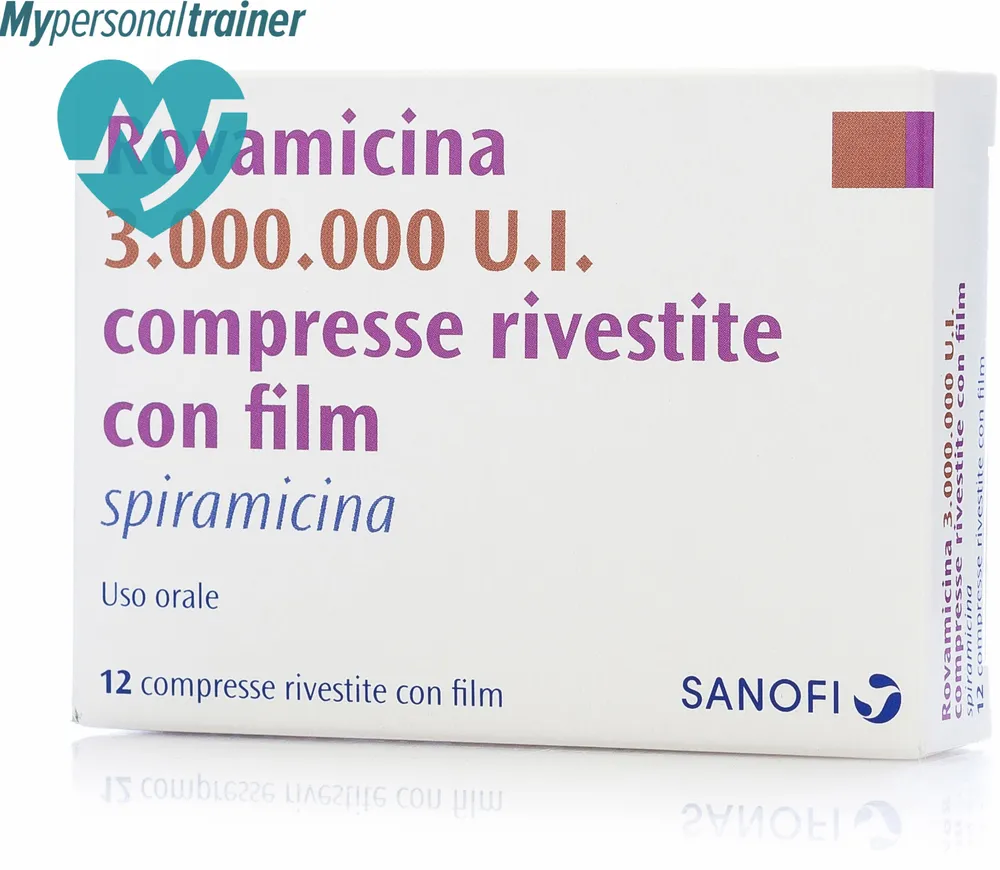
Table of Contents
- Package leaflet: Information for the patient
- Rovamicina 3,000,000 IU film-coated tablets
- 1. What Rovamicina is and what it is used for
- 2. What you need to know before taking Rovamicina
- 3. How to take Rovamicina
- 4. Possible side effects
- 5. How to store Rovamicina
- 6. Package contents and other information
Package leaflet: Information for the patient
Rovamicina 3,000,000 IU film-coated tablets
spiramycin
Please read this leaflet carefully before taking this medicine because it contains important information for you.
- Keep this leaflet. You may need to read it again.
- If you have any questions, ask your doctor or pharmacist.
- This medicine has been prescribed for you only. Do not give it to other people, even if their symptoms are the same as yours, as it may be harmful.
- If you experience any adverse reactions, including those not listed in this leaflet, contact your doctor or pharmacist. See section 4.
Contents of this leaflet:
- What Rovamicina is and what it is used for
- What you need to know before taking Rovamicina
- How to take Rovamicina
- Possible side effects
- How to store Rovamicina
- Contents of the pack and other information
1. What Rovamicina is and what it is used for
Rovamicina contains spiramycin, an antibiotic belonging to a group of medicines called macrolides,
which acts against certain bacteria causing the following infections:
- infections of the mouth, such as inflammation of the tissues around the tooth (periodontal diseases) and of the gums (gingivitis). Spiramycin, in addition to other therapies, is used to treat chronic inflammatory conditions affecting the supporting tissues of the teeth (alveolar pyorrhea);
- respiratory tract infections, such as infections of the nose and throat (rhinopharyngitis, tonsillitis, laryngitis), ear infections (otitis media), infections of the bronchi and lungs (bronchitis, bronchopneumonia, and pneumonia), and infections characterized by pus accumulation (pulmonary abscesses and empyema);
- infectious diseases, such as whooping cough (pertussis), erysipelas (skin inflammation with redness), scarlet fever (with fever, sore throat, red rash), and gonorrhea (a sexually transmitted infection);
- skin infections such as pyodermitis, furunculosis, abscesses, and infected ulcers;
- bronchopulmonary complications associated with influenza and exanthematous diseases (infectious diseases characterized by skin rashes).
2. What you need to know before taking Rovamicina
Do not take Rovamicina
If you are allergic to the active substance or to any of the other ingredients of this medicine (listed in
section 6).
Warnings and precautions
Talk to your doctor before taking Rovamicina:
- if you have changes in your electrocardiogram (prolongation of the QT interval);
- if you have had certain heart problems such as heart failure, heart attack, or slow heart rate (bradycardia);
- if you have had certain abnormal blood tests due to low levels of certain salts in the blood, such as potassium (hypokalaemia) or magnesium (hypomagnesaemia);
- if you are taking medicines known to affect heart rhythm (drugs that prolong the QT interval), such as medicines used to regulate heart rhythm (antiarrhythmics), for depression (tricyclic antidepressants), certain antibiotics, or certain medicines used to treat mental illnesses (antipsychotics): this is particularly important in elderly patients, newborns, and women (see section “Other medicines and Rovamicina”);
- if you suffer from skin, mouth, eye, or genital lesions (such as red, blistered skin or mucosal lesions) – these may be signs of a disease called “toxic epidermal necrolysis” or “Stevens-Johnson syndrome” or “acute generalised exanthematous pustulosis”;
- if you have a hereditary condition characterised by deficiency of an enzyme called glucose-6-phosphate dehydrogenase. This medicine may not be suitable for you, as it could cause a decrease in haemoglobin in the blood due to excessive destruction of red blood cells (acute haemolysis). This phenomenon is rare.
Laboratory tests
If you need to take this medicine for a long time and at high doses, your doctor will periodically prescribe tests to monitor the various components of your blood and liver function.
Other medicines and Rovamicina
Tell your doctor or pharmacist if you are taking, have recently taken, or might take any other medicine.
In particular, inform your doctor if you are taking the following medicines:
- medicines known to affect heart rhythm (drugs that prolong the QT interval), such as medicines used to regulate heart rhythm (antiarrhythmics), for depression (tricyclic antidepressants), certain antibiotics, or certain medicines used to treat mental illnesses (antipsychotics);
- hydroxychloroquine or chloroquine (used to treat conditions such as rheumatoid arthritis or to treat or prevent malaria): taking these medicines together with Rovamicina may increase the risk of heart-related side effects, which could be life-threatening. The use of antibiotics may lead to the development of bacteria resistant to treatment. Some germs that become resistant to spiramycin may also become insensitive to similar, but not identical, substances such as oleandomycin, erythromycin, and other antibiotics belonging to the macrolide group.
If you are being treated with carbidopa or levodopa, your doctor will monitor you and, if necessary, adjust the dosage of levodopa.
Pregnancy and breastfeeding
Pregnancy
If you are pregnant, suspect you may be pregnant, planning to become pregnant, or breastfeeding, consult your doctor or pharmacist before taking this medicine.
Breastfeeding
The use of Rovamicina during breastfeeding is not recommended because spiramycin passes into breast milk.
Driving and using machines
Rovamicina does not affect the ability to drive vehicles or operate machinery.
Rovamicina film-coated tablets contain sodium
This medicine contains less than 1 mmol (23 mg) of sodium per tablet, i.e. essentially ‘sodium-free’.
3. How to take Rovamicina
Take this medicine exactly as directed by your doctor or pharmacist. If you have
any doubts, consult your doctor or pharmacist.
The recommended dose is 2 - 3 tablets per day, divided into 2 or 3 doses.
Swallow the tablet whole, without chewing, with plenty of water.
Use in children
The dose will be determined by the doctor and depends on the child's body weight and the severity of the illness.
Follow the recommended dose carefully.
It is important to continue taking Rovamicina for at least 48 hours after symptoms have disappeared.
If you take more Rovamicina than you should
If you take more Rovamicina than prescribed, contact your doctor immediately or go to the nearest hospital.
Take the medicine package with you so that the doctor knows what you have taken.
If you forget to take Rovamicina
Do not take a double dose to make up for the missed tablet.
If you have any doubts about how to use this medicine, consult your doctor or pharmacist.
4. Possible side effects
Like all medicines, this medicine can cause side effects, although not everyone will experience them.
Stop taking Rovamicina and contact your doctor or go to the nearest hospital immediately if you experience:
- difficulty breathing or swallowing, swelling of the face, hands and feet, eyes, lips and/or tongue, skin irritation, itching, or hives: these may be symptoms of severe allergic reactions (angioedema and anaphylactic reaction).
The following side effects have been reported with the use of this medicine:
Very common:
-
temporary alteration in sensation of limbs or other body parts (transient paresthesia).
Common: -
abdominal pain;
-
nausea, vomiting;
-
diarrhoea;
-
a specific inflammation of the lower end of the intestine associated with severe diarrhoea (pseudomembranous colitis);
-
skin redness (rash);
-
transient taste disturbance (transient dysgeusia).
Not known: -
urticaria, itching, swelling of the face, hands and feet, eyes, lips and/or tongue (angioedema);
-
skin, mouth, eye or genital lesions (such as red skin rashes with blisters or mucosal lesions) – these may be signs of a condition called “toxic epidermal necrolysis” or “Stevens-Johnson syndrome” or “acute generalized exanthematous pustulosis”;
-
severe allergic reaction (anaphylactic shock); widespread red or purple spots on the skin, sometimes associated with joint pain, muscle pain, weakness and fever, which may be symptoms of inflammation of blood vessels (vasculitis, including Henoch-Schönlein purpura);
-
inflammation of the liver that may also affect the bile ducts (cholestatic and mixed hepatitis);
-
excessive breakdown of red blood cells in the blood, leading to reduced haemoglobin (acute haemolysis);
-
reduction in white blood cells (leukopenia, neutropenia);
-
changes in heart rhythm (ventricular arrhythmias or torsades de pointes, which may lead to cardiac arrest), increased heart rate (ventricular tachycardia);
-
abnormalities in certain tests assessing heart function (electrocardiogram: QT interval prolongation) and liver function (abnormal liver function tests).
Reporting of side effects
If you experience any side effect, including those not listed in this leaflet, please inform your doctor, pharmacist, or nurse. You may also report side effects directly via the national reporting system at http://www.aifa.gov.it/content/segnalazioni-reazioni-avverse.
By reporting side effects, you can help provide more information on the safety of this medicine.
5. How to store Rovamicina
This medicinal product does not require any special storage conditions.
Keep this medicine out of the sight and reach of children.
Do not use this medicine after the expiry date which is stated on the packaging after “Exp.”.
The expiry date refers to the last day of that month.
Do not dispose of any medicine via wastewater or household waste. Ask your pharmacist how to dispose of
medicines no longer in use. This will help protect the environment.
6. Package contents and other information
What Rovamicina contains
- The active substance is spiramycin. One tablet contains 3,000,000 IU of spiramycin.
- The other components are: anhydrous colloidal silica, hydroxypropylcellulose, magnesium stearate, hypromellose, pregelatinized corn starch, macrogol 6,000, sodium croscarmellose, microcrystalline cellulose, titanium dioxide.
Description of the appearance of Rovamicina and contents of the pack
Pack of 12 film-coated tablets in blister.
Marketing Authorization Holder and Manufacturer
Marketing Authorization Holder
The Simple Pharma Company Limited
Ground Floor, 71 Lower Baggot Street
Dublin, D02 P593, Ireland
Manufacturer
FAMAR HEALTH CARE SERVICES - Avenida de Leganés, 62 - 28 923 Alcorcon (Madrid) - Spain
SANOFI S.r.l. - Strada Statale 17, Km 22 - 67019 Scoppito (AQ) - Italy