Ropivacaine Noridem
Italy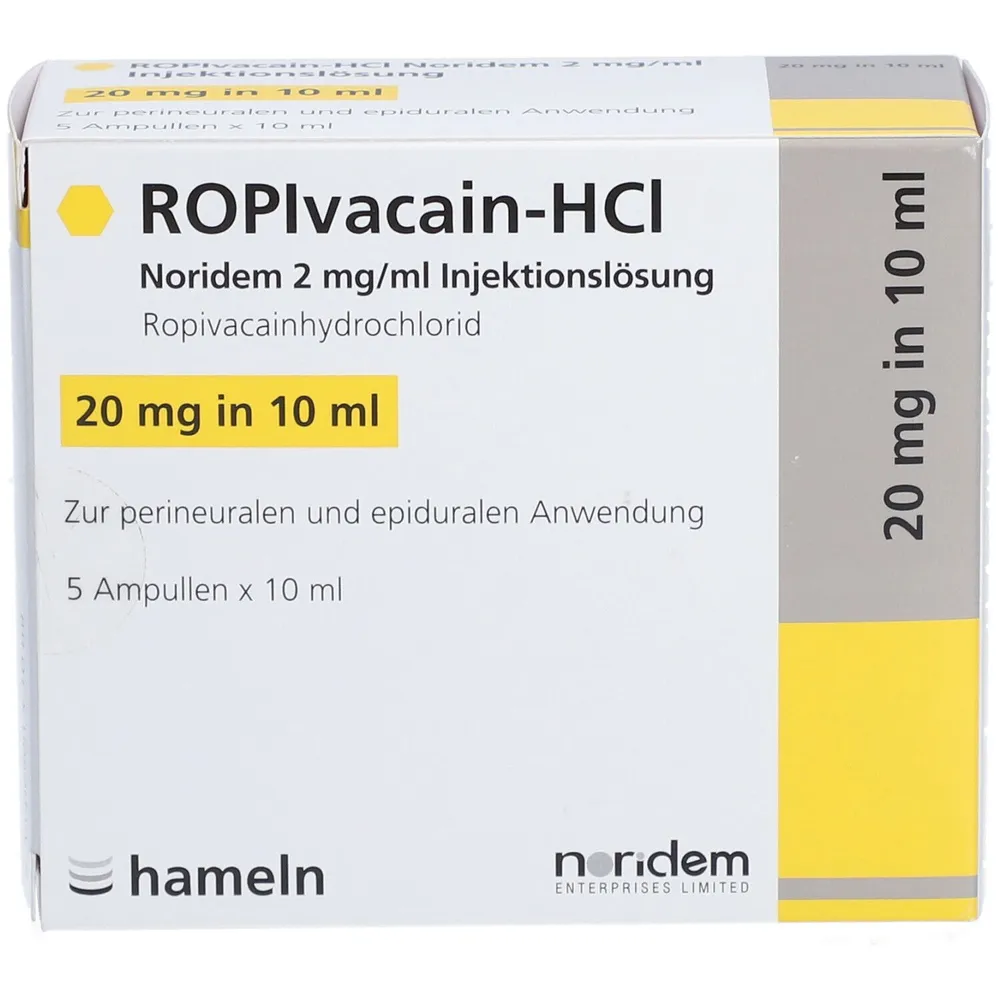
Table of Contents
- Package leaflet: Information for the user
- Ropivacaine Noridem 2 mg/mL solution for injection
- 1. What Ropivacaina Noridem is and what it is used for
- 2. What you need to know before Ropivacaine Noridem is administered to you
- 3. How Ropivacaine Noridem is administered
- 4. Possible side effects
- 5. How to store Ropivacaine Noridem
- 6. Package contents and other information
- Package leaflet: Information for the user
- Ropivacaine Noridem 5 mg/mL solution for injection
- 1. What Ropivacaine Noridem is and what it is used for
- 2. What you should know before being given Ropivacaine Noridem
- 3. How Ropivacaine Noridem is administered
- 4. Possible side effects
- 5. How to store Ropivacaine Noridem
- 6. Package Contents and Other Information
- Package leaflet: Information for the user
- Ropivacaine Noridem 7.5 mg/mL solution for injection
- 1. What Ropivacaine Noridem is and what it is used for
- 2. What you should know before Ropivacaine Noridem is administered to you
- 3. How Ropivacaina Noridem is administered
- 4. Possible side effects
- 5. How to store Ropivacaine Noridem
- 6. Package contents and other information
- Package leaflet: Information for the user
- Ropivacaine Noridem 10 mg/mL solution for injection
- 1. What Ropivacaine Noridem is and what it is used for
- 2. What you should know before Ropivacaine Noridem is administered to you
- 3. How Ropivacaine Noridem is administered
- 4. Possible side effects
- 5. How to store Ropivacaine Noridem
- 6. Package contents and other information
- Package leaflet: information for the user
- Ropivacaine Noridem 2 mg/mL infusion solution
- 1. What Ropivacaina Noridem is and what it is used for
- 2. What you need to know before being given Ropivacaine Noridem
- 3. How Ropivacaine Noridem is administered
- 4. Possible side effects
- 5. How to store Ropivacaine Noridem
- 6. Package contents and other information
Package leaflet: Information for the user
Ropivacaine Noridem 2 mg/mL solution for injection
ropivacaine hydrochloride
Generic medicine
Please read this leaflet carefully before this medicine is administered to you because it
contains important information for you.
- Keep this leaflet. You may need to read it again.
- If you have any questions, ask your doctor, pharmacist or nurse.
- If you experience any side effects, including those not listed in this leaflet, tell your doctor, pharmacist or nurse. See section 4.
Contents of this leaflet:
- What Ropivacaine Noridem is and what it is used for
- What you need to know before it is administered
- How Ropivacaine Noridem is administered
- Possible side effects
- How to store Ropivacaine Noridem
- Contents of the pack and other information
1. What Ropivacaina Noridem is and what it is used for
The name of the medicine is Ropivacaina Noridem.
- It contains an active substance called ropivacaine hydrochloride.
- It belongs to a group of medicines called local anaesthetics.
- It will be administered to you as an injection.
Ropivacaina Noridem 2 mg/mL is used in adults and children of all ages for the management of
acute pain. It numbs (anaesthetizes) parts of the body, e.g. after surgical procedures.
2. What you need to know before Ropivacaine Noridem is administered to you
Do not be given Ropivacaine Noridem:
- if you are allergic to ropivacaine hydrochloride or to any of the other ingredients of this medicine (listed in section 6);
- if you are allergic to any other local anaesthetic of the same class (e.g. lidocaine or bupivacaine);
- if you have been diagnosed with reduced blood volume (hypovolemia);
- into a blood vessel to anaesthetize a specific area of the body or into the cervix to relieve pain during childbirth.
If you are unsure whether any of the above apply to you, consult your doctor before Ropivacaine Noridem is administered.
Warnings and precautions
Talk to your doctor or pharmacist before receiving Ropivacaine Noridem:
- if you have heart, liver or kidney problems. Your doctor may need to adjust the dose of Ropivacaine Noridem;
- if you or a family member has been diagnosed with a rare blood pigment disorder called "porphyria". Your doctor may need to use a different anaesthetic;
- if you suffer from any medical conditions or diseases.
Special care is needed:
- in newborn infants, as they are more sensitive to Ropivacaine Noridem;
- in children up to and including 12 years of age, as certain injections to numb body areas have not been evaluated in younger children.
Other medicines and Ropivacaine Noridem
Inform your doctor or pharmacist if you are taking, have recently taken, or might take any other medicines, including those obtained without a prescription and herbal medicines. Ropivacaine Noridem may affect the way some medicines work, and some medicines may affect Ropivacaine Noridem.
Specifically, inform your doctor if you are taking any of the following medicines:
- Other local anaesthetics;
- Strong painkillers, such as morphine or codeine;
- Medicines used to treat irregular heartbeat (arrhythmia), such as lidocaine and mexiletine.
Your doctor must be informed about the use of these medicines in order to determine the correct dose of Ropivacaine Noridem for you.
Also inform your doctor if you are taking any of the following medicines:
- Medicines for depression (such as fluvoxamine);
- Antibiotics used to treat bacterial infections (such as enoxacin).
Your body eliminates Ropivacaine Noridem more slowly if you are taking these medicines. If you are taking any of these medicines, prolonged use of Ropivacaine Noridem should be avoided.
Pregnancy and breastfeeding
If you are pregnant, think you may be pregnant, planning to become pregnant, or are breastfeeding, ask your doctor for advice before this medicine is administered to you. It is not known whether ropivacaine hydrochloride affects pregnancy or passes into breast milk.
Driving and using machines
Ropivacaine Noridem may cause drowsiness and affect reaction speed. After receiving Ropivacaine Noridem, you must not drive or operate tools or machinery until the following day.
Ropivacaine Noridem contains sodium
10 mL vial: this medicine contains 33.8 mg of sodium (the main component of table salt) per vial. This is equivalent to 1.69% of the maximum daily dietary intake recommended for an adult.
20 mL vial: this medicine contains 67.6 mg of sodium (the main component of table salt) per vial. This is equivalent to 3.38% of the maximum daily dietary intake recommended for an adult.
This should be taken into account if you are on a controlled-sodium diet.
3. How Ropivacaine Noridem is administered
Ropivacaine Noridem will be administered to you by a doctor. The dose given by the doctor will depend on the type of pain relief you need, as well as on your body size, age, and physical condition.
Ropivacaine Noridem will be administered as an injectable solution. The part of the body where it will be administered depends on the reason for which Ropivacaine Noridem is being given.
Your doctor will administer Ropivacaine Noridem at one of the following sites:
- The part of the body that needs to be anesthetized.
- Near the part of the body that needs to be anesthetized.
- An area distant from the part of the body that needs to be anesthetized. This occurs when you are given an epidural injection (into the area around the spinal cord).
When Ropivacaine Noridem is used in any of these ways, it prevents nerves from sending pain signals to the brain. It will prevent you from feeling pain, heat, or cold in the area where it is used, but you may still feel other sensations such as pressure or touch.
Your doctor will know the correct way to administer this medicine.
If you receive more Ropivacaine Noridem than you should
Serious adverse effects resulting from an overdose of Ropivacaine Noridem require special treatment, and your doctor is trained to manage these situations. The first signs that you have received too much Ropivacaine Noridem are generally the following:
- Feeling dizzy or lightheaded.
- Numbness of the lips and around the mouth.
- Numbness of the tongue.
- Hearing disturbances.
- Vision problems.
To reduce the risk of serious adverse effects, your doctor will stop administering Ropivacaine Noridem as soon as any of these signs appear. This means that if any of the above events occur, or if you think you have received too much Ropivacaine Noridem, you must inform your doctor immediately.
More serious adverse effects due to an overdose of Ropivacaine Noridem include difficulty speaking, muscle twitching, tremors, seizures, and loss of consciousness.
4. Possible side effects
Like all medicines, this medicine can cause side effects, although not everyone gets them.
Important side effects to be aware of:
Life-threatening sudden allergic reactions (such as anaphylaxis, including anaphylactic shock) are rare and occur in 1 to 10 out of 10,000 users. Possible symptoms include sudden onset of rash, itching or hives; swelling of the face, lips, tongue or other parts of the body; shortness of breath, wheezing or difficulty breathing; feeling faint. If you think Ropivacaine Noridem is causing an allergic reaction, inform your doctor immediately.
Other possible side effects:
Very common (affects more than 1 in 10 people)
- Low blood pressure (hypotension), which may make you feel dizzy or confused.
- Nausea.
Common (affects 1 to 10 in 100 people)
- Tingling sensation.
- Dizziness.
- Headache.
- Slow or fast heartbeat (bradycardia, tachycardia).
- High blood pressure (hypertension).
- Vomiting.
- Difficulty urinating.
- High temperature (fever) or chills (shivering).
- Back pain.
Uncommon (affects 1 to 10 in 1,000 people)
- Anxiety.
- Reduced skin sensitivity.
- Fainting.
- Difficulty breathing.
- Low body temperature (hypothermia).
- Some symptoms may occur if the injection has been accidentally administered into a blood vessel or if an excessive dose of Ropivacaine Noridem has been given (see also “If you receive more Ropivacaine Noridem than you should”). These symptoms include seizures, dizziness or confusion, numbness of the lips and around the mouth, numbness of the tongue, hearing disturbances, visual disturbances, difficulty speaking, muscle stiffness and tremors.
Rare (affects 1 to 10 in 10,000 people)
- Heart attack (cardiac arrest).
- Irregular heartbeat (arrhythmia).
Not known (frequency cannot be estimated from the available data)
- Horner’s syndrome.
Other possible side effects include:
- Numbness due to nerve irritation caused by the needle or injection. This usually does not last long.
- Involuntary muscle movements (dyskinesia).
Possible side effects observed with other local anaesthetics, which may also occur with Ropivacaine Noridem, include:
- Nerve damage. Rarely (affects 1 to 10 in 10,000 people), this may lead to permanent problems.
- If an excessive dose of Ropivacaine Noridem is administered into the spinal fluid, it may cause loss of sensation throughout the body (anaesthesia).
- Receiving an epidural injection (injection into the space around the spinal nerves) may interrupt a nerve pathway running from the brain to the head and neck, particularly in pregnant women, which may sometimes result in a condition called Horner’s syndrome. This is characterised by reduced pupil size, drooping of the upper eyelid and inability of sweat glands to produce sweat. It will resolve spontaneously once treatment is discontinued.
Additional side effects in children
In children, side effects are the same as in adults, except that low blood pressure occurs less frequently in children (affects 1 to 10 in 100 children) and vomiting occurs more frequently in children (affects more than 1 in 10 children).
Reporting of side effects
If you experience any side effects, including those not listed in this leaflet, talk to your doctor, pharmacist or nurse. You can also report side effects directly through the national reporting system at https://www.aifa.gov.it/content/segnalazioni-reazioni-avverse.
By reporting side effects, you can help provide more information on the safety of this medicine.
5. How to store Ropivacaine Noridem
- Keep this medicine out of the sight and reach of children.
- Do not use this medicine after the expiry date stated on the label and the carton after Exp. The expiry date refers to the last day of that month.
- Vials in polypropylene (with blister): do not store above 30°C. Do not freeze. / Vials in polypropylene (without blister): this medicine does not require any special storage conditions.
- Ropivacaine Noridem is generally administered by a doctor or in a hospital setting.
- After first opening: chemical and physical stability has been demonstrated for 24 hours at 2 - 8 °C. From a microbiological standpoint, the product should be used immediately.
- If not used immediately after first opening, the quality of the medicine is the responsibility of the user. The solution should be inspected visually before use. The solution should only be used if it is clear, practically free from particles, and if the container is undamaged.
- Users are also responsible for the proper disposal of any unused Ropivacaine Noridem.
6. Package contents and other information
What Ropivacaine Noridem contains
- The active substance is ropivacaine hydrochloride.
1 mL of injectable solution contains ropivacaine equivalent to 2.12 mg of ropivacaine hydrochloride monohydrate (equivalent to 2 mg of ropivacaine hydrochloride).
Each 10 mL vial of injectable solution contains ropivacaine equivalent to 21.2 mg of ropivacaine hydrochloride monohydrate (equivalent to 20 mg of ropivacaine hydrochloride).
Each 20 mL vial of injectable solution contains ropivacaine equivalent to 42.3 mg of ropivacaine hydrochloride monohydrate (equivalent to 40 mg of ropivacaine hydrochloride).
- The other components are: sodium chloride, sodium hydroxide (for pH adjustment), hydrochloric acid (3.6%) (for pH adjustment) and water for injections. For further details on sodium, see section 2.
Description of the appearance of Ropivacaine Noridem and package contents
Ropivacaine Noridem is a clear, colourless injectable solution.
Ropivacaine Noridem 2 mg/mL solution for injection is available as:
sterile 10 mL or 20 mL vials in blisters, packs of 5. Each vial is individually placed in a polypropylene blister.
or
10 mL or 20 mL vials in packs of 5. These packs must not be used in any intraoperative (sterile) environment.
Not all pack sizes may be marketed.
Marketing Authorisation Holder and Manufacturer
Marketing Authorisation Holder:
Noridem Enterprises Limited
Evagorou & Makariou
Mitsi Building 3, Office 115
1065 Nicosia, Cyprus
Manufacturer:
DEMO S.A., PHARMACEUTICAL INDUSTRY
21st Km National Road Athens–Lamia,
14568 Krioneri, Attiki, Greece
T: +30 210 8161802, F: +30 2108161587
This medicinal product is authorised in the European Economic Area Member States and in the United Kingdom (Northern Ireland) under the following names:
Germany: Ropivacain-HCl Noridem 2mg/ml Injektionslösung
Netherlands: Ropivacaïne HCl Noridem 2mg/ml oplossing voor injectie
France: ROPIVACAINE NORIDEM 2 mg/mL, solution injectable
Belgium: Ropivacain HCl Noridem 2 mg/ml solution injectable - oplossing voor injectie - Injektionslösung
Luxembourg: ROPIVACAINE NORIDEM 2 mg/mL, solution injectable
Cyprus: ZITAMIN 2 mg / mL Ενέσιμο διάλυμα
Greece: ZITAMIN 2 mg / mL Ενέσιμο διάλυμα
Austria: Ropivacain Noridem 2 mg/ml Injektionslösung
Denmark: Ropivacaine Noridem
Finland: Ropivacaine Noridem 2 mg/ml injektioneste, liuos
Norway: Ropivacaine Noridem
Sweden: Ropivacaine Noridem
Spain: Ropivacaina Noridem 2 mg/ml solución inyectable EFG
Portugal: Ropivacaína Noridem
Poland: Ropivacaine Noridem
Italy: Ropivacaina Noridem
The following information is intended exclusively for physicians or healthcare professionals:
This patient information leaflet is an abbreviated version of the summary of product characteristics.
It is limited to instructions for the proper handling and preparation of the product. It does not
constitute a sufficient basis for deciding whether this medicinal product may be administered.
For further information, please read the summary of product characteristics.
Precipitation may occur in alkaline solutions, as ropivacaine is poorly soluble at pH above 6.0.
Ropivacaine Noridem 2 mg/mL solution for injection is chemically and physically compatible with the following products.
Compatibility with solutions other than those listed below has not been studied.
| Ropivacaine concentration: 1.5 to 2 mg/mL | |
| Additive | Concentration |
| Fentanyl citrate | 3.0 mg/L |
| Diamorphine HCl | 25 mg/L |
| Ropivacaine concentration: 2 mg/L | |
| Additive | Concentration |
| Sufentanil citrate | 0.5 – 1 mg/L |
Ropivacaine Noridem must be used only by physicians experienced in regional anaesthesia or under their supervision.
Ropivacaine Noridem is intended for single use only. Any unused solution must be discarded.
The medicinal product should be inspected visually before use. The solution should only be used if it is clear, practically free from particles, and if the container is undamaged.
An intact container must not be re-autoclaved.
Only packaging containing sterile vials in blisters may be used in an intraoperative (aseptic) environment.
Shelf life after first opening
Chemical and physical stability has been demonstrated for 24 hours at 2–8 °C.
From a microbiological standpoint, unless the opening method excludes the risk of microbial contamination, the product should be used immediately.
If not used immediately, the times and conditions of storage during use are the responsibility of the user.
Shelf life after dilution
Chemical and physical stability during use has been demonstrated for 96 hours at 20–25 °C.
From a microbiological standpoint, diluted mixtures must be used immediately. If not used immediately, storage times during use and conditions prior to use are the responsibility of the user and normally should not exceed 24 hours at 2–8 °C, unless dilution has been performed under controlled and validated conditions.
Dosage in adults and adolescents over 12 years of age
The following table provides guidance on recommended dosages for the most common types of block. The dose used should be the lowest required to achieve effective block. The dose administered should be selected based on the physician's experience and knowledge of the patient's clinical status.
Conc. Volume Dose Onset Duration
mg/mL mL mg minutes hours
SURGICAL ANAESTHESIA
Lumbar epidural administration
Surgery 7.5 15–25 113–188 10–20 3–5
10.0 15–20 150–200 10–20 4–6
Caesarean section 7.5 15–20 113–150 10–20 3–5
Thoracic epidural administration
For pain control after surgery 7.5 5–15 38–113 10–20 n/a
(based on injection level)
Major nerve block (*)
7.5 30–40 225–300 10–25 6–10
(brachial plexus block)
Surgical field block 7.5 1–30 7.5–225 1–15 2–6
(e.g. minor nerve blocks and infiltration)
ACUTE PAIN MANAGEMENT
Lumbar epidural administration
Bolus 2.0 10–20 20–40 10–15 0.5–1.5
Intermittent injections (top-up) 2.0 10–15 20–30
(e.g. labour pain management) (minimum interval
30 min)
Continuous infusion 2.0 6–10 mL/h 12–20 mg/h n/a n/a
e.g. labour pain
Postoperative pain management 2.0 6–14 mL/h 12–28 mg/h n/a n/a
Thoracic epidural administration
Continuous infusion (postoperative 2.0 6–14 mL/h 12–28 mg/h n/a n/a
pain management)
Surgical field block
(e.g. minor nerve blocks and 2.0 1–100 2.0–200 1–5 2–6
infiltration)
Peripheral nerve block
(e.g. femoral or interscalene block)
Continuous infusion or intermittent 2.0 5–10 mL/h 10–20 mg/h n/a n/a
injections
(e.g. postoperative pain management)
The doses listed in the table are those considered necessary to produce an adequate block and should be regarded as guidance for use in adults. Individual variations in onset and duration of action may occur. The data in the “Dose” column reflect the expected range of average doses required. Reference texts should be consulted regarding factors influencing specific block techniques and individual patient requirements.
* Regarding major nerve blocks, dosage recommendations are available only for brachial plexus block. For other types of major nerve blocks, lower doses may be required. However, at present, there is no experience with specific recommended doses for other types of block.
(1) Incremental doses should be administered, starting with a dose of approximately 100 mg (97.5 mg = 13 mL; 105 mg = 14 mL) over 3–5 minutes. If necessary, up to two additional doses of 50 mg each may be administered.
(2) n/a = not applicable
(3) The dose for major nerve blocks should be adjusted according to the site of administration and the patient's condition. Interscalene and supraclavicular brachial plexus blocks may be associated with a higher frequency of serious adverse reactions, regardless of the local anaesthetic used (see section 4.4 "Special warnings and precautions for use" in the Summary of Product Characteristics).
In general, surgical anaesthesia (e.g. epidural administration) requires higher concentrations and doses. The 10 mg/mL formulation of Ropivacaine Noridem injection solution is recommended for epidural anaesthesia when complete motor block is essential for surgery. Lower concentrations and dosages are recommended for analgesia (e.g. epidural administration for acute pain management).
Method of administration
To avoid intravascular injection, careful aspiration is recommended before and during injection. When a high dose is to be administered, a test dose of 3–5 mL of lidocaine with adrenaline (epinephrine) is recommended. Accidental intravascular injection may be recognized by a transient increase in heart rate, while accidental intrathecal injection may be recognized by signs of spinal block.
Aspiration must be performed before and during drug administration, which should be injected slowly or in fractional doses at a rate of 25–50 mg/minute, with close monitoring of vital signs and verbal contact maintained. If symptoms of toxicity occur, the injection must be immediately stopped.
When performing prolonged blocks, either via continuous epidural infusion or repeated bolus administration, the potential risk of achieving toxic plasma concentrations or inducing local neurotoxicity should be considered. Cumulative doses of up to 675 mg of ropivacaine administered within 24 hours for surgical anaesthesia and postoperative analgesia have been well tolerated in adults, as have continuous epidural infusions at rates up to 28 mg/h for 72 hours postoperatively. In a limited number of patients, higher doses up to 800 mg/day have been administered with a relatively low incidence of adverse reactions.
For postoperative pain management, the following technique is recommended:
If not established preoperatively, an epidural block is induced with 10 mL or 20 mL of Ropivacaine Noridem 7.5 mg/mL injection solution via an epidural catheter. Analgesia is then maintained with Ropivacaine Noridem 2 mg/mL infusion solution. Infusion rates of 6–14 mL (12–28 mg) per hour provide adequate analgesia with mild and non-progressive motor block in most cases of severe postoperative pain. The maximum duration of epidural block is 3 days. In any case, careful monitoring of analgesic effect should be performed to allow catheter removal as soon as pain intensity permits. With this technique, a significant reduction in opioid requirements has been observed.
When performing prolonged blocks, either via continuous infusion or repeated bolus administration, the potential risk of achieving toxic plasma concentrations or inducing local neurotoxicity should be considered.
In caesarean section, use of ropivacaine concentrations higher than 7.5 mg/mL is not documented.
Paediatric population
Epidural block: Paediatric patients from 0 (term neonates) to 12 years inclusive
Conc. Volume mL/kg Dose
mg/mL mg/kg
ACUTE PAIN MANAGEMENT
(peri- and post-operative)
Single caudal epidural block 2 1 2
Blocks below T12 level in children with body weight up to 25 kg
Continuous epidural infusion
In children with body weight up to 25 kg
From 0 to 6 months
Bolus 2 0.5–1 1–2
Infusion up to 72 hours 2 0.1 mL/kg/h 0.2 mg/kg/h
From 6 to 12 months
Bolus 2 0.5–1 1–2
Infusion up to 72 hours 2 0.2 mL/kg/h 0.4 mg/kg/h
From 1 to 12 years
Bolus 2 1 2
Infusion up to 72 hours 2 0.2 mL/kg/h 0.4 mg/kg/h
The doses indicated in the table should be considered as guidance for paediatric use. Individual variations may occur. In children with high body weight, a gradual reduction in dosage is often necessary. Dosing should be based on ideal body weight. The volume for a single caudal epidural block and the volume for epidural bolus doses must not exceed 25 mL in all patients. Reference texts should be consulted regarding factors influencing specific block techniques and individual patient requirements.
Doses at the lower end of the range are recommended for thoracic epidural blocks, while doses at the upper end are recommended for lumbar or caudal epidural blocks. Recommended for lumbar epidural blocks. It may be appropriate to reduce the bolus dose for thoracic epidural analgesia.
Peripheral nerve block: Infants from 1 year of age and children up to 12 years
Conc. Volume Dose
mg/mL mL/kg mg/kg
ACUTE PAIN MANAGEMENT
(peri- and post-operative)
Single injections for peripheral
nerve block
(e.g. ilioinguinal nerve block, brachial
plexus block, fascia iliaca compartment block)
2.0 0.5–0.75 1.0–1.5
Multiple blocks 2.0 0.5–1.5 1.0–3.0
Continuous infusion for peripheral 2.0 0.1–0.3 mL/kg/h 0.2–0.6 mg/kg/h
nerve block
Infusion up to 72 hours
The doses indicated in the table should be considered as guidance for paediatric use. Individual variations may occur. In children with high body weight, a gradual reduction in dosage is often necessary.
Dosing should be based on ideal body weight. Reference texts should be consulted regarding factors influencing specific block techniques and individual patient requirements.
Method of administration
To avoid intravascular injection, careful aspiration is recommended before and during injection. The patient's vital signs must be closely monitored during injection. If symptoms of toxicity occur, the injection must be immediately stopped.
Fractionated administration of the calculated dose of local anaesthetic is recommended, regardless of the route of administration.
The use of Ropivacaine Noridem 7.5 and 10 mg/mL may be associated with systemic and central toxic events in children. Lower concentrations (Ropivacaine Noridem 2 mg/mL) are more appropriate for administration in this population.
The doses of Ropivacaine Noridem for peripheral block in infants and children provide guidance for use in children without severe disease. More conservative doses and careful monitoring are recommended for children with severe disease.
Single injections for peripheral nerve block (e.g. ilioinguinal nerve block, brachial plexus block, fascia iliaca compartment block) must not exceed 2.5–3.0 mg/kg.
The use of ropivacaine in preterm infants is not documented.
Package leaflet: Information for the user
Ropivacaine Noridem 5 mg/mL solution for injection
ropivacaine hydrochloride
Generic medicine
Please read this leaflet carefully before this medicine is administered to you because
it contains important information for you.
- Keep this leaflet. You may need to read it again.
- If you have any questions, ask your doctor, pharmacist or nurse.
- If you experience any side effects, including those not listed in this leaflet, tell your doctor, pharmacist or nurse. See section 4.
Contents of this leaflet:
- What Ropivacaine Noridem is and what it is used for
- What you need to know before Ropivacaine Noridem is administered to you
- How Ropivacaine Noridem is administered
- Possible side effects
- How to store Ropivacaine Noridem
- Contents of the pack and other information
1. What Ropivacaine Noridem is and what it is used for
The name of the medicine is Ropivacaine Noridem.
- It contains an active substance called ropivacaine hydrochloride.
- It belongs to a group of medicines called local anaesthetics.
Ropivacaine Noridem is used:
- in adults to numb (anaesthetize) the part of the body where surgery will be performed. It is injected into the lower part of the spine. This rapidly blocks pain below the waist for a limited period of time (usually 1 to 2 hours). This is known as a "spinal block".
- in children from 1 to 12 years of age to numb (anaesthetize) parts of the body. It is used to prevent the onset of pain or to provide pain relief.
2. What you should know before being given Ropivacaine Noridem
Ropivacaine Noridem must not be administered to you if:
- you are allergic (hypersensitive) to ropivacaine hydrochloride or to any of the other ingredients of this medicine (see section 6: Further information)
- you are allergic to any other local anaesthetic of the same class (e.g. lidocaine or bupivacaine)
- you have been diagnosed with reduced blood volume (hypovolemia)
- directly into a blood vessel when attempting to anaesthetize a specific area of the body, or into the cervix to relieve pain during childbirth.
If you are unsure whether any of the above apply to you, consult your doctor before receiving
Ropivacaine Noridem.
Warnings and precautions
Talk to your doctor or pharmacist before receiving Ropivacaine Noridem:
- if you have heart, liver or kidney problems. Your doctor may need to adjust the dose of Ropivacaine Noridem.
- if you or a family member has been diagnosed with a rare blood pigment disorder called "porphyria". Your doctor may need to use a different anaesthetic.
- if you suffer from any medical conditions or diseases.
Special caution is required:
- in children, because the safety and efficacy of Ropivacaine Noridem 5 mg/mL injectable solution administered in the lower spine have not been established in children.
- in children under 1 year of age, because injections of Ropivacaine Noridem for regional anaesthesia have not been studied in very young children.
Other medicines and Ropivacaine Noridem
Inform your doctor if you are taking, have recently taken, or might take any other medicines, including those obtained without a prescription and herbal medicines. Ropivacaine Noridem may affect how some medicines work, and some medicines may affect Ropivacaine Noridem.
In particular, inform your doctor if you are taking any of the following medicines:
- Other local anaesthetics.
- Strong painkillers, such as morphine or codeine.
- Medicines used to treat heart rhythm disorders (arrhythmias), such as lidocaine and mexiletine.
Your doctor must be informed about these medicines in order to determine the correct dose of
Ropivacaine Noridem for you.
Also inform your doctor if you are taking any of the following medicines:
- Medicines for depression (such as fluvoxamine).
- Antibiotics used to treat bacterial infections (such as enoxacin).
Your body may take longer to eliminate Ropivacaine Noridem if you are taking these medicines. If you are taking any of these medicines, prolonged use of Ropivacaine Noridem should be avoided.
Pregnancy and breastfeeding
If you are pregnant, think you may be pregnant, are planning to become pregnant, or are breastfeeding,
ask your doctor for advice before this medicine is administered to you. It is not known whether
ropivacaine hydrochloride affects pregnancy or passes into breast milk.
Driving and using machines
Ropivacaine Noridem may cause drowsiness and affect reaction speed. After receiving Ropivacaine
Noridem, you must not drive or operate tools or machinery until the following day.
Ropivacaine Noridem contains sodium
10 mL vial: this medicine contains 31.5 mg of sodium (the main component of table salt) per vial. This corresponds to 1.58% of the maximum daily recommended dietary intake for an adult.
20 mL vial: this medicine contains 63 mg of sodium (the main component of table salt) per vial. This corresponds to 3.15% of the maximum daily recommended dietary intake for an adult.
This should be taken into account if you are on a sodium-controlled diet.
3. How Ropivacaine Noridem is administered
Ropivacaine Noridem will be administered to you by a doctor. The dose given by the doctor will depend on the type of pain relief you require, as well as on your body size, age, and physical condition.
Ropivacaine Noridem will be administered to you as:
- An injection into the lower part of the spinal column.
- An injection near the part of the body that needs to be anesthetized.
When Ropivacaine Noridem is injected into the body, it prevents nerves from transmitting signals to the brain.
It will prevent you from feeling pain, heat, or cold in the anesthetized area, but you may still perceive other sensations such as pressure or touch.
Your doctor knows the correct way to administer this medicine.
If you receive more Ropivacaine Noridem than you should
Serious adverse effects resulting from an excessive dose of Ropivacaine Noridem require special treatment, and your doctor is trained to manage these situations. The first signs that you have received too much Ropivacaine Noridem are usually the following:
- Feeling dizzy or lightheaded.
- Numbness of the lips and around the mouth.
- Numbness of the tongue.
- Hearing disturbances.
- Vision problems.
To reduce the risk of serious adverse effects, your doctor will stop administering Ropivacaine Noridem as soon as any of these signs appear. This means that if any of the above-mentioned events occur, or if you think you have received too much Ropivacaine Noridem, you must inform your doctor immediately.
More serious adverse effects due to an excessive dose of Ropivacaine Noridem include difficulty speaking, muscle contractions, tremors, seizures, and loss of consciousness.
4. Possible side effects
Like all medicines, Ropivacaine Noridem can cause side effects, although not everyone experiences them.
Important side effects to be aware of:
Severe, sudden, life-threatening allergic reactions (such as anaphylaxis, including anaphylactic shock) are rare and occur in 1 to 10 out of 10,000 users. Possible symptoms include sudden onset of rash, itching or hives; swelling of the face, lips, tongue or other parts of the body; shortness of breath, wheezing or difficulty breathing; feeling faint or losing consciousness. If you think Ropivacaine Noridem is causing an allergic reaction, inform your doctor immediately.
Other possible side effects:
Very common (affects more than 1 in 10 people)
- Low blood pressure (hypotension), which may make you feel dizzy or confused.
- Nausea.
Common (affects 1 to 10 in 100 people)
- Tingling sensation (paraesthesia).
- Dizziness.
- Headache.
- Slow or fast heartbeat (bradycardia, tachycardia).
- High blood pressure (hypertension).
- Vomiting.
- Difficulty urinating.
- High body temperature (fever) or tremors (chills).
- Back pain.
Uncommon (affects 1 to 10 in 1,000 people)
- Anxiety.
- Reduced skin sensitivity.
- Fainting.
- Difficulty breathing.
- Low body temperature (hypothermia).
- Some symptoms may occur if the injection was accidentally administered into a blood vessel or if an excessive dose of Ropivacaine Noridem was given (see also “If you receive more Ropivacaine Noridem than you should”). These symptoms include seizures, feeling dizzy or confused, numbness of the lips and around the mouth, numbness of the tongue, hearing disturbances, visual disturbances, difficulty speaking, muscle stiffness and tremor.
Rare (affects 1 to 10 in 10,000 people)
- Heart attack (cardiac arrest).
- Irregular heartbeat (arrhythmia).
Other possible side effects include:
- Numbness due to nerve irritation caused by the needle or injection. This usually does not last long.
- Involuntary muscle movements (dyskinesia).
Side effects associated with Ropivacaine Noridem injected into the lower part of the spine may occur more frequently compared to other local anaesthetic procedures, regardless of the local anaesthetic used.
Possible side effects observed with other local anaesthetics, which could also be caused by Ropivacaine Noridem, include:
- Nerve damage. Rarely (affects 1 to 10 in 10,000 people), this may lead to permanent problems.
- If an excessive dose of Ropivacaine Noridem is administered into the spinal fluid, the entire body may become numb (anaesthetized). An epidural injection (injection into the space around the spinal nerves) may interrupt a nerve pathway from the brain to the head and neck, especially in pregnant women, which may sometimes cause a condition called Horner’s syndrome. This is characterized by reduced pupil size, drooping of the upper eyelid and inability of the sweat glands to produce sweat. It will resolve spontaneously once treatment is discontinued.
Additional side effects in children
In children, side effects are the same as in adults, except that low blood pressure occurs less frequently in children (affects 1 to 10 in 100 children) and vomiting occurs more frequently in children (affects more than 1 in 10 children).
Reporting of side effects
If you experience any side effect, including those not listed in this leaflet, talk to your doctor, pharmacist or nurse. You can also report side effects directly via the national reporting system at the following website:
https://www.aifa.gov.it/content/segnalazioni-reazioni-avverse.
By reporting side effects, you can help provide more information on the safety of this medicine.
5. How to store Ropivacaine Noridem
- Keep this medicine out of the sight and reach of children.
- Do not use this medicine after the expiry date which is stated on the label and the carton after Exp. The expiry date refers to the last day of that month.
- Vials in polypropylene (with blister): do not store above 30°C. Do not freeze. / Vials in polypropylene (without blister): this medicine does not require any special storage conditions.
- Generally, Ropivacaine Noridem will be administered to you by a doctor or in a hospital.
- After first opening: chemical and physical stability has been demonstrated for 24 hours at 2 - 8 °C. From a microbiological point of view, the product should be used immediately.
- If not used immediately after first opening, the quality of the medicine is under the responsibility of the user. The medicine should be inspected visually before use. The solution should only be used if it is clear, practically free from particles, and if the container is undamaged.
- Users are also responsible for the proper disposal of any unused Ropivacaine Noridem.
6. Package Contents and Other Information
What Ropivacaine Noridem Contains
- The active substance is ropivacaine hydrochloride. 1 mL of injectable solution contains ropivacaine equivalent to 5.29 mg of monohydrate ropivacaine hydrochloride (equivalent to 5 mg of ropivacaine hydrochloride).
Each 10 mL vial of injectable solution contains ropivacaine equivalent to 52.9 mg of
monohydrate ropivacaine hydrochloride (equivalent to 50 mg of ropivacaine hydrochloride).
Each 20 mL vial of injectable solution contains ropivacaine equivalent to 105.8 mg of
monohydrate ropivacaine hydrochloride (equivalent to 100 mg of ropivacaine hydrochloride).
- Other components are: sodium chloride, sodium hydroxide (for pH adjustment), hydrochloric acid (3.6%) (for pH adjustment), and water for injections. For further details on sodium, see section 2.
Description of the Appearance of Ropivacaine Noridem and Contents of the Package
Ropivacaine Noridem is a clear, colourless injectable solution.
Ropivacaine Noridem is available as:
sterile 10 mL or 20 mL vials in blisters, packs of 5. Each vial is individually placed in a
polypropylene blister.
or
10 mL or 20 mL vials in packs of 5. These packs must not be used in any intraoperative (sterile) environment.
Not all pack sizes may be marketed.
Marketing Authorisation Holder and Manufacturer
Marketing Authorisation Holder:
Noridem Enterprises Limited
Evagorou & Makariou
Mitsi Building 3, Office 115
1065 Nicosia, Cyprus
Manufacturer:
DEMO S.A., PHARMACEUTICAL INDUSTRY
21st Km National Road Athens–Lamia,
14568 Krioneri, Attiki, Greece
T: +30 210 8161802, F: +30 2108161587
This medicinal product is authorised in the Member States of the European Economic Area and in the United Kingdom (Northern Ireland) under the following names:
Germany: Ropivacain-HCl Noridem 5mg/ml Injektionslösung
Netherlands: Ropivacaïne HCl Noridem 5mg/ml oplossing voor injectie
France: ROPIVACAINE NORIDEM 5 mg/mL, solution injectable
Belgium: Ropivacain HCl Noridem 5 mg/ml solution injectable - oplossing voor injectie - Injektionslösung
Luxembourg: ROPIVACAINE NORIDEM 5 mg/mL, solution injectable
Cyprus: ZITAMIN 5 mg / mL Ενέσιμο διάλυμα
Greece: ZITAMIN 5 mg / mL Ενέσιμο διάλυμα
Austria: Ropivacain Noridem 5 mg/ml Injektionslösung
Denmark: Ropivacaine Noridem
Finland: Ropivacaine Noridem 5 mg/ml injektioneste, liuos
Norway: Ropivacaine Noridem
Sweden: Ropivacaine Noridem
Spain: Ropivacaina Noridem 5 mg/ml solución inyectable EFG
Portugal: Ropivacaína Noridem
Poland: Ropivacaine Noridem
Italy: Ropivacaina Noridem
The following information is intended exclusively for physicians or healthcare professionals:
This patient leaflet is an abbreviated version of the product's Summary of Characteristics.
It is limited to instructions for proper handling and preparation of the product. It does not
constitute a sufficient basis for deciding whether this medicinal product may be administered.
For further information, please read the Summary of Characteristics of the product.
In the absence of compatibility studies, this medicinal product must not be diluted or mixed with other
medicinal products. Precipitation may occur in alkaline solutions, as ropivacaine is poorly soluble at pH above 6.0.
Shelf-life after first opening
Chemical and physical stability has been demonstrated for 24 hours at 2 - 8 °C.
From a microbiological standpoint, unless the method of opening excludes the risk of microbial
contamination, the product should be used immediately.
If not used immediately, the times and conditions of storage during use are the responsibility of the user.
Ropivacaine Noridem is intended for single use only. Any unused solution must be discarded.
The medicinal product must be visually inspected before use. The solution should only be used if it is clear, practically free of particles, and if the container is undamaged.
The intact container must not be re-autoclaved.
Only packs containing sterile vials in blisters may be used in an intraoperative (sterile) environment.
Intrathecal Administration for Surgical Anaesthesia
Dosage
The following table provides guidance on recommended dosages for the most common types of block. The dose used should be the lowest required to achieve effective block. The dose to be administered should be selected based on the physician’s experience and knowledge of the patient’s clinical condition.
Table 1 Dosage for Intrathecal Administration in Adults
Conc. Volume Dose Onset Duration
mg/mL mL mg minutes hours
SURGICAL ANAESTHESIA
Intrathecal Administration
Surgery 5.0 3 - 5 15 - 25 1 - 5 2 - 6
The doses listed in the table are considered necessary to produce adequate block and should be regarded as guidance for use in adults. Individual variations in onset and duration of action may occur. The data in the “Dose” column reflect the expected range of average dose required. Reference texts should be consulted regarding factors influencing specific block techniques and individual patient requirements.
Method of Administration
To avoid intravascular injection, careful aspiration is recommended before and during injection. Aspiration should be performed before and during drug administration. The main dose should be injected slowly, at a rate of 25 - 50 mg/minute, with close monitoring of the patient’s vital signs and maintenance of verbal contact. If symptoms of toxicity occur, the injection must be immediately stopped.
Intrathecal injection must be performed only after identifying the subarachnoid space and confirming cerebrospinal fluid outflow from the spinal needle or its aspirability.
Paediatric Population
Intrathecal administration has not been studied in infants, young children, or children.
Ropivacaine Noridem 5 mg/mL is not approved for use in children under 1 year of age. Neonates require special attention due to the immaturity of metabolic pathways. The greater variability in plasma concentrations of ropivacaine observed in clinical studies in neonates suggests that the risk of systemic toxicity may be higher in this age group.
Single Injection for Peripheral Nerve Block
Dosage
Paediatric Population
Table 2 Infants older than 1 year and children up to 12 years
Conc. Volume mL Dose
mg/mL mg
Single injection for peripheral nerve block (e.g. ilioinguinal nerve block, brachial plexus block) in children aged between 1 and 12 years
The dose indicated in the table should be considered as guidance for paediatric use. Individual variations may occur. In children with high body weight, a gradual dose reduction is often required. Dosing should be based on ideal body weight. Reference texts should be consulted regarding factors influencing specific block techniques and individual patient requirements.
Doses for peripheral block in infants and children provide guidance for use in children without severe disease. More conservative doses and careful monitoring are recommended for children with severe illness.
Ropivacaine 5 mg/mL is not approved for use in children under 1 year of age; the use of ropivacaine in preterm infants has not been studied.
Method of Administration
To avoid intravascular injection, careful aspiration is recommended before and during injection. The patient’s vital signs must be closely monitored during injection. If symptoms of toxicity occur, the injection must be immediately stopped.
Fractionated administration of the calculated local anaesthetic dose is recommended.
With ultrasound-guided techniques, lower doses may often be required.
High total plasma concentrations have been observed when Ropivacaine Noridem 5 mg/mL was administered at doses of 3.5 mg/kg (0.7 mL/kg) without occurrence of systemic toxic events. A lower concentration of ropivacaine is recommended for blocks requiring large volumes, exceeding 3 mg/kg (0.6 mL/kg) (e.g. fascia iliaca compartment block).
Package leaflet: Information for the user
Ropivacaine Noridem 7.5 mg/mL solution for injection
ropivacaine hydrochloride
Equivalent medicine
Please read this leaflet carefully before this medicine is administered to you because it contains important information for you.
- Keep this leaflet. You may need to read it again.
- If you have any questions, ask your doctor, pharmacist or nurse.
- If you experience any side effects, including those not listed in this leaflet, tell your doctor, pharmacist or nurse. See section 4.
Contents of this leaflet:
- What Ropivacaine Noridem is and what it is used for
- What you need to know before Ropivacaine Noridem is administered to you
- How Ropivacaine Noridem is administered
- Possible side effects
- How to store Ropivacaine Noridem
- Contents of the pack and other information
1. What Ropivacaine Noridem is and what it is used for
The name of the medicine is Ropivacaine Noridem.
- It contains an active substance called ropivacaine hydrochloride.
- It belongs to a group of medicines called local anaesthetics.
- It will be administered to you as an injection.
Ropivacaine Noridem 7.5 mg/mL is used in adults and children over 12 years of age to numb (anaesthetize) parts of the body. It is used to block the onset of pain or to provide pain relief. It may be used for:
- Anaesthetizing parts of the body during surgical procedures, including caesarean section.
- Relieving pain during childbirth, after surgery, or following an injury.
2. What you should know before Ropivacaine Noridem is administered to you
Ropivacaine Noridem must not be administered to you if:
- you are allergic to ropivacaine hydrochloride or to any of the other ingredients of this medicine (listed in section 6);
- you are allergic to any other local anaesthetic of the same class (e.g. lidocaine or bupivacaine);
- you have been diagnosed with reduced blood volume (hypovolemia);
- into a blood vessel to anaesthetize a specific area of the body or into the cervix to relieve pain during childbirth.
If you are unsure whether any of the above apply to you, consult your doctor before Ropivacaine Noridem is administered.
Warnings and precautions
Talk to your doctor or pharmacist before receiving Ropivacaine Noridem:
- if you have heart, liver or kidney problems. Your doctor may need to adjust the dose of Ropivacaine Noridem;
- if you or a family member has been diagnosed with a rare blood pigment disorder called "porphyria". Your doctor may need to prescribe a different anaesthetic;
- if you suffer from any medical conditions or diseases.
Special caution is required:
- In newborn infants, as they are more sensitive to Ropivacaine Noridem;
- In children up to and including 12 years of age, as certain injections to numb areas of the body have not been evaluated in younger children. The 2 mg/mL and 5 mg/mL concentrations of Ropivacaine Noridem may be more appropriate.
Other medicines and Ropivacaine Noridem
Inform your doctor or pharmacist if you are taking, have recently taken, or might take any other medicines, including those without a prescription, herbal medicines, and dietary supplements.
Ropivacaine Noridem may affect how some medicines work, and some medicines may affect Ropivacaine Noridem.
In particular, inform your doctor if you are taking any of the following medicines:
- Other local anaesthetics;
- Strong painkillers such as morphine or codeine;
- Medicines used to treat irregular heartbeat (arrhythmia), such as lidocaine and mexiletine.
Your doctor must be informed about these medicines in order to determine the correct dose of Ropivacaine Noridem for you.
Also inform your doctor if you are taking any of the following medicines:
- Medicines for depression (such as fluvoxamine);
- Antibiotics used to treat bacterial infections (such as enoxacin).
Your body may take longer to eliminate Ropivacaine Noridem if you are taking these medicines. If you are taking any of these medicines, prolonged use of Ropivacaine Noridem should be avoided.
Pregnancy and breastfeeding
If you are pregnant, think you may be pregnant, planning to become pregnant, or are breastfeeding, consult your doctor before this medicine is administered. It is not known whether ropivacaine hydrochloride affects pregnancy or passes into breast milk.
Driving and using machines
Ropivacaine Noridem may cause drowsiness and affect reaction speed. After receiving Ropivacaine Noridem, you must not drive or operate tools or machinery until the following day.
Ropivacaine Noridem contains sodium
10 mL vial: this medicine contains 29.5 mg of sodium (the main component of table salt) per vial. This corresponds to 1.48% of the maximum daily recommended dietary intake for an adult.
20 mL vial: this medicine contains 58 mg of sodium (the main component of table salt) per vial. This corresponds to 2.95% of the maximum daily recommended dietary intake for an adult.
This should be taken into account if you are on a sodium-controlled diet.
3. How Ropivacaina Noridem is administered
Ropivacaina Noridem will be administered to you by a doctor. The dose given by the doctor will depend on the type of pain relief you require, as well as on your body size, age, and physical condition.
Ropivacaina Noridem will be administered to you in the form of an injectable solution. The part of the body where it will be administered depends on the reason for which Ropivacaina Noridem is being used.
Your doctor will administer Ropivacaina Noridem at one of the following sites:
- The part of the body that needs to be anesthetized.
- Near the part of the body that needs to be anesthetized.
- A site distant from the part of the body that needs to be anesthetized. This occurs when you are given an epidural injection (into the area surrounding the spinal cord).
When Ropivacaina Noridem is used in one of these ways, it prevents nerves from transmitting pain signals to the brain. It will prevent you from feeling pain, heat, or cold in the area where it is administered, but you may still perceive other sensations such as pressure or touch.
Your doctor will know the correct way to administer this medicine.
If you receive more Ropivacaina Noridem than you should
Serious adverse effects resulting from an overdose of Ropivacaina Noridem require special treatment, and your doctor is trained to manage these situations. The first signs that you have received too much Ropivacaina Noridem are generally the following:
- Feeling dizzy or lightheaded.
- Numbness of the lips and around the mouth.
- Numbness of the tongue.
- Hearing disturbances.
- Vision problems.
To reduce the risk of serious adverse effects, your doctor will stop administering Ropivacaina Noridem as soon as any of these signs appear. This means that if any of the above-mentioned symptoms occur, or if you think you have received too much Ropivacaina Noridem, you must inform your doctor immediately.
More severe adverse effects due to excessive administration of Ropivacaina Noridem include difficulty speaking, muscle twitching, tremors, seizures, and loss of consciousness.
4. Possible side effects
Like all medicines, this medicine can cause side effects, although not everyone experiences them.
Important side effects to be aware of:
Severe, life-threatening allergic reactions (such as anaphylaxis, including anaphylactic shock) are rare and occur in 1 to 10 out of 10,000 users. Possible symptoms include sudden onset of skin rash, itching or hives; swelling of the face, lips, tongue or other parts of the body; shortness of breath, wheezing or difficulty breathing; feeling faint or losing consciousness. If you think Ropivacaine Noridem is causing an allergic reaction, inform your doctor immediately.
Other possible side effects:
Very common (affects more than 1 in 10 users)
- Low blood pressure (hypotension), which may make you feel dizzy or cause vertigo.
- Nausea.
Common (affects 1 to 10 in 100 users)
- Tingling sensation.
- Dizziness.
- Headache.
- Slow or fast heartbeat (bradycardia, tachycardia).
- High blood pressure (hypertension).
- Vomiting.
- Difficulty urinating.
- Elevated body temperature (fever) or chills (shivering).
- Back pain.
Uncommon (affects 1 to 10 in 1,000 users)
- Anxiety.
- Reduced skin sensitivity.
- Fainting.
- Difficulty breathing.
- Low body temperature (hypothermia).
- Some symptoms may occur if the injection has accidentally been administered into a blood vessel or if an excessive dose of Ropivacaine Noridem has been given (see also “If you receive more Ropivacaine Noridem than you should”). These symptoms include seizures, dizziness or feeling lightheaded, numbness of the lips and around the mouth, numbness of the tongue, hearing disturbances, visual disturbances, speech difficulties, muscle stiffness and tremors.
Rare (affects 1 to 10 in 10,000 users)
- Heart attack (cardiac arrest).
- Irregular heartbeat (arrhythmia).
Not known (frequency cannot be estimated from the available data) - Horner’s syndrome.
Other possible side effects include: - Numbness due to nerve irritation caused by the needle or injection. This usually does not last long.
- Involuntary muscle movements (dyskinesia).
Possible side effects observed with other local anaesthetics, which may also occur with Ropivacaine Noridem, include:
- Nerve damage. Rarely (affects 1 to 10 in 10,000 users), this may lead to permanent problems.
- If an excessive dose of Ropivacaine Noridem is administered into the spinal fluid, the entire body may become numb (anaesthetised). An epidural injection (injection into the space around the spinal nerves) may interrupt a nerve pathway from the brain to the head and neck, particularly in pregnant women, which may sometimes cause a condition called Horner’s syndrome. This is characterised by reduced pupil size, drooping of the upper eyelid and inability of the sweat glands to produce sweat. It will resolve spontaneously once treatment is discontinued.
Additional side effects in children
In children, side effects are the same as in adults, except for low blood pressure, which occurs less frequently in children (affects 1 to 10 in 100 children), and vomiting, which occurs more frequently in children (affects more than 1 in 10 children).
Reporting of side effects
If you experience any side effect, including those not listed in this leaflet, talk to your doctor, pharmacist or nurse. You can also report side effects directly via the national reporting system at the following website:
https://www.aifa.gov.it/content/segnalazioni-reazioni-avverse.
By reporting side effects, you can help provide more information on the safety of this medicine.
5. How to store Ropivacaine Noridem
- Keep this medicine out of the sight and reach of children.
- Do not use this medicine after the expiry date stated on the label and the carton after "Exp". The expiry date refers to the last day of that month.
- Vials in polypropylene (with blister): do not store above 30°C. Do not freeze. / Vials in polypropylene (without blister): this medicine requires no special storage conditions.
- Ropivacaine Noridem is generally administered by a physician or in a hospital setting.
- After first opening: chemical and physical stability has been demonstrated for 24 hours at 2 - 8 °C. From a microbiological standpoint, the product should be used immediately.
- If not used immediately after first opening, the quality of the medicine is the responsibility of the user. The solution should be inspected visually before use. The solution should only be used if it is clear, practically free from particles, and if the container is undamaged.
- Users are also responsible for the proper disposal of any unused Ropivacaine Noridem.
6. Package contents and other information
What Ropivacaina Noridem contains
- The active substance is ropivacaine hydrochloride. 1 mL of injectable solution contains ropivacaine in the form of 7.94 mg of monohydrate ropivacaine hydrochloride (equivalent to 7.5 mg of ropivacaine hydrochloride).
Each 10 mL vial of injectable solution contains ropivacaine in the form of 79.4 mg of
monohydrate ropivacaine hydrochloride (equivalent to 75 mg of ropivacaine hydrochloride).
Each 20 mL vial of injectable solution contains ropivacaine in the form of 158.7 mg of
monohydrate ropivacaine hydrochloride (equivalent to 150 mg of ropivacaine hydrochloride).
- The other components are: sodium chloride, sodium hydroxide (for pH adjustment), hydrochloric acid (3.6%) (for pH adjustment), and water for injections. For further details on sodium, see section 2.
Description of the appearance of Ropivacaina Noridem and package contents
Ropivacaina Noridem is a clear, colourless injectable solution.
Ropivacaina Noridem 7.5 mg/mL solution for injection is available as:
sterile vials of 10 mL or 20 mL in blisters, packs of 5. Each vial is individually placed in a
polypropylene blister.
or
vials of 10 mL or 20 mL in packs of 5. These packs must not be used in any intraoperative (sterile) environment.
Not all pack sizes may be marketed.
Marketing Authorisation Holder and Manufacturer
Marketing Authorisation Holder:
Noridem Enterprises Limited
Evagorou & Makariou
Mitsi Building 3, Office 115
1065 Nicosia, Cyprus
Manufacturer:
DEMO S.A., PHARMACEUTICAL INDUSTRY
21st Km National Road Athens–Lamia,
14568 Krioneri, Attiki, Greece
T: +30 210 8161802, F: +30 2108161587
This medicinal product is authorised in the European Economic Area Member States under the following names:
Germany: Ropivacain-HCl Noridem 7,5mg/ml Injektionslösung
Netherlands: Ropivacaïne HCl Noridem 7,5mg/ml oplossing voor injectie
France: ROPIVACAINE NORIDEM 7,5 mg/mL, solution injectable
Belgium: Ropivacain HCl Noridem 7,5 mg/ml solution injectable - oplossing voor
injectie - Injektionslösung
Luxembourg: ROPIVACAINE NORIDEM 7,5 mg/mL, solution injectable
Cyprus: ZITAMIN 7,5 mg / mL Ενέσιμο διάλυμα
Greece: ZITAMIN 7,5 mg / mL Ενέσιμο διάλυμα
Austria: Ropivacain Noridem 7,5 mg/ml Injektionslösung
Denmark: Ropivacaine Noridem
Finland: Ropivacaine Noridem 7,5 mg/ml injektioneste, liuos
Norway: Ropivacaine Noridem
Sweden: Ropivacaine Noridem
Spain: Ropivacaina Noridem 7,5 mg/ml solución inyectable EFG
Portugal: Ropivacaína Noridem
Poland: Ropivacaine Noridem
Italy: Ropivacaina Noridem
The following information is intended exclusively for physicians or healthcare professionals:
This patient leaflet is an abbreviated version of the summary of product characteristics.
It is limited to instructions for proper handling and preparation of the product. It does not
constitute a sufficient basis for deciding whether this medicinal product may be administered.
For further information, please read the summary of product characteristics.
Precipitation may occur in alkaline solutions, as ropivacaine is poorly soluble at pH above 6.0.
Ropivacaina Noridem 7.5 mg/mL solution for injection is chemically and physically compatible with the following products.
Compatibility with solutions other than those listed below has not been studied.
Ropivacaine concentration: from 1.5 to 2 mg/mL
| Additive | Concentration |
| Fentanyl citrate | 3.0 mg/L |
| Diamorphine HCl | 25 mg/L |
| Ropivacaine concentration: 2 mg/L | |
| Additive | Concentration |
| Sufentanil citrate | 0.5 – 1 mg/L |
Ropivacaine Noridem must be used only by physicians experienced in regional anaesthesia or under their supervision.
Ropivacaine Noridem is intended for single use only. Any unused solution must be discarded.
The medicinal product must be inspected visually before use. The solution should only be used if it is clear, practically free from particles, and if the container is undamaged.
The intact container must not be re-autoclaved.
Only packages containing sterile vials in blisters may be used in an intraoperative (sterile) environment.
Shelf life after first opening:
Chemical and physical stability has been demonstrated for 24 hours at 2 - 8 °C.
From a microbiological standpoint, unless the opening method excludes the risk of microbial contamination, the product should be used immediately.
If not used immediately, the times and conditions of storage during use are the responsibility of the user.
Shelf life after dilution:
Chemical and physical stability during use has been demonstrated for 96 hours at 20 °C - 25 °C.
From a microbiological standpoint, mixtures should be used immediately. If not used immediately, storage times during use and conditions prior to use are the responsibility of the user and normally should not exceed 24 hours at 2 °C - 8 °C, unless dilution has been performed under controlled and validated conditions.
Dosage in adults and adolescents over 12 years of age
The following table provides guidance on recommended dosages for the most common types of block. The dose used should be the lowest required to achieve effective block. The administered dose should be selected based on the physician's experience and knowledge of the patient's clinical status.
Conc. Volume Dose Onset Duration
mg/mL mL mg minutes hours
SURGICAL ANAESTHESIA
Lumbar epidural administration
Surgery 7.5 15 - 25 113 - 188 10 - 20 3 - 5
10.0 15 - 20 150 - 200 10 - 20 4 - 6
Caesarean section 7.5 15 - 20 113 – 150 10 - 20 3 - 5
Thoracic epidural administration
For pain control after surgery 7.5 5 - 15 38 - 113 10 - 20 n/a
(based on level of injection)
Major nerve block (*)
7.5 30 - 40 225 - 300 10 - 25 6 - 10
(brachial plexus block)
Surgical field block 7.5 1 - 30 7.5 - 225 1 - 15 2 - 6
(e.g. minor nerve blocks and infiltration)
ACUTE PAIN MANAGEMENT
Lumbar epidural administration
Bolus 2.0 10 - 20 20 - 40 10 - 15 0.5 - 1.5
Intermittent injections (top-up) 2.0 10 - 15 20 - 30
(e.g. labour pain management) (minimum interval 30 min)
Continuous infusion 2.0 6 - 10 mL/h 12 - 20 mg/h n/a n/a
e.g. labour pain
Postoperative pain management 2.0 6 - 14 mL/h 12 - 28 mg/h n/a n/a
Thoracic epidural administration
Continuous infusion (postoperative pain management) 2.0 6 - 14 mL/h 12 - 28 mg/h n/a n/a
Surgical field block
(e.g. minor nerve blocks and infiltration) 2.0 1 - 100 2.0 - 200 1 - 5 2 - 6
Peripheral nerve block
(e.g. femoral or interscalene block)
Continuous infusion or intermittent injections 2.0 5 - 10 mL/h 10 - 20 mg/h n/a n/a
(e.g. postoperative pain management)
The doses listed in the table are those considered necessary to produce adequate block and should be regarded as a guide for use in adults. Individual variations in onset and duration of action may occur. The data in the "Dose" column reflect the expected range of average dose required. Reference texts should be consulted regarding factors influencing specific block techniques and individual patient requirements.
* Regarding major nerve blocks, dosage recommendations are available only for brachial plexus block. For other types of major nerve blocks, lower doses may be required. However, at present, there is no experience with recommended specific doses for other types of block.
(1) Incremental doses should be administered, starting with a dose of approximately 100 mg (97.5 mg = 13 mL; 105 mg = 14 mL) over 3 - 5 minutes. If necessary, up to two additional doses may be administered, up to a total of 50 mg extra.
(2) n/a = not applicable
(3) The dose for major nerve blocks should be adjusted according to the site of administration and the patient's condition. Interscalene and supraclavicular brachial plexus blocks may be associated with a higher frequency of serious adverse reactions, regardless of the local anaesthetic used (see section 4.4 "Special warnings and precautions for use" in the Summary of Product Characteristics).
In general, surgical anaesthesia (e.g. epidural administration) requires higher concentrations and doses. The 10 mg/mL formulation of Ropivacaine Noridem solution for injection is recommended for epidural anaesthesia when complete motor block is essential for surgery. Lower concentrations and dosages are recommended for analgesia (e.g. epidural administration for acute pain management).
Method of administration
To avoid intravascular injection, careful aspiration is recommended before and during injection. When a large dose is to be injected, a test dose of 3 – 5 mL of lidocaine (lignocaine) with adrenaline (epinephrine) is recommended. Accidental intravascular injection may be recognized by a transient increase in heart rate, while accidental intrathecal injection may be recognized by signs of spinal block.
Aspiration must be performed before and during drug administration, which should be injected slowly or in fractionated doses at a rate of 25 - 50 mg/minute, with close monitoring of the patient's vital signs and maintenance of verbal contact. If symptoms of toxicity occur, the injection must be immediately stopped.
When performing prolonged blocks, either via continuous epidural infusion or repeated bolus administration, the possible risk of reaching toxic plasma concentrations or inducing local neurotoxicity should be considered. Cumulative doses up to 675 mg of ropivacaine administered over 24 hours for surgical anaesthesia and postoperative analgesia have been well tolerated in adults, as well as continuous epidural infusions at rates up to 28 mg/h for 72 hours in the postoperative period. In a limited number of patients, higher doses up to 800 mg/day have been administered with a relatively low incidence of adverse reactions.
For postoperative pain management, the following technique is recommended:
If not established preoperatively, an epidural block is induced with 10 mL or 20 mL of Ropivacaine Noridem 7.5 mg/mL solution for injection via an epidural catheter. Analgesia is then maintained with Ropivacaine Noridem 2 mg/mL solution for infusion. Infusion rates of 6 - 14 mL (12 - 28 mg) per hour provide adequate analgesia with mild and non-progressive motor block in most cases of severe postoperative pain. The maximum duration of epidural block is 3 days. In any case, careful monitoring of analgesic effect should be performed to allow catheter removal as soon as pain intensity permits. With this technique, a significant reduction in the need for opioid use has been observed.
When performing prolonged blocks, either via continuous infusion or repeated bolus administration, the possible risk of reaching toxic plasma concentrations or inducing local nerve damage should be considered.
In caesarean section, the use of ropivacaine concentrations higher than 7.5 mg/mL has not been documented.
Paediatric population
Epidural block: Paediatric patients from 0 (term neonates) to 12 years inclusive
Conc. Volume mL/kg Dose
mg/mL mg/kg
ACUTE PAIN MANAGEMENT
(peri- and post-operative)
Single caudal epidural block 2 1 2
Blocks below T12 level in children with body weight up to 25 kg
Continuous epidural infusion
In children with body weight up to 25 kg
From 0 to 6 months
Bolus 2 0.5 - 1 1 - 2
Infusion up to 72 hours 2 0.1 mL/kg/h 0.2 mg/kg/h
From 6 to 12 months
Bolus 2 0.5 - 1 1 - 2
Infusion up to 72 hours 2 0.2 mL/kg/h 0.4 mg/kg/h
From 1 to 12 years
Bolus 2 1 2
Infusion up to 72 hours 2 0.2 mL/kg/h 0.4 mg/kg/h
The dose indicated in the table should be considered as a guide for use in paediatrics. Individual variations may occur. In children with high body weight, a gradual reduction of dosage is often necessary. Dosing should be based on ideal body weight. The volume for a single caudal epidural block and the volume for epidural bolus doses must not exceed 25 mL in all patients. Reference texts should be consulted regarding factors influencing specific block techniques and individual patient requirements.
Doses at the lower end of the range are recommended for thoracic epidural blocks, while doses at the upper end are recommended for lumbar or caudal epidural blocks. Recommended for lumbar epidural blocks. It is advisable to reduce the bolus dose for thoracic epidural analgesia.
Peripheral nerve block: Infants from 1 year of age and children up to 12 years
Conc. Volume Dose
mg/mL mL/kg mg/kg
ACUTE PAIN MANAGEMENT
(peri- and post-operative)
Single injections for peripheral nerve block
(e.g. ilioinguinal nerve block, brachial plexus block, fascia iliaca compartment block)
2.0 0.5 - 0.75 1.0 - 1.5
Multiple blocks 2.0 0.5 - 1.5 1.0 - 3.0
Continuous infusion for peripheral nerve block
Infusion up to 72 hours 2.0 0.1 - 0.3 mL/kg/h 0.2 - 0.6 mg/kg/h
The dose indicated in the table should be considered as a guide for use in paediatrics. Individual variations may occur. In children with high body weight, a gradual reduction of dosage is often necessary.
Dosing should be based on ideal body weight. Reference texts should be consulted regarding factors influencing specific block techniques and individual patient requirements.
Method of administration
To avoid intravascular injection, careful aspiration is recommended before and during injection. The patient's vital signs must be closely monitored during injection. If symptoms of toxicity occur, the injection must be immediately stopped.
Fractionated administration of the calculated dose of local anaesthetic is recommended, regardless of the route of administration.
The use of Ropivacaine Noridem 7.5 and 10 mg/mL may be associated with systemic and central toxic events in children. Lower concentrations (Ropivacaine Noridem 2 mg/mL) are more appropriate for administration in this population.
The doses of Ropivacaine Noridem for peripheral nerve block in infants and children provide a guide for use in children without severe disease. More conservative doses and careful monitoring are recommended for children with severe disease.
Single injections for peripheral nerve block (e.g. ilioinguinal nerve block, brachial plexus block, fascia iliaca compartment block) must not exceed 2.5 - 3.0 mg/kg.
The use of ropivacaine in preterm infants has not been documented.
Package leaflet: Information for the user
Ropivacaine Noridem 10 mg/mL solution for injection
ropivacaine hydrochloride
Equivalent medicine
Please read this leaflet carefully before this medicine is administered to you, because it contains important information for you.
- Keep this leaflet. You may need to read it again.
- If you have any questions, ask your doctor, pharmacist, or nurse.
- If you experience any side effects, including those not listed in this leaflet, tell your doctor, pharmacist, or nurse. See section 4.
Contents of this leaflet:
- What Ropivacaine Noridem is and what it is used for
- What you should know before being administered Ropivacaine Noridem
- How Ropivacaine Noridem is administered
- Possible side effects
- How to store Ropivacaine Noridem
- Contents of the pack and other information
1. What Ropivacaine Noridem is and what it is used for
The name of the medicine is Ropivacaine Noridem.
- It contains an active substance called ropivacaine hydrochloride.
- It belongs to a group of medicines called local anaesthetics.
- It will be administered to you as an injection.
Ropivacaine Noridem 10 mg/mL is used in adults and children over 12 years of age to numb (anaesthetise) parts of the body. It is used to prevent pain or to provide pain relief. It may be used for:
- anaesthetising parts of the body during surgical procedures, including caesarean section
- relieving pain during childbirth, after surgery, or following an injury.
2. What you should know before Ropivacaine Noridem is administered to you
Do not receive Ropivacaine Noridem:
- if you are allergic to ropivacaine hydrochloride or to any of the other ingredients of this medicine (listed in section 6)
- if you are allergic to any other local anaesthetic of the same class (e.g. lidocaine or bupivacaine)
- if you have been told that you have reduced blood volume (hypovolemia)
- into a blood vessel when attempting to anaesthetize a specific area of the body, or into the cervix to relieve pain during childbirth.
If you are unsure whether any of the above apply to you, consult your doctor before receiving
Ropivacaine Noridem.
Warnings and precautions
Talk to your doctor or pharmacist before receiving Ropivacaine Noridem:
- if you have heart, liver or kidney problems. Your doctor may need to adjust the dose of Ropivacaine Noridem;
- if you have been told that you or a family member has a rare blood pigment disorder called "porphyria". Your doctor may need to give you a different anaesthetic;
- if you suffer from any medical conditions or diseases.
Special caution is needed:
- In newborn infants, as they are more sensitive to Ropivacaine Noridem;
- In children up to and including 12 years of age, as certain injections to numb areas of the body have not been evaluated in younger children. The 2 mg/mL and 5 mg/mL strengths of Ropivacaine Noridem may be more appropriate.
Other medicines and Ropivacaine Noridem
Inform your doctor or pharmacist if you are taking, have recently taken, or might take any other medicines, including those without a prescription and herbal medicines.
Ropivacaine Noridem may affect how some medicines work, and some medicines may affect Ropivacaine Noridem.
In particular, inform your doctor if you are taking any of the following medicines:
- Other local anaesthetics.
- Strong painkillers, such as morphine or codeine.
- Medicines used to treat irregular heartbeat (arrhythmia), such as lidocaine and mexiletine.
Your doctor must be informed about these medicines in order to determine the correct dose of
Ropivacaine Noridem for you.
Also inform your doctor if you are taking any of the following medicines:
- Medicines for depression (such as fluvoxamine).
- Antibiotics used to treat bacterial infections (such as enoxacin).
Your body may take longer to eliminate Ropivacaine Noridem if you are taking these medicines. If you are taking any of these medicines, prolonged use of Ropivacaine Noridem should be avoided.
Pregnancy and breastfeeding
If you are pregnant, think you may be pregnant, planning to become pregnant, or are breastfeeding,
ask your doctor for advice before this medicine is administered to you. It is not known whether
ropivacaine hydrochloride affects pregnancy or passes into breast milk.
Driving and using machines
Ropivacaine Noridem may cause drowsiness and affect reaction speed. After receiving
Ropivacaine Noridem, you must not drive or operate tools or machinery until the following day.
Ropivacaine Noridem contains sodium
10 mL vial: this medicine contains 27.9 mg of sodium (the main component of table salt) per vial. This corresponds to 1.40% of the maximum daily recommended dietary intake for an adult.
20 mL vial: this medicine contains 55.8 mg of sodium (the main component of table salt) per vial. This corresponds to 2.79% of the maximum daily recommended dietary intake for an adult.
This should be taken into account if you are on a sodium-controlled diet.
3. How Ropivacaine Noridem is administered
Ropivacaine Noridem will be administered to you by a doctor. The dose given by the doctor will depend on the type of pain relief you require, as well as on your body size, age, and physical condition.
Ropivacaine Noridem will be administered to you in the form of an injectable solution. The part of the body where it will be administered depends on the reason for which Ropivacaine Noridem is being given.
Your doctor will administer Ropivacaine Noridem at one of the following sites:
- The part of the body that needs to be anaesthetized.
- Near the part of the body that needs to be anaesthetized.
- An area distant from the part of the body that needs to be anaesthetized. This occurs when you are given an epidural injection (in the area surrounding the spinal cord).
When Ropivacaine Noridem is used in one of these ways, it prevents nerves from transmitting pain signals to the brain. It will prevent you from feeling pain, heat, or cold in the area where it is used, but you may still perceive other sensations such as pressure or touch.
Your doctor will know the correct way to administer this medicine to you.
If you receive more Ropivacaine Noridem than you should
Serious adverse effects resulting from an excessive dose of Ropivacaine Noridem require special treatment, and your doctor is trained to manage these situations. The first signs that you have been given too much Ropivacaine Noridem are generally the following:
- Feeling dizzy or lightheaded.
- Numbness of the lips and around the mouth.
- Numbness of the tongue.
- Hearing disturbances.
- Vision problems.
To reduce the risk of serious adverse effects, your doctor will stop administering Ropivacaine Noridem as soon as any of these signs appear. This means that if any of the above occur, or if you think you have received too much Ropivacaine Noridem, you must inform your doctor immediately.
More serious adverse effects due to an excessive dose of Ropivacaine Noridem include difficulty speaking, muscle twitching, tremors, seizures, and loss of consciousness.
4. Possible side effects
Like all medicines, this medicine can cause side effects, although not everybody gets them.
Important side effects to be aware of:
Severe, sudden life-threatening allergic reactions (such as anaphylaxis, including anaphylactic shock) are rare and occur in 1 to 10 out of 10,000 users. Possible symptoms include sudden onset of rash, itching or hives; swelling of the face, lips, tongue or other parts of the body; shortness of breath, wheezing or difficulty breathing; feeling faint or loss of consciousness. If you think Ropivacaine Noridem is causing an allergic reaction, inform your doctor immediately.
Other possible side effects:
Very common (affects more than 1 user in 10)
- Low blood pressure (hypotension), which may make you feel dizzy or lightheaded.
- Nausea.
Common (affects from 1 to 10 users in 100)
- Tingling sensation (pins and needles).
- Dizziness.
- Headache.
- Slow or fast heartbeat (bradycardia, tachycardia).
- High blood pressure (hypertension).
- Vomiting.
- Difficulty urinating.
- High body temperature (fever) or chills (shivering).
- Back pain.
Uncommon (affects from 1 to 10 users in 1,000)
- Anxiety.
- Reduced skin sensitivity.
- Fainting.
- Difficulty breathing.
- Low body temperature (hypothermia).
- Some symptoms may occur if the injection has been accidentally administered into a blood vessel or if an excessive dose of Ropivacaine Noridem has been given (see also “If you receive more Ropivacaine Noridem than you should”). These symptoms include seizures, dizziness or lightheadedness, numbness of the lips and around the mouth, tongue numbness, hearing disturbances, visual disturbances, speech difficulties, muscle stiffness and tremors.
Rare (affects from 1 to 10 users in 10,000)
- Heart attack (cardiac arrest).
- Irregular heartbeat (arrhythmia).
Not known (frequency cannot be estimated from the available data): Horner’s syndrome.
Other possible side effects include:
- Numbness due to nerve irritation caused by the needle or injection. This usually does not last long.
- Involuntary muscle movements (dyskinesia).
Possible side effects observed with other local anaesthetics, which may also be caused by Ropivacaine Noridem, include:
- Nerve damage. Rarely (affects from 1 to 10 users in 10,000), this may lead to permanent problems.
- If an excessive dose of Ropivacaine Noridem is administered into the spinal fluid, it may cause the entire body to become numb (anaesthetized). Receiving an epidural injection (an injection into the space around the spinal nerves) may interrupt a nerve pathway from the brain to the head and neck, particularly in pregnant women, which may sometimes result in a condition called Horner’s syndrome. This is characterized by reduced pupil size, drooping of the upper eyelid and inability of the sweat glands to produce sweat. It will resolve spontaneously once treatment is discontinued.
Additional side effects in children
In children, side effects are the same as in adults, except that low blood pressure occurs less frequently in children (affects from 1 to 10 children in 100) and vomiting occurs more frequently in children (affects more than 1 child in 10).
Reporting of side effects
If you experience any side effect, including those not listed in this leaflet, talk to your doctor, pharmacist or nurse. You can also report side effects directly via the national reporting system at the website https://www.aifa.gov.it/content/segnalazioni-reazioni-avverse.
By reporting side effects, you can help provide more information on the safety of this medicine.
5. How to store Ropivacaine Noridem
- Keep this medicine out of the sight and reach of children.
- Do not use this medicine after the expiry date stated on the label and the carton after Exp. The expiry date refers to the last day of that month.
- Vials in polypropylene (with blister): do not store above 30°C. Do not freeze. / Vials in polypropylene (without blister): this medicine requires no special storage conditions.
- Ropivacaine Noridem is generally administered by a physician or in a hospital setting.
- After first opening: chemical and physical stability has been demonstrated for 24 hours at 2-8°C. From a microbiological standpoint, the product should be used immediately.
- If not used immediately after first opening, the responsibility for the quality of the medicine lies with the user. The solution should be inspected visually before use. The solution should only be used if it is clear, practically free from particles, and if the container is undamaged.
- Users are also responsible for the proper disposal of any unused Ropivacaine Noridem.
6. Package contents and other information
What Ropivacaina Noridem contains
- The active substance is ropivacaine hydrochloride. 1 mL of injectable solution contains ropivacaine in the form of 10.58 mg of ropivacaine hydrochloride monohydrate (equivalent to 10 mg of ropivacaine hydrochloride).
Each 10 mL vial of injectable solution contains ropivacaine in the form of 105.8 mg of
ropivacaine hydrochloride monohydrate (equivalent to 100 mg of ropivacaine hydrochloride).
Each 20 mL vial of injectable solution contains ropivacaine in the form of 211.6 mg of
ropivacaine hydrochloride monohydrate (equivalent to 200 mg of ropivacaine hydrochloride).
- The other components are: sodium chloride, sodium hydroxide (for pH adjustment), hydrochloric acid (3.6%) (for pH adjustment), and water for injections. For further details on sodium, see section 2.
Description of the appearance of Ropivacaina Noridem and contents of the pack
Ropivacaina Noridem is a clear, colourless injectable solution.
Ropivacaina Noridem 10 mg/mL injectable solution is available as:
sterile 10 mL or 20 mL vials in blisters, packs of 5. Each vial is individually placed in a
polypropylene blister.
or
10 mL or 20 mL vials in packs of 5. These packs must not be used in any intraoperative (sterile) environment.
Not all pack sizes may be marketed.
Marketing Authorisation Holder and Manufacturer
Marketing Authorisation Holder:
Noridem Enterprises Limited
Evagorou & Makariou
Mitsi Building 3, Office 115
1065 Nicosia, Cyprus
Manufacturer:
DEMO S.A., PHARMACEUTICAL INDUSTRY
21st Km National Road Athens–Lamia,
14568 Krioneri, Attiki, Greece
T: +30 210 8161802, F: +30 2108161587
This medicinal product is authorised in the European Economic Area Member States under the following names:
Germany: Ropivacain-HCl Noridem 10 mg/ml Injektionslösung
Netherlands: Ropivacaïne HCl Noridem 10 mg/ml oplossing voor injectie
France: ROPIVACAINE NORIDEM 10 mg/mL, solution injectable
Belgium: Ropivacain HCl Noridem 10 mg/ml solution injectable - oplossing voor injectie
Luxembourg: ROPIVACAINE NORIDEM 10 mg/mL, solution injectable
Cyprus: ZITAMIN 10 mg / mL Ενέσιμο διάλυμα
Greece: ZITAMIN 10 mg / mL Ενέσιμο διάλυμα
Austria: Ropivacain Noridem 10 mg/ml Injektionslösung
Denmark: Ropivacaine Noridem
Finland: Ropivacaine Noridem 10 mg/ml injektioneste, liuos
Norway: Ropivacaine Noridem
Sweden: Ropivacaine Noridem
Spain: Ropivacaina Noridem 10 mg/ml solución inyectable EFG
Portugal: Ropivacaína Noridem
Poland: Ropivacaine Noridem
Italy: Ropivacaina Noridem
The following information is intended exclusively for physicians or healthcare professionals:
This patient information leaflet is an abbreviated version of the product's summary of characteristics.
It is limited to instructions for proper handling and preparation of the product. It does not
provide a sufficient basis for deciding whether this medicinal product may be administered.
For further information, please read the summary of the product characteristics.
Precipitation may occur in alkaline solutions, as ropivacaine is poorly soluble at pH above 6.0.
Ropivacaina Noridem 10 mg/mL injectable solution is chemically and physically compatible with the following products.
Compatibility with solutions other than those listed below has not been studied.
| Ropivacaine concentration: 1.5 to 2 mg/mL | |
| Additive | Concentration |
| Fentanyl citrate | 3.0 mg/L |
| Diamorphine HCl | 25 mg/L |
| Ropivacaine concentration: 2 mg/L | |
| Additive | Concentration |
| Sufentanil citrate | 0.5 – 1 mg/L |
Ropivacaine Noridem must be used only by physicians experienced in regional anaesthesia or under their supervision.
Ropivacaine Noridem is intended for single use only. Any unused solution must be discarded.
The medicinal product must be visually inspected before use. The solution should only be used if it is clear, practically free from particles, and if the container is undamaged.
The intact container must not be re-autoclaved.
Only packages containing sterile vials in blister packs may be used in an intraoperative (aseptic) environment.
Shelf life after first opening
Chemical and physical stability has been demonstrated for 24 hours at 2–8 °C.
From a microbiological standpoint, unless the method of opening excludes the risk of microbial contamination, the product should be used immediately.
If not used immediately, the times and conditions of storage during use are the responsibility of the user.
Shelf life after dilution
Chemical and in-use stability has been demonstrated for 96 hours at 20 °C–25 °C.
From a microbiological standpoint, diluted mixtures should be used immediately. If not used immediately, storage times during use and conditions prior to use are the responsibility of the user and normally should not exceed 24 hours at 2 °C–8 °C, unless dilution has been performed under controlled and validated conditions.
Dosage in adults and adolescents over 12 years of age
The following table provides guidance on recommended dosages for the most common types of block. The dose used should be the lowest required to achieve effective block. The administered dose should be selected based on the physician’s experience and knowledge of the patient’s clinical status.
Conc. Volume Dose Onset Duration
mg/mL mL mg minutes hours
SURGICAL ANAESTHESIA
Lumbar epidural administration
Surgery
7.5 15–25 113–188 10–20 3–5
10.0 15–20 150–200 10–20 4–6
Caesarean section
7.5 15–20 113–150 10–20 3–5
Thoracic epidural administration
For determining block for postoperative 7.5 5–15 38–113 10–20 n/a
pain control (depending on injection level)
Major nerve blocks (*)
7.5 30–40 225–300 10–25 6–10
(e.g. brachial plexus block)
Surgical field block
7.5 1–30 7.5–225 1–15 2–6
(e.g. minor nerve blocks and infiltration)
ACUTE PAIN MANAGEMENT
Lumbar epidural administration
Bolus
2.0 10–20 20–40 10–15 0.5–1.5
Intermittent injections (top-up)
2.0 10–15 20–30
(e.g. labour pain management) (minimum interval 30 min)
Continuous infusion
2.0 6–10 mL/h 12–20 mg/h n/a n/a
(e.g. labour pain)
Postoperative pain management
2.0 6–14 mL/h 12–28 mg/h n/a n/a
Thoracic epidural administration
Continuous infusion (postoperative pain management)
2.0 6–14 mL/h 12–28 mg/h n/a n/a
Surgical field block
(e.g. minor nerve blocks and infiltration)
2.0 1–100 2.0–200 1–5 2–6
Peripheral nerve block
(e.g. femoral or interscalene block)
Continuous infusion or intermittent injections
2.0 5–10 mL/h 10–20 mg/h n/a n/a
(e.g. postoperative pain management)
The doses listed in the table are those considered necessary to produce adequate block and should be regarded as a guide for use in adults. Individual variations in onset and duration of action may occur. The data in the “Dose” column reflect the expected range of average doses required. Reference texts should be consulted regarding factors influencing specific block techniques and individual patient requirements.
* Regarding major nerve blocks, dosage recommendations can only be provided for brachial plexus block. For other types of major nerve blocks, lower doses may be required. However, currently there is no experience with specific recommended doses for other types of block.
(1) Incremental doses should be administered, starting with a dose of approximately 100 mg (97.5 mg = 13 mL; 105 mg = 14 mL) over 3–5 minutes. If necessary, up to two additional doses of 50 mg each may be administered.
(2) n/a = not applicable
(3) The dose for major nerve blocks should be adjusted according to the site of administration and the patient’s condition. Interscalene and supraclavicular brachial plexus blocks may be associated with a higher frequency of serious adverse reactions, regardless of the local anaesthetic used (see section 4.4 "Special warnings and precautions for use" in the Summary of Product Characteristics).
In general, surgical anaesthesia (e.g. epidural administration) requires higher concentrations and doses. The 10 mg/mL formulation of Ropivacaine Noridem injection solution is recommended for epidural anaesthesia when complete motor block is essential for surgery. Lower concentrations and dosages are recommended for analgesia (e.g. epidural administration for acute pain management).
Method of administration
To avoid intravascular injection, careful aspiration is recommended before and during injection. When a large dose is to be administered, a test dose of 3–5 mL of lidocaine (lignocaine) with adrenaline (epinephrine) is recommended. Accidental intravascular injection may be recognized by a transient increase in heart rate, while accidental intrathecal injection may be recognized by signs of spinal block.
Aspiration must be performed before and during drug administration. The drug should be injected slowly or in fractionated doses at a rate of 25–50 mg/minute, with close monitoring of vital signs and maintenance of verbal contact. If signs of toxicity occur, the injection must be immediately stopped.
When performing prolonged blocks, either by continuous epidural infusion or repeated bolus administration, the potential risk of reaching toxic plasma concentrations or causing local neurotoxicity must be considered. Cumulative doses up to 675 mg of ropivacaine administered over 24 hours for surgical anaesthesia and postoperative analgesia have been well tolerated in adults, as have continuous epidural infusions at rates up to 28 mg/h for 72 hours postoperatively. In a limited number of patients, higher doses up to 800 mg/day have been administered with a relatively low incidence of adverse reactions.
For postoperative pain management, the following technique is recommended:
If not established preoperatively, an epidural block should be induced with 10 mL or 20 mL of Ropivacaine Noridem 7.5 mg/mL injection solution via an epidural catheter. Analgesia is then maintained with Ropivacaine Noridem 2 mg/mL solution for infusion. Infusion rates of 6–14 mL (12–28 mg) per hour provide adequate analgesia with mild and non-progressive motor block in most cases of severe postoperative pain. The maximum duration of epidural block is 3 days. In any case, careful monitoring of analgesic effect should be performed to allow catheter removal as soon as pain intensity permits. With this technique, a significant reduction in opioid requirements has been observed.
When performing prolonged blocks, either by continuous infusion or repeated bolus administration, the potential risk of reaching toxic plasma concentrations or causing local neurotoxicity must be considered.
In caesarean section, use of ropivacaine concentrations exceeding 7.5 mg/mL has not been documented.
Paediatric population
Epidural block: Paediatric patients aged 0 (term neonates) to 12 years inclusive
Conc. Volume mL/kg Dose
mg/mL mg/kg
ACUTE PAIN MANAGEMENT
(peri- and post-operative)
Single caudal epidural block
2 1 2
Blocks below T12 level in children weighing up to 25 kg
Continuous epidural infusion
In children weighing up to 25 kg
From 0 to 6 months
Bolus
2 0.5–1 1–2
Infusion up to 72 hours
2 0.1 mL/kg/h 0.2 mg/kg/h
From 6 to 12 months
Bolus
2 0.5–1 1–2
Infusion up to 72 hours
2 0.2 mL/kg/h 0.4 mg/kg/h
From 1 to 12 years
Bolus
2 1 2
Infusion up to 72 hours
2 0.2 mL/kg/h 0.4 mg/kg/h
The doses indicated in the table should be considered as a guide for use in paediatrics. Individual variations may occur. In children with high body weight, a gradual dose reduction is often necessary. Dosing should be based on ideal body weight. The volume for a single caudal epidural block and the volume for epidural bolus doses must not exceed 25 mL in all patients. Reference texts should be consulted regarding factors influencing specific block techniques and individual patient requirements.
Doses at the lower end of the range are recommended for thoracic epidural blocks, while doses at the upper end are recommended for lumbar or caudal epidural blocks. Recommended for lumbar epidural blocks. It may be appropriate to reduce the bolus dose for thoracic epidural analgesia.
Peripheral nerve block: Infants from 1 year of age and children up to 12 years
Conc. Volume Dose
mg/mL mL/kg mg/kg
ACUTE PAIN MANAGEMENT
(peri- and post-operative)
Single injections for peripheral nerve block
(e.g. ilioinguinal nerve block, brachial plexus block, fascia iliaca compartment block)
2.0 0.5–0.75 1.0–1.5
Multiple blocks
2.0 0.5–1.5 1.0–3.0
Continuous infusion for peripheral nerve block
Infusion up to 72 hours
2.0 0.1–0.3 mL/kg/h 0.2–0.6 mg/kg/h
The doses indicated in the table should be considered as a guide for use in paediatrics. Individual variations may occur. In children with high body weight, a gradual dose reduction is often necessary.
Dosing should be based on ideal body weight. Reference texts should be consulted regarding factors influencing specific block techniques and individual patient requirements.
Method of administration in children aged 0 to 12 years
To avoid intravascular injection, careful aspiration is recommended before and during injection. The patient’s vital signs must be closely monitored during injection. If signs of toxicity occur, the injection must be immediately stopped.
Fractionated administration of the calculated dose of local anaesthetic is recommended, regardless of the route of administration.
The use of Ropivacaine Noridem 7.5 and 10 mg/mL may be associated with systemic and central toxic events in children. Lower concentrations (Ropivacaine Noridem 2 mg/mL) are more appropriate for administration in this population.
The doses of Ropivacaine Noridem for peripheral nerve block in infants and children provide guidance for use in children without severe disease. More conservative doses and careful monitoring are recommended for children with severe disease.
Single injections for peripheral nerve block (e.g. ilioinguinal nerve block, brachial plexus block, fascia iliaca compartment block) must not exceed 2.5–3.0 mg/kg.
The use of ropivacaine in preterm infants has not been documented.
Package leaflet: information for the user
Ropivacaine Noridem 2 mg/mL infusion solution
ropivacaine hydrochloride
Generic medicine
Please read this leaflet carefully before this medicine is administered to you because
it contains important information for you.
- Keep this leaflet. You may need to read it again.
- If you have any questions, ask your doctor, pharmacist or nurse.
- If you experience any side effects, including those not listed in this leaflet, tell your doctor, pharmacist or nurse. See section 4.
Contents of this leaflet:
- What Ropivacaine Noridem is and what it is used for
- What you need to know before being administered Ropivacaine Noridem
- How Ropivacaine Noridem is administered
- Possible side effects
- How to store Ropivacaine Noridem
- Contents of the pack and other information
1. What Ropivacaina Noridem is and what it is used for
The name of the medicine is Ropivacaina Noridem.
- It contains an active substance called ropivacaine hydrochloride.
- It belongs to a group of medicines called local anaesthetics.
- It will be administered to you as an infusion.
Ropivacaina Noridem 2 mg/mL is used in adults and children of all ages for the management of acute pain. It numbs (anaesthetizes) parts of the body, e.g. after surgical procedures.
2. What you need to know before being given Ropivacaine Noridem
Ropivacaine Noridem must not be administered to you if:
- you are allergic to ropivacaine hydrochloride or to any of the other ingredients of this medicine (listed in section 6).
- you are allergic to any other local anaesthetic of the same class (e.g. lidocaine or bupivacaine).
- you have been told that you have reduced blood volume (hypovolemia).
- it is to be injected into a blood vessel to anaesthetize a specific area of the body or into the cervix to relieve pain during childbirth.
If you are unsure whether any of the above apply to you, consult your doctor before receiving Ropivacaine Noridem.
Warnings and precautions
Talk to your doctor or pharmacist before being given Ropivacaine Noridem:
- if you have heart, liver or kidney problems. Your doctor may need to adjust the dose of Ropivacaine Noridem.
- if you or a family member has been diagnosed with a rare blood pigment disorder called "porphyria". Your doctor may need to use a different anaesthetic.
- if you suffer from any diseases or medical conditions.
Special caution is required:
- in newborn infants, as they are more sensitive to Ropivacaine Noridem.
- in children up to and including 12 years of age, as certain injections to numb areas of the body have not been evaluated in younger children.
Other medicines and Ropivacaine Noridem
Inform your doctor or pharmacist if you are taking, have recently taken, or might take any other medicines, including those obtained without a prescription, herbal medicines, or supplements.
Ropivacaine Noridem may affect how some medicines work, and some medicines may affect Ropivacaine Noridem.
In particular, inform your doctor if you are taking any of the following medicines:
- Other local anaesthetics.
- Strong painkillers, such as morphine or codeine.
- Medicines used to treat irregular heartbeat (arrhythmia), such as lidocaine and mexiletine.
Your doctor must be informed about these medicines in order to determine the correct dose of Ropivacaine Noridem for you.
Also inform your doctor if you are taking any of the following medicines:
- Medicines for depression (such as fluvoxamine).
- Antibiotics used to treat bacterial infections (such as enoxacin).
Your body may take longer to eliminate Ropivacaine Noridem if you are taking these medicines. If you are taking any of these medicines, prolonged use of Ropivacaine Noridem should be avoided.
Pregnancy and breastfeeding
If you are pregnant, think you might be pregnant, planning to become pregnant, or are breastfeeding, consult your doctor before receiving this medicine. It is not known whether ropivacaine hydrochloride affects pregnancy or passes into breast milk.
Driving and using machines
Ropivacaine Noridem may cause drowsiness and affect your reaction speed. After receiving Ropivacaine Noridem, you must not drive or operate tools or machinery until the following day.
Ropivacaine Noridem contains sodium
100 mL bag or vial: this medicine contains 338 mg of sodium (the main component of table salt) per bag or vial. This corresponds to 16.9% of the maximum daily recommended dietary intake for an adult.
200 mL bag or vial: this medicine contains 676 mg of sodium (the main component of table salt) per bag or vial. This corresponds to 33.8% of the maximum daily recommended dietary intake for an adult.
This should be taken into account if you are on a controlled-sodium diet.
3. How Ropivacaine Noridem is administered
Ropivacaine Noridem will be administered to you by a doctor. The dose given by the doctor will depend on the type of pain relief you require, as well as on your body size, age, and physical condition.
Ropivacaine Noridem will be administered as an injectable solution for infusion. The part of the body where it will be administered depends on the reason for which Ropivacaine Noridem is being given.
Your doctor will administer Ropivacaine Noridem at one of the following sites:
- The part of the body that needs to be anaesthetized.
- Near the part of the body that needs to be anaesthetized.
- An area distant from the part of the body that needs to be anaesthetized. This occurs when you are given an epidural injection (into the area around the spinal cord).
When Ropivacaine Noridem is used in one of these ways, it prevents nerves from sending pain signals to the brain. You will be unable to feel pain, heat, or cold in the area where it is used, but you may still perceive other sensations such as pressure or touch.
Your doctor will know the correct way to administer the medicine to you.
If you receive more Ropivacaine Noridem than you should
Serious adverse effects resulting from an overdose of Ropivacaine Noridem require special treatment, and your doctor is trained to manage such situations. The first signs that you have been given too much Ropivacaine Noridem are generally the following:
- Feeling dizzy or lightheaded.
- Numbness of the lips and around the mouth.
- Numbness of the tongue.
- Hearing disturbances.
- Visual disturbances.
To reduce the risk of serious adverse effects, your doctor will stop administering Ropivacaine Noridem as soon as any of these signs appear. Therefore, if any of the above events occur, or if you think you have received too much Ropivacaine Noridem, you must inform your doctor immediately.
More serious adverse effects due to an overdose of Ropivacaine Noridem include difficulty speaking, muscle twitching, tremors, seizures, and loss of consciousness.
4. Possible side effects
Like all medicines, this medicine can cause side effects, although not everyone gets them.
Important side effects to be aware of:
Life-threatening sudden allergic reactions (such as anaphylaxis, including anaphylactic shock) are rare and affect between 1 and 10 out of 10,000 users. Possible symptoms include sudden onset of rash, itching or hives; swelling of the face, lips, tongue or other parts of the body; shortness of breath, wheezing or difficulty breathing; feeling faint or losing consciousness. If you think Ropivacaine Noridem is causing an allergic reaction, inform your doctor immediately.
Other possible side effects:
Very common (affects more than 1 in 10 users)
- Low blood pressure (hypotension), which may make you feel dizzy or lightheaded.
- Nausea.
Common (affects between 1 and 10 out of 100 users)
- Tingling sensation.
- Dizziness.
- Headache.
- Slow or fast heartbeat (bradycardia, tachycardia).
- High blood pressure (hypertension).
- Vomiting.
- Difficulty urinating.
- High body temperature (fever) or chills (tremors).
- Back pain.
Uncommon (affects between 1 and 10 out of 1,000 users)
- Anxiety.
- Reduced skin sensitivity.
- Fainting.
- Difficulty breathing.
- Low body temperature (hypothermia).
- Some symptoms may occur if the injection was accidentally administered into a blood vessel or if an excessive dose of Ropivacaine Noridem was given (see also “If you receive more Ropivacaine Noridem than you should”). These symptoms include seizures, dizziness or lightheadedness, numbness of the lips and around the mouth, numbness of the tongue, hearing disturbances, vision problems, speech difficulties, muscle stiffness and tremors.
Rare (affects between 1 and 10 out of 10,000 users)
- Heart attack (cardiac arrest).
- Irregular heartbeat (arrhythmia).
Other possible side effects include:
- Numbness due to nerve irritation caused by the needle or injection. This usually does not last long.
- Involuntary muscle movements (dyskinesia).
Possible side effects observed with other local anaesthetics, which may also be caused by Ropivacaine Noridem, include:
- Nerve damage. Rarely (affects between 1 and 10 out of 10,000 users), this may lead to permanent problems.
- If an excessive dose of Ropivacaine Noridem is administered into the spinal fluid, the whole body may become numb (anaesthetized).
- Receiving an epidural injection (an injection into the space around the spinal nerves) may interrupt a nerve pathway from the brain to the head and neck, particularly in pregnant women, which may sometimes lead to a condition called Horner’s syndrome. This is characterized by reduced pupil size, drooping of the upper eyelid and inability of the sweat glands to produce sweat. It will resolve spontaneously once treatment is discontinued.
Additional side effects in children
In children, side effects are the same as in adults, except for low blood pressure, which occurs less frequently in children (affects between 1 and 10 out of 100 children), and vomiting, which occurs more frequently in children (affects more than 1 in 10 children).
Reporting of side effects
If you experience any side effect, including those not listed in this leaflet, talk to your doctor, pharmacist or nurse. You can also report side effects directly via the national reporting system at https://www.aifa.gov.it/content/segnalazioni-reazioni-avverse.
By reporting side effects, you can help provide more information on the safety of this medicine.
5. How to store Ropivacaine Noridem
- Keep this medicine out of the sight and reach of children.
- Do not use this medicine after the expiry date stated on the label and the carton after Exp. The expiry date refers to the last day of that month.
- Do not store above 30°C. Do not freeze.
- Generally, Ropivacaine Noridem will be administered by a doctor or in a hospital setting.
- After first opening: chemical and physical stability has been demonstrated for 24 hours at 2 - 8 °C. From a microbiological standpoint, the product should be used immediately.
- If not used immediately after first opening, the quality of the medicine is the responsibility of the user. The medicine should be visually inspected before use. The solution should only be used if it is clear, practically free from particles, and if the container is undamaged.
- Users are also responsible for the proper disposal of any unused Ropivacaine Noridem.
6. Package contents and other information
What Ropivacaine Noridem contains
- The active substance is ropivacaine hydrochloride. 1 mL of infusion solution contains ropivacaine in the form of 2.12 mg of ropivacaine hydrochloride monohydrate (equivalent to 2 mg of ropivacaine hydrochloride).
Each 100 mL bag of infusion solution contains ropivacaine in the form of 211.6 mg of
ropivacaine hydrochloride monohydrate (equivalent to 200 mg of ropivacaine hydrochloride).
Each 200 mL bag of infusion solution contains ropivacaine in the form of 423.2 mg of
ropivacaine hydrochloride monohydrate (equivalent to 400 mg of ropivacaine hydrochloride).
Each 100 mL vial of infusion solution contains ropivacaine in the form of 211.6 mg of
ropivacaine hydrochloride monohydrate (equivalent to 200 mg of ropivacaine hydrochloride).
Each 200 mL vial of infusion solution contains ropivacaine in the form of 423.2 mg of
ropivacaine hydrochloride monohydrate (equivalent to 400 mg of ropivacaine hydrochloride).
- The other components are: sodium chloride, sodium hydroxide (for pH adjustment), hydrochloric acid (3.6%) (for pH adjustment), and water for injections. For further details on sodium, see section 2.
Description of the appearance of Ropivacaine Noridem and contents of the pack
Ropivacaine Noridem is a clear, colourless infusion solution.
Ropivacaine Noridem 2 mg/mL infusion solution is available as:
5 bags in sterile blisters containing 100 mL or 200 mL of infusion solution.
20 vials containing 100 mL or 200 mL of infusion solution.
Not all pack sizes may be marketed.
Marketing Authorisation Holder and Manufacturer
Marketing Authorisation Holder:
Noridem Enterprises Limited
Evagorou & Makariou
Mitsi Building 3, Office 115
1065 Nicosia, Cyprus
Manufacturer:
DEMO S.A., PHARMACEUTICAL INDUSTRY
21st Km National Road Athens–Lamia,
14568 Krioneri, Attiki, Greece
T: +30 210 8161802, F: +30 2108161587
This medicinal product is authorised in the European Economic Area Member States under the following names:
Germany: Ropivacain Noridem 2 mg/ml Infusionslösung
Netherlands: Ropivacain HCl Noridem 2 mg/ml oplossing voor infusie
France: ROPIVACAINE NORIDEM 2 mg/mL, solution pour perfusion
Belgium: Ropivacain HCl Noridem 2 mg/ml solution pour perfusion - oplossing voor
infusie - Infusionslösung
Luxembourg: ROPIVACAINE NORIDEM 2 mg/mL, solution pour perfusion
Cyprus: ZITAMIN 2 mg / mL Διάλυμα για έγχυση
Greece: ZITAMIN 2 mg / mL Διάλυμα για έγχυση
Austria: Ropivacain Noridem 2 mg/ml Infusionslösung
Denmark: Ropivacaine Noridem
Finland: Ropivacaine Noridem 2 mg/ml infususioneste, liuos
Norway: Ropivacaine Noridem
Sweden: Ropivacaine Noridem
Spain: Ropivacaina Noridem 2 mg/ml para perfusión EFG
Portugal: Ropivacaína Noridem
Poland: Ropivacaine Noridem
Italy: Ropivacaina Noridem
The following information is intended exclusively for physicians or healthcare professionals:
This patient information leaflet is an abridged version of the summary of product characteristics.
It is limited to instructions for proper handling and preparation of the product. It does not
provide a sufficient basis for deciding whether this medicinal product may be administered.
For further information, read the summary of product characteristics.
Precipitation may occur in alkaline solutions, as ropivacaine is poorly soluble at pH above 6.0.
Ropivacaine Noridem 2 mg/mL infusion solution is chemically and physically compatible with the following products.
Compatibility with solutions other than those listed below has not been studied.
| Ropivacaine concentration: 1 to 2 mg/mL | |
| Additive | Concentration* |
| Fentanyl citrate | 1.0 to 10 micrograms/mL |
| Sufentanil citrate | 0.4 to 4.0 micrograms/mL |
| Morphine sulfate | 20.0 to 100.0 micrograms/mL |
| Clonidine hydrochloride | 5.0 to 50.0 micrograms/mL |
(*) The concentration ranges of the procedures described in the table are higher than those used in clinical practice. Epidural infusion of ropivacaine/sufentanil citrate, ropivacaine/morphine sulfate, or ropivacaine/clonidine hydrochloride has not been studied in clinical trials.
Ropivacaina Noridem must be used only by physicians experienced in regional anesthesia or under their supervision.
Ropivacaina Noridem is intended for single use only. Any unused solution must be discarded.
The medicinal product must be visually inspected before use. The solution should only be used if it is clear, practically free of particles, and if the container is undamaged.
An intact container must not be re-autoclaved.
Shelf life after first opening
Chemical and physical stability has been demonstrated for 24 hours at 2–8°C.
From a microbiological standpoint, unless the method of opening excludes the risk of microbial contamination, the product should be used immediately.
If not used immediately, the times and conditions of storage during use are the responsibility of the user.
Shelf life after dilution
Chemical and in-use stability has been demonstrated for 30 days at 20°C–30°C.
From a microbiological standpoint, the mixtures should be used immediately. If not used immediately, storage times and conditions prior to use are the responsibility of the user and normally should not exceed 24 hours at 2°C–8°C, unless dilution has been performed under controlled and validated conditions.
Dosage in adults and adolescents over 12 years of age
The following table provides guidance on recommended dosages for the most common types of block. The dose used should be the lowest required to achieve effective block. The administered dose should be selected based on the physician's experience and knowledge of the patient's clinical status.
| Conc. | Volume | Dose | Onset | Duration |
|-----------|------------|----------|-----------|--------------|
| mg/mL | mL | mg | minutes | hours |
| SURGICAL ANESTHESIA | | | | |
| Lumbar epidural administration | | | | |
| Surgery | 7.5 | 15–25 | 113–188 | 10–20 | 3–5 |
| | 10.0 | 15–20 | 150–200 | 10–20 | 4–6 |
| Caesarean section | 7.5 | 15–20 | 113–150 | 10–20 | 3–5 |
| Thoracic epidural administration | | | | |
| For determining block for postoperative pain control (based on injection level) | 7.5 | 5–15 | 38–113 | 10–20 | n/a |
| Major nerve block (*) | | | | |
| 7.5 | 30–40 | 225–300 | 10–25 | 6–10 |
| (brachial plexus block) | | | | | |
| Surgical field block | | | | |
| (e.g., minor nerve block and infiltration) | 7.5 | 1–30 | 7.5–225 | 1–15 | 2–6 |
| ACUTE PAIN MANAGEMENT | | | | |
| Lumbar epidural administration | | | | |
| Bolus | 2.0 | 10–20 | 20–40 | 10–15 | 0.5–1.5 |
| Intermittent injections (top-up) | 2.0 | 10–15 | 20–30 | (minimum interval 30 min) | |
| Continuous infusion | 2.0 | 6–10 mL/h | 12–20 mg/h | n/a | n/a |
| (e.g., labor pain) | | | | | |
| Postoperative pain management | 2.0 | 6–14 mL/h | 12–28 mg/h | n/a | n/a |
| Thoracic epidural administration | | | | |
| Continuous infusion (postoperative pain management) | 2.0 | 6–14 mL/h | 12–28 mg/h | n/a | n/a |
| Surgical field block | | | | |
| (e.g., minor nerve block and infiltration) | 2.0 | 1–100 | 2.0–200 | 1–5 | 2–6 |
| Peripheral nerve block | | | | |
| (e.g., femoral or interscalene block) | | | | | |
| Continuous infusion or intermittent injections | 2.0 | 5–10 mL/h | 10–20 mg/h | n/a | n/a |
| (e.g., postoperative pain management) | | | | | |
The doses listed in the table are considered necessary to produce adequate block and should be regarded as guidance for use in adults. Individual variations in onset and duration of action may occur. The data in the "Dose" column reflect the expected range of average dose required. Reference texts should be consulted regarding factors influencing specific block techniques and individual patient requirements.
* Regarding major nerve blocks, dosage recommendations are available only for brachial plexus block. For other types of major nerve blocks, lower doses may be required. However, at present, there is no experience with specific recommended doses for other types of block.
(1) Incremental doses should be administered, starting with a dose of approximately 100 mg (97.5 mg = 13 mL; 105 mg = 14 mL) over 3–5 minutes. If necessary, up to two additional doses of 50 mg each may be administered.
(2) n/a = not applicable
(3) The dose for major nerve blocks should be adjusted according to the site of administration and the patient's condition. Interscalene and supraclavicular brachial plexus blocks may be associated with a higher frequency of serious adverse reactions, regardless of the local anesthetic used (see section 4.4 "Special warnings and precautions for use" in the Summary of Product Characteristics).
In general, surgical anesthesia (e.g., epidural administration) requires higher concentrations and doses. The 10 mg/mL formulation of Ropivacaina Noridem solution for injection is recommended for epidural anesthesia when complete motor block is essential for surgery. Lower concentrations and dosages are recommended for analgesia (e.g., epidural administration for acute pain management).
Method of administration
To avoid intravascular injection, careful aspiration is recommended before and during injection. When a large dose is to be injected, it is recommended to administer a test dose of 3–5 mL of lidocaine (lignocaine) with adrenaline (epinephrine). Accidental intravascular injection may be recognized by a transient increase in heart rate, while accidental intrathecal injection may be recognized by signs of spinal block.
Aspiration must be performed before and during drug administration. The drug should be injected slowly or in fractionated doses at a rate of 25–50 mg/minute, with close monitoring of vital signs and verbal contact maintained. If symptoms of toxicity occur, the injection must be immediately stopped.
When performing prolonged blocks, either via continuous epidural infusion or repeated bolus administration, the possible risk of reaching toxic plasma concentrations or inducing local neurotoxicity should be considered. Cumulative doses up to 675 mg of ropivacaine administered within 24 hours for surgical anesthesia and postoperative analgesia have been well tolerated in adults, as have continuous epidural infusions at rates up to 28 mg/h for 72 hours in the postoperative period. In a limited number of patients, higher doses up to 800 mg/day have been administered with a relatively low incidence of adverse reactions.
For postoperative pain management, the following technique is recommended:
If not established preoperatively, an epidural block is induced with 10 mL or 20 mL of Ropivacaina Noridem 7.5 mg/mL solution for injection via an epidural catheter. Analgesia is then maintained with Ropivacaina Noridem 2 mg/mL solution for infusion. Infusion rates of 6–14 mL (12–28 mg) per hour provide adequate analgesia with mild, non-progressive motor block in most cases of severe postoperative pain. The maximum duration of epidural block is 3 days. In any case, careful monitoring of analgesic effect should be performed to remove the catheter as soon as pain intensity allows. With this technique, a significant reduction in opioid requirements has been observed.
When performing prolonged blocks, either via continuous infusion or repeated bolus administration, the possible risk of reaching toxic plasma concentrations or inducing local neurotoxicity should be considered.
In caesarean section, the use of ropivacaine concentrations higher than 7.5 mg/mL has not been documented.
Paediatric population
Epidural block: Paediatric patients aged 0 (term neonates) to 12 years inclusive
| Conc. | Volume mL/kg | Dose |
|-----------|------------------|----------|
| mg/mL | | mg/kg |
| ACUTE PAIN MANAGEMENT | | |
| (peri- and post-operative) | | |
| Single caudal epidural block | 2 | 1 | 2 |
| Blocks below T12 level in children weighing up to 25 kg | | | |
| Continuous epidural infusion | | | |
| In children weighing up to 25 kg | | | |
| From 0 to 6 months | | | |
| Bolus | 2 | 0.5–1 | 1–2 |
| Infusion up to 72 hours | 2 | 0.1 mL/kg/h | 0.2 mg/kg/h |
| From 6 to 12 months | | | |
| Bolus | 2 | 0.5–1 | 1–2 |
| Infusion up to 72 hours | 2 | 0.2 mL/kg/h | 0.4 mg/kg/h |
| From 1 to 12 years | | | |
| Bolus | 2 | 1 | 2 |
| Infusion up to 72 hours | 2 | 0.2 mL/kg/h | 0.4 mg/kg/h |
The dose indicated in the table should be considered as guidance for use in paediatrics. Individual variations may occur. In children with high body weight, a gradual reduction in dosage is often necessary. Dosing should be based on ideal body weight. The volume for a single caudal epidural block and the volume for bolus epidural doses must not exceed 25 mL in all patients. Reference texts should be consulted regarding factors influencing specific block techniques and individual patient requirements.
Doses at the lower end of the range are recommended for thoracic epidural blocks, while doses at the upper end are recommended for lumbar or caudal epidural blocks. Recommended for lumbar epidural blocks. It may be appropriate to reduce the bolus dose for thoracic epidural analgesia.
Peripheral nerve block: Infants from 1 year of age and children up to 12 years
| Conc. | Volume | Dose |
|-----------|------------|----------|
| mg/mL | mL/kg | mg/kg |
| Acute pain management | | |
| (peri- and post-operative) | | |
| Single injections for peripheral nerve block | | |
| (e.g., ilioinguinal nerve block, brachial plexus block, fascia iliaca compartment block) | 2.0 | 0.5–0.75 | 1.0–1.5 |
| Multiple blocks | 2.0 | 0.5–1.5 | 1.0–3.0 |
| Continuous infusion for peripheral nerve block in children aged 1 to 12 years | | | |
| Infusion up to 72 hours | 2.0 | 0.1–0.3 mL/kg/h | 0.2–0.6 mg/kg/h |
The dose indicated in the table should be considered as guidance for use in paediatrics. Individual variations may occur. In children with high body weight, a gradual reduction in dosage is often necessary.
Dosing should be based on ideal body weight. Reference texts should be consulted regarding factors influencing specific block techniques and individual patient requirements.
Method of administration in children aged 0 to 12 years
To avoid intravascular injection, careful aspiration is recommended before and during injection. The patient's vital signs must be closely monitored during injection. If symptoms of toxicity occur, the injection must be immediately stopped.
Fractionated administration of the calculated dose of local anesthetic is recommended, regardless of the route of administration.
The use of Ropivacaina Noridem 7.5 and 10 mg/mL may be associated with systemic and central toxic events in children. Lower concentrations (2 mg/mL) are more appropriate for administration in this population.
The doses of Ropivacaina Noridem for peripheral nerve block in infants and children provide guidance for use in children without severe disease. More conservative doses and careful monitoring are recommended for children with severe disease.
Single injections for peripheral nerve block (e.g., ilioinguinal nerve block, brachial plexus block, fascia iliaca compartment block) must not exceed 2.5–3.0 mg/kg.
The use of ropivacaine in premature infants has not been documented.