Ropiral
ItalyTable of Contents
- Package Leaflet: Information for the User
- Ropiral 2 mg, 4 mg, 8 mg prolonged-release tablets
- 1. What Ropiral is and what it is used for
- 2. What you need to know before taking Ropiral
- 3. How to take Ropiral
- 4. Possible side effects
- 5. How to store Ropiral
- 6. Contents of the pack and other information
Package Leaflet: Information for the User
Ropiral 2 mg, 4 mg, 8 mg prolonged-release tablets
Ropinirole
Generic medicine
Please read this leaflet carefully before you start taking this medicine because it contains
important information for you.
- Keep this leaflet. You may need to read it again.
- If you have any questions, ask your doctor or pharmacist.
- This medicine has been prescribed for you. Do not give it to other people, even if their symptoms are the same as yours, as it may be harmful.
- If you experience any side effects, including those not listed in this leaflet, talk to your doctor or pharmacist. See section 4.
Contents of this leaflet:
- What Ropiral is and what it is used for
- What you need to know before taking Ropiral
- How to take Ropiral
- Possible side effects
- How to store Ropiral
- Contents of the pack and other information
1. What Ropiral is and what it is used for
The active substance of Ropiral is ropinirole, which belongs to a group of medicines known as dopamine agonists. Dopamine agonists act on the brain in a way similar to a natural substance called dopamine.
Ropiral prolonged-release tablets are used to treat Parkinson's disease.
People affected by Parkinson's disease have low levels of dopamine in certain areas of the brain. Ropinirole has effects similar to those of natural dopamine, thus helping to reduce the symptoms of Parkinson's disease.
2. What you need to know before taking Ropiral
Do not take Ropiral
- if you are allergic to ropinirole or to any of the other ingredients of this medicine (listed in section 6);
- if you have severe kidney disease;
- if you have liver disease.
Tell your doctor if you think any of these apply to you.
Warnings and precautions
Talk to your doctor or pharmacist before taking Ropiral:
- if you are pregnant or think you may be pregnant;
- if you are breastfeeding;
- if you are under 18 years of age;
- if you have a serious heart condition;
- if you have a severe mental health disorder;
- if you have experienced any impulse and/or unusual behaviour (see section 4);
- if you are intolerant to certain sugars (such as lactose).
Inform your doctor if you experience symptoms such as depression, apathy, anxiety, fatigue,
sweating, or pain after stopping or reducing the dose of Ropiral. If symptoms
persist for longer than a few weeks, your doctor may need to adjust your treatment.
Inform your doctor if you or someone in your family / caregiver notices that you are
developing impulses or urges to behave in a way that is unusual for you and that you cannot resist the impulse, urge, or temptation to carry out certain activities that could be harmful to yourself or others.
These are known as impulse control disorders and may include behaviours such as pathological gambling, compulsive eating or spending, abnormally high sex drive, or increased sexual thoughts or feelings. Your doctor may need to adjust or stop your dose.
Tell your doctor if you think any of these apply to you. Your doctor may decide that Ropiral is not suitable for you, or that you need additional monitoring while taking it.
During treatment with Ropiral
Inform your doctor if you or your family members notice that you are developing any unusual behaviour
(such as an unusual urge to gamble or an increased urge and/or sexual behaviour) while taking Ropiral. Your doctor may decide it is necessary to adjust your dose or stop treatment.
Smoking and Ropiral
Tell your doctor if you start smoking or stop smoking while taking Ropiral. Your doctor may need to adjust your dose.
Other medicines and Ropiral
Tell your doctor or pharmacist if you are taking, have recently taken, or might take
any other medicine, including herbal products or over-the-counter medicines.
Remember to inform your doctor or pharmacist if you start taking a new medicine while on Ropiral.
Some medicines may affect how Ropiral works, or make side effects more likely. Ropiral may also affect how other medicines work.
These medicines include:
- the antidepressant fluvoxamine;
- medicines used to treat other mental health disorders, for example sulpiride;
- hormone replacement therapy (HRT);
- metoclopramide, used to treat nausea and heartburn;
- the antibiotics ciprofloxacin or enoxacin;
- any other medicine used to treat Parkinson’s disease.
Tell your doctor if you are taking or have recently taken any of these medicines.
You will need additional blood tests if you are taking any of these medicines with Ropiral:
- vitamin K antagonists (used to reduce blood clotting) such as warfarin (Coumadin).
Ropiral with food and drink
You may take Ropiral with or without food, as you prefer.
Pregnancy, breastfeeding and fertility
If you are pregnant, think you may be pregnant, plan to become pregnant, or are breastfeeding, ask your doctor or pharmacist for advice before taking this medicine.
Ropiral is not recommended during pregnancy, unless your doctor considers that the benefit of taking Ropiral outweighs the risk to the unborn child.
Ropiral is not recommended if you are breastfeeding, as it may affect milk production.
Tell your doctor immediately if you are pregnant, think you may be pregnant, or are planning a pregnancy. Your doctor will advise you if you are breastfeeding or intend to breastfeed. Your doctor may recommend that you stop taking Ropiral.
Driving and using machines
Ropiral may cause drowsiness. It may make people extremely sleepy and sometimes cause people to fall asleep suddenly, without warning signs.
Ropinirole may cause hallucinations (seeing, hearing, or feeling things that are not there). If this occurs, do not drive and do not operate machinery.
If you experience these symptoms: do not drive, do not use machines, and avoid situations where drowsiness or sudden sleep could put you (or others) at risk of serious injury or death.
Do not engage in such activities until these effects have subsided.
Talk to your doctor if this causes you problems.
This medicine contains less than 1 mmol (23 mg) of sodium per prolonged-release capsule, i.e. it is essentially ‘sodium-free’.
Ropiral 2 mg prolonged-release tablets contain a sugar called lactose. If your doctor has diagnosed you with an intolerance to certain sugars, contact your doctor before taking this medicine.
Ropiral 4 mg prolonged-release tablets contain the colouring agent sunset yellow, which may cause allergic reactions.
3. How to take Ropiral
Take this medicine exactly as your doctor has told you. If you have any doubts, consult your
doctor or pharmacist.
Do not administer Ropiral to children. Ropiral is not normally prescribed for people under 18
years of age.
Ropiral may be prescribed alone to treat the symptoms of Parkinson’s disease, or it may be given together
with another medicine called L-dopa ( also known as levodopa ). If you are taking L-dopa, you may experience
some involuntary movements (dyskinesia) when you start taking Ropiral. Inform your doctor if this occurs, as
your doctor may need to adjust the dose of the medicines you are taking.
Ropiral prolonged-release tablets are formulated to release the medicine over a 24-hour period. If you have
a condition in which the medicine passes through your body too quickly, such as in the case of diarrhoea, the
tablets may not dissolve completely and may not work properly. You may find tablet residues in your faeces.
If this happens, inform your doctor as soon as possible.
How much Ropiral should you take?
It may take some time to find the optimal dose of Ropiral for you.
The recommended starting dose of Ropiral prolonged-release tablets is 2 mg once daily for the first week.
Your doctor may increase the dose to 4 mg of Ropiral prolonged-release tablets once daily from the second
week of treatment. If you are elderly, your doctor may increase your dose more slowly. Afterwards, your
doctor may adjust your dose until the optimal dose for you is reached. Some people take up to 24 mg of
Ropiral prolonged-release tablets per day.
If you experience side effects at the beginning of treatment that are difficult to tolerate, discuss this with your
doctor. Your doctor may advise you to switch to a lower dose of ropinirole film-coated tablets (immediate-release) to be taken three times daily.
Do not take more Ropiral than your doctor has recommended.
It may take several weeks for Ropiral to take effect.
How to take your dose of Ropiral
Take Ropiral once daily, at the same time each day.
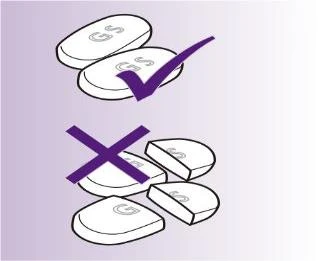
Swallow the Ropiral prolonged-release tablet whole with a glass of water.
Do not break, chew or crush the prolonged-release tablets. Doing so may result in overdose, as the medicine would be released into your body too quickly.
If you are switching from treatment with ropinirole film-coated tablets (immediate-release)
Your doctor will determine the dose of Ropiral prolonged-release tablets based on the dose of ropinirole
film-coated tablets (immediate-release) you are currently taking.
The day before switching, take your usual dose of ropinirole film-coated tablets (immediate-release). Then,
the following morning, take Ropiral prolonged-release tablets and stop taking ropinirole film-coated tablets
(immediate-release).
If you take more Ropiral than you should
Contact your doctor or pharmacist immediately. If possible, show them the Ropiral packaging.
People who have taken an excessive dose of Ropiral may experience some of the following symptoms:
feeling unwell (nausea), illness (vomiting), dizziness (spinning sensation), drowsiness, physical or mental
fatigue, fainting, hallucinations.
If you forget to take Ropiral
Do not take a double dose to make up for the missed dose.
If you have forgotten to take Ropiral for one day or more, consult your doctor for advice on how to resume
treatment.
If you stop taking Ropiral
Do not stop taking Ropiral without medical advice.
Take Ropiral for as long as your doctor recommends. Do not stop unless your doctor tells you to.
If you stop taking Ropiral suddenly, symptoms of Parkinson’s disease may worsen rapidly. Sudden withdrawal
may lead to the development of a medical condition called neuroleptic malignant syndrome, which can pose a
serious health risk. Symptoms include: akinesia (loss of muscle movement), muscle rigidity, fever, unstable
blood pressure, tachycardia (increased heart rate), confusion, and decreased level of consciousness (e.g., coma).
If you need to discontinue treatment with Ropiral, your doctor will gradually reduce your dose.
If you have any questions about the use of this medicine, consult your doctor or pharmacist.
4. Possible side effects
Like all medicines, this medicine can cause side effects, although not everybody gets them.
Side effects with Ropiral are more likely to occur when treatment is first started or when the dose is increased. Side effects are usually mild and may become less of a problem after you have been taking the medicine for a short time. If you are concerned about side effects, discuss them with your doctor.
Very common side effects
May affect more than 1 in 10 people taking Ropiral:
- fainting;
- feeling sleepy;
- feeling unwell (nausea).
Common side effects
May affect up to 1 in 10 people taking Ropiral:
- falling asleep suddenly without prior warning of sleepiness (sudden onset of sleep episodes);
- hallucinations (“seeing” things that are not really there);
- feeling unwell (vomiting);
- dizziness (spinning sensation);
- heartburn;
- stomach ache;
- constipation;
- swelling of the legs, feet, and hands.
Uncommon side effects
May affect up to 1 in 100 people taking Ropiral:
- feeling faint or dizzy, especially when standing up suddenly (caused by a drop in blood pressure);
- feeling very sleepy during the day (excessive daytime sleepiness);
- mental problems such as delirium (severe confusion), illusions (irrational beliefs), or paranoia (unwarranted suspiciousness).
Some patients may experience the following side effects (frequency not known: cannot be estimated from the available data)
- allergic reactions, such as flushing, itchy swellings of the skin (urticaria), swelling of the face, lips, mouth, tongue, or throat which may cause difficulty in swallowing or breathing, skin rash, or intense itching (see section 2);
- changes in liver function, observed in blood tests;
- behaving aggressively;
- excessive use of Ropiral (irresistible urge to take dopaminergic medications at doses higher than required to control motor symptoms, known as dopamine dysregulation syndrome);
- inability to resist the impulse, desire, or temptation to carry out actions that could be harmful to yourself or others, which may include:
- a strong urge to gamble excessively despite serious personal or family consequences;
- altered or increased sexual interest and behaviour causing significant concern to you or others, for example increased sexual desire;
- uncontrollable excessive shopping or spending;
- binge eating (consuming large amounts of food in a short period of time) or compulsive eating (eating more food than needed to satisfy hunger);
- after stopping or reducing the dose of Ropiral, symptoms such as depression, apathy, anxiety, feeling fatigued, sweating, or pain may occur (dopamine agonist withdrawal syndrome or DAWS).
Tell your doctor if you experience any of these behaviours; ways to manage or reduce the symptoms will be discussed.
If you are taking Ropiral with L-dopa
Patients taking Ropiral with L-dopa may develop additional side effects over time:
- involuntary movements (dyskinesia) are a very common side effect. If you are taking L-dopa, you may develop some involuntary movements (dyskinesia) when you start taking Ropiral. If this happens, inform your doctor, as you may need to adjust the doses of your medicines;
- feeling confused is a common side effect.
Reporting of side effects
If you get any side effects, including ones not listed in this leaflet, talk to your doctor or pharmacist. You can also report side effects directly via the national reporting system at https://www.aifa.gov.it/content/segnalazioni-reazioni-avverse. By reporting side effects, you can help provide more information on the safety of this medicine.
5. How to store Ropiral
Keep this medicine out of the sight and reach of children.
Do not use this medicine after the expiry date stated on the carton and blister after EXP. The expiry date refers to the last day of that month.
Store Ropiral below 25°C.
Do not dispose of any medicine via wastewater or household waste. Ask your pharmacist how to dispose of medicines you no longer use. This will help protect the environment.
6. Contents of the pack and other information
What Ropiral contains
The active substance of Ropiral is ropinirole.
Each prolonged-release tablet contains ropinirole as the hydrochloride salt, equivalent to 2 mg, 4 mg or 8 mg of ropinirole.
The other ingredients are:
- Tablet core: methacrylic acid copolymer Type B, hypromellose, sodium lauryl sulfate, copovidone, magnesium stearate.
- Tablet coating:
| 2 mg | Hypromellose (E464), iron oxide red (E172), lactose monohydrate, titanium dioxide (E171), triacetin |
| 4 mg | Macrogol 400, hypromellose (E464), sunset yellow (E110), titanium dioxide (E171), indigo carmine (E132) |
| 8 mg | Hypromellose (E464), iron oxide red (E172), black iron oxide |
| (E172), yellow iron oxide (E172), macrogol 400, titanium dioxide (E171) |
Description of the appearance of Ropiral and contents of the pack
Ropiral 2 mg: prolonged-release pink, round, biconvex tablets, 6.8 ± 0.1 mm in diameter and
5.5 ± 0.2 mm thick.
Ropiral 4 mg: prolonged-release light brown, oval, biconvex tablets, 12.6 x 6.6 ± 0.1 mm in size and
5.3 ± 0.2 mm thick.
Ropiral 8 mg: prolonged-release red, oval, biconvex tablets, 19.2 x 10.2 ± 0.2 mm in size and
5.2 ± 0.2 mm thick.
All strengths are supplied in PVC/PCTFE-aluminium opaque white blister packs.
Pack sizes:
2 mg prolonged-release tablets:
Blister packs in PVC/PCTFE-aluminium opaque white containing 28, 30, 42 and 84 tablets.
4 mg prolonged-release tablets:
Blister packs in PVC/PCTFE-aluminium opaque white containing 28, 30 and 84 tablets.
8 mg prolonged-release tablets:
Blister packs in PVC/PCTFE-aluminium opaque white containing 28, 30 and 84 tablets.
Not all pack sizes may be marketed.
Marketing Authorization Holder
Aurobindo Pharma (Italia) S.r.l.
via San Giuseppe, 102
21047 - Saronno (VA)
Italy
Manufacturers
Pharmathen S.A., 6 Dervanakion Str, Athens, Pallini 15351, Greece
Pharmathen International S.A., Industrial Park Sapes, Rodopi Prefecture, Block No 5, Rodopi 69300,
Greece
APL Swift Services (Malta) Limited
HF26, Hal Far Industrial Estate, Hal Far, Birzebbugia, BBG 3000 - Malta
This medicinal product is authorized in the European Economic Area countries under the following
names:
France: Ropinirole Arrow LP 2mg/ 4mg/ 8mg prolonged-release tablets
Germany: Ropinirol PUREN 2 mg/ 4mg/ 8mg Retardtabletten
Italy: Ropiral
Netherlands: Ropinirole Aurobindo 2 mg/ 4mg/ 8mg tabletten met verlengde afgifte
Portugal: Ropinirol Aurobindo LP
Romania: Ropinirol Aurobindo 2 mg/ 4mg/ 8mg comprimate cu eliberare prelungita
Spain: Ropinirol Aurobindo 2 mg/ 4mg/ 8mg comprimidos de liberación prolongada EFG
United Kingdom: ROPIQUAL XL 2 mg/ 4mg/ 8mg prolonged release tablets