Rolenium
Italy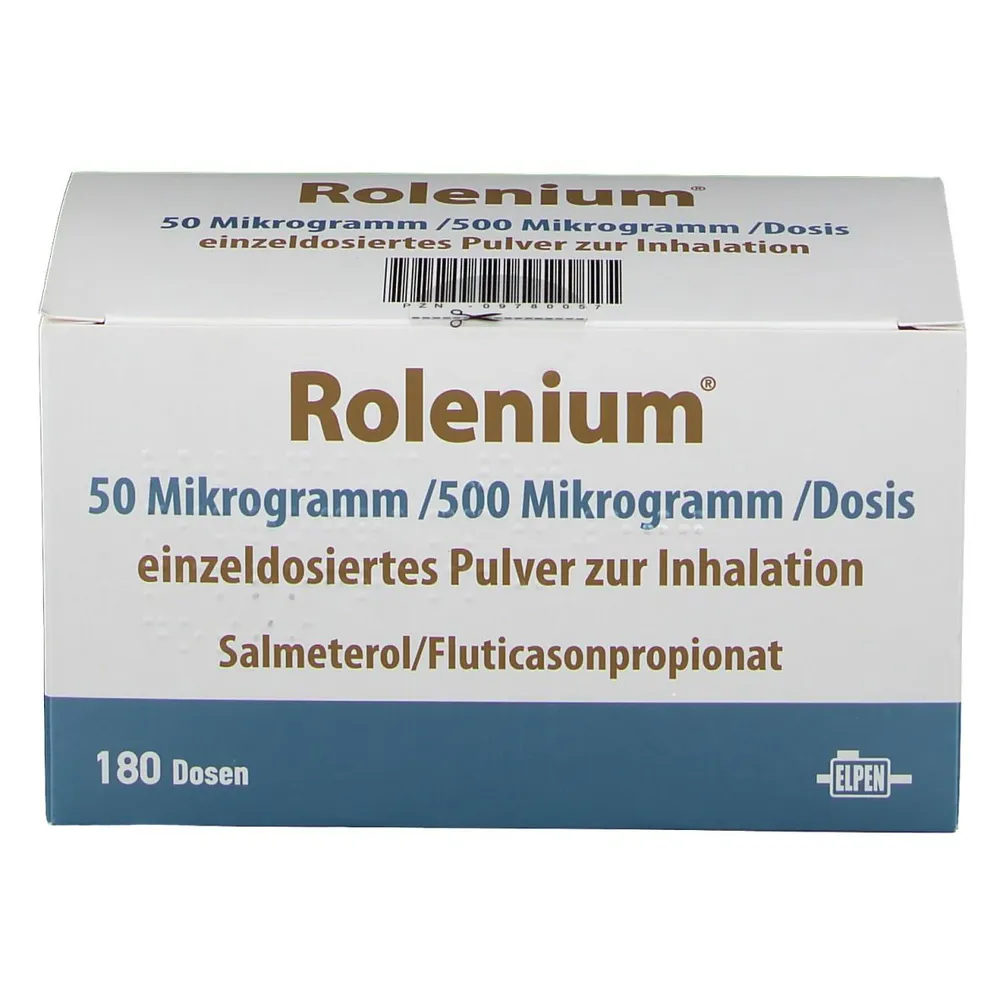
Table of Contents
- Package leaflet: Information for the user
- ROLENIUM 50 micrograms/250 micrograms per dose inhalation powder in single-dose container
- 1. What ROLENIUM is and what it is used for
- 2. What you need to know before taking ROLENIUM
- 3. How to take ROLENIUM
- 4. Possible side effects
- 5. How to store ROLENIUM
- 6. Contents of the pack and other information
Package leaflet: Information for the user
ROLENIUM 50 micrograms/250 micrograms per dose inhalation powder in single-dose container
ROLENIUM 50 micrograms/500 micrograms per dose inhalation powder in single-dose container
salmeterol/fluticasone propionate
Please read all of this leaflet carefully before you start taking this medicine because it contains important information for you.
- Keep this leaflet. You may need to read it again.
- If you have any questions, ask your doctor or pharmacist.
- This medicine has been prescribed for you only. Do not give it to others, even if they have the same symptoms as yours, because it could be harmful.
- If you experience any side effect, including those not listed in this leaflet, tell your doctor or pharmacist. See section 4.
Contents of this leaflet:
- What ROLENIUM is and what it is used for
- What you need to know before using ROLENIUM
- How to take ROLENIUM
- Possible side effects
- How to store ROLENIUM
- Contents of the pack and other information
1. What ROLENIUM is and what it is used for
ROLENIUM contains two medicines, salmeterol and fluticasone propionate:
- Salmeterol is a long-acting bronchodilator. Bronchodilators help keep the airways of the lungs open, making it easier for air to flow in and out. The effects last for at least 12 hours.
- Fluticasone propionate is a corticosteroid that reduces swelling and irritation in the lungs.
Your doctor has prescribed this medicine to help prevent breathing problems such as:
- Asthma
- Chronic Obstructive Pulmonary Disease (COPD). ROLENIUM at the dose of 50 / 500 micrograms reduces the number of exacerbations of COPD symptoms.
You must use ROLENIUM every day as directed by your doctor. This will ensure that the medicine works properly to control your asthma or COPD.
ROLENIUM helps prevent episodes of breathlessness and wheezing. However, ROLENIUM cannot be used to relieve sudden attacks of breathlessness or wheezing. If this happens, you must use a fast-acting 'rescue' inhaler, such as salbutamol. You must always have your fast-acting 'rescue' inhaler with you.
2. What you need to know before taking ROLENIUM
Do not take ROLENIUM:
if you are allergic to salmeterol, fluticasone propionate, or to the excipient lactose monohydrate.
Warnings and precautions
Consult your doctor before using ROLENIUM if you have:
- Heart diseases, including irregular or rapid heartbeat
- Overactive thyroid gland
- High blood pressure
- Diabetes mellitus (ROLENIUM may increase blood sugar levels)
- Hypokalaemia (low potassium levels in the blood)
- Tuberculosis (TB), either currently or in the past, or other lung infections
Other medicines and ROLENIUM
Inform your doctor or pharmacist if you are taking, have recently taken, or might take any other medicine. This includes medicines for asthma or any other medicines not requiring a prescription. This is because ROLENIUM may not be suitable to take together with certain other medicines.
Inform your doctor if you are taking any of the following medicines before starting to use ROLENIUM:
- β-blockers (such as atenolol, propranolol, and sotalol). Beta-blockers are mainly used for high blood pressure or other heart conditions.
- Medicines for the treatment of infections (such as ritonavir, ketoconazole, itraconazole, and erythromycin). Some of these medicines may increase the amount of fluticasone propionate or salmeterol in your body. This may increase the risk of developing side effects with ROLENIUM, including irregular heartbeat, or may worsen existing side effects.
- Corticosteroids (taken orally or parenterally). If you have recently taken these medicines, this may increase the risk that this medicine affects your adrenal gland.
- Diuretics used to treat high blood pressure.
- Other bronchodilators (such as salbutamol).
- Xanthine-based medicines. These are often used to treat asthma.
Pregnancy, breastfeeding, and fertility
If you are pregnant, breastfeeding, suspect you may be pregnant, or are planning a pregnancy, consult your doctor for advice before taking this medicine.
Driving and using machines
ROLENIUM does not affect the ability to drive or operate machinery.
ROLENIUM contains lactose.
If your doctor has informed you that you are intolerant to lactose (a type of sugar), contact them before taking this medicine.
3. How to take ROLENIUM
Always use this medicine exactly as instructed by your doctor or pharmacist. If you
have any doubts, consult your doctor or pharmacist.
- Use ROLENIUM every day until your doctor tells you to stop. Do not take a higher dose than recommended. If you have any doubts, consult your doctor or pharmacist.
- Do not stop using ROLENIUM or reduce the dose without first speaking to your doctor.
- ROLENIUM must be inhaled into the lungs through the mouth.
- After use, rinse your mouth with water and spit it out.
For adults with asthma
- ROLENIUM 50 micrograms / 250 microgrammes / dose: One inhalation twice daily.
- ROLENIUM 50 micrograms / 500 microgrammes / dose: One inhalation twice daily.
For adults with chronic obstructive pulmonary disease (COPD)
ROLENIUM 50 micrograms / 500 microgrammes / dose: One inhalation twice daily.
Use in children and adolescents
ROLENIUM must not be used in children and adolescents.
Your symptoms may be well controlled with ROLENIUM taken twice daily. If this is the case, your doctor may decide to reduce the dose to once daily. The dose may then be taken:
- once at night – if you have night-time symptoms
- once in the morning – if you have daytime symptoms
It is very important to follow your doctor's instructions regarding how many inhalations to take and how often to take the medicine.
If you are using ROLENIUM for asthma, your doctor will want to monitor your symptoms regularly.
Contact your doctor immediately if your asthma or breathing worsens. You may notice increased breathlessness, a more frequent feeling of chest tightness, or you may need to use your fast-acting "reliever" medicine more often. If any of these occur, continue taking ROLENIUM, but do not increase the number of inhalations. Your chest condition may worsen and you could become seriously ill. Contact your doctor, as additional treatment may be required.
Instructions for use
Your doctor, nurse, or pharmacist should show you how to use your inhaler (Elpenhaler). They should also check your technique from time to time.
Incorrect use of ROLENIUM or use different from what is prescribed may mean that it will not help your asthma or COPD as it should.
INSTRUCTIONS FOR USE AND HANDLING OF Elpenhaler
Below are the patient instructions for correctly inhaling the two medicines contained in a strip of two blisters (double blister), stored in the Elpenhaler device.
DESCRIPTION
Elpenhaler is a device for the simultaneous inhalation of two medicines in powder form. The two medicines form a fixed-dose combination. Each medicine is separately packaged in its own blister within the special double-blister strip.
The double-blister contains one dose (1) of the combination of medicines.
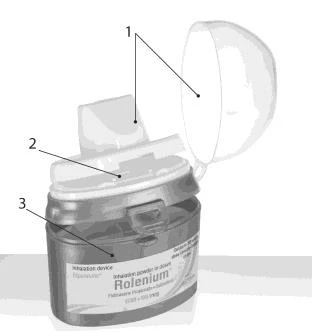
Elpenhaler consists of three parts:
- The mouthpiece and its protective cap (1).
- The surface (2) on which the double blister strip is placed (support surface).
- The container (3) where the strips are stored.
The three parts are connected to each other and can be opened
separately.
The support surface contains:
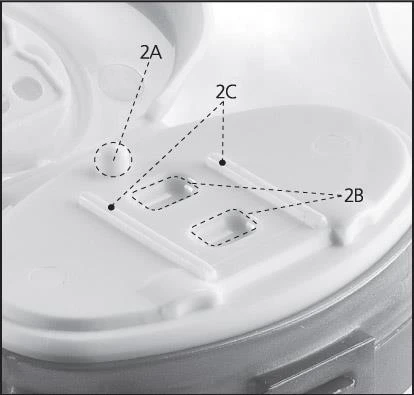
- An attachment point (2A) where the double-blister strip is fixed.
- Two cavities (2B) that hold the two blisters of the strip.
- Two guides (2C) that securely fix the strip in the correct position on the support surface.
The double-blister strip contains:
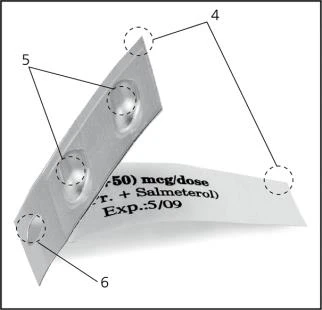
- Two foils (4)
- Two blisters (5), one containing salmeterol and the other fluticasone propionate
- A hole (6)
USING Elpenhaler
A. Preparing the device
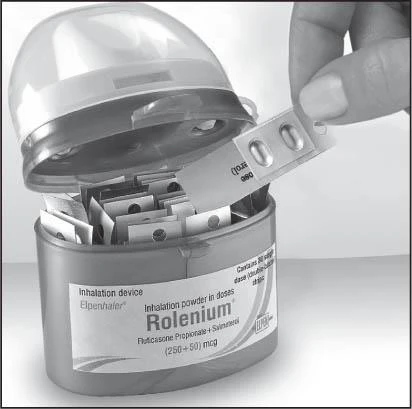
Open the container, take out a strip and close it again.
- Completely remove the cap from the mouthpiece.
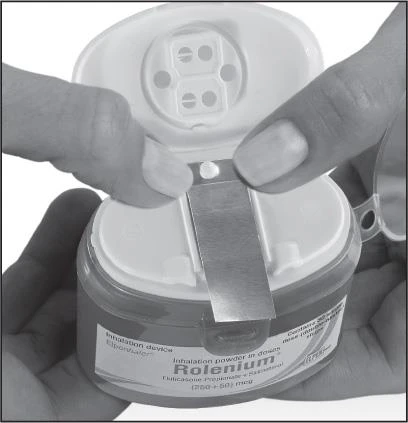
- Unlock and press the mouthpiece backward to reveal the support surface.
- Hold the strip with its shiny side facing upwards.
- Place the strip onto the attachment point of the surface. Apply light pressure to ensure the strip is securely fixed at the attachment point.
- The double-blister will fit into the cavities of the surface, and the guides will ensure the strip is correctly positioned.
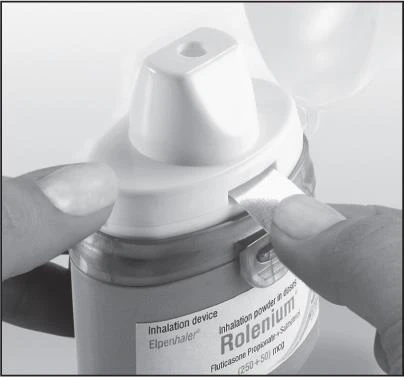
- Close the mouthpiece and pull off the protruding part of the strip. The dose is now ready to be inhaled.
B. Inhaling the dose
Hold the device away from your mouth.
- Breathe out fully. Be careful not to breathe out onto the
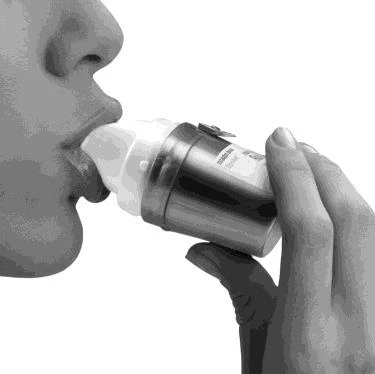
mouthpiece of the device.
- Bring Elpenhaler to your mouth and close your lips tightly around the mouthpiece.
- Breathe in slowly and deeply through your mouth (not through your nose) until your lungs are full.
- Hold your breath for about 5 seconds or as long as you comfortably can, while removing the device from your mouth.
- Breathe out and continue breathing normally.
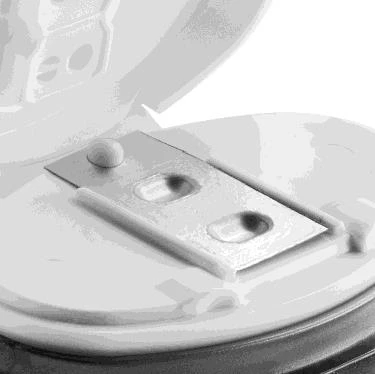
- Open the mouthpiece. You will notice that all the powder has been inhaled and that the two blisters are empty.
- Remove the empty strip and proceed to step C.
C. Cleaning the device
C. Cleaning the device
- After each use, clean the mouthpiece and support surface with a dry cloth or dry tissue. Do not use water to clean the device.
- Close the mouthpiece and replace the protective cap.
If you use more ROLENIUM than you should
It is important to use the inhaler as directed. If you accidentally use more than the recommended dose, contact your doctor or pharmacist. You may notice that your heart beats faster than usual and that you feel shaky. You may also experience dizziness, headache, muscle weakness, and joint pain.
If you have used higher doses for a prolonged period, you should discuss this with your doctor or pharmacist. This is because higher doses of ROLENIUM may reduce the amount of steroid hormones produced by the adrenal glands.
If you forget to take ROLENIUM
Do not take a double dose to make up for a forgotten dose. Take the next dose as usual.
If you stop taking ROLENIUM
It is very important that you take ROLENIUM every day as prescribed.
Continue taking it until your doctor tells you to stop. Do not stop or
suddenly reduce the dose of ROLENIUM. This could worsen your breathing problem.
Additionally, if you stop or abruptly reduce the dose of ROLENIUM, this may (very rarely) cause problems with the adrenal glands (adrenal insufficiency), which can sometimes lead to unwanted effects.
These unwanted effects may include any of the following:
- Stomach pain
- Tiredness and loss of appetite, feeling unwell
- Nausea and diarrhoea
- Weight loss
- Headache or drowsiness
- Low levels of potassium in the blood
- Low blood pressure and seizures (fits)
When the body is under stress due to fever, trauma (e.g. after a road accident), infection, or surgery, adrenal insufficiency may worsen and may cause one or more of the unwanted effects listed above.
If you experience any of these unwanted effects, contact your doctor or pharmacist.
To prevent the development of these symptoms, your doctor may prescribe other corticosteroids in tablet form (such as prednisolone).
If you have any further questions about using this inhaler, consult your doctor, nurse, or pharmacist.
4. Possible side effects
Like all medicines, this medicine can cause side effects, although not everyone gets them. To reduce the possibility of side effects, your doctor will prescribe the lowest dose of ROLENIUM needed to control your asthma or COPD.
Allergic reactions: you may notice a sudden worsening of breathing immediately after using ROLENIUM. You may become very breathless, develop cough or shortness of breath. You may also notice itching, skin rash (urticaria), swelling (usually of the face, lips, tongue or throat), or you may suddenly feel your heart beating very fast or feel weak and dizzy (which could lead to collapse or loss of consciousness). If you experience any of these effects, or if they occur suddenly after using ROLENIUM, stop using ROLENIUM immediately and contact your doctor without delay.
Allergic reactions to ROLENIUM are uncommon (affecting up to 1 in 100 people).
Other side effects are listed below:
Very common (affect more than 1 in 10 people)
- Headache – this usually improves with continued treatment.
- Increased frequency of colds has been reported in patients with COPD.
Common (affect up to 1 in 10 people)
- Oral thrush (sores, raised cream-yellow patches) in the mouth and throat. Also, tongue pain, hoarseness, and throat irritation. Rinsing the mouth with water and spitting it out immediately and/or brushing teeth after each dose may help. Your doctor may prescribe an antifungal medicine to treat thrush.
- Swollen and painful joints and muscle pain.
- Muscle cramps.
The following side effects have also been reported in patients with chronic obstructive pulmonary disease (COPD):
- Pneumonia (lung infection) in patients with COPD (common side effect). Inform your doctor if you experience any of the following symptoms while taking Rolenium, as they may indicate a lung infection:
- fever or chills
- increased mucus production or change in mucus colour
- increased cough or worsening breathlessness
- Bruising and fractures
- Sinusitis (a feeling of pressure or fullness in the nose, cheeks, and behind the eyes, sometimes with throbbing pain)
- Decreased blood potassium levels (you may experience irregular heartbeat, muscle weakness, or cramps)
Uncommon (affect up to 1 in 100 patients)
- Increased blood sugar (glucose) levels (hyperglycaemia). If you have diabetes, more frequent blood sugar monitoring and possible adjustment of your usual diabetes treatment may be required.
- Cataract (clouding of the eye's lens)
- Very fast heartbeat (tachycardia)
- Trembling sensation (tremor) and fast or irregular heartbeat (palpitations) – these are usually harmless and tend to decrease with continued treatment
- Chest pain
- Breathlessness (this effect occurs mainly in children)
- Sleep disturbances
- Allergic skin rashes
Rare (affect up to 1 in 1,000 people)
- Breathing difficulties or wheezing that worsens immediately after taking ROLENIUM. If this occurs, stop using ROLENIUM. Use your fast-acting "rescue" inhaler to help breathing and contact your doctor immediately.
- ROLENIUM may affect the body's normal production of steroid hormones, especially if high doses have been taken for long periods. Effects include:
- Slowed growth in children and adolescents
- Thinning of the bones
- Glaucoma
- Weight gain
- Rounded (moon-shaped) face (Cushing's syndrome). Your doctor will monitor you regularly for any of these side effects and ensure you are taking the lowest effective dose of ROLENIUM to control your asthma.
- Changes in behaviour, such as unusual excitability or irritability (these effects occur mainly in children)
- Irregular heartbeat or extra heartbeats (arrhythmias). Inform your doctor, but do not stop taking ROLENIUM unless your doctor tells you to.
- Fungal infection of the oesophagus (gullet), which may cause difficulty in swallowing.
Not known: frequency cannot be estimated from available data
- Depression or aggression. These effects are more likely in children.
Reporting of side effects
If you experience any side effect, including those not listed in this leaflet, talk to your doctor or pharmacist. You can also report side effects directly via
www.aifa.gov.it/content/segnalazioni-reazioni-avverse.
By reporting side effects, you can help provide more information on the safety of this medicine.
5. How to store ROLENIUM
- Keep this medicine out of the sight and reach of children.
- Do not use this medicine after the expiry date stated on the label and packaging. The expiry date refers to the last day of the month.
- Store below 25°C.
- Do not dispose of any medicine via wastewater or household waste. Ask your pharmacist how to dispose of medicines you no longer use. This will help protect the environment.
6. Contents of the pack and other information
What ROLENIUM contains
The active substances are
50 micrograms of salmeterol (as salmeterol xinafoate) and 250 micrograms of fluticasone
propionate.
or
50 micrograms of salmeterol (as salmeterol xinafoate) and 500 micrograms of fluticasone
propionate.
The excipient is lactose monohydrate.
Description of the appearance of ROLENIUM and contents of the pack
ROLENIUM contains salmeterol and fluticasone propionate packaged in a double-blister strip, stored in the Elpenhaler inhalation device.
The foil (Alu-Alu) protects the inhaled powder from atmospheric effects.
Each dose is a single dose in a double-blister strip.
Each pack contains one Elpenhaler inhalation device with 30 double-blister strips Alu-Alu. 30 doses per pack.
Each pack contains one Elpenhaler inhalation device with 30 double-blister strips and one reserve metal container with an additional 30 double-blister strips. 60 doses per pack.
Each pack contains one Elpenhaler inhalation device with 60 double-blister strips Alu-Alu. 60 doses per pack.
Each pack contains three Elpenhaler inhalation devices with 60 double-blister strips Alu-Alu. 180 doses per pack.
Marketing Authorisation Holder and Manufacturer
ELPEN Pharmaceutical Co. Inc.
95, Marathonos Ave., GR-19009 Pikermi, Attica
Greece
This leaflet was last reviewed on