Rocuronium Hikma
Italy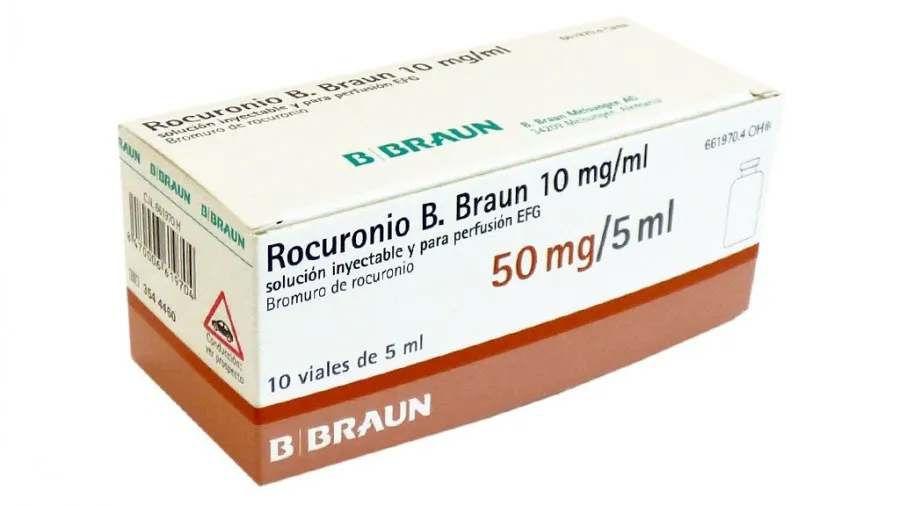
Table of Contents
PACKAGE LEAFLET: INFORMATION FOR THE USER
Rocuronium Hikma
10 mg/ml, solution for injection/infusion
Equivalent medicine
Rocuronium bromide
Please read all of this leaflet carefully before you are given this medicine because it contains important information for you.
- Keep this leaflet. You may need to read it again.
- If you have any questions, ask your doctor or nurse.
- If you get any side effects, talk to your doctor or nurse. This includes any possible side effects not listed in this leaflet. See section 4.
Contents of this leaflet
- What Rocuronium Hikma is and what it is used for
- What you need to know before being given Rocuronium Hikma
- How Rocuronium Hikma is given
- Possible side effects
- How to store Rocuronium Hikma
- Contents of the pack and other information
1. What Rocuronio Hikma is and what it is used for
Rocuronio Hikma belongs to a group of medicines called muscle relaxants.
Muscle relaxants are used during surgery as part of general anaesthesia.
When you undergo surgery, your muscles must be completely relaxed. This makes it easier for the surgeon to perform the operation.
Normally, your nerves send messages, called impulses, to your muscles.
Rocuronio Hikma works by blocking these impulses, causing your muscles to relax.
Since your breathing muscles also become relaxed, you will need assistance with breathing (artificial ventilation) during and after the operation, until you are able to breathe on your own again.
During the operation, your anaesthetist will continue to monitor the effect of the muscle relaxant and, if necessary, will administer additional doses.
At the end of the operation, the effects of the medicine will wear off and you will start breathing on your own again. In some cases, the anaesthetist may give you another medicine to help speed up this process.
Rocuronio Hikma may also be used in Intensive Care Units to maintain muscle relaxation.
2. What you need to know before using Rocuronium Hikma
Do not use Rocuronium Hikma:
- if you are allergic (hypersensitive) to rocuronium, bromide ions, or any of the other ingredients of this medicine (listed in section 6).
Please inform your anaesthetist if any of the above applies to you.
Warnings and precautions
Talk to your doctor or nurse before using Rocuronium Hikma:
- if you are allergic to muscle relaxants,
- if you have had kidney, heart, liver, or gallbladder disorders,
- if you have suffered from nerve or muscle diseases,
- if you have fluid retention (edema),
- if you have a history of malignant hyperthermia (sudden fever with rapid heartbeat, rapid breathing, muscle stiffness, pain and/or weakness).
Inform your anaesthetist if any of these conditions apply to you.
Certain conditions may affect the effects of Rocuronium Hikma – for example:
- low levels of calcium in the blood,
- low levels of potassium in the blood,
- high levels of magnesium in the blood,
- low levels of protein in the blood,
- excess carbon dioxide in the blood,
- excessive loss of body water, for example due to illness, diarrhoea, or sweating,
- over-ventilation leading to abnormally low levels of carbon dioxide in the blood (alkalosis),
- a general state of illness,
- burns,
- being significantly overweight (obesity),
- very low body temperature (hypothermia).
If you suffer from any of these conditions, your anaesthetist will take them into account when deciding the appropriate dose of Rocuronium Hikma for you.
Children and elderly
Rocuronium Hikma can be used in children (neonates and adolescents) and in elderly patients, but your anaesthetist must first review your medical history.
Other medicines and Rocuronium Hikma
Tell your doctor if you are taking, have recently taken, or might take any other medicines.
This includes medicines or herbal products you may have purchased without a prescription.
Rocuronium Hikma may have effects on and/or from other medicines.
Medicines that may increase the effects of Rocuronium Hikma
- certain antibiotics
- certain medicines used to treat heart conditions or high blood pressure (diuretics, calcium channel blockers, beta-blockers, and quinidine)
- certain anti-inflammatory medicines (corticosteroids)
- medicines for manic-depressive illness (bipolar disorder)
- magnesium salts
- certain medicines used to treat malaria
Medicines that may decrease the effects of Rocuronium Hikma
- certain medicines for epilepsy
- calcium chloride and potassium chloride
- certain protease inhibitors called gabexate and ulinastatin.
In addition, you may be given other medicines before or during surgery that could alter the effects of Rocuronium Hikma. These include certain anaesthetics, other muscle relaxants, drugs such as phenytoin, and medicines that have opposite effects to Rocuronium Hikma.
Rocuronium Hikma may cause certain anaesthetics to act more quickly. Your anaesthetist will take this into account when determining the correct dose of Rocuronium Hikma for you.
Pregnancy and breastfeeding
Inform your anaesthetist if you are pregnant, think you might be pregnant, or are breastfeeding.
Your anaesthetist may still administer Rocuronium Hikma, but you should discuss this with them first.
If you are pregnant, suspect you may be pregnant, are planning to become pregnant, or are breastfeeding, consult your doctor before taking this medicine.
Rocuronium Hikma may be administered if you are undergoing a Caesarean section.
Breastfeeding should be suspended for 6 hours after using this medicine.
Driving and using machines
Do not drive or operate machinery until you are told it is safe to do so. Since Rocuronium Hikma is administered as part of general anaesthesia, you may feel tired, weak, or dizzy for some time afterwards. Your doctor will inform you about the duration of the medicine's effects.
Rocuronium Hikma contains sodium.
This medicine contains less than 1 mmol of sodium (23 mg) per dose, and is therefore essentially "sodium-free".
3. How to use Rocuronio Hikma
Dosage
Your anaesthetist will calculate the dose of Rocuronio Hikma you need based on:
- type of anaesthetic,
- expected duration of the surgery,
- other medicines you are taking,
- your health status.
The recommended dose is 0.6 mg/kg body weight, and the effect will last for 30–40 minutes.
How Rocuronio Hikma is administered
Rocuronio Hikma will be administered to you by your anaesthetist. Rocuronio Hikma is given intravenously (into a vein), either as a single injection or by continuous infusion (via infusion).
If you are given more Rocuronio Hikma than you should
Since your anaesthetist will closely monitor your condition, it is unlikely that you will receive too much Rocuronio Hikma. However, if this does happen, your anaesthetist will continue to support your breathing artificially (using a ventilator) until you are able to breathe on your own. You will remain unconscious during this time.
4. Possible side effects
Like all medicines, this medicine can cause side effects, although not everybody gets them.
If these side effects occur while you are under the effect of the anaesthetic, they will be noticed and treated by your anaesthetist.
Uncommon side effects (may affect up to 1 in 100 people)
- the medicine is too effective, or not effective enough
- the medicine lasts longer than it should
- reduction in blood pressure
- increased heart rate
- pain at the injection site
Very rare side effects (may affect up to 1 in 10,000 people)
- allergic reactions (hypersensitivity) (such as difficulty in breathing, circulatory collapse and shock)
- shortness of breath
- muscle weakness
- sudden fever with rapid heartbeat, fast breathing, and muscle stiffness, pain and/or weakness
- swelling, rash or redness of the skin
Not known (frequency cannot be estimated from the available data):
- Severe allergic spasm of the coronary blood vessels (Kounis syndrome) leading to chest pain (angina) or heart attack (myocardial infarction)
If any side effect becomes severe, or if you experience any side effect not listed in this leaflet, inform your anaesthetist or doctor.
Reporting of side effects
If you experience any side effect, including those not listed in this leaflet, talk to your doctor or nurse. You can also report side effects directly via the national reporting system at the website:
www.aifa.gov.it/content/segnalazioni-reazioni-avverse
By reporting side effects, you can help provide more information on the safety of this medicine.
5. How to store Rocuronium Hikma
Store in a refrigerator (2°C – 8°C).
Storage outside the refrigerator:
the medicinal product may be stored at a temperature up to 25°C for a maximum of 16 weeks, after which it must be discarded. The medicinal product must not be refrigerated again once it has been stored outside the refrigerator. The storage period must not exceed the expiry date.
The hospital will store Rocuronium Hikma under appropriate storage conditions throughout the period until the expiry date.
Keep this medicinal product out of the sight and reach of children.
Do not use this medicinal product after the expiry date stated on the label and on the carton after the wording EXP.
6. Package contents and other information
What Rocuronium Hikma contains
- The active substance is Rocuronium Bromide.
- The other ingredients are sodium acetate trihydrate, sodium chloride, sodium hydroxide, acetic acid, water for injections. Each ml of Rocuronium Hikma contains 10 mg of rocuronium bromide. Each 5 ml vial contains 50 mg of rocuronium bromide.
Description of the appearance of Rocuronium Hikma and contents of the pack
Rocuronium Hikma is a clear, injectable solution, colourless to slightly yellow/orange.
It is available in vials containing 50 mg (10 vials per pack) of rocuronium bromide.
Marketing Authorisation Holder and Manufacturer
Hikma Farmacêutica (Portugal), S.A.
Estrada do Rio da Mó, nº8, 8A, 8B, Fervença
2705-906 Terrugem SNT
Portugal
Marketing Authorisation Holder for Italy
Hikma Italia Spa
Viale Certosa 10
27100 Pavia
This patient information leaflet was last reviewed on
The following information is intended for healthcare professionals only
- Incompatibilities Physical incompatibility of rocuronium has been documented when added to solutions containing the following drugs: amphotericin, amoxicillin, azathioprine, cefazolin, cloxacillin, dexamethasone, diazepam, enoximone, erythromycin, famotidine, furosemide, hydrocortisone sodium succinate, insulin, intralipid, metoclopramide, methylprednisolone, prednisolone sodium succinato, thiopental, trimethoprim and vancomycin.
This medicinal product must not be mixed with other medicinal products except those listed in section 6.6.
If Rocuronium Hikma is administered through the same line used for other medicinal products, the infusion line must be adequately flushed (e.g., with 0.9% sodium chloride (NaCl)) between the administration of Rocuronium Hikma and other medicinal products with which incompatibility has been demonstrated or for which compatibility has not been established.
- Shelf life
Unopened vial: 2 years if stored under the recommended conditions (see section on Special precautions for storage). The date stated on the carton and vial label is the expiry date; this is the date until which Rocuronium Hikma may be used.
Storage outside the refrigerator:
The medicinal product may be stored at a temperature up to 25°C for a maximum of 16 weeks, after which it must be discarded. The medicinal product must not be returned to refrigerated storage once it has been stored outside the refrigerator. The storage period must not exceed the expiry date.
After first opening:
Since Rocuronium Hikma does not contain preservatives, the solution must be used immediately after opening the vial.
After dilution with infusion fluids (see section 6.6), chemical and physical in-use stability has been demonstrated for 24 hours at room temperature (15°C – 25°C). From a microbiological standpoint, the diluted product should be used immediately. If not used immediately, the in-use storage times and conditions prior to use are under the responsibility of the user/administrator and normally should not exceed 24 hours at 2°C – 8°C.
- Special precautions for disposal and handling Compatibility studies have been performed with the following infusion fluids: at nominal concentrations of 1 mg/ml, Rocuronium Hikma has been found compatible with: 0.9% sodium chloride (NaCl), 5% dextrose, 5% dextrose in saline solution, water for injections, and Ringer's lactate. Administration should begin immediately after mixing and must be completed within 24 hours. Unused medicinal product and waste material derived from this medicinal product must be disposed of in accordance with local regulations.