Rocaltrol
Italy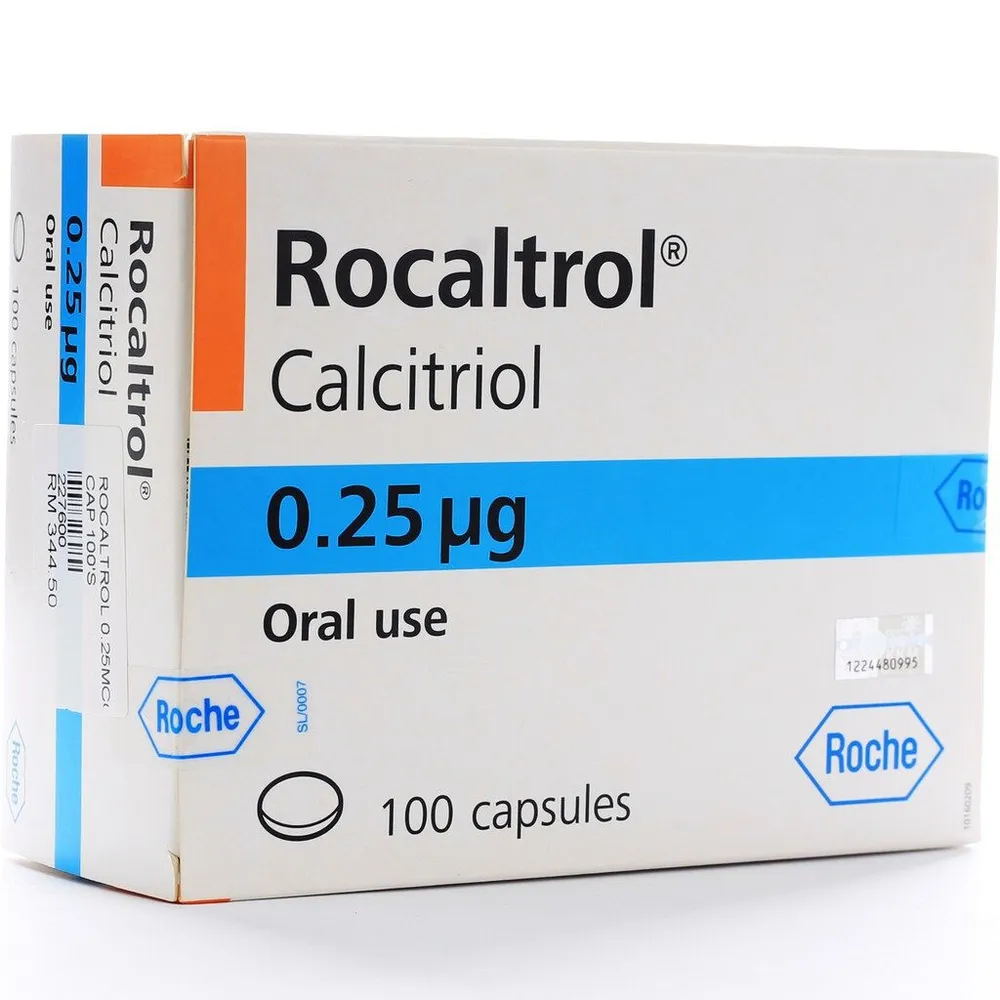
Table of Contents
- Package leaflet: Information for the patient
- Rocaltrol 0.25 mcg soft capsules, 0.50 mcg soft capsules
- 1. What Rocaltrol is and what it is used for
- 2. What you should know before taking Rocaltrol
- 3. How to take Rocaltrol
- 4. Possible side effects
- 5. How to store Rocaltrol
- 6. Package contents and other information
Package leaflet: Information for the patient
Rocaltrol 0.25 mcg soft capsules, 0.50 mcg soft capsules
Calcitriol
Please read all of this leaflet carefully before taking this medicine because it contains
important information for you.
Keep this leaflet. You may need to read it again.
If you have any questions, ask your doctor or pharmacist.
This medicine has been prescribed for you only. Do not give it to other people, even if their
symptoms are the same as yours, because it may be harmful.
If you experience any side effect, including those not listed in this leaflet,
contact your doctor or pharmacist. See section 4.
Contents of this leaflet:
- What Rocaltrol is and what it is used for
- What you need to know before taking Rocaltrol
- How to take Rocaltrol
- Possible side effects
- How to store Rocaltrol
- Contents of the pack and other information
1. What Rocaltrol is and what it is used for
Rocaltrol contains calcitriol, the active metabolite of vitamin D, which is necessary for bone formation.
Rocaltrol is indicated:
- for the treatment of a bone disease occurring in chronic kidney disease (renal osteodystrophy), especially in patients undergoing haemodialysis (a method of blood filtration)
- for the treatment of disorders related to reduced function of the parathyroid glands, glands located in the neck (hypoparathyroidism, pseudohypoparathyroidism), which secrete PTH (parathyroid hormone), the hormone regulating calcium metabolism
- for the treatment of rickets: a disease characterized by defective bone formation and development (vitamin D-resistant hypophosphataemic rickets, vitamin D-dependent rickets)
- for the treatment of a disease caused by overactivity of the parathyroid glands due to moderate to severe chronic kidney disease, not treated with dialysis (secondary hyperparathyroidism in patients with moderate to severe chronic renal insufficiency in pre-dialysis).
Furthermore, Rocaltrol is indicated in postmenopausal women:
- for the treatment of a disease that weakens the bones and increases the risk of bone fractures (postmenopausal osteoporosis).
2. What you should know before taking Rocaltrol
Do not take Rocaltrol:
- if you are allergic to calcitriol or to similar medicines or to any of the other ingredients of this medicine (listed in section 6);
- if you have a disease caused by high levels of calcium in the blood (hypercalcemia);
- if you show signs of vitamin D toxicity.
Warnings and precautions
Talk to your doctor or pharmacist before taking Rocaltrol.
In particular, inform your doctor:
- if you have reduced kidney function (renal insufficiency), as in this case the risk of calcium accumulation in areas of the body where it is not needed (ectopic calcification) increases;
- if you are immobilized, for example after surgery, as in this case the risk of hypercalcemia (increased calcium in the blood) increases;
- if you have a bone formation disorder (vitamin D-resistant rickets with hypophosphatemia) and are being treated with phosphate-containing medicines;
- if you are already being treated with ergocalciferol (see section “Other medicines and Rocaltrol”).
Monitoring of calcium and phosphate levels in blood
There is a close relationship between treatment with this medicine and increased levels of calcium and phosphate in the blood. Therefore:
- during treatment with Rocaltrol, follow the diet prescribed by your doctor to avoid an increase in blood calcium and phosphate levels (see section “Rocaltrol with food and drink”);
- before and during therapy, your doctor will ask you to have blood tests to monitor your calcium and creatinine levels (a protein used to assess kidney function); if these levels are too high, your doctor will instruct you to stop treatment immediately until calcium levels return to normal (see section “Possible side effects”);
- your doctor will monitor your blood phosphate levels;
- your doctor will instruct you to recognize any symptoms of increased calcium and phosphate in the blood.
If you are postmenopausal and have osteoporosis
If you are postmenopausal and this medicine has been prescribed to treat osteoporosis, your doctor will carefully monitor your kidney function and blood calcium levels before starting therapy and at regular intervals during treatment.
Dehydration
If you do not have kidney disorders, your doctor will advise you to drink plenty of fluids during treatment with this medicine to avoid dehydration (excessive loss of body fluids).
Elderly
Dosage adjustments are not necessary in elderly patients.
Children and adolescents
Rocaltrol must not be administered to children and adolescents, as the safety and efficacy of the medicine in this patient group have not been sufficiently studied to allow dosage recommendations.
Other medicines and Rocaltrol
Inform your doctor or pharmacist if you are taking, have recently taken, or might take any other medicines.
In particular, inform your doctor if you are using:
- medicines or other preparations containing vitamin D, including calcium supplements. Do not take any other vitamin D-containing preparations during treatment with Rocaltrol (see also “Rocaltrol with food and drink”);
- ergocalciferol (vitamin D), as excessive increases in blood calcium levels may occur. In this case, your doctor will prescribe Rocaltrol only when ergocalciferol blood levels are adequate. It may take several months for ergocalciferol levels in the blood to return to normal;
- thiazide diuretics (medicines used to treat high blood pressure), as they increase the risk of hypercalcemia (increased calcium in the blood);
- digitalis (a medicine used to treat heart rhythm disorders), to avoid the occurrence of arrhythmias (irregular heartbeats);
- corticosteroids (medicines used to treat inflammation);
- medicines containing magnesium (e.g. antacids). Avoid taking these medicines during Rocaltrol therapy if you are on dialysis;
- medicines used to reduce the absorption of phosphates; in cases of vitamin D-resistant hypophosphatemic rickets or reduced kidney function (renal insufficiency), your doctor will continue oral phosphate therapy;
- medicines that increase liver activity, such as phenytoin (used to treat epilepsy) or phenobarbital (a barbiturate);
- medicines to lower blood lipid levels, such as bile acid sequestrants, including cholestyramine and sevelamer.
Rocaltrol with food and drink
Carefully follow the diet prescribed by your doctor.
Consider the total vitamin D intake when taking other products already containing vitamin D (e.g. dairy products or calcium supplements).
Always consume an adequate amount of fluids.
Pregnancy and breastfeeding
If you are pregnant, suspect you may be pregnant, plan to become pregnant, or are breastfeeding, consult your doctor or pharmacist before taking this medicine.
Pregnancy
If you are pregnant, your doctor will prescribe Rocaltrol only if the benefits to you outweigh the potential risks to the fetus.
Breastfeeding
Rocaltrol may be prescribed during breastfeeding provided that your calcium levels and those of the nursing infant are monitored and remain within normal limits.
Driving and using machines
It is unlikely that Rocaltrol will affect your ability to drive or use machinery.
Rocaltrol contains sorbitol
Rocaltrol 0.25 mcg soft capsules
This medicine contains 2.87 – 4.37 mg of sorbitol per 0.25 mcg capsule.
Rocaltrol 0.50 mcg soft capsules
This medicine contains 2.87 – 4.36 mg of sorbitol per 0.50 mcg capsule.
3. How to take Rocaltrol
Take this medicine exactly as directed by your doctor or pharmacist. If you have any doubts, consult your doctor or pharmacist.
Your dose will be determined by your doctor based on your body weight and general health. At the beginning of treatment, your doctor will perform frequent blood tests to establish the most appropriate dose for you and during treatment to monitor your blood calcium levels (calcemia).
Bone disease caused by kidney disease in dialysis patients (renal osteodystrophy):
The effectiveness of treatment depends on concomitant calcium intake: in adults, a supplementary intake of 600–1000 mg of calcium per day should be ensured.
- The recommended initial dose is 0.25 micrograms per day.
- If your blood calcium levels are normal or only slightly reduced, the recommended initial dose is 0.25 micrograms every 2 days.
- If no improvement is observed after 2–4 weeks, your doctor may increase the dose by 0.25 micrograms per day at intervals of 2–4 weeks.
- During treatment, your doctor will adjust the dose between 0.5 micrograms and 1 microgram per day.
If you suffer from a condition related to overactivity of the parathyroid glands (secondary hyperparathyroidism) in patients with moderate to severe renal insufficiency not yet on dialysis:
- The recommended initial dose is 0.25 mcg/day in adults.
- If necessary, the dose may be increased to 0.5 mcg/day.
If you suffer from a condition related to reduced parathyroid function (hypoparathyroidism) or if you have rickets:
- The recommended dose is 0.25 micrograms per day, taken in the morning.
- If there is no improvement, your doctor may increase the dose every 2–4 weeks.
Postmenopausal women
If you have a disease that weakens the bones and increases the risk of bone fractures (established postmenopausal osteoporosis):
- The recommended initial dose is 0.25 micrograms twice daily.
- If calcium levels do not show significant changes, your doctor will not change your dose. In this case, your doctor will not prescribe additional calcium supplementation.
Monitoring of calcium levels
Once your doctor has established the optimal dose, your blood calcium levels will be monitored once a month. Based on these checks, your doctor may decide to adjust or temporarily suspend treatment with this medicine (see section “Possible side effects”). During periods when treatment is interrupted or suspended, blood calcium and phosphate levels must be monitored daily.
If you take more Rocaltrol than you should
In case of accidental ingestion or overdose of Rocaltrol, inform your doctor immediately or go to the nearest hospital.
Symptoms
Taking high doses of calcium and phosphate together with Rocaltrol may cause the following adverse effects:
Acute symptoms:
- Anorexia (loss of appetite or lack of appetite)
- Headache (cephalalgia)
- Vomiting
- Constipation (stipsis)
Chronic symptoms:
- Weakness, weight loss (dystrophy)
- Sensory disturbances
- Fever with increased thirst
- Frequent need to urinate (polyuria)
- Fluid loss (dehydration)
- Apathy
- Growth arrest
- Urinary tract infections
- Hypercalcemia with calcium deposits in healthy tissues (kidneys, heart, lungs, and pancreas)
Treatment
Your doctor will discontinue treatment with Rocaltrol and initiate appropriate supportive measures according to your clinical condition (for example, immediate gastric lavage or induction of vomiting to prevent further absorption of the medicine, or administration of liquid paraffin to promote elimination via faeces).
Your doctor will recommend repeated measurements of serum calcium levels. If high calcium levels in the blood (hypercalcemia) persist, phosphates and corticosteroids may be administered to promote adequate diuresis.
If you forget to take Rocaltrol
Do not take a double dose to make up for a forgotten dose.
If you stop taking Rocaltrol
If you have any questions about the use of this medicine, consult your doctor or pharmacist.
4. Possible side effects
Like all medicines, this medicine can cause side effects, although not everybody gets them.
If you experience:
- an increase in calcium or creatinine levels in the blood, treatment with Rocaltrol will be immediately discontinued until normal calcium levels in the blood are restored;
- abnormal levels of calcium and phosphorus in the blood, treatment will be discontinued.
The possible side effects that may occur with this medicine are listed below, grouped by frequency:
Very common (may affect more than 1 in 10 people)
- increased calcium levels in the blood (hypercalcemia), which may lead to calcium intoxication
Common (may affect up to 1 in 10 people)
- headache (cephalalgia)
- nausea
- abdominal pain
- urinary tract infections
- skin rashes
Uncommon (may affect up to 1 in 100 people)
- reduced appetite
- vomiting
- increased creatinine in the blood
Not known (frequency cannot be estimated from the available data)
- allergic reactions (hypersensitivity)
- urticaria
- excessive thirst (polydipsia)
- dehydration
- weight loss
- apathy
- muscle weakness
- sensory disturbances
- constipation (stippsis)
- stomach pain
- itching (pruritus)
- skin redness (erythema)
- growth retardation
- frequent need to urinate (polyuria)
- fever
- thirst
- deposition of calcium salts in the skin, in subcutaneous tissues, and, more rarely, in tendons, tissues around joints, and muscles (calcinosis)
Reporting of side effects
If you experience any side effect, including those not listed in this leaflet, please inform your doctor or pharmacist.
You can also report side effects directly via the national reporting system at the website
https://www.aifa.gov.it/content/segnalazioni-reazioni-avverse.
By reporting side effects, you can help provide more information on the safety of this medicine.
5. How to store Rocaltrol
Do not store above 30°C.
Keep the medicine in the original container to protect it from light.
Keep this medicine out of the sight and reach of children.
Do not use this medicine after the expiry date stated on the packaging after "Exp.".
The expiry date refers to the last day of that month.
Do not dispose of medicines via wastewater or household waste. Ask your pharmacist how to
dispose of medicines no longer in use. This will help protect the environment.
6. Package contents and other information
What Rocaltrol contains
Rocaltrol 0,25 mcg soft capsules
One capsule contains:
- The active substance is calcitriol 0.25 mcg.
- The other ingredients are medium-chain saturated triglycerides, butylhydroxyanisole, butylhydroxytoluene. The capsule shell contains gelatin, glycerol 85%, Karion 83 [sorbitol (see section 2. Rocaltrol contains sorbitol), mannitol, hydrogenated hydrolysed starch], titanium dioxide (E 171), yellow iron oxide (E 172) and red iron oxide (E 172).
Rocaltrol 0.50 mcg soft capsules
One capsule contains:
- The active substance is calcitriol 0.50 mcg.
- The other ingredients are medium-chain saturated triglycerides, butylhydroxyanisole, butylhydroxytoluene. The capsule shell contains gelatin, glycerol 85%, Karion 83 [sorbitol (see section 2. Rocaltrol contains sorbitol), mannitol, hydrogenated hydrolysed starch], titanium dioxide (E 171), yellow iron oxide (E 172) and red iron oxide (E 172).
Description of the appearance of Rocaltrol and package contents
Rocaltrol 0.25 mcg is presented as soft capsules and is available in packs of 30 capsules.
Rocaltrol 0.50 mcg is presented as soft capsules and is available in packs of 30 capsules.
Not all pack sizes may be marketed.
Marketing Authorization Holder
Roche S.p.A. – Viale G.B. Stucchi, 110 – 20900 Monza (MB)
Manufacturer
Delpharm Milano S.r.l.
Via Carnevale, 1
20090 Segrate (MI)
Roche S.p.A.
Viale G.B. Stucchi, 110
20900 Monza (MI)