Rivastigmine Doc Generici
Italy
Table of Contents
- PACKAGE LEAFLET: INFORMATION FOR THE USER
- RIVASTIGMINA DOC 4.6 mg/24 hours transdermal patch, 9.5 mg/24 hours transdermal patch
- 1. What RIVASTIGMINA DOC is and what it is used for
- 2. What you need to know before using RIVASTIGMINA DOC
- 3. How to use RIVASTIGMINA DOC
- 4. Possible side effects
- 5. How to store RIVASTIGMINA DOC
- 6. Package contents and other information
- PATIENT INFORMATION LEAFLET: INFORMATION FOR THE USER
- RIVASTIGMINA DOC 13.3 mg/24 hours transdermal patch
- 1. What RIVASTIGMINA DOC is and what it is used for
- 2. What you need to know before using RIVASTIGMINA DOC
- 3. How to use RIVASTIGMINA DOC
- 4. Possible side effects
- 5. How to store RIVASTIGMINA DOC
- 6. Package contents and other information
PACKAGE LEAFLET: INFORMATION FOR THE USER
RIVASTIGMINA DOC 4.6 mg/24 hours transdermal patch, 9.5 mg/24 hours transdermal patch
Generic medicine
Please read all of this leaflet carefully before you start using this medicine because it contains important information for you.
- Keep this leaflet. You may need to read it again.
- If you have any questions, ask your doctor, pharmacist, or nurse.
- This medicine has been prescribed for you only. Do not give it to other people, even if they have the same symptoms as yours, as it may be harmful.
- If you experience any side effects, including those not listed in this leaflet, tell your doctor, pharmacist, or nurse. See section 4.
Contents of this leaflet:
- What RIVASTIGMINA DOC is and what it is used for
- What you need to know before using RIVASTIGMINA DOC
- How to use RIVASTIGMINA DOC
- Possible side effects
- How to store RIVASTIGMINA DOC
- Contents of the pack and other information
1. What RIVASTIGMINA DOC is and what it is used for
RIVASTIGMINA DOC contains the active substance rivastigmine.
Rivastigmine belongs to a class of substances known as cholinesterase inhibitors. In patients with
Alzheimer's dementia, certain brain cells die, resulting in low levels of
acetylcholine (a substance that enables nerve cells to communicate with each other). Rivastigmine works
by inhibiting the enzymes that break down acetylcholine: acetylcholinesterase and butyrylcholinesterase. By inhibiting
these enzymes, RIVASTIGMINA DOC increases acetylcholine levels in the brain, thereby improving the
symptoms of Alzheimer's disease.
RIVASTIGMINA DOC is used for the treatment of adult patients with mild to moderate Alzheimer's dementia, a progressive disorder of the central nervous system that gradually affects memory, learning ability, and behavior.
2. What you need to know before using RIVASTIGMINA DOC
Do not use RIVASTIGMINA DOC
- if you are allergic to rivastigmine or to any of the other ingredients of this medicine (listed in section 6).
- if you have previously had an allergic reaction to medicines of a similar type (carbamate derivatives).
- if, when using the patch, you have experienced a skin reaction extending beyond the area where the patch was applied, or if you have had a more intense local reaction (such as blisters, increased skin inflammation, swelling) that did not improve within 48 hours after removing the patch.
If any of these apply to you, inform your doctor and do not apply the RIVASTIGMINA DOC transdermal patch.
Warnings and precautions
Talk to your doctor before using RIVASTIGMINA DOC
- if you have or have previously had an irregular or slow heartbeat.
- if you have or have previously had an active gastric ulcer.
- if you have or have previously had difficulty urinating.
- if you have or have previously had seizures.
- if you have or have previously had asthma or severe respiratory disorders.
- if you suffer from tremors.
- if you have low body weight.
- if you experience gastrointestinal disturbances such as nausea, vomiting, and diarrhea. If vomiting and diarrhea are persistent, you may become dehydrated (excessive loss of fluids).
- if you have impaired liver function.
If you fall into any of these categories, your doctor may monitor you more frequently during treatment with this medicine.
If you have not applied a patch for more than three days, consult your doctor before applying the next one.
Children and adolescents
There is no indication for the specific use of RIVASTIGMINA DOC in the pediatric population for the treatment of Alzheimer's disease.
Other medicines and RIVASTIGMINA DOC
Inform your doctor or pharmacist if you are taking, have recently taken, or might take any other medicines.
RIVASTIGMINA DOC may interfere with anticholinergic medicines, including those used to relieve stomach cramps or spasms (e.g., dicyclomine), for the treatment of Parkinson's disease (e.g., amantadine), or to prevent motion sickness (e.g., diphenhydramine, scopolamine, or meclizine).
RIVASTIGMINA DOC must not be used at the same time as metoclopramide (a medicine used to relieve or prevent nausea and vomiting). Using these two medicines together may cause side effects such as stiffness of the limbs and hand tremors.
If you are scheduled for surgery and are being treated with the RIVASTIGMINA DOC transdermal patch, inform your doctor before receiving anesthesia, as this medicine may increase the effects of certain muscle relaxants during anesthesia.
Caution is recommended when RIVASTIGMINA DOC is used together with beta-blockers (medicines such as atenolol, used to treat hypertension, angina, and other heart conditions). Using both medicines together may cause side effects such as slowing of the heartbeat (bradycardia), which may lead to fainting or loss of consciousness.
RIVASTIGMINA DOC with food, drinks, and alcohol
The RIVASTIGMINA DOC transdermal patch can be used with food, drinks, and alcohol.
Pregnancy, breastfeeding, and fertility
If you are pregnant, think you might be pregnant, are planning to become pregnant, or are breastfeeding, consult your doctor or pharmacist before using this medicine.
If you are pregnant, the benefits of using the RIVASTIGMINA DOC transdermal patch must be weighed against the potential risks to the unborn child.
RIVASTIGMINA DOC must not be used during pregnancy unless strictly necessary.
You must not breastfeed during treatment with the RIVASTIGMINA DOC transdermal patch.
Driving and using machines
Your doctor will advise you whether your condition allows you to drive or operate machinery safely. The RIVASTIGMINA DOC transdermal patch may cause fainting or severe confusion. If you feel faint or confused, do not drive, do not operate machinery, and avoid any other activity requiring alertness.
3. How to use RIVASTIGMINA DOC
Use this medicine exactly as prescribed by your doctor. If you have any doubts, consult your doctor,
pharmacist, or nurse.
IMPORTANT:
- Remove the previous day’s patch before applying a NEW one.
- Only one patch per day.
- Do not cut the patch into pieces.
- Press firmly on the patch with the palm of your hand for at least 30 seconds.
Starting treatment
Your doctor will tell you which RIVASTIGMINA DOC transdermal patch is most suitable for you.
- Treatment usually starts with RIVASTIGMINA DOC 4.6 mg/24 hours.
- The usual recommended daily dose is RIVASTIGMINA DOC 9.5 mg/24 hours. If well tolerated, your doctor may consider increasing the dose to 13.3 mg/24 hours.
- Apply only one RIVASTIGMINA DOC patch at a time and replace the patch with a new one every 24 hours.
During treatment, your doctor may adjust the dose according to your individual needs.
If you have not applied a patch for more than three days, do not apply the next one without first consulting your
doctor. Treatment with transdermal patches may be resumed at the same dose if the therapy has not been
interrupted for more than 3 days; otherwise, your doctor will restart treatment with RIVASTIGMINA DOC 4.6 mg/24 hours.
Where to apply the RIVASTIGMINA DOC transdermal patch
- Before applying a patch, make sure the skin is:
- clean, dry, and free of hair,
- free of powders, oils, moisturizers, or lotions, which may prevent the patch from adhering properly to the skin. The skin should be free of cuts, rashes, and/or irritations.
- Carefully remove any existing patch before applying a new one. Having more than one patch on the skin could expose you to an excessive amount of medicine, which could be potentially dangerous.
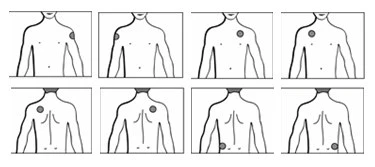
- Apply ONE patch per day to ONE of the following possible sites, as shown in the figures below:
- upper left arm or upper right arm
- upper left chest or upper right chest ( avoid the breast area )
- upper left back or upper right back
- lower left back or lower right back
Every 24 hours, remove the previous patch before applying a NEW one to ONE of the following possible sites.
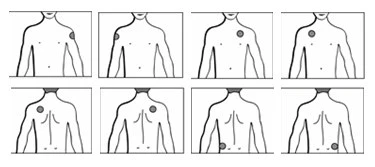
When changing the patch, remove the previous day’s patch before applying a new one, each time at a different site (for example, on the right side of the body one day and on the left side the next day, on the upper part of the body one day and on the lower part the next day). Do not reapply a new patch to the same spot until at least 14 days have passed.
How to apply the RIVASTIGMINA DOC transdermal patch
RIVASTIGMINA DOC patches are thin, translucent, plastic patches that adhere to the skin. Each patch is sealed in a protective pouch until ready for use. Do not open the pouch or remove the patch until just before application.
Carefully remove any existing patch before applying a new one.
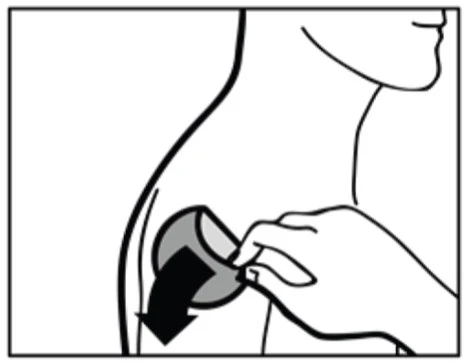
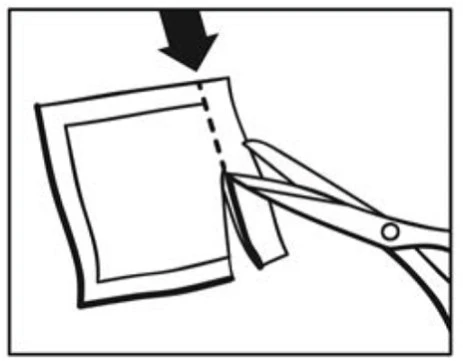
For patients starting treatment for the first time and for patients resuming treatment with RIVASTIGMINA DOC after an interruption, please follow the instructions below next to the second image.
- Each patch is sealed in its protective pouch. Open the pouch only when you are ready to apply the patch. Cut the pouch along the dotted line with scissors and remove the patch from the pouch.
- A protective liner covers the adhesive side of the patch. Peel off one side of the protective liner and avoid touching the adhesive surface with your fingers.
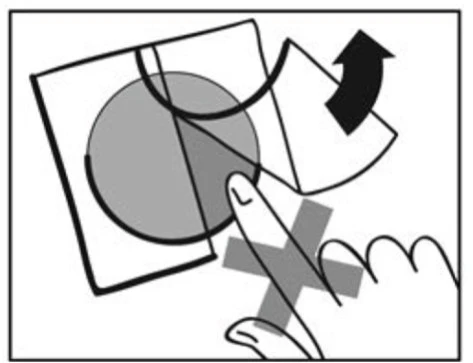
- Place the adhesive side of the patch on the upper or lower back, upper arm, or chest, then remove the second side of the protective liner.
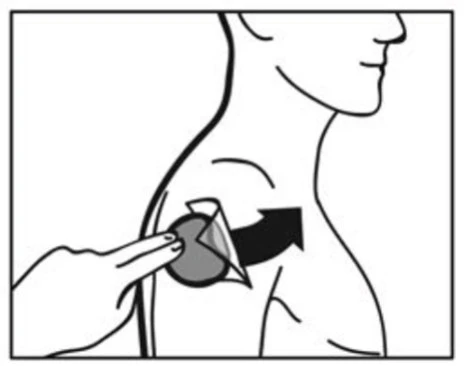
- Press firmly on the patch with the palm of your hand for at least 30 seconds, making sure the edges adhere well.
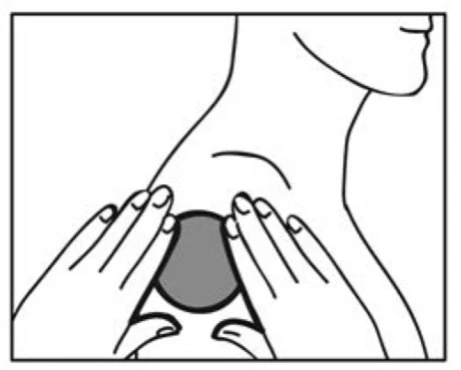
If helpful, you may write on the patch, for example, the day of the week, using a fine ballpoint pen.
The patch should be worn continuously until it is time to replace it with a new one. If desired, when applying a new patch, you may try different sites to find the most comfortable ones and where clothing does not rub against the patch.
How to remove the RIVASTIGMINA DOC transdermal patch
Gently lift one corner of the patch to slowly remove it from the skin. If adhesive residue remains on the skin, rinse the area gently but thoroughly with warm water and mild soap, or use baby oil to remove it. Alcohol or other solvents (such as nail polish remover or similar products) must not be used.
After removing the patch, wash your hands with soap and water. If you have contact with your eyes or if your eyes become red after handling the patch, rinse immediately with plenty of water and consult a doctor if symptoms do not improve.
Can you use the RIVASTIGMINA DOC transdermal patch while bathing, swimming, or in the sun?
- Bathing, swimming, or showering should not interfere with the patch. Make sure the patch does not come loose during these activities.
- Do not expose the patch to external sources of heat (e.g., excessive sunlight, sauna, sunbed) for prolonged periods.
What to do if the patch comes off
If the patch comes off, apply a new one for the remainder of the day, then replace the patch at the usual time the next day.
When and for how long to apply the RIVASTIGMINA DOC transdermal patch
- To benefit from treatment, apply a new patch every day, preferably at the same time.
- Apply only one patch at a time and replace it with a new one after 24 hours.
If you use more RIVASTIGMINA DOC than you should
If you accidentally apply more than one patch, remove all patches from the skin and inform your doctor that you accidentally applied more than one patch. You may need medical treatment. Some people who accidentally took an excessive amount of rivastigmine have experienced nausea, vomiting, diarrhea, high blood pressure, and hallucinations. A slowed heart rate and fainting may also occur.
If you forget to use RIVASTIGMINA DOC
If you realize you have forgotten to apply a patch, apply one immediately. You may apply the next patch at the usual time the following day. Do not apply two patches to make up for the missed one.
If you stop using RIVASTIGMINA DOC
If you stop treatment with the patch, inform your doctor or pharmacist.
If you have any doubts about using this medicine, consult your doctor or pharmacist.
4. Possible side effects
Like all medicines, this medicine can cause side effects, although not everyone gets them.
Side effects may be more frequent when you first start using the medicine or when the dose is increased.
Generally, side effects will gradually disappear as your body gets used to the medicine.
Remove the patch and inform your doctor immediately if you notice any of the following side effects
becoming severe:
Common (may affect up to 1 in 10 people)
- Loss of appetite
- Dizziness
- Feeling agitated or drowsy
- Urinary incontinence (inability to properly retain urine)
Uncommon (may affect up to 1 in 100 people)
- Heart rhythm disorders, such as slow heartbeat
- Seeing things that are not really there (hallucinations)
- Stomach ulcer
- Dehydration (excessive loss of fluids)
- Hyperactivity (high level of activity, restlessness)
- Aggression
Rare (may affect up to 1 in 1,000 people)
-
- Falls
Very rare (may affect up to 1 in 10,000 people)
- Stiffness in arms or legs
- Hand tremors
Not known (frequency cannot be estimated from the available data)
-
- Allergic reactions at the application site of the patch, such as blisters or inflamed skin
-
- Worsening of symptoms of Parkinson's disease – such as tremor, stiffness, and shuffling gait
-
- Inflammation of the pancreas – manifested by severe pain in the upper abdomen, often accompanied by nausea or vomiting
-
- Fast or irregular heartbeat
-
- High blood pressure
-
- Seizures (epileptic fits)
-
- Liver problems (yellowing of the skin and whites of the eyes, abnormally dark urine, or unexplained nausea, vomiting, tiredness, and loss of appetite)
-
- Changes in liver function test results
-
- Feeling restless
- Nightmares
Remove the patch and inform your doctor immediately if you notice any of the side effects listed above.
Other side effects observed with capsules or oral solution containing rivastigmine that may also occur
with the patch:
Common (may affect up to 1 in 10 people)
- Excessive salivation
- Loss of appetite
- Feeling restless
- General feeling of being unwell
- Tremors or feeling confused
- Increased sweating
Uncommon (may affect up to 1 in 100 people)
- Irregular heartbeat (e.g. fast heartbeat)
- Sleep disorders
- Accidental falls
Rare (may affect up to 1 in 1,000 people)
- Seizures (epileptic fits)
- Intestinal ulcer
- Chest pain – this may be caused by heart spasm
Very rare (may affect up to 1 in 10,000 people)
- High blood pressure
- Inflammation of the pancreas – manifested by severe pain in the upper abdomen, often accompanied by nausea or vomiting
- Intestinal bleeding – manifested by blood in the stool or vomit
- Seeing things that are not there (hallucinations)
- In some people who experienced severe vomiting, rupture of the tube connecting the mouth to the stomach (esophagus) occurred.
Reporting of side effects
If you get any side effects, including ones not listed in this leaflet, talk to your doctor, pharmacist, or nurse.
You can also report side effects directly via the national reporting system at the website: https://www.aifa.gov.it/content/segnalazioni-reazioni-avverse.
Reporting side effects can help provide more information on the safety of this medicine.
5. How to store RIVASTIGMINA DOC
Keep this medicine out of the sight and reach of children.
Do not use this medicine after the expiry date stated on the carton and sachet after "Exp.". The expiry date refers to the last day of that month.
Store in the original packaging to protect from light.
Keep the transdermal patch in its sachet until ready to use.
This medicine does not require any special storage temperature conditions.
Do not use the patch if it is damaged or if there are signs of tampering.
After removing a patch, fold it in half with the adhesive sides together and press firmly. Return the used patch to its original sachet and dispose of it in such a way that children cannot touch it. Avoid touching your eyes with your fingers and wash your hands thoroughly with water and soap after removing the patch. If your local authority incinerates household waste, you may dispose of the patch with household waste. Alternatively, return used patches to a pharmacy, preferably in their original packaging.
Do not dispose of any medicine via wastewater or household waste. Ask your pharmacist how to dispose of medicines no longer in use. This will help protect the environment.
6. Package contents and other information
What RIVASTIGMINA DOC contains
The active substance is rivastigmine.
- RIVASTIGMINA DOC 4.6 mg/24 hours transdermal patch: each 5 cm patch releases 4.6 mg of rivastigmine over 24 hours and contains 9 mg of rivastigmine.
- RIVASTIGMINA DOC 9.5 mg/24 hours transdermal patch: each 10 cm patch releases 9.5 mg of rivastigmine over 24 hours and contains 18 mg of rivastigmine.
The other components are:
Backing layer: polyester film
fluorinated polyester film
Drug-containing matrix: acrylic adhesive
acrylic copolymer poly(butyl methacrylate-co-methyl) methacrylate (80:20)
Adhesive matrix: silicone adhesive
Printing ink: black printing ink
Description of the appearance of RIVASTIGMINA DOC and contents of the pack
Each transdermal patch is a thin patch consisting of three layers. The outer layer is translucent and white, printed in black ink with:
- RIVASTIGMINA DOC 4.6 mg/24 hours transdermal patch: “Rivastigmina”, “4.6 mg/24 h”.
- RIVASTIGMINA DOC 9.5 mg/24 hours transdermal patch: “Rivastigmina”, “9.5 mg/24 h”.
Each transdermal patch is individually packed in a child-resistant, heat-sealed pouch. The patches are available in packs containing 7, 10, 30, 60 or 90 pouches, and in multiple packs containing 60 (2 x 30) or 90 (3 x 30) pouches.
Not all pack sizes may be marketed.
Marketing Authorization Holder
DOC Generici S.r.l. - Via Turati 40 - 20121 Milano – Italy.
Manufacturer responsible for batch release
Eurofins PHAST GmbH - Kardinal-Wendel-Strasse 16 - 66424 Homburg – Germany.
PATIENT INFORMATION LEAFLET: INFORMATION FOR THE USER
RIVASTIGMINA DOC 13.3 mg/24 hours transdermal patch
Generic medicine
Please read this leaflet carefully before using this medicine as it contains important information for you.
- Keep this leaflet. You may need to read it again.
- If you have any questions, ask your doctor, pharmacist, or nurse.
- This medicine has been prescribed for you only. Do not give it to others, even if their symptoms are the same as yours, as it could be harmful.
- If you experience any side effects, including those not listed in this leaflet, contact your doctor, pharmacist, or nurse. See section 4.
Contents of this leaflet:
- What RIVASTIGMINA DOC is and what it is used for
- What you need to know before using RIVASTIGMINA DOC
- How to use RIVASTIGMINA DOC
- Possible side effects
- How to store RIVASTIGMINA DOC
- Contents of the pack and other information
1. What RIVASTIGMINA DOC is and what it is used for
RIVASTIGMINA DOC contains the active substance rivastigmine.
Rivastigmine belongs to a class of substances known as cholinesterase inhibitors. In patients with
Alzheimer's dementia, certain brain cells die, resulting in low levels of acetylcholine (a
substance that enables nerve cells to communicate with each other). Rivastigmine works by inhibiting the enzymes
that break down acetylcholine: acetylcholinesterase and butyrylcholinesterase. By inhibiting these enzymes,
RIVASTIGMINA DOC increases acetylcholine levels in the brain, thereby improving the symptoms of
Alzheimer's disease.
RIVASTIGMINA DOC is used to treat adult patients with mild to moderate Alzheimer's dementia, a progressive disorder of the central nervous system that gradually affects memory, learning ability, and behavior.
2. What you need to know before using RIVASTIGMINA DOC
Do not use RIVASTIGMINA DOC
- if you are allergic to rivastigmine or to any of the other ingredients of this medicine (listed in section 6).
- if you have previously had an allergic reaction to similar medicines (carbamate derivatives).
- if, when using the patch, you experienced a skin reaction spreading beyond the area where the patch was applied, or if you had a more severe local reaction (such as blisters, increased skin inflammation, swelling) that did not improve within 48 hours after removing the patch.
If any of these apply to you, inform your doctor and do not apply the RIVASTIGMINA DOC transdermal patch.
Warnings and precautions
Talk to your doctor before using RIVASTIGMINA DOC
- if you have or have previously had a heart condition such as irregular or slow heartbeat, QTc interval prolongation, family history of QTc interval prolongation, torsades de pointes, or if you have low levels of potassium or magnesium in your blood.
- if you have or have previously had an active gastric ulcer.
- if you have or have previously had difficulty urinating.
- if you have or have previously had seizures (epileptic fits).
- if you have or have previously had asthma or severe respiratory disorders.
- if you suffer from tremors.
- if you have a low body weight.
- if you experience gastrointestinal disorders such as nausea, vomiting, and diarrhea. If vomiting and diarrhea are persistent, you may become dehydrated (excessive loss of fluids).
- if you have impaired liver function.
If you fall into any of these categories, your doctor may monitor you more frequently during treatment with this medicine.
If you have not applied a patch for more than three days, consult your doctor before applying the next one.
Children and adolescents
There is no indication for the specific use of RIVASTIGMINA DOC in the pediatric population for the treatment of Alzheimer's disease.
Other medicines and RIVASTIGMINA DOC
Inform your doctor or pharmacist if you are taking, have recently taken, or might take any other medicines.
RIVASTIGMINA DOC may interfere with anticholinergic medicines, including those used to relieve stomach cramps or spasms (e.g. dicyclomine), for the treatment of Parkinson's disease (e.g. amantadine), or to prevent motion sickness (e.g. diphenhydramine, scopolamine, or meclizine).
RIVASTIGMINA DOC must not be administered concurrently with metoclopramide (a medicine used to relieve or prevent nausea and vomiting). Using these two medicines together may cause side effects such as stiffness of limbs and hand tremors.
If you are scheduled for surgery and are being treated with the RIVASTIGMINA DOC transdermal patch, inform your doctor before receiving anesthesia, as it may enhance the effects of certain muscle relaxants during anesthesia.
Caution is recommended when RIVASTIGMINA DOC is taken together with beta-blockers (medicines such as atenolol, used to treat hypertension, angina, and other heart conditions). Using both medicines together may cause side effects such as slowing of the heartbeat (bradycardia), which may lead to fainting or loss of consciousness.
Caution is also recommended when RIVASTIGMINA DOC is taken together with other medicines that may affect heart rhythm or the heart's electrical system (QT interval prolongation).
RIVASTIGMINA DOC with food, drink, and alcohol
The RIVASTIGMINA DOC transdermal patch may be used with food, drinks, and alcohol.
Pregnancy, breastfeeding, and fertility
If you are pregnant, suspect you may be pregnant, are planning to become pregnant, or are breastfeeding, consult your doctor or pharmacist before using this medicine.
If you are pregnant, the benefits of using the RIVASTIGMINA DOC transdermal patch must be weighed against the potential risks to the unborn child. RIVASTIGMINA DOC must not be used during pregnancy unless strictly necessary.
You must not breastfeed during treatment with the RIVASTIGMINA DOC transdermal patch.
Driving and using machines
Your doctor will advise you whether your condition allows you to drive or operate machinery safely. The RIVASTIGMINA DOC transdermal patch may cause fainting or severe confusion. If you feel faint or confused, do not drive, do not operate machinery, and avoid any other activity requiring alertness.
3. How to use RIVASTIGMINA DOC
Use this medicine exactly as prescribed by your doctor. If you have any doubts, consult your doctor,
pharmacist, or nurse.
IMPORTANT:
- Remove the previous day’s patch before applying a NEW ONE.
- One patch only per day.
- Do not cut the patch into pieces.
- Press firmly on the patch with the palm of your hand for at least 30 seconds.
Starting treatment
Your doctor will tell you which RIVASTIGMINA DOC transdermal patch is most suitable for you.
- Treatment usually starts with RIVASTIGMINA DOC 4.6 mg/24 hours.
- The usual recommended daily dose is RIVASTIGMINA DOC 9.5 mg/24 hours. If well tolerated, your doctor may consider increasing the dose to 13.3 mg/24 hours.
- Apply only one RIVASTIGMINA DOC patch at a time and replace the patch with a new one every 24 hours.
During treatment, your doctor may adjust the dose according to your individual needs.
If you have not applied a patch for more than three days, do not apply the next one without first consulting your
doctor. You may resume treatment with the transdermal patches at the same dose if the treatment has been
interrupted for no more than 3 days; otherwise, your doctor will restart treatment with
RIVASTIGMINA DOC 4.6 mg/24 hours.
Where to apply the RIVASTIGMINA DOC transdermal patch
- Before applying a patch, make sure the skin is:
- clean, dry and hair-free,
- free from powders, oils, moisturizers, or lotions that may prevent the patch from adhering properly to the skin, which must be free of cuts, rashes, and/or irritations.
- Carefully remove any existing patch before applying a new one. Having more than one patch on the skin could expose you to an excessive amount of medicine, which could be potentially dangerous.
- Apply ONE patch per day on ONE of the following possible sites, as shown in the figures below:
- upper left arm or upper right arm
- upper left chest or upper right chest ( avoid the breast )
- upper left back or upper right back
- lower left back or lower right back
Every 24 hours, remove the previous patch before applying a NEW ONE on ONE of the following possible sites.
When changing the patch, remove the previous day’s patch before applying a new one each time at a different site (for example, on the right side of the body one day and on the left side the next day, on the upper part of the body one day and on the lower part the next day). Do not reapply a new patch to the same site until at least 14 days have passed.
How to apply the RIVASTIGMINA DOC transdermal patch
RIVASTIGMINA DOC patches are thin, translucent, plastic patches that adhere to the skin. Each patch is sealed in a pouch that protects it until use. Do not open the pouch or remove the patch until just before application.
Carefully remove the existing patch before applying a new one.
For patients starting treatment for the first time and for patients resuming treatment with
RIVASTIGMINA DOC after an interruption, please follow the instructions below next to the second image.
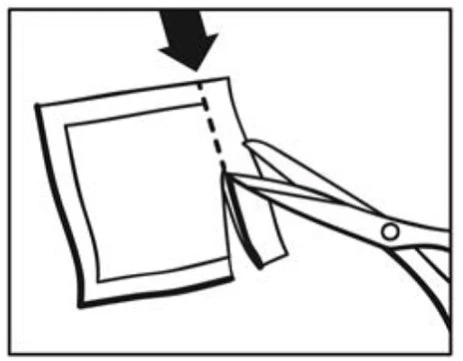
- Each patch is sealed in its protective pouch. Open the pouch only when you are ready to apply the patch. Cut the pouch along the dotted line with scissors and remove the patch from the pouch.
- A protective liner covers the adhesive side of the patch. Peel off one side of the protective liner and do not touch the adhesive part of the patch with your fingers.
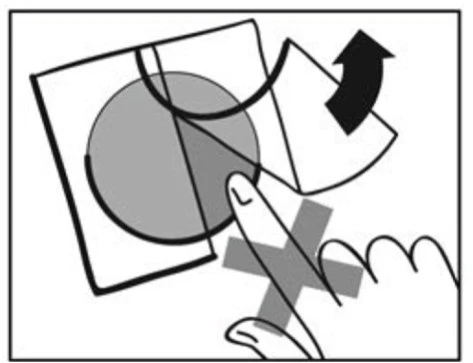
- Place the adhesive side of the patch on the upper or lower back, upper arm, or chest, then remove the second side of the protective liner.
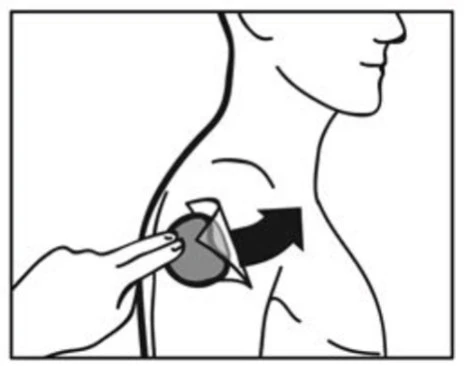
- Press firmly on the patch with the palm of your hand for at least 30 seconds, making sure the edges adhere well.
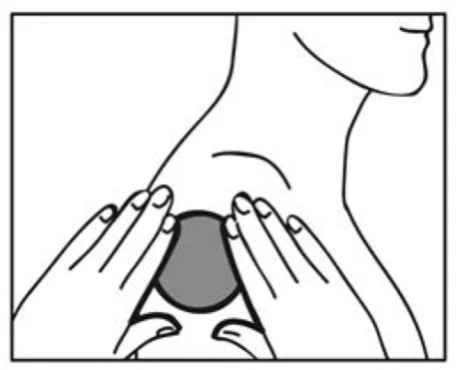
If helpful, you may write on the patch, for example, the day of the week, using a fine-tip ballpoint pen.
The patch should be worn continuously until it is time to replace it with a new one. If desired, when applying a new patch you may try different sites to find those most comfortable for you and where clothing will not rub against the patch.
How to remove the RIVASTIGMINA DOC transdermal patch
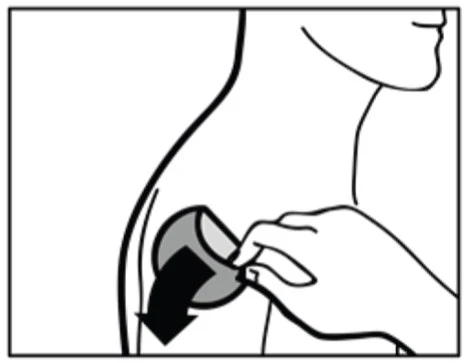
Gently lift one corner of the patch to slowly remove it from the skin. If adhesive residue remains on the skin, gently and thoroughly wet the area with warm water and mild soap, or use baby oil to remove it. Do not use alcohol or other solvents (such as nail polish remover or similar products).
After removing the patch, wash your hands with water and soap. If you come into contact with your eyes or if your eyes become red after handling the patch, rinse immediately with plenty of water and consult a doctor if symptoms do not improve.
Can you apply the RIVASTIGMINA DOC transdermal patch while bathing, swimming, or sunbathing?
- Bathing, swimming, or showering should not interfere with the patch. Make sure the patch does not come off during these activities.
- Do not expose the patch to external sources of heat (e.g., excessive sunlight, sauna, tanning bed) for prolonged periods.
What to do if the patch comes off
If a patch comes off, apply a new one for the remainder of the day, then replace the patch the next day at the usual time.
When and for how long to apply the RIVASTIGMINA DOC transdermal patch
- To benefit from treatment, apply a new patch every day, preferably at the same time.
- Apply only one patch at a time and replace it with a new one after 24 hours.
If you use more RIVASTIGMINA DOC than you should
If you accidentally apply more than one patch, remove all patches from the skin and inform your doctor that you accidentally applied more than one patch. You may need medical treatment. Some people who accidentally took an excessive amount of rivastigmine have experienced nausea, vomiting, diarrhea, high blood pressure, and hallucinations. Slowing of the heart rate and fainting may also occur.
If you forget to use RIVASTIGMINA DOC
If you realize you have forgotten to apply a patch, apply a new one immediately. You may apply the next patch the following day at the scheduled time. Do not apply two patches to make up for the missed one.
If you stop using RIVASTIGMINA DOC
If you stop treatment with the patch, inform your doctor or pharmacist.
If you have any doubts about using this medicine, consult your doctor or pharmacist.
4. Possible side effects
Like all medicines, RIVASTIGMINA DOC transdermal patch may cause side effects,
although not everybody gets them.
Side effects may be more frequent when you first start using the medicine or when the dose is increased.
Generally, side effects will gradually disappear as your body gets used to the medicine.
Remove the patch and contact your doctor immediately if you notice that any of the following
side effects become severe:
Common (may affect up to 1 in 10 people)
- Loss of appetite
- Dizziness
- Feeling agitated or drowsy
- Urinary incontinence (inability to properly control urine)
Uncommon (may affect up to 1 in 100 people)
- Heart rhythm disorders such as slow heartbeat
- Seeing things that are not really there (hallucinations)
- Stomach ulcer
- Dehydration (excessive loss of fluids)
- Hyperactivity (high level of activity, restlessness)
- Aggression
Rare (may affect up to 1 in 1,000 people)
-
- Falls
Very rare (may affect up to 1 in 10,000 people)
- Stiffness in arms or legs
- Hand tremors
Frequency not known (frequency cannot be estimated from the available data)
-
- Allergic reactions at the application site, such as blisters or inflamed skin
-
- Worsening of Parkinson's disease symptoms - such as tremor, stiffness, and shuffling gait
-
- Inflammation of the pancreas - manifested by severe pain in the upper stomach, often accompanied by nausea or vomiting
-
- Fast or irregular heartbeat
-
- High blood pressure
-
- Seizures (epileptic fits)
-
- Liver disorders (yellowing of the skin and whites of the eyes, abnormally dark-coloured urine, or unexplained nausea, vomiting, fatigue, and loss of appetite)
-
- Changes in liver function test results
-
- Feeling of restlessness
- Nightmares
Remove the patch and contact your doctor immediately if you notice any of the
side effects listed above.
Other side effects observed with rivastigmine capsules or oral solution that may
occur with the patch:
Common (may affect up to 1 in 10 people)
- Excessive salivation
- Loss of appetite
- Feeling of restlessness
- General feeling of being unwell
- Tremors or confusion
- Increased sweating
Uncommon (may affect up to 1 in 100 people)
- Irregular heartbeat (e.g. fast heartbeat)
- Sleep disorders
- Accidental falls
Rare (may affect up to 1 in 1,000 people)
- Seizures (epileptic fits)
- Intestinal ulcer
- Chest pain - this may be caused by heart spasm
Very rare (may affect up to 1 in 10,000 people)
- High blood pressure
- Inflammation of the pancreas - manifested by severe pain in the upper stomach, often accompanied by nausea or vomiting
- Intestinal bleeding - manifested by presence of blood in stools or vomit
- Seeing things that are not there (hallucinations)
- In some people with severe vomiting, rupture of the tube connecting the mouth to the stomach (esophagus) has occurred.
Reporting of side effects
If you get any side effects, including those not listed in this leaflet, talk to your doctor, pharmacist, or nurse.
You can also report side effects directly via the national reporting system at the website https://www.aifa.gov.it/content/segnalazioni-reazioni-avverse .
Reporting side effects can help provide more information on the safety of this medicine.
5. How to store RIVASTIGMINA DOC
- Keep this medicine out of the sight and reach of children.
- Do not use this medicine after the expiry date stated on the carton and on the sachet after "Exp". The expiry date refers to the last day of that month.
- Store in the original packaging to protect from light.
- Keep the transdermal patch in its sachet until the time of use.
- This medicine does not require any special storage temperature.
- Do not use the patch if it is damaged or if there are any signs of tampering.
- After removing a patch, fold it in half with the adhesive sides together and press firmly. Return the used patch to its original sachet and dispose of it in such a way that children cannot touch it. Avoid touching your eyes with your fingers and wash your hands thoroughly with water and soap after removing the patch. If your local authority incinerates household waste, you may dispose of the patch with household waste. Alternatively, return used patches to your pharmacy, preferably in their original packaging.
Do not dispose of any medicines via wastewater or household waste. Ask your pharmacist how to dispose of medicines you no longer use. This will help protect the environment.
6. Package contents and other information
What RIVASTIGMINA DOC contains
The active substance is rivastigmine.
Each 15 cm patch releases 13.3 mg of rivastigmine over 24 hours and contains 27 mg of rivastigmine.
The other components are:
Film: polyester film
fluoride-coated polyester film
Matrix with active substance: acrylic adhesive
acrylic copolymer poly(butyl methacrylate-co-methyl) methacrylate (80:20)
Adhesive matrix: silicone adhesive
Ink: printing black ink (containing PET, resins/waxes, carbon black, additives)
Description of the appearance of RIVASTIGMINA DOC and pack contents
Each transdermal patch is a thin patch consisting of three layers. The outer layer is translucent, white, and printed in black ink with:
- RIVASTIGMINA DOC 13.3 mg/24 hours transdermal patch: “Rivastigmina”, “13.3 mg/24 h”.
Each transdermal patch is packaged in a heat-sealed, child-resistant pouch. The patches are available in packs containing 30 pouches.
Marketing Authorization Holder and Manufacturer
Marketing Authorization Holder:
DOC Generici S.r.l. - Via Turati 40 - 20121 Milan – Italy.
Manufacturer:
Eurofins PHAST GmbH - Kardinal-Wendel-Strasse 16 - 66424 Homburg – Germany.