Ritalin long-acting
Italy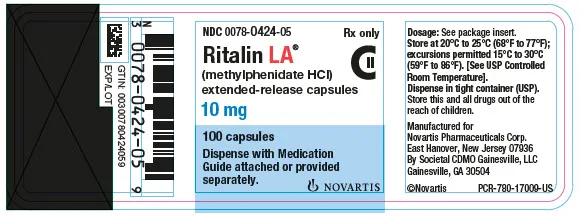
Table of Contents
- Package leaflet: Information for the user
- 1. What Ritalin Long-Acting is and what it is used for
- 2. What you should know before taking or giving Ritalin Long-acting to your child
- 3. How to take Ritalin Long-Acting
- 4. Possible side effects
- 5. How to store Ritalin Long-Acting
- 6. Package contents and other information
Package leaflet: Information for the user
Ritalin Long-Acting 10 mg, 20 mg, 30 mg, 40 mg and 60 mg modified-release hard capsules
methylphenidate hydrochloride
Please read all of this leaflet carefully before you take, or give to your child, this medicine as it contains important information for you.
- Keep this leaflet. You may need to read it again.
- If you have any further questions, ask your doctor or pharmacist.
- This medicine has been prescribed for you or your child only. Do not pass it on to others, even if their symptoms are the same as yours, as it may be harmful.
- If you or your child experience any side effects, including those not listed in this leaflet, talk to your doctor or pharmacist. See section 4.
Contents of this leaflet:
- What Ritalin Long-Acting is and what it is used for
- What you need to know before taking or giving Ritalin Long-Acting to your child
- How to take Ritalin Long-Acting
- Possible side effects
- How to store Ritalin Long-Acting
- Contents of the pack and other information
1. What Ritalin Long-Acting is and what it is used for
Ritalin Long-Acting contains the active substance methylphenidate hydrochloride, a compound that stimulates the central nervous system.
What this medicine is used for
This medicine is used to treat 'Attention Deficit Hyperactivity Disorder' (ADHD).
- It is used in children and adolescents aged between 6 and 18 years.
- It is used only after trying non-pharmacological treatments, such as supportive therapy and behavioural therapy, which have proven insufficient.
This medicine must not be used to treat ADHD in children under 6 years of age or in adults who have not previously been treated with this medicine. If treatment was started at a young age, it may be advisable to continue it into adulthood. Your doctor will advise you accordingly.
The safety and efficacy of this medicine have not been studied in children under 6 years of age, and therefore it is not known whether this medicine can be used safely or is effective in this age group.
How this medicine works
This medicine improves the activity of certain brain areas that are less active. It can help improve attention and concentration and reduce impulsive behaviour.
The medicine is given as part of a comprehensive treatment programme. This treatment programme also includes psychological, educational and social therapy, in addition to pharmacological treatment. This medicine is prescribed only by doctors experienced in behavioural disorders. Although there is no cure for ADHD, it can be managed with the help of a treatment programme.
Information about ADHD
Children and adolescents with ADHD find it difficult to sit still and concentrate. It is not their fault if they cannot do these things. Many children and adolescents struggle to do these things. However, having ADHD may cause problems in everyday life.
Children and young people with ADHD may have difficulties in learning and doing homework. It is hard for them to behave well at home, at school or in other places. ADHD does not affect intelligence.
Not all patients with ADHD require pharmacological treatment.
Examinations during treatment with this medicine
To check whether this medicine is causing any unwanted effects, your doctor will regularly monitor your health or that of your child (e.g. blood pressure or heart rate). In children taking this medicine, the doctor will also monitor growth. If used for a prolonged period, blood tests will be performed to monitor blood cell counts (white blood cells, red blood cells and platelets).
2. What you should know before taking or giving Ritalin Long-acting to your child
Do not take Ritalin Long-acting
- if you or your child are allergic to methylphenidate hydrochloride or to any of the other ingredients of this medicine (listed in section 6)
- if you or your child have a thyroid problem
- if you or your child have high pressure in the eye (glaucoma)
- if you or your child have a tumour of the adrenal gland (pheochromocytoma)
- if you or your child have an eating problem when not hungry or do not want to eat, such as anorexia nervosa
- if you or your child have very high blood pressure or narrowing of blood vessels that may cause pain in arms and legs
- if you or your child have previously had heart problems, such as heart attack, irregular heartbeat, chest pain or discomfort, heart failure, heart disease, or were born with a heart problem
- if you or your child have previously had a problem with blood vessels in the brain, such as stroke, swelling and weakening of a part of a blood vessel (aneurysm), narrowing or blockage of blood vessels, or inflammation of blood vessels (vasculitis)
- if you or your child have mental disorders, such as:
- a "psychopathic" personality disorder or borderline personality disorder
- abnormal thoughts/delusions or a mental illness characterised by symptoms such as delusional ideas, perception of things that are not there, and gradual personality change (schizophrenia)
- signs of severe mood disorders such as:
- suicidal thoughts
- severe depression, when feeling very sad, useless and desperate
- feeling of unusual excitement, hyperactivity and lack of inhibition (mania)
- if you or your child are taking medicines for depression called monoamine oxidase inhibitors (MAOIs). Taking a monoamine oxidase inhibitor together with methylphenidate may cause a sudden increase in blood pressure.
If any of these conditions apply to you or your child, do not take methylphenidate. If you are unsure, consult your
doctor or pharmacist before taking methylphenidate. This is because methylphenidate may worsen these
conditions.
Warnings and precautions
Talk to your doctor or pharmacist before taking Ritalin Long-acting if you or your child:
- have liver or kidney problems
- have suffered from seizures (epilepsy) or if any electroencephalographic tests have been abnormal (electroencephalogram, EEG)
- have ever had episodes of abuse or have been dependent on alcohol, prescription medicines or common drugs
- are a girl who has started menstruating (see “Pregnancy, breastfeeding and fertility”)
- have repeated and difficult-to-control movements of any part of the body or repeat sounds and words
- have high blood pressure
- have heart problems not listed in the previous section “Do not take Ritalin Long-acting”
- have a mental health problem not listed in the previous section “Do not take Ritalin Long-acting”. Other mental health problems include:
- mood swings (from manic to depressed – called “bipolar disorder”)
- becoming aggressive or hostile, or worsening of existing aggression
- seeing, hearing or perceiving things that are not there (hallucinations)
- believing things that are not true (delusions)
- feeling unusually suspicious (paranoia)
- feeling restless, anxious or tense
- feeling depressed or guilty.
Methylphenidate may worsen these conditions. Your doctor will want to monitor how the medicine affects
you or your child.
During treatment, males and adolescents may unexpectedly experience prolonged erections.
These may be painful and can occur at any time. It is important to contact your doctor immediately if an
erection lasts more than 2 hours, especially if it is painful.
Checks your doctor will carry out before starting treatment with this medicine:
These checks are intended to determine whether methylphenidate is the right medicine for you or your child.
The doctor will ask you or your child about:
- any other medicines you or your child are taking
- any cases of unexplained sudden death in the family
- any other medical problems (e.g. heart problems) affecting you, your child or other family members
- how you or your child feel, for example whether you feel well or unwell, have strange thoughts, or have previously experienced any of these feelings
- any family history of “tics” (repeated and difficult-to-control movements of any part of the body or repetition of sounds and words)
- any history of mental or behavioural problems in you, your child or other family members. The doctor will assess whether you or your child are at risk of mood swings (from manic to depressed, so-called “bipolar disorder”). The doctor will review your or your child’s mental health history and whether there is a family history of suicide, manic-depressive illness (bipolar disorder) or depression.
It is important that you or your child provide as much information as possible. This will help the doctor decide
whether methylphenidate is the right medicine for you or your child. The doctor may decide that additional
medical tests are needed before starting treatment with this medicine.
Other medicines and Ritalin Long-acting
Inform your doctor or pharmacist if you or your child are taking, have recently taken or might take any other
medicine.
If you or your child are taking other medicines, methylphenidate may affect their effectiveness or cause
unwanted effects. It may be necessary to adjust the dose or stop taking methylphenidate or the other
medicines. If you or your child are taking any of the following medicines, consult your doctor or pharmacist
before taking methylphenidate:
- other medicines for depression
- medicines for severe mental health problems
- medicines for epilepsy
- medicines used to lower or raise blood pressure
- some cough and cold remedies containing substances that may affect blood pressure. It is important to check with the pharmacist when purchasing such products
- medicines that thin the blood to prevent clot formation
If you have any doubts whether any of the medicines you or your child are taking are included among those
listed above, ask your doctor or pharmacist before taking methylphenidate.
In case of surgery
Inform your doctor if you or your child are about to undergo surgery. You must not take methylphenidate on the
day of surgery if certain types of anaesthetics are to be used. This is because there is a risk of a sudden rise in
blood pressure during surgery.
Drug abuse screening tests
In laboratory tests for amphetamines, methylphenidate may give a false positive result, especially in
immunological screening tests.
Ritalin Long-acting with food, drinks and alcohol
You or your child must not drink alcoholic beverages while taking this medicine. Alcohol may worsen the
unwanted effects of this medicine. Remember that some foods and some medicines contain alcohol.
Pregnancy, breastfeeding and fertility
Available data do not indicate an overall increased risk of birth defects, although a small increase in the risk of
heart malformations cannot be ruled out following use during the first three months of pregnancy. Your doctor
can provide you with further information about this risk. In animal studies, no effects on fertility have been
observed. Your doctor can provide you with further information about this risk.
Inform your doctor or pharmacist before taking methylphenidate if you or your daughter:
- are sexually active. The doctor will discuss contraception methods with you or your daughter.
- are pregnant, suspect you may be pregnant, or are planning a pregnancy. The doctor will assess whether you should take methylphenidate.
- are breastfeeding or planning to breastfeed. Methylphenidate may pass into breast milk. Therefore, the doctor will decide whether breastfeeding should continue during treatment with methylphenidate.
Driving and using machines
While taking methylphenidate, you or your child may feel dizzy or have difficulty falling asleep, focusing or blurred
vision. If this occurs, it may be dangerous to perform activities such as driving, operating machinery, horse
riding, cycling or climbing trees.
Doping
For individuals engaged in sports: using this medicine without a therapeutic need constitutes doping and may
lead to a positive result in anti-doping tests.
Ritalin Long-acting contains sucrose
If your doctor has diagnosed you or your child with an intolerance to certain sugars, contact your doctor before
taking this medicine.
3. How to take Ritalin Long-Acting
Take this medicine exactly as directed by your doctor. If you have any doubts, consult your doctor or pharmacist.
The capsules contain two different types of granules. Half of the granules release the active substance (methylphenidate) immediately after intake, while the other half release methylphenidate after 4 hours. This special formulation is designed to provide effective treatment throughout the school day (not the entire day) without the need for an additional dose at lunchtime.
- Your doctor will generally start treatment at a low dose and gradually increase it as needed.
- The maximum daily dose in children/adolescents is 60 mg.
- The maximum daily dose in adults is 80 mg.
- If you were previously treated during childhood with this medicine for ADHD and have recently turned 18, your doctor may continue prescribing the same dose. If you were previously treated with Ritalin tablets during childhood, your doctor will prescribe the equivalent dose of Ritalin Long-Acting.
- This medicine is taken once daily, usually in the morning. To prevent sleep disturbances, do not take the medicine too late in the day.
- This medicine may be taken with or without food.
- The capsule must be swallowed whole with a glass of water.
- Do not crush, chew, or divide the capsule or its contents.
If you, or your child, are unable to swallow this medicine, you may sprinkle the contents onto a small amount of food as follows:
- Carefully open the capsule and sprinkle the microspheres onto a small amount of soft food (e.g., applesauce).
- The food must not be hot, as heat could affect the special properties of the microspheres.
- This mixture of medicine and food should be taken immediately.
Never store the medicine and food mixture for later use.
If you, or your child, do not feel better after 1 month of treatment
If you, or your child, do not feel better, talk to your doctor. Your doctor may consider whether a different treatment is needed.
If you, or your child, do not take this medicine correctly
If this medicine is not taken correctly, it may cause abnormal behavior. It may also mean that you, or your child, begin to develop dependence on the medicine. Inform your doctor if you, or your child, have ever abused or been dependent on alcohol, prescription medicines, or street drugs.
This medicine has been prescribed only for you, or your child. Do not give this medicine to others, even if their symptoms appear similar to yours.
If you, or your child, take more Ritalin Long-Acting than you should
If you, or your child, take an excessive dose of this medicine, contact your doctor or call an ambulance immediately. Tell them how much medicine has been taken.
Signs of overdose may include: vomiting, restlessness (agitation), tremors, increased involuntary movements, muscle twitching, seizures (which may be followed by coma), feelings of euphoria, confusion, seeing, hearing, or sensing things that are not real (hallucinations), sweating, hot flushes (reddening), headache, high fever, changes in heartbeat (slow, fast, or irregular), high blood pressure, dilated pupils, dry nose, dry mouth, and red-brown discoloration of the urine, which could be signs of abnormal muscle breakdown (rhabdomyolysis).
If you, or your child, forget to take Ritalin Long-Acting
Do not take a double dose to make up for a forgotten dose. If you, or your child, forget a dose, wait until the next scheduled dose.
If you, or your child, stop taking Ritalin Long-Acting
If you, or your child, suddenly stop taking this medicine, ADHD symptoms may return or unwanted effects such as depression may occur. Your doctor may consider gradually reducing the daily dose before stopping treatment completely. Inform your doctor before you, or your child, stop taking this medicine.
What your doctor will do during treatment
Your doctor will carry out some checks:
- Before starting treatment – to ensure that this medicine is safe and beneficial for you or your child
- After starting treatment – at least every 6 months, but preferably more frequently. These checks will also be performed when the dose is changed. These examinations include:
- monitoring of appetite
- measuring height and weight in children
- measuring weight in adults
- measuring blood pressure and heart rate
- checking for the development of any problems related to mood, emotional state, or any other unusual feelings in you or your child, or any worsening during the period of taking this medicine.
Long-term treatment
It is not necessary to take this medicine indefinitely. If you, or your child, have been taking this medicine for more than one year, your doctor should interrupt treatment for a short period at least once a year. In children, this period may coincide with a school holiday. This will help determine whether the medicine is still needed.
If you have any questions about the use of this medicine, consult your doctor or pharmacist.
4. Possible side effects
Like all medicines, this medicine can cause side effects, although not everyone experiences them.
Some side effects can be serious.
If you or your child experience any of the side effects listed below, contact a doctor immediately.
Common (may affect up to 1 in 10 people)
- disturbance in heart rhythm (arrhythmia), increased heart rate (tachycardia), rapid heartbeat (palpitations)
- mood changes or mood swings, or changes in personality
Uncommon (may affect up to 1 in 100 people)
- thoughts about suicide or wanting to commit suicide
- perceiving or sensing things that are not real; these are signs of psychosis
- uncontrolled speech and body movements (tics or Tourette’s syndrome)
- signs of allergy such as rash, itching or hives on the skin, swelling of the face, lips, tongue or other parts of the body, shortness of breath, wheezing or difficulty breathing
Rare (may affect up to 1 in 1,000 people)
- feeling unusually excited, hyperactivity and lack of inhibition (mania)
Very rare (may affect up to 1 in 10,000 people)
- heart attack
- seizures (epilepsy)
- skin peeling or red-purple spots
- uncontrollable muscle spasms affecting the eyes, head, neck, body and nervous system – this is due to a temporary lack of blood flow to the brain
- paralysis or problems with movement and vision, difficulty speaking (these may be signs of problems with blood vessels in the brain)
- decrease in blood cell count (white blood cells and platelets), which may increase the likelihood of infections and make bleeding and bruising easier
- sudden increase in body temperature, very high blood pressure and severe seizures (Neuroleptic Malignant Syndrome, NMS). It is unclear whether these side effects are caused by methylphenidate or by other medicines that may be taken in combination with methylphenidate.
Other side effects (frequency cannot be estimated from available data)
- unwanted thoughts that keep recurring
- fainting without reason, chest pain, shortness of breath (these may be signs of heart problems)
If you or your child experience any of the side effects listed above, contact a doctor immediately.
Other side effects
If these side effects become severe, inform your doctor or pharmacist:
Very common (may affect more than 1 in 10 people)
- headache
- reduced appetite
- nervousness
- insomnia
- discomfort (nausea)
- dry mouth
Common (may affect up to 1 in 10 people)
- joint pain (e.g. knee, ankle or shoulder)
- high temperature (fever)
- common cold (nasopharyngitis)
- unusual hair loss or thinning
- unusual drowsiness or lethargy
- fatigue
- thirst
- excessive sweating
- itching, rash or raised red itchy skin rashes (urticaria)
- cough, sore throat or irritation of nose and throat, shortness of breath
- high blood pressure, cold hands and feet (peripheral coldness)
- dizziness, uncontrollable movements (dyskinesia), tremor or shaking, being unusually active
- feeling aggressive, agitation, depression, irritability, anxiety or restlessness
- abnormal behaviour, reduced sexual desire, sleep problems, panic attacks, feeling stressed
- toothache
- stomach pain, diarrhoea, stomach upset, indigestion with a feeling of fullness or stomach pain, belching, nausea, vomiting and heartburn (dyspepsia) and vomiting. These side effects occur at the beginning of treatment and may be reduced by taking the medicine with food
- weight loss
- excessive nervousness
- excessive teeth grinding (bruxism)
Uncommon (may affect up to 1 in 100 people)
- constipation
- blood in urine
- double or blurred vision
- muscle pain, muscle twitch, muscle stiffness
- chest pain
- increased liver function test values (detected during a blood test)
- anger, crying spells, tension, excessive awareness of surroundings (hypervigilance)
- inability to stay still or sit still (akathisia)
- inflammation of the stomach and intestines (gastroenteritis)
- lethargy, drowsiness (sedation)
Rare (may affect up to 1 in 1,000 people)
- changes in sexual drive
- feeling disoriented
- dilated pupils (mydriasis), vision disturbances
- breast enlargement in men
- skin redness, raised red skin rashes
- feeling of tightness and pain in the chest (angina pectoris)
Very rare (may affect up to 1 in 10,000 people)
- heart attack
- sudden death
- muscle cramps
- small red spots on the skin
- inflammation or blockage of cerebral arteries
- liver function abnormalities, including liver failure and coma
- changes in test results (including liver function tests and blood tests)
- suicide attempt, thought disturbances, lack of feelings or emotions, repetitive behaviours, being obsessed with something
- numbness, tingling and colour change (from white to blue, then red) in fingers of hands and feet when cold (Raynaud’s phenomenon)
- anaemia
Other side effects (frequency cannot be estimated from available data)
- migraine
- very high fever
- slow, fast or extra heartbeats
- a major seizure (‘grand mal’)
- believing things that are not true, confusion
- excessive and uncontrollable talking (logorrhoea)
- severe stomach pain, often with nausea and vomiting
- problems with blood vessels in the brain (stroke, inflammation of arteries in the brain, blockage of cerebral artery)
- impotence
- prolonged erections, sometimes painful, or increased number of erections
- dependence
- delusions
- inability to hold urine (incontinence)
- spasm of jaw muscles making it difficult to open the mouth (trismus)
- stuttering
- nosebleeds
Effects on growth
When used for more than one year, methylphenidate may cause delayed growth in some children.
This occurs in fewer than 1 in 10 children.
- It may be observed that weight and height do not increase as expected.
- Your doctor will carefully monitor your child’s height, weight and whether they are eating properly.
- If your child does not grow as expected, treatment with methylphenidate may be interrupted for a short period.
Reporting of side effects
If you experience any side effect, including those not listed in this leaflet, talk to your doctor or pharmacist. You can also report side effects directly via the national reporting system at https://www.aifa.gov.it/content/segnalazioni-reazioni-avverse. By reporting side effects, you can help provide more information on the safety of this medicine.
5. How to store Ritalin Long-Acting
Make sure to store the medicine in a safe place, so that no one else can take it,
especially younger brothers or sisters.
Do not store above 30°C.
Keep the bottle tightly closed.
Do not use this medicine after the expiry date stated on the bottle or on the carton after Exp. The
expiry date refers to the last day of that month.
Do not use this medicine if you notice that the packaging is damaged or has been tampered with.
Do not dispose of any medicine via wastewater or household waste. Ask your pharmacist how to dispose of
medicines no longer required. This will help protect the environment.
6. Package contents and other information
What Ritalin Extended Release contains
The active substance is methylphenidate hydrochloride.
- Ritalin Extended Release 10 mg contains 10 mg of methylphenidate hydrochloride.
- Ritalin Extended Release 20 mg contains 20 mg of methylphenidate hydrochloride.
- Ritalin Extended Release 30 mg contains 30 mg of methylphenidate hydrochloride.
- Ritalin Extended Release 40 mg contains 40 mg of methylphenidate hydrochloride.
- Ritalin Extended Release 60 mg contains 60 mg of methylphenidate hydrochloride.
The other components are:
Capsule contents:
Ammonio methacrylate copolymer type B
Macrogol 6000
Sugar spheres (corn starch and sucrose)
Methacrylic acid–methyl methacrylate copolymer (1:1)
Talc
Triethyl citrate
Capsule shell:
Gelatin
Titanium dioxide (E 171)
Black iron oxide and red iron oxide (E 172) (10, 40 and 60 mg)
Yellow iron oxide (10, 30, 40 and 60 mg)
Printing ink:
Glycerol (E 904)
Red iron oxide (E 172)
Yellow iron oxide (E 172)
Titanium dioxide (E 171)
Potassium hydroxide (E 525)
Ammonia (E 527)
Propylene glycol (E 1520)
Description of the appearance of Ritalin Extended Release and package contents
Ritalin Extended Release modified-release hard capsules are available in five different strengths: 10 mg,
20 mg, 30 mg, 40 mg and 60 mg.
Ritalin Extended Release 10 mg is an opaque hard gelatin capsule with a light brown cap and a white opaque body, printed with “NVR” on the cap and “R10” on the body. The capsule contains white to off-white microspheres.
Ritalin Extended Release 20 mg is an opaque white hard gelatin capsule, printed with “NVR” on the cap and “R20” on the body. The capsule contains white to off-white microspheres.
Ritalin Extended Release 30 mg is an opaque yellow hard gelatin capsule, printed with “NVR” on the cap and “R30” on the body. The capsule contains white to off-white microspheres.
Ritalin Extended Release 40 mg is an opaque light brown hard gelatin capsule, printed with “NVR” on the cap and “R40” on the body. The capsule contains white to off-white microspheres.
Ritalin Extended Release 60 mg is an opaque hard gelatin capsule with a light brown cap and a yellow body, printed with “NVR” on the cap and “R60” on the body. The capsule contains white to off-white microspheres.
The medicine is available in bottles containing 30 and 100 capsules.
Not all pack sizes may be marketed.
Marketing Authorization Holder and Manufacturer
INFECTOPHARM Arzneimittel und Consilium GmbH
Von-Humboldt-Strasse 1
64646 Heppenheim
Germany
This medicinal product is authorized in the European Economic Area countries under the following names:
Italy: Ritalin Effetto Prolungato 10 mg, 20 mg, 30 mg, 40 mg and 60 mg, modified-release hard capsules
Poland: Cognimentin LA 10 mg, 20 mg, 30 mg, 40 mg and 60 mg, modified-release hard capsules
Netherlands: Ritalin LA 10 mg, 20 mg, 30 mg, 40 mg and 60 mg, modified-release hard capsules