Risedronate Tecnigen
Italy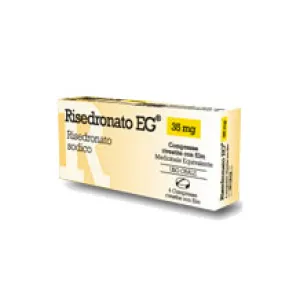
Table of Contents
- PATIENT INFORMATION LEAFLET: Information for the user
- RISEDRONATE TECNIGEN 35 mg film-coated tablets
- 1. WHAT RISEDRONATE TECNIGEN IS AND WHAT IT IS USED FOR
- 2. WHAT YOU SHOULD KNOW BEFORE TAKING RISEDRONATE TECNIGEN
- 3. HOW TO TAKE RISEDRONATE TECNIGEN
- 4. Possible side effects
- 5. HOW TO STORE RISEDRONATE TECNIGEN
- 6. Package contents and other information
PATIENT INFORMATION LEAFLET: Information for the user
RISEDRONATE TECNIGEN 35 mg film-coated tablets
equivalent medicine
Please read this leaflet carefully before taking this medicine because it contains important information for you.
- Keep this leaflet. You may need to read it again.
- If you have any questions, ask your doctor or pharmacist.
- This medicine has been prescribed for you only. Do not give it to other people, even if their symptoms are the same as yours, as it could be harmful.
- If you experience any side effects, including those not listed in this leaflet, tell your doctor or pharmacist. See section 4.
Contents of this leaflet:
- What RISEDRONATE TECNIGEN is and what it is used for
- What you need to know before taking RISEDRONATE TECNIGEN
- How to take RISEDRONATE TECNIGEN
- Possible side effects
- How to store RISEDRONATE TECNIGEN
- Contents of the pack and other information
1. WHAT RISEDRONATE TECNIGEN IS AND WHAT IT IS USED FOR
What RISEDRONATE TECNIGEN is
RISEDRONATE TECNIGEN belongs to a group of non-hormonal medicines called bisphosphonates, which are
used to treat bone disorders. It acts directly on the bones to make them stronger and therefore less
prone to fractures.
Bone is a living tissue. The body continuously breaks down old bone and replaces it with new
bone tissue.
Postmenopausal osteoporosis is a condition that occurs in women after menopause, when bones become weakened and thinner, resulting in an increased risk of fractures following falls or minor trauma.
Osteoporosis may also occur in men due to various causes such as aging and/or low levels of the male hormone testosterone.
Fractures occur most frequently in the spine, hip, and wrist, although they can occur throughout the body. Fractures related to osteoporosis may also cause back pain, weight loss, and curvature of the spine. Many patients with osteoporosis do not have symptoms, so you may not even know you have it.
What RISEDRONATE TECNIGEN is used for
Treatment of osteoporosis:
- in postmenopausal women, including those with severe osteoporosis. It reduces the risk of vertebral and hip fractures
- in men.
2. WHAT YOU SHOULD KNOW BEFORE TAKING RISEDRONATE TECNIGEN
Do not take RISEDRONATE TECNIGEN:
- if you are allergic to sodium risedronate or to any of the other ingredients of this medicine (listed in section 6);
- if your doctor has told you that you have a condition called hypocalcemia (low calcium levels in the blood);
- if you are pregnant, if you think you may be pregnant, or if you are planning a pregnancy;
- if you are breastfeeding;
- if you have severe kidney problems.
Warnings and precautions
Talk to your doctor or pharmacist before taking RISEDRONATE TECNIGEN
- If you are unable to stand or sit upright for at least 30 minutes.
- If you have disorders of mineral and bone metabolism (for example, vitamin D deficiency, parathyroid hormone dysfunction, both of which can lead to reduced calcium levels in the blood).
- If you have previously had esophageal problems (the tube connecting the mouth to the stomach), such as pain or difficulty swallowing food.
- If your doctor has told you that you have an intolerance to certain sugars (such as lactose).
- If you have or have had jaw pain, swelling or numbness of the jaw and/or a "heavy jaw sensation" or tooth mobility.
- If you are under dental treatment or have a dental procedure scheduled, inform your dentist that you are being treated with sodium risedronate. Your doctor will advise you on what to do while taking RISEDRONATE TECNIGEN if you have any of the above conditions.
Children and adolescents
The use of sodium risedronate is not recommended in children under 18 years of age, as data on safety and efficacy are insufficient.
Other medicines and RISEDRONATE TECNIGEN
Inform your doctor or pharmacist if you are taking, have recently taken, or might take any other medicines.
Medicines containing any of the following ingredients reduce the effect of RISEDRONATE TECNIGEN if taken at the same time:
calcium
magnesium
aluminum (e.g. some antacid mixtures)
iron
Take these medicines at least 30 minutes after taking RISEDRONATE TECNIGEN.
RISEDRONATE TECNIGEN with food and drinks
It is very important that you do NOT take food or drinks (except tap water) together with the RISEDRONATE TECNIGEN tablet, so that the medicine can work properly. In particular, do not take this medicine at the same time as dairy products (such as milk), as they contain calcium (see section 2 “Other medicines and RISEDRONATE TECNIGEN”).
Take food and drinks (except tap water) at least 30 minutes after taking the RISEDRONATE TECNIGEN tablet.
Pregnancy and breastfeeding
If you are pregnant, think you might be pregnant, are planning a pregnancy, or are breastfeeding, consult your doctor or pharmacist before taking this medicine.
DO NOT take RISEDRONATE TECNIGEN if you are pregnant, think you may be pregnant, or are planning a pregnancy (see section 2 “Do not take RISEDRONATE TECNIGEN”). The potential risk associated with the use of the active substance sodium risedronate in pregnant women is unknown.
DO NOT take RISEDRONATE TECNIGEN if you are breastfeeding (see section 2 “Do not take RISEDRONATE TECNIGEN”).
Driving and using machines
No effects on the ability to drive or operate machinery have been observed.
RISEDRONATE TECNIGEN contains lactose
RISEDRONATE TECNIGEN contains lactose. If your doctor has diagnosed you with an intolerance to certain sugars, contact them before taking this medicine (see section 2 “Warnings and precautions”).
3. HOW TO TAKE RISEDRONATE TECNIGEN
Take this medicine exactly as your doctor or pharmacist has told you. If you
are unsure, consult your doctor or pharmacist.
Usual dose
The recommended dose is one tablet of RISEDRONATE TECNIGEN (35 mg sodium risedronate) once
weekly.
Choose the day of the week that best fits your routine. Take one tablet of
RISEDRONATE TECNIGEN once a week on the chosen day.
The package contains compartments/spaces. Mark the day of the week you have selected for taking the
RISEDRONATE TECNIGEN tablet. Also note the days on which you will take the tablet.
When to take the RISEDRONATE TECNIGEN tablet
Take the tablet at least 30 minutes before the first food, beverage (except tap water), or other
medicines of the day.
How to take the RISEDRONATE TECNIGEN tablet:
Take the tablet while in an upright position (sitting or standing) to avoid stomach irritation.
Swallow the tablet with at least one full glass of tap water (120 ml).
Swallow the tablet whole. Do not chew or allow the tablet to dissolve in the mouth.
Do not lie down for 30 minutes after swallowing the tablet.
Your doctor will assess whether you need calcium and vitamin supplements if these are not sufficiently
provided through your diet.
If you take more RISEDRONATE TECNIGEN than you should
If you or someone else accidentally takes more RISEDRONATE TECNIGEN tablets than prescribed, drink a
full glass of milk and contact your doctor immediately.
If you forget to take RISEDRONATE TECNIGEN
If you forget to take the tablet at your usual time, take it on the same day when you remember.
Resume taking one tablet once weekly on your usual tablet-taking day.
Do not take a double dose to make up for the forgotten tablet.
If you stop taking RISEDRONATE TECNIGEN
If you stop taking this medicine, you may begin to lose bone mass. Talk to your doctor before deciding to
stop treatment with this medicine.
If you have any doubts about how to use this medicine, consult your doctor or pharmacist.
4. Possible side effects
Like all medicines, this medicine can cause side effects, although not everyone will experience them.
Stop taking Risedronate Tecnigen and contact a doctor immediately if you experience any of the following:
- symptoms of a severe allergic reaction such as
- swelling of the face, lips, tongue, throat and/or neck (Not known [frequency cannot be determined from available data])
- difficulty swallowing (Not known)
- difficulty breathing (Not known)
- hives, skin rash (Not known)
- severe skin reactions such as
- irritation of the skin, mouth, eyes and other moist body surfaces (genitals) (Stevens-Johnson syndrome) (Not known)
- palpable red spots on the skin (leukocytoclastic vasculitis) (Not known)
- red rash affecting multiple areas of the body and/or loss of the outer layer of skin (toxic epidermal necrolysis) (Not known)
Inform your doctor promptly if you experience the following side effects:
Inflammation of the coloured part of the eye (iris) (painful, red eyes with possible changes in vision), usually associated with pain, redness and mild sensitivity (Uncommon side effect [may affect up to 1 in 1,000 people]).
Osteonecrosis of the jaw (osteonecrosis), a serious bone condition affecting the jaw and mandible, associated with delayed healing and infection, often following dental extraction (see section 2, "Warnings and precautions") (Not known).
Inflammation or ulceration of the oesophagus with oesophageal symptoms such as pain when swallowing or difficulty swallowing, chest pain, or onset or worsening of heartburn. Inflammation or ulceration of the stomach and duodenum (the part of the intestine draining the stomach) (Uncommon side effect).
Other side effects observed were generally mild and did not require discontinuation of treatment:
Common side effects (may affect up to 1 in 100 people):
Constipation, feeling unwell (dyspepsia), indigestion, stomach pain, cramps or discomfort in the stomach, bloating, diarrhoea, flatulence.
Pain in bones, muscles or joints.
Headache.
Uncommon side effects (may affect up to 1 in 1,000 people):
Inflammation or ulceration of the oesophagus (the tube connecting the mouth to the stomach), causing difficulty and pain when swallowing (see also section 2, "Warnings and precautions"), inflammation of the stomach and duodenum (the part of the intestine draining the stomach).
Inflammation of the coloured part of the eye (iris) (painful, red eyes with possible changes in vision).
Rare side effects (may affect up to 1 in 10,000 people):
Inflammation of the tongue (red, swollen, sometimes painful), narrowing of the oesophagus (the tube connecting the mouth to the stomach).
Abnormal liver function test results, which can only be diagnosed by a blood test, have been reported.
Very rare side effects
- Contact your doctor if you experience ear pain, ear discharge and/or ear infection. These symptoms may be signs of bone damage in the ear.
During post-marketing experience, the following events have been reported (frequency not known):
- Eye inflammation
- Hair loss
- Liver disorders, in some cases severe
- Inflammation of small blood vessels
- Skin allergic reactions, in some cases severe (see above symptoms of a severe allergic reaction).
Atypical femoral fracture, particularly in patients undergoing long-term treatment for osteoporosis, may occur rarely. Consult your doctor if you experience pain, weakness or discomfort in the thigh, hip or groin, as these may be early signs of a possible femoral fracture.
In rare cases, calcium and phosphate levels in patients may decrease at the beginning of treatment. These changes are usually minor and do not cause any symptoms.
Reporting of side effects
If you experience any side effect, including those not listed in this leaflet, contact your doctor or pharmacist. You can also report side effects directly via the national reporting system at www.agenziafarmaco.gov.it/it/responsabili. By reporting side effects, you can help provide more information on the safety of this medicine.
5. HOW TO STORE RISEDRONATE TECNIGEN
Keep this medicine out of the sight and reach of children.
This medicine does not require any special storage conditions.
Do not use this medicine after the expiry date stated on the packaging after “Exp.”. The expiry date refers to the last day of that month.
Do not dispose of any medicine via wastewater or household waste. Ask your pharmacist how to dispose of medicines you no longer use. This will help protect the environment.
6. Package contents and other information
What RISEDRONATE TECNIGEN contains
- The active substance is sodium risedronate. Each tablet contains 35 mg of sodium risedronate (as sodium risedronate hemipentahydrate).
- The other components are: Microcrystalline cellulose, crospovidone, magnesium stearate, lactose monohydrate, red iron oxide, yellow iron oxide, Opadry White (glyceryl triacetate, hypromellose, titanium dioxide)
Description of the appearance of RISEDRONATE TECNIGEN and the contents of the pack
RISEDRONATE TECNIGEN are film-coated, round, biconvex, salmon-pink tablets.
They are available in blisters containing 4 tablets.
Marketing Authorization Holder
TECNIGEN S.R.L.
Via Galileo Galilei 40
20092 Cinisello Balsamo (MI)
Manufacturer
LABORATORIOS ALTER S.A. - c/ Mateo Inurria nº30 – MADRID (Spain)