Rinvoq
Italy
Table of Contents
- Patient Information Leaflet: Important Information for You
- RINVOQ 15 mg prolonged-release tablets, 30 mg prolonged-release tablets, 45 mg prolonged-release tablets
- 1. What RINVOQ is and what it is used for
- 2. What you need to know before taking RINVOQ
- 3. How to take RINVOQ
- 1. How to pierce the foil
- 4. Possible side effects
- 5. How to store RINVOQ
- 6. Pack contents and other information
Patient Information Leaflet: Important Information for You
RINVOQ 15 mg prolonged-release tablets, 30 mg prolonged-release tablets, 45 mg prolonged-release tablets
upadacitinib
Please read this entire leaflet carefully before taking this medicine, as it contains important information for you.
- Keep this leaflet. You may need to read it again.
- If you have any questions, ask your doctor, pharmacist, or nurse.
- This medicine has been prescribed for you only. Do not give it to others, even if they have the same symptoms as yours, as it may be harmful.
- If you experience any side effects, including those not listed in this leaflet, inform your doctor, pharmacist, or nurse. See section 4.
Contents of this leaflet
- What RINVOQ is and what it is used for
- What you need to know before taking RINVOQ
- How to take RINVOQ
- Possible side effects
- How to store RINVOQ
- Package contents and other information
1. What RINVOQ is and what it is used for
RINVOQ contains the active substance upadacitinib and belongs to a group of medicines called
Janus kinase inhibitors. By reducing the activity of an enzyme in the body known as "Janus kinase",
RINVOQ reduces inflammation in the following conditions:
- Rheumatoid arthritis
- Psoriatic arthritis
- Axial spondyloarthritis
- Non-radiographic axial spondyloarthritis
- Ankylosing spondylitis (AS, radiographic axial spondyloarthritis)
- Giant cell arteritis
- Atopic dermatitis
- Ulcerative colitis
- Crohn’s disease
Rheumatoid arthritis
RINVOQ is used to treat adults with rheumatoid arthritis. Rheumatoid arthritis is a disease that causes
inflammation of the joints. If you have moderate to severe active rheumatoid arthritis, you may first be
prescribed other medicines, one of which will usually be methotrexate. If these medicines do not work
adequately, RINVOQ will be prescribed either alone or in combination with methotrexate for the
treatment of rheumatoid arthritis.
RINVOQ can help reduce joint pain, stiffness, and swelling, reduce fatigue, and may also slow down
damage to bones and joint cartilage. These effects may make everyday activities easier and thus
improve quality of life.
Psoriatic arthritis
RINVOQ is used to treat adults with psoriatic arthritis. Psoriatic arthritis is a disease that causes joint
inflammation and psoriasis. If you have active psoriatic arthritis, you may first be prescribed other
medicines. If these medicines do not work adequately, RINVOQ will be prescribed either alone or in
combination with methotrexate for the treatment of psoriatic arthritis.
RINVOQ can help reduce pain, stiffness, and swelling inside and around the joints, back pain and
spinal stiffness, psoriatic skin rash, and fatigue, as well as slow down damage to bones and joint
cartilage. These effects may make everyday activities easier and thus improve quality of life.
Axial spondyloarthritis (non-radiographic axial spondyloarthritis and ankylosing spondylitis)
RINVOQ is used to treat adults with axial spondyloarthritis. Axial spondyloarthritis is a disease that
mainly causes inflammation of the spine. If you have active axial spondyloarthritis, you may first be
prescribed other medicines. If these medicines do not work adequately, RINVOQ will be prescribed for
the treatment of axial spondyloarthritis.
RINVOQ can help reduce back pain, stiffness, and inflammation of the spine. These effects may make
everyday activities easier and thus improve quality of life.
Giant cell arteritis
RINVOQ is used to treat adults with giant cell arteritis. Giant cell arteritis is a disease that causes
inflammation of blood vessels, typically affecting medium- and large-sized arteries in the head, neck,
and arms.
RINVOQ can help control the signs and symptoms of giant cell arteritis, including headache, scalp
tenderness, jaw pain, and fatigue. These effects may make everyday activities easier and thus improve
quality of life. Giant cell arteritis is often treated with medicines called steroids, which are usually
effective but may cause side effects when used at high doses or over long periods of time. Reducing
steroid doses may also lead to a flare-up of giant cell arteritis.
Adding RINVOQ to treatment may allow steroids to be used for a shorter period of time while still
maintaining control of giant cell arteritis.
Atopic dermatitis
RINVOQ is used for the treatment of adults and adolescents aged 12 years and older with moderate to
severe atopic dermatitis, also known as atopic eczema. RINVOQ may be used together with topical
eczema treatments applied to the skin or may be used alone.
Taking RINVOQ may improve skin condition and reduce itching and flare-ups. RINVOQ may help
improve symptoms of pain, anxiety, and depression that people with atopic dermatitis may experience.
RINVOQ may also help improve sleep disturbances and overall quality of life.
Ulcerative colitis
Ulcerative colitis is an inflammatory disease of the large intestine. RINVOQ is used to treat adults with
ulcerative colitis who have not responded adequately or have not tolerated previous therapy.
RINVOQ can help reduce signs and symptoms of the disease, including bloody stools, abdominal pain,
and urgency and frequency of bowel movements. These effects may make everyday activities easier
and reduce fatigue.
Crohn’s disease
Crohn’s disease is an inflammatory disease that can affect any part of the digestive tract, but most
commonly involves the intestine. RINVOQ is used to treat adults with Crohn’s disease who have not
responded adequately or have not tolerated previous therapy.
RINVOQ can help reduce signs and symptoms of the disease, including urgency and frequency of
bowel movements, abdominal pain, and inflammation of the intestinal lining. These effects may make
everyday activities easier and reduce fatigue.
2. What you need to know before taking RINVOQ
Do not take RINVOQ
- if you are allergic to upadacitinib or to any of the other ingredients of this medicine (listed in section 6)
- if you have a serious infection (such as pneumonia or bacterial skin infection)
- if you have active tuberculosis (TB)
- if you have severe liver problems
- during pregnancy (see section Pregnancy, breastfeeding and contraception)
Warnings and precautions
Talk to your doctor or pharmacist before and during treatment with RINVOQ if:
- you have an infection or get infections frequently. Inform your doctor if you experience symptoms such as fever, wounds, feeling more tired than usual, or dental problems, as these may be signs of infection. RINVOQ may reduce your body's ability to fight infections and may therefore cause or worsen an existing infection or increase the likelihood of acquiring a new infection. If you have diabetes or are aged 65 years or older, you may have a higher risk of developing infections
- you have had tuberculosis or have been in close contact with someone who has tuberculosis. Your doctor will test you for tuberculosis before starting treatment with RINVOQ and may repeat the test during treatment
- you have had an infection caused by the herpes zoster virus (shingles), as RINVOQ could cause it to reappear. Inform your doctor if you develop a painful rash with blisters, as these may be signs of herpes zoster infection
- you have ever had hepatitis B or C
- you have recently received or are planning to receive a vaccination (immunization) – because live vaccines are not recommended while using RINVOQ
- you have or have previously had cancer, smoke or have smoked in the past, as your doctor will need to discuss whether RINVOQ is an appropriate treatment for you
- non-melanoma skin cancer has been observed in patients taking RINVOQ. Your doctor may recommend regular skin examinations while you are taking RINVOQ. If new skin lesions appear or existing lesions change during or after treatment, inform your doctor
- you have or have had heart problems, as your doctor will need to discuss whether RINVOQ is an appropriate treatment for you
- your liver is not functioning properly
- you have previously had blood clots in the veins of your legs (deep vein thrombosis) or in your lungs (pulmonary embolism), or have an increased risk of developing them (for example, if you have recently undergone major surgery, if you use hormonal contraceptives/hormone replacement therapy, if you have been diagnosed with a blood clotting disorder, or if a close family member has had such a condition). Your doctor will discuss with you whether RINVOQ is an appropriate treatment for you. Inform your doctor if you suddenly develop shortness of breath or difficulty breathing, chest pain or upper back pain, swelling in one arm or leg, pain or tenderness in a limb, or
redness or discoloration of a limb, as these may
be signs of blood clots in the veins
- you experience sudden changes in vision. You should seek immediate medical attention if you suddenly develop symptoms such as blurred vision, partial or complete loss of vision, as these may be signs of blocked blood flow in the eyes
- you have kidney problems
- you have unexplained stomach (abdominal) pain, or have had or currently have diverticulitis (painful inflammation of the lining of small intestinal pouches), stomach or intestinal ulcers, or are taking non-steroidal anti-inflammatory drugs
- you repeatedly notice a tablet or tablet residue in your stools.
If you experience any of the following serious side effects, contact your doctor immediately:
- symptoms such as rash (hives), difficulty breathing, or swelling of the lips, tongue, or throat, as you may be having an allergic reaction. Some people taking RINVOQ have experienced severe allergic reactions. If you experience any of these symptoms during treatment with RINVOQ, stop taking RINVOQ and seek immediate medical help at an emergency room.
- severe stomach pain, particularly if accompanied by fever, nausea, and vomiting.
Blood tests
You will need to have blood tests before starting RINVOQ or during treatment.
These tests are intended to check for a low number of red blood cells (anemia), a low number of white blood cells (neutropenia or lymphopenia), high levels of fat in the blood (cholesterol), or elevated liver enzymes. These tests help ensure that treatment with RINVOQ does not cause problems.
Elderly patients
In patients aged 65 years or older, there is a higher rate of infections. Inform your doctor as soon as you notice signs or symptoms of infection.
Patients aged 65 years or older may have an increased risk of infections, heart problems including heart attack, and certain types of cancer. Your doctor will discuss with you whether RINVOQ is an appropriate treatment for you.
Children and adolescents
The use of RINVOQ is not recommended in children under 12 years of age or in adolescents with atopic dermatitis weighing less than 30 kg, as it has not been studied in these patients.
The use of RINVOQ is not recommended in children and adolescents under 18 years of age with rheumatoid arthritis, psoriatic arthritis, axial spondyloarthritis (non-radiographic axial spondyloarthritis and ankylosing spondylitis), ulcerative colitis, or Crohn’s disease, as it has not been studied in this age group.
Other medicines and RINVOQ
Inform your doctor or pharmacist if you are taking, have recently taken, or might take any other medicines. This is because some medicines may reduce the effectiveness of RINVOQ or increase the risk of side effects. It is very important to inform your doctor or pharmacist if you are taking any of the following medicines:
- medicines used to treat fungal infections (such as itraconazole, posaconazole, or voriconazole)
- medicines used to treat bacterial infections (such as clarithromycin)
- medicines used to treat Cushing's syndrome (such as ketoconazole)
- medicines used to treat tuberculosis (such as rifampicin)
- medicines used to treat seizures or epileptic fits (such as phenytoin)
- medicines that affect the immune system (such as azathioprine, 6-mercaptopurine, cyclosporine, and tacrolimus)
- medicines that may increase the risk of gastrointestinal perforation or diverticulitis, such as non-steroidal anti-inflammatory drugs (commonly used to treat painful and/or inflammatory conditions of muscles or joints), and/or opioids (used to treat severe pain), and/or corticosteroids (commonly used to treat inflammatory conditions)
- medicines used to treat diabetes or if you have diabetes. Your doctor may decide whether you need to reduce your dose of antidiabetic medicine while taking upadacitinib. If you are taking any of the medicines listed above or are unsure, consult your doctor or pharmacist before taking RINVOQ.
Pregnancy, breastfeeding and contraception
Pregnancy
RINVOQ must not be used during pregnancy.
Breastfeeding
If you are breastfeeding or planning to breastfeed, consult your doctor before taking this medicine. You must not use RINVOQ while breastfeeding, as it is not known whether this medicine passes into breast milk. You and your doctor must decide whether to breastfeed or take RINVOQ. You must not do both.
Contraception
If you are a woman of childbearing potential, you must use an effective method of contraception to prevent pregnancy during treatment with RINVOQ and for at least 4 weeks after the last dose of RINVOQ. If you become pregnant during this time, contact your doctor immediately.
If a girl starts her first menstrual period during treatment with RINVOQ, inform the doctor.
Driving and using machines
If you experience dizziness or a sensation of spinning (vertigo) while taking RINVOQ, do not drive or operate machinery until these symptoms resolve.
3. How to take RINVOQ
Always take this medicine exactly as instructed by your doctor or pharmacist.
If you have any doubts, consult your doctor or pharmacist.
How much medicine to take
If you have rheumatoid arthritis, psoriatic arthritis, axial spondyloarthritis (non-radiographic axial spondyloarthritis and ankylosing spondylitis), or giant cell arteritis:
The recommended dose is one 15 mg tablet once daily.
If you have atopic dermatitis:
Adults (aged 18 to 64 years):
The recommended dose is 15 mg or 30 mg, as prescribed by your doctor, in the form of one tablet once daily.
Your doctor may increase or decrease the dose depending on your response to the medicine.
Adolescents (aged 12 to 17 years) with body weight of at least 30 kg:
The recommended dose is one 15 mg tablet once daily. Your doctor may increase the dose to one 30 mg tablet once daily, depending on your response to the medicine.
Elderly:
If you are 65 years of age or older, the recommended dose is 15 mg once daily.
If you have ulcerative colitis:
The recommended dose is one 45 mg tablet once daily for 8 weeks. Your doctor may decide to extend the initial 45 mg dose for an additional 8 weeks (for a total of 16 weeks). This phase will be followed by one 15 mg or 30 mg tablet once daily for long-term treatment. Your doctor may increase or decrease the dose depending on your response to the medicine.
Elderly:
If you are 65 years of age or older, the recommended dose for long-term treatment is 15 mg once daily.
Your doctor may reduce your dose if you have kidney problems or if you are prescribed other medicines.
If you have Crohn’s disease:
The recommended dose is one 45 mg tablet once daily for 12 weeks. This phase will be followed by one 15 mg or one 30 mg tablet once daily for long-term treatment. Your doctor may increase or decrease the dose depending on your response to the medicine.
Elderly:
If you are 65 years of age or older, the recommended dose for long-term treatment is 15 mg once daily.
Your doctor may reduce your dose if you have kidney problems or if you are prescribed certain other medicines.
How to take the medicine
- Swallow the tablet whole with water. Do not divide, crush, chew, or break the tablet before swallowing, as this may alter the amount of medicine absorbed into your body.
- To help you remember to take RINVOQ more easily, take it at the same time every day.
- Tablets may be taken with or without food.
- Do not ingest the desiccant.
- Avoid foods or beverages containing grapefruit while taking (or being treated with) RINVOQ, as these may increase the likelihood of side effects by increasing the amount of medicine in your body.
If you take more RINVOQ than you should
If you take more RINVOQ than prescribed, contact your doctor. You may experience some of the side effects listed in section 4.
If you forget to take RINVOQ
- If you forget a dose, take it as soon as you remember.
- If you miss an entire day’s dose, skip the missed dose and take only your usual single dose the next day.
- Do not take a double dose to make up for a forgotten dose.
If you stop taking RINVOQ
Do not stop treatment with RINVOQ unless your doctor tells you to.
How to open the bottle
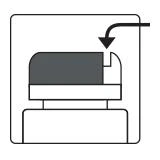
Film-cutting tool – on the bottle cap
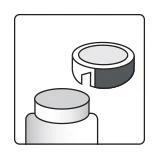
1. How to pierce the foil
1a. Remove the cap from the bottle by pressing downwards and,
while continuing to press, turn the cap counterclockwise.
1b. Invert the cap and position the cutting tool
next to the edge of the foil.
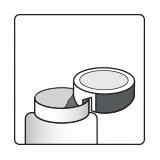
2. Press downwards to make a hole in the foil
and move the cutting tool along the edge of the
foil to continue cutting it.
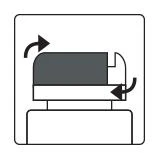
- After taking the tablet, replace the cap and close the bottle.
If you have any doubts about how to use this medicine, consult your doctor or pharmacist.
4. Possible side effects
Like all medicines, this medicine can cause side effects, although not everyone experiences them.
Serious side effects
Contact your doctor or seek immediate medical help if you notice signs of:
- infection such as shingles or a painful skin rash with blisters (herpes zoster virus) – common (may affect up to 1 in 10 people)
- lung infection (pneumonia), which may cause shortness of breath, fever, and productive cough with mucus – common (may affect up to 1 in 10 people)
- blood infection (sepsis) – uncommon (may affect up to 1 in 100 people)
- allergic reaction (feeling of chest tightness, wheezing, swelling of the lips, tongue or throat, hives) – uncommon (may affect up to 1 in 100 people)
Other side effects
Contact your doctor if you notice any of the following side effects:
Very common (may affect more than 1 in 10 people)
- throat and nose infections
- acne
Common (may affect up to 1 in 10 people)
- non-melanoma skin cancer
- cough
- fever
- cold sores (herpes simplex virus)
- feeling of stomach discomfort (nausea)
- increased levels of an enzyme called creatine kinase, detected by blood tests
- low white blood cell count, detected by blood tests
- increased cholesterol levels (a type of fat in the blood), detected by blood tests
- increased liver enzyme levels, detected by blood tests (a sign of liver problems)
- weight gain
- inflammation (swelling) of hair follicles
- influenza
- anaemia
- abdominal pain
- fatigue (unusual tiredness and weakness)
- headache (very common in giant cell arteritis)
- hives
- urinary tract infection
- skin rash
- sensation of spinning (vertigo)
- dizziness
- lung infection (bronchitis)
- swelling of hands and feet (peripheral oedema)
Uncommon (may affect up to 1 in 100 people)
- oral candidiasis (white patches in the mouth)
- increased levels of triglycerides (a type of fat) in the blood, detected by blood tests
- diverticulitis (painful inflammation of the lining of small intestinal pouches)
- gastrointestinal perforation (a perforation of the intestine)
Additional side effects in adolescents with atopic dermatitis
Common
- warts (skin papilloma)
Reporting of side effects
If you experience any side effect, including those not listed in this leaflet,
please contact your doctor, pharmacist, or nurse. You can also report side effects
directly via the national reporting system listed in Annex V. By reporting side effects,
you can help provide more information on the safety of this medicine.
5. How to store RINVOQ
Keep this medicine out of the sight and reach of children.
Do not use this medicine after the expiry date stated on the blister after “EXP” and on the label and carton after “Scad.”
This medicine does not require any special storage temperature.
Store in the original blister or in the bottle with the cap tightly closed to protect the medicine from moisture.
Do not dispose of any medicine via wastewater or household waste. Ask your pharmacist how to dispose of medicines you no longer use. This will help protect the environment.
6. Pack contents and other information
What RINVOQ contains
The active substance is upadacitinib.
RINVOQ 15 mg prolonged-release tablets
- Each prolonged-release tablet contains upadacitinib hemihydrate, equivalent to 15 mg of upadacitinib.
- The other components are:
- Tablet core: microcrystalline cellulose, mannitol, tartaric acid, hypromellose, anhydrous colloidal silica, magnesium stearate.
- Film coating: polyvinyl alcohol, macrogol, talc, titanium dioxide (E171), red iron oxide (E172), black iron oxide (E172).
RINVOQ 30 mg prolonged-release tablets
- Each prolonged-release tablet contains upadacitinib hemihydrate, equivalent to 30 mg of upadacitinib.
- The other components are:
- Tablet core: microcrystalline cellulose, mannitol, tartaric acid, hypromellose, anhydrous colloidal silica, magnesium stearate.
- Film coating: polyvinyl alcohol, macrogol, talc, titanium dioxide (E171), red iron oxide (E172).
RINVOQ 45 mg prolonged-release tablets
- Each prolonged-release tablet contains upadacitinib hemihydrate, equivalent to 45 mg of upadacitinib.
- The other components are:
- Tablet core: microcrystalline cellulose, mannitol, tartaric acid, hypromellose, anhydrous colloidal silica, magnesium stearate.
- Film coating: polyvinyl alcohol, macrogol, talc, titanium dioxide (E171), yellow iron oxide (E172) and red iron oxide (E172).
Description of the appearance of RINVOQ and pack contents
RINVOQ 15 mg prolonged-release tablets
RINVOQ 15 mg prolonged-release tablets are purple, oblong, biconvex tablets with 'a15' engraved on one side.
The tablets are supplied in blisters or bottles.
RINVOQ is available in packs containing 28 or 98 prolonged-release tablets and in multiple packs of 84 comprising 3 boxes, each containing 28 prolonged-release tablets.
Each calendar blister pack contains 7 tablets.
RINVOQ is available in bottles with desiccant containing 30 prolonged-release tablets, each pack containing 1 bottle (pack of 30 tablets) or 3 bottles (pack of 90 tablets).
RINVOQ 30 mg prolonged-release tablets
RINVOQ 30 mg prolonged-release tablets are red, oblong, biconvex tablets with 'a30' engraved on one side.
The tablets are supplied in blisters or bottles.
RINVOQ is available in packs containing 28 or 98 prolonged-release tablets.
Each calendar blister pack contains 7 tablets.
RINVOQ is available in bottles with desiccant containing 30 prolonged-release tablets, each pack containing 1 bottle (pack of 30 tablets) or 3 bottles (pack of 90 tablets).
RINVOQ 45 mg prolonged-release tablets
RINVOQ 45 mg prolonged-release tablets are yellow to mottled yellow, oblong, biconvex tablets with 'a45' engraved on one side.
The tablets are supplied in blisters or bottles.
RINVOQ is available in packs containing 28 prolonged-release tablets.
Each calendar blister pack contains 7 tablets.
RINVOQ is available in bottles with desiccant containing 28 prolonged-release tablets, each pack containing 1 bottle.
Not all pack sizes may be marketed.
Marketing Authorization Holder
AbbVie Deutschland GmbH & Co. KG
Knollstrasse
67061 Ludwigshafen
Germany
Manufacturer
AbbVie S.r.l.
S.R. 148 Pontina, km 52 SNC
04011 Campoverde di Aprilia (Latina)
Italy
AbbVie Logistics B.V.
Zuiderzeelaan 53
Zwolle, 8017 JV,
The Netherlands
For further information about this medicinal product, please contact the local representative of the Marketing Authorization Holder:
België/Belgique/Belgien Lietuva
AbbVie SA AbbVie UAB
Tél/Tel: +32 10 477811 Tel: +370 5 205 3023
България Luxembourg/Luxemburg
АбВи ЕООД AbbVie SA
Тел.:+359 2 90 30 430 Belgique/Belgien
Tél/Tel: +32 10 477811
Česká republika Magyarország
AbbVie s.r.o. AbbVie Kft.
Tel: +420 233 098 111 Tel.:+36 1 455 8600
Danmark Malta
AbbVie A/S V.J.Salomone Pharma Limited
Tlf: +45 72 30-20-28 Tel: +356 21220174
Deutschland Nederland
AbbVie Deutschland GmbH & Co. KG AbbVie B.V.
Tel: 00800 222843 33 (free of charge) Tel: +31 (0)88 322 2843
Tel: +49 (0) 611 / 1720-0
Eesti Norge
AbbVie OÜ AbbVie AS
Tel: +372 623 1011 Tlf: +47 67 81 80 00
Ελλάδα Österreich
AbbVie ΦΑΡΜΑΚΕΥΤΙΚΗ Α.Ε. AbbVie GmbH
Τηλ: +30 214 4165 555 Tel: +43 1 20589-0
España Polska
AbbVie Spain, S.L.U. AbbVie Sp. z o.o.
Tel: +34 91 384 09 10 Tel.: +48 22 372 78 00
France Portugal
AbbVie AbbVie, Lda.
Tél: +33 (0) 1 45 60 13 00 Tel: +351 (0)21 1908400
Hrvatska România
AbbVie d.o.o. AbbVie S.R.L.
Tel + 385 (0)1 5625 501 Tel: +40 21 529 30 35
Ireland Slovenija
AbbVie Limited AbbVie Biofarmacevtska družba d.o.o.
Tel: +353 (0)1 4287900 Tel: +386 (1)32 08 060
Ísland Slovenská republika
Vistor AbbVie s.r.o.
Sími: +354 535 7000 Tel: +421 2 5050 0777
Italia Suomi/Finland
AbbVie S.r.l. AbbVie Oy
Tel: +39 06 928921 Puh/Tel: +358 (0)10 2411 200
Κύπρος Sverige
Lifepharma (Z.A.M.) Ltd AbbVie AB
Τηλ.: +357 22 34 74 40 Tel: +46 (0)8 684 44 600
Latvija
AbbVie SIA
Tel: +371 67605000
Other sources of information
More detailed information on this medicinal product is available on the website of the European Medicines Agency, https://www.ema.europa.eu.
Detailed and up-to-date information on this product is also available by scanning with a smartphone the QR code below or on the outer carton. The same information is also available at the following URL: www.rinvoq.eu.
QR code to be included
To listen to or request a printed copy of this package leaflet in , or , please contact the local representative of the Marketing Authorization Holder.
ANNEX IV
SCIENTIFIC CONCLUSIONS AND REASONS FOR THE VARIATION OF THE TERMS OF THE MARKETING AUTHORISATION
Scientific conclusions
Taking into account the assessment by the Pharmacovigilance and Risk Assessment Committee (PRAC) of the Periodic Safety Update Report (PSUR) for upadacitinib, the scientific conclusions of the PRAC are as follows:
Considering the available data on retinal vein occlusion, the reported cases with at least a reasonable possibility of a causal association between retinal vein occlusion and treatment with upadacitinib, the severity of the condition, the plausible mechanism of action, and the potential class effect, the PRAC considers that the product information for the medicinal product containing upadacitinib should be appropriately updated.
Having reviewed the PRAC recommendation, the Committee for Human Medicinal Products (CHMP) agrees with the general conclusions and the reasoning of the recommendation.
Reasons for the variation of the terms of the marketing authorisation
Based on the scientific conclusions on upadacitinib, the CHMP considers that the benefit-risk balance of the medicinal product containing upadacitinib remains unchanged, subject to the proposed updates to the product information.
The CHMP recommends a variation to the terms of the marketing authorisation.