Ringer's lactated solution Eurospital
Italy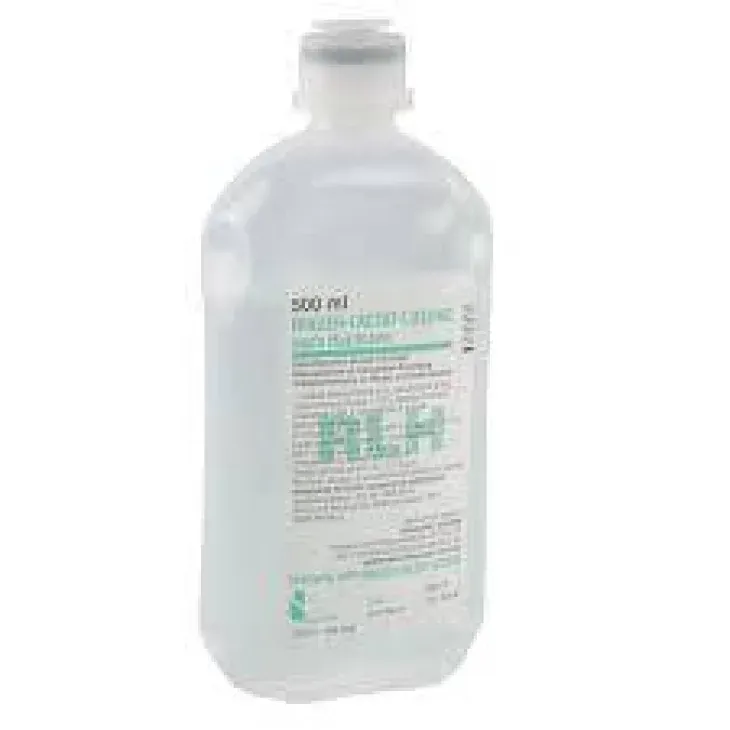
Table of Contents
- Package leaflet: Information for the user
- Ringer Lactate Eurospital 2.60 g/l + 1.17 g/l + 6.00 g/l + 0.40 g/l + 0.27 g/l
- 1. What Ringer Lactate Eurospital is and what it is used for
- 2. What you need to know before using Ringer Lactate Eurospital
- 3. How to use Ringer Lactate Eurospital
- 4. Possible side effects
- 5. How to store Ringer Lactate Eurospital
- 6. Contents of the pack and other information
Package leaflet: Information for the user
Ringer Lactate Eurospital 2.60 g/l + 1.17 g/l + 6.00 g/l + 0.40 g/l + 0.27 g/l
infusion solution for intravenous use
Lactic acid, Sodium hydroxide, Sodium chloride, Potassium chloride, Calcium chloride
“Equivalent medicine”
Please read this leaflet carefully before using this medicine, as it contains important information for you.
- Keep this leaflet. You may need to read it again.
- If you have any questions, ask your doctor, pharmacist, or nurse.
- This medicine has been prescribed for you only. Do not give it to other people, even if their symptoms are the same as yours, as it may be harmful.
- If you experience any adverse reactions, including those not listed in this leaflet, inform your doctor, pharmacist, or nurse. See section 4.
Contents of this leaflet:
- What Ringer Lactate Eurospital is and what it is used for
- What you need to know before using Ringer Lactate Eurospital
- How to use Ringer Lactate Eurospital
- Possible adverse effects
- How to store Ringer Lactate Eurospital
- Contents of the pack and other information
1. What Ringer Lactate Eurospital is and what it is used for
Ringer Lactate Eurospital contains the active substances lactic acid, sodium hydroxide, sodium chloride, potassium chloride, and calcium chloride, and belongs to the category of rehydration and electrolyte replacement medicines (which restore losses of fluids and salts from the body); and alkalizing agents (which reduce blood acidity).
Ringer Lactate Eurospital is used in parenteral replacement therapy by intravenous route for fluid and electrolyte losses, when correction of mild to moderate, but not severe, states of blood acidity is required.
Consult your doctor if you do not feel better or if you feel worse.
2. What you need to know before using Ringer Lactate Eurospital
Do not use Ringer Lactate Eurospital
- if you are allergic to lactic acid, sodium hydroxide, sodium chloride, potassium chloride, calcium chloride, or any of the other components of this medicine (listed in section 6);
- if you have high potassium levels in the blood (hyperkalemia) or reduced potassium excretion;
- if you have high calcium levels in the blood (hypercalcemia);
- if you have severe liver failure;
- if you have increased blood acidity due to elevated lactic acid (lactic acidosis), or severe drop in blood pressure (shock) and reduced oxygen in the blood (hypoxemias) that prevent lactate utilization, or reduced blood acidity due to loss of acidic substances through urine or vomiting (metabolic alkalosis), or reduced blood acidity due to decreased carbon dioxide levels in the blood, as occurs with increased respiratory rate (respiratory alkalosis);
- during blood transfusion through the same intravenous line, as this may increase the risk of coagulation;
- in neonates (≤ 28 days of age) concurrently with ceftriaxone, even when using separate intravenous lines. See sections “Other medicines and Ringer Lactate Eurospital”, “How to use Ringer Lactate Eurospital”, and “Possible side effects”.
Warnings and precautions
Talk to your doctor, pharmacist, or nurse before using Ringer Lactate Eurospital.
Use with great caution:
- if you have heart failure with fluid accumulation (congestive heart failure), severe kidney failure, or fluid and salt retention (edema with saline retention);
- if you are being treated with medicines that increase the heart's contraction force (cardiac inotropic agents) or with cortisone and similar corticosteroids or corticotropin medicines.
Electrolyte balance, serum electrolytes, and acid-base balance should be monitored before and during administration, with particular attention to serum sodium levels if you have the syndrome of inappropriate antidiuretic hormone secretion (SIADH), which causes non-osmotic release of vasopressin, or if you are receiving concomitant treatment with vasopressin agonists, due to the risk of hospital-acquired hyponatremia (see “Warnings and precautions”, “Other medicines and Ringer Lactate Eurospital”, and “Side effects”).
Infusion rate and volume depend on your age, weight, clinical condition (e.g., burns, surgery, head injuries, infections), and concomitant therapy, and must be determined by a physician experienced in pediatric intravenous fluid therapy (see “Warnings and precautions” and “Side effects”).
If you have heart or lung failure, or conditions causing non-osmotic vasopressin release (including SIADH), careful monitoring is required during high-volume infusions due to the risk of hospital-acquired hyponatremia.
If you have: acute illness, pain, postoperative stress, infections, burns, or central nervous system disorders (conditions causing non-osmotic release of a hormone called vasopressin), or heart disease (cardiopathies), liver disease (hepatopathies), kidney disease (nephropathies), or are receiving treatment with vasopressin agonist medicines (see “Other medicines and Ringer Lactate Eurospital”), you may be particularly at risk of sudden drop in blood sodium concentration (acute hyponatremia) following infusion of hypotonic solutions.
Acute hyponatremia may cause acute hyponatremic encephalopathy (cerebral edema), characterized by headache, nausea, seizures, lethargy (drowsiness), and vomiting. Patients with cerebral edema are especially at risk of severe, irreversible, and life-threatening brain damage.
Children, women of childbearing age, and patients with reduced cerebral compliance (e.g., meningitis, intracranial hemorrhage, contusion, and cerebral edema) are particularly at risk of severe and life-threatening cerebral edema caused by acute hyponatremia.
Due to its potassium content, administration must be guided by frequent electrocardiograms; serum potassium levels do not reflect intracellular potassium concentrations. Closely monitor fluid and electrolyte balance and acid-base equilibrium (blood acidity). Pay special attention to kidney function and avoid administering Ringer lactate at a rate exceeding 10 mEq potassium/hour, as this could lead to excessively high potassium levels in the blood. This is a generic medicine with the same composition as the reference medicine whose patent has expired, manufactured according to the rules of the Pharmacopoeia guidelines that the pharmacist must follow for drug quality control. For further information regarding its use (Warnings and precautions, Other medicines and Ringer Lactate Eurospital, Possible side effects), the prescribing physician is referred to the scientific literature.
Use immediately after opening the container.
The solution must be clear, colorless, free of visible particles, and under vacuum. To check for vacuum, insert the infusion set into the inverted bottle: bubbling should be observed.
For single, uninterrupted use only; any remaining solution must not be reused.
Children
The safety and efficacy of Ringer Lactate Eurospital in children have not been established.
Other medicines and RINGER LACTATE EUROSPITAL
Inform your doctor or pharmacist if you are taking, have recently taken, or might take any other medicines.
- If you need to use Ringer Lactate Eurospital to dilute medications, consult a pharmacist, if available, before adding them; consider the characteristics of the products to be added; use sterile techniques; do not store solutions containing other medicines. The prescribing physician is referred to the scientific literature.
- As with other calcium-containing solutions, concomitant use with ceftriaxone, an antibiotic, is contraindicated in neonates (≤ 28 days of age), even when separate infusion lines (i.e., different veins) are used, due to the risk of fatal precipitation of ceftriaxone-calcium salt in the neonate's bloodstream (see section “Possible side effects”). In patients older than 28 days (including adults), ceftriaxone must not be administered simultaneously with intravenous solutions containing calcium, including Ringer Lactate Eurospital, through the same infusion line (e.g., via Y-connector). If the same line is used for sequential administration, the line must be flushed with a compatible fluid between infusions.
Medicines that increase the effect of vasopressin
The following medicines increase the risk of hospital-acquired hyponatremia when intravenous fluid therapy is not properly balanced (see sections “How to use Ringer Lactate Eurospital”, “Warnings and precautions”, and “Side effects”):
- Medicines stimulating vasopressin release, e.g.: chlorpropamide, clofibrate, carbamazepine, vincristine, selective serotonin reuptake inhibitors, 3,4-methylenedioxymethamphetamine (MDMA), ifosfamide, antipsychotics, narcotics;
- Medicines enhancing vasopressin action, e.g.: chlorpropamide, NSAIDs, cyclophosphamide;
- Vasopressin analogues, e.g.: desmopressin, oxytocin, vasopressin, terlipressin.
Other medicines that increase the risk of hyponatremia (reduced blood sodium concentration) include diuretics in general and antiepileptic drugs such as oxcarbazepine.
Pregnancy and breastfeeding
If you are pregnant, suspect you may be pregnant, planning pregnancy, or breastfeeding, consult your doctor or pharmacist before using this medicine.
During pregnancy, administer only if clearly needed. The prescribing physician is referred to the scientific literature.
During labor, your doctor will assess whether administration of this medicine is necessary, especially if used in combination with oxytocin (a medicine used to stimulate uterine contractions), due to the risk of hyponatremia (see sections “Warnings and precautions”, “Other medicines and Ringer Lactate Eurospital”, “Side effects”).
Driving and using machines
The prescribing physician is referred to the scientific literature.
3. How to use Ringer Lactate Eurospital
Use this medicine exactly as instructed by your doctor or pharmacist. If you have any doubts,
consult your doctor or pharmacist.
Shake well during preparation and before use.
For intravenous use.
The dose depends on your age, body weight, and clinical condition.
Calcium salts may form complexes with many drugs, which may lead to precipitate formation.
Physical incompatibility has been reported with ceftriaxone (see sections “Do not use Ringer Lactate
Eurospital”, “Other medicines and Ringer Lactate Eurospital”, and “Possible side effects”).
If you have any doubts about the use of this medicine, consult your doctor, pharmacist, or nurse.
4. Possible side effects
Like all medicines, this medicine can cause side effects, although not everybody will experience them.
The following side effects may occur:
- Hospital-acquired hyponatremia (reduced sodium concentration in the blood), which may cause irreversible brain damage and death
- Hyponatremic encephalopathy (brain damage caused by reduced sodium concentration in the blood)
- fever;
- injection site infections;
- formation of blood clots in the veins (venous thrombosis) or inflammation of the veins (phlebitis);
- tissue death (tissue necrosis). If any adverse reaction occurs, discontinue administration and retain the unused portion for possible testing.
Additional side effects in children
Calcium-ceftriaxone salt precipitation
Serious, and in some cases fatal, adverse events have been rarely reported in premature and full-term newborns (age <28 days) treated with ceftriaxone (an antibiotic) and calcium administered intravenously. Calcium-ceftriaxone aggregates have been found at autopsy in the lungs and kidneys.
The high risk of precipitation in neonates is due to their smaller blood volume and slower elimination of ceftriaxone compared to adults (see sections “Do not use Ringer Lactate Eurospital” and “Other medicines and Ringer Lactate Eurospital”).
Cases of calcium-ceftriaxone aggregate formation in the kidney have been reported, mainly in children over 3 years of age treated with high daily doses (e.g. ≥ 80 mg/kg/day) or total doses exceeding 10 grams, and who had other risk factors (e.g. reduced fluid administration, bedridden patients). The risk of forming these aggregates increases in immobilized or dehydrated patients.
This event may be symptomatic or asymptomatic, may cause renal failure and absence of urine production (anuria), and resolves upon discontinuation of administration.
Calcium-ceftriaxone aggregate formation in the gallbladder has also been observed, primarily in patients treated with doses exceeding the recommended standard dose. Variable incidence of precipitation has been demonstrated in children receiving intravenous administration. This incidence appears to be lower when infusions are administered slowly (20–30 minutes). This effect is generally asymptomatic, but in rare cases has been associated with pain, nausea, and vomiting. In such cases, specific symptomatic treatment is recommended. Aggregate formation usually resolves upon discontinuation of administration.
Reporting of side effects
If you experience any side effect, including those not listed in this leaflet, talk to your doctor, pharmacist, or nurse. You can also report side effects directly via the national reporting system at www.agenziafarmaco.gov.it/content/come-segnalare-una-sospetta-reazione-avversa.
By reporting side effects, you can help provide more information on the safety of this medicine.
5. How to store Ringer Lactate Eurospital
Keep this medicine out of the sight and reach of children.
Do not use this medicine after the expiry date stated on the packaging. The expiry date refers to the product stored in its original intact packaging and properly stored.
Store in tightly closed containers at room temperature (8–30°C).
Do not freeze.
Do not dispose of medicines via wastewater or household waste. Ask your pharmacist how to dispose of medicines you no longer use. This will help protect the environment.
6. Contents of the pack and other information
What Ringer Lactate Eurospital contains
- The active substances are: lactic acid, sodium hydroxide, sodium chloride, potassium chloride, calcium chloride. 1L of solution contains: lactic acid 2.60 g, sodium hydroxide 1.17 g, sodium chloride 6.00 g, potassium chloride 0.40 g, calcium chloride 0.27 g.
- Other components: water for injections q.s. [mEq/l (Na+) 132; (K+) 5; (Ca++) 4; (Cl\−) 112; (lactate as HCO3\−) 29]. [Theoretical osmolarity: 280 mOsm/l] – pH between 5.5 and 7.0.
Description of the appearance of Ringer Lactate Eurospital and contents of the pack
Glass bottle containing 500 ml of solution.
Marketing Authorization Holder
Eurospital S.p.A., Via Flavia, 122 - Trieste.
Manufacturers
Laboratorios Grifols, Pol. Ind. Autopista, Passeig Fluvial 24, 08150 Parets del Valles, Barcelona, Spain
Bieffe Medital S.p.A., Via Nuova Provinciale s/n – 23034 Grosotto, Italy