Ringer lactate Diaco
Italy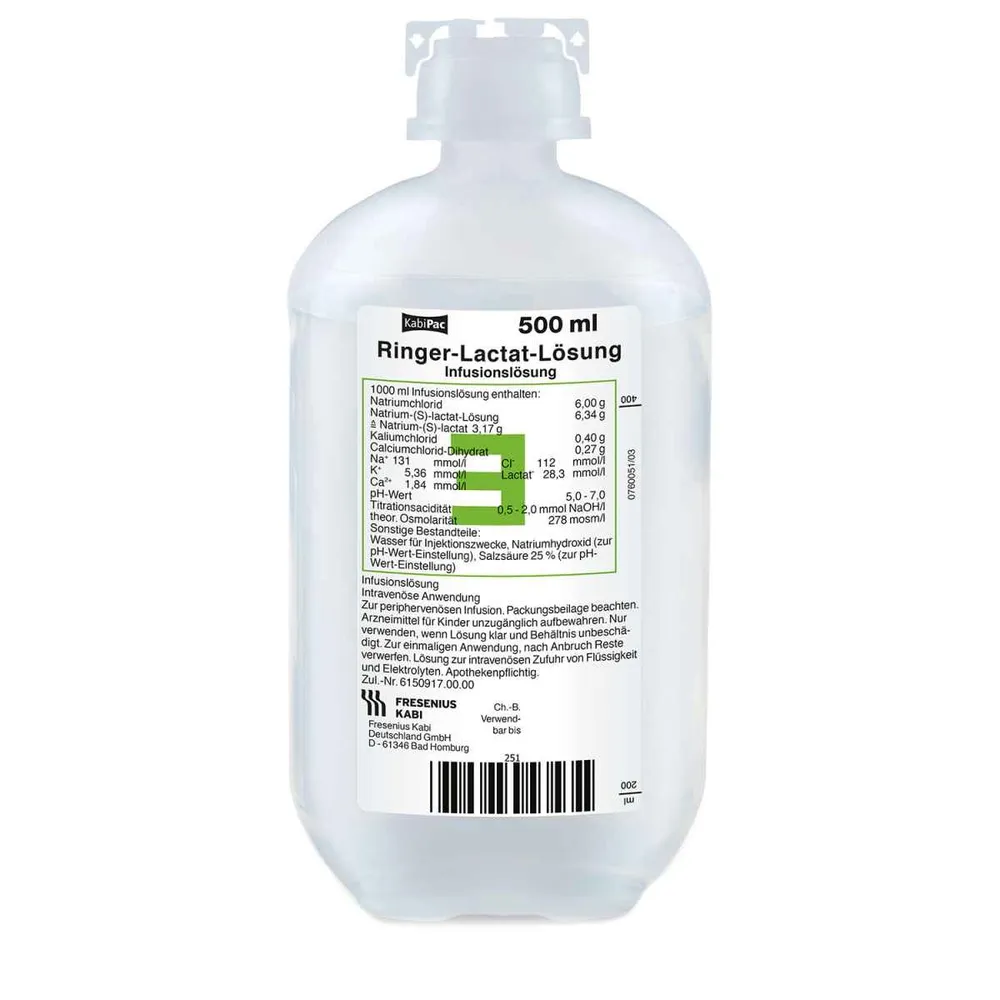
Table of Contents
- Package leaflet: Information for the patient
- Ringer Lactate Diaco
- 1. What Ringer Lactate Diaco is and what it is used for
- 2. What you need to know before using Ringer Lactate Diaco
- 3. How to use Ringer Lactate Diaco
- 4. Possible side effects
- 5. How to store Ringer Lactate Diaco
- 6. Contents of the pack and other information
Package leaflet: Information for the patient
Ringer Lactate Diaco
6 g/l + 0.4 g/l + 0.27 g/l + 2.6 g/l + 1.17 g/l infusion solution
sodium chloride, potassium chloride, calcium chloride dihydrate, lactic acid, sodium hydroxide.
Please read this leaflet carefully before using this medicine because it contains important information for you.
- Keep this leaflet. You may need to read it again.
- If you have any questions, ask your doctor, pharmacist, or nurse.
- This medicine has been prescribed for you only. Do not give it to other people, even if their symptoms are the same as yours, as it could be harmful.
- If you experience any side effect, including those not listed in this leaflet, tell your doctor, pharmacist, or nurse. See section 4.
Contents of this leaflet:
- What Ringer Lactate Diaco is and what it is used for
- What you need to know before using Ringer Lactate Diaco
- How to use Ringer Lactate Diaco
- Possible side effects
- How to store Ringer Lactate Diaco
- Contents of the pack and other information
1. What Ringer Lactate Diaco is and what it is used for
Ringer Lactate Diaco contains the active substances sodium chloride, potassium chloride, calcium chloride dihydrate, and sodium lactate. It belongs to the category of rehydration and electrolyte replacement medicines (which restore the body's loss of fluids and salts), and alkalizing agents (which reduce blood acidity).
Ringer Lactate Diaco is used:
- In parenteral replacement therapy administered intravenously for fluid and electrolyte losses, when correction of mild to moderate, but not severe, acidotic conditions is required.
- In the treatment of mild or moderate, but not severe, hemorrhagic shock.
Consult your doctor if you do not feel better or if you feel worse.
2. What you need to know before using Ringer Lactate Diaco
Take special care if:
- you suffer from acute illnesses, pain, postoperative stress, infections, burns, or diseases of the central nervous system;
- you have any type of heart, liver, or kidney disease;
- you have been treated with a medicine that increases the effect of vasopressin (a hormone regulating water retention in the body), as this may increase the risk of hospitalization;
- you have low levels of sodium in your blood (hyponatremia).
Do not use Ringer Lactate Diaco
- if you are allergic to sodium chloride, potassium chloride, calcium chloride dihydrate, sodium lactate, or any of the other components of this medicine (listed in section 6);
- severe kidney failure;
- if you have hypercalcemia (increased calcium in the blood), hypercalciuria (excretion of high levels of calcium in urine), or severe kidney disorders;
- if you suffer from hypernatremia (increased sodium in the blood);
- if you suffer from salt plethoric states (salt retention);
- if you suffer from hyperkalemia (increased potassium in the blood) or impaired potassium excretion;
- if you suffer from ventricular fibrillation, a serious heart rhythm disorder (calcium chloride may increase the risk of arrhythmias);
- kidney stones (may be worsened by calcium administration);
- sarcoidosis, a chronic inflammatory disease (may exacerbate the typical hypercalcemia of this condition);
- hypercoagulability (increased tendency of blood to clot);
- concomitant therapy with cardioactive glycosides used in heart failure (see section “Other medicines and Ringer Lactate Diaco”);
- metabolic or respiratory alkalosis (decreased blood acidity);
- untreated Addison's disease (adrenal insufficiency);
- heat cramps;
- Concomitantly with ceftriaxone in neonates (≤28 days of age), even when using separate infusion lines. (See sections “ Other medicines and Ringer Lactate Diaco ”, “ Possible side effects ”).
When administered concomitantly with blood transfusions, this solution must not be given through the same infusion catheter as whole blood due to the possible risk of coagulation.
Warnings and precautions
Talk to your doctor, pharmacist, or nurse before using Ringer Lactate Diaco.
Due to its sodium content, use with caution if you suffer from congestive heart failure, severe kidney failure, or clinical conditions associated with edema and salt retention; in patients receiving cardiac inotropic drugs (which increase heart contraction) or corticosteroid or corticotropin drugs (cortisone and similar agents).
Sodium salts should be administered cautiously if you have high blood pressure, heart failure, peripheral or pulmonary edema, reduced kidney function, pre-eclampsia (a pregnancy-related condition with high blood pressure and kidney problems), or other conditions associated with sodium retention (see section “Other medicines and Ringer Lactate Diaco”).
Due to its potassium content, administration should be guided by serial electrocardiograms; serum potassium levels do not reliably reflect intracellular potassium concentrations. High potassium levels in the blood may cause cardiac depression leading to death, cardiac arrhythmias, or cardiac arrest. To avoid potassium intoxication, the infusion must be administered at a controlled rate (see section “How to use Ringer Lactate Diaco”).
The medicine should be administered with caution if:
- you suffer from kidney failure (administration of potassium-containing solutions in patients with impaired kidney function may cause potassium retention);
- you suffer from heart failure, especially if receiving digitalis therapy;
- you suffer from adrenal insufficiency;
- you suffer from liver failure;
- you suffer from familial periodic paralysis (a muscle contraction disorder);
- you suffer from congenital myotonia (a muscle contraction disorder);
- you are in the early postoperative phase.
Due to its calcium content, the medicine must be used with great caution if:
- you suffer from kidney disorders;
- you suffer from heart disorders;
- you have received a blood transfusion, as calcium ion concentrations may differ from expected values.
Since calcium chloride is acidifying, caution is required when administered in conditions such as kidney disorders, cor pulmonale, respiratory acidosis (increased blood acidity), or respiratory failure, where acidification may worsen the clinical condition.
Additionally, caution is required in conditions where there is an increased risk of hypercalcemia (elevated blood calcium), such as chronic kidney failure, dehydration, or electrolyte imbalance.
Since calcium salts may increase the risk of arrhythmias (heart rhythm disturbances), care must be taken when prolonging calcium chloride administration in patients with heart disorders.
Administration of calcium chloride may cause vasodilation, resulting in lowered blood pressure.
Calcium chloride solution is irritating and must not be administered intramuscularly, subcutaneously, or into peri-vascular tissue, as tissue necrosis may occur.
Due to its lactate content, the medicine must be used cautiously in patients with lactic acidosis (increased blood acidity due to high levels of lactic acid) and in conditions involving impaired oxidative processes that prevent lactate utilization (e.g., shock, hypoxemias).
During infusion of this medicine, continuous electrocardiographic monitoring is essential, and it is good practice to monitor fluid and electrolyte balance, plasma osmolarity, and acid-base equilibrium.
Plasma calcium levels and urinary calcium excretion should be monitored frequently to avoid hypercalciuria (high calcium levels in urine), as hypercalciuria may progress to hypercalcemia (high blood calcium levels).
Special attention must be paid in the following cases:
- acute illness, pain, postoperative stress, infections, burns, diseases of the central nervous system;
- heart, liver, or kidney diseases;
- treatment with medicines that increase the effect of vasopressin (a hormone regulating water retention in the body), because these may increase the risk of hospital-acquired hyponatremia (low sodium levels in the blood) (see also section “Other medicines and Ringer Lactate Diaco”).
All patients must be closely monitored. In cases where normal regulation of blood water content is impaired due to increased secretion of vasopressin (also known as antidiuretic hormone), infusion of fluids with low sodium chloride concentration (hypotonic fluids) may lead to low sodium levels in the blood (hyponatremia). This may result in headache, nausea, seizures, lethargy, vomiting, coma, brain swelling (cerebral edema), and death. Therefore, these symptoms (acute symptomatic hyponatremic encephalopathy) are considered a medical emergency (see also section “Possible side effects”).
Children, women of childbearing age, and patients with brain disorders such as meningitis, cerebral hemorrhage, cerebral contusion, and cerebral edema are particularly at risk of life-threatening cerebral edema caused by acute hyponatremia.
Use immediately after opening the container. The solution must be clear, colorless or almost colorless, and free from visible particles. It is intended for single, uninterrupted administration; any remaining solution must not be used.
Children and adolescents
In children, safety and efficacy have not been established.
Children are particularly at risk of life-threatening cerebral edema caused by acute hyponatremia.
Concomitant therapy must be determined by a physician experienced in pediatric intravenous therapy, especially considering the potential risk of hyponatremia.
Other medicines and Ringer Lactate Diaco
Inform your doctor or pharmacist if you are taking, have recently taken, or might take any other medicines.
- Use of potassium-sparing diuretics may increase the risk of hyperkalemia (increased potassium levels in the blood), especially in the presence of renal dysfunction. Therefore, serum potassium levels must be closely monitored in such cases.
- Use of drugs such as ACE inhibitors (used to treat high blood pressure) that reduce aldosterone levels may lead to potassium retention. Therefore, serum potassium levels must be closely monitored.
- Corticosteroids (cortisone and similar agents) are associated with sodium and water retention, leading to edema and high blood pressure: therefore, caution is required when administering sodium salts concomitantly with corticosteroids (see section “Warnings and precautions”).
- Medicines that stimulate vasopressin release: chlorpropamide, clofibrate, carbamazepine, vincristine, selective serotonin reuptake inhibitors, 3,4-methylenedioxy-N-methamphetamine, ifosfamide, antipsychotics, narcotics.
- Medicines that enhance the action of vasopressin: chlorpropamide, NSAIDs, cyclophosphamide.
- Vasopressin analogs: desmopressin, oxytocin, vasopressin, terlipressin.
- Other medicines that increase the risk of hyponatremia include diuretics in general and antiepileptic drugs such as oxcarbazepine.
Calcium chloride solution may interact with the following medicines:
- thiazide diuretics, as hypercalcemia (increased blood calcium) may occur due to reduced renal calcium excretion;
- cardioactive glycosides (digitalis), digoxin, and digitoxin (used in certain heart conditions), as concomitant use may increase the risk of arrhythmias;
- verapamil (and other calcium channel blockers), as concomitant use may reduce verapamil's antihypertensive effect;
- magnesium-containing medicines, as this may increase the risk of hypercalcemia or hypermagnesemia (increased magnesium levels in blood), especially in patients with kidney disorders;
- neuromuscular blocking agents (used during surgery to block muscle contraction): calcium salts may antagonize the effect of non-depolarizing blockers; in some cases, an increased and prolonged effect of tubocurarine (a neuromuscular blocker) has also been observed;
- As with other calcium-containing solutions, concomitant use with ceftriaxone is contraindicated in neonates (≤28 days of age), even when using separate infusion lines (risk of fatal precipitation of ceftriaxone-calcium salt in the neonatal bloodstream; see section “Possible side effects”). In patients older than 28 days (including adults), ceftriaxone must not be administered concomitantly with intravenous calcium-containing solutions, including Ringer Lactate Diaco, through the same infusion line (e.g., via a Y-connector). If the same line is used for sequential administration, the line must be flushed with a compatible fluid between infusions.
Pregnancy and breastfeeding
If you are pregnant, suspect you may be pregnant, planning a pregnancy, or breastfeeding, consult your doctor or pharmacist before using this medicine.
Ringer Lactate Diaco must be administered with particular caution in pregnant women during labor, especially regarding serum sodium levels, when administered concomitantly with oxytocin (a hormone that may induce labor and control bleeding), due to the risk of hyponatremia (see sections “Warnings and precautions”, “Other medicines and Ringer Lactate Diaco”, “Possible side effects”).
This medicine should not be used during pregnancy or breastfeeding unless absolutely necessary and only after careful assessment of the risk-benefit ratio.
Driving and using machines
Does not affect the ability to drive or operate machinery.
3. How to use Ringer Lactate Diaco
Use this medicine exactly as directed by your doctor or pharmacist. If you have any doubts, consult your doctor or pharmacist.
The solution is isotonic (has the same salt concentration as blood) and must be administered with caution by intravenous infusion at a controlled infusion rate.
Shake well before administration.
The dose (frequency and volume of infusion) depends on age, body weight, and clinical condition (e.g., burns, surgical procedures, head injuries, infections).
This medicine must be administered only if renal function is normal and at a rate not exceeding 10 mEq of potassium per hour.
Adults
The daily dose is approximately 20–30 mL of solution per kg of body weight, up to a maximum of 40 mL of solution per kg of body weight.
Use in children
In children, the safety and efficacy of this medicine have not been established.
Infusions that are too rapid may cause local pain, and the infusion rate must be adjusted according to tolerance.
Do not inject intramuscularly, subcutaneously, or into perivascular tissues.
Administration must be discontinued if the patient experiences pain or redness at the injection site, as this may indicate extravasation of the drug.
It is advisable for the patient to remain lying down for a short period after administration.
Incompatibilities with Ringer Lactate Diaco
Due to the presence of calcium chloride, this medicine is incompatible with:
- magnesium sulfate: formation of a precipitate;
- medicines containing phosphates: formation of calcium phosphate precipitate;
- medicines containing carbonate: formation of calcium carbonate precipitate;
- medicines containing tartrate: formation of calcium tartrate precipitate.
Incompatibilities of calcium chloride have been reported with:
- aminophylline (bronchodilator): due to precipitate formation;
- amphotericin B (used in fungal infections): due to development of turbidity;
- cefamandole (antibiotic): due to presence of sodium carbonate in the cefamandole preparation;
- ceftriaxone sodium (antibiotic): due to precipitate formation; therefore, calcium-containing solutions must not be administered within 48 hours after ceftriaxone administration; calcium salts may aggregate with many drugs, potentially leading to precipitate formation. Physical incompatibility has been reported with ceftriaxone (see sections “Do not take Ringer Lactate Diaco”, “Other medicines and Ringer Lactate Diaco”, and “Possible side effects”);
- cephalothin (antibiotic): due to physical incompatibility;
- cefradine (antibiotic): due to presence of sodium carbonate in the cefradine preparation;
- chlorphenamine (antihistamine): due to physical incompatibility;
- dobutamine (used to support cardiac function): due to development of turbidity;
- fat emulsion: due to flocculation;
- sodium heparin (used to thin the blood);
- indomethacin (anti-inflammatory): due to precipitate formation;
- sodium nitrofurantoin (antibiotic);
- promethazine (antihistamine): due to precipitate formation;
- propofol (anesthetic): due to precipitate formation;
- streptomycin (antibiotic): because calcium may inhibit the activity of streptomycin;
- tetracyclines (antibiotics): calcium salts may complex with tetracyclines.
Use immediately after opening the container. The container is intended for single, uninterrupted administration, and any remaining solution must not be used.
Shake well before administration.
Do not use the medicine if the solution is not clear and colourless or if it contains particles.
Take all usual precautions to maintain sterility before and during intravenous infusion.
Calcium salts may form complexes with many drugs, potentially leading to precipitate formation.
Physical incompatibility has been reported with ceftriaxone (see sections “Do not take Ringer Lactate Diaco”, “Other medicines and Ringer Lactate Diaco”, “Possible side effects”).
If you take more Ringer Lactate Diaco than you should.
Symptoms
High plasma concentrations of potassium may cause death due to cardiac depression, arrhythmias (irregular heartbeats), or cardiac arrest.
Excessive administration of sodium chloride may lead, depending on the patient's clinical condition, to hypernatraemia (increased sodium levels in the blood) and/or hypervolaemia (increased blood volume). Hypernatraemia and excessive sodium retention, particularly in patients with impaired renal sodium excretion, may cause dehydration of internal organs, especially the brain, and accumulation of extracellular fluid with oedema affecting the cerebral, pulmonary, and peripheral circulation, potentially leading to pulmonary and peripheral oedema.
Accumulation of chloride ions reduces bicarbonate ion concentration, leading to acidosis (increased blood acidity).
In case of excessive administration of calcium chloride, hypercalcaemia (increased calcium levels in the blood) may occur, especially in patients with renal disease. Typical symptoms of hypercalcaemia include thirst, nausea, vomiting, constipation, increased urine output, abdominal pain, muscle weakness, mental disturbances, and, in severe cases, cardiac arrhythmia and coma. Hypercalcaemia is defined as plasma calcium concentrations exceeding 2.6 mmol/L; therefore, plasma calcium levels must be monitored continuously.
Treatment
Immediately discontinue the infusion and initiate corrective therapy to reduce plasma levels of excess ions and, if necessary, restore acid-base balance (see Precautions for use).
You should be kept under observation to monitor for any signs and symptoms related to the administered medicine, so that appropriate symptomatic and supportive measures can be provided as needed.
In case of high sodium levels in the blood, loop diuretics may be used.
In case of hyperkalaemia (high potassium levels in the blood), intravenous glucose (with or without insulin) or sodium bicarbonate may be administered.
In case of mild overdose with calcium chloride, treatment includes immediate discontinuation of the infusion and any other calcium-containing medication. In case of severe overdose (plasma concentrations >2.9 mmol/L), the following measures should be taken:
- rehydration with 0.9% sodium chloride solution;
- use of non-thiazide diuretics to promote calcium excretion;
- monitoring of potassium and calcium blood levels with immediate correction to normal values;
- monitoring of cardiac function and use of beta-blockers to reduce the risk of cardiac arrhythmia;
- possible recourse to haemodialysis (a blood purification method). Significantly elevated blood electrolyte levels may require dialysis.
In case of accidental ingestion/overdose of Ringer Lactate Diaco, contact your doctor immediately or go to the nearest hospital.
If you have any doubts about how to use Ringer Lactate Diaco, consult your doctor, pharmacist, or nurse.
If you have any questions about the use of this medicine, consult your doctor, pharmacist, or nurse.
4. Possible side effects
Like all medicines, this medicine can cause side effects, although not everyone will experience them.
Below are the side effects associated with Ringer Lactate. There are insufficient data available to determine the frequency of individual listed side effects.
- Gastrointestinal disturbances and irritation, thirst, reduced salivation, nausea, vomiting, diarrhoea, abdominal pain, constipation, metallic taste, chalky taste.
- Neuromuscular disturbances, muscle stiffness, paresthesia (tingling), flaccid paralysis (muscle paralysis), weakness, mental confusion, headache, dizziness, restlessness, irritability, seizures, coma, death.
- Drowsiness, confusional states, psychiatric disorders.
- Arrhythmias, tachycardia, bradycardia, conduction disorders, disappearance of the P wave, widening of the QRS complex on the electrocardiogram, ventricular fibrillation (heart rhythm disturbances and electrocardiogram changes), syncope (fainting), cardiac arrest.
- Hypotension (low blood pressure), hypertension (high blood pressure), peripheral edema, vasodilation, hot flushes.
- Hypernatremia or hyponatremia (increased or decreased levels of sodium in the blood), hypervolemia (increased blood volume), hyperchloremia (increased levels of chloride in the blood).
- Headache, nausea, convulsive crisis, lethargy, and vomiting. This may be caused by low sodium levels in the blood. When blood sodium levels become very low, water enters brain cells causing them to swell. This leads to increased intracranial pressure and results in hyponatremic encephalopathy.
- Difficulty breathing, respiratory arrest, pulmonary edema, pneumothorax (presence of air in the pleural cavity).
- Reduced tear production.
- Renal failure, polyuria (increased urine production).
- Hypercalcemia (increased calcium levels in the blood), Burnett's syndrome (milk-alkali syndrome occurring when excessive amounts of poorly acidic substances are ingested).
- Muscle weakness.
- Fever, infection at the infusion site, pain or local reaction, redness, rash, venous irritation, thrombosis (circulatory problems due to blood clot formation in veins) or venous phlebitis (vein inflammation) extending from the infusion site, extravasation (leakage of the medicine into surrounding tissues), tissue necrosis, abscess formation (collections of pus), cutaneous calcification.
Additional side effects in children
Calcium-ceftriaxone salt precipitation
Rarely, serious and in some cases fatal adverse reactions have been reported in preterm and full-term neonates (age ≤ 28 days) who had been treated with ceftriaxone and calcium administered intravenously. Autopsy findings revealed calcium-ceftriaxone salt aggregates in the lungs and kidneys. The high risk of precipitation in neonates is due to their low blood volume and prolonged ceftriaxone circulation time compared to adults (see sections "Do not use Ringer Lactate Diaco" and "Other medicines and Ringer Lactate Diaco").
Cases of renal precipitation have been reported, primarily in children over 3 years of age treated with high daily doses (e.g., ≥ 80 mg/kg/day) or total doses exceeding 10 grams, and who had other risk factors (e.g., fluid restriction, bedridden patients). The risk of precipitate formation increases in immobilized or dehydrated patients. This event may be symptomatic or asymptomatic, may lead to renal failure and anuria (lack of urine production), and is reversible upon discontinuation of administration.
Calcium-ceftriaxone salt precipitation in the gallbladder has been observed, primarily in patients treated with doses exceeding the recommended standard dose. Prospective studies in children have shown variable incidence of precipitation with intravenous administration; in some studies, the incidence exceeded 30%. This incidence appears to be lower when infusions are administered slowly (over 20–30 minutes). This effect is generally asymptomatic, but in rare cases precipitations have been associated with clinical symptoms such as pain, nausea, and vomiting. Symptomatic treatment is recommended in such cases. Precipitation generally resolves upon discontinuation of administration.
In case of an adverse reaction, discontinue administration and retain the unused portion for possible testing.
Reporting of side effects
If you experience any side effect, including those not listed in this leaflet, consult your doctor, pharmacist, or nurse. You may also report side effects directly via the national reporting system at https://www.aifa.gov.it/content/segnalazioni-reazioni-avverse. By reporting side effects, you can help provide more information on the safety of this medicine.
5. How to store Ringer Lactate Diaco
Keep this medicine out of the sight and reach of children.
Do not use this medicine after the expiry date stated on the packaging. The expiry date refers to the product
in its original, undamaged packaging, properly stored.
Store in the original packaging and in a tightly closed container.
Do not refrigerate or freeze.
Do not dispose of any medicine via wastewater or household waste. Ask your pharmacist how to dispose of
medicines no longer in use. This will help protect the environment.
6. Contents of the pack and other information
What Ringer Lactate Diaco contains
- The active substances are: Sodium chloride, Potassium chloride, Calcium chloride dihydrate, Lactic acid, Sodium hydroxide. 1000 ml of solution contain 6.0 g of sodium chloride, 0.4 g of potassium chloride, 0.27 g of calcium chloride dihydrate, 2.6 g of lactic acid, 1.17 g of sodium hydroxide.
- Other components: Water for injections [mMol/litre (Na+) 132; (K+) 5; (Ca++) 4; (Cl-) 112; (Lactate) 29]. [Theoretical osmolarity: 280 mOsm/l] - pH between 5.5 and 7.0.
Description of the appearance of Ringer Lactate Diaco and contents of the pack
Infusion solution, sterile and pyrogen-free
50 ml vial
100 ml vial
250 ml vial
500 ml vial
1000 ml vial
Marketing Authorization Holder
Diaco Biofarmaceutici S.r.l.
Via Flavia n.124 - 34147 - Trieste (Italy)
Manufacturer
DIACO BIOFARMACEUTICI S.r.l.
Via Flavia n.124 - 34147 - Trieste (Italy)