Remifentanil Hameln
Italy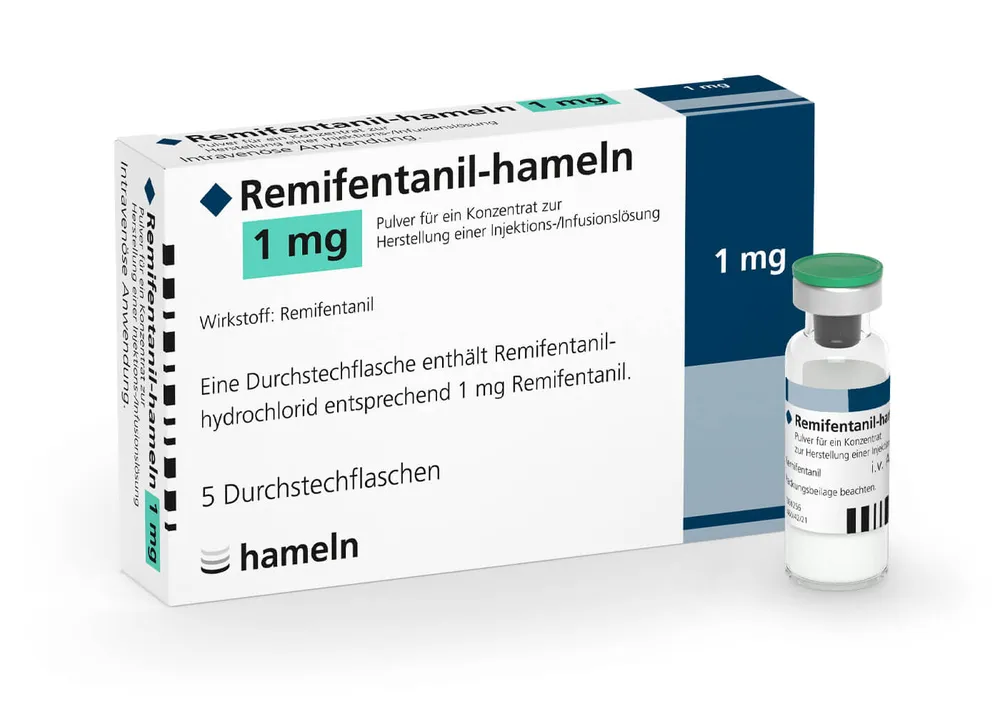
Table of Contents
- PACKAGE LEAFLET: INFORMATION FOR THE USER
- Remifentanil hameln 1 mg powder for concentrate for solution for injection/infusion, 2 mg powder for concentrate for solution for injection/infusion, 5 mg powder for concentrate for solution for injection/infusion
- 1. What Remifentanil hameln is and what it is used for
- 2. What you need to know before being given Remifentanil hameln
- 3. How to use Remifentanil hameln
- 4. Possible side effects
- 5. How to store Remifentanil hameln
- 6. Package contents and other information
PACKAGE LEAFLET: INFORMATION FOR THE USER
Remifentanil hameln 1 mg powder for concentrate for solution for injection/infusion, 2 mg powder for concentrate for solution for injection/infusion, 5 mg powder for concentrate for solution for injection/infusion
Remifentanil
Generic medicine
Please read this leaflet carefully before this medicine is administered to you because it contains important information for you.
- Keep this leaflet. You may need to read it again.
- If you have any questions, ask your doctor or pharmacist.
- If you experience any side effects, including those not listed in this leaflet, tell your doctor or pharmacist. See section 4.
Contents of this leaflet
- What Remifentanil hameln is and what it is used for
- What you need to know before Remifentanil hameln is administered to you
- How to use Remifentanil hameln
- Possible side effects
- How to store Remifentanil hameln
- Contents of the pack and other information
1. What Remifentanil hameln is and what it is used for
Remifentanil hameln belongs to a group of medicines called opioids. It differs from other medicines in this group due to its rapid onset and short duration of action.
- Remifentanil hameln can be used to prevent you from feeling pain before or during an operation.
- Remifentanil hameln can be used to relieve pain during controlled mechanical ventilation in the Intensive Care Unit (for patients aged 18 years and older).
2. What you need to know before being given Remifentanil hameln
Remifentanil must not be administered to you if:
- you are allergic to remifentanil or to any of the other ingredients of this medicine (listed in section 6) or to fentanyl derivatives (such as alfentanil, fentanyl, sufentanil). An allergic reaction may include skin rash, itching, difficulty breathing, or swelling of the face, lips, throat, or tongue.
- as an injection into the spinal canal.
- as the sole medicine for induction of anaesthesia.
Warnings and precautions
Please speak with your doctor before remifentanil is administered if:
- you have ever experienced adverse reactions during surgery.
- you have ever had allergic reactions or have been told you are allergic to: any medicine used during surgery or opioid medicines (e.g. morphine, fentanyl, pethidine, codeine); see also the previous section "Remifentanil must not be administered to you if".
- you suffer from impaired lung and/or liver function (you may be more sensitive to breathing difficulties).
- you are over 65 years old, are frail, or have reduced blood volume and/or low blood pressure (you may be more sensitive to cardiac disturbances).
- you or a family member has ever abused or been dependent on alcohol, prescription medicines, or illegal drugs ("addiction").
- you are a smoker.
- you have ever had mood disorders (depression, anxiety, or personality disorder) or have been treated by a psychiatrist for other mental illnesses.
This medicine contains remifentanil, which is an opioid medicine. Repeated use of opioid painkillers may lead to reduced effectiveness of the medicine (you may become tolerant to it). It may also lead to dependence and abuse, which could result in potentially life-threatening overdose. If you are concerned about becoming dependent on remifentanil, it is important to discuss this with your doctor.
Occasionally, withdrawal reactions including rapid heartbeat, high blood pressure, and restlessness have been reported when treatment with this medicine was stopped abruptly, particularly when treatment lasted longer than 3 days (see also section 4. Possible side effects). If you experience these symptoms, your doctor may reintroduce the medicine and gradually reduce the dose.
For athletes:
Using this medicine without a therapeutic need constitutes doping.
Other medicines and Remifentanil hameln
Inform your doctor or pharmacist if you are taking, have recently taken, or might take any other medicines, including those without a prescription. This is particularly important with the following medicines, as they may interact with remifentanil:
- Medicines for high blood pressure or heart problems (known as beta-blockers or calcium antagonists). These medicines may enhance remifentanil's effects on the heart (lowering blood pressure and heart rate).
- Medicines for depression such as selective serotonin reuptake inhibitors (SSRIs), serotonin-norepinephrine reuptake inhibitors (SNRIs), or monoamine oxidase inhibitors (MAOIs). Concomitant use of these medicines with remifentanil is not recommended, as they may increase the risk of serotonin syndrome, a potentially life-threatening condition.
Sedatives such as benzodiazepines or related medicines
Concomitant use of remifentanil and sedatives such as benzodiazepines or related medicines increases the risk of drowsiness, breathing difficulties (respiratory depression), coma, and may be potentially fatal.
Because of this, concomitant use should only be considered when no other treatment options are available. However, if your doctor prescribes remifentanil together with sedatives, your doctor will limit the dose and duration of concomitant treatment. Concurrent use of opioids and medicines used to treat epilepsy, nerve pain, or anxiety (gabapentin and pregabalin) increases the risk of opioid overdose, respiratory depression, and may be potentially life-threatening.
Inform your doctor about all sedatives you are taking and follow your doctor’s dosage recommendations carefully. It may be helpful to inform friends and family to watch for the signs and symptoms listed above. If you experience such symptoms, contact your doctor.
Serotonergic medicines
Inform your doctor or pharmacist if you are taking other serotonergic medicines such as antidepressants. Your doctor will closely monitor you for signs and symptoms of serotonin syndrome. If serotonin syndrome is suspected, treatment with remifentanil, other opioid therapy, and/or any concomitant serotonergic medicine should be discontinued.
Nevertheless, remifentanil may still be indicated for you, and your doctor will decide what is appropriate for your condition.
Children and adolescents
Remifentanil is not recommended in neonates and children (children under one year of age) when used for surgery.
Experience with the use of remifentanil in children and adolescents (under 18 years of age) in intensive care units is limited.
Remifentanil hameln and alcohol
After receiving remifentanil, you must not drink alcohol until you have fully recovered.
Pregnancy and breastfeeding
If you are pregnant, suspect you may be pregnant, plan to become pregnant, or are breastfeeding, please consult your doctor or pharmacist before receiving this medicine. Your doctor will discuss with you the potential risks and benefits of administering remifentanil during pregnancy or while breastfeeding.
Remifentanil must not be administered to pregnant women unless medically justified.
Remifentanil is not recommended during labour or caesarean section.
If you are given this medicine during labour or close to delivery, it may affect your baby’s breathing. You and your baby will be monitored for signs of excessive drowsiness and breathing difficulties.
After receiving this medicine, you must stop breastfeeding for 24 hours. Breast milk expressed during this period must be discarded and not given to the baby.
Driving and using machines
If you are staying in hospital for only one day, your doctor will inform you how long you should wait before leaving the hospital or driving. It may be dangerous to drive too soon after undergoing surgery.
3. How to use Remifentanil hameln
You are not expected to self-administer this medicine. It will always be administered by qualified personnel.
Remifentanil hameln is for intravenous use.
It can be administered:
- as a single intravenous injection
- as a continuous intravenous infusion. This is when the medicine is given slowly over a longer period of time.
The dose you will receive and the way the medicine is administered depend on:
- the procedure or treatment you will undergo in the Intensive Care Unit
- the intensity of pain
The dose varies from patient to patient. Dosage adjustments are not required for patients with liver or kidney problems.
After surgery
Inform your doctor or nurse if you experience pain. If you have pain after surgery, they may administer other pain-relieving medicines.
If you receive more Remifentanil hameln than you should or if you miss a dose of Remifentanil hameln
Since remifentanil is normally administered by a doctor or nurse under closely controlled conditions, it is unlikely that you will receive too much or that a dose will be missed.
If you have received too much of this medicine, or if you suspect that you have received too much, the doctor will promptly take appropriate actions.
If you have any doubts about the use of this medicine, consult your doctor or pharmacist.
4. Possible side effects
Like all medicines, this medicine can cause side effects, although not everyone experiences them.
Allergic reactions including anaphylaxis: are rare (may affect up to 1 in 1,000 people) in individuals receiving remifentanil. Signs include:
- raised, itchy rash (urticaria)
- swelling of the face or mouth (angioedema) causing breathing difficulties
- collapse.
Severe allergic reactions may progress to potentially life-threatening anaphylactic shock, with unknown frequency (the frequency cannot be estimated from the available data), which includes worsening of allergic signs, severe drop in blood pressure, rapid heartbeat and/or fainting.
If you experience any of these symptoms, seek medical advice immediately.
The following side effects have been reported:
Very common (may affect more than 1 in 10 people)
- stiff muscles (muscle rigidity)
- feeling unwell (nausea) or being sick (vomiting)
- low blood pressure (hypotension)
Common (may affect up to 1 in 10 people)
- slow heartbeat (bradycardia)
- shortness of breath (respiratory depression)
- temporary stop in breathing (apnea)
- itching
- cough
Uncommon (may affect up to 1 in 100 people)
- constipation
- lack of oxygen (hypoxia)
Rare (may affect up to 1 in 1,000 people)
- slow heartbeat (bradycardia) followed by absence of heartbeat in patients receiving remifentanil with one or more anaesthetics
Other side effects
Other side effects have occurred in a very small number of people, but their exact frequency is unknown:
- seizures
- cardiac arrest
- irregular heartbeat (arrhythmia)
- a type of irregular heartbeat (atrioventricular block)
- physical need for remifentanil (drug dependence) or need to increase doses to achieve the same effect (drug tolerance)
- withdrawal syndrome (which may present with the following side effects: increased heart rate, high blood pressure, feeling restless or agitated, nausea, vomiting, diarrhoea, anxiety, chills, tremors, and sweating)
Side effects that may occur after surgery
Common side effects
- shivering
- high blood pressure (hypertension)
Uncommon side effects
- pain
Rare side effects
- feeling very calm or drowsy
Reporting of side effects
If you experience any side effect, including those not listed in this leaflet, talk to your doctor or pharmacist. You can also report side effects directly via the national reporting system at: https://www.aifa.gov.it/content/segnalazioni-reazioni-avverse .
By reporting side effects, you can help provide more information on the safety of this medicine.
5. How to store Remifentanil hameln
Keep this medicine out of the sight and reach of children.
Do not use this medicine after the expiry date stated on the carton and label after EXP. The expiry date refers to the last day of that month.
Do not store above 25°C.
Do not use this medicine if you notice that the solution is not clear and free from particles, or if the container is damaged.
6. Package contents and other information
What Remifentanil hameln contains
The active substance is remifentanil.
Remifentanil hameln 1 mg
One vial contains remifentanil hydrochloride equivalent to 1 mg of remifentanil.
Remifentanil hameln 2 mg
One vial contains remifentanil hydrochloride equivalent to 2 mg of remifentanil.
Remifentanil hameln 5 mg
One vial contains remifentanil hydrochloride equivalent to 5 mg of remifentanil.
Each ml of injectable or infusion solution contains 1 mg of remifentanil when reconstituted as
instructed.
The other components are glycine and hydrochloric acid (for pH adjustment).
Description of the appearance of Remifentanil hameln and contents of the package
Remifentanil hameln is a white to off-white or yellowish powder for concentrate for solution for
injection/infusion (powder for concentrate). It is supplied in clear glass vials (4 ml (Remifentanil hameln 1 mg), 6 ml (Remifentanil hameln 2 mg), 10 ml (Remifentanil hameln 5 mg)) with a bromobutyl rubber stopper and cap.
Pack size:
5 vials per pack
Marketing Authorization Holder
hameln pharma gmbh
Inselstraße 1
31787 Hameln
Germany
Manufacturer
hameln rds s.r.o.
Horná 36
900 01 Modra
Slovakia
Siegfried Hameln GmbH
Langes Feld 13
31789 Hameln
Germany
Anfarm Hellas S.A.
61 km National Road Athens Lamia
32009 Schimatari Viotias
Greece
This medicinal product is authorized in the European Economic Area Member States under the following names:
AT Remifentanil-hameln 1 mg /2 mg / 5 mg
Pulver für ein Konzentrat zur Herstellung einer Injektions-/Infusionslösung
BG Ремифентанил Хамелн 1 mg, 2 mg, 5 mg
прах за концентрат за инжекционен/инфузионен разтвор
Remifentanil hameln 1 mg, 2 mg, 5 mg
powder for concentrate for solution for injection or infusion
DE Remifentanil-hameln 1 mg /2 mg / 5 mg
Pulver für ein Konzentrat zur Herstellung einer Injektions-/Infusionslösung
DK Remifentanil hameln
FI Remifentanil hameln 1 mg, 2 mg, 5 mg
kuiva-aine välikonsentraatiksi injektio-/infuusionestettä varten, liuos
HR Remifentanil hameln 1 mg, 2 mg, 5 mg
prašak za koncentrat za otopinu za injekciju / infuziju
IS Remifentanil hameln
stofn fyrir stungulyfs-/innrennslisþykkni, lausn
IT Remifentanil hameln
NO Remifentanil hameln
SE Remifentanil hameln
SI Remifentanil hameln 1 mg, 2 mg, 5 mg
prašek za koncentrat za raztopino za injiciranje/infundiranje
The following information is intended exclusively for physicians and healthcare professionals:
GUIDE FOR THE PREPARATION OF
Remifentanil hameln 1 mg powder for concentrate for solution for injection/infusion
Remifentanil hameln 2 mg powder for concentrate for solution for injection/infusion
Remifentanil hameln 5 mg powder for concentrate for solution for injection/infusion
It is important that you read the entire content of this guide before preparing this medicinal product.
Reconstitution:
Remifentanil hameln must be prepared for intravenous use by adding the appropriate volume (as indicated in the table below) of one of the following diluents to obtain a reconstituted solution with a concentration of approximately 1 mg/ml.
| Form | Volume of diluent to add | Concentration of reconstituted solution |
| Remifentanil hameln 1 mg | 1 ml | 1 mg/ml |
| Remifentanil hameln 2 mg | 2 ml | 1 mg/ml |
| Remifentanil hameln 5 mg | 5 ml | 1 mg/ml |
Shake until completely dissolved. The reconstituted solution must be clear,
colorless, and free from visible particles.
Further dilution
After reconstitution, Remifentanil hameln must not be used without further dilution to
concentrations between 20 and 250 µg/ml using one of the injectable solutions listed below (50 μg/ml is the
recommended dilution for adults and 20 to 25 μg/ml for pediatric patients aged 1 year and
older).
For target-controlled infusions (TCI), the recommended dilution of Remifentanil hameln is 20–
50 µg/ml.
The dilution depends on the technical capacity of the infusion device and the anticipated patient needs.
For dilution, one of the following solutions must be used:
- Water for injectable preparations
- Glucose 50 mg/ml (5 %) solution for injection
- Glucose 50 mg/ml (5 %) solution for injection and Sodium chloride 9 mg/ml (0.9 %) solution for injection
- Sodium chloride 9 mg/ml (0.9 %) solution for injection
- Sodium chloride 4.5 mg/ml (0.45 %) solution for injection
The following infusion solutions may also be used when administered through an intravenous catheter:
- Ringer Lactate for injectable preparations
- Ringer Lactate and Glucose 50 mg/ml (5 %) for injectable preparations
Remifentanil hameln is compatible with propofol when administered through a continuous intravenous catheter in use.
Other diluents must not be used.
The solution must be visually inspected for particles before administration. The solution must be used only if it is clear and free from particles.
Ideally, intravenous infusions of Remifentanil hameln should be prepared at the time of administration.
Chemical and physical stability in use has been demonstrated for 24 hours at 25°C and at 2–8°C.
From a microbiological standpoint, unless the opening/reconstitution/dilution procedure excludes the risk of microbial contamination, the product should be used immediately. If not used immediately, storage times and conditions prior to use are the responsibility of the user.
The vial contents are for single use only. Unused medicine and waste materials derived from this medicine must be disposed of in accordance with local regulations.
Overdose
In case of overdose or suspected overdose, the following measures should be taken:
discontinue remifentanil administration, maintain airway patency, initiate assisted or controlled ventilation with oxygen, and maintain adequate cardiovascular function.
If respiratory depression is associated with muscle rigidity, administration of a neuromuscular blocking agent may be necessary to facilitate assisted or controlled ventilation. Intravenous fluids and vasopressors may be used to treat hypotension. Other supportive measures may also be helpful.
Intravenous administration of an opioid antagonist such as naloxone may be used as a specific antidote in addition to ventilatory support to manage severe respiratory depression. It is unlikely that the duration of respiratory depression caused by remifentanil overdose will exceed the duration of action of the opioid antagonist.
Special precautions for storage
Do not store above 25°C.
For storage conditions after reconstitution/dilution of the medicinal product, see the previous section Further dilution.