Rasilez
Italy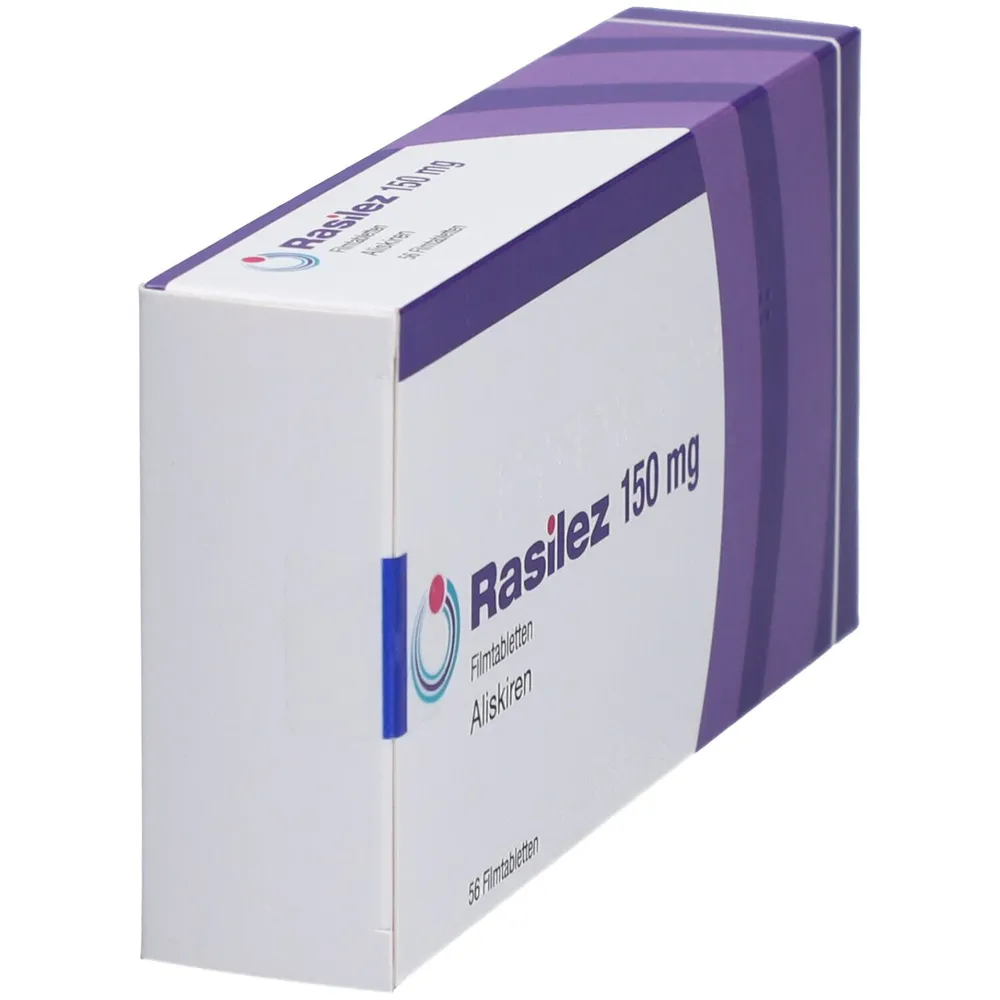
Table of Contents
- Package leaflet: Information for the user
- Rasilez 150 mg film-coated tablets, 300 mg film-coated tablets
- 1. What Rasilez is and what it is used for
- 2. What you need to know before taking Rasilez
- 3. How to take Rasilez
- 4. Possible side effects
- 5. How to store Rasilez
- 6. Package contents and other information
Package leaflet: Information for the user
Rasilez 150 mg film-coated tablets, 300 mg film-coated tablets
Aliskiren
Please read this leaflet carefully before taking this medicine because it contains important information for you.
- Keep this leaflet. You may need to read it again.
- If you have any questions, ask your doctor or pharmacist.
- This medicine has been prescribed for you only. Do not give it to other people, even if they have the same symptoms as you, because it may be harmful.
- If you experience any side effect, including those not listed in this leaflet, talk to your doctor or pharmacist. See section 4.
Contents of this leaflet
- What Rasilez is and what it is used for
- What you need to know before taking Rasilez
- How to take Rasilez
- Possible side effects
- How to store Rasilez
- Contents of the pack and other information
1. What Rasilez is and what it is used for
This medicine contains an active substance called aliskiren. Aliskiren belongs to a class of medicines known as renin inhibitors. Renin inhibitors reduce the amount of angiotensin II produced by the body. Angiotensin II causes blood vessels to narrow, thereby increasing blood pressure. By reducing the amount of angiotensin II, blood vessels are able to relax, resulting in lower blood pressure.
This helps to reduce high blood pressure in adult patients. High blood pressure increases the workload on the heart and arteries. If left untreated over a long period, this condition may damage the blood vessels of the brain, heart, and kidneys, and may lead to stroke, heart failure, heart attack, or kidney failure. Lowering blood pressure to normal levels reduces the risk of developing these conditions.
2. What you need to know before taking Rasilez
Do not take Rasilez
- if you are allergic to aliskiren or to any of the other ingredients of this medicine (listed in section 6). If you think you may be allergic, ask your doctor for advice.
- if you have experienced the following types of angioedema (difficulty breathing or swallowing, or swelling of the face, hands and feet, eyes, lips and/or tongue):
- angioedema while taking aliskiren.
- hereditary angioedema.
- angioedema without any known cause.
- during the last 6 months of pregnancy or if you are breastfeeding; see section “Pregnancy and breastfeeding”.
- if you are taking cyclosporine (a medicine used in organ transplantation to prevent organ rejection or for other conditions such as rheumatoid arthritis or atopic dermatitis), itraconazole (a medicine used to treat fungal infections), or quinidine (a medicine used to correct heart rhythm).
- if you have diabetes or impaired kidney function and are being treated with the following classes of medicines used to treat high blood pressure:
- an angiotensin-converting enzyme (ACE) inhibitor such as enalapril, lisinopril, ramipril, or
- an angiotensin II receptor blocker (ARB) such as valsartan, telmisartan, irbesartan.
- if the patient is under 2 years of age.
Warnings and precautions
Talk to your doctor before taking Rasilez:
- if you are taking a diuretic (a type of medicine that increases the amount of urine produced).
- if you are taking the following classes of medicines used to treat high blood pressure:
- an angiotensin-converting enzyme (ACE) inhibitor such as enalapril, lisinopril, ramipril, or
- an angiotensin II receptor blocker (ARB) such as valsartan, telmisartan, irbesartan.
- if your kidney function is impaired, your doctor will carefully assess whether this medicine is suitable for you and may wish to monitor you closely.
- if you have previously experienced angioedema (difficulty breathing or swallowing, or swelling of the face, hands and feet, eyes, lips and/or tongue). If this occurs, stop taking this medicine and contact your doctor.
- if you suffer from renal artery stenosis (narrowing of the blood vessels to one or both kidneys).
- if you suffer from severe congestive heart failure (a type of heart disease in which the heart is unable to pump sufficient blood throughout the body).
If you develop severe and persistent diarrhoea, you must stop taking Rasilez.
Your doctor may monitor your kidney function, blood pressure, and blood electrolyte levels
(e.g. potassium) at regular intervals.
See also section “Do not take Rasilez”.
Children and adolescents
This medicine must not be used in children from birth up to less than 2 years of age. It must not be used in children from 2 to less than 6 years of age, and its use is not recommended in children and adolescents from 6 to less than 18 years of age. This is because the safety and benefits of this medicine are not known in this population.
Elderly
The usual starting dose of aliskiren in elderly patients aged 65 years and over is 150 mg. In most patients aged 65 years and over, the 300 mg dose of Rasilez provides no additional benefit in lowering blood pressure compared to the 150 mg dose.
Other medicines and Rasilez
Tell your doctor or pharmacist if you are taking, have recently taken, or might take any other medicines.
If you are taking any of the following medicines, your doctor may need to adjust your dose and/or take other precautions:
- medicines that increase potassium levels in the blood. These include potassium-sparing diuretics and potassium supplements.
- furosemide or torasemide, medicines belonging to the diuretic class, used to increase urine production.
- an angiotensin II receptor blocker or an angiotensin-converting enzyme (ACE) inhibitor (see sections “Do not take Rasilez” and “Warnings and precautions”).
- ketoconazole, a medicine used to treat fungal infections.
- verapamil, a medicine used to lower blood pressure, to correct heart rhythm, or to treat angina pectoris.
- certain types of painkillers known as non-steroidal anti-inflammatory drugs (NSAIDs).
Rasilez with food and drink
Take this medicine either with a light meal or without food, once daily, preferably at the same time each day. You should avoid taking this medicine with fruit juice and/or drinks containing plant extracts (including herbal infusions), as this may reduce the effectiveness of this medicine.
Pregnancy and breastfeeding
Pregnancy
Do not take this medicine if you are pregnant (see section “Do not take Rasilez”). If you find out you are pregnant while taking this medicine, stop immediately and consult your doctor. If you suspect you are pregnant or are planning a pregnancy, ask your doctor or pharmacist for advice before taking this medicine. Your doctor will usually advise you to stop taking this medicine before becoming pregnant and will recommend an alternative medicine. Rasilez is not recommended during early pregnancy and must not be taken after the first 3 months of pregnancy, as it may cause serious harm to the unborn baby if used beyond the third month of pregnancy.
Breastfeeding
Inform your doctor if you are breastfeeding or about to start breastfeeding. This medicine is not recommended for women who are breastfeeding, and your doctor may choose an alternative treatment if you wish to breastfeed.
Driving and using machines
This medicine may cause dizziness, which could affect your ability to concentrate. Before driving, operating machinery, or performing other activities requiring concentration, make sure you are aware of how this medicine affects you.
3. How to take Rasilez
Take this medicine exactly as prescribed by your doctor. If you have any doubts, consult your doctor or pharmacist.
People with high blood pressure often do not notice any symptoms. Many feel quite normal. To achieve the best results and reduce the risk of unwanted effects, it is very important that you take this medicine exactly as directed by your doctor. Keep your medical appointments even if you feel well.
The usual starting dose is one 150 mg tablet once daily. The blood pressure-lowering effect occurs within two weeks after starting treatment.
Elderly patients
The usual recommended starting dose of aliskiren in elderly patients is 150 mg. In most patients aged 65 years and over, the 300 mg dose of aliskiren provides no additional benefit in lowering blood pressure compared to the 150 mg dose.
Depending on your response to treatment, your doctor may prescribe a higher dose of one 300 mg tablet once daily. Your doctor may prescribe this medicine together with other medicines used to treat high blood pressure.
Method of administration
Swallow the tablet whole with some water. Take this medicine once daily, always either with food or always without food, preferably at the same time each day. Establish a convenient daily routine to take the medicine in the same way every day, in relation to your meals. Avoid taking this medicine with fruit juice and/or beverages containing herbal extracts (including herbal infusions). During treatment, your doctor may adjust the dosage based on your blood pressure response.
If you take more Rasilez than you should
If you accidentally take too many tablets of this medicine, contact your doctor immediately. You may require medical treatment.
If you forget to take Rasilez
If you forget to take a dose of this medicine, take it as soon as you remember, then take your next dose at the usual time. However, if it is almost time for your next dose, you may simply take the next tablet at your usual time. Do not take a double dose to make up for a forgotten dose.
4. Possible side effects
Like all medicines, this medicine can cause side effects, although not everybody gets them.
Some side effects can be serious (frequency not known):
some patients have reported serious side effects. Tell your doctor immediately if you experience any of
the following:
- severe allergic reaction with symptoms such as rash, itching, swelling of the face, lips, or tongue, difficulty breathing, dizziness.
Possible side effects:
Common (may affect up to 1 in 10 people): diarrhoea, joint pain (arthralgia), high levels of potassium in the blood, dizziness.
Uncommon (may affect up to 1 in 100 people): skin rashes (which may also be signs of allergic reactions or angioedema – see side effects listed below under “Rare”), kidney problems including acute renal failure (severe decrease in urine output), swelling of the hands, ankles or feet (peripheral oedema), severe skin reactions (toxic epidermal necrolysis and/or oral mucosal reactions – skin redness, blistering of lips, eyes or mouth, skin peeling, fever), low blood pressure, palpitations, cough, itching, itchy skin rash (urticaria), increased liver enzymes.
Rare (may affect up to 1 in 1,000 people): increased creatinine levels in the blood, decreased haemoglobin levels in the blood (anaemia), decreased red blood cell levels, skin redness (erythema).
Not known (frequency cannot be estimated from the available data): sensation of spinning (vertigo), low sodium levels in the blood, shortness of breath, nausea, vomiting, signs of liver problems (nausea, loss of appetite, dark-coloured urine or yellowing of the skin and eyes).
If any of these effects occur severely, consult your doctor. You may need to stop taking Rasilez.
Reporting of side effects
If you experience any side effect, including those not listed in this leaflet, talk to your doctor or pharmacist. You can also report side effects directly via the national reporting system listed in Annex V. By reporting side effects, you can help provide more information on the safety of this medicine.
5. How to store Rasilez
Keep this medicine out of the sight and reach of children.
Do not use this medicine after the expiry date stated on the carton and blister pack. The expiry date refers to the last day of that month.
Do not store above 25°C.
Store in the original packaging to protect the medicine from moisture.
Do not dispose of any medicine via wastewater or household waste. Ask your pharmacist how to dispose of medicines no longer in use. This will help protect the environment.
6. Package contents and other information
What Rasilez contains
- The active substance is aliskiren (as hemifumarate).
Rasilez 150 mg film-coated tablets
- Each tablet contains 150 mg of aliskiren (as hemifumarate). Rasilez 300 mg film-coated tablets contain 300 mg of aliskiren.
- The other components are crospovidone type A, hypromellose type 2910 (3 mPa·s), magnesium stearate, macrogol 4000, microcrystalline cellulose, povidone K-30, anhydrous colloidal silica, talc, titanium dioxide (E 171), black iron oxide (E 172), red iron oxide (E 172).
Rasilez 300 mg film-coated tablets
- Each tablet contains 300 mg of aliskiren (as hemifumarate). The other components are crospovidone type A, hypromellose type 2910 (3 mPa·s), magnesium stearate, macrogol 4000, microcrystalline cellulose, povidone K-30, anhydrous colloidal silica, talc, titanium dioxide (E 171), black iron oxide (E 172), red iron oxide (E 172).
Description of the appearance of Rasilez and package contents
Rasilez 150 mg film-coated tablets are light pink, biconvex, round tablets, with the letters “IL” engraved on one side and “NVR” on the other.
Rasilez 300 mg film-coated tablets are light red, biconvex, oval-shaped tablets, with the letters “IU” engraved on one side and “NVR” on the other.
Rasilez 150 mg film-coated tablets are available in the following pack sizes:
- Single packs containing 14, 28, 30, 50, 56, 90 or 98 tablets
- Single packs containing 56x1 tablets in unit dose divisible blisters
- Multiple packs containing 280 (20x14) tablets
- Packs containing 98 (2x49x1) tablets in unit dose divisible blisters
Rasilez 300 mg film-coated tablets are available in the following pack sizes:
- Single packs containing 14, 28, 30, 50, 56, 90 or 98 tablets
- Single packs containing 56x1 tablets in unit dose divisible blisters
- Multiple packs containing 280 (20x14) tablets
- Packs containing 98 (2x49x1) tablets in unit dose divisible blisters
Not all pack sizes may be available in your country.
Marketing Authorization Holder
Noden Pharma DAC
D'Olier Chambers
16A D'Olier Street
Dublin 2
Ireland
Manufacturer
Delpharm Milano S.R.L.,
Via Carnevale, 1,
Segrate (MI),
20054,
Italy
Other sources of information
More detailed information on this medicinal product is available on the website of the European Medicines Agency: http://www.ema.europa.eu