Quofenix
Italy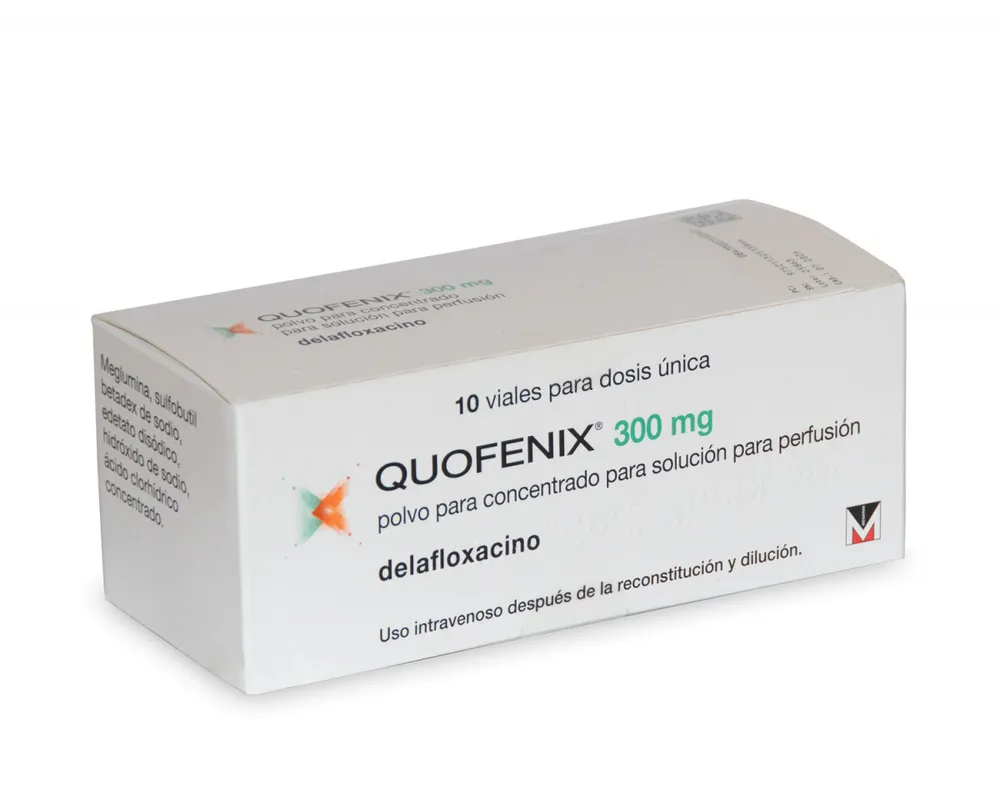
Table of Contents
- Package leaflet: Information for the user
- Quofenix 300 mg powder for concentrate for solution for infusion
- 1. What Quofenix is and what it is used for
- 2. What you should know before receiving Quofenix
- 3. How to use Quofenix
- 4. Possible side effects
- 5. How to store Quofenix
- 6. Package contents and other information
- The following information is intended exclusively for healthcare professionals:
- Package leaflet: Information for the user
- Quofenix 450 mg tablets
- 1. What Quofenix is and what it is used for
- 2. What you should know before taking Quofenix
- 3. How to take Quofenix
- 4. Possible side effects
- 5. How to store Quofenix
- 6. Package contents and other information
Package leaflet: Information for the user
Quofenix 300 mg powder for concentrate for solution for infusion
delafloxacin
Please read carefully all of this leaflet before you are given this medicine as it contains important information for you.
- Keep this leaflet. You may need to read it again.
- If you have any questions, ask your doctor, pharmacist or nurse.
- This medicine has been prescribed for you only. Do not pass it on to other people, even if their symptoms are the same as yours, as it may be harmful.
- If you get any side effects, including those not listed in this leaflet, tell your doctor, pharmacist or nurse. See section 4.
Contents of this leaflet
- What Quofenix is and what it is used for
- What you need to know before you are given Quofenix
- How to use Quofenix
- Possible side effects
- How to store Quofenix
- Contents of the pack and other information
1. What Quofenix is and what it is used for
Quofenix is an antibiotic containing the active substance delafloxacin. It belongs to a group of
medicines called fluoroquinolones.
It is used to treat adults with serious short-term infections caused by certain bacteria, when commonly used antibiotics cannot be used or have not worked:
- Infections of the skin and tissues beneath the skin
- Lung infection known as pneumonia
It works by blocking the enzymes that bacteria need in order to copy and repair their DNA.
By blocking these enzymes, Quofenix kills the bacteria causing the infection.
2. What you should know before receiving Quofenix
Do not receive Quofenix:
- if you are allergic to delafloxacin or to any of the other ingredients of this medicine (listed in section 6);
- if you are allergic to any other antibacterial medicine belonging to the fluoroquinolone or quinolone class;
- if you have previously experienced tendon problems, such as tendinitis related to treatment with a "quinolone antibiotic". Tendons are the tissues connecting muscles to bones;
- if you are pregnant, think you may be pregnant, or could become pregnant;
- if you are breastfeeding;
- if you are a child or adolescent under 18 years of age who is still growing.
Warnings and precautions
Before receiving this medicine
Do not take fluoroquinolone/quinolone antibacterial medicines, including Quofenix, if in the past you have experienced any serious adverse reaction during treatment with a quinolone or fluoroquinolone. In such case, inform your doctor as soon as possible.
When receiving this medicine
- Rarely, joint pain and swelling, as well as inflammation or rupture of tendons, may occur. The risk is higher if you are elderly (over 60 years of age), have received an organ transplant, have kidney problems, or are being treated with corticosteroids. Tendon inflammation and rupture may occur within the first 48 hours of treatment and up to several months after stopping Quofenix. At the first signs of tendon pain or inflammation (e.g., in the ankle, wrist, elbow, shoulder, or knee), stop taking Quofenix, consult your doctor, and rest the affected area. Avoid any unnecessary movement, as this may increase the risk of tendon rupture.
- Rarely, symptoms of nerve damage (neuropathy) may occur, such as pain, burning, tingling, numbness, and/or weakness, particularly in the feet and legs or hands and arms. In such cases, stop taking Quofenix and inform your doctor immediately to prevent the development of a potentially irreversible condition.
Talk to your doctor, pharmacist, or nurse before Quofenix is administered if:
- you have been diagnosed with enlargement or "bulging" of a large blood vessel (aortic aneurysm or peripheral aneurysm of a large blood vessel);
- you have previously experienced episodes of aortic dissection (a tear in the wall of the aorta);
- you have been diagnosed with insufficiency of one of the heart valves (aortic or mitral regurgitation);
- you have a family history of aortic aneurysm, aortic dissection, congenital heart valve disease, or other risk factors or predisposing conditions (e.g., connective tissue disorders such as Marfan syndrome, Ehlers-Danlos syndrome, Turner syndrome, Sjögren's syndrome [an autoimmune inflammatory disease], or if you have vascular diseases such as Takayasu arteritis, giant cell arteritis, Behcet's syndrome, known high blood pressure or atherosclerosis, rheumatoid arthritis [an autoimmune inflammatory disease], or endocarditis [inflammation of the heart]);
- you have had tendon problems during previous treatment with a quinolone or fluoroquinolone antibiotic;
- you have or may have central nervous system disorders (e.g., severe cerebral arteriosclerosis, epilepsy), or other risk factors that may increase your risk of seizures (epileptic attacks); in such cases, your doctor will determine whether this treatment is the best option for you;
- you have myasthenia gravis (a type of muscle weakness), as symptoms may worsen;
- you have or have previously had diarrhoea during or up to 2 months after taking antibiotics; inform your doctor immediately if you develop diarrhoea during or after treatment; do not take any anti-diarrhoeal medicine without consulting your doctor;
- you have kidney problems;
- you have previously undergone prolonged antibiotic treatment; this may indicate that you have developed another infection caused by different bacteria (superinfection) that cannot be treated by the antibiotic; consult your doctor if you have any doubts or questions about this or about the use of Quofenix;
- you may experience a severe skin reaction, such as blistering or skin lesions;
- you or a family member has glucose-6-phosphate dehydrogenase (G6PD) deficiency;
- you have diabetes; fluoroquinolone antibiotics such as Quofenix may excessively increase or decrease blood glucose levels; if you have diabetes, you must monitor your blood sugar very carefully.
If you experience sudden and severe pain in your abdomen, chest, or back, which may be a symptom of aneurysm or aortic dissection, go immediately to the emergency room. The risk may be higher if you are taking systemic corticosteroid medicines.
Inform your doctor immediately if you notice a sudden onset of shortness of breath, especially when lying down, or swelling of the ankles, feet, or abdomen, or new episodes of palpitations (sensation of rapid or irregular heartbeat).
Serious, prolonged, disabling, and potentially irreversible side effects
Fluoroquinolone/quinolone antibacterial medicines have been associated with very rare but serious side effects, some of which are prolonged (lasting months or years), disabling, or potentially irreversible. These include tendon, muscle, and joint pain in the upper and lower limbs, difficulty walking, abnormal sensations such as pricking, tingling, itching, numbness, or burning (paresthesia), sensory organ disturbances such as changes in vision, taste, smell, or hearing, depression, memory problems, severe fatigue, and severe sleep disturbances.
If you experience any of these side effects after treatment with Quofenix, inform your doctor immediately before continuing treatment. You and your doctor will decide whether to continue treatment, possibly considering the use of an antibiotic from another class.
Children and adolescents
This medicine must not be used in children and adolescents because sufficient studies have not been conducted in these groups.
Other medicines and Quofenix
Inform your doctor or pharmacist if you are taking, have recently taken, or might take any other medicine.
Quofenix must not be administered simultaneously through the same intravenous line with any solution containing substances such as calcium or magnesium.
Pregnancy and breastfeeding
Quofenix must not be used during pregnancy or breastfeeding. Quofenix must not be used in women of childbearing age who are not using contraception.
If you are pregnant, suspect you may be pregnant, are planning a pregnancy, or are breastfeeding with breast milk, consult your doctor before receiving this medicine.
If you think you could become pregnant, you must use an effective contraceptive method during treatment with Quofenix.
Driving and using machines
Quofenix may cause dizziness and lightheadedness. Do not drive, operate machinery, or perform any other activity requiring mental alertness and coordination until you know how Quofenix affects you.
Quofenix contains cyclodextrin
This medicine contains 2,480 mg of sulfobutylether beta cyclodextrin sodium per vial.
Quofenix contains sodium
This medicine contains 175 mg of sodium (the main component of table salt) per vial. This corresponds to 8.8% of the maximum daily dietary intake recommended for an adult.
3. How to use Quofenix
Quofenix will be administered by a nurse or doctor as an intravenous infusion (intravenous drip) into a vein.
You will receive an infusion of Quofenix containing 300 mg of the medicinal product twice daily for a period of 5 to 14 days for skin infections and 5 to 10 days for pneumonia, as determined by your doctor. Each infusion will last approximately one hour. Your doctor will decide the necessary duration of treatment.
Inform your doctor if you have kidney problems, as your dose may need to be adjusted.
If you have any further questions about the use of this medicine, consult your doctor.
If you are given more Quofenix than you should have
Tell your doctor or nurse immediately if you think you have been given too much Quofenix.
If you miss a dose of Quofenix
Tell your doctor or nurse immediately if you are concerned that you may have missed a dose.
If you have any doubts about how to use this medicine, consult your doctor or nurse.
4. Possible side effects
Like all medicines, this medicine can cause side effects, although not everybody gets them.
Serious side effects
Immediately inform your doctor or nurse if you experience any of the following symptoms,
as treatment with this medicine must be stopped and you may require urgent medical
intervention:
- Difficulty swallowing or breathing and coughing; swelling of the lips, face, throat or tongue; dry throat or sensation of suffocation and severe skin rash. These may be signs and symptoms of a hypersensitivity (allergic) reaction and may be life-threatening. These serious reactions are uncommon side effects that may affect up to 1 in 100 people.
- Drop in blood pressure; blurred vision; dizziness. This serious reaction is an uncommon side effect that may affect up to 1 in 100 people.
- Abdominal pain (stomach pain) possibly with severe diarrhoea; fever and nausea. These may be signs of an intestinal infection, which should not be treated with anti-diarrhoeal medicines that stop bowel movements. Intestinal infection (infection with Clostridioides difficile) is an uncommon side effect that may affect up to 1 in 100 people.
Other side effects may include:
Common side effects (may affect up to 1 in 10 people):
- Fungal infection;
- Headache;
- Vomiting;
- Swelling, redness or pain around the needle at the site where the medicine is administered intravenously (infusion site reaction);
- Increased levels of liver enzymes known as transaminases, detected in blood tests;
- Itching.
Uncommon side effects (may affect up to 1 in 100 people):
- Decrease in the number of white blood cells in the blood (leucopenia);
- Low levels of haemoglobin (anaemia);
- Allergic reaction;
- High blood glucose levels;
- Decreased appetite;
- Insomnia;
- Muscle weakness in the extremities;
- Sensations such as numbness, tingling and prickling;
- Reduced sense of touch;
- Taste disturbances;
- Sensation of the heart beating (palpitations);
- High blood pressure;
- Flushing (e.g. redness of the face or neck);
- Inflammation of the stomach lining, inflammation of the internal tissues of the mouth, abdominal pain, stomach pain or discomfort or indigestion, dry mouth, flatulence;
- Abnormal sweating;
- Skin allergic reaction;
- Itching, skin rash with redness;
- Joint pain;
- Pain and swelling of tendons;
- Muscle pain and musculoskeletal pain (e.g. limb pain, back pain, neck pain);
- Increased levels of creatine phosphokinase in the blood (an indicator of muscle damage);
- Reduced kidney function;
- Feeling of fatigue;
- Changes in blood test values related to liver function (increase in serum alkaline phosphatase);
- Rise in body temperature (pyrexia);
- Swelling of the lower limbs.
Rare side effects (may affect up to 1 in 1,000 people):
- Urinary tract infection;
- Inflammation of the mucosal lining of the nose;
- Reduction in haematocrit (reduction in an indicator of blood cell count);
- Reduction in special blood cells needed for blood clotting (platelets);
- Changes in blood tests measuring blood clotting ability;
- Seasonal allergy;
- Low blood glucose levels;
- High levels of uric acid;
- High levels of potassium in the blood;
- Low levels of potassium in the blood;
- Perceiving things that do not exist (auditory hallucinations);
- Anxiety;
- Abnormal dreams;
- Confusion;
- Drowsiness;
- Feeling faint or dizzy, usually due to a drop in blood pressure;
- Dry eyes;
- Dizziness or loss of balance (vertigo);
- Ringing or buzzing sounds in the ears (tinnitus);
- Disturbance of the sense of balance;
- Rapid or irregular heartbeat, reduced heart rate;
- Swelling, redness and irritation of veins (phlebitis);
- Blood clot known as deep vein thrombosis;
- Heartburn/acid reflux;
- Loss of tactile sensation in the mouth;
- Reduced tactile sensation in the mouth;
- Burning sensation in the mouth;
- Discoloration of faeces;
- Changes in blood tests related to liver function (decrease in serum albumin and increase in gamma-glutamyltransferase);
- Cold sweating;
- Night sweats;
- Abnormal hair loss;
- Muscle spasms;
- Muscle inflammation/pain;
- Joint inflammation, pain in hands or feet, back pain;
- Presence of blood in urine;
- Cloudy urine due to presence of solid particles;
- Chills;
- Worsening of a wound;
- Peripheral oedema;
- Medical device occlusion.
Very rare cases of prolonged (lasting for months or years) or permanent side effects, such as
tendon inflammation, tendon rupture, joint pain, limb pain, difficulty walking, abnormal sensations such as tingling, prickling, itching, burning, numbness or pain (neuropathy), fatigue, memory and concentration problems, effects on mental health (which may include sleep disturbances, anxiety, panic attacks, depression and suicidal ideation), changes in hearing, vision, taste and smell, have been associated with the administration of quinolone and fluoroquinolone antibiotics, in some cases
independent of pre-existing risk factors.
Cases of dilation and weakening of the aortic wall or aortic wall tear (aneurysms and dissections), with possible rupture that may be fatal, as well as cases of regurgitation of blood from heart valves, have been reported in patients treated with fluoroquinolones. See also section 2.
Reporting of side effects
If you experience any side effect, including those not listed in this leaflet, talk to your doctor, pharmacist or nurse. You can also report side effects directly via the national reporting system detailed in Annex V. By reporting side effects, you can help provide more information on the safety of this medicine.
5. How to store Quofenix
Keep this medicine out of the sight and reach of children.
Do not use this medicine after the expiry date which is stated on the carton or blister after
"Exp". The expiry date refers to the last day of that month.
This medicine does not require any special storage conditions when kept closed in the
original container.
After reconstitution: chemical and physical stability under use conditions has been demonstrated for 24 hours at a temperature between 20 and 25 ºC or between 2 and 8 °C. From a microbiological standpoint, the product should be used immediately after reconstitution and dilution. If not used immediately, the duration of storage in use and the conditions prior to use are the responsibility of the user and normally should not exceed 24 hours at a temperature between 2 and 8 °C, unless reconstitution and dilution have taken place under controlled and validated aseptic conditions.
Do not freeze.
6. Package contents and other information
What Quofenix contains
- The active substance is delafloxacin. Each vial of powder contains 300 mg of delafloxacin (as meglumine).
- The other excipients are meglumine, sulfobutylether beta-cyclodextrin sodium, disodium edetate, sodium hydroxide (for pH adjustment), and concentrated hydrochloric acid (for pH adjustment).
Description of the appearance of Quofenix and contents of the pack
Quofenix powder for concentrate for solution for infusion is supplied in 20 mL clear glass vials. The vial contains a powder ranging in colour from light yellow to cream.
It is available in packs containing 10 vials.
Marketing Authorization Holder
A. Menarini – Industrie Farmaceutiche Riunite – s.r.l.
Via Sette Santi 3
50131 Florence
Italy
Manufacturer
Patheon Italia S.p.A.
2° Trav. SX Via Morolense 5
03013 Ferentino (FR)
Italy
or
AlfaSigma
Via Enrico Fermi 1
65020 Alanno (PE)
Italy
For further information on this medicinal product, please contact the local representative of the Marketing Authorization Holder.
België/Belgique/Belgien Lietuva
Menarini Benelux NV/SA UAB “BERLIN-CHEMIE MENARINI
Tél/Tel: +32 (0)2 721 4545 BALTIC”
Tel.: +370 52 691 947
България Luxembourg/Luxemburg
Берлин-Хеми/А. Менарини България ЕООД Menarini Benelux NV/SA
тел.: +359 2 454 0950 Tél/Tel: +32 (0)2 721 4545
Česká republika Magyarország
Berlin-Chemie/A.Menarini Ceska republika Berlin-Chemie/A. Menarini Kft.
s.r.o. Tel.: +36 17997320
Tel.: +420 267 199 333
Danmark Malta
A. Menarini - Industrie Farmaceutiche Riunite - A. Menarini - Industrie Farmaceutiche Riunite -
s.r.l. s.r.l.
Tel.: +39-055 56801 Tel.: +39-055 56801
Deutschland Nederland
Berlin-Chemie AG Menarini Benelux NV/SA
Tel.: +49 (0) 30 67070 Tel.: +32 (0)2 721 4545
Eesti Norge
OÜ Berlin-Chemie Menarini Eesti A. Menarini - Industrie Farmaceutiche Riunite -
Tel.: +372 667 5001 s.r.l.
Tel.: +39-055 56801
Ελλάδα Österreich
MENARINI HELLAS AE A. Menarini Pharma GmbH.
Τηλ: +30 210 8316111-13 Tel.: +43 1 879 95 85-0
España Polska
Laboratorios Menarini S.A. Berlin-Chemie/Menarini Polska Sp. z o.o.
Tel.: +34-93 462 88 00 Tel.: +48 22 566 21 00
France Portugal
MENARINI France A. Menarini Portugal – Farmacêutica, S.A.
Tél: +33 (0)1 45 60 77 20 Tel.: +351 210 935 500
Hrvatska România
Berlin-Chemie Menarini Hrvatska d.o.o. Berlin-Chemie A. Menarini S.R.L.
Tel.: +385 1 4821 361 Tel.: +40 21 232 34 32
Ireland Slovenija
A. Menarini Pharmaceuticals Ireland Ltd Berlin-Chemie / A. Menarini Distribution
Tel.: +353 1 284 6744 Ljubljana d.o.o.
Tel.: +386 01 300 2160
Ísland Slovenská republika
A. Menarini - Industrie Farmaceutiche Riunite - Berlin-Chemie / A. Menarini Distribution
s.r.l. Slovakia s.r.o. Tel.: +421 2 544 30 730
Tel.: +39-055 56801
Italia Suomi/Finland
A. Menarini - Industrie Farmaceutiche Riunite - Berlin-Chemie/A.Menarini Suomi OY
s.r.l. Puh/Tel: +358 403 000 760
Tel.: +39-055 56801
Κύπρος Sverige
MENARINI HELLAS AE A. Menarini - Industrie Farmaceutiche Riunite -
Τηλ: +30 210 8316111-13 s.r.l.
Tel.: +39-055 56801
Latvija United Kingdom (Northern Ireland)
SIA Berlin-Chemie/Menarini Baltic A. Menarini Farmaceutica Internazionale S.R.L.
Tel.: +371 67103210 Tel.: +44 (0)1628 856400
More detailed information on this medicinal product is available on the European Medicines Agency website: http://www.ema.europa.eu.
The following information is intended exclusively for healthcare professionals:
For single use only.
Quofenix must be reconstituted under aseptic conditions using 10.5 mL of dextrose 50 mg/mL (5%) injectable solution (D5W) or sodium chloride 9 mg/mL (0.9%) injectable solution for each 300 mg vial.
- The vial must be shaken vigorously until the contents are completely dissolved. The reconstituted vial contains 300 mg in 12 mL of delafloxacin as a solution ranging from pale yellow to amber in color.
- Prior to administration, the reconstituted solution must be diluted in a 250 mL intravenous infusion bag (0.9% sodium chloride injectable or D5W).
- Prepare the required dose for intravenous infusion by withdrawing a volume of 12 mL for Quofenix 300 mg or 8 mL for Quofenix 200 mg from the reconstituted vial.
- The required dose of reconstituted Quofenix solution must be transferred aseptically from the vial to a 250 mL intravenous infusion bag (any remaining reconstituted solution must be discarded).
- After reconstitution and dilution, Quofenix must be administered by intravenous infusion over a total infusion time of 60 minutes.
Quofenix must not be infused simultaneously with other medicinal products. If a common intravenous line is used to administer other medicinal products in addition to Quofenix, the line must be flushed before and after each Quofenix infusion with sodium chloride 9 mg/mL (0.9%) injectable solution or D5W. Unused medicinal product and waste materials derived from this medicinal product must be disposed of in accordance with local regulations.
Package leaflet: Information for the user
Quofenix 450 mg tablets
delafloxacin
Please read all of this leaflet carefully before taking this medicine because it contains important information for you.
- Keep this leaflet. You may need to read it again.
- If you have any questions, ask your doctor, pharmacist, or nurse.
- This medicine has been prescribed for you only. Do not give it to other people, even if they have the same symptoms as you, because it may be harmful.
- If you experience any adverse reaction, including those not listed in this leaflet, contact your doctor, pharmacist, or nurse. See section 4.
Contents of this leaflet
- What Quofenix is and what it is used for
- What you need to know before taking Quofenix
- How to take Quofenix
- Possible side effects
- How to store Quofenix
- Contents of the pack and other information
1. What Quofenix is and what it is used for
Quofenix is an antibiotic containing the active substance delafloxacin. It belongs to a group of
medicines called fluoroquinolones.
It is used to treat adults with serious short-term infections caused by certain bacteria, when standard antibiotics cannot be used or have not worked:
- Infections of the skin and tissues beneath the skin
- Lung infection known as pneumonia
It works by blocking the enzymes that bacteria need to copy and repair their DNA.
By blocking these enzymes, Quofenix kills the bacteria causing the infection.
2. What you should know before taking Quofenix
Do not take Quofenix:
- if you are allergic to delafloxacin or to any of the other ingredients of this medicine (listed in section 6);
- if you are allergic to any other antibacterial quinolone- or fluoroquinolone-based medicine;
- if you have previously experienced tendon problems, such as tendinitis related to treatment with a "quinolone antibiotic". Tendons are the parts connecting muscles to the skeleton;
- if you are pregnant, think you may be pregnant, or could become pregnant;
- if you are breastfeeding;
- if you are a child or adolescent under the age of 18 who is still growing.
Warnings and precautions
Before taking this medicine
You must not take quinolone/fluoroquinolone antibacterial medicines, including Quofenix, if
you have previously had any serious adverse reaction during treatment with a quinolone or
fluoroquinolone. In such case, inform your doctor as soon as possible.
When taking this medicine
- Rarely, joint pain and swelling, or inflammation or rupture of tendons may occur. The risk is higher if you are elderly (over 60 years of age), have received an organ transplant, have kidney problems, or are being treated with corticosteroids. Tendon inflammation and rupture may occur within the first 48 hours of treatment and up to several months after stopping treatment with Quofenix. At the first signs of pain or inflammation in a tendon (for example, in the ankle, wrist, elbow, shoulder, or knee), stop taking Quofenix, inform your doctor, and rest the affected area. Avoid any unnecessary movement, as this may increase the risk of tendon rupture.
- Rarely, symptoms of nerve damage (neuropathy) such as pain, burning, tingling, numbness, and/or weakness, particularly in the feet and legs or hands and arms, may occur. In such cases, stop taking Quofenix and inform your doctor immediately to avoid the development of a potentially irreversible condition.
Consult your doctor, pharmacist, or nurse before taking Quofenix if:
- you have been diagnosed with enlargement or "bulging" of a large blood vessel (aortic aneurysm or peripheral aneurysm of a large blood vessel);
- you have previously experienced episodes of aortic dissection (a tear in the wall of the aorta);
- you have been diagnosed with insufficiency of one of the heart valves (aortic or mitral regurgitation);
- you have a family history of aortic aneurysm, aortic dissection, congenital heart valve disease, or other risk factors or predisposing conditions (e.g., connective tissue disorders such as Marfan syndrome, Ehlers-Danlos syndrome, Turner syndrome, Sjögren's syndrome [an autoimmune inflammatory disease], or if you have vascular conditions such as Takayasu arteritis, giant cell arteritis, Behcet's syndrome, known high blood pressure or atherosclerosis, rheumatoid arthritis [an autoimmune inflammatory disease], or endocarditis [inflammation of the heart]);
- you have had tendon problems during previous treatment with a quinolone or fluoroquinolone antibiotic;
- you have or may have problems affecting the central nervous system (e.g., severe cerebral arteriosclerosis, epilepsy) or have other risk factors that may increase your risk of seizures (epileptic fits); in such cases, your doctor will determine whether this treatment is the best option for you;
- you have myasthenia gravis (a type of muscle weakness), as symptoms may worsen;
- you have or have previously had diarrhoea during or up to 2 months after taking antibiotics; inform your doctor immediately if you develop diarrhoea during or after treatment; do not take any medicine for diarrhoea without first consulting your doctor;
- you have kidney problems;
- you have previously undergone prolonged antibiotic treatment; this may indicate that you have contracted another infection caused by different bacteria (superinfection) that cannot be treated by the antibiotic; consult your doctor if you have any doubts or questions about this or about the use of Quofenix;
- you may experience a severe skin reaction, such as blistering or skin lesions;
- you or a family member has glucose-6-phosphate dehydrogenase (G6PD) deficiency;
- you have diabetes; fluoroquinolone antibiotics, such as Quofenix, may excessively increase or decrease blood glucose levels; if you have diabetes, you must monitor your blood sugar very carefully.
If you experience sudden, severe pain in your abdomen, chest, or back, which may be a sign of
aortic aneurysm or dissection, seek immediate medical attention at an emergency department. The risk may be
higher if you are taking systemic corticosteroid medicines.
Inform your doctor immediately if you notice sudden shortness of breath, especially when lying down, or swelling of the ankles, feet, or abdomen, or new episodes of palpitations (sensation of rapid or irregular heartbeat).
Serious, prolonged, disabling, and potentially irreversible side effects
Fluoroquinolone/quinolone antibacterial medicines have been associated with very rare but serious side effects, some of which are prolonged (lasting months or years), disabling, or potentially irreversible. These include tendon, muscle, and joint pain in the upper and lower limbs, difficulty walking, abnormal sensations such as itching, tingling, pins and needles, numbness, or burning (paraesthesia), sensory organ disturbances such as changes in vision, taste, smell, or hearing, depression, memory disturbances, severe fatigue, and severe sleep disturbances.
If you experience any of these side effects after taking Quofenix, inform your doctor immediately before continuing treatment. You and your doctor will decide whether to continue treatment, considering also the use of an antibiotic from another class.
Children and adolescents
This medicine must not be used in children and adolescents, as sufficient studies have not been conducted in these groups.
Other medicines and Quofenix
Inform your doctor or pharmacist if you are taking, have recently taken, or might take any other medicine.
Quofenix tablets must be taken at least 2 hours before or 6 hours after:
- an antacid, multivitamin, or other product containing magnesium, aluminium, iron, or zinc
- sucralfate
- buffered didanosine tablets for oral suspension or paediatric powder for oral solution
Pregnancy and breastfeeding
Quofenix must not be used during pregnancy or breastfeeding. Quofenix must not be used in women of childbearing potential who are not using contraception.
If you are pregnant, suspect you may be pregnant, plan to become pregnant, or are breastfeeding, consult your doctor before taking this medicine.
If you think you could become pregnant, you must use an effective contraceptive method during treatment with Quofenix.
Driving and using machines
Quofenix may cause dizziness and lightheadedness. Do not drive, operate machinery, or perform other activities requiring mental alertness and coordination until you know how Quofenix affects you.
Quofenix contains sodium
This medicine contains 39 mg of sodium (the main component of table salt) per vial. This corresponds to 2% of the maximum daily recommended dietary intake for an adult.
3. How to take Quofenix
Take this medicine exactly as your doctor has told you. If you have any doubts, consult your doctor.
The recommended dose is 450 mg orally every 12 hours for a total duration of between 5 and 14 days for skin infections and between 5 and 10 days for pneumonia, at the discretion of your doctor. The tablets must be swallowed whole with a sufficient amount of water and may be taken with or without food.
If you take more Quofenix than you should
If you accidentally take more tablets than you should, consult a doctor or seek medical assistance. Take the medicine pack with you.
If you forget to take Quofenix
If you miss a dose, you should take it as soon as possible, provided that there are more than 8 hours before the next scheduled dose. If less than 8 hours remain before the next dose, wait and take the next scheduled dose.
Do not take a double dose to make up for the missed dose.
If you stop taking Quofenix
If you stop treatment with Quofenix without consulting your doctor, your symptoms may worsen. Consult your doctor or pharmacist before stopping treatment with this medicine.
If you have any doubts about how to use this medicine, consult your doctor, pharmacist, or nurse.
4. Possible side effects
Like all medicines, this medicine can cause side effects, although not everybody gets them.
Serious side effects
Tell your doctor or nurse immediately if you experience any of the following symptoms,
because treatment with this medicine must be stopped and you may need urgent medical
attention:
- Difficulty swallowing or breathing and coughing; swelling of the lips, face, throat or tongue; dry throat or sensation of choking and severe skin rash. These may be signs and symptoms of a hypersensitivity (allergic) reaction and may be life-threatening. These serious reactions are uncommon side effects that may affect up to 1 in 100 people.
- Drop in blood pressure; blurred vision; dizziness. This serious reaction is an uncommon side effect that may affect up to 1 in 100 people.
- Abdominal (stomach) pain possibly with severe diarrhoea; fever and nausea. These may be signs of a bowel infection, which should not be treated with anti-diarrhoeal medicines that stop bowel movements. Bowel infection (Clostridioides difficile infection) is an uncommon side effect that may affect up to 1 in 100 people.
Other side effects may include:
Common side effects (may affect up to 1 in 10 people):
- Fungal infection;
- Headache;
- Vomiting;
- Increased levels of liver enzymes known as transaminases found in blood tests;
- Itching;
Uncommon side effects (may affect up to 1 in 100 people):
- Decrease in the number of white blood cells in the blood (leucopenia);
- Low levels of haemoglobin (anaemia);
- Allergic reaction;
- High blood glucose levels;
- Loss of appetite;
- Insomnia;
- Muscle weakness in the extremities;
- Sensations such as numbness, tingling, and pricking;
- Reduced sense of touch;
- Taste disturbance;
- Sensation of the heart beating (palpitations);
- High blood pressure;
- Flushing (e.g. redness of the face or neck);
- Inflammation of the stomach lining, inflammation of the internal tissues of the mouth, abdominal pain, stomach pain or discomfort or indigestion, dry mouth, flatulence;
- Abnormal sweating;
- Skin allergic reaction;
- Itching, skin rash with redness;
- Joint pain;
- Pain and swelling of tendons;
- Muscle pain and skeletal muscle pain (e.g. limb pain, back pain, neck pain);
- Increased levels of creatine phosphokinase in the blood (an indicator of muscle damage);
- Reduced kidney function;
- Feeling of tiredness;
- Changes in blood test values related to liver function (increase in serum alkaline phosphatase);
- Rise in body temperature (pyrexia);
- Swelling of the lower limbs;
Rare side effects (may affect up to 1 in 1,000 people):
- Urinary tract infection;
- Inflammation of the mucosal lining of the nose;
- Reduction in haematocrit (reduction in an indicator of blood cell count);
- Reduction in special blood cells needed for blood clotting (platelets);
- Changes in tests measuring blood clotting ability;
- Seasonal allergy;
- Low blood glucose levels;
- High levels of uric acid;
- High levels of potassium in the blood;
- Low levels of potassium in the blood;
- Hearing things that do not exist (auditory hallucinations);
- Anxiety;
- Abnormal dreams;
- Confusion;
- Drowsiness;
- Feeling of dizziness or fainting, usually due to a drop in blood pressure;
- Dry eyes;
- Dizziness or loss of balance (vertigo);
- Ringing or buzzing in the ears (tinnitus);
- Disturbance of sense of balance;
- Rapid or irregular heartbeat, reduced heart rate;
- Swelling, redness and irritation of veins (phlebitis);
- Blood clot known as thrombus in a deep vein;
- Heartburn/acid reflux;
- Loss of tactile sensation in the mouth;
- Reduced tactile sensation in the mouth;
- Burning sensation in the mouth;
- Discoloration of faeces;
- Changes in blood tests related to liver function (decrease in serum albumin and increase in gamma-glutamyltransferase);
- Cold sweat;
- Night sweats;
- Abnormal hair loss;
- Muscle spasms;
- Muscle inflammation/pain;
- Joint inflammation, pain in hands or feet, back pain;
- Presence of blood in urine;
- Cloudy urine due to presence of solid particles;
- Chills;
- Worsening of a wound;
- Peripheral oedema.
Very rare cases of prolonged (lasting for months or years) or permanent adverse drug reactions,
such as tendon inflammation, tendon rupture, joint pain, limb pain, difficulty walking, abnormal
sensations such as pricking, tingling, tickling, burning, numbness or pain (neuropathy), fatigue,
memory and concentration disturbances, effects on mental health (which may include sleep
disturbances, anxiety, panic attacks, depression and suicidal ideation), disturbances in hearing,
vision, taste and smell, have been associated with the administration of quinolone and
fluoroquinolone antibiotics, in some cases regardless of pre-existing risk factors.
Cases of aortic wall dilation and weakening or aortic wall tear (aneurysms and dissections), with
possible rupture that may be fatal, as well as cases of regurgitation of blood from heart valves, have
been reported in patients treated with fluoroquinolones. See also section 2.
Reporting of side effects
If you get any side effects, including any not listed in this leaflet, talk to your doctor, pharmacist or nurse. You can also report side effects directly via the national reporting system referred to in Annex V. By reporting side effects, you can help provide more information on the safety of this medicine.
5. How to store Quofenix
Keep this medicine out of the sight and reach of children.
Do not use this medicine after the expiry date which is stated on the box or blister after
Exp. The expiry date refers to the last day of that month.
This medicine does not require any special storage conditions in terms of
temperature.
Keep it in the original packaging to protect the medicine from light.
Do not dispose of any medicine via wastewater or household waste. Ask your pharmacist how to
dispose of medicines no longer in use. This will help protect the environment.
6. Package contents and other information
What Quofenix contains
- The active substance is delafloxacin. Each tablet contains 450 mg of delafloxacin (as meglumine).
- The other components are microcrystalline cellulose, povidone, crospovidone, sodium bicarbonate, monosodium phosphate monohydrate, citric acid, magnesium stearate.
Description of the appearance of Quofenix and contents of the pack
Quofenix is a medicine presented as oblong, biconvex tablets, beige in colour with a mottled beige appearance.
It is available in blister packs of 5 tablets in cartons containing 10, 20, 30, 50, 60 or 100 tablets.
Not all pack sizes may be marketed.
Marketing Authorisation Holder
A. Menarini – Industrie Farmaceutiche Riunite – s.r.l.
Via Sette Santi 3
50131 Florence
Italy
Manufacturer
AlfaSigma
Via Enrico Fermi 1
65020 Alanno (PE)
Italy
or
Special Product’s Line S.p.A.
1 Via Fratta Rotonda Vado Largo
03012 Anagni (FR)
Italy
For further information about this medicine, please contact the local representative of the Marketing Authorisation Holder:
België/Belgique/Belgien Lietuva
Menarini Benelux NV/SA UAB “BERLIN-CHEMIE MENARINI
Tél/Tel: + 32 (0)2 721 4545 BALTIC”
Tel.: +370 52 691 947
България
Берлин-Хеми/А. Менарини България ЕООД
тел.: +359 2 454 0950
Luxembourg/Luxemburg
Menarini Benelux NV/SA
Tél/Tel: + 32 (0)2 721 4545
Česká republika Magyarország
Berlin-Chemie/A.Menarini Ceska republika Berlin-Chemie/A. Menarini Kft.
s.r.o. Tel.: +36 17997320
Tel.: +420 267 199 333
Danmark Malta
A. Menarini - Industrie Farmaceutiche Riunite - A. Menarini - Industrie Farmaceutiche Riunite -
s.r.l. s.r.l.
Tel.: +39-055 56801 Tel.: +39-055 56801
Deutschland Nederland
Berlin-Chemie AG Menarini Benelux NV/SA
Tel.: +49 (0) 30 67070 Tel.: +32 (0)2 721 4545
Eesti Norge
OÜ Berlin-Chemie Menarini Eesti A. Menarini - Industrie Farmaceutiche Riunite -
Tel.: +372 667 5001 s.r.l.
Tel.: +39-055 56801
Ελλάδα Österreich
MENARINI HELLAS AE A. Menarini Pharma GmbH.
Τηλ: +30 210 8316111-13 Tel.: +43 1 879 95 85-0
España Polska
Laboratorios Menarini S.A. Berlin-Chemie/Menarini Polska Sp. z o.o.
Tel.: +34-93 462 88 00 Tel.: +48 22 566 21 00
France Portugal
MENARINI France A. Menarini Portugal – Farmacêutica, S.A.
Tél: +33 (0)1 45 60 77 20 Tel.: +351 210 935 500
Hrvatska România
Berlin-Chemie Menarini Hrvatska d.o.o. Berlin-Chemie A. Menarini S.R.L.
Tel.: + 385 1 4821 361 Tel.: +40 21 232 34 32
Ireland Slovenija
A. Menarini Pharmaceuticals Ireland Ltd Berlin-Chemie / A. Menarini Distribution
Tel.: +353 1 284 6744 Ljubljana Tel: +386 01 300 2160
Ísland Slovenská republika
A. Menarini -Industrie Farmaceutiche Riunite - Berlin-Chemie / A. Menarini Distribution
s.r.l. Slovakia s.r.o. Tel.: +421 2 544 30 730
Tel.: +39-055 56801
Italia Suomi/Finland
A. Menarini - Industrie Farmaceutiche Riunite - Berlin-Chemie/A.Menarini Suomi OY
s.r.l. Puh/Tel: +358 403 000 760
Tel.: +39-055 56801
Κύπρος Sverige
MENARINI HELLAS AE A. Menarini - Industrie Farmaceutiche Riunite -
Τηλ: +30 210 8316111-13 s.r.l.
Tel.: +39-055 56801
Latvija United Kingdom (Northern Ireland)
SIA Berlin-Chemie/Menarini Baltic A. Menarini Farmaceutica Internazionale S.R.L.
Tel.: +371 67103210 Tel.: +44 (0)1628 856400
More detailed information on this medicine is available on the website of the European Medicines Agency: http://www.ema.europa.eu.