Quinine sulfate Nova Argentia
Italy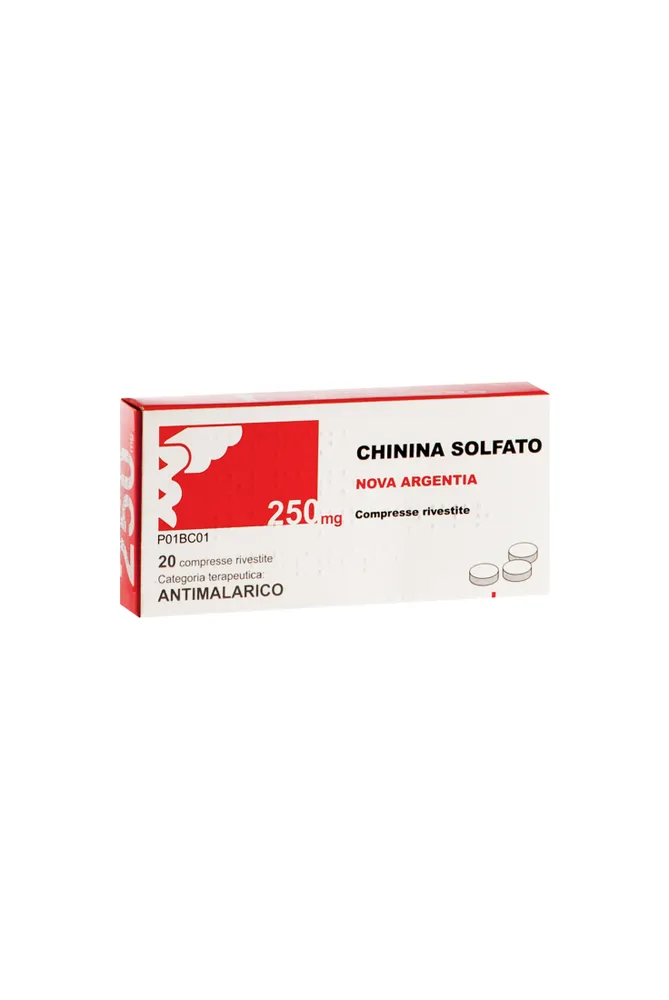
Table of Contents
- Patient Information Leaflet: Information for the Patient
- CHININA SOLFATO NOVA ARGENTIA 250 mg Film-coated Tablets
- 1. What CHININA SOLFATO NOVA ARGENTIA is and what it is used for
- 2. What you should know before taking CHININA SOLFATO NOVA ARGENTIA
- 3. How to take CHININA SOLFATO NOVA ARGENTIA
- 4. Possible side effects
- 5. How to store CHININA SOLFATO NOVA ARGENTIA
- 6. Contents of the package and other information
Patient Information Leaflet: Information for the Patient
CHININA SOLFATO NOVA ARGENTIA 250 mg Film-coated Tablets
Quinine sulfate
Please read this leaflet carefully before taking this medicine because it contains important information for you.
- Keep this leaflet. You may need to read it again.
- If you have any questions, ask your doctor or pharmacist.
- This medicine has been prescribed for you only. Do not give it to other people, even if they have the same symptoms as you, because it could be harmful.
- If you experience any adverse reactions, including those not listed in this leaflet, contact your doctor or pharmacist. See section 4.
Contents of this leaflet:
- What CHININA SOLFATO NOVA ARGENTIA is and what it is used for
- What you need to know before taking CHININA SOLFATO NOVA ARGENTIA
- How to take CHININA SOLFATO NOVA ARGENTIA
- Possible side effects
- How to store CHININA SOLFATO NOVA ARGENTIA
- Contents of the pack and other information
1. What CHININA SOLFATO NOVA ARGENTIA is and what it is used for
CHININA SOLFATO NOVA ARGENTIA contains quinine, a medicine used to treat malaria, a disease caused by parasites of the Plasmodium genus.
This medicine is used for the treatment of uncomplicated cases of malaria (due to strains of Plasmodium falciparum).
2. What you should know before taking CHININA SOLFATO NOVA ARGENTIA
Do not take CHININA SOLFATO NOVA ARGENTIA
- if you are allergic to quinine, to similar medicines (quinine derivatives), or to any of the other ingredients of this medicine (listed in section 6): in this regard, cross-reactivity between quinine and quinidine, used in the treatment of heart problems (cardiac arrhythmias), should be considered;
- if you suffer from myasthenia gravis, a disease causing muscle weakness and fatigue: quinine may worsen muscle weakness;
- if you have low levels of a particular substance (the enzyme glucose-6-phosphate dehydrogenase) because serious blood problems may occur (hemolysis and hemolytic anemia);
- if you suffer from a heart condition called long QT syndrome;
- if you have eye problems (optic neuritis);
- if you have previously experienced allergic reactions (hypersensitivity) after using this medicine; such reactions involve serious problems affecting blood and kidneys (thrombotic thrombocytopenic purpura, hemolytic uremic syndrome, thrombocytopenia, hemoglobinuric fever with acute intravascular hemolysis, hemoglobinuria and hemoglobinemia);
- if you are taking certain specific medicines (see section “Other medicines and CHININA SOLFATO NOVA ARGENTIA”).
Warnings and precautions
Talk to your doctor or pharmacist before taking CHININA SOLFATO NOVA ARGENTIA.
Take this medicine with great caution if you suffer from:
- serious heart problems such as irregular heartbeat (atrial fibrillation, conduction defects, blocks);
- breathing difficulties (asthma);
- a blood disorder called hemoglobinuria;
- inflammation of the optic nerve (optic neuritis);
- a condition characterized by ringing in the ears (tinnitus);
- liver or kidney problems (hepatic or renal insufficiency).
During treatment with CHININA SOLFATO NOVA ARGENTIA, the following may occur:
- a drastic reduction in blood glucose levels, sometimes even fatal (severe hypoglycemia), due to increased production of a hormone called insulin, especially if you are pregnant or have severe and prolonged infections. For this reason, your blood glucose levels (glycemia) will be closely monitored; additionally, preventive administration of a glucose-based medicine (glucose solution) may be necessary.
- a rare and serious allergic reaction (hypersensitivity reaction) called hemoglobinuric fever, characterized by severe problems affecting blood cells (massive hemolysis, hemoglobinemia and hemoglobinuria), which may cause serious, even fatal, kidney problems (renal failure). This condition occurs more frequently in pregnant women.
The administration of CHININA SOLFATO NOVA ARGENTIA together with mefloquine may increase the risk of involuntary muscle contractions (seizures) and disturbances in heart rhythm (arrhythmias).
The use of CHININA SOLFATO NOVA ARGENTIA may alter the results of the following laboratory tests:
- urine color, which may appear darkened;
- blood quinidine levels, which may show a false increase;
- ESR (erythrocyte sedimentation rate), which may show a false decrease;
- determination of certain substances in urine (17-hydroxycorticosteroids, 17-ketosteroids and catecholamines), which may show a false increase.
Other medicines and CHININA SOLFATO NOVA ARGENTIA
Inform your doctor or pharmacist if you are taking, have recently taken, or might take any other medicine.
Do not take CHININA SOLFATO NOVA ARGENTIA if you are taking the following medicines:
- amiodarone, used to treat heart disorders (cardiac arrhythmias);
- astemizole and terfenadine, used as antihistamines;
- thioridazine, primozide, droperidol, used to treat mental illnesses;
- halofantrine, used to treat malaria;
- cisapride, used for stomach problems (gastroesophageal reflux);
- levacetylmethadol, used to treat opioid dependence.
Take this medicine with great caution if you are taking the following medicines:
- mefloquine, used to treat malaria;
- erythromycin, troleandomycin and rifampicin, used to treat bacterial infections (antibiotics);
- saquinavir and ritonavir, used to treat AIDS;
- ketoconazole, used to treat fungal infections;
- cimetidine and ranitidine, used for stomach problems (gastric ulcer);
- carbamazepine, phenobarbital and phenytoin, used to treat a disease characterized by loss of consciousness and uncontrolled muscle movements (epilepsy);
- theophylline and aminophylline, used for breathing problems;
- atorvastatin, used to treat high blood cholesterol;
- desipramine, used to treat depression;
- antacid medicines containing aluminium and/or magnesium, used for stomach acidity;
- acetazolamide, sodium bicarbonate, used for kidney problems;
- urine acidifying agents, used for kidney problems;
- digoxin, used for heart problems (congestive heart failure);
- iloperidone and pimozide, used to treat mental illnesses;
- lapatinib, used to treat breast cancer;
- sunitinib, used to treat kidney cancer;
- quinidine and flecainide, used to treat heart disorders (cardiac arrhythmias);
- pancuronium, succinylcholine and tubocurarine, used for muscle relaxation during surgery;
- cyclosporine, used to reduce the risk of organ rejection after transplantation;
- metformin, used for diabetes;
- warfarin and similar medicines (oral anticoagulants), heparin, used for blood clotting disorders;
- methadone, used in the treatment of drug addiction.
CHININA SOLFATO NOVA ARGENTIA with food and drink
During treatment with CHININA SOLFATO NOVA ARGENTIA, do not consume grapefruit juice because it may increase its toxicity.
Pregnancy and breastfeeding
If you are pregnant, suspect you may be pregnant, planning a pregnancy, or breastfeeding, consult your doctor or pharmacist before taking this medicine.
Pregnancy
Avoid taking this medicine if you are pregnant because it may cause serious harm both to you, such as decreased blood glucose levels (hypoglycemia) or a rare and serious allergic reaction characterized by severe blood cell problems (hemoglobinuric fever), and to the fetus, particularly hearing problems that may lead to deafness (hypoplasia of the auditory nerve).
The use of this medicine is particularly dangerous during the third trimester of pregnancy; however, if your doctor considers it necessary and under their direct supervision, this medicine may be administered in cases of absolute necessity.
Breastfeeding
Avoid taking this medicine if you are breastfeeding because it may cause serious blood disorders in the newborn (severe hemolysis).
Driving and using machines
During treatment with this medicine, vision disturbances may occur. If this happens, avoid driving vehicles or operating machinery.
CHININA SOLFATO NOVA ARGENTIA contains sucrose
This medicine contains sucrose, a type of sugar. If your doctor has diagnosed you with an intolerance to certain sugars, contact them before taking this medicine.
3. How to take CHININA SOLFATO NOVA ARGENTIA
Take this medicine exactly as directed by your doctor or pharmacist. If you have
any doubts, consult your doctor or pharmacist.
Your doctor will determine the most appropriate dose for you based on your health condition.
The recommended dose is 2–3 tablets (500–750 mg) every 8 hours for 10–14 days when
the infection is caused by chloroquine-resistant strains.
For other malaria infections, the recommended dose ranges from 1 to 4 tablets (250–1000 mg) every 8 hours
for 6–12 days.
Use in children
The doctor will adjust the dosage according to the child's body weight. The recommended dose is 8.3
milligrams of quinine per kilogram of body weight every 8 hours.
Use in patients with kidney problems (renal impairment)
In patients with kidney problems (severe chronic renal failure), the recommended dosage includes
a single loading dose of 2 tablets (500 mg), followed after 12 hours by maintenance doses of 1
tablet (250 mg) every 12 hours.
Use in patients with liver problems (hepatic impairment)
In patients with mild to moderate hepatic impairment, no dose adjustment is required.
If you take more CHININA SOLFATO NOVA ARGENTIA than you should
In case of accidental ingestion or overdose of CHININA SOLFATO NOVA ARGENTIA, contact your doctor immediately or go to the nearest hospital.
Symptoms of overdose may include:
- Vision problems (visual disturbances and impaired color perception, blurred vision, blindness)
- Decreased blood glucose levels (hypoglycemia)
- Serious heart and circulatory problems (cardiac arrhythmia, hypotension, circulatory collapse, sinus tachycardia, PR interval prolongation, T-wave inversion, bundle branch block and QT interval prolongation, worsening of myocardial depression due to reduced coronary perfusion, cardiogenic shock and circulatory collapse, ventricular arrhythmia, ventricular tachycardia, ventricular fibrillation, idioventricular rhythm, torsades de pointes, bradycardia and atrioventricular block, reduced rate of depolarization and conduction, increased action potential and refractory period)
- Drowsiness, loss of consciousness, loss of muscle coordination (ataxia), uncontrolled muscle movements (convulsions), coma, death
- Respiratory problems (respiratory depression, pulmonary edema, and adult respiratory distress syndrome)
Treatment with CHININA SOLFATO NOVA ARGENTIA, even at therapeutic doses, may cause a clinical condition known as cinchonism. In mild forms, this is characterized by hearing problems (tinnitus), headache (cephalalgia), nausea, visual disturbances (blurred vision, scotomas, photophobia, altered color perception), dizziness, breathing difficulties (dyspnea), and fever. Continuing treatment or taking high single doses may additionally cause: gastrointestinal symptoms (vomiting, abdominal pain, diarrhea), heart problems (sinus arrest, junctional rhythm, atrioventricular block, ventricular tachycardia and fibrillation), skin reactions (warm and flushed skin, rashes), respiratory depression, mental confusion, involuntary muscle contractions (convulsions), and worsening of visual disturbances (including temporary blindness).
If you forget to take CHININA SOLFATO NOVA ARGENTIA
If you forget to take a dose of this medicine, take it as soon as you remember, unless it is almost time for your next dose. Do not take a double dose to make up for the missed dose.
If you have any doubts about how to use this medicine, consult your doctor or pharmacist.
4. Possible side effects
Like all medicines, this medicine can cause side effects, although not everyone will experience them.
The following adverse reactions may occur.
Frequency not known (frequency cannot be estimated from the available data):
- heart problems, even serious ones (angina pectoris, torsades de pointes, ventricular arrhythmias, atrial fibrillation, atrioventricular conduction disturbances) and blood circulation disorders (vasculitis);
- a severe drop in blood pressure (severe hypotension);
- skin disorders (erythema multiforme, skin rashes, facial edema, angioedema, transient skin redness, pruritus, photosensitivity, excessive sweating, toxic epidermal necrolysis also known as Lyell's syndrome, thrombotic thrombocytopenic purpura);
- reduced levels of glucose in the blood (hypoglycemia);
- difficulty swallowing (dysphagia), stomach (epigastric) and abdominal pain, nausea and vomiting;
- reduced number of blood cells (pancytopenia, thrombocytopenia, leukopenia, agranulocytosis), inherited blood disorder (porphyria), destruction of red blood cells (hemolysis), blood coagulation disorders (coagulopathy, disseminated intravascular coagulation), deficiency of a blood substance called prothrombin (hypoprothrombinemia), a condition characterized by impaired oxygen transport in the blood (methemoglobinemia), reduced bone marrow function (myelosuppression);
- severe liver damage (cholestatic hepatitis and granulomatous hepatitis);
- immune system disorders, allergic reactions (hypersensitivity reactions), itching and skin redness (urticarial, papular, scarlatiniform rashes), swelling (angioedema, especially of the face), skin sensitivity to light (photosensitivity), immune system disorders (lupus anticoagulant);
- muscle weakness and fatigue (myasthenia gravis);
- nervous system disorders, anxiety, confusion, headache (migraine, cephalalgia), agitation, restlessness, loss of consciousness (syncope), dizziness, involuntary muscle contractions (seizures);
- vision problems (abnormal color vision, blurred vision, diplopia, nystagmus, photophobia, scotoma, visual disturbances, narrowing of the visual field, night blindness, temporary blindness, mydriasis, and rarely, blindness);
- hearing problems (ototoxicity, tinnitus, hypoacusis, and generally reversible deafness);
- kidney problems, even severe ones (hemoglobinuric fever, hemolytic-uremic syndrome, interstitial nephritis, nephrotoxicity, hemoglobinuria, acute renal failure);
- breathing problems (asthma, pulmonary infiltrate, respiratory depression, dyspnea);
- cinchonism, a condition characterized by various symptoms affecting vision and hearing, heart, stomach and intestines, breathing difficulties, and nervous system problems (See section “If you take more CHININA SOLFATO NOVA ARGENTIA than you should”).
Reporting of side effects
If you experience any side effect, including those not listed in this leaflet, please inform your doctor or pharmacist. You can also report side effects directly via the national reporting system at www.agenziafarmaco.gov.it/content/come-segnalare-una-sospetta-reazione-avversa.
By reporting side effects, you can help provide more information on the safety of this medicine.
5. How to store CHININA SOLFATO NOVA ARGENTIA
Keep this medicine out of the sight and reach of children.
Do not use this medicine after the expiry date stated on the packaging after "Expiry".
The expiry date refers to the last day of that month.
Store this medicine in the original packaging and protect it from light.
Do not dispose of medicines via wastewater or household waste. Ask your pharmacist how to dispose of medicines you no longer use. This will help protect the environment.
6. Contents of the package and other information
What CHININA SOLFATO NOVA ARGENTIA contains
- The active substance is chininum sulphate. Each tablet contains 250 mg of chininum sulphate.
- The other components are: maize starch, talc, magnesium stearate, sodium starch glycolate, precipitated silica, microcrystalline cellulose. Excipients in the coating: shellac, castor oil, gum arabic, gelatin, talc, titanium dioxide, precipitated silica, heavy magnesium carbonate, sucrose, carnauba wax.
Description of the appearance of CHININA SOLFATO NOVA ARGENTIA and contents of the pack
Pack containing 20 coated tablets.
Marketing Authorization Holder
Industria Farmaceutica NOVA ARGENTIA S.p.A. - Piazza Sant’Angelo, 1 - Milano
Manufacturer
Industria Farmaceutica NOVA ARGENTIA S.p.A. - Via G. Pascoli, 1 - Gorgonzola - Milano