Questran
Italy
Table of Contents
Package leaflet: Information for the patient
QUESTRAN 4 g oral suspension powder
Cholestyramine
Please read this leaflet carefully before taking this medicine because it contains important information for you.
- Keep this leaflet. You may need to read it again.
- If you have any questions, ask your doctor or pharmacist.
- This medicine has been prescribed for you only. Do not give it to other people, even if their symptoms are the same as yours, because it could be harmful.
- If you experience any side effects, including those not listed in this leaflet, contact your doctor or pharmacist. See section 4.
Contents of this leaflet:
- What Questran is and what it is used for
- What you need to know before taking Questran
- How to take Questran
- Possible side effects
- How to store Questran
- Contents of the pack and other information
1. What Questran is and what it is used for
Questran contains cholestyramine, which belongs to a group of medicines known as bile acid sequestrants.
Questran is indicated to reduce blood cholesterol levels in patients:
- with excess cholesterol not associated with any other disease (primary hypercholesterolemia)
- with excess cholesterol associated with high levels of triglycerides in the blood (hypercholesterolemia associated with hypertriglyceridemia), when hypercholesterolemia is the main therapeutic concern. Therefore, Questran is not indicated when the primary abnormality is hypertriglyceridemia alone
- with excess cholesterol that cannot be controlled by diet alone. Questran is also indicated to relieve itching associated with partial blockage of the bile ducts (the system that transports bile produced by the liver).
2. What you need to know before taking Questran
Do not take Questran
- If you are allergic to cholestyramine or any of the other ingredients of this medicine (listed in section 6).
- If you have complete biliary obstruction, as Questran cannot exert any activity if bile is not released into the intestine.
- If you have phenylketonuria, a condition characterized by the accumulation of phenylalanine in body tissues and fluids, because Questran contains aspartame, a source of phenylalanine (see section “Questran contains aspartame”).
- If you are pregnant, suspect you may be pregnant, or are breastfeeding (see section “Pregnancy and breastfeeding”).
Warnings and precautions
Talk to your doctor or pharmacist before taking Questran.
Inform your doctor:
- if you have high blood cholesterol levels due to the following conditions (secondary hypercholesterolemia):
- hypothyroidism (underactivity of the thyroid gland, resulting in insufficient production of thyroid hormones),
- diabetes mellitus (a disorder affecting blood sugar levels),
- nephrotic syndrome (a kidney disorder causing protein loss in the urine),
- dysproteinemia (an abnormality in the amount and quality of blood proteins),
- obstruction of the hepatic ducts (the bile transport system). In such cases, your doctor will initiate appropriate treatments and advise you to follow a suitable diet, monitor your body weight, and manage any other conditions contributing to hypercholesterolemia;
- if you suffer from constipation, as cholestyramine may worsen it; in case of constipation, your doctor may reduce the dose of cholestyramine due to the risk of fecal impaction;
- if you show signs of coronary artery disease (blood vessels supplying the heart), in which case straining during defecation should be avoided. In such cases, your doctor will adjust the dose of Questran to prevent constipation.
During the first months of treatment, your doctor will frequently monitor your blood cholesterol levels; subsequently, periodic checks may be recommended. Your doctor will also monitor your blood triglyceride levels to detect any significant changes.
If you have been taking Questran for a long time:
- your doctor may consider supplementing your diet with Vitamins A, D, and K, as the medicine may interfere with the digestion and absorption of fats and fat-soluble vitamins (Vitamins A, D, K, and K), increasing the risk of bleeding due to Vitamin K deficiency;
- your doctor may consider administering folic acid, as reduced serum or red blood cell folate levels (a B-group vitamin) may occur;
- high doses of Questran (cholestyramine) may lead to hyperchloremic acidosis (accumulation of acids in the body due to excessive fluid loss), particularly in children, small patients, and those with impaired renal function;
- Questran may increase urinary calcium excretion and, due to possible interference with Vitamin D absorption, may increase the risk of osteoporosis (reduced bone mass and deterioration of bone tissue).
Possible consequences of hypercholesterolemia
Individuals with high blood cholesterol levels (hypercholesterolemia) may at any time experience:
- xanthomas (fatty deposits in the skin),
- arteritis (inflammation of arteries),
- thrombophlebitis (inflammation of superficial veins leading to blood clot formation),
- myocardial infarction (death of part of the heart muscle),
- myocardial ischemia (inadequate blood supply to the heart muscle),
- edema (fluid accumulation in tissues),
- uveitis (inflammation of the eyes),
- paresthesia (altered sensation in limbs or other body parts),
- claudication (limping),
- muscle pain,
- dyspnea (shortness of breath),
- dizziness,
- somnolence (drowsiness),
- fatigue.
These symptoms may also occur during treatment with Questran and are not related to taking the medicine.
Children and adolescents
Your doctor will exercise caution when prescribing Questran to patients under 18 years of age, as long-term effects in this age group are unknown. Possible effects of Questran on the absorption of vitamins and electrolytes should be considered (see Warnings and precautions).
Other medicines and Questran
Inform your doctor or pharmacist if you are currently taking, have recently taken, or might take any other medicines.
Inform your doctor if you are taking:
- phenylbutazone (a medicine used to treat pain and inflammation),
- non-steroidal anti-inflammatory drugs (diclofenac, meloxicam, piroxicam, sulindac, tenoxicam),
- warfarin, phenprocoumon (medicines used to prevent blood clots),
- thiazide diuretics (hydrochlorothiazide) and loop diuretics such as furosemide (diuretic medicines),
- tetracyclines, benzylpenicillin (antibiotics),
- phenobarbital, valproate (medicines used in the treatment of epilepsy to control uncontrolled body movements and seizures),
- thyroid preparations and thyroxine (Levothyroxine, liotyronine, thyroid extract) – medicines used to treat thyroid dysfunction,
- digitalis (digitoxin, digoxin) (medicines used to treat heart failure),
- antiarrhythmic agents (amiodarone),
- antimetabolites (methotrexate),
- bile acids (ursodeoxycholic acid),
- cholesterol-lowering agents (bezafibrate, ezetimibe, fluvastatin, pravastatin),
- estrogens and combined oral contraceptives (ethinylestradiol),
- leflunomide, mycophenolate (medicines that reduce the activity of the immune system),
- nicotinic acid,
- raloxifene (an estrogen modulator).
The list above may not be complete.
Questran may delay or reduce the absorption of these medicines. Your doctor will advise you to take the above-listed medicines either 1 hour before or 4–6 hours after taking Questran, and in any case at the maximum possible interval.
Additionally, if you are taking digitalis and interrupt or restart treatment with Questran, increased absorption of digitalis may occur, posing a health risk.
Furthermore, inform your doctor if you are taking:
- oral anticoagulants (medicines used to prevent blood clotting),
- medicines that undergo enterohepatic circulation (such as estrogens), as Questran may interfere with their activity.
Pregnancy and breastfeeding
If you are pregnant, suspect you may be pregnant, plan to become pregnant, or are breastfeeding, do not take Questran.
Questran may be harmful to the fetus if taken during pregnancy. If taken during breastfeeding, interference with the absorption of fat-soluble vitamins in the mother may also affect the infant.
Driving and using machines
Questran does not appear to have a negative effect on driving or operating machinery.
This medicine contains 32.5 mg of propylene glycol per sachet.
If you have liver or kidney disease, do not take this medicine unless advised by your doctor.
Your doctor may perform additional monitoring during treatment.
If the child is under 5 years of age, speak with your doctor or pharmacist before administering this medicine, especially if the child is taking other medicines containing propylene glycol or alcohol.
This medicine contains 30 mg of aspartame per sachet.
Aspartame is a source of phenylalanine. It may be harmful if you have phenylketonuria, a rare genetic disorder causing phenylalanine accumulation because the body cannot properly metabolize it (see section “Do not take Questran”).
3. How to take Questran
Take this medicine exactly as your doctor or pharmacist has told you. If you are unsure, consult your doctor or pharmacist.
The recommended dose to lower blood cholesterol levels ranges from 1 to 6 sachets daily. Your doctor will determine the optimal dose based on the severity of your condition.
The recommended dose to relieve itching associated with partial blockage of the bile ducts is 1–2 sachets daily.
Take Questran before meals.
If you are taking other medicines, the timing of your Questran dose may need to be adjusted to avoid interactions (see section “Other medicines and Questran”).
During the first months of treatment, and if your doctor increases your dose, you will be asked to undergo periodic blood tests to monitor your levels of cholesterol, triglycerides, fats, and lipoproteins (combinations of proteins and fats).
Use in children and adolescents
Your doctor will be cautious when prescribing Questran to patients under 18 years of age, as the long-term effects in this age group are unknown.
The dose will be determined by the doctor based on the child's health status. Treatment usually starts with one dose daily. The doctor will increase the dose every 5–6 days until the appropriate dose for your child is reached.
Instructions for use
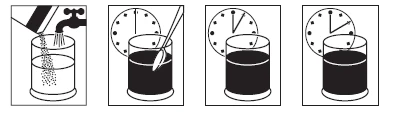
- Do not take Questran in its dry powder form.
- Mix the contents of the Questran sachet with water, fully skimmed milk, or fruit juice in a glass.
- Stir well with a teaspoon.
- Wait 10 minutes before drinking, to allow the powder to absorb the liquid and form a homogeneous suspension.
Duration of treatment
Your doctor will determine how long you should take this medicine.
If you take more Questran than you should
If you accidentally take too much Questran, contact your doctor or the nearest hospital immediately.
The main risk of an overdose of Questran is a possible blockage of the intestinal tract.
If you forget to take Questran
Do not take a double dose to make up for a forgotten dose.
If you have any questions about the use of this medicine, consult your doctor or pharmacist.
4. Possible side effects
Like all medicines, this medicine can cause side effects, although not everybody gets them.
The most common side effects are limited to the gastrointestinal tract (stomach and intestine).
Constipation is the most frequent effect. If you are elderly (over 60 years of age) or are being treated with high doses, you are more likely to experience constipation. Many cases of constipation are mild, transient and manageable with conventional therapies. If you experience constipation, consult your doctor, who will evaluate whether a dose reduction or treatment interruption is necessary, to prevent worsening of haemorrhoidal disorders (dilation of veins in the rectum and anus) or intestinal obstruction.
If you suffer from coronary heart disease (blood vessels supplying the heart), you should avoid complications associated with severe constipation.
Other possible side effects, whose frequency is unknown, include:
Effects affecting the mouth, stomach and intestine
- Abdominal pain and distension
- Excessive gas formation in the stomach or intestine (flatulence)
- Nausea
- Vomiting
- Diarrhoea
- Burning sensation behind the breastbone (heartburn)
- Digestive difficulties (dyspepsia) and passage of stools with excessive undigested fat content (steatorrhoea)
- Acute abdominal disorders due to formation of a pasty mass in the transverse colon
- Bleeding from the stomach and intestine
- Dark stools
- Bleeding due to haemorrhoids and/or lesions of the inner walls of the stomach and duodenum (gastroduodenal ulcers)
- Difficulty or pain when swallowing (dysphagia)
- Hiccups
- Exacerbation of gastroduodenal ulcer
- Altered taste
- Inflammation of the pancreas (pancreatitis)
- Pain and bleeding in the rectum (terminal portion of the intestine)
- Inflammation of one or more diverticula, small pouches forming in the terminal part of the intestine (diverticulitis)
- Release of air from the mouth (eructation)
- Bleeding gums
- Dental caries
Effects affecting metabolism and glands
- Loss of appetite or reduced appetite (anorexia)
- Tendency to bleed due to reduced blood protamine content (vitamin K deficiency)
- Deficiency of vitamin A (reduced night vision) and vitamin D
- Changes in body weight
- Syndrome causing fluid retention leading to swelling (oedema)
- Increased sexual desire
- Enlargement of glands (glandular swelling)
- Accumulation of acids in the body caused by excessive fluid loss (hyperchloremic acidosis) in children and patients with impaired kidney function
Effects affecting the liver and bile
- Formation of calcium-rich aggregates, with calcification of the gallbladder (however, this may not be related to Questran use, but rather to pre-existing liver damage)
- Severe abdominal pain caused by solid aggregates (gallstones) in the bile ducts (biliary colic)
Effects affecting the skin
- Skin irritations and lesions, of the tongue and the area around the anus
Effects affecting diagnostic tests
- Abnormal liver function
Effects affecting the blood
- Increased or decreased prothrombin time (the time it takes for blood to clot)
- Bleeding into subcutaneous tissues due to bruising (ecchymoses)
- Reduced haemoglobin levels in the blood (anaemia)
Effects affecting the immune system, the body's defence system
- Appearance of red or white wheals of various sizes, possibly accompanied by itching (urticaria)
- Asthma
- Shortness of breath (dyspnoea)
- Contraction of the muscles lining the airways, making breathing difficult (bronchospasm)
Effects affecting muscles and bones
- Back pain (lumbago)
- Muscle and joint pain
- Chronic inflammation of the joints causing pain and swelling (arthritis)
- Reduced bone mass and deterioration of bone tissue (osteoporosis)
Effects affecting the nervous system
- Headache
- Anxiety
- Dizziness
- Balance disorders
- Loss of strength or muscle weakness (asthenia)
- Unpleasant ringing sensation in the ears (tinnitus)
- Temporary loss of consciousness (syncope)
- Drowsiness
- Severe pain caused by inflammation of one or more nerves in the thigh (femoral neuralgia)
- Altered sensation in limbs or other body parts (paraesthesia)
Effects affecting the eyes
- Inflammation of the eye (uveitis)
Effects affecting the kidneys and urinary tract
- Presence of blood in the urine (haematuria)
- Difficult urination (dysuria)
- "Burnt" odour in the urine
- Urine excretion (diuresis)
Reporting of side effects
If you experience any side effect, including those not listed in this leaflet, talk to your doctor or pharmacist. You can also report side effects directly via the national reporting system at https://www.aifa.gov.it/content/segnalazioni-reazioni-avverse.
By reporting side effects, you can help provide more information on the safety of this medicine.
5. How to store Questran
Keep in the original packaging.
Keep this medicine out of the sight and reach of children.
Do not use this medicine after the expiry date which is stated on the carton after "Exp.".
The expiry date refers to the last day of that month.
Do not dispose of any medicine via wastewater or household waste. Ask your pharmacist how to dispose of medicines you no longer use. This will help protect the environment.
6. Package contents and other information
What Questran contains
- The active substance is cholestyramine chloride. Each sachet contains 4 g of cholestyramine.
- The other components are: propylene glycol alginate, anhydrous citric acid, orange flavour, xanthan gum, aspartame (see section “Questran contains aspartame”) and anhydrous colloidal silica.
Description of the appearance of Questran and contents of the pack
Oral suspension powder supplied in sachets. Each carton contains 12 sachets.
Marketing Authorisation Holder
CHEPLAPHARM Arzneimittel GmbH
Ziegelhof 24
17489 Greifswald
Germany
Manufacturer:
Farmea
10, rue Bouchè Thomas, ZAC d'Orgemont
Angers - France
[O]
ITC Farma S.r.l
Via Pontina, 5
00071 Pomezia (RM)
Italy