QDENGA
Italy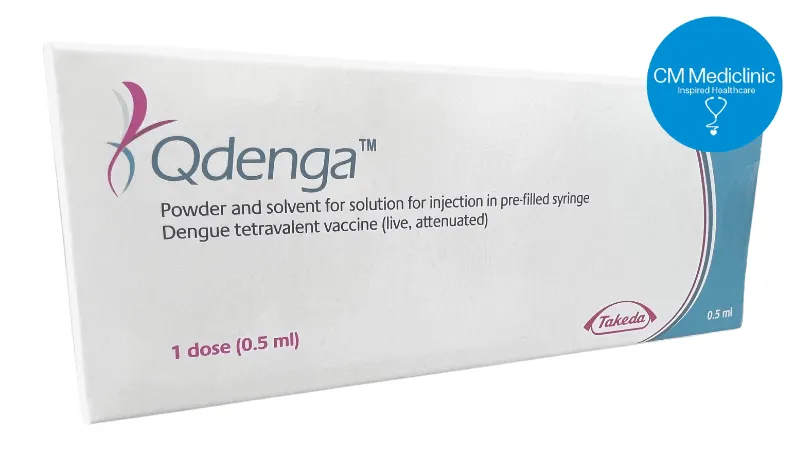
Table of Contents
- Package leaflet: Information for the user
- Qdenga powder and solvent for solution for injection
- 1. What Qdenga is and what it is used for
- 2. What you should know before you or your child receive Qdenga
- 3. How Qdenga is administered
- 4. Possible side effects
- 5. How to store Qdenga
- 6. Package contents and other information
- The following information is intended exclusively for healthcare professionals:
- Package leaflet: Information for the user
- Qdenga powder and solvent for injectable solution in a pre-filled syringe
- 1. What Qdenga is and what it is used for
- 2. What you should know before you or your child receive Qdenga
- 3. How Qdenga is administered
- 4. Possible side effects
- 5. How to store Qdenga
- 6. Package contents and other information
- The following information is intended exclusively for healthcare professionals:
Package leaflet: Information for the user
Qdenga powder and solvent for solution for injection
Tetravalent dengue vaccine (live, attenuated)
This medicinal product is subject to additional monitoring. This will allow rapid identification of new safety information. You can help by reporting any side effects you experience while taking this medicine. See the end of section 4 for information on how to report side effects.
Please read this leaflet carefully before you or your child are vaccinated as it contains important information for you.
- Keep this leaflet. You may need to read it again.
- If you have any questions, ask your doctor, pharmacist or nurse.
- This medicine has been prescribed for you or your child only. Do not give it to others.
- If you or your child experience any side effects, including those not listed in this leaflet, tell your doctor, pharmacist or nurse. See section 4.
Contents of this leaflet
- What Qdenga is and what it is used for
- What you need to know before you or your child are given Qdenga
- How Qdenga is given
- Possible side effects
- How to store Qdenga
- Contents of the pack and other information
1. What Qdenga is and what it is used for
Qdenga is a vaccine. It is used to protect you or your child against dengue. Dengue is a disease
caused by serotypes 1, 2, 3 and 4 of the dengue virus. Qdenga contains weakened versions of these 4
dengue virus serotypes, modified so they cannot cause the disease.
Qdenga is administered to adults, adolescents and children (from 4 years of age).
Qdenga must be used in accordance with official recommendations.
How the vaccine works
Qdenga stimulates the body's natural defences (immune system). This will help protect you
against the viruses that cause dengue if your body is exposed to them in the future.
What is dengue
Dengue is caused by a virus.
- The virus spreads through mosquitoes (Aedes mosquitoes).
- If a mosquito bites someone with dengue, it can transmit the virus to other people it bites later. Dengue is not transmitted directly from person to person.
Signs of dengue include fever, headache, pain behind the eyes, muscle and joint pain, nausea and vomiting, swollen glands or rash. Symptoms of dengue usually last for 2–7 days. You may also be infected with the dengue virus without showing any signs of the disease.
Occasionally, dengue can be severe enough to require hospitalisation for you or your child, and rarely, it can cause death. Severe dengue can cause high fever and one or more of the following symptoms: severe abdominal (stomach) pain, persistent vomiting, rapid breathing, severe bleeding, bleeding into the stomach, bleeding from the gums, fatigue, restlessness, coma, seizures and organ failure.
2. What you should know before you or your child receive Qdenga
To ensure that Qdenga is suitable for you or your child, it is important to consult your doctor,
pharmacist, or nurse if any of the following apply to you or your child. If you do not understand something, please do not hesitate to ask your doctor, pharmacist, or nurse for clarification.
Do not use Qdenga if you or your child
- are allergic to the active substances or to any of the other ingredients of Qdenga (listed in section 6).
- have had an allergic reaction after previous administration of Qdenga. Signs of an allergic reaction include itchy rash, difficulty breathing, and swelling of the face and tongue.
- have a weakened immune system (the body's natural defences). This may be due to a genetic defect or HIV infection.
- are taking a medicine that affects the immune system (such as high-dose corticosteroids or chemotherapy). Your doctor will not use Qdenga until a certain period of time has passed after stopping treatment with such medicine.
- are pregnant or breastfeeding. Do not use Qdenga if any of the above conditions apply to you.
Warnings and precautions
Talk to your doctor, pharmacist, or nurse before receiving Qdenga if you or your child:
- have an infection with fever. Vaccination may need to be postponed until recovery.
- have previously experienced any health problems after vaccination. Your doctor will carefully assess the risks and benefits of vaccination.
- have ever fainted following an injection. Dizziness, fainting, and sometimes falling may occur following or even before any needle injection, especially in young people.
Important information about protection provided
Like any vaccine, Qdenga may not protect all individuals who receive it, and protection may decrease over time. You may still contract dengue fever following mosquito bites, including severe dengue disease. You must continue to protect yourself or your child from mosquito bites even after vaccination with Qdenga.
After vaccination, you should contact a doctor if you think you or your child may have contracted dengue infection and experience any of the following symptoms: high fever, severe abdominal pain, persistent vomiting, rapid breathing, bleeding gums, fatigue, restlessness, or blood in vomit.
Additional protective precautions
You should take precautions against mosquito bites. This includes using insect repellents, wearing protective clothing, and using mosquito nets.
Younger children
Qdenga must not be given to children under 4 years of age.
Other medicines and Qdenga
Qdenga may be administered at the same visit together with hepatitis A vaccine, yellow fever vaccine, or human papillomavirus vaccine, provided each is given at a separate injection site (in another part of the body, usually the other arm).
Tell your doctor or pharmacist if you or your child are taking, have recently taken, or might take any other vaccine or medicine.
In particular, inform your doctor or pharmacist if you or your child are taking any of the following:
- medicines that affect the body's natural defences (immune system), such as high-dose corticosteroids or chemotherapy. In this case, your doctor will not use Qdenga until a certain period of time has passed after stopping treatment, because Qdenga may not work as intended.
- medicines known as “immunoglobulins” or blood products containing immunoglobulins, such as blood or plasma. In this case, your doctor will not use Qdenga until at least 6 weeks, and preferably 3 months, have passed since the last dose of such products, because Qdenga may not work as intended.
Pregnancy and breastfeeding
Do not use Qdenga if you or your daughter are pregnant or breastfeeding. If you or your daughter:
- are of childbearing age, you must take necessary precautions to avoid pregnancy for at least one month after vaccination with Qdenga.
- think you may be pregnant or are planning a pregnancy, consult your doctor, pharmacist, or nurse before using Qdenga.
Driving and using machines
Qdenga may slightly affect the ability to drive and use machines in the first few days after vaccination.
Qdenga contains sodium and potassium
Qdenga contains less than 1 mmol (23 mg) of sodium per 0.5 mL dose, i.e., essentially “sodium-free”.
Qdenga contains potassium, less than 1 mmol (39 mg) per 0.5 mL dose, i.e., essentially “potassium-free”.
3. How Qdenga is administered
Qdenga is administered by a doctor or nurse through an injection under the skin (subcutaneous injection) in the upper arm. It must not be injected into a blood vessel.
You or your child will receive 2 injections.
The second injection is given 3 months after the first injection.
There is no data available in adults over 60 years of age. Please consult your doctor for advice on the potential benefits of treatment with Qdenga for you.
Qdenga must be used in accordance with official recommendations.
The instructions for preparing the vaccine, intended exclusively for doctors and healthcare professionals, are included at the end of the package leaflet.
If you or your child miss an injection of Qdenga
- If you or your child miss a scheduled injection, the doctor will decide when the missed injection should be given. It is important that you or your child follow the doctor's, pharmacist's or nurse's instructions regarding the next injection.
- If you forget or are unable to attend on the scheduled day, consult your doctor, pharmacist or nurse for advice. If you have any doubts about the use of this vaccine, consult your doctor, pharmacist or nurse.
4. Possible side effects
Like all medicines, Qdenga can cause side effects, although not everybody gets them.
Severe allergic reaction (anaphylactic)
Contact a doctor immediately if any of the following symptoms occur after leaving the place where you or your child received the injection:
- difficulty breathing
- bluish colour of the tongue or lips
- rash
- swelling of the face or throat
- low blood pressure causing dizziness or fainting
- sudden and severe feeling of illness or discomfort with a drop in blood pressure causing dizziness and loss of consciousness, rapid heartbeat associated with breathing difficulties
These signs or symptoms (anaphylactic reactions) usually develop immediately after the injection, while you or your child are still at the healthcare facility or doctor's office. They may very rarely also occur after receiving any vaccine.
The following side effects occurred during studies in children, adolescents and adults.
Very common (may affect more than 1 in 10 people):
- pain at injection site
- headache
- muscle pain
- redness at injection site
- general feeling of being unwell
- weakness
- nose or throat infections
- fever
Common (may affect up to 1 in 10 people):
- swelling at injection site
- pain or inflammation of nose or throat
- bruising at injection site
- itching at injection site
- inflammation of throat and tonsils
- joint pain
- flu-like illness
Uncommon (may affect up to 1 in 100 people):
- diarrhoea
- nausea
- stomach pain
- vomiting
- bleeding at injection site
- feeling mentally dazed
- itchy skin
- rash, including blotchy or itchy rash
- hives (urticaria)
- tiredness
- changes in skin colour at injection site
- respiratory tract inflammation
- runny nose
Rare (may affect up to 1 in 1,000 people):
- small red or purple spots under the skin (petechiae)
Very rare (may affect up to 1 in 10,000 people):
- rapid swelling under the skin in areas such as face, throat, arms and legs
- low levels of platelets in the blood (thrombocytopenia)
Not known (frequency cannot be estimated from the available data):
- sudden and severe allergic reaction (anaphylactic), with breathing difficulties, swelling, dizziness, rapid heartbeat, sweating and loss of consciousness
- eye pain
Additional side effects in children aged between 4 and 5 years:
Very common (may affect more than 1 in 10 people):
- reduced appetite
- feeling sleepy
- irritability
Reporting of side effects
If you experience any side effects, including those not listed in this leaflet, please inform your doctor, pharmacist or nurse. You can also report side effects directly through the national reporting system listed in Annex V. By reporting side effects, you can help provide more information on the safety of this medicine.
5. How to store Qdenga
Keep Qdenga out of the sight and reach of children.
Do not use Qdenga after the expiry date stated on the carton after Exp. The expiry date refers to the last day of that month.
Store in a refrigerator (2 °C – 8 °C).
Do not freeze.
Keep the vaccine in the outer carton.
After mixing (reconstitution) with the supplied solvent, Qdenga must be used immediately. If not used immediately, Qdenga must be used within 2 hours.
Do not dispose of any medicine via wastewater or household waste. Ask your pharmacist how to dispose of medicines you no longer use. This will help protect the environment.
6. Package contents and other information
What Qdenga contains
- After reconstitution, one dose (0.5 mL) contains: Dengue virus serotype 1 (live, attenuated)*: ≥3.3 log10 PFU**/dose
Dengue virus serotype 2 (live, attenuated)#: ≥2.7 log10 PFU**/dose
Dengue virus serotype 3 (live, attenuated)*: ≥4.0 log10 PFU**/dose
Dengue virus serotype 4 (live, attenuated)*: ≥4.5 log10 PFU**/dose
*Produced in Vero cells using recombinant DNA technology. Serotype-specific surface protein genes engineered into the dengue type 2 backbone. This product contains genetically modified organisms (GMOs).
#Produced in Vero cells using recombinant DNA technology.
**PFU = Plaque-forming units
- Other components are: α,α-trehalose dihydrate, poloxamer 407, human serum albumin, monobasic potassium phosphate, dibasic sodium phosphate, potassium chloride, sodium chloride, water for injections.
Description of the appearance of Qdenga and package contents
Qdenga is a powder and solvent for injectable solution. Qdenga is supplied as a powder in a single-dose vial and a solvent in a separate single-dose vial.
The powder and solvent must be mixed before use.
Qdenga powder and solvent for solution for injection is available in pack sizes of 1 or 10.
Not all pack sizes may be marketed.
The powder is a compact mass, white to off-white in colour.
The solvent (0.22% sodium chloride solution) is a clear, colourless liquid.
After reconstitution, Qdenga is a clear solution, colourless to pale yellow, and practically free from foreign particles.
Marketing Authorisation Holder and Manufacturer
Marketing Authorisation Holder
Takeda Pharmaceuticals International AG Ireland Branch
Block 2 Miesian Plaza
50-58 Baggot Street Lower
Dublin 2
D02 HW68
Ireland
Manufacturer
Takeda GmbH
Production site Singen
Robert-Bosch-Str. 8
78224 Singen
Germany
For further information on this medicinal product, please contact the local representative of the Marketing Authorisation Holder:
België/Belgique/Belgien Lietuva
Takeda Belgium NV Takeda, UAB
Tél/Tel: +32 2 464 06 11 Tel: +370 521 09 070
[email protected] [email protected]
България Luxembourg/Luxemburg
Такеда България Takeda Belgium NV
Тел: +359 2 958 27 36 Tél/Tel: +32 2 464 06 11
[email protected] [email protected]
Česká republika Magyarország
Takeda Pharmaceuticals Czech Republic s.r.o. Takeda Pharma Kft.
Tel: +420 234 722 722 Tel: +36 1 270 7030
[email protected] [email protected]
Danmark Malta
Takeda Pharma A/S Takeda HELLAS S.A.
Tlf.: +45 46 77 10 10 Tel: +30 210 6387800
[email protected] [email protected]
Deutschland Nederland
Takeda GmbH Takeda Nederland B.V.
Tel: +49 (0) 800 825 3325 Tel: +31 20 203 5492
[email protected] [email protected]
Eesti Norge
Takeda Pharma AS Takeda AS
Tel: +372 6177 669 Tlf: 800 800 30
[email protected] [email protected]
Ελλάδα Österreich
Takeda ΕΛΛΑΣ Α.Ε. Takeda Pharma Ges.m.b.H.
Τηλ: +30 210 6387800 Tel: +43 (0) 800-20 80 50
[email protected] [email protected]
España Polska
Takeda Farmacéutica España, S.A. Takeda Pharma sp. z o.o.
Tel: +34 917 90 42 22 Tel: +48 22 306 24 47
[email protected] [email protected]
France Portugal
Takeda France SAS Takeda Farmacêuticos Portugal, Lda.
Tél: +33 1 40 67 33 00 Tel: +351 21 120 1457
[email protected] [email protected]
Hrvatska România
Takeda Pharmaceuticals Croatia d.o.o. Takeda Pharmaceuticals SRL
Tel: +385 1 377 88 96 Tel: +40 21 335 03 91
[email protected] [email protected]
Ireland Slovenija
Takeda Products Ireland Ltd. Takeda Pharmaceuticals farmacevtska družba d.o.o.
Tel: 1800 937 970 Tel: +386 (0) 59 082 480
[email protected] [email protected]
Ísland Slovenská republika
Vistor hf. Takeda Pharmaceuticals Slovakia s.r.o.
Sími: +354 535 7000 Tel: +421 (2) 20 602 600
[email protected] [email protected]
Italia Suomi/Finland
Takeda Italia S.p.A. Takeda Oy
Tel: +39 06 502601 Puh/Tel: 0800 774 051
[email protected] [email protected]
Κύπρος Sverige
Takeda ΕΛΛΑΣ Α.Ε. Takeda Pharma AB
Τηλ: +30 210 6387800 Tel: 020 795 079
[email protected] [email protected]
Latvija
Takeda Latvia SIA
Tel: +371 67840082
[email protected]
Other sources of information
More detailed information on this medicinal product is available on the website of the European Medicines Agency: https://www.ema.europa.eu .
The following information is intended exclusively for healthcare professionals:
- As with any other injectable vaccine, appropriate medical treatment and supervision must always be readily available in case of an anaphylactic reaction following administration of Qdenga.
- Qdenga must not be mixed with any other medicinal products or vaccines in the same syringe.
- Qdenga must never be administered by intravascular injection.
- Vaccination should be given by subcutaneous injection, preferably in the upper arm, in the deltoid region. Qdenga must not be administered by intramuscular injection.
- Fainting (syncope) may occur after, or even before, any vaccination as a psychogenic response to needle injection. Procedures should be in place to avoid injury from falls and to manage syncope reactions.
Instructions for reconstituting the vaccine with the solvent provided in the vial:
Qdenga is a two-component vaccine consisting of a vial containing lyophilized vaccine and a vial containing the solvent. The lyophilized vaccine must be reconstituted with the solvent before administration.
Use only sterile syringes for reconstitution and injection of Qdenga. Qdenga must not be mixed with other vaccines in the same syringe.
To reconstitute Qdenga, use only the solvent (0.22% sodium chloride solution) supplied with the vaccine, as it is free of preservatives or other antiviral substances. Avoid contact with preservatives, antiseptics, detergents, and other antiviral substances, as they may inactivate the vaccine.
Remove the vaccine and solvent vials from the refrigerator.
- Remove the caps from both vials
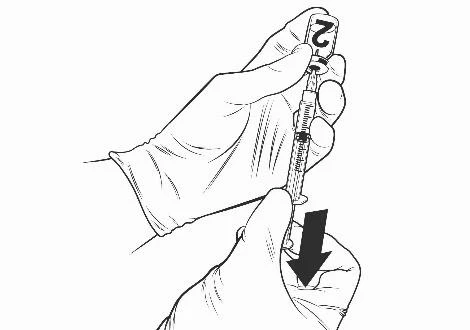
and clean the surface of the stoppers on the top of the vials using an alcohol swab.
- Attach a sterile needle to a sterile 1 mL syringe and insert the needle into the solvent vial. The recommended needle is a 23 gauge.
- Slowly push the plunger fully down.
- Invert the vial, draw up the entire content of the Solvent vial into the syringe, and continue pulling the plunger to the 0.75 mL mark. A bubble should be visible inside the syringe.
- Invert the syringe to move the bubble to the plunger.
- Insert the syringe needle into the vial containing the lyophilized vaccine
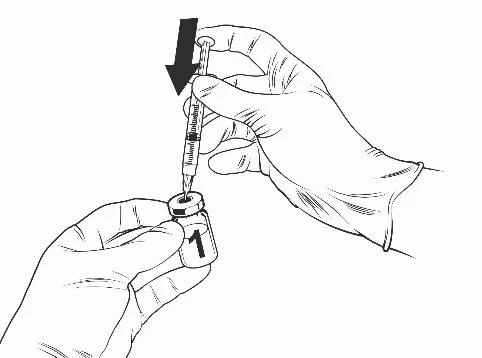
- Direct the flow of solvent onto the side of the vial by slowly pushing the plunger to minimize the formation of bubbles.
Lyophilized vaccine vial
- Release the plunger and, placing the assembly
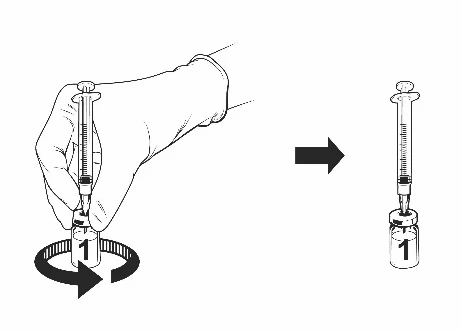
on a flat surface, gently rotate the vial in both directions while the syringe remains attached.
- DO NOT SHAKE. Foam and bubbles may form in the reconstituted product. Allow the vial and attached syringe to stand until the solution becomes clear. This takes approximately 30–60 seconds. Reconstituted vaccine
After reconstitution, the resulting solution should be clear, colorless to pale yellow, and practically free of foreign particles. Discard the vaccine if particulate matter is present or if discoloration occurs.
- Draw up the entire volume of the reconstituted
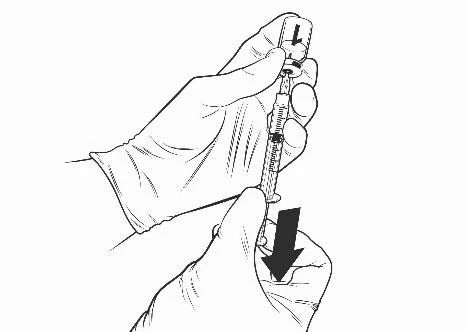
Qdenga solution into the same syringe until an air bubble appears in the syringe.
- Remove the syringe needle from the vial.
- Hold the syringe with the needle pointing upward, tap the side of the syringe to allow air bubbles to rise, remove and discard the attached needle, and replace it with a new sterile needle. Expel air bubbles until Reconstituted vaccine a small drop of liquid appears at the tip of the needle. The recommended needle is a 25 gauge, 16 mm.
- Qdenga is now ready for subcutaneous injection.
Qdenga must be administered immediately after reconstitution. Chemical and physical stability in use has been demonstrated for 2 hours at room temperature (up to 32.5 °C) from the time of reconstitution of the vaccine vial. After this time, the vaccine must be discarded. Do not return it to the refrigerator. From a microbiological standpoint, Qdenga should be used immediately. If not used immediately, the times and conditions of storage during use are the responsibility of the user.
Any unused medicinal product and waste materials derived from its use must be disposed of in accordance with local regulations.
Package leaflet: Information for the user
Qdenga powder and solvent for injectable solution in a pre-filled syringe
Tetravalent dengue vaccine (live, attenuated)
This medicinal product is subject to additional monitoring. This will allow for the rapid identification of new safety information. You can help by reporting any adverse reactions you experience while receiving this medicine. See the end of section 4 for information on how to report adverse reactions.
Please read this leaflet carefully before you or your child are vaccinated, as it contains important information for you.
- Keep this leaflet. You may need to read it again.
- If you have any questions, ask your doctor, pharmacist, or nurse.
- This medicine has been prescribed only for you or your child. Do not give it to others.
- If you or your child experience any adverse reactions, including those not listed in this leaflet, contact your doctor, pharmacist, or nurse. See section 4.
Contents of this leaflet
- What Qdenga is and what it is used for
- What you need to know before you or your child receive Qdenga
- How Qdenga is administered
- Possible adverse reactions
- How to store Qdenga
- Contents of the pack and other information
1. What Qdenga is and what it is used for
Qdenga is a vaccine. It is used to protect you or your child against dengue. Dengue is a disease
caused by serotypes 1, 2, 3 and 4 of the dengue virus. Qdenga contains weakened forms of these 4
dengue virus serotypes, so that they cannot cause the disease.
Qdenga is given to adults, adolescents and children (from 4 years of age).
Qdenga should be used in accordance with official recommendations.
How the vaccine works
Qdenga stimulates the body’s natural defences (immune system). This will help protect you
against the viruses that cause dengue if you are exposed to them in the future.
What is dengue
Dengue is caused by a virus.
- The virus spreads through mosquitoes (Aedes mosquitoes).
- If a mosquito bites someone with dengue, it can transmit the virus to subsequent people it bites. Dengue is not transmitted directly from person to person.
Signs of dengue include fever, headache, pain behind the eyes, muscle and joint pain, nausea and
vomiting, swollen glands or skin rash. Signs of dengue usually last for 2–7 days. You may also be infected with the dengue virus but not show any signs of illness.
Occasionally, dengue can be severe enough to require hospitalisation, and rarely, it may cause death. Severe dengue can cause high fever and one or more of the following symptoms: severe abdominal pain, persistent vomiting, rapid breathing, severe bleeding, bleeding into the stomach, bleeding gums, fatigue, restlessness, coma, seizures and organ failure.
2. What you should know before you or your child receive Qdenga
To ensure that Qdenga is suitable for you or your child, it is important to consult your doctor,
pharmacist, or nurse if any of the following apply to you or your child. If you do not understand something, please do not hesitate to ask your doctor, pharmacist, or nurse for clarification.
Do not use Qdenga if you or your child
- are allergic to the active substances or to any of the other ingredients of Qdenga (listed in section 6).
- have previously had an allergic reaction after receiving Qdenga. Signs of an allergic reaction include itchy rash, difficulty breathing, and swelling of the face and tongue.
- have a weakened immune system (the body's natural defences). This may be due to a genetic defect or HIV infection.
- are taking a medicine that affects the immune system (such as high-dose corticosteroids or chemotherapy). Your doctor will not use Qdenga until a certain period of time has passed after stopping treatment with such a medicine.
- are pregnant or breastfeeding. Do not use Qdenga if any of the conditions listed above apply to you.
Warnings and precautions
Talk to your doctor, pharmacist, or nurse before receiving Qdenga if you or your child:
- have an infection with fever. Vaccination may need to be postponed until you have recovered.
- have previously experienced any health problems after receiving a vaccine. Your doctor will carefully evaluate the risks and benefits of vaccination.
- have ever fainted following an injection. Dizziness, fainting, and sometimes falling may occur following or even before any needle injection (especially in young people).
Important information about protection provided
Like any vaccine, Qdenga may not protect everyone who receives it, and protection may decrease over time. You may still contract dengue fever from mosquito bites, including severe dengue disease. You should continue to protect yourself or your child from mosquito bites even after vaccination with Qdenga.
After vaccination, you should contact a doctor if you think you or your child may have contracted dengue infection and experience any of the following symptoms: high fever, severe abdominal pain, persistent vomiting, rapid breathing, bleeding gums, fatigue, restlessness, and blood in vomit.
Additional protective precautions
You should take precautions against mosquito bites. This includes using insect repellents, wearing protective clothing, and using mosquito nets.
Younger children
Qdenga must not be given to children under 4 years of age.
Other medicines and Qdenga
Qdenga may be administered at the same visit as the hepatitis A vaccine, yellow fever vaccine, or human papillomavirus (HPV) vaccine, provided each is given at a separate injection site (in another part of the body, usually the other arm).
Inform your doctor or pharmacist if you or your child are using, have recently used, or might use any other vaccines or medicines.
In particular, inform your doctor or pharmacist if you or your child are taking any of the following:
- medicines that affect the body's natural defences (immune system), such as high-dose corticosteroids or chemotherapy. In such cases, your doctor will not use Qdenga until a certain period of time has passed after stopping treatment. This is because Qdenga may not work as intended.
- medicines known as “immunoglobulins” or blood products containing immunoglobulins, such as blood or plasma. In such cases, your doctor will not use Qdenga until at least 6 weeks, and preferably 3 months, have passed since stopping treatment. This is because Qdenga may not work as intended.
Pregnancy and breastfeeding
Do not use Qdenga if you or your daughter are pregnant or breastfeeding with breast milk. If you or your daughter:
- are of childbearing age, you should take necessary precautions to avoid pregnancy for at least one month after vaccination with Qdenga.
- think you may be pregnant or are planning a pregnancy, consult your doctor, pharmacist, or nurse before using Qdenga.
Driving and using machines
Qdenga may slightly affect the ability to drive vehicles and use machines in the first few days after vaccination.
Qdenga contains sodium and potassium
Qdenga contains less than 1 mmol (23 mg) of sodium per 0.5 mL dose, i.e., essentially “sodium-free”.
Qdenga contains potassium, less than 1 mmol (39 mg) per 0.5 mL dose, i.e., essentially “potassium-free”.
3. How Qdenga is administered
Qdenga is administered by a doctor or nurse through an injection under the skin (subcutaneous injection) in the upper arm. It must not be injected into a blood vessel.
You or your child will receive 2 injections.
The second injection is given 3 months after the first injection.
There is no data available in adults over 60 years of age. Please consult your doctor for advice on the potential benefits of Qdenga treatment for you.
Qdenga should be used in accordance with official recommendations.
The instructions for preparing the vaccine, intended exclusively for doctors and healthcare professionals, are included at the end of the package leaflet.
If you or your child miss an injection of Qdenga
- If you or your child miss a scheduled injection, the doctor will decide when to administer the missed dose. It is important that you or your child follow the doctor's, pharmacist's, or nurse's instructions regarding the next injection.
- If you forget or are unable to attend on the scheduled day, consult your doctor, pharmacist, or nurse for advice. If you have any doubts about the use of this vaccine, consult your doctor, pharmacist, or nurse.
4. Possible side effects
Like all medicines, Qdenga can cause side effects, although not everybody gets them.
Severe allergic (anaphylactic) reaction
Contact a doctor immediately if any of the following symptoms occur after leaving the place where you or your child received the injection:
- difficulty breathing
- bluish colour of the tongue or lips
- skin rash
- swelling of the face or throat
- low blood pressure causing dizziness or fainting
- sudden and severe feeling of illness or discomfort with low blood pressure causing dizziness and loss of consciousness, rapid heartbeat associated with breathing difficulties
These signs or symptoms (anaphylactic reactions) usually develop immediately after the injection, while you or your child are still at the healthcare facility or doctor's office. They may very rarely also occur after receiving any vaccine.
The following side effects occurred during studies in children, adolescents and adults.
Very common (may affect more than 1 in 10 people):
- pain at the injection site
- headache
- muscle pain
- redness at the injection site
- general feeling of being unwell
- weakness
- nose or throat infections
- fever
Common (may affect up to 1 in 10 people):
- swelling at the injection site
- pain or inflammation of nose or throat
- bruising at the injection site
- itching at the injection site
- inflammation of throat and tonsils
- joint pain
- flu-like illness
Uncommon (may affect up to 1 in 100 people):
- diarrhoea
- nausea
- stomach pain
- vomiting
- bleeding at the injection site
- feeling mentally confused
- itchy skin
- skin rash, including blotchy or itchy rashes
- urticaria (hives)
- fatigue
- changes in skin colour at the injection site
- respiratory tract inflammation
- runny nose
Rare (may affect up to 1 in 1,000 people):
- small red or purple spots under the skin (petechiae)
Very rare (may affect up to 1 in 10,000 people):
- rapid swelling under the skin in areas such as the face, throat, arms and legs
- low levels of platelets in the blood (thrombocytopenia)
Not known (frequency cannot be estimated from the available data):
- sudden and severe allergic (anaphylactic) reaction, with breathing difficulties, swelling, dizziness, rapid heartbeat, sweating and loss of consciousness
- eye pain
Additional side effects in children aged 4 to 5 years:
Very common (may affect more than 1 in 10 people):
- reduced appetite
- feeling sleepy
- irritability
Reporting of side effects
If you experience any side effects, including those not listed in this leaflet, tell your doctor, pharmacist or nurse. You can also report side effects directly through the national reporting system detailed in Annex V. By reporting side effects, you can help provide more information on the safety of this medicine.
5. How to store Qdenga
Keep Qdenga out of the sight and reach of children.
Do not use Qdenga after the expiry date stated on the carton after "Exp". The expiry date refers to the last day of that month.
Store in a refrigerator (2 °C – 8 °C).
Do not freeze.
Keep the vaccine in its outer carton.
After reconstitution with the supplied solvent, Qdenga must be used immediately. If not used immediately, Qdenga must be used within 2 hours.
Do not dispose of any medicine via wastewater or household waste. Ask your pharmacist how to dispose of medicines you no longer use. This will help protect the environment.
6. Package contents and other information
What Qdenga contains
- After reconstitution, one dose (0.5 mL) contains:
Dengue virus serotype 1 (live, attenuated): ≥3.3 log₁₀ PFU**/dose
Dengue virus serotype 2 (live, attenuated)#: ≥2.7 log₁₀ PFU**/dose
Dengue virus serotype 3 (live, attenuated): ≥4.0 log₁₀ PFU**/dose
Dengue virus serotype 4 (live, attenuated)*: ≥4.5 log₁₀ PFU**/dose
*Produced in Vero cells using recombinant DNA technology. Serotype-specific surface protein genes engineered into the dengue type 2 backbone. This product contains genetically modified organisms (GMOs).
#Produced in Vero cells using recombinant DNA technology.
**PFU = Plaque-forming units
- Other components are: α,α-trehalose dihydrate, poloxamer 407, human serum albumin, monopotassium phosphate, disodium phosphate, potassium chloride, sodium chloride, water for injections.
Description of the appearance of Qdenga and contents of the pack
Qdenga is a powder and solvent for injectable solution. Qdenga is supplied as a powder in a single-dose vial and solvent in a pre-filled syringe with 2 separate needles or needle-free.
The powder and solvent must be mixed before use.
Qdenga powder and solvent for injectable solution in pre-filled syringe is available in packs of 1 or 5.
Not all pack sizes may be marketed.
The powder is a compact mass, white to off-white.
The solvent (0.22% sodium chloride solution) is a clear, colourless liquid.
After reconstitution, Qdenga is a clear solution, colourless to pale yellow, and practically free from foreign particles.
Marketing Authorisation Holder and Manufacturer
Marketing Authorisation Holder
Takeda Pharmaceuticals International AG Ireland Branch
Block 2 Miesian Plaza
50-58 Baggot Street Lower
Dublin 2
D02 HW68
Ireland
Manufacturer
Takeda GmbH
Production site Singen
Robert-Bosch-Str. 8
78224 Singen
Germany
For further information about this medicinal product, contact the local representative of the Marketing Authorisation Holder:
België/Belgique/Belgien Lietuva
Takeda Belgium NV Takeda, UAB
Tel/Tél: +32 2 464 06 11 Tel: +370 521 09 070
[email protected] [email protected]
България Luxembourg/Luxemburg
Такеда България Takeda Belgium NV
Тел: +359 2 958 27 36 Tel/Tél: +32 2 464 06 11
[email protected] [email protected]
Česká republika Magyarország
Takeda Pharmaceuticals Czech Republic s.r.o. Takeda Pharma Kft.
Tel: +420 234 722 722 Tel: +36 1 270 7030
[email protected] [email protected]
Danmark Malta
Takeda Pharma A/S Takeda HELLAS S.A
Tlf.: +45 46 77 10 10 Tel: +30 210 6387800
[email protected] [email protected]
Deutschland Nederland
Takeda GmbH Takeda Nederland B.V.
Tel: +49 (0) 800 825 3325 Tel: +31 20 203 5492
[email protected] [email protected]
Eesti Norge
Takeda Pharma AS Takeda AS
Tel: +372 6177 669 Tlf: 800 800 30
[email protected] [email protected]
Ελλάδα Österreich
Takeda ΕΛΛΑΣ Α.Ε. Takeda Pharma Ges.m.b.H.
Τηλ: +30 210 6387800 Tel: +43 (0) 800-20 80 50
[email protected] [email protected]
España Polska
Takeda Farmacéutica España, S.A. Takeda Pharma sp. z o.o.
Tel: +34 917 90 42 22 Tel: +48 22 306 24 47
[email protected] [email protected]
France Portugal
Takeda France SAS Takeda Farmacêuticos Portugal, Lda.
Tél: +33 1 40 67 33 00 Tel: +351 21 120 1457
[email protected] [email protected]
Hrvatska România
Takeda Pharmaceuticals Croatia d.o.o. Takeda Pharmaceuticals SRL
Tel: +385 1 377 88 96 Tel: +40 21 335 03 91
[email protected] [email protected]
Ireland Slovenija
Takeda Products Ireland Ltd. Takeda Pharmaceuticals farmacevtska družba d.o.o.
Tel: 1800 937 970 Tel: +386 (0) 59 082 480
[email protected] [email protected]
Ísland Slovenská republika
Vistor hf. Takeda Pharmaceuticals Slovakia s.r.o.
Sími: +354 535 7000 Tel: +421 (2) 20 602 600
[email protected] [email protected]
Italia Suomi/Finland
Takeda Italia S.p.A. Takeda Oy
Tel: +39 06 502601 Puh/Tel: 0800 774 051
[email protected] [email protected]
Κύπρος Sverige
Takeda ΕΛΛΑΣ Α.Ε. Takeda Pharma AB
Τηλ: +30 2106387800 Tel: 020 795 079
[email protected] [email protected]
Latvija
Takeda Latvia SIA
Tel: +371 67840082
[email protected]
Other sources of information
More detailed information on this medicinal product is available on the European Medicines Agency website: https://www.ema.europa.eu
The following information is intended exclusively for healthcare professionals:
- As with any other injectable vaccine, appropriate treatment and medical support must always be readily available in case of an anaphylactic reaction following administration of Qdenga.
- Qdenga must not be mixed with any other medicinal products or vaccines in the same syringe.
- Qdenga must never be administered by intravascular injection.
- Immunization should be performed by subcutaneous injection, preferably in the upper arm, in the deltoid region. Qdenga must not be administered by intramuscular injection.
- Syncope (fainting) may occur following, or even before, any vaccination due to a psychogenic response to the injection with a needle. Procedures should be in place to prevent fall-related injuries and to manage syncopal reactions.
Instructions for reconstituting the vaccine with the solvent provided in the pre-filled syringe:
Qdenga is a two-component vaccine consisting of a vial containing the lyophilized vaccine and solvent supplied in a pre-filled syringe. The lyophilized vaccine must be reconstituted with the solvent prior to administration.
Qdenga must not be mixed with other vaccines in the same syringe.
To reconstitute Qdenga, use only the solvent (0.22% sodium chloride solution) in the pre-filled syringe supplied with the vaccine, as it is free from preservatives or other antiviral substances.
Avoid contact with preservatives, antiseptics, detergents, and other antiviral substances, as they may inactivate the vaccine.
Remove the vaccine vial and the pre-filled syringe containing the solvent from the refrigerator.
-
Remove the closure cap from the vaccine vial and clean the surface of the stopper at the top of the vial using an alcohol-soaked swab.
-
Insert a sterile needle into the pre-filled syringe and insert the needle into the vaccine vial. The recommended needle is a 23 gauge needle.
-
Direct the flow of solvent onto the side of the vial and slowly push the plunger to minimize the formation of bubbles. Lyophilized vaccine vial
-
Release the finger from the plunger and, placing the assembly on a flat surface, gently rotate the vial back and forth while the syringe needle remains attached.
-
DO NOT SHAKE. Foam and bubbles may form in the reconstituted product.
-
Allow the vial and attached syringe to stand for a short time until the solution becomes clear. Reconstituted vaccine This takes approximately 30–60 seconds.
After reconstitution, the resulting solution should be clear, colorless to pale yellow, and practically free from foreign particles. Discard the vaccine if particulate matter is present and/or if discoloration occurs.
-
Draw up the entire volume of the reconstituted Qdenga solution into the same syringe until an air bubble appears in the syringe.
-
Remove the syringe needle from the vial.
-
Hold the syringe with the needle pointing upward, tap the side of the syringe to bring air bubbles to the top, remove the attached needle, and replace it with a new sterile needle. Expel the air bubbles until a small drop of liquid appears at the tip Reconstituted vaccine of the needle. The recommended needle is a 25 gauge, 16 mm needle.
-
Qdenga is now ready for subcutaneous injection.
Qdenga must be administered immediately after reconstitution. Chemical and physical in-use stability has been demonstrated for 2 hours at room temperature (up to 32.5 °C) from the time of reconstitution of the vaccine vial. After this period, the vaccine must be discarded. Do not return it to the refrigerator. From a microbiological standpoint, Qdenga should be used immediately. If not used immediately, the times and conditions of storage during use are the responsibility of the user.
Any unused medicinal product and waste materials derived from this medicinal product must be disposed of in accordance with local applicable regulations.