Pyrukynd
Italy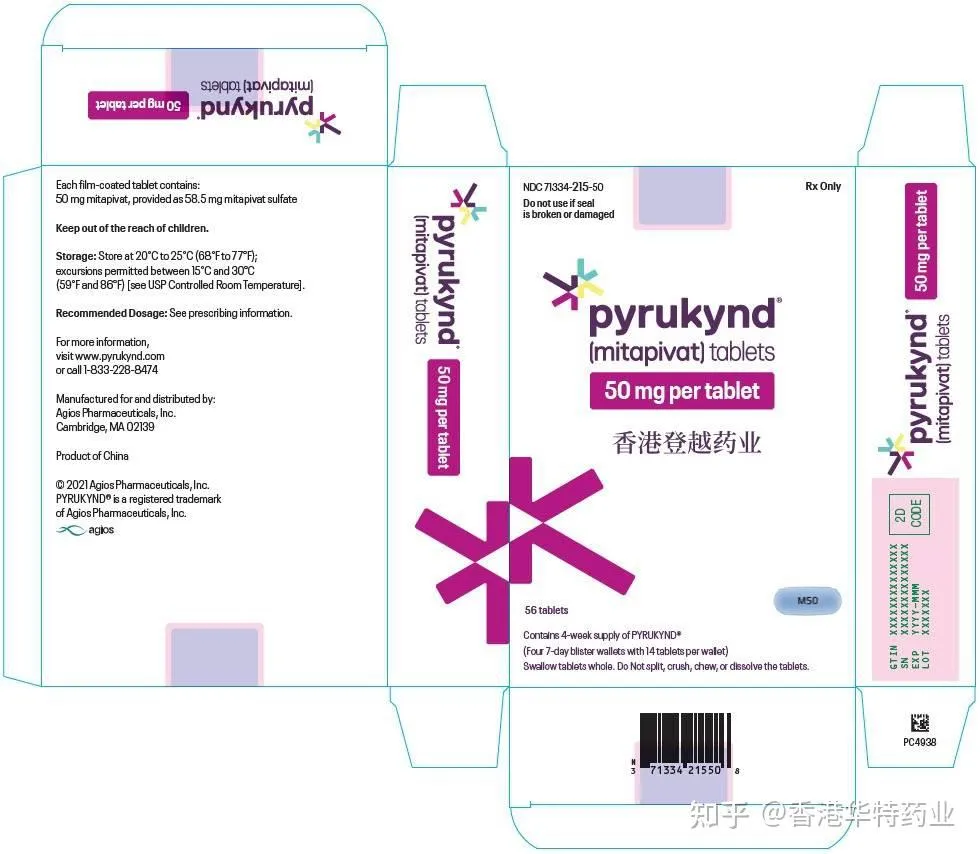
Table of Contents
- Package leaflet: Information for the patient
- Pyrukynd 5 mg film-coated tablets, 20 mg film-coated tablets, 50 mg film-coated tablets
- 1. What Pyrukynd is and what it is used for
- 2. What you need to know before taking Pyrukynd
- 3. How to take Pyrukynd
- 4. Possible side effects
- 5. How to store Pyrukynd
- 6. Package contents and other information
Package leaflet: Information for the patient
Pyrukynd 5 mg film-coated tablets, 20 mg film-coated tablets, 50 mg film-coated tablets
mitapivat

This medicinal product is subject to additional monitoring. This will allow for rapid identification of
new safety information. You can help by reporting any side effects you experience while taking this
medicinal product. See the end of section 4 for information on how to report side effects.
Please read this leaflet carefully before taking this medicine because it contains
important information for you.
- Keep this leaflet. You may need to read it again.
- If you have any questions, ask your doctor, pharmacist, or nurse.
- This medicine has been prescribed for you only. Do not give it to other people, even if their symptoms are the same as yours, because it may be harmful.
- If you experience any side effect, including those not listed in this leaflet, contact your doctor, pharmacist, or nurse. See section 4.
Contents of this leaflet
- What Pyrukynd is and what it is used for
- What you need to know before taking Pyrukynd
- How to take Pyrukynd
- Possible side effects
- How to store Pyrukynd
- Contents of the pack and other information
1. What Pyrukynd is and what it is used for
Pyrukynd contains the active substance mitapivat.
Pyrukynd is used to treat adults with an inherited disease called pyruvate kinase deficiency.
Patients with pyruvate kinase deficiency have abnormalities in an enzyme in red blood cells called pyruvate kinase, which prevents the enzyme from functioning properly. This leads to red blood cells being broken down too quickly, a process known as haemolytic anaemia.
Pyrukynd helps the pyruvate kinase enzyme to work better. It increases energy in red blood cells and prevents them from breaking down too quickly.
If you have any questions about how Pyrukynd works or why this medicine has been prescribed for you, speak to your doctor, pharmacist, or nurse.
2. What you need to know before taking Pyrukynd
Do not take Pyrukynd
- if you are allergic to mitapivat or to any of the other ingredients of this medicine (listed in section 6).
Warnings and precautions
Talk to your doctor, pharmacist, or nurse before taking Pyrukynd.
It is important that you do not stop taking this medicine abruptly, as this may
lead to worsening anemia, with sudden breakdown of red blood cells (acute haemolysis).
- If you wish to stop treatment with Pyrukynd, consult your doctor first.
- Your doctor will explain how to stop taking this medicine, usually by gradually reducing the dose. This helps prevent unwanted effects caused by sudden breakdown of red blood cells.
See section 4 for more information about these side effects.
Children and adolescents
Do not give this medicine to children and adolescents under 18 years of age, as it is not known whether
mitapivat is safe and effective for them.
Other medicines and Pyrukynd
Tell your doctor or pharmacist if you are taking, have recently taken, or might take
any other medicines, including those without a prescription. In particular:
Tell your doctor or pharmacist if you are taking any of the following medicines, because they may increase the
risk of side effects of Pyrukynd (for example, insomnia) or prevent Pyrukynd from working
properly:
- some medicines for fungal infections, such as itraconazole
- some medicines for tuberculosis, such as rifampicin
- some medicines for stomach ulcers, heartburn, or acid reflux, such as famotidine
Tell your doctor or pharmacist if you are taking any of the following medicines, because Pyrukynd may
prevent these medicines from working properly:
- some sedatives, such as midazolam
- some hormonal contraceptives (contraceptives), such as ethinylestradiol
- some chemotherapeutic medicines for cancer treatment, such as irinotecan, cyclophosphamide, paclitaxel
- some medicines to help stop smoking, such as bupropion
- some medicines for stomach ulcers, heartburn, or acid reflux, such as omeprazole
- some medicines for type 2 diabetes, such as repaglinide
- some anticoagulants, such as warfarin, dabigatran etexilate
- some medicines for heart problems, such as digoxin
- some medicines for epilepsy, such as carbamazepine, phenytoin, valproic acid
- some medicines used for severe pain relief, such as alfentanil
- some medicines used to prevent organ transplant rejection, such as ciclosporin, sirolimus, tacrolimus
- some medicines used for treating abnormal heart rhythm, such as quinidine
- some medicines used for treating migraines, such as ergotamine
- some medicines used for treating chronic pain, such as fentanyl
- some medicines used to control involuntary movements or sounds, such as pimozide
- some medicines used for treatment or prevention of gout flare-ups, such as colchicine
Pregnancy, breast-feeding and fertility
Pregnancy
If you are pregnant, think you may be pregnant, planning to become pregnant, or are breast-feeding,
ask your doctor or pharmacist for advice before taking this medicine.
You should avoid becoming pregnant during treatment with Pyrukynd,
- because it could be harmful to the unborn child
- contact your doctor immediately if you become pregnant during treatment with this medicine.
Breast-feeding
If you plan to breast-feed, ask your doctor or pharmacist for advice before taking
this medicine, because it is not known whether the medicine passes into breast milk or what effects it might
have on the infant.
Fertility
During treatment with Pyrukynd, there may be an impact on fertility in both women and men.
Ask your doctor or pharmacist for advice if you are planning to have a child.
Contraception for women
If you are of childbearing age, you must use reliable contraceptive methods during treatment with Pyrukynd and for
at least 1 month after taking the last dose.
During treatment with Pyrukynd, some hormonal contraceptive medicines (such as the pill) may not work as expected,
which means you could be at risk of pregnancy. Consult your doctor, pharmacist, or nurse about contraceptive methods
that may be suitable for you during treatment with this medicine.
Driving and using machines
Difficulty sleeping (insomnia) may occur during treatment with Pyrukynd. If this happens, be cautious when
driving or operating machinery.
Pyrukynd contains lactose and sodium
If your doctor has diagnosed you with an intolerance to certain sugars, contact them before taking
this medicine.
This medicine contains less than 1 mmol (23 mg) of sodium per dose, i.e. essentially ‘sodium-free’.
3. How to take Pyrukynd
Take this medicine exactly as your doctor or pharmacist has told you. If you are unsure, consult your doctor or pharmacist.
Dosage
The recommended starting dose of Pyrukynd is one 5 mg tablet twice daily. Your doctor may gradually increase the dose at intervals of several weeks, based on blood test results (haemoglobin levels) and your disease response, up to a maximum of one 50 mg tablet twice daily.
You must continue taking this medicine unless your doctor tells you otherwise.
Method of administration
Pyrukynd is taken by mouth.
- Swallow the tablet whole.
- You may take it with or without food.
- Do not split, crush, chew, or dissolve the tablets.
Elderly patients
Pyrukynd has been used in a limited number of patients aged 65 years and older. There are no data suggesting the need for a different dose in elderly patients compared to younger adults.
Instructions for opening blister packs
The following images show how to remove the tablet from the blister.
Locate the correct blister cell indicated by the day of the week and, if applicable, the time of day (morning or evening dose, as indicated on the blister by the sun and moon symbols). On the corresponding tab:
- PRESS with your thumb.
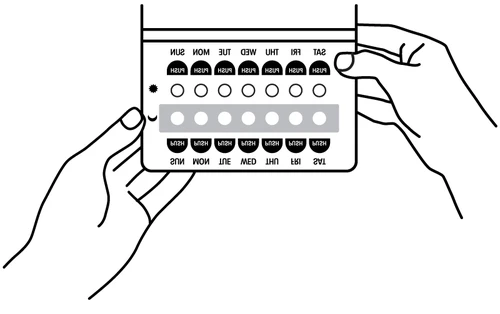
The image above shows the inside of the blister.
- Turn the package over, PULL the raised tab from the back.
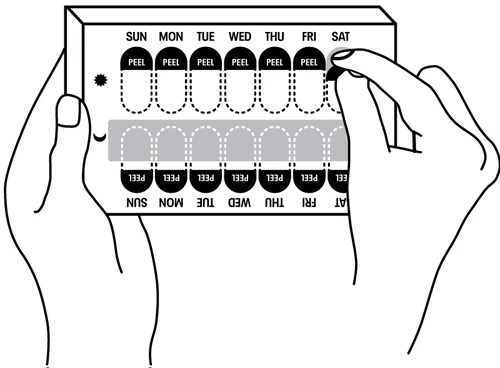
The image above shows the back of the blister.
- Push the tablet through the aluminium foil to release it.
If you take more Pyrukynd than you should
If you have taken more Pyrukynd than prescribed, contact your doctor or the nearest emergency department immediately. Take the packaging with you to show the doctor which medicine you have taken.
If you forget to take Pyrukynd
- If you forget a dose and it is less than 4 hours since the scheduled time, take it as soon as possible.
- If you forget a dose and more than 4 hours have passed since the scheduled time, do not take a replacement dose. Take the next scheduled dose at the usual time. Do not take a double dose to make up for the missed dose.
If you stop taking Pyrukynd
Do not stop taking this medicine suddenly.
- If you wish to discontinue treatment with Pyrukynd, consult your doctor first.
- Your doctor will explain how to stop taking this medicine, usually by gradually reducing the dose. This helps prevent unwanted side effects caused by a sudden breakdown of red blood cells. See section 4 for more information about these side effects.
If you have any questions about the use of this medicine, ask your doctor, pharmacist, or nurse.
4. Possible side effects
Like all medicines, this medicine can cause side effects, although not everyone gets them.
Very common (may affect more than 1 in 10 people):
- difficulty sleeping (insomnia)
- reduced levels of the hormone estrone, observed in blood tests in men
- nausea
Common (may affect up to 1 in 10 people):
- hot flush
- increased levels of the hormone testosterone, observed in blood tests in men
- reduced levels of the hormone estradiol, observed in blood tests in men
Side effects that may occur when stopping Pyrukynd suddenly
If you stop treatment with Pyrukynd suddenly, symptoms may include:
- feeling extremely tired
- yellowing of the skin and whites of the eyes (jaundice)
- back pain
- dark urine
Contact your doctor immediately if you experience any of the symptoms listed above after stopping this medicine.
Reporting of side effects
If you get any side effects, including those not listed in this leaflet, talk to your doctor, pharmacist, or nurse. You can also report side effects directly through the national reporting system detailed in Annex V. By reporting side effects, you can help provide more information on the safety of this medicine.
5. How to store Pyrukynd
Keep this medicine out of the sight and reach of children.
Do not use this medicine after the expiry date stated on the carton, the blister pack’s outer box, and the blister after "Exp". The expiry date refers to the last day of that month.
Store below 25 °C.
Do not dispose of any medicine via wastewater or household waste. Ask your pharmacist how to dispose of medicines no longer required. This will help protect the environment.
6. Package contents and other information
What Pyrukynd contains
The active substance is mitapivat.
Pyrukynd 5 mg film-coated tablets
Each film-coated tablet contains 5 mg of mitapivat (as sulphate).
Pyrukynd 20 mg film-coated tablets
Each film-coated tablet contains 20 mg of mitapivat (as sulphate).
Pyrukynd 50 mg film-coated tablets
Each film-coated tablet contains 50 mg of mitapivat (as sulphate).
Pyrukynd 5 mg, 20 mg and 50 mg film-coated tablets
The other components are:
- tablet core: microcrystalline cellulose, sodium croscarmellose, mannitol (E421) and sodium stearyl fumarate
- film coating: hypromellose (E464), titanium dioxide (E171), lactose monohydrate, triacetin, indigo carmine aluminium lake (E132)
- printing ink: shellac (E904), iron oxide black (E172) and ammonium hydroxide (E527). See section 2 “Pyrukynd contains lactose and sodium”.
Description of the appearance of Pyrukynd and package contents
Pyrukynd 5 mg film-coated tablets are round, blue, film-coated tablets approximately 5 mm in diameter, with “M5” printed in black ink on one side and smooth on the other.
Pyrukynd 20 mg film-coated tablets are round, blue, film-coated tablets approximately 8 mm in diameter, with “M20” printed in black ink on one side and smooth on the other.
Pyrukynd 50 mg film-coated tablets are oblong, blue, film-coated tablets measuring approximately 16 mm × 6.8 mm, with “M50” printed in black ink on one side and smooth on the other.
Packages for initiation and continuation of treatment
Pyrukynd 5 mg, 20 mg and 50 mg film-coated tablets are available in packs of 4 blisters, each containing 14 film-coated tablets. Each pack contains 56 film-coated tablets.
Packages for dose reduction or treatment discontinuation
Pyrukynd 5 mg film-coated tablets are also available in blisters containing 7 film-coated tablets.
Pyrukynd 20 mg film-coated tablets + Pyrukynd 5 mg film-coated tablets are available in blisters containing 14 film-coated tablets (7 tablets of 20 mg + 7 tablets of 5 mg).
Pyrukynd 50 mg film-coated tablets + Pyrukynd 20 mg film-coated tablets are available in blisters containing 14 film-coated tablets (7 tablets of 50 mg + 7 tablets of 20 mg).
Not all pack sizes may be marketed.
Marketing Authorisation Holder
Agios Netherlands B.V.
Zuidplein 36
Regus Amsterdam WTC
1077XV Amsterdam
The Netherlands
Manufacturer
Almac Pharma Services Limited
Seagoe Industrial Estate
Portadown
Craigavon, County Armagh
BT63 5UA
United Kingdom (Northern Ireland)
Other sources of information
More detailed information on this medicinal product is available on the website of the European Medicines Agency: http://www.ema.europa.eu. Links to other websites on rare diseases and their therapeutic treatments are also provided.